


- Description
- Specifications

Product Overview
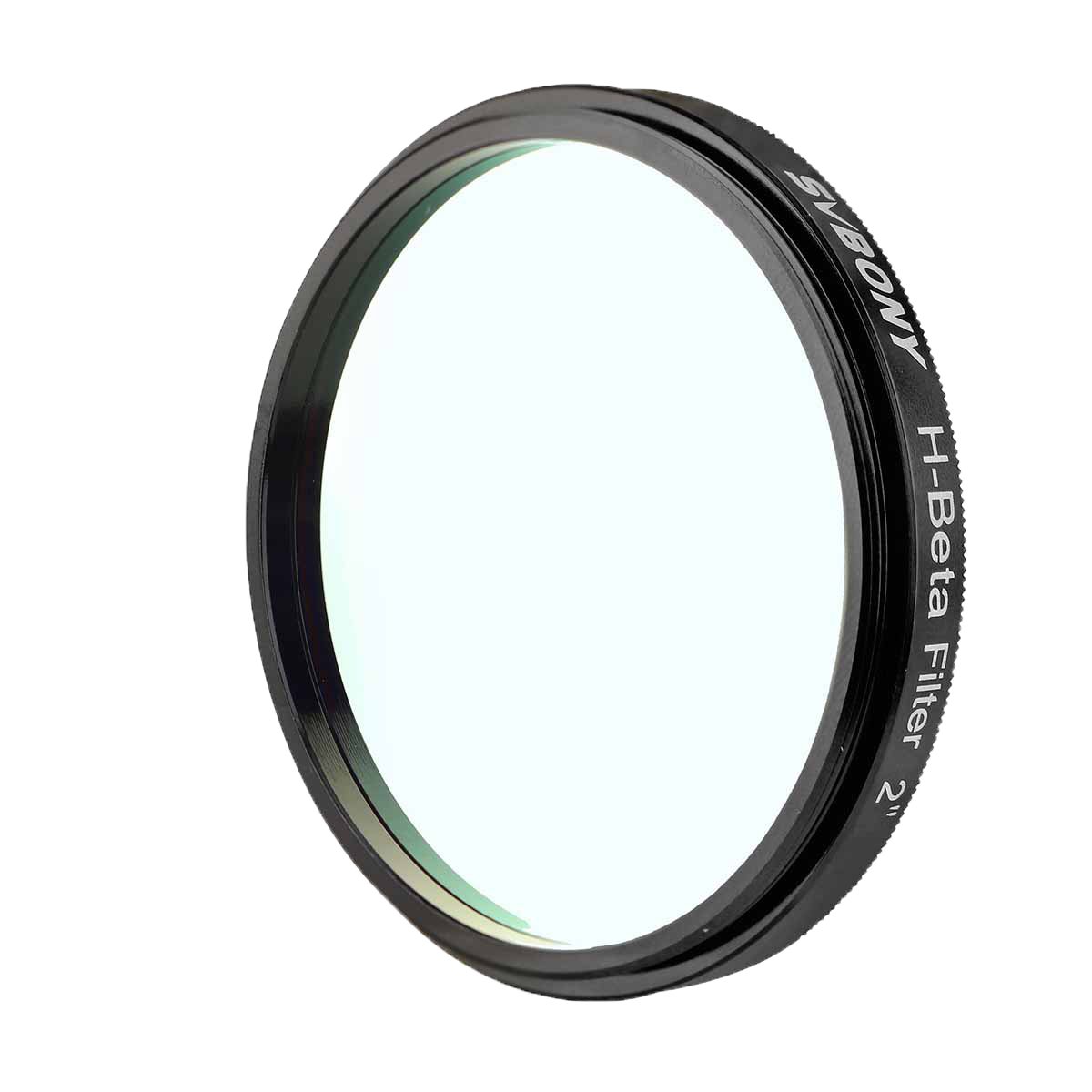
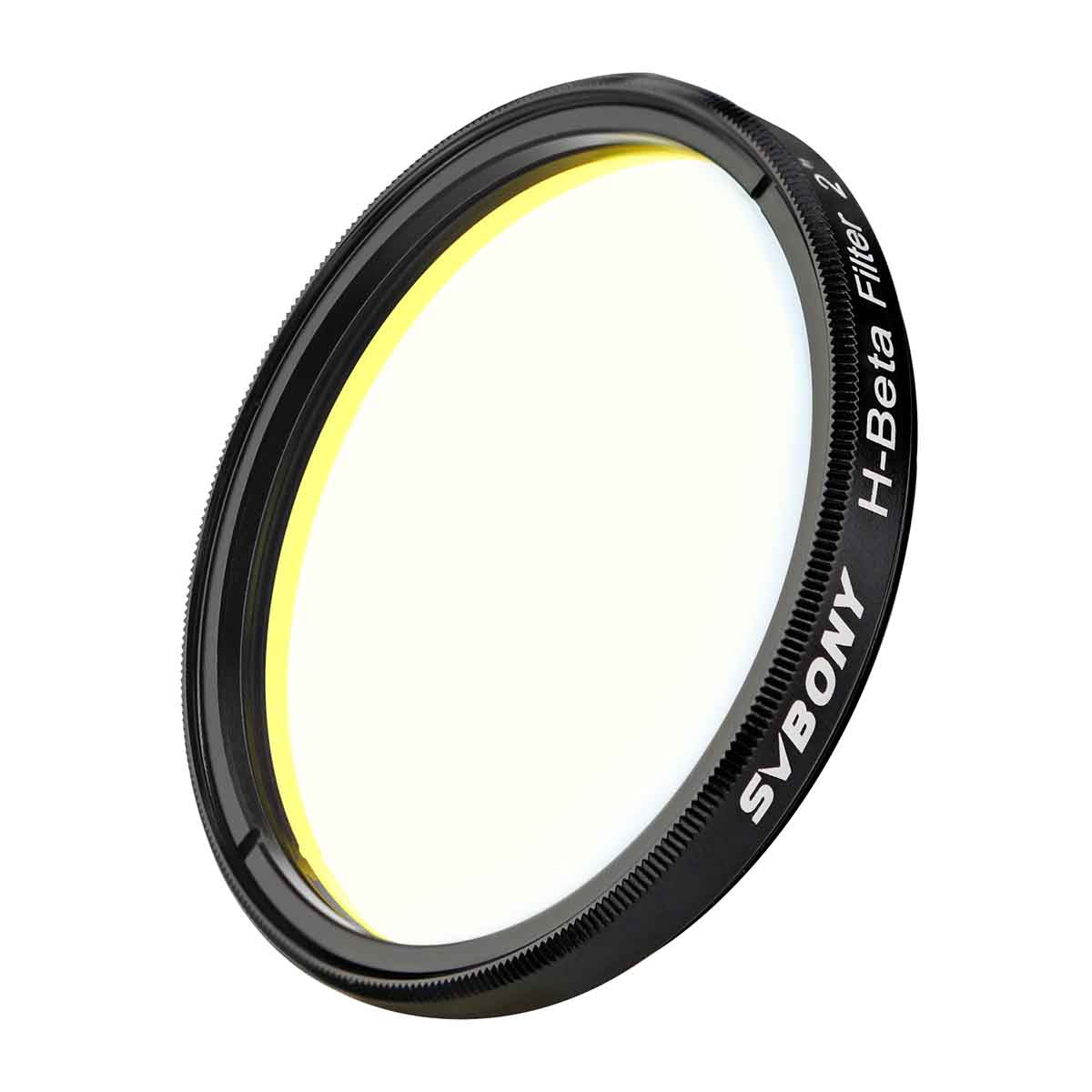
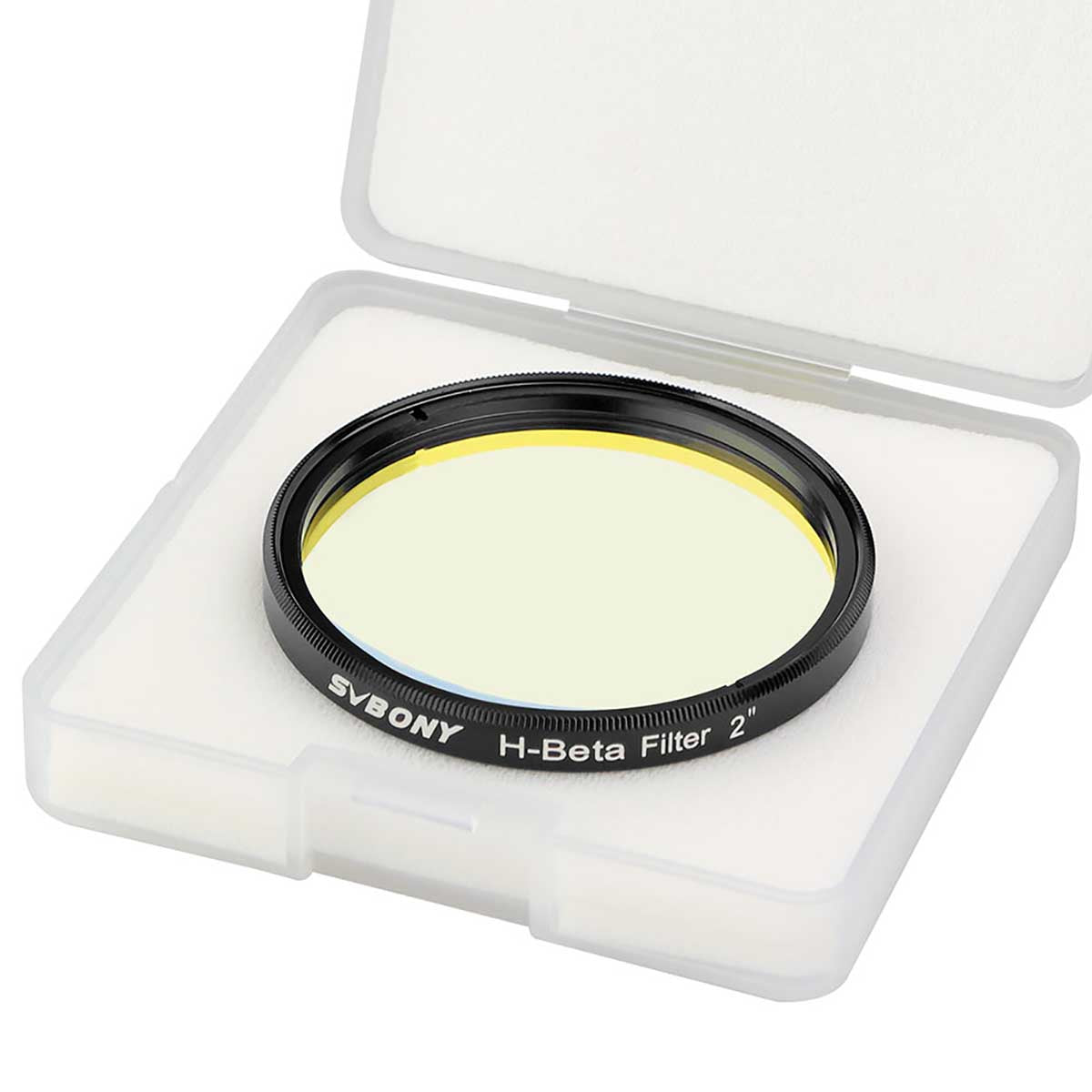
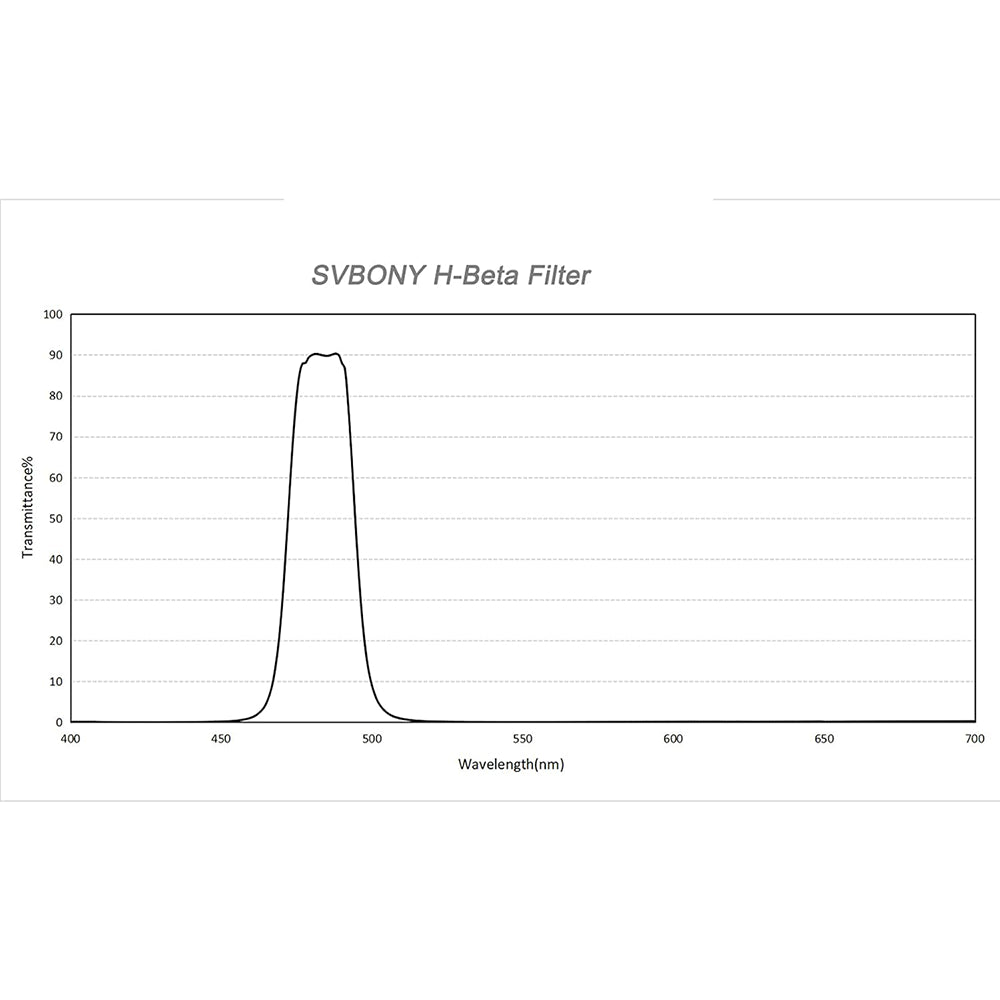
The SVBONY SV132 is a 2″ H-Beta narrowband filter for visual observing. It passes a 25 nm ± 2 nm band centred on 486 nm ± 2 nm — the hydrogen-beta emission line — at a published 90% peak transmission, and blocks to OD3 across 300–1100 nm. The filter is coated on a 1.85 mm B270 substrate with a 44 mm clear aperture, 60/40 surface quality and 1/4λ surface parallelism, mounted in a metal cell with standard 2″ threads.

Who It's For
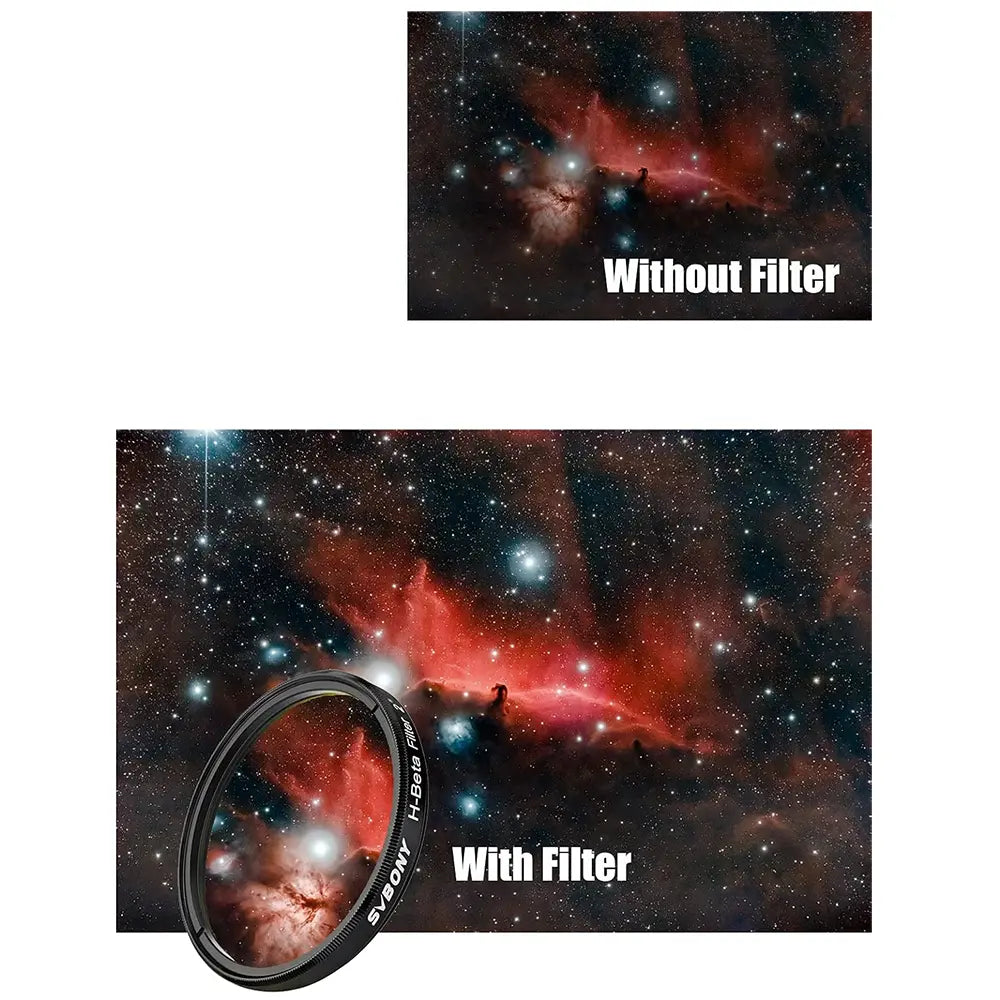
This is a good match if you observe faint emission nebulae visually through a larger-aperture telescope under dark skies, and want the handful of objects that shine mainly in H-beta — the Horsehead, California and Cocoon nebulae among them — to stand out from the background.
Key Features & Design
- 486 nm H-beta passband: 25 nm FWHM isolates the blue hydrogen-beta line and suppresses the rest of the visible spectrum.
- 90% peak transmission: keeps as much of the target's light as possible at the eyepiece.
- OD3 blocking, 300–1100 nm: broad out-of-band suppression.
- B270 substrate, 1.85 mm: 60/40 surface quality, 1/4λ surface parallelism, 30″ parallelism.
- 44 mm clear aperture: sized for 2″ eyepieces and diagonals.
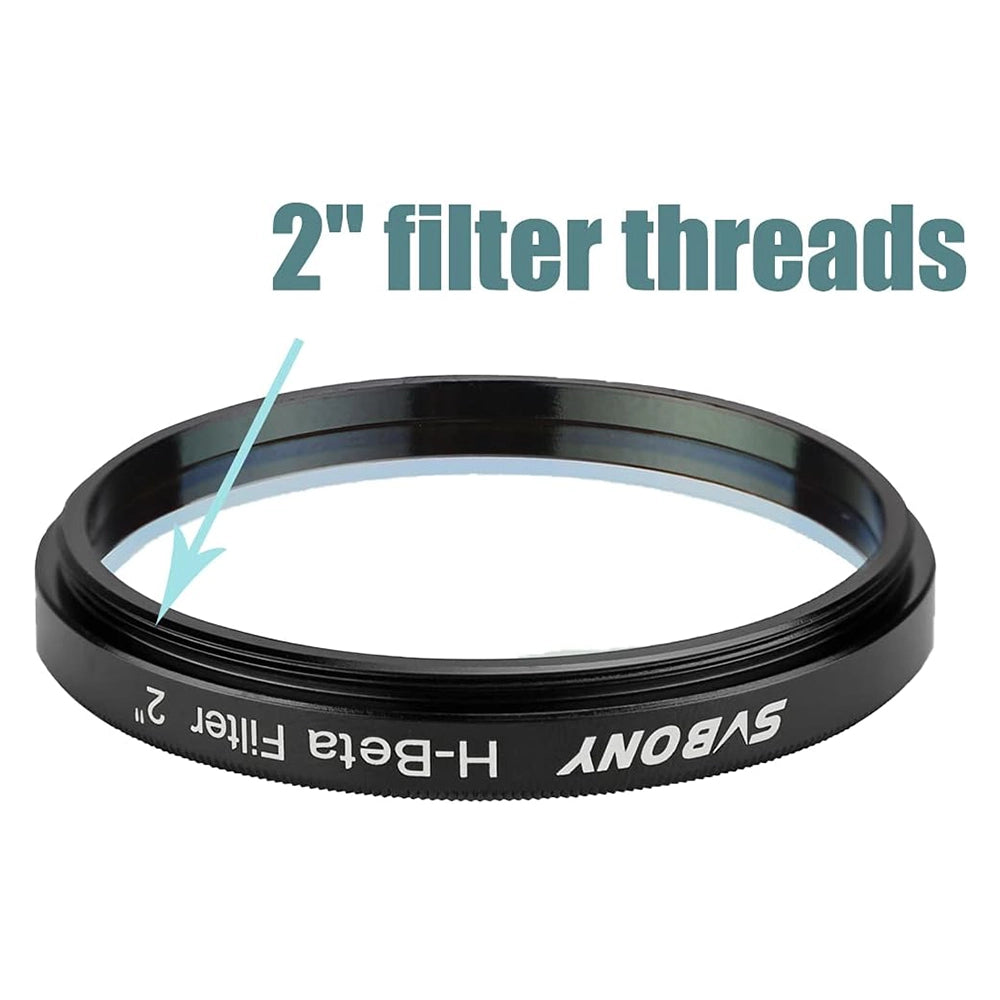
- Metal cell with 2″ threads: precise threading that seals against light leaks.


Recommended Uses
- The Horsehead Nebula (B33) against the IC 434 glow — the classic H-beta target.
- The California Nebula (NGC 1499), whose large, faint outline benefits from a low-power 2″ eyepiece.
- The Cocoon Nebula (IC 5146) and other H-beta-bright emission regions.
Compatibility and Accessory Notes
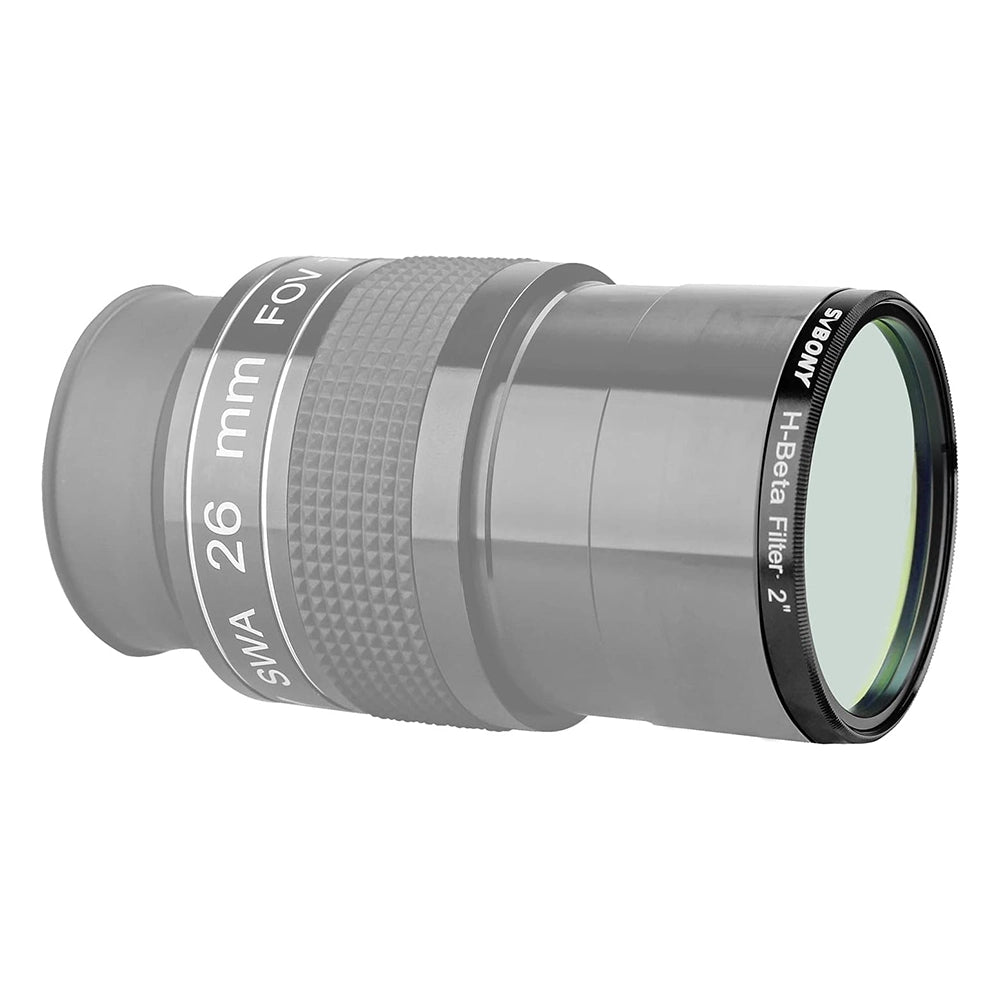
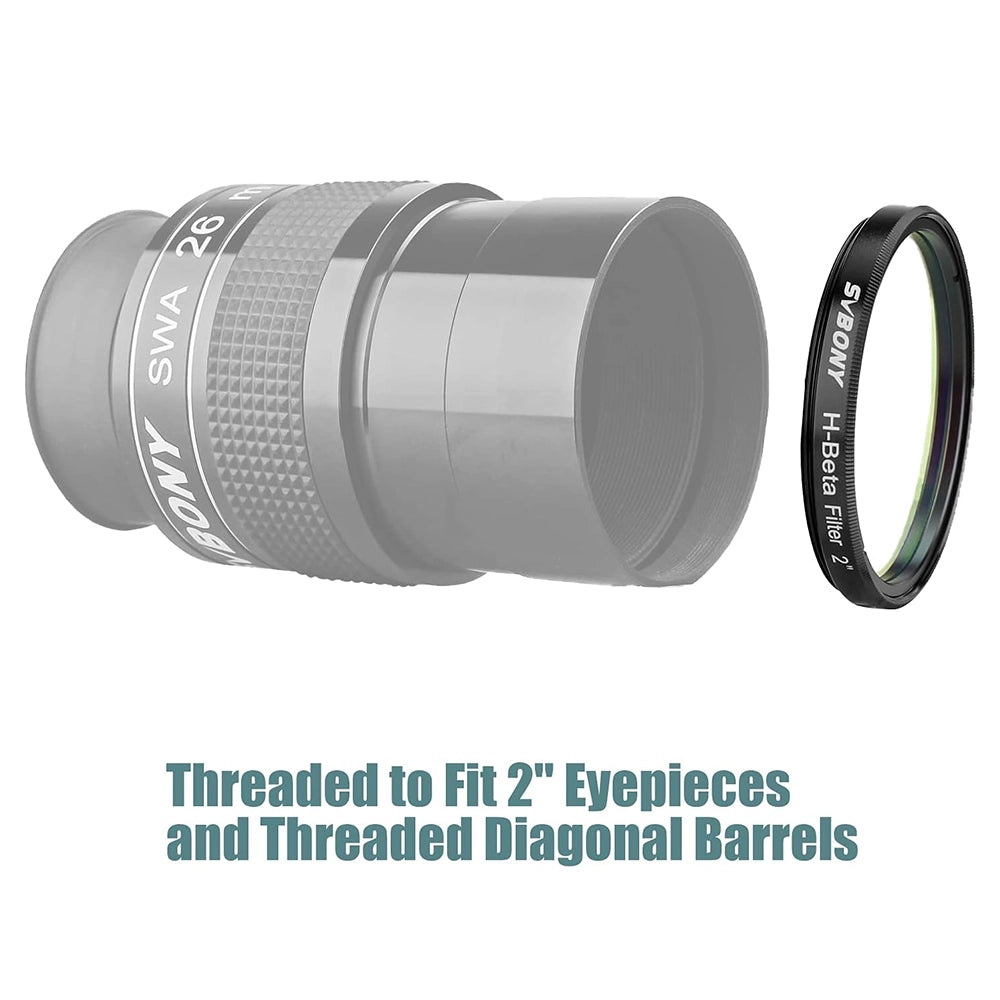
- Threads: standard 2″ filter thread; screws into 2″ eyepiece barrels and threaded 2″ diagonal nosepieces.
- Aperture: SVBONY recommends a large-aperture telescope; small apertures do not gather enough light for these faint targets through a narrow passband.
- Sky: the target nebulae are best seen from dark sites.
- Need the 1.25″ size? SVBONY also makes the SV132 H-Beta in 1.25″.

Good to Know Before You Order
- Specialist filter: H-beta enhances a short list of objects. For broader nebula work, an OIII or UHC-type filter covers more targets.
- Aperture matters: SVBONY does not recommend it for small-aperture telescopes.
- Visual filter: it is designed for eyepiece use.
Frequently Asked Questions
Is it difficult to set up?
No. It threads onto the barrel of a 2″ eyepiece or into the nosepiece of a threaded 2″ diagonal.
What can I see with an H-Beta filter?
Mainly emission nebulae that are bright in hydrogen-beta, such as the Horsehead, California and Cocoon nebulae.
What size telescope do I need?
SVBONY recommends a large-aperture telescope; small apertures are not recommended with this filter.
Will it help in light-polluted skies?
Its targets are best observed from dark sites; the filter boosts contrast on them but does not replace a dark sky.
Bottom Line
In short: a 2″, 25 nm H-Beta filter at 486 nm with 90% peak transmission, made for bringing out the Horsehead, California and Cocoon nebulae in a larger telescope under dark skies.
Performance Data
SVBONY's published transmission data for the SV132:

| Model | SV132 |
|---|---|
| Type | H-Beta |
| Size | 2″ |
| Substrate | B270 |
| Substrate thickness | 1.85 mm |
| Wavelength range | 400–700 nm |
| CWL | 486 nm ± 2 nm |
| FWHM | 25 nm ± 2 nm |
| T peak | 90% |
| Blocking | OD3 @ 300–1100 nm |
| Clear aperture | 44 mm |
| Surface quality | 60/40 |
| Surface parallelism | 1/4λ |
| Parallelism | 30″ |
| Net weight | 13.2 g / 0.47 oz |
| Use case | Visual observing of H-beta emission nebulae |
You may also like
Recently viewed
Recent Blog Posts
View all
Your Guide Graph Is Lying to You
Read More

D-Size vs V-Size: A Complete Guide to Telescope Dovetail Systems
Read More

What Is Back Focus in Astrophotography? Telescope Reducers, Flatteners, and Spacing Explained
Read More