


- Description
- Specifications

Product Overview
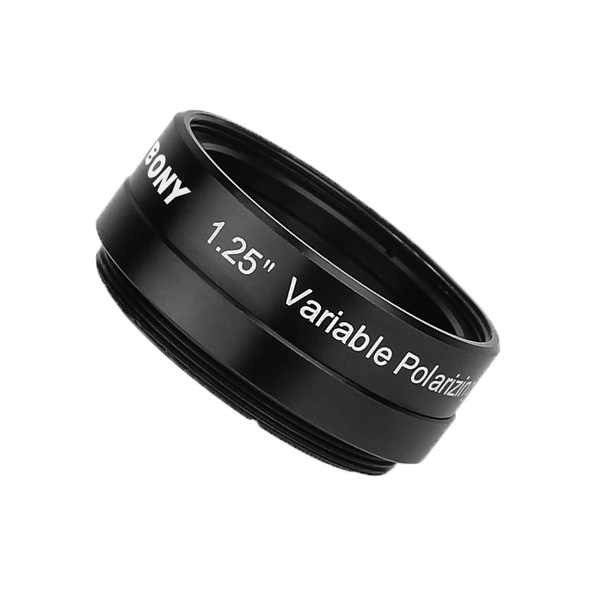
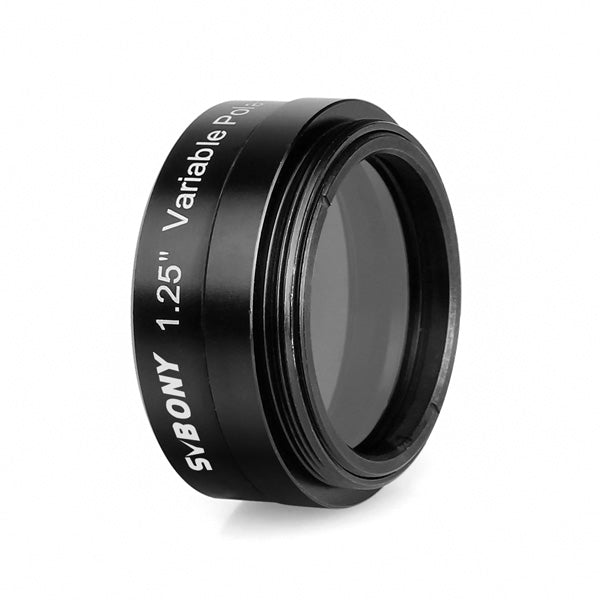
The SVBONY SV128 is a variable polarizing filter that threads onto the barrel of a 1.25″ eyepiece. It uses two polarizing elements in an aluminium cell: rotating one against the other sets the light transmission anywhere from 1% to 40%, so you can dim the Moon or a bright planet to a comfortable level without swapping filters. This listing is the 1.25″ version (F9147A), 2.4 mm thick with an M28.5 × 0.6 thread.

Who It's For
This is a good match if the full Moon or a bright planet is uncomfortably glaring in your eyepiece — common with larger apertures — and you want to dial the brightness to suit the target, the phase or your eyes, rather than settle for a fixed neutral-density value.
Key Features & Design
- Adjustable 1%–40% transmission: rotate the housing to set the brightness.
- Dual polarizing elements: optical glass in an aluminium frame.
- M28.5 × 0.6 thread: screws onto standard 1.25″ eyepiece barrels.
- Slim 2.4 mm cell.

Recommended Uses
- Lunar observing: cut glare around full and gibbous phases to bring out surface contrast.
- Bright planets: tame Venus and Jupiter in large apertures.
- Terrestrial viewing: reduce glare from bright sand, snow or water.

Compatibility and Accessory Notes
- Eyepieces: threads onto most 1.25″ eyepieces with the standard M28.5 × 0.6 filter thread.
- Filter drawers: SVBONY notes it is too thick for SV226 filter drawers.
- 2″ version: SVBONY also makes the SV128 in 2″ (F9147B, M48 × 0.75, 4.8 mm) — contact us if you need that size.

Good to Know Before You Order
- Not a solar filter: it is not suitable for viewing the Sun under any setting.
- Cameras: polarization affects metering and autofocus, so SVBONY describes it as generally unsuitable for highly automated digital cameras.
- Weight: SVBONY does not publish the filter's weight.
Frequently Asked Questions
Is it difficult to set up?
No. Thread it onto the bottom of your eyepiece barrel, insert the eyepiece, then rotate the filter housing until the brightness looks right.
How dark does it go?
SVBONY quotes a transmission range of 1% to 40%, set by rotating the housing.
Can I use it to look at the Sun?
No. It is for the Moon, bright planets and bright terrestrial scenes only; solar viewing requires a dedicated full-aperture solar filter.
Will it fit my filter drawer?
Not an SV226 drawer — SVBONY notes it is too thick. It is designed to thread onto eyepiece barrels.
Bottom Line
In short: a 1.25″ dual-element polarizing filter that dials transmission from 1% to 40%, giving comfortable, glare-free views of the Moon and bright planets.
| Model | SV128 (F9147A) |
|---|---|
| Type | Variable polarizing filter |
| Material | Optical glass lens + aluminium frame |
| Barrel diameter | 1.25″ |
| Thickness | 2.4 mm |
| Thread standard | M28.5 × 0.6 |
| Adjustable transmission | 1% to 40% |
| Weight | Not published by vendor |
| Use case | Glare and brightness control for lunar, bright-planet and terrestrial viewing |
You may also like
Recently viewed
Recent Blog Posts
View all
Your Guide Graph Is Lying to You
Read More
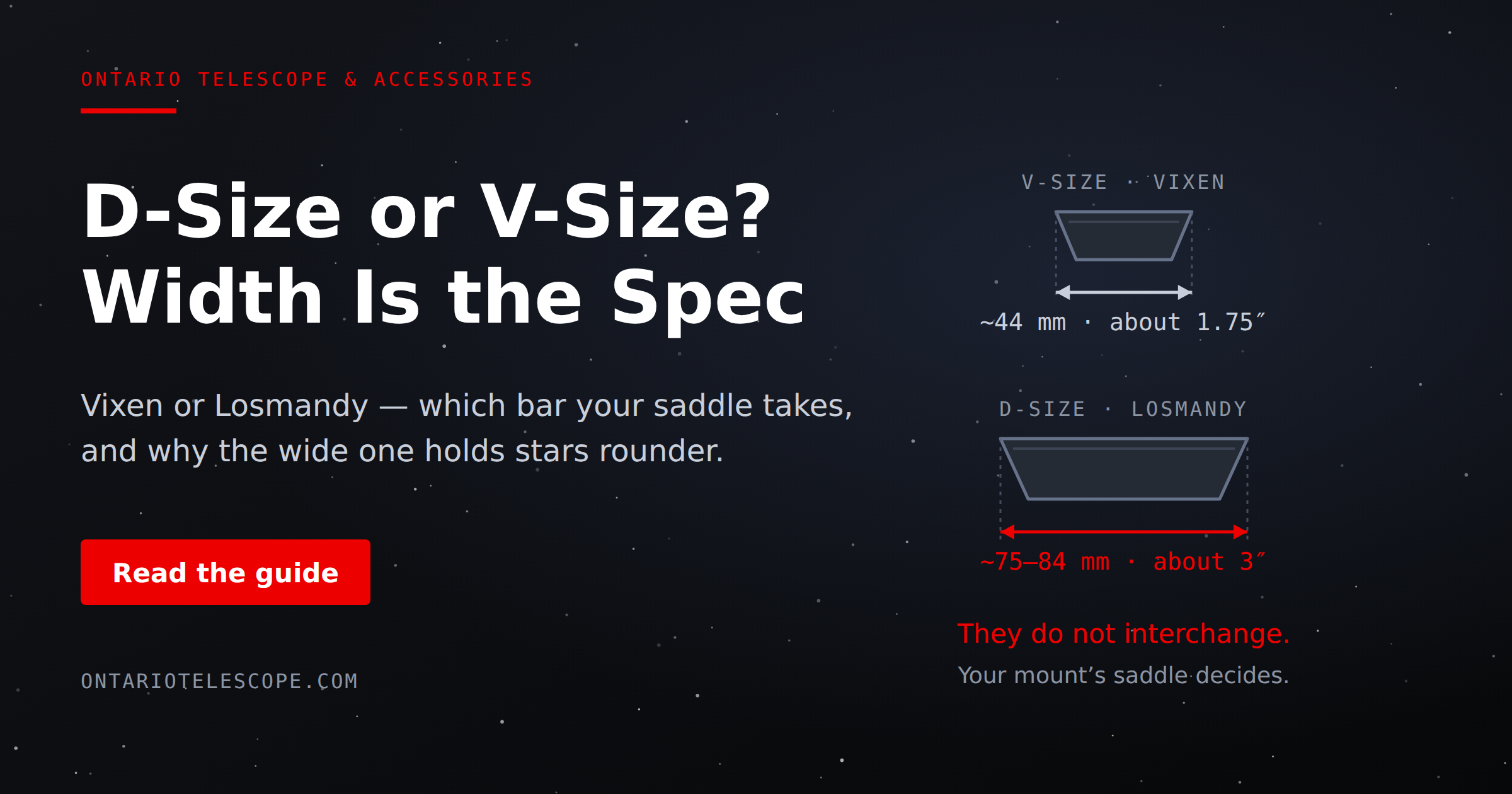
D-Size vs V-Size: A Complete Guide to Telescope Dovetail Systems
Read More
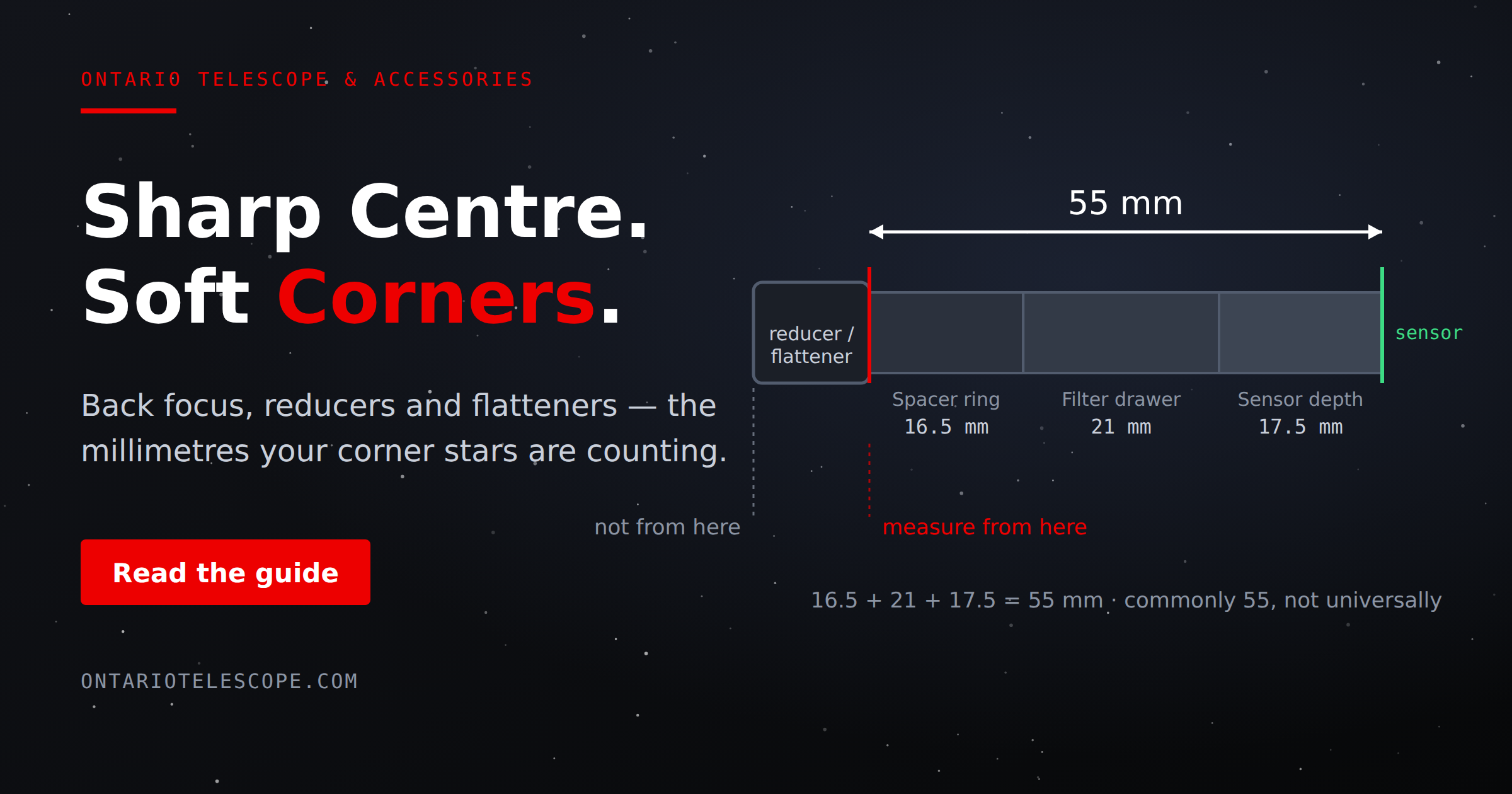
What Is Back Focus in Astrophotography? Telescope Reducers, Flatteners, and Spacing Explained
Read More