


- Description
- Specifications

Product Overview
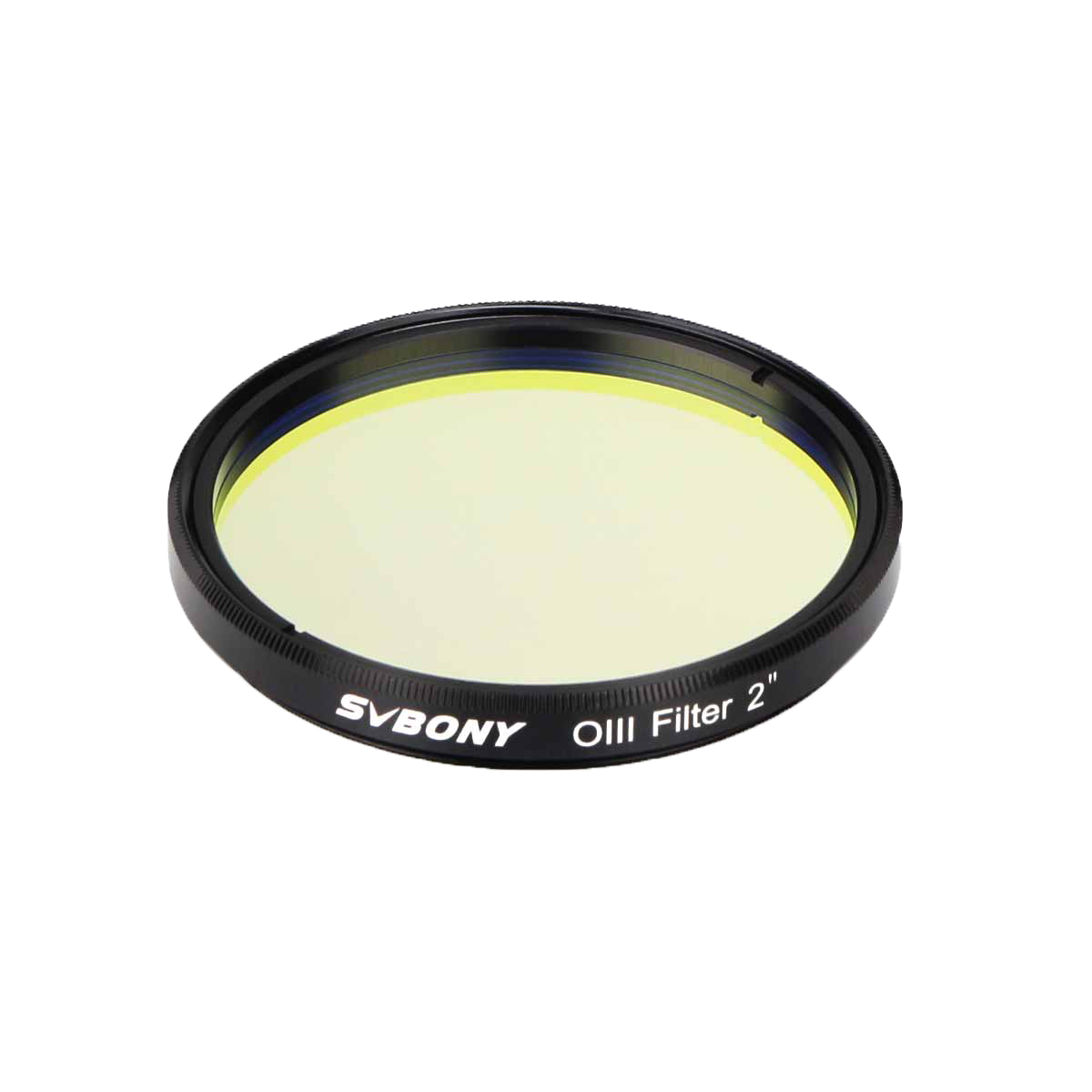
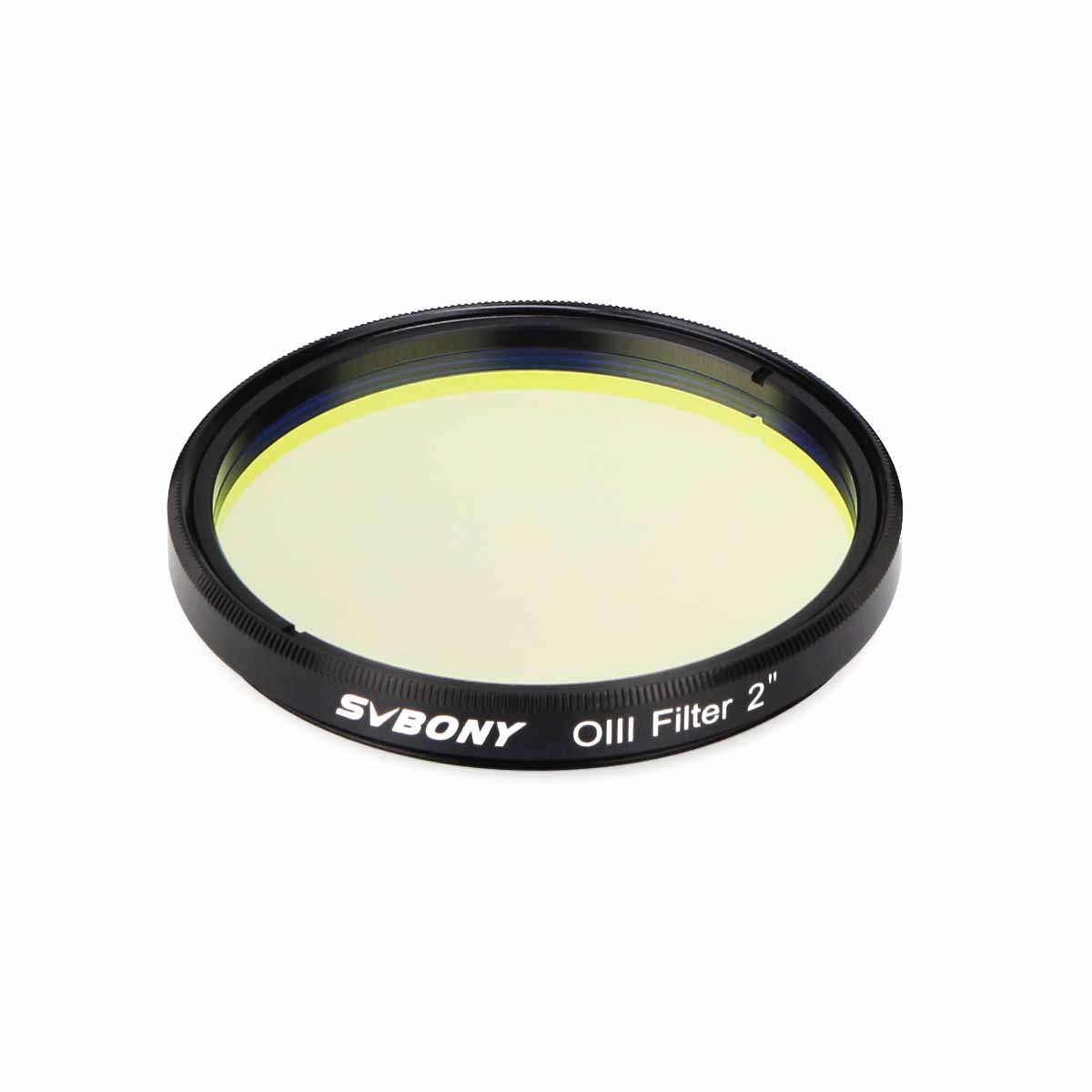
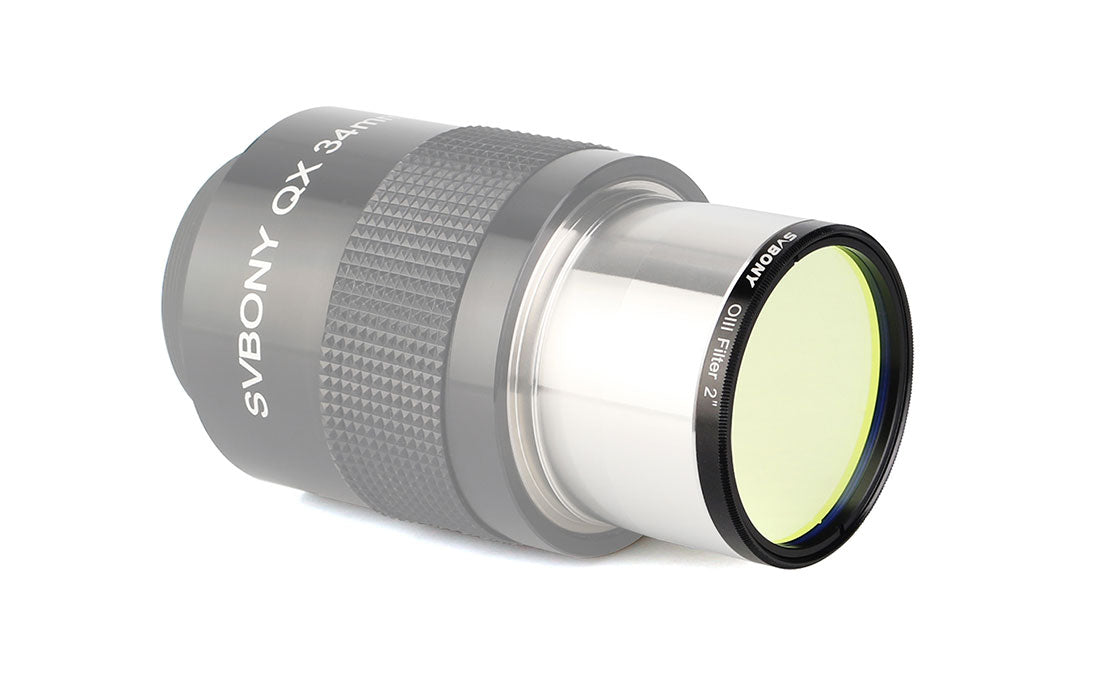
The SVBONY SV115 2″ (item F9186B) is an O-III narrowband filter with an 18 ± 2 nm passband centred near 500 nm. It transmits 90% at 495.9 nm and 500.7 nm and blocks across 400–700 nm, cutting light from mercury and sodium street lamps and natural skyglow. The 1.85 mm glass carries dichroic and anti-reflection coatings to reduce glare and ghosting, in a standard 2″ cell that fits all 2″ eyepieces.
Who It's For
This is a good match if you observe through a 2″ focuser or diagonal and want higher-contrast views of emission nebulae, planetary nebulae and supernova remnants, including bright nebulae like M42 under heavy light pollution.

Key Features & Design
- 18 ± 2 nm FWHM around the O-III lines.
- 90% transmission at 495.9 nm and 500.7 nm.
- 400–700 nm blocking against artificial light and skyglow.
- Dichroic and anti-reflection coatings: reduce glare and ghost images.
- 2″ cell, 1.85 mm glass.

Optical Design
The filter passes a narrow band around the doubly-ionized oxygen emission that nebulae radiate strongly, and blocks most of the visible spectrum where light pollution and skyglow fall. The sky background darkens far more than the nebula, so faint structure becomes visible. It raises contrast rather than brightness, and SVBONY notes the best results come with large apertures under clear, dark skies with good seeing.
Recommended Uses
- Supernova remnants such as the Veil.
- Planetary nebulae and emission nebulae.
- M42 and other bright nebulae from light-polluted sites.

Compatibility and Accessory Notes
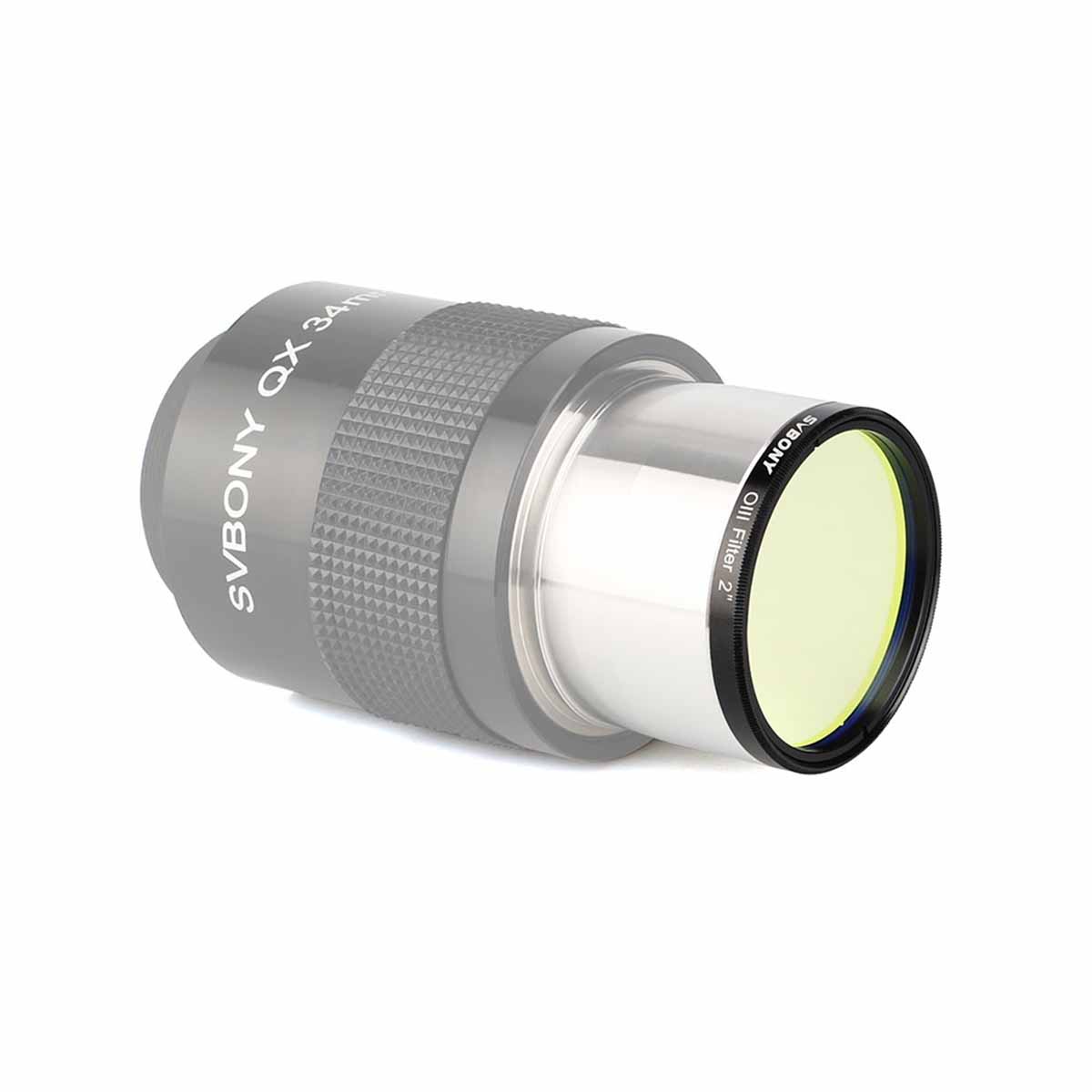
- Size: 2″, fits all 2″ eyepieces and 2″ diagonals.
- 1.25″ version: SVBONY also makes the SV115 in 1.25″ as a separate product.

Good to Know Before You Order
- Contrast, not brightness: the filter does not remove light pollution or brighten objects; it darkens the background so O-III nebulae stand out.
- Target-specific: galaxies and star clusters do not benefit from an O-III filter.
- Weight: SVBONY does not publish a weight for this filter.
Frequently Asked Questions
Is it difficult to set up?
No. Thread it onto a 2″ eyepiece barrel or into a 2″ diagonal.
Does it work in the city?
It increases nebula contrast under light pollution, and SVBONY lists bright nebulae such as M42 as targets even under heavy light pollution.
Which objects benefit most?
Emission nebulae, planetary nebulae and supernova remnants.
Bottom Line
In short: a 2″ 18 nm O-III filter with 90% line transmission and 400–700 nm blocking, for higher-contrast visual views of nebulae and supernova remnants.
| Model | F9186B (SV115) |
|---|---|
| Size | 2″ 18 nm O-III |
| Diameter | 2″ |
| FWHM | 18 ± 2 nm |
| Transmittance | 90% at 495.9 nm and 500.7 nm |
| Blocking area | 400–700 nm |
| Thickness | 1.85 mm |
| Coatings | Dichroic and anti-reflection |
| Weight | Not published by vendor |
| Use case | Visual observing of emission and planetary nebulae and supernova remnants |
You may also like
Recently viewed
Recent Blog Posts
View all
Your Guide Graph Is Lying to You
Read More

D-Size vs V-Size: A Complete Guide to Telescope Dovetail Systems
Read More

What Is Back Focus in Astrophotography? Telescope Reducers, Flatteners, and Spacing Explained
Read More