


- Description
- Specifications

Product Overview
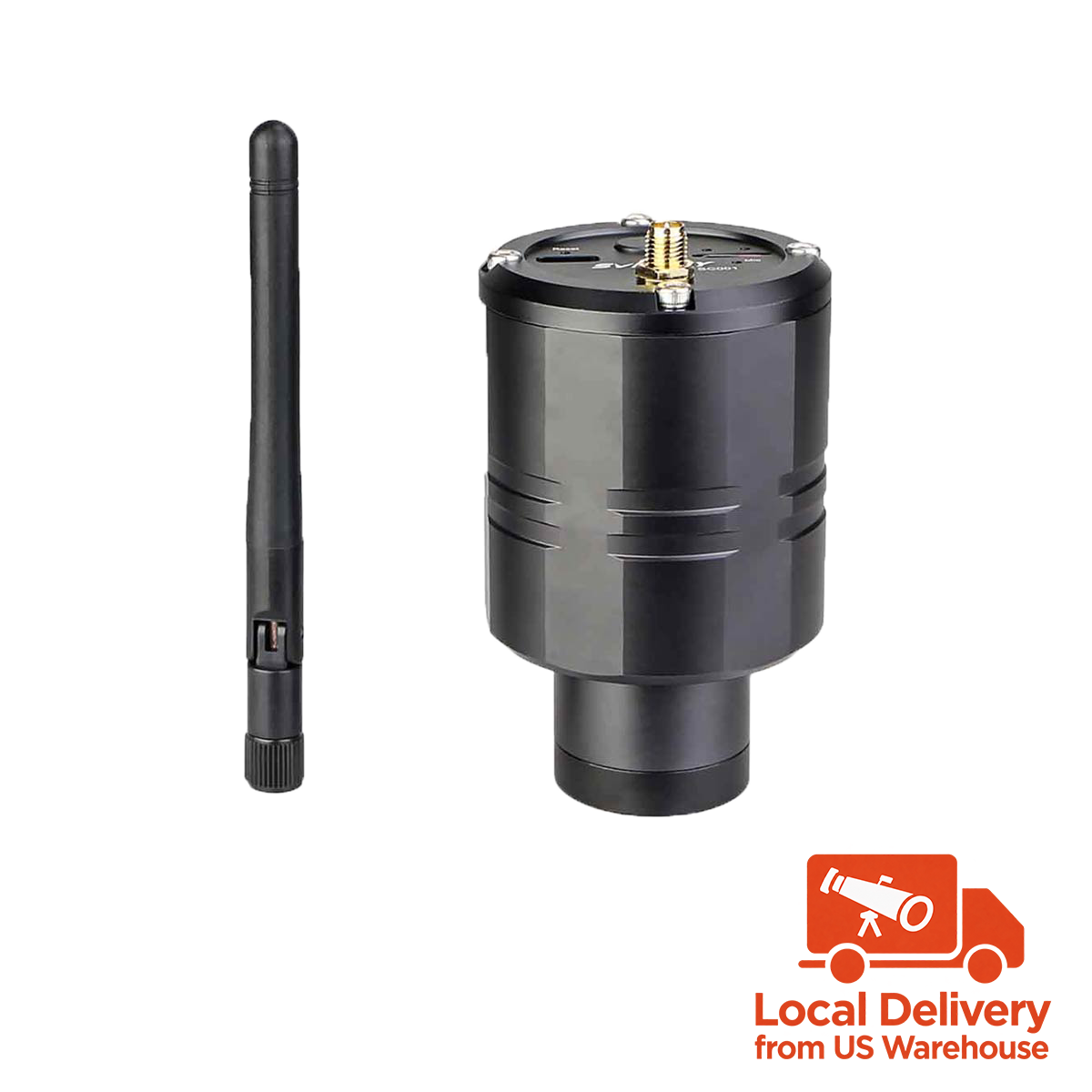
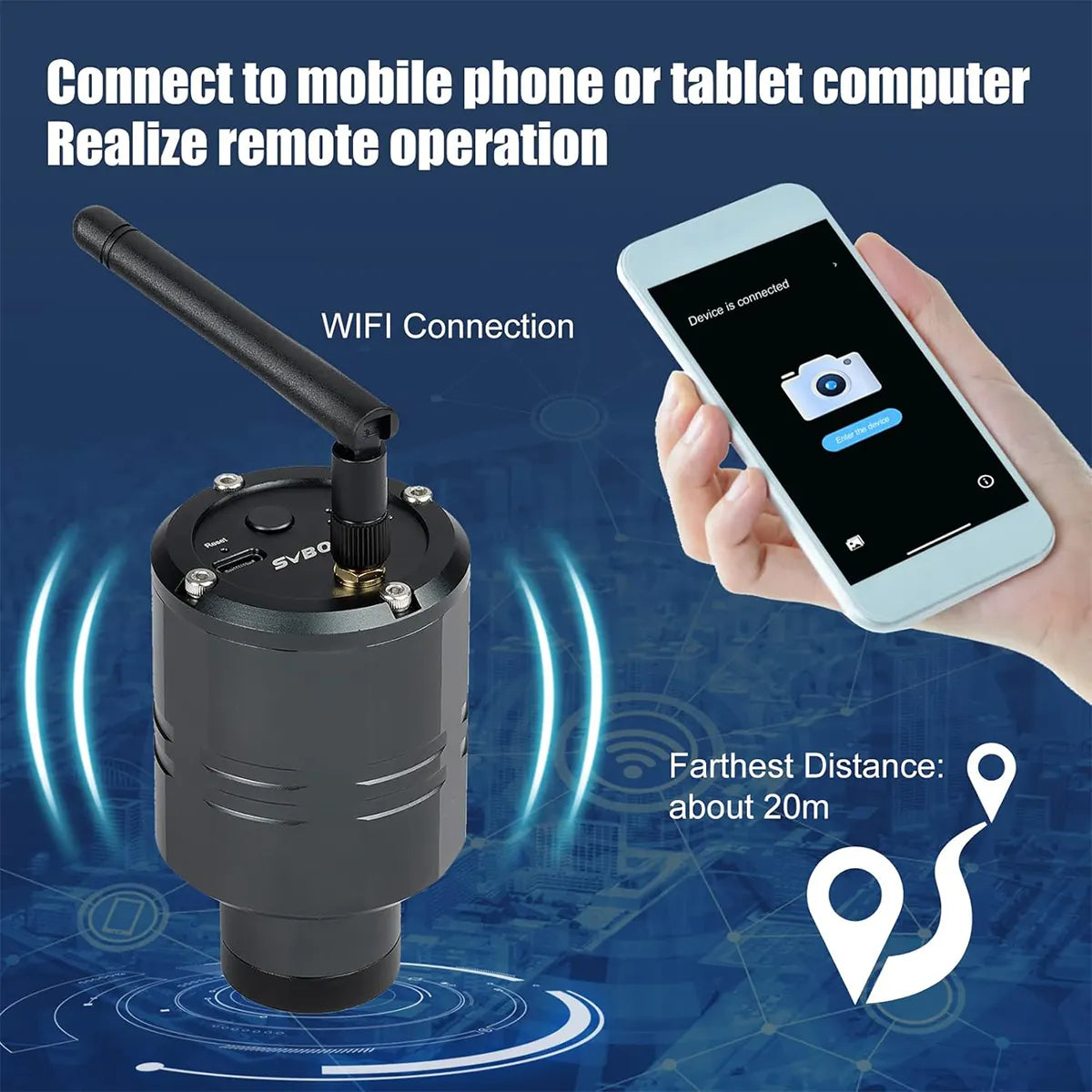
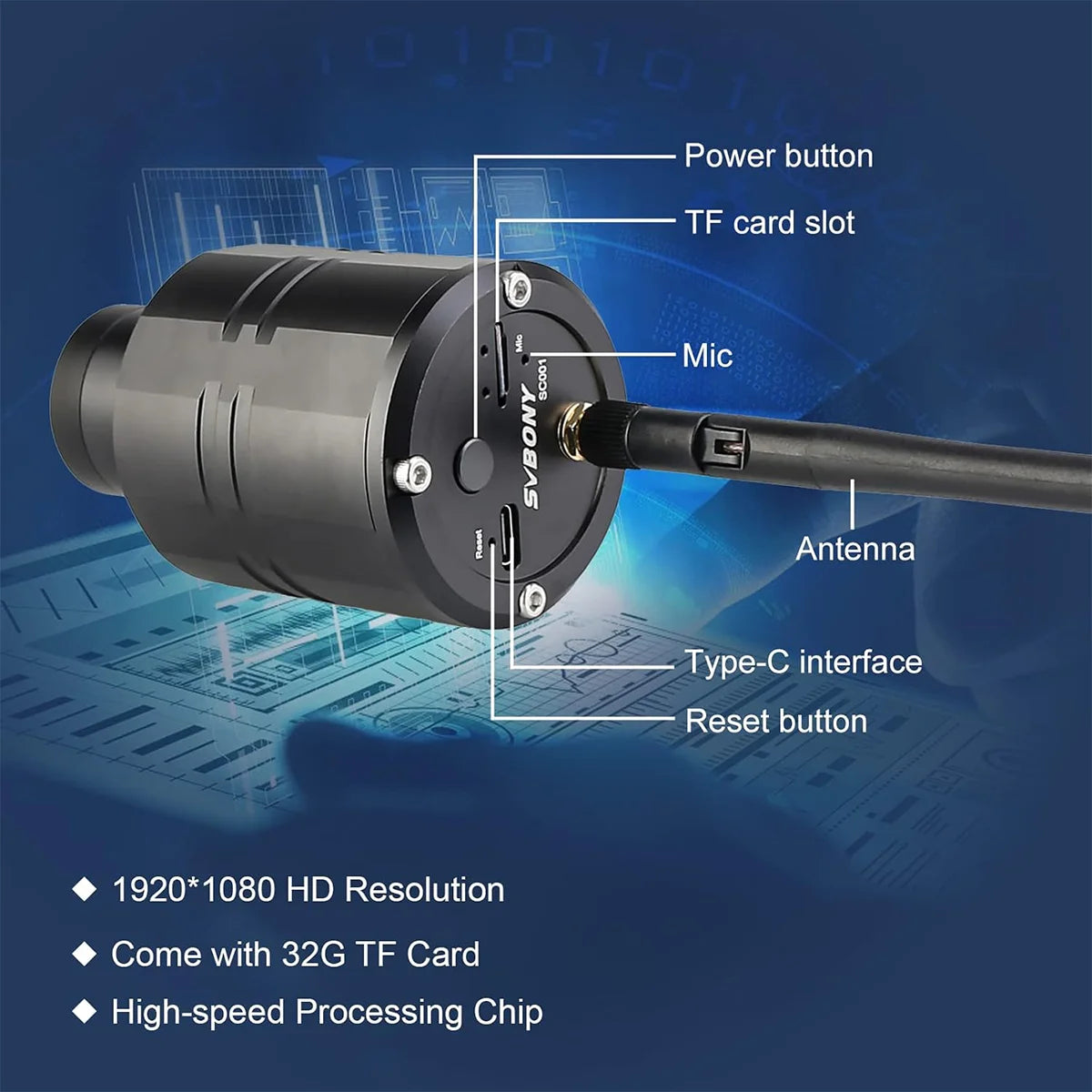
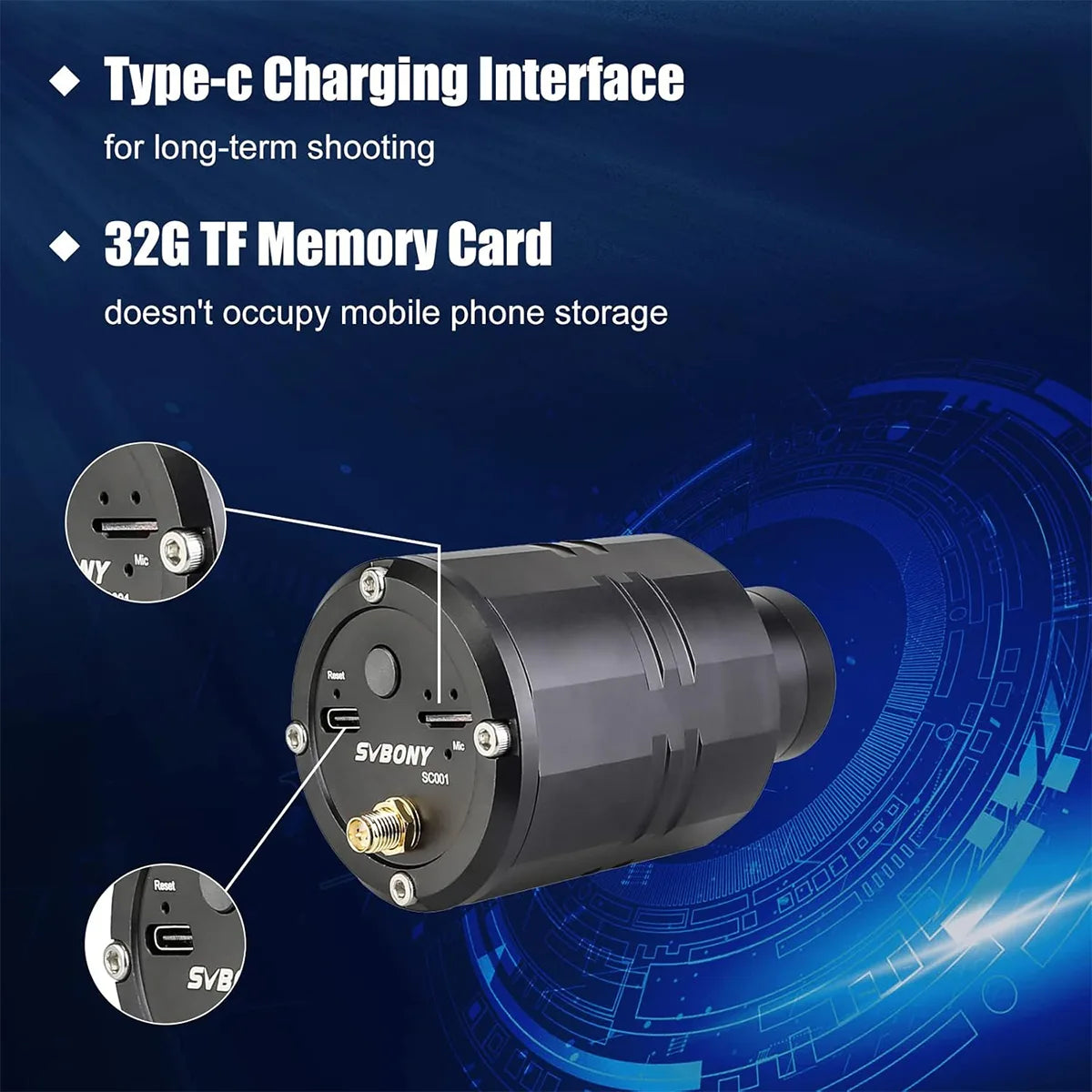
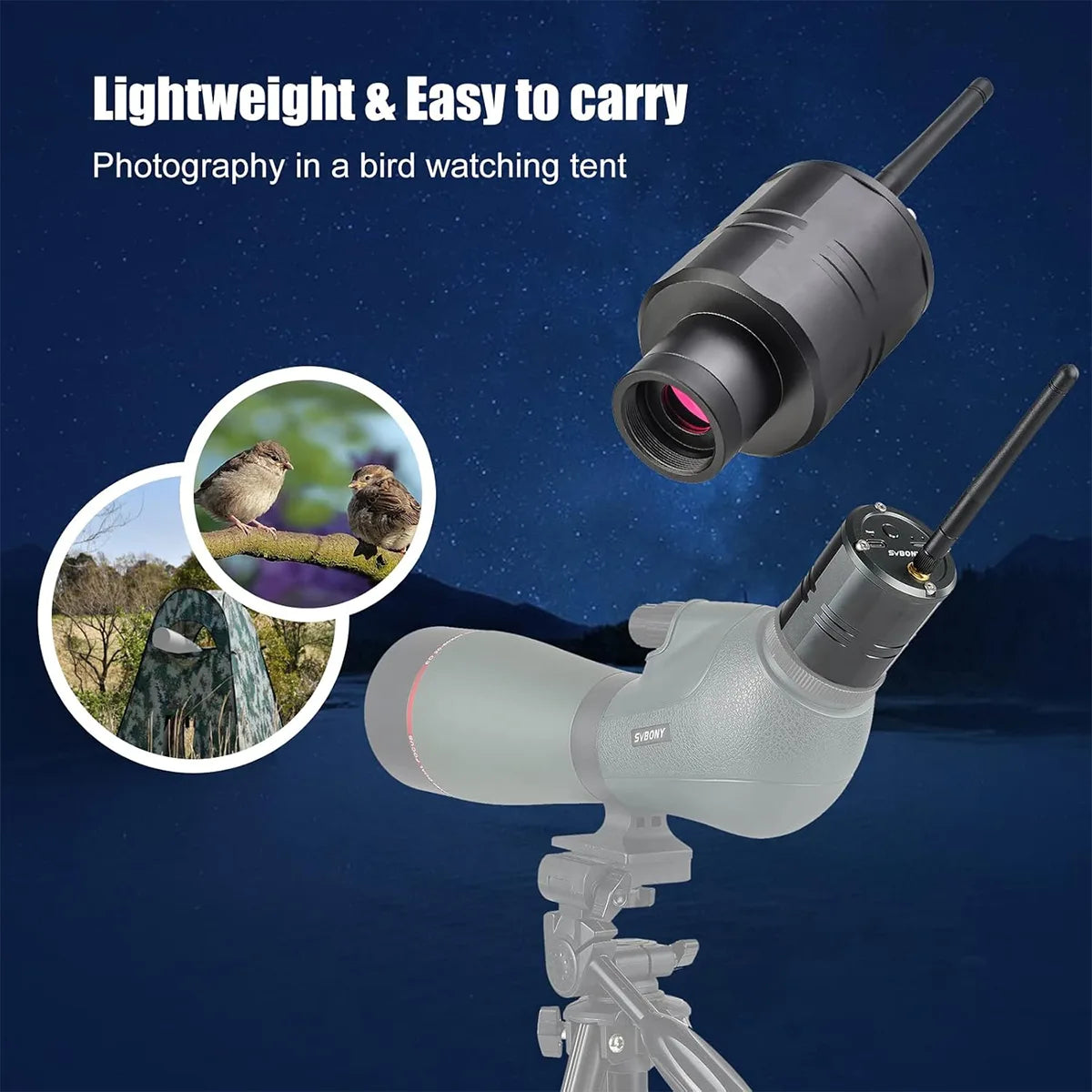
The SVBONY SC001 is a 2 MP WiFi camera that slides into a 1.25″ eyepiece holder on a spotting scope or telescope and streams the live view to your phone. It uses an OV2718 sensor at 1920 x 1080 with 2.8 µm pixels, creates its own 2.4 GHz WiFi hotspot (150 Mbps), records photos and video to a TF card (32 GB card included, up to 128 GB supported), and runs from a built-in 1500 mAh rechargeable battery. Connected by USB Type-C to a computer, it also works as a standard UVC camera. It weighs 184 g.

Who It's For
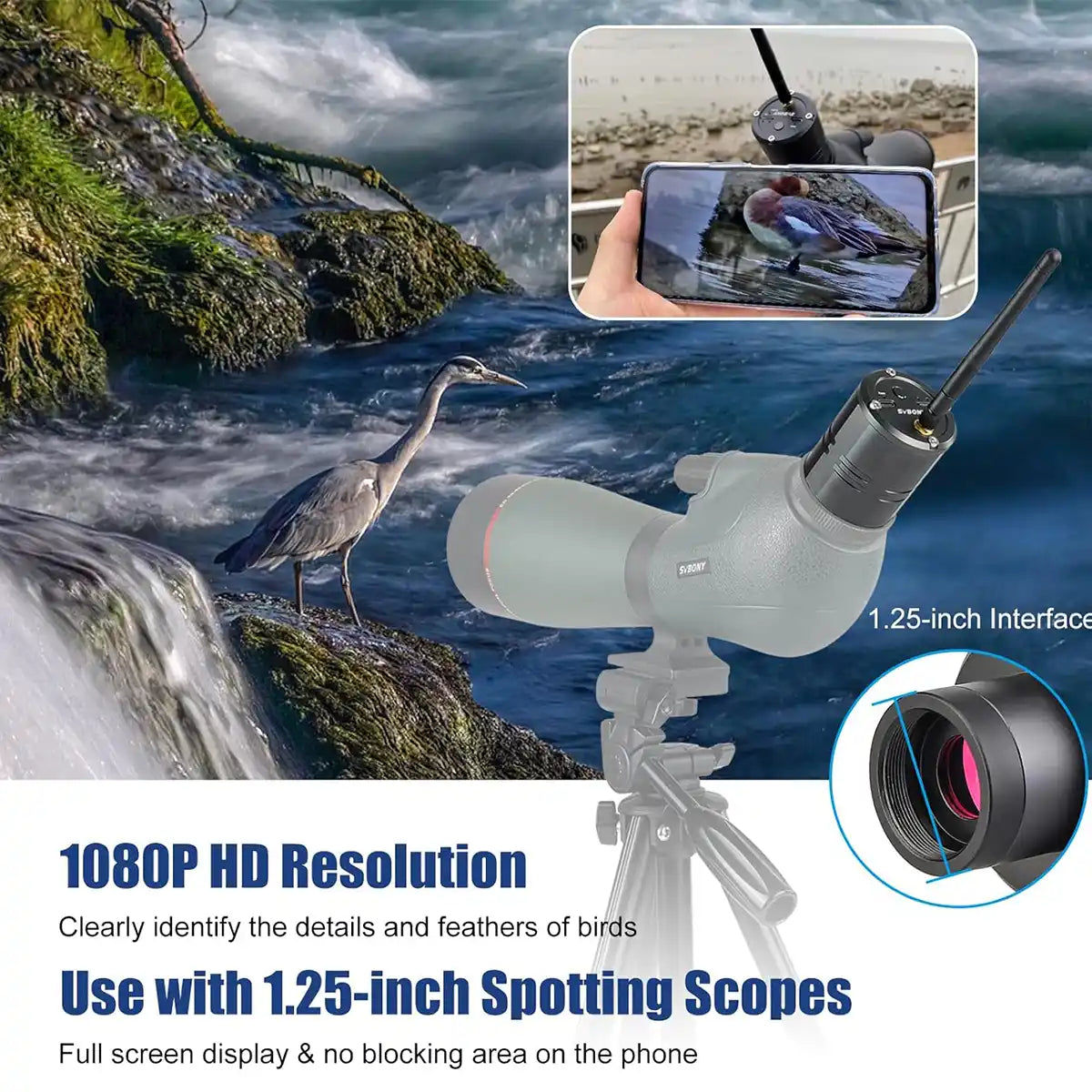
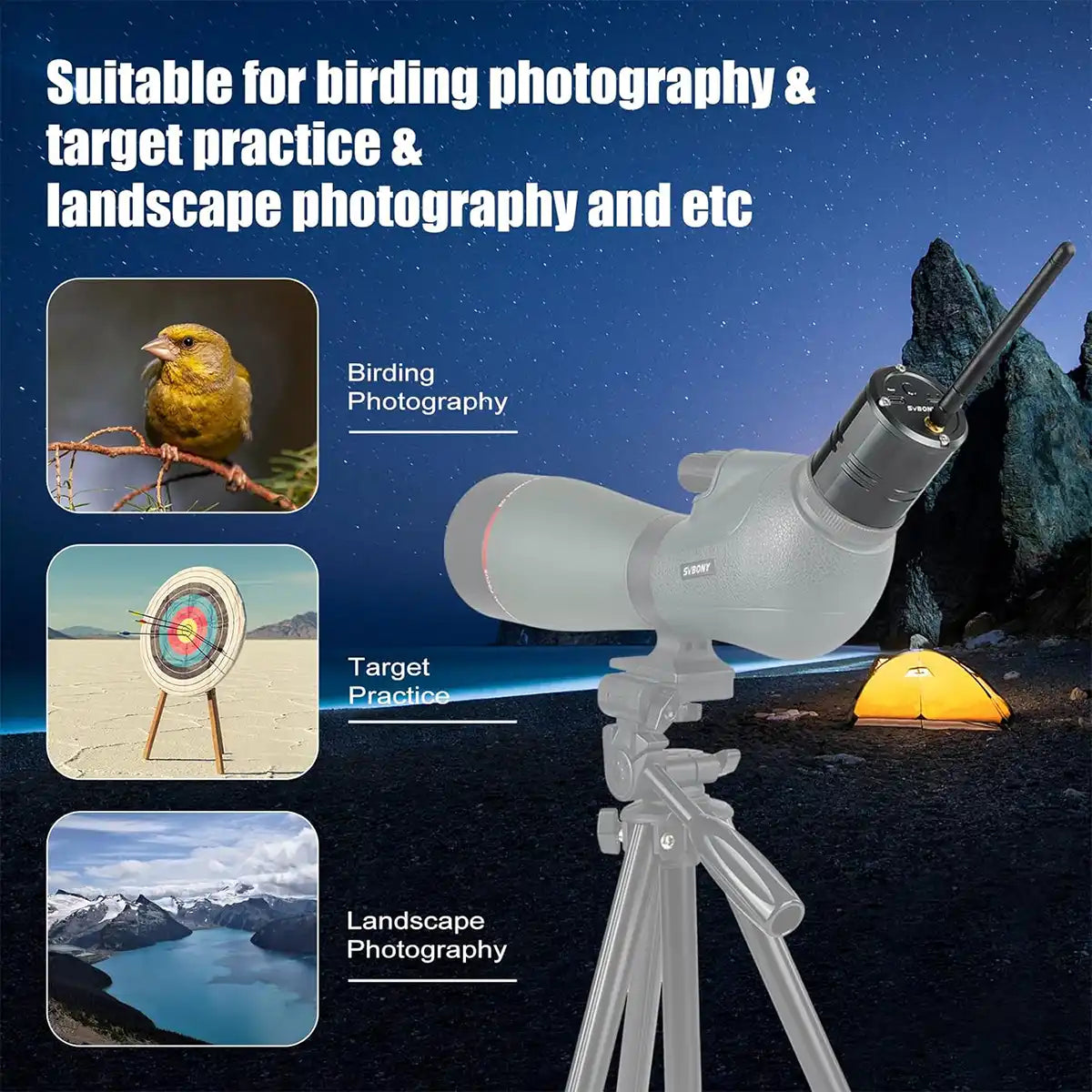
This is a good match if you watch birds or wildlife through a spotting scope and want to capture and share what you see from your phone, or if you want a simple camera for the Moon and bright daytime targets through a 1.25″ telescope without a laptop at the eyepiece.
Key Features & Design
- Wireless phone connection: a built-in WiFi hotspot lets you view, control and capture through SVBONY's free app on Android or iPhone.
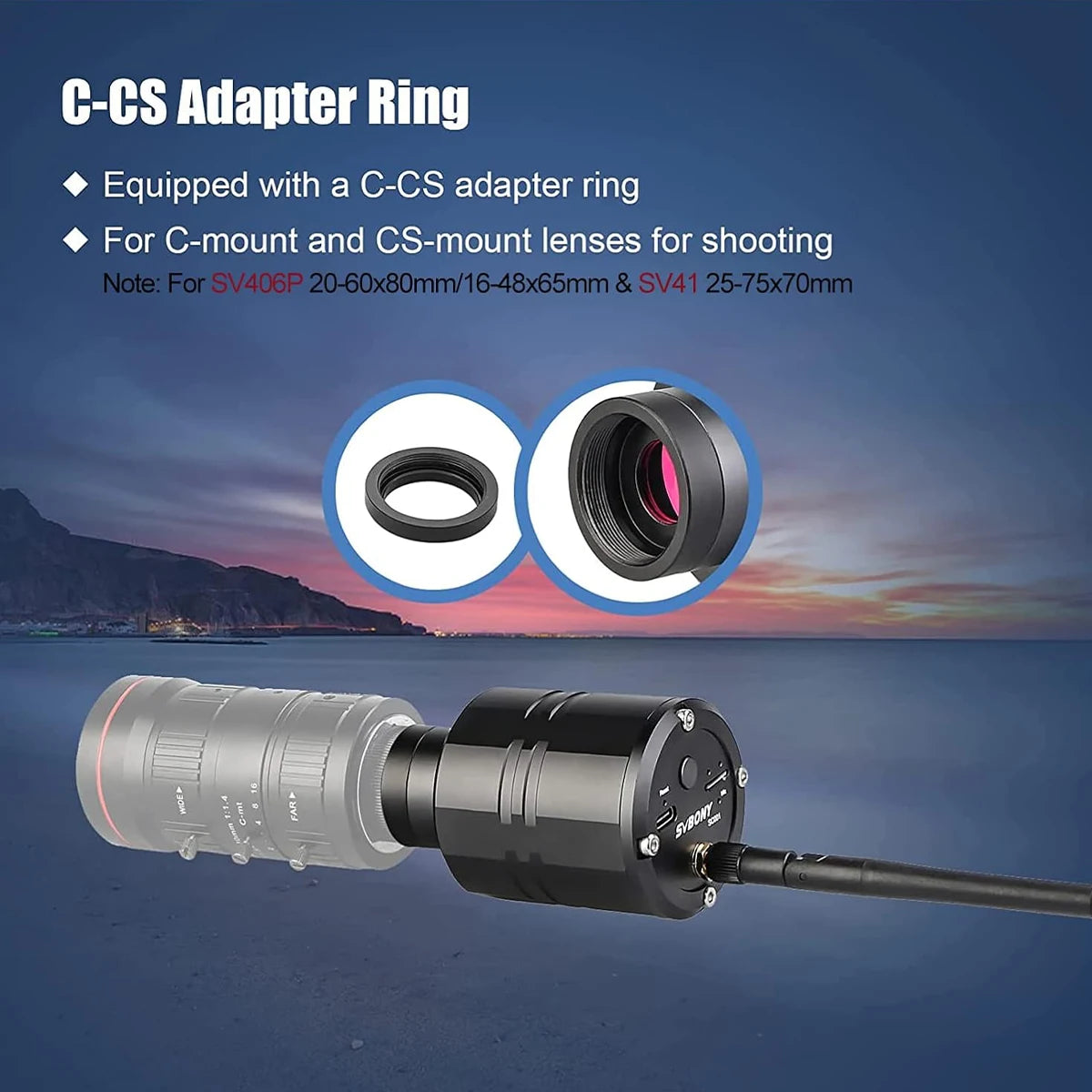
- Universal 1.25″ fit: a 1.25″ barrel with M28.5 x 0.6 thread, plus a CS-C adapter for C-mount lenses.
- Full HD capture: 1920 x 1080 photos and video, scheduled shooting supported.
- Rechargeable battery: 1500 mAh, which SVBONY rates for more than 3 hours on a full charge; battery level shows in the app.
- Flexible storage: files save to the TF card and can be downloaded to your phone and shared.
- UVC mode: with the Type-C cable connected to a PC, it appears as a UVC camera in software such as AMCap.


Camera Design
The OV2718 is a 1080p CMOS sensor with 2.8 µm pixels. In place of an eyepiece, the camera sits at the scope's focal plane, so the image fills the sensor directly; SVBONY notes that with the SV406P spotting scope the picture fills the phone screen with little edge distortion. Power input for charging is DC 5V 1A, and the camera is FCC, MIC and CE certified.


Recommended Uses
- Digiscoping: birds and wildlife through a spotting scope, shared straight from your phone.
- Lunar and daytime telescope imaging through a 1.25″ focuser or diagonal.
- Group viewing: the live view on a phone lets others see what the scope is pointed at.
Compatibility and Accessory Notes
- Optics: any spotting scope or telescope with a 1.25″ eyepiece holder; the included 1.25″ extension tube helps reach focus.
- Filters: accepts 1.25″ filters on its M28.5 x 0.6 thread.
- Lenses: C-mount lenses via the included CS-C adapter.
- Phones and computers: SVBONY app on Android and iPhone; UVC mode on a PC over USB Type-C.


What's in the Box
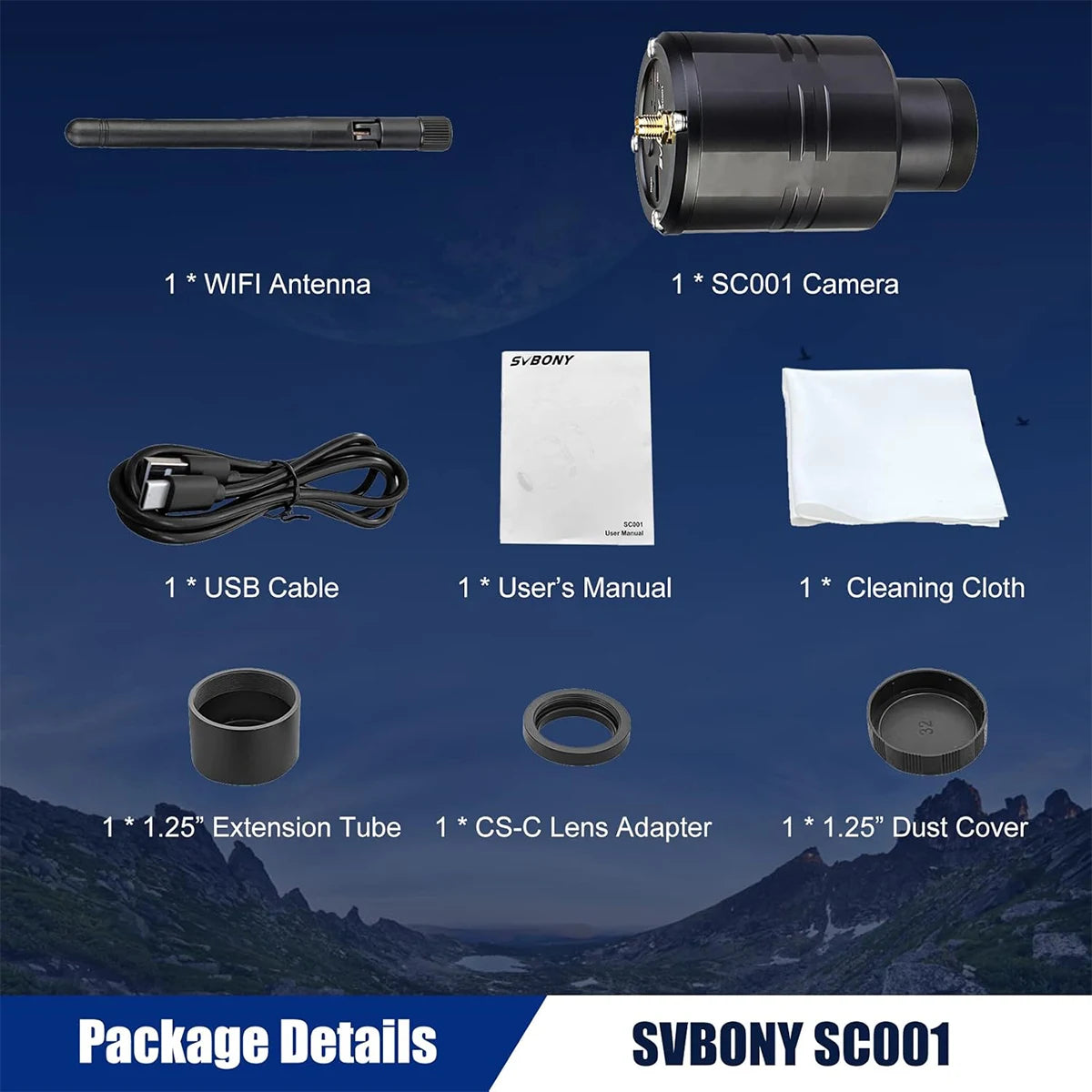
- 1 x SVBONY SC001 camera
- 1 x WiFi antenna
- 1 x TF card (32 GB)
- 1 x USB cable
- 1 x 1.25″ extension tube
- 1 x CS-C lens adapter
- 1 x 1.25″ dust cover
- 1 x Cleaning cloth
- 1 x User manual


Good to Know Before You Order
- Charger not included: the USB cable is supplied, but a 5V 1A power adapter is not.
- Uncooled 2 MP sensor: it is aimed at bright targets — wildlife, the Moon and daytime scenes — rather than long deep-sky exposures.
- Mode switching: after connecting by cable it defaults to UVC mode, and returns to WiFi mode once the cable is unplugged and reconnected.
- Operating range: −10 °C to 50 °C, 20–80% RH.
Frequently Asked Questions
Is it difficult to set up?
No. Insert it into the 1.25″ eyepiece holder, connect your phone to the camera's WiFi hotspot, open the app and focus the scope until the image is sharp on screen.
Does it need a computer?
No. It runs from its own battery and your phone. A computer is only needed if you want to use it as a UVC camera.
Which phones does it work with?
Android and iPhone, through SVBONY's free app.
How long does the battery last?
SVBONY rates the 1500 mAh battery at more than 3 hours on a full charge.
Can I use filters with it?
Yes. It accepts 1.25″ filters on its M28.5 x 0.6 thread.
Bottom Line
In short: a 184 g, 1080p WiFi camera for 1.25″ spotting scopes and telescopes that shows the view on your phone, records to an included 32 GB card and runs for hours on its own battery.
| Brand | SVBONY |
|---|---|
| Model | SC001 |
| Resolution | 1920 x 1080 |
| Pixel size | 2.8 µm x 2.8 µm |
| Sensor | OV2718 |
| Effective pixels | 2 MP |
| WiFi module | 2.4G, 150 Mbps |
| Storage | TF card, max 128 GB; 32 GB TF card included |
| USB type | Type-C |
| Built-in battery | 1500 mAh |
| Video / photo / scheduled shooting | Supported |
| Interface | 1.25″, M28.5 x 0.6; CS-C adapter included |
| Working humidity | 20%RH–80%RH |
| Storage humidity | 20%RH–95%RH |
| Operating temperature | −10 °C to 50 °C |
| Storage temperature | −20 °C to 60 °C |
| Weight | 184 g |
| Package size | 150 x 132 x 70 mm |
You may also like
Recently viewed
Recent Blog Posts
View all
Your Guide Graph Is Lying to You
Read More

D-Size vs V-Size: A Complete Guide to Telescope Dovetail Systems
Read More

What Is Back Focus in Astrophotography? Telescope Reducers, Flatteners, and Spacing Explained
Read More