


- Description
- Specifications

Product Overview
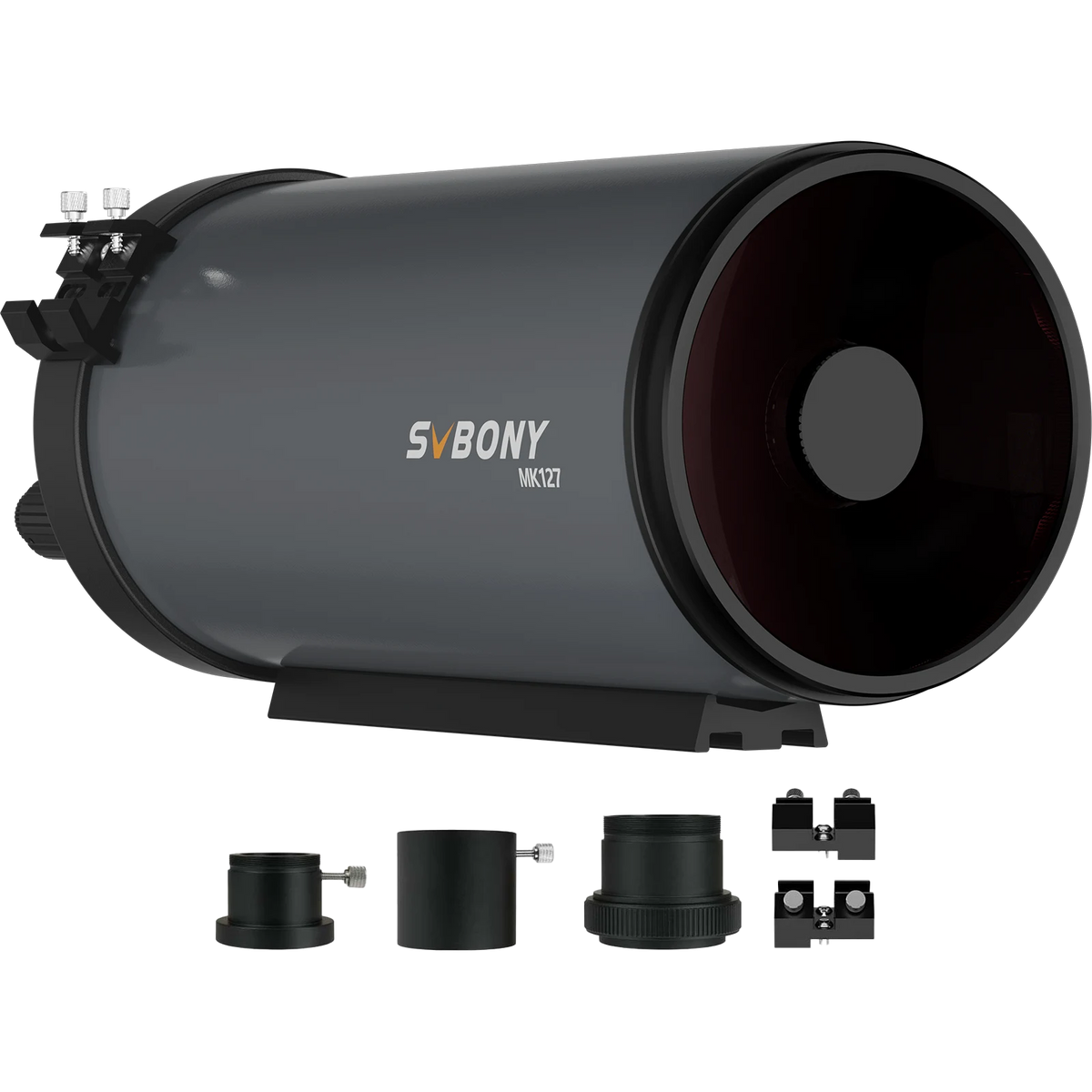
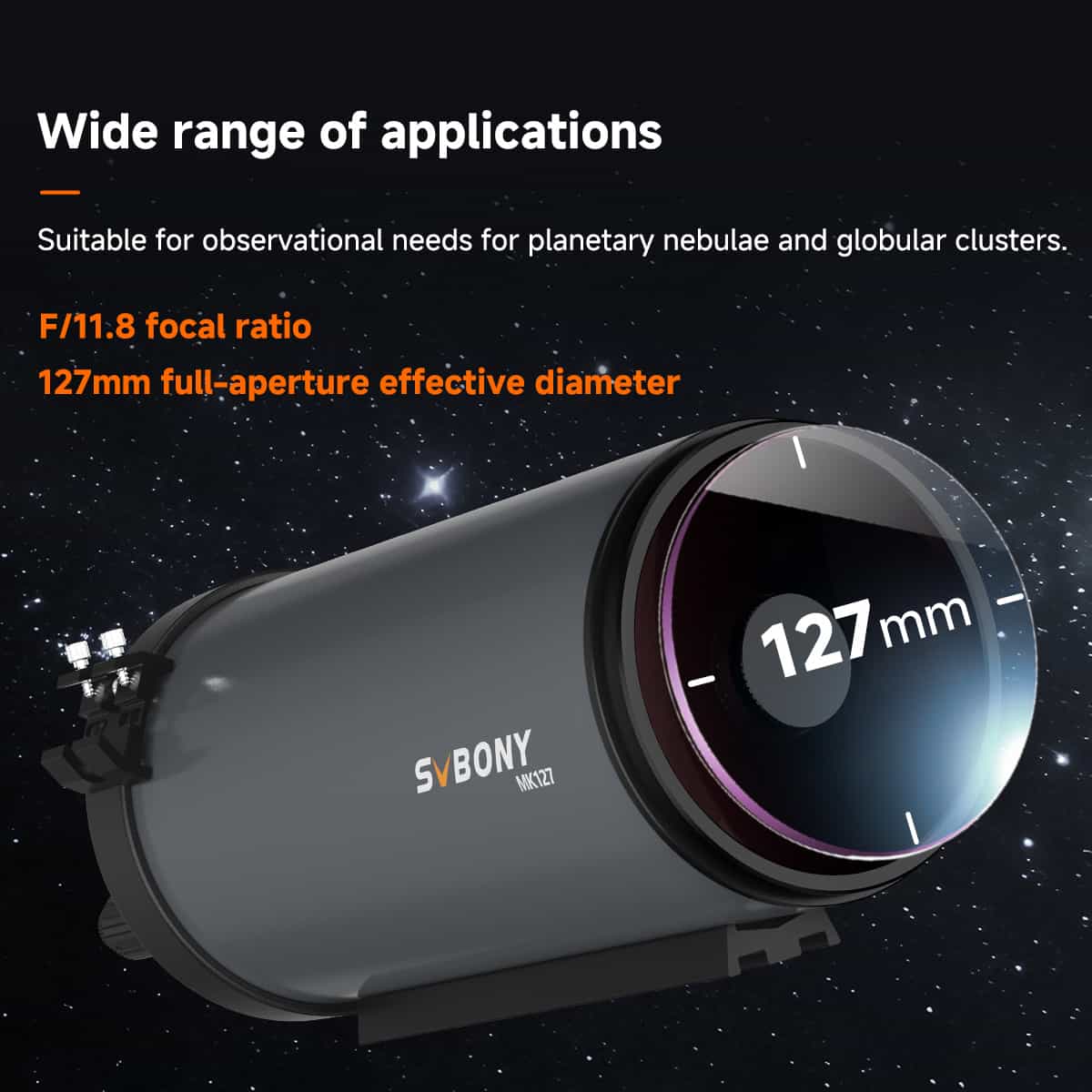
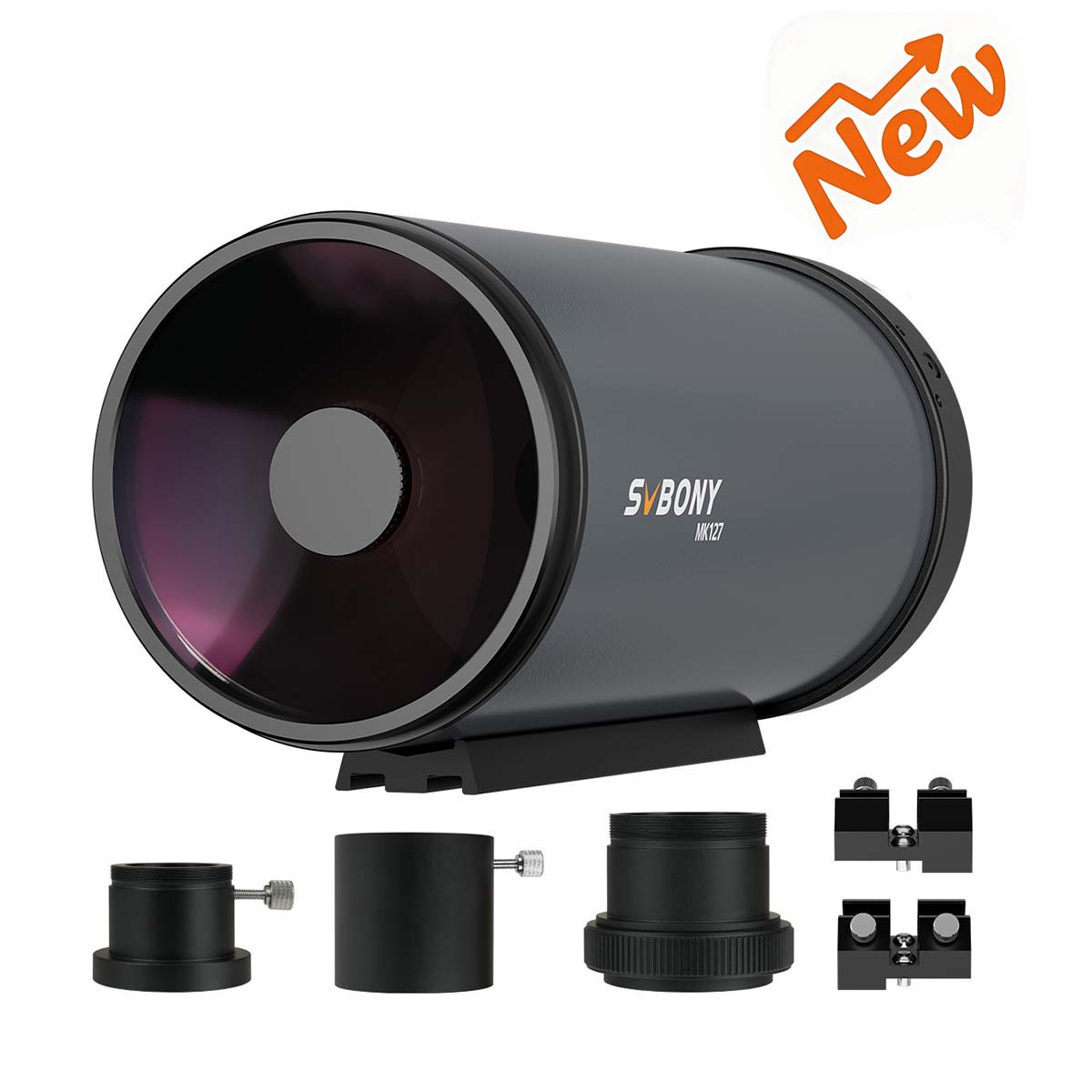
The SVBONY MK127 is a 127 mm Maksutov-Cassegrain optical tube with a 1500 mm focal length at f/11.8. It uses a Rumak-style layout with a separate secondary mirror rather than an aluminized spot on the meniscus, a 99%-reflectivity dielectric coating on the secondary, and an internal dual-speed focuser. SVBONY includes a dedicated 0.65x focal reducer that brings the system to f/7.68, so the same tube covers high-magnification lunar and planetary work at f/11.8 and faster imaging of smaller deep-sky targets at f/7.68.
The tube is 145 mm in outer diameter and weighs 2934 g (6.47 lb), with a 210 mm Vixen-style dovetail on two mounting bases. The rear port is an SCT male thread (2"-24 TPI), and both SCT-to-2" and SCT-to-1.25" (with T-thread) adapters come in the box.
Who It's For
This is a good match if you:
- Observe the Moon, planets and double stars: 1500 mm of focal length gives high magnification with moderate-focal-length eyepieces, and the closed tube holds collimation well.
- Image planets and the Moon: the long native focal length suits small-pixel planetary cameras without a heavy Barlow stack.
- Want one tube for planets and small deep-sky targets: the included reducer opens the field for planetary nebulae, globular clusters and small galaxies.
- Travel or set up quickly: at under 3 kg the MK127 rides on compact alt-az and GoTo mounts that a larger SCT would overload.
It works well as a first serious planetary scope and equally well as a grab-and-go second telescope for an experienced observer.
Key Features & Design
- 127 mm aperture, 1500 mm focal length: f/11.8 native, with 254x light-gathering power relative to the dark-adapted eye.
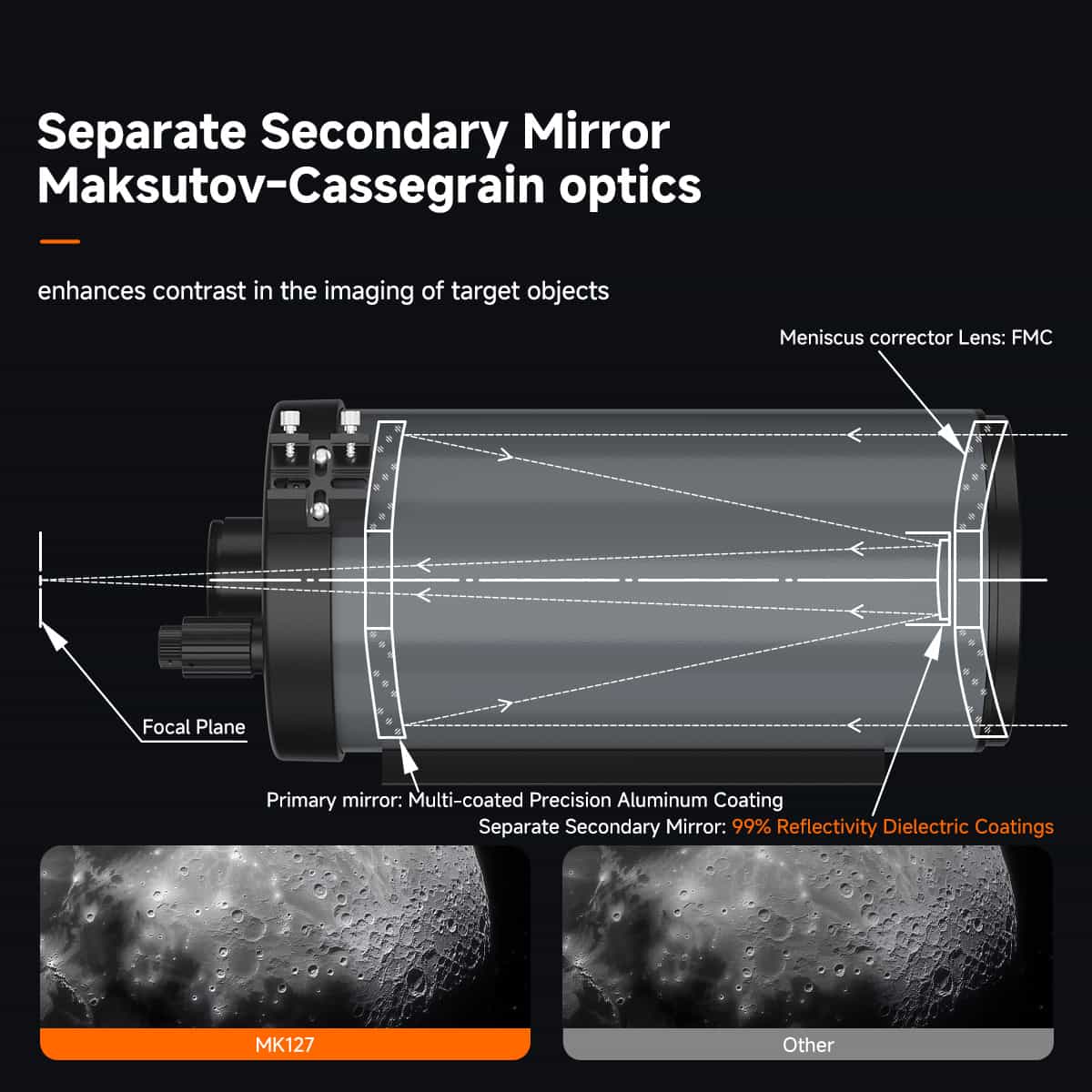
- Rumak-style separated secondary: the secondary is a separate mirror, which SVBONY uses to correct coma and astigmatism and to flatten the field.
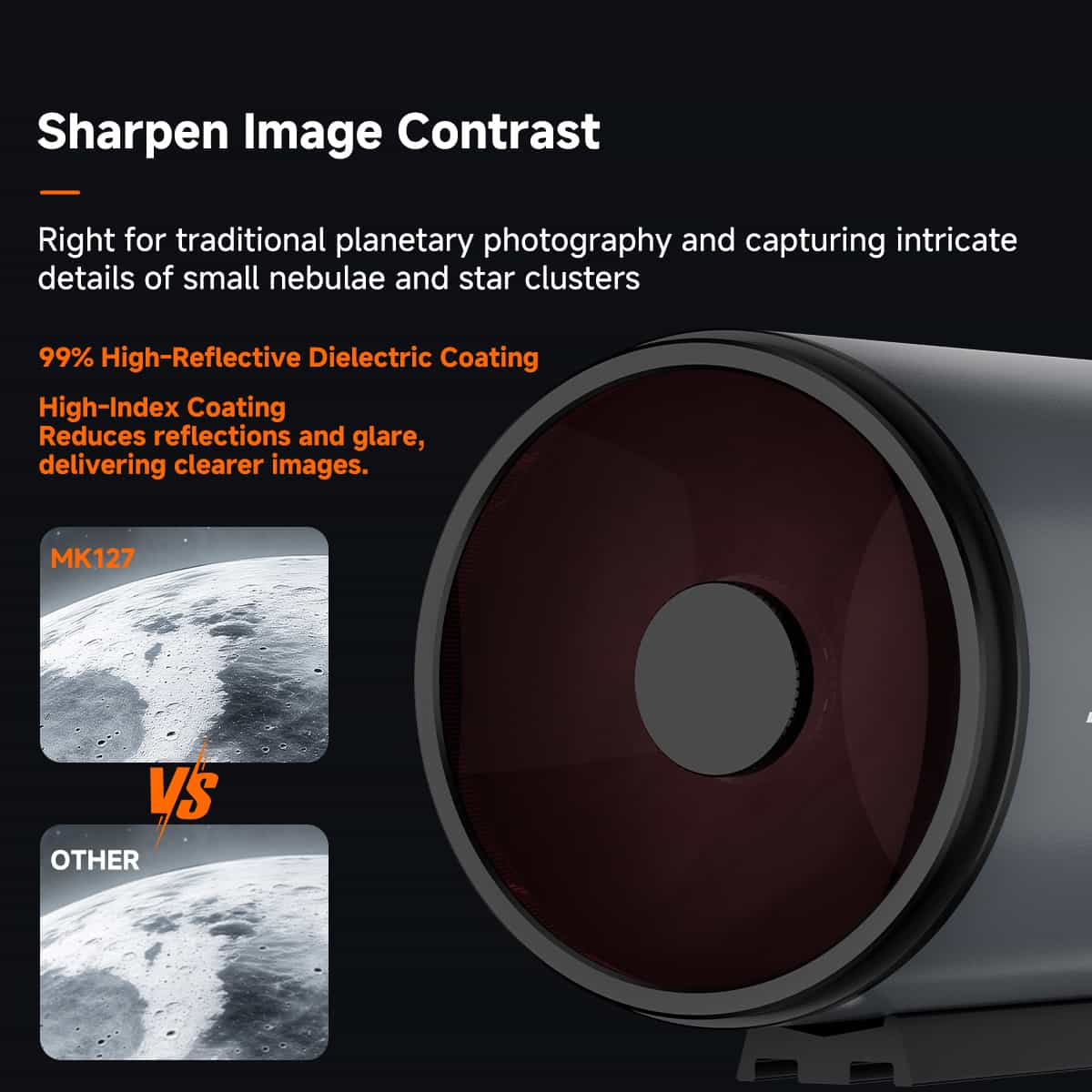
- Dielectric secondary coating: 99% reflectivity on the secondary mirror; the primary uses a multi-coated precision aluminum coating.
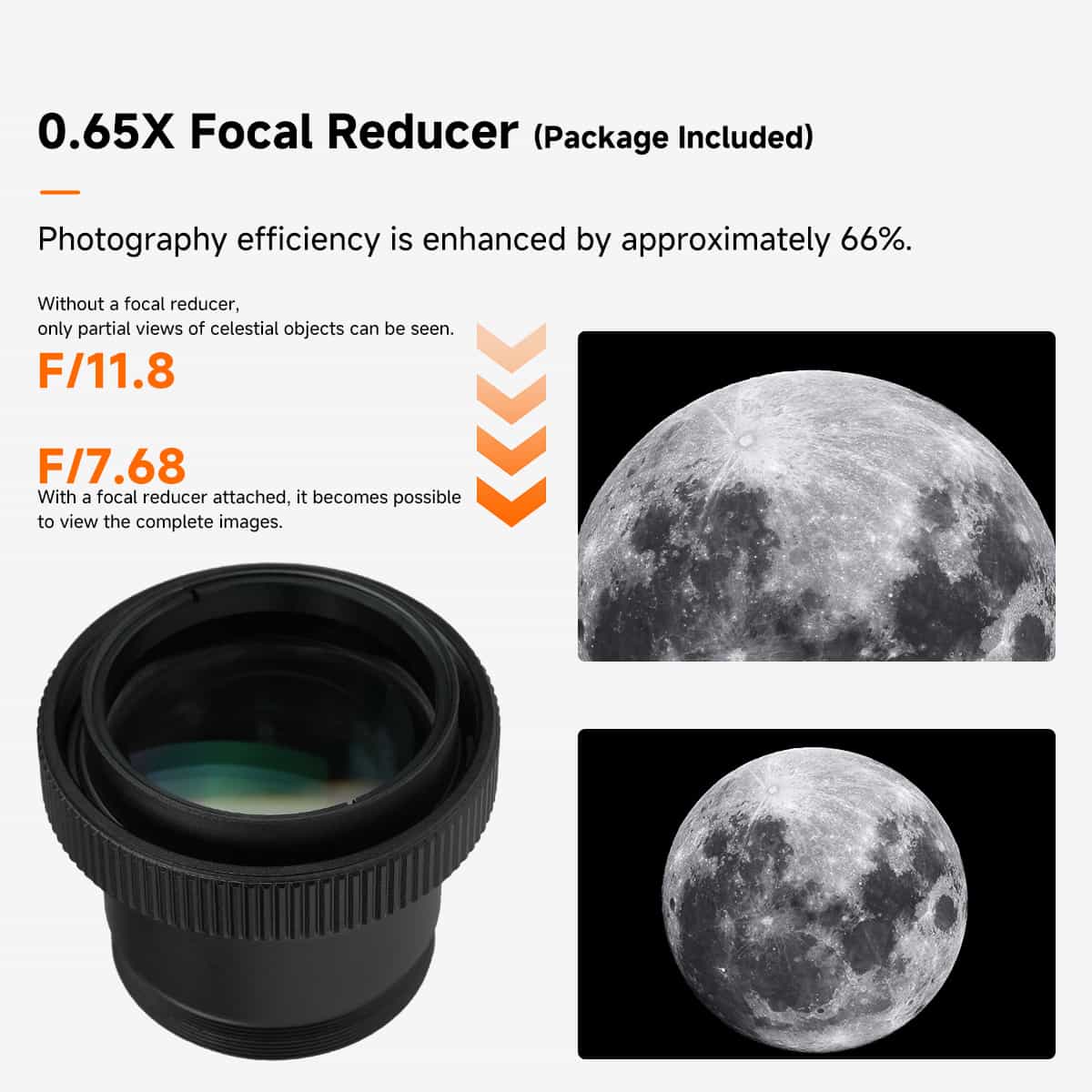
- Included 0.65x focal reducer: takes the system to f/7.68 for a wider field and shorter exposures.
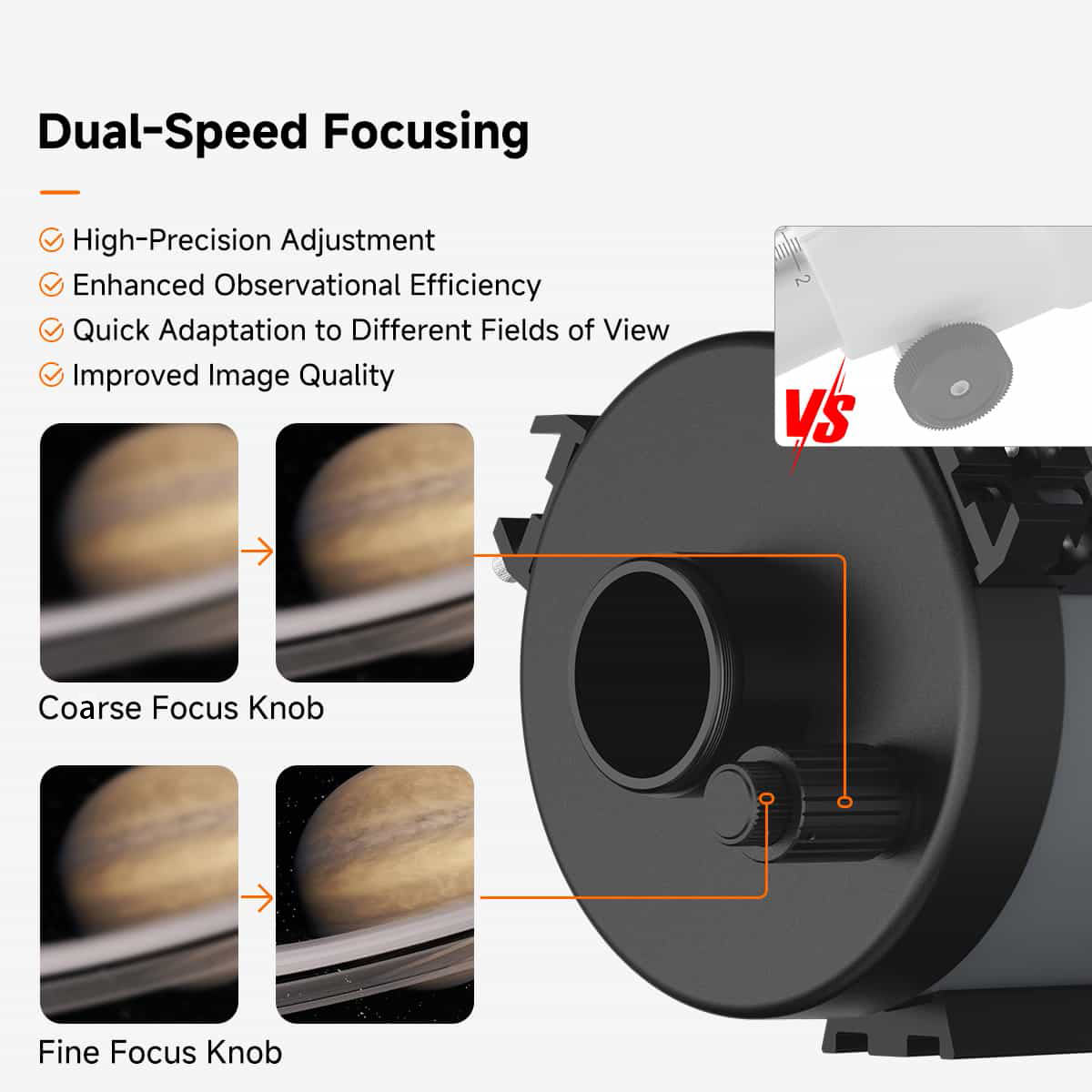
- Internal dual-speed focuser: a coarse knob for fast travel and a fine knob for precise focus at high power.
- Baffled tube: anti-reflective paint on the inner wall plus a conical baffle to control stray light.
- Factory collimated: the optical axis is aligned before shipping, and no extension tube is needed to reach focus.
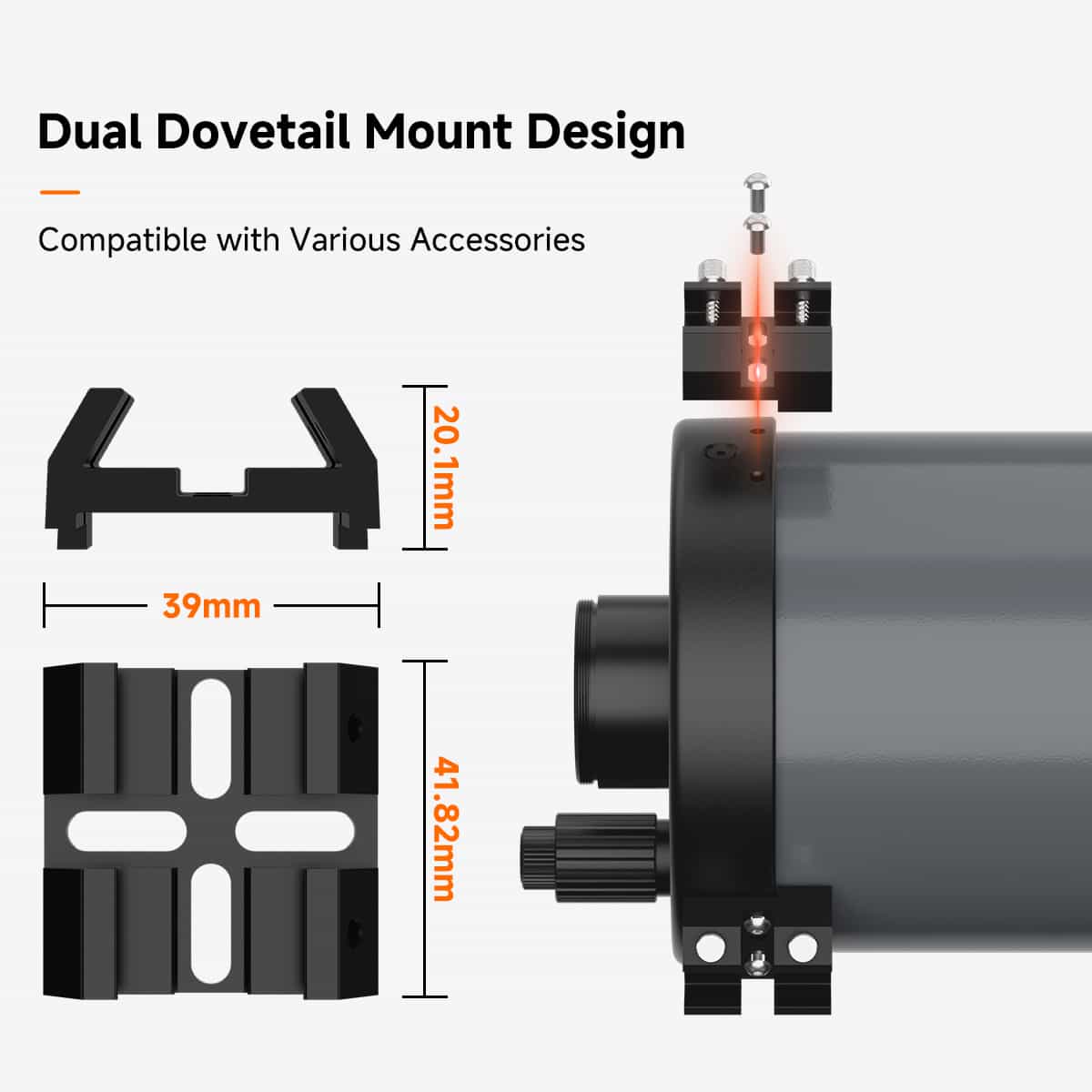
- Vixen-style dovetail: 210 mm plate on two mounting bases, removable with M5 hex screws.


Optical Design
Light enters through a full-aperture meniscus corrector, reflects off the spherical primary, and returns through a central hole in the primary after bouncing off the secondary. In a classic Gregory Maksutov the secondary is an aluminized spot on the back of the meniscus. The MK127 uses a separate secondary mirror (a Rumak arrangement), which gives the designer an extra surface to work with. SVBONY uses that freedom for a flatter field with lower coma and astigmatism, which matters most once a camera sensor is in the focal plane.
As a reflecting design, the MK127 brings all colours to the same focus, so the Moon's limb and bright planets show none of the violet fringing an achromatic refractor produces. The 40.6 mm secondary is coated with a 99%-reflectivity dielectric stack, and the tube is internally blackened and fitted with a conical baffle for contrast.


Recommended Uses
- Lunar and planetary observing: high-contrast views of Jupiter's cloud belts, Saturn's rings, Mars at opposition and lunar craters. SVBONY lists 254x as a fully usable magnification.
- Planetary and lunar imaging: at f/11.8 the native focal length pairs naturally with small-pixel planetary cameras such as the SVBONY SC715C.
- Small deep-sky imaging: with the 0.65x reducer at f/7.68, planetary nebulae (Ring, Dumbbell, Helix), globular clusters and compact galaxies such as M51.
- Double stars: long focal length and high image scale for splitting close pairs.
- Travel and quick sessions: a closed tube that arrives collimated and needs no collimation in the field.

Compatibility and Accessory Notes
- Rear thread: SCT male, 2"-24 TPI, so standard SCT visual backs, diagonals and T-adapters thread on.
- Included adapters: SCT to 2" for 2" diagonals and accessories, and SCT to 1.25" with T-thread for 1.25" diagonals or direct camera connection.
- Backfocus with the reducer: 55 mm from the reducer to the sensor. Without the reducer, no specific backfocus applies; the internal focuser simply brings the image to focus.
- Reducer: the 0.65x reducer is dedicated to the MK127 and is not designed for other brands of telescope.
- Mounting: Vixen-style 210 mm dovetail. At 2934 g plus diagonal and eyepiece (or camera), the tube sits comfortably within the payload of most compact alt-az and small equatorial mounts.
- Visual accessories: a 1.25" or 2" star diagonal and eyepieces are needed for visual use. The SVBONY SV188P diagonal and SV191 zoom eyepiece suit the MK127 well.
- Imaging accessories: for guided deep-sky work, the SVBONY SV106 guide scope or the SV238 off-axis guider with SV226P filter drawer fit the MK127 imaging train.
If you want to check a specific camera, filter or guider combination against the 55 mm backfocus, send us your setup and we will work out the spacing with you.

What's in the Box
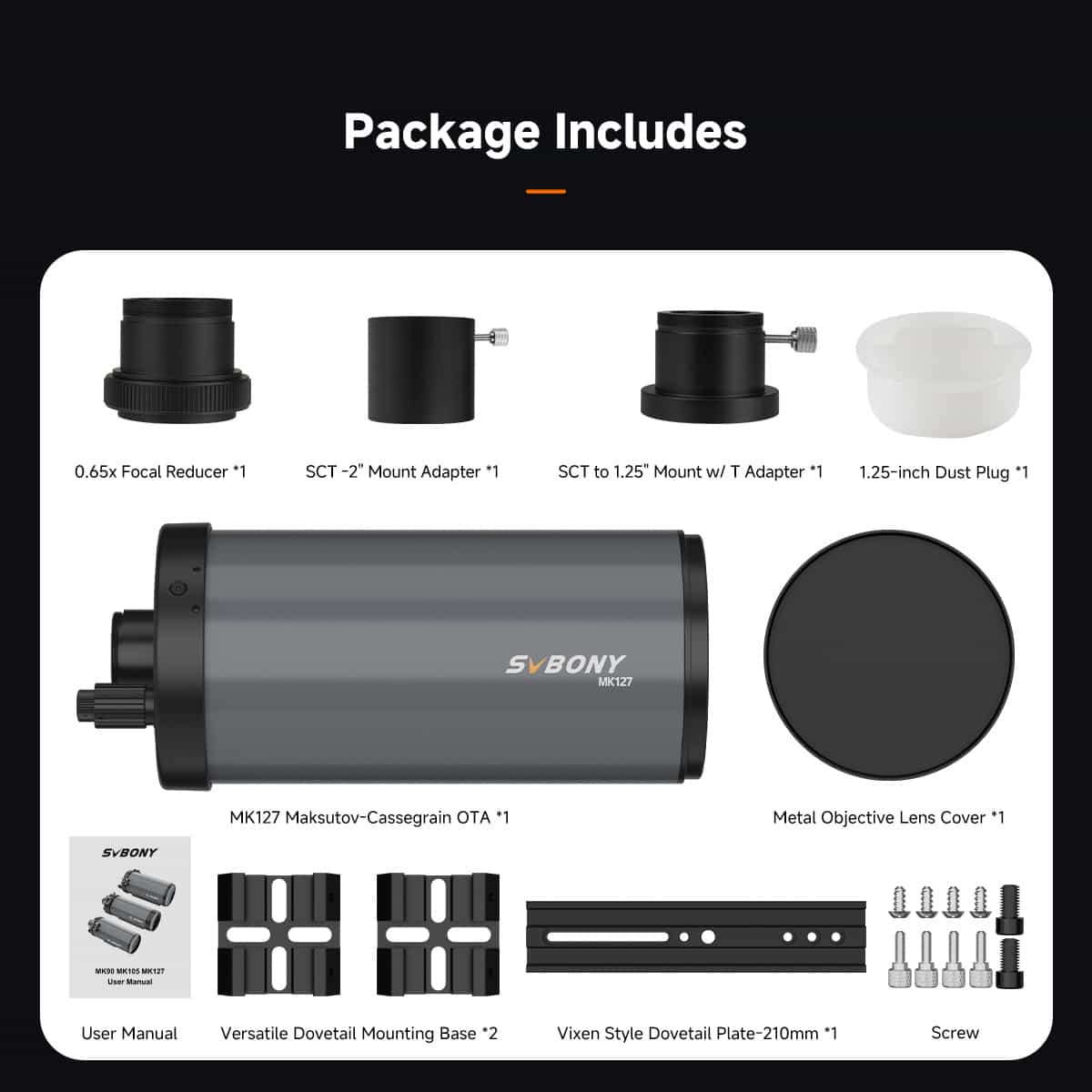
- 1 x MK127 Maksutov-Cassegrain optical tube
- 1 x 0.65x focal reducer
- 1 x SCT to 2" adapter
- 1 x SCT to 1.25" adapter with T-thread
- 1 x 1.25" dust plug
- 1 x metal objective lens cover
- 1 x Vixen-style dovetail plate, 210 mm
- 2 x dovetail mounting bases
- 10 x screws
- 1 x user manual
SVBONY also supplies a storage bag with the telescope.

Good to Know Before You Order
- Optical tube only: no mount, tripod, finder, diagonal or eyepiece is included. The Vixen-style dovetail fits most small mounts, and the add-ons on this page cover the visual and imaging accessories.
- Long focal ratio: at f/11.8 the field of view is narrow, which suits planets and small objects. The included reducer widens it to f/7.68 for imaging.
- Cool-down: like any closed-tube Maksutov, the MK127 gives its sharpest views once the optics reach ambient temperature, so setting it out a little before observing helps.
- Dew: the front meniscus is exposed to the night sky, and on humid Ontario nights a dew heater keeps it clear through long sessions.
Frequently Asked Questions
Is it difficult to set up?
No. The tube is collimated at the factory, the dovetail drops into any Vixen-style saddle, and the SCT adapters thread on by hand. Add a diagonal and eyepiece and it is ready to observe.
Does the MK127 need an extension tube to reach focus?
No. SVBONY confirms it reaches focus without one, as with the rest of the MK series.
Is the 0.65x focal reducer included?
Yes. It ships with the telescope as a standard accessory and is designed specifically for the MK127.
What backfocus does the reducer need?
55 mm from the reducer to the camera sensor. Without the reducer there is no fixed backfocus figure.
What is the highest useful magnification?
SVBONY rates 254x as fully usable. On nights of steady seeing that is enough for fine planetary detail.
Is it for visual observing or imaging?
Both. SVBONY optimized the design primarily for photography, and it performs well visually with a standard diagonal and eyepieces.
Can the dovetail be removed or replaced?
Yes. The supplied 210 mm plate is held with M5 hex screws and comes off with an S4 hex wrench.
What is the outer diameter of the tube?
145 mm, which is the figure to use when choosing a dew shield or heater strip.
Bottom Line
In short: a 127 mm, 1500 mm f/11.8 Maksutov-Cassegrain with a separated dielectric secondary, dual-speed focuser and an included 0.65x reducer, ready for lunar and planetary observing and imaging at native focal length and for small deep-sky targets at f/7.68. Add a mount, a diagonal and an eyepiece or camera, and it is complete.
Optical Diagram Reports
SVBONY publishes spot diagrams at native f/11.8 and at f/7.6 with the 0.65x reducer, along with optical surface test data.


| Brand | SVBONY |
|---|---|
| Model | MK127 |
| Optical design | Maksutov-Cassegrain, separated secondary mirror (Rumak-style) |
| Aperture | 127 mm |
| Focal length | 1500 mm |
| Focal ratio | f/11.8; f/7.68 with included 0.65x focal reducer |
| Light-gathering power | 254x |
| Primary mirror | Multi-coated precision aluminum coating |
| Secondary mirror | 99% reflectivity dielectric coating, 40.6 mm diameter |
| Focuser | Internal, dual-speed |
| Rear thread | SCT male (2"-24 TPI) |
| Backfocus with reducer | 55 mm |
| Mounting | Vixen-style dovetail plate, 210 mm, on 2 mounting bases |
| Outer diameter | 145 mm |
| Net weight | 2934 g / 6.47 lb |
| Included accessories | 0.65x focal reducer; SCT to 2" adapter; SCT to 1.25" adapter with T-thread; 1.25" dust plug; metal objective cover; 210 mm dovetail; 2 mounting bases; screws; manual |
| Recommended use | Lunar, planetary and double-star observing and imaging; small deep-sky imaging with reducer |
You may also like
Recently viewed
Recent Blog Posts
View all
Your Guide Graph Is Lying to You
Read More

D-Size vs V-Size: A Complete Guide to Telescope Dovetail Systems
Read More

What Is Back Focus in Astrophotography? Telescope Reducers, Flatteners, and Spacing Explained
Read More