


- Description
- Specifications
- Downloads
Product Overview
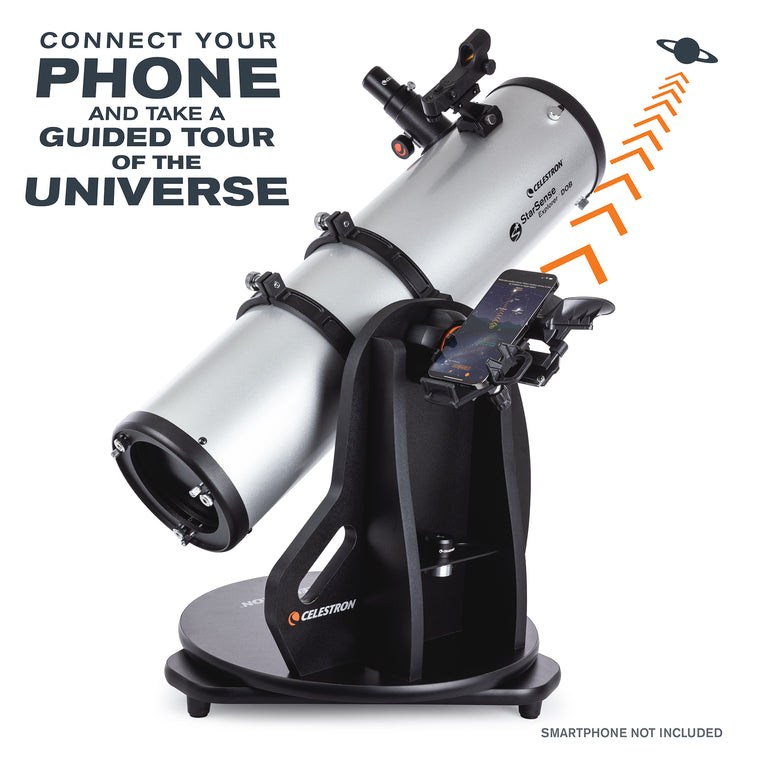
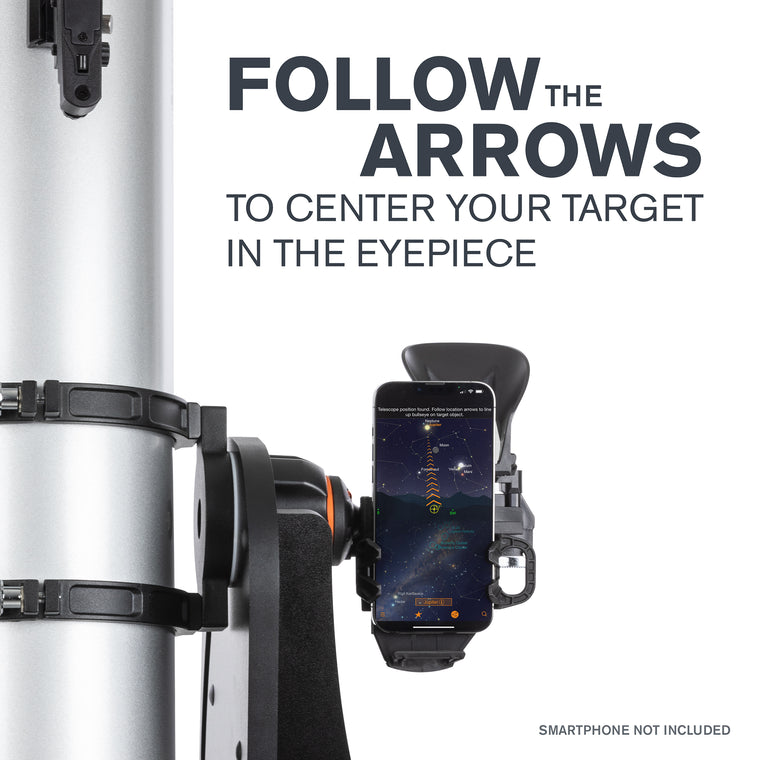
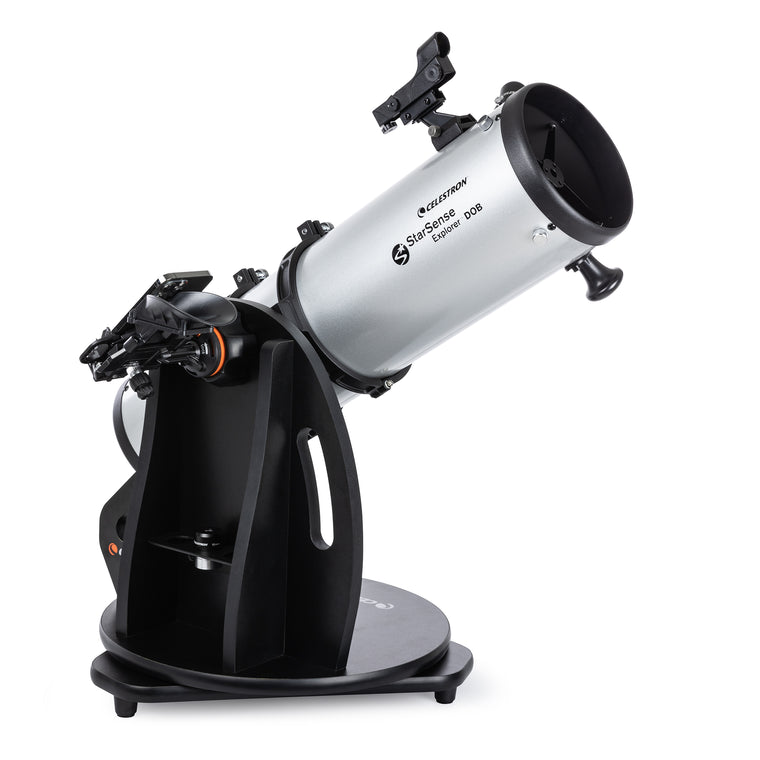
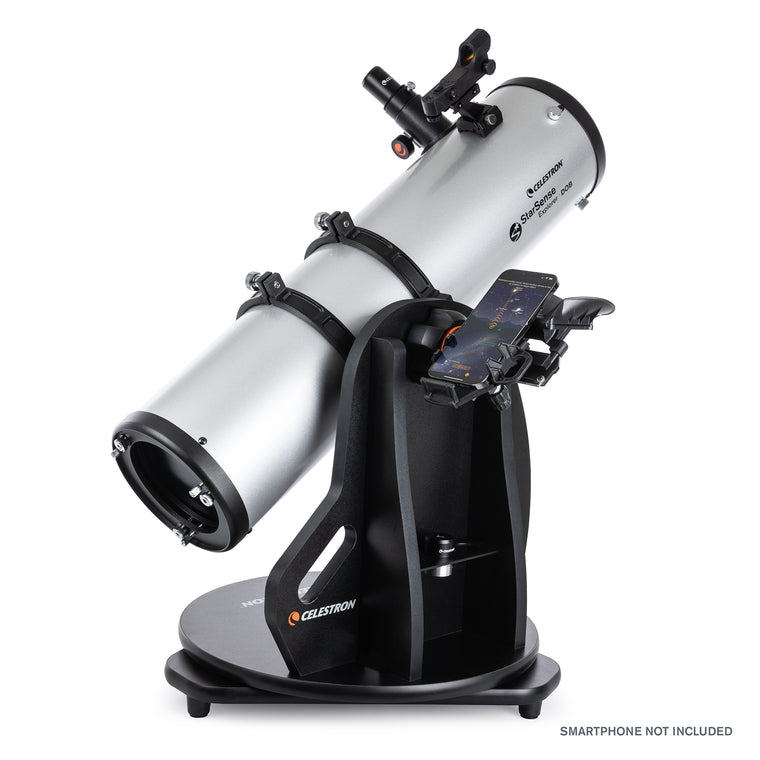
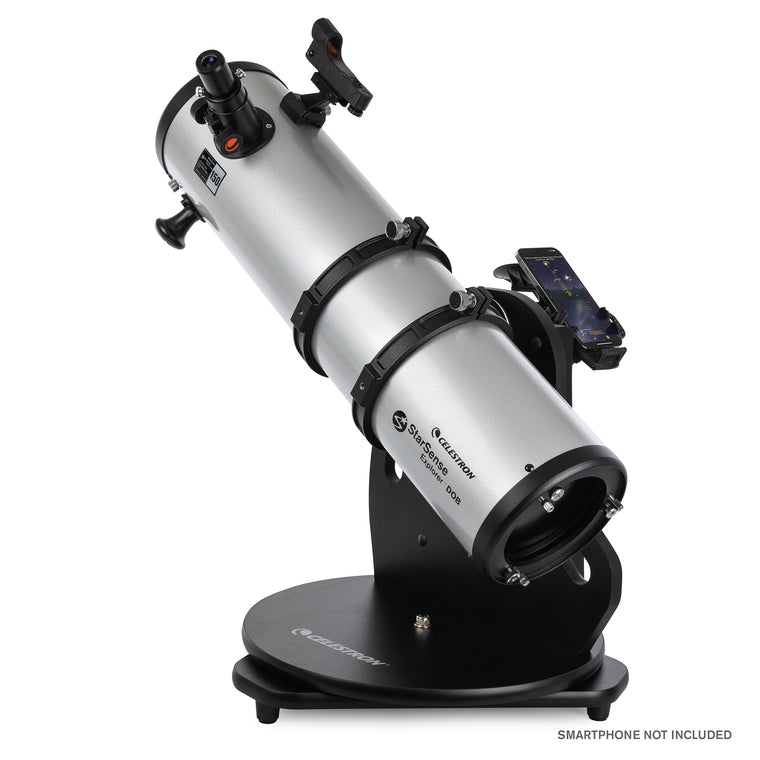
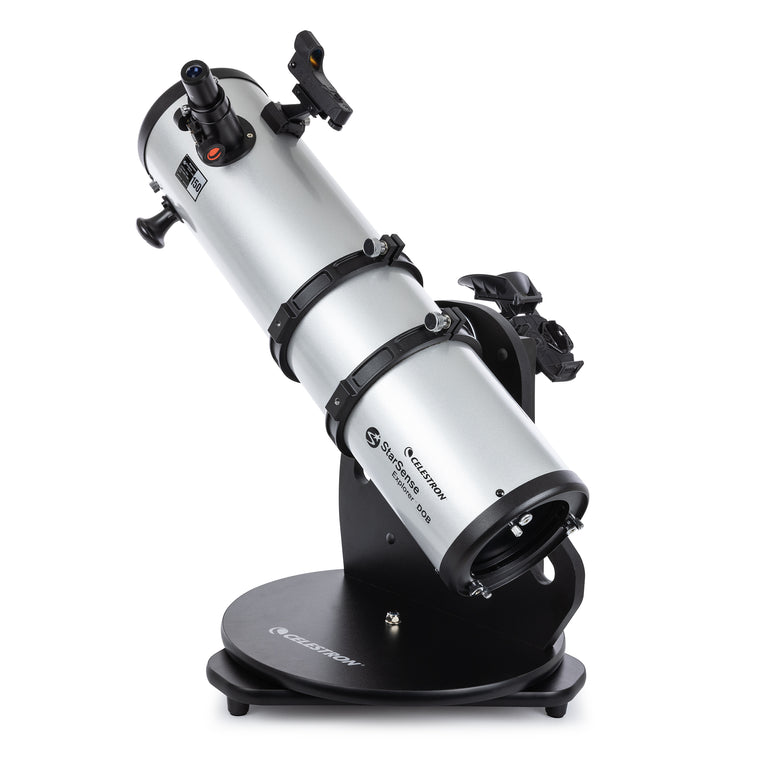
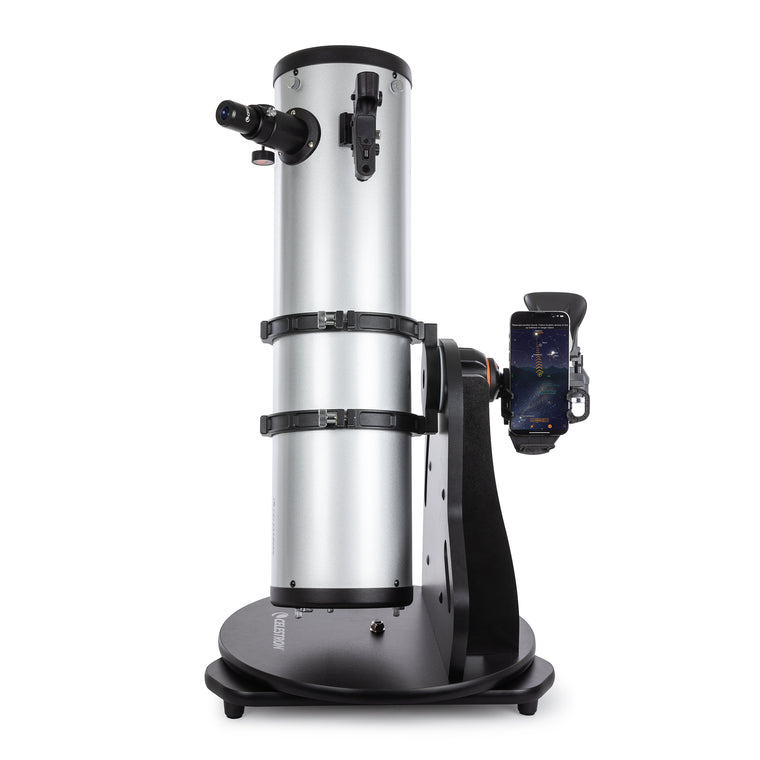
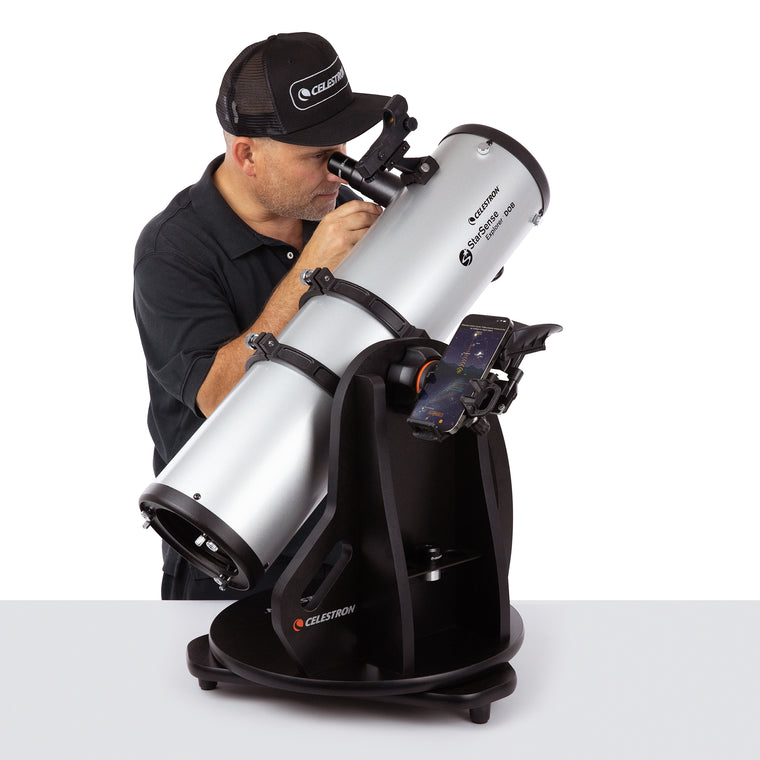
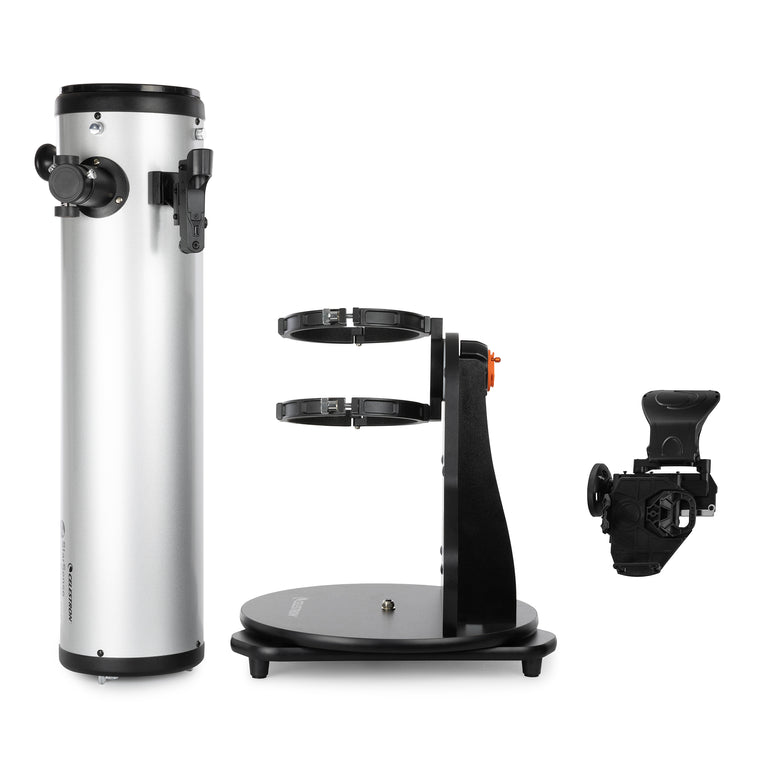
The Celestron StarSense Explorer 150mm is a 150 mm f/5 Newtonian reflector with a parabolic primary, mounted on a tabletop Dobsonian base and paired with a smartphone dock and Celestron's StarSense Explorer app. The app reads the actual star field through your phone's camera and matches it against its own catalogue to work out where the tube is pointed, then shows on-screen arrows that walk you to a target and turn the bullseye green once it is centred in the eyepiece. At 750 mm focal length with 459 times the light-gathering power of the unaided eye, this is the largest of the tabletop models and the most capable telescope in the range that still packs into a 25 lb pair of pieces.
Who It's For
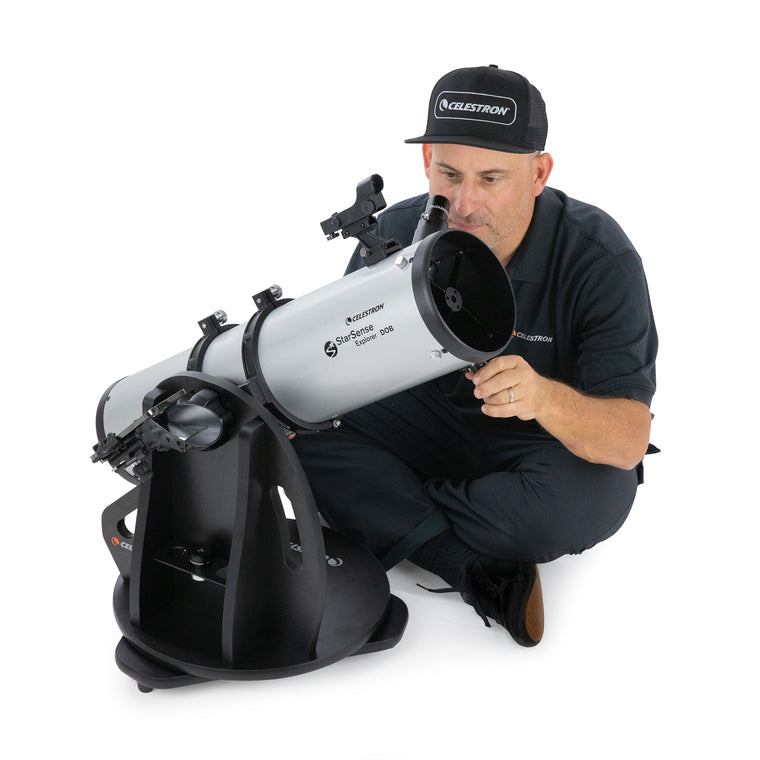
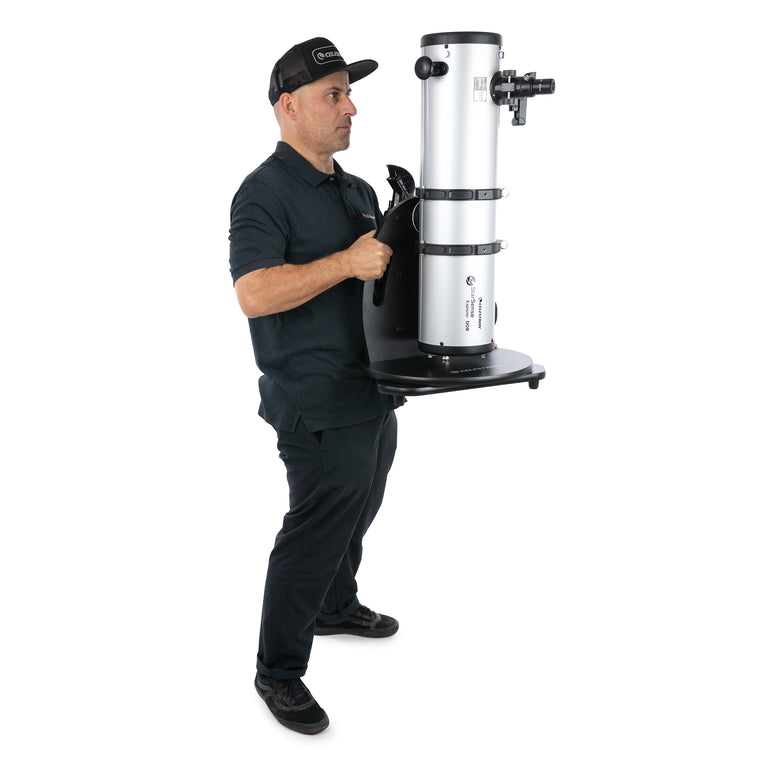
This is a good match if you want six inches of aperture in something that stores in a cupboard and travels in a car boot, and you would rather spend the evening observing than learning to star-hop first. A 13.4 limiting magnitude and 0.77 arcsecond Dawes resolution put a long deep-sky list and real planetary detail within reach. It suits an observer choosing between a tabletop and a floor-standing Dobsonian who would rather keep the smaller footprint, and it travels well to dark-sky sites.
Key Features & Design
- 150 mm parabolic primary at f/5: 750 mm focal length, with a highest useful magnification of 354x, a lowest useful magnification of 21x and a limiting stellar magnitude of 13.4.
- 459x the light-gathering power of the unaided eye: the most of any tabletop in the range, and around 75% more than the 114mm model.
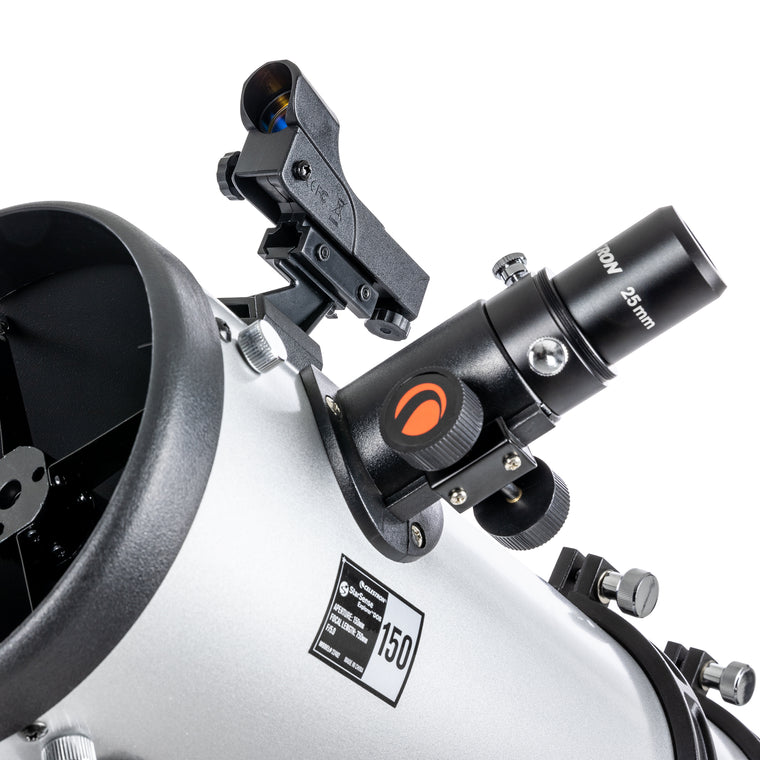
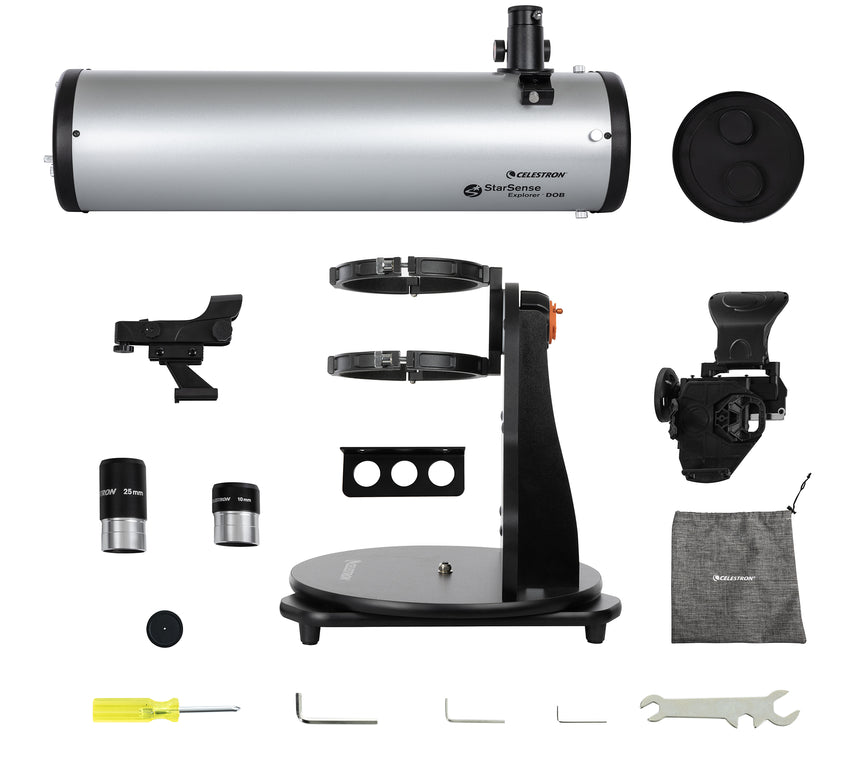
- Two Kellner eyepieces supplied: a 25mm at 30x and a 10mm at 75x, giving a wide finding field and a closer look in the box.
- 0.77 arcsecond Dawes resolution: fine enough for close double stars and for detail on Jupiter and Saturn.
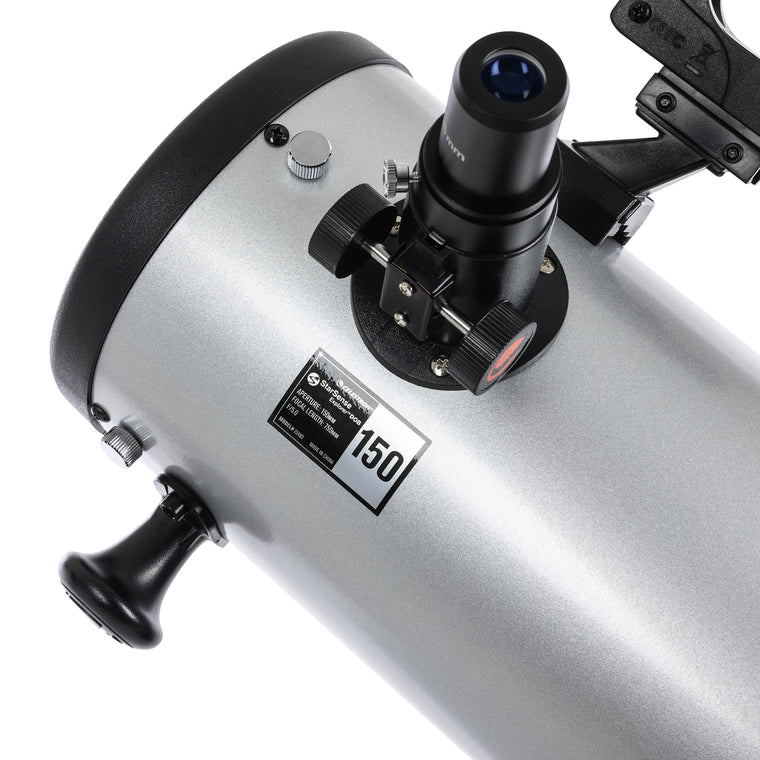
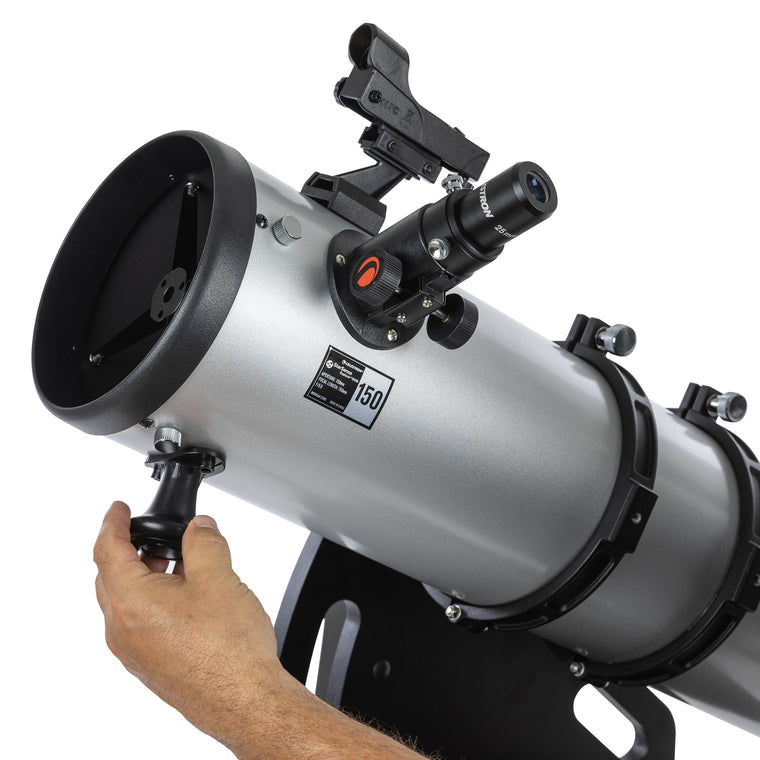
- 1.25" rack-and-pinion focuser and a StarPointer red-dot finderscope.
- Aluminium mirror coatings with an SiO2 overcoat on standard optical glass, with a 47 mm secondary minor axis.
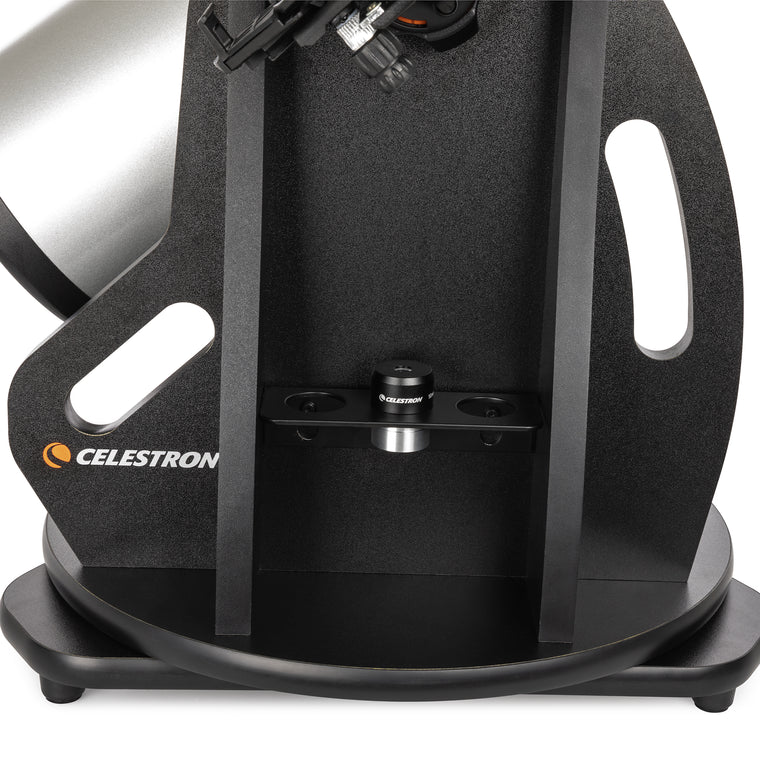
- Tabletop Dobsonian base: 482.6 x 482.6 x 469.9 mm (19" x 19" x 18.5"), 16 lb, in CARB-compliant melamine-faced particle board.
- 25 lb (11.33 kg) complete: a 9 lb tube and a 16 lb base, with the StarSense dock and unlock code included.
Optical / Mechanical Design
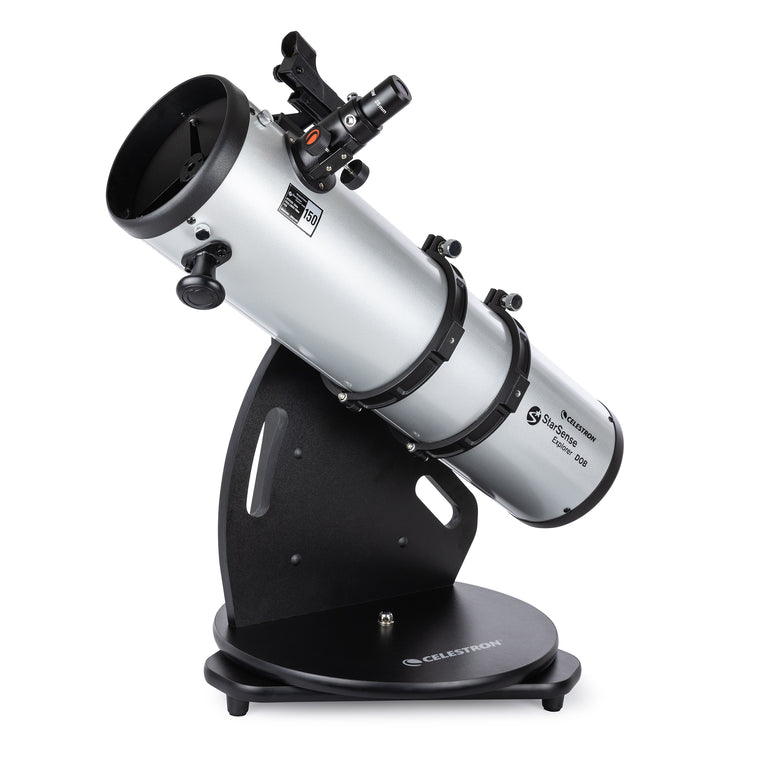
The tube is a 150 mm parabolic Newtonian at f/5, measuring 723.9 mm long by 190.5 mm in diameter (28.5" x 7.5"). Celestron publishes its resolving power as 0.92 arcseconds by the Rayleigh criterion and 0.77 arcseconds by the Dawes limit, and the secondary has a 47 mm minor axis.
f/5 across a 150 mm mirror is the combination that makes this telescope work as a tabletop: 750 mm of focal length in a tube under 30 inches, which is short enough that the base does not need to be tall to clear the ground. The parabolic primary is what keeps stars tight across the field at this focal ratio — a spherical mirror would soften off-axis. A collimation cap is supplied, and the 1.25" rack-and-pinion focuser takes any 1.25" eyepiece.
Recommended Uses
Deep-sky observing of globular and open clusters, emission and planetary nebulae, and galaxies at a 13.4 limiting magnitude. Lunar observing in fine detail and planetary observing at up to 354x, where the 0.77 arcsecond resolution is the useful figure. Double-star work near the resolution limit. Guided touring with the app's list of currently visible objects and its audio descriptions. Dark-sky trips, where 25 lb in two pieces fits a car boot alongside everything else. Outreach and family observing, where the app lets anyone find something themselves.
Compatibility and Accessory Notes
Eyepieces: the focuser takes 1.25" eyepieces. The supplied 25mm and 10mm Kellners cover 30x and 75x; a 6mm or a zoom is the usual next addition for planetary work, with a 354x ceiling above.
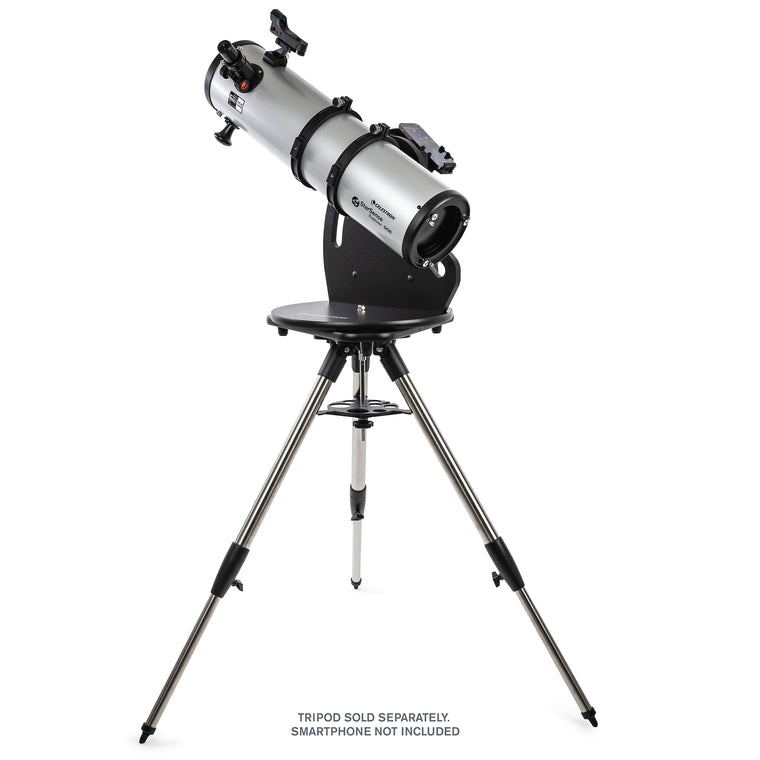
Something to stand it on: the base is a tabletop design and needs a table, bench or wall at a comfortable height — and at 18.5" tall with a 28.5" tube, a reasonably sturdy one. Celestron's Tripod for StarSense Explorer Tabletop Dobsonian Telescopes is the purpose-made answer, and it is the accessory most 150mm owners end up adding.
Smartphone: the StarSense Explorer app runs on Android 12 and later and on iOS 18 and newer, including iPhone XR and newer. Celestron maintains the full device list at starsenseexplorer.simcur.com.
Included software: Celestron Starry Night Basic Edition ships with the telescope alongside the StarSense Explorer unlock code.
If you are unsure whether your phone will run the app, send us the model and we will check it against Celestron's list before you order.
Good to Know Before You Order
No tripod is included. The base is built to sit on a surface, and this is the heaviest and tallest of the tabletops at 16 lb and 18.5" — a solid table or the matching tripod above rather than a folding side table.
The app needs real starlight to work. It cannot orient itself in daylight and wants roughly an hour after sunset before there is enough star detail to match on. Cloud cover, haze, a bright Moon and heavy light pollution all reduce what it can lock onto.
It shows tonight's sky only. There is no date or time control in the app, so it plans the session you are about to have rather than one next month.
Tracking is manual. Objects drift across the field as the Earth turns and you nudge the tube to follow. At 354x that means small, frequent corrections.
It is a 1.25"-only focuser. Two-inch wide-field eyepieces do not fit, which sets the widest true field this telescope can reach even though the aperture would support more.
Solar observing needs a purpose-made filter. Viewing the Sun through any telescope requires a proper solar filter fitted to the front of the tube — ask us and we will point you at one that fits this aperture.
Two-year Celestron warranty.
Frequently Asked Questions
Is it difficult to set up?
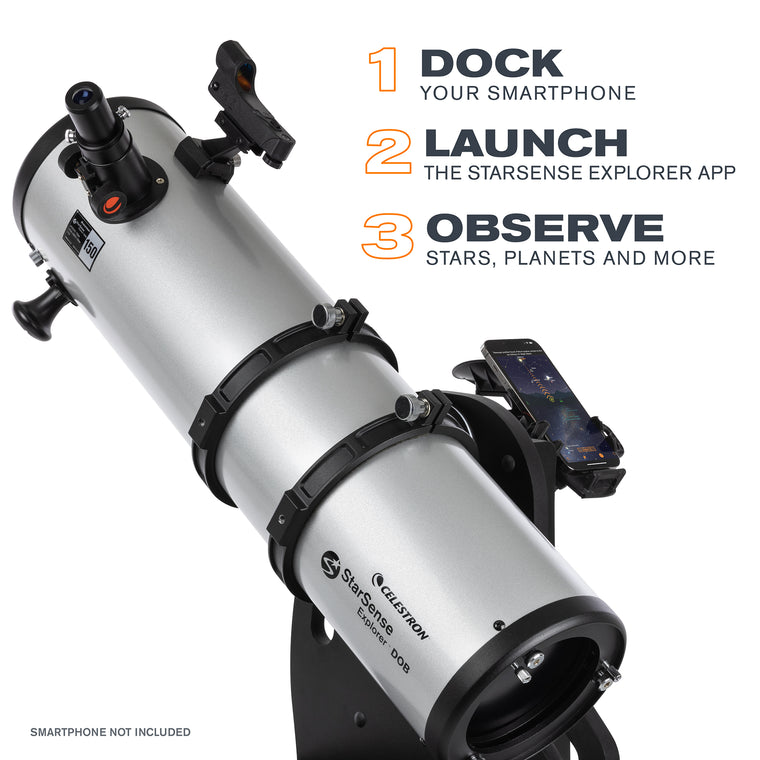
No. The tube sits in the base, an eyepiece goes in the focuser and the phone goes in the dock. Aligning the phone to the optics is a short procedure at the start of each session and the app's tutorials walk through it. Collimation is the one technical job and the included collimation cap is what you do it with.
Does the app need a subscription?
No. The unlock code is in the box and the app is yours with the telescope.
Do I need to buy anything else to use it?
Not to observe — two eyepieces, the finder and the dock are all supplied. You do need a solid surface to stand it on, and the matching tripod is the accessory most owners of this model add.
Which phones does it work with?
Android 12 and later, and iOS 18 and newer including iPhone XR and newer.
Should I get this or the 8" floor-standing Dobsonian?
The 8" gathers 841x the unaided eye against this telescope's 459x and reaches a 14.2 limiting magnitude against 13.4, with a 2" focuser that opens up wide-field eyepieces. This one is 25 lb against 43.4 lb, stores in a cupboard, and needs no floor space. It comes down to whether storage and portability or reach matters more to you — tell us your situation and we will give you a straight answer.
Can I use it for astrophotography?
It is built as a visual instrument. The base is manual with no tracking drive, so long-exposure imaging is outside what it does. Short-exposure lunar and planetary work held up to the eyepiece is practical.
Bottom Line
A 150 mm f/5 parabolic Newtonian on a tabletop Dobsonian base with app-guided pointing: 750 mm of focal length, a 354x useful ceiling, 0.77 arcsecond Dawes resolution, two eyepieces and 25 lb complete. The most aperture in the range that still lives in a cupboard, and it wants a solid surface or the matching tripod to sit on.
| Item number | 22482 |
|---|---|
| Optical design | Newtonian reflector, parabolic primary mirror |
| Aperture | 150 mm (5.9") |
| Focal length | 750 mm (29.5") |
| Focal ratio | f/5 |
| Supplied eyepieces | 25 mm Kellner (30x) and 10 mm Kellner (75x) |
| Highest useful magnification | 354x |
| Lowest useful magnification | 21x |
| Limiting stellar magnitude | 13.4 |
| Light gathering power | 459x compared to the human eye |
| Resolution | 0.92 arcsec (Rayleigh) · 0.77 arcsec (Dawes) |
| Optical coatings | Aluminium with SiO2 overcoat |
| Mirror material | Standard optical glass |
| Secondary mirror minor axis | 47 mm (1.85") |
| Tube material | Steel |
| Focuser | 1.25" rack-and-pinion |
| Finderscope | StarPointer red-dot |
| Optical tube dimensions | 723.9 mm x 190.5 mm diameter (28.5" x 7.5") |
| Optical tube weight | 9 lb (4.08 kg) |
| Mount type | Altazimuth tabletop Dobsonian base, manual |
| Base material | Particle board with melamine surfaces and edge trim, CARB compliant |
| Base dimensions | 482.6 x 482.6 x 469.9 mm (19" x 19" x 18.5") |
| Base weight | 16 lb (7.26 kg) |
| Total kit weight | 25 lb (11.33 kg) |
| Tripod | Not included — tabletop base; optional StarSense Explorer tabletop Dobsonian tripod available |
| In the box | Optical tube, Dobsonian base, 25 mm and 10 mm eyepieces, StarPointer red-dot finderscope, StarSense Explorer dock, StarSense Explorer unlock code, eyepiece rack, collimation cap, Starry Night Basic Edition software |
| Smartphone requirements | Android 12 and later; iOS 18 and newer, including iPhone XR and newer |
| Warranty | 2-year Celestron warranty |
Manuals and Guides
- StarSense Explorer Tabletop Dobsonian Manual — Celestron
- StarSense Explorer App Manual — Celestron
- Tabletop Dobsonian Tripod Manual — Celestron (optional accessory)
Reference
- How StarSense Explorer Technology Works — Celestron
- Smartphone Compatibility Checker — Celestron
You may also like
Recently viewed
Recent Blog Posts
View all
Your Guide Graph Is Lying to You
Read More
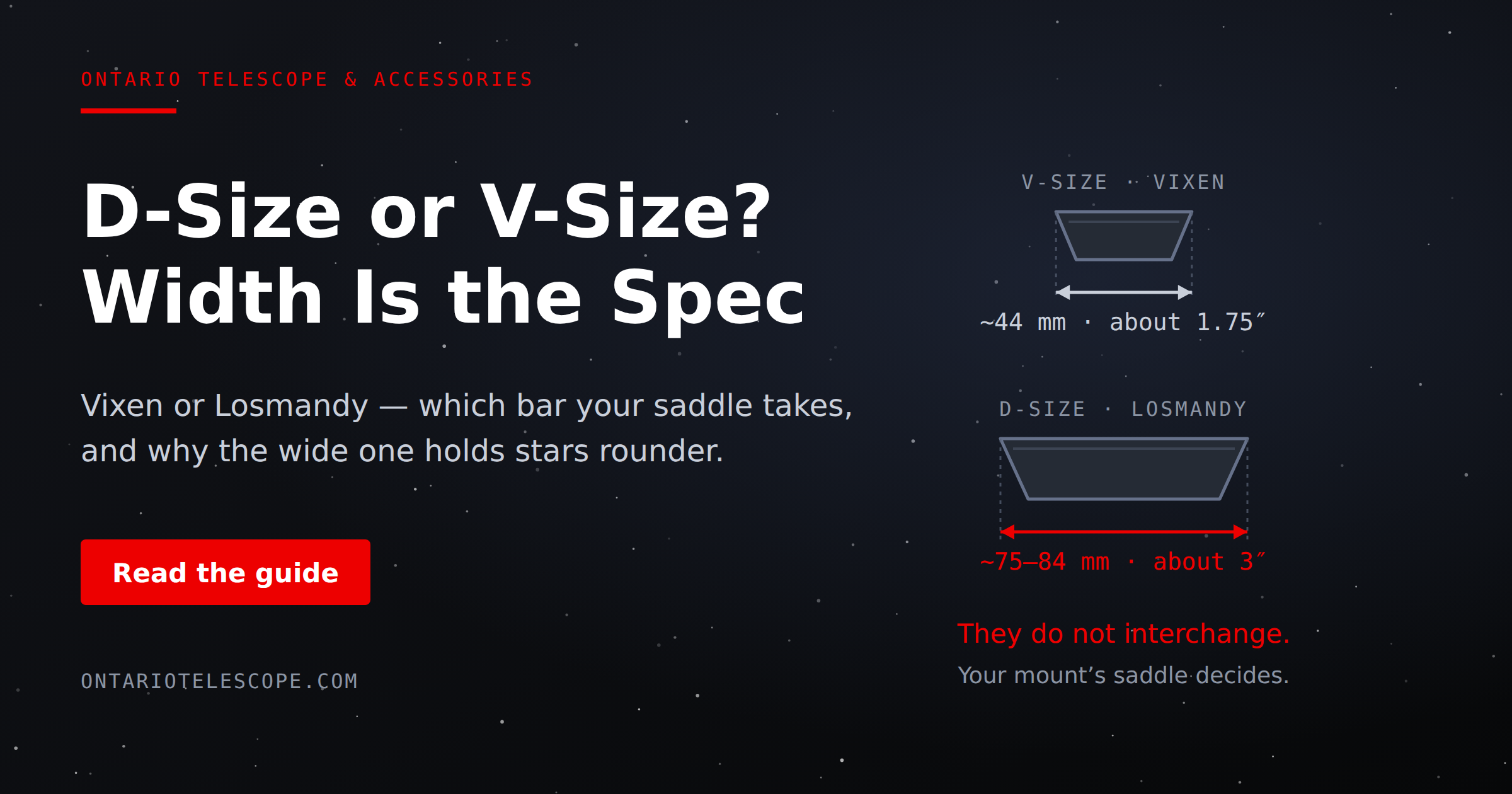
D-Size vs V-Size: A Complete Guide to Telescope Dovetail Systems
Read More
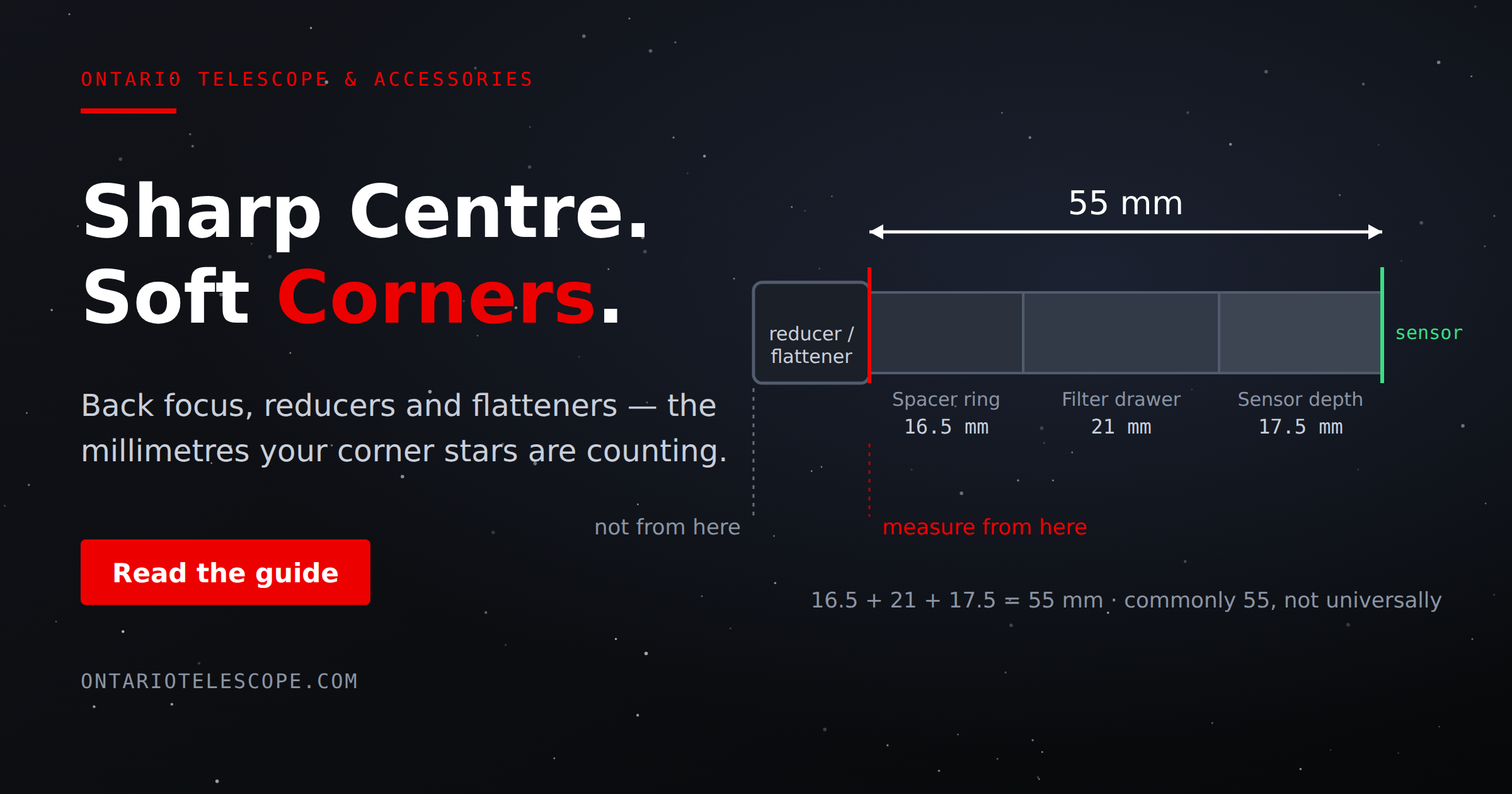
What Is Back Focus in Astrophotography? Telescope Reducers, Flatteners, and Spacing Explained
Read More