

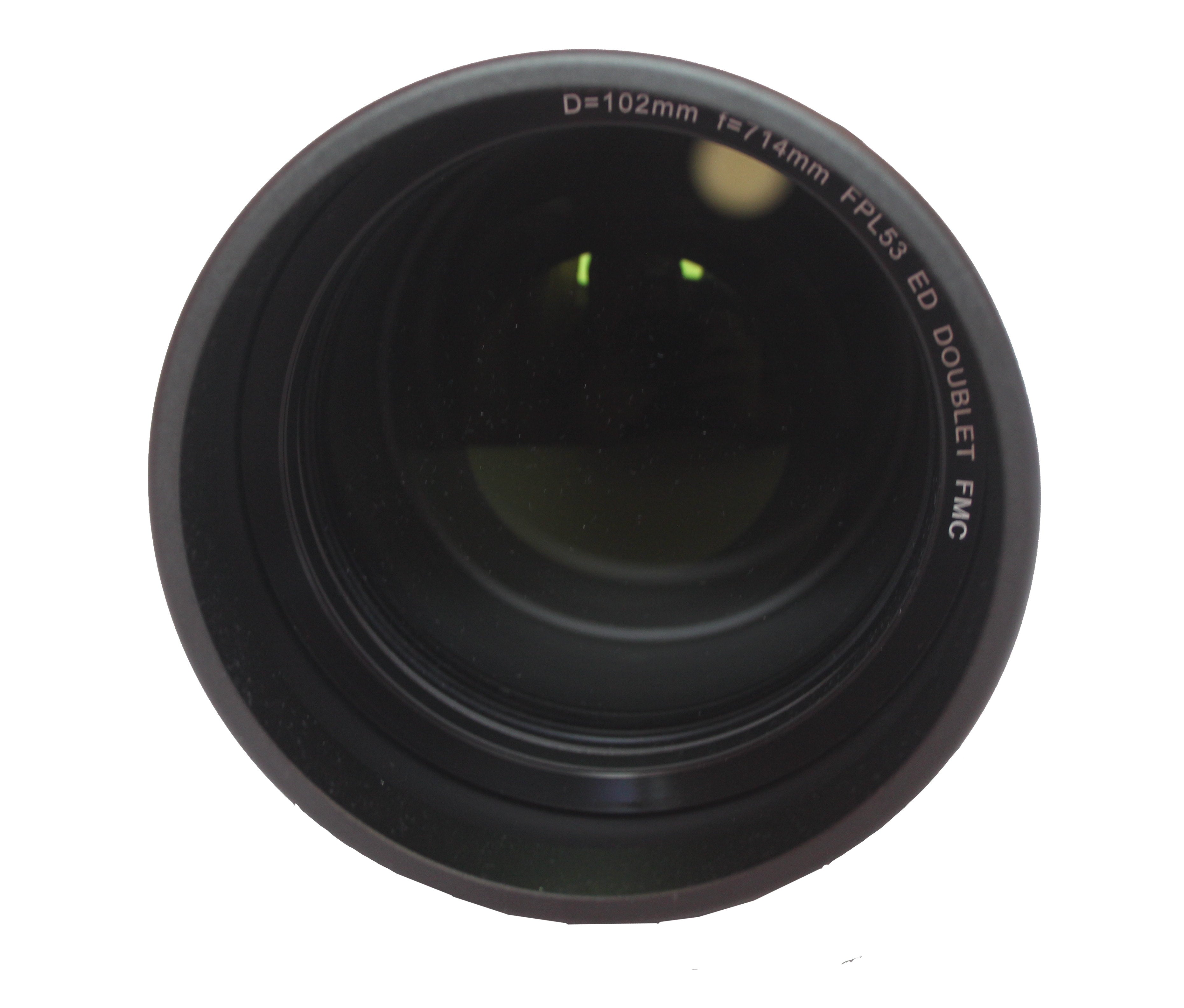


- Description
- Specifications
ED102 f/7 714mm APO
The Starfield ED102 APO doublet offers incredible performance in both imaging an visual astronomy. Using FPL53 (Ohara, Japan) and a lanthanum element, chromatic correction rivals more expensive triplet telescopes with the advantage of faster cool down time. Taken to the highest magnification, images and views remain colour-free. This fast refractor for lunar and solar system observation and demanding astrophotography applications.
This 714mm f/7 offers high performance that you would typically see in higher priced triplet telescopes.
High quality build and features
- 2.5" two speed rack and pinion focuser, with ball bearings, that is also fully rotatable rotation.
- Optional motor focusers can easily be installed.
- Self centering rotational lock. No setscrews to come loose.
- Support for heavy camera loads and accessories.
- Supports 2" and 1.25" eyepiece accessories
- HD CNC tube rings and Vixen style dovetail bar
- Retractable dew shield retractable for transport. With dew shield retracted the total length is 26”
Doublet Apo 102 mm f/7 - FPL53 / Lanthanum Objective
- Aperture 102 mm / focal length 714 mm / focal ratio f/7
- Adjustable doublet in temperature compensated cell
- Image free of chromatic error due to "Extra-Low-Dispersion" FPL53 apo element from Ohara (Japan) and Lanthanum element. Achieving better chromatic correction than comparable apochromats with doublet lenses with lower quality glass.
- Shorter cooling time than with triplet lenses, thus quicker operation possible
- Internally baffled to prevent stray light and get the contrast you would expect from performance refractors.
- 2.5" two speed rack and pinion focuser that is also fully rotatable rotation. Optional Motor focusers can easily be installed. Self centering rotational lock. No setscrews to come loose. Support for heavy camera loads and accessories.
- Supports 2" and 1.25" eyepiece accessories
- HD CNC tube rings and Vixen style dovetail bar
- Retractable dew shield retractable for transport. With dew shield retracted the total length is 26”
Features and specifcations
- Air-spaced 102mm F7 Doublet ED lens system
- 714mm focal length
- FPL53 ED glass and Lanthanum element housed in a precision adjustable CNC machined lens cell with temperature compensation interleaving.
- Fully multi coated (STM Coatings)
- Resolving Power (Dawes’ Limit) 1.45 arc seconds
- Visual Limiting Magnitude 12.2 maximum
- Weight approx. 12lbs,
- Overall length with dew shield retracted, 26 inches.
- Aluminium tube with matte powder coat and hard anodizing finish.
- Retractable dew shield.
- 2.5" "Rack 'n Pinion" Geared dual speed focuser with 1:10 micro-fully rotatable focuser. Focuser rotator rides on a Teflon bushing allowing for smooth rotation.
- Self-Centering 2" to 1.25" reducer with brass compression rings included.
- Vixen style dovetail
- HD CNC Tube rings with M6 threaded holes with 30mm spacing.
You may also like
Recently viewed
Recent Blog Posts
View all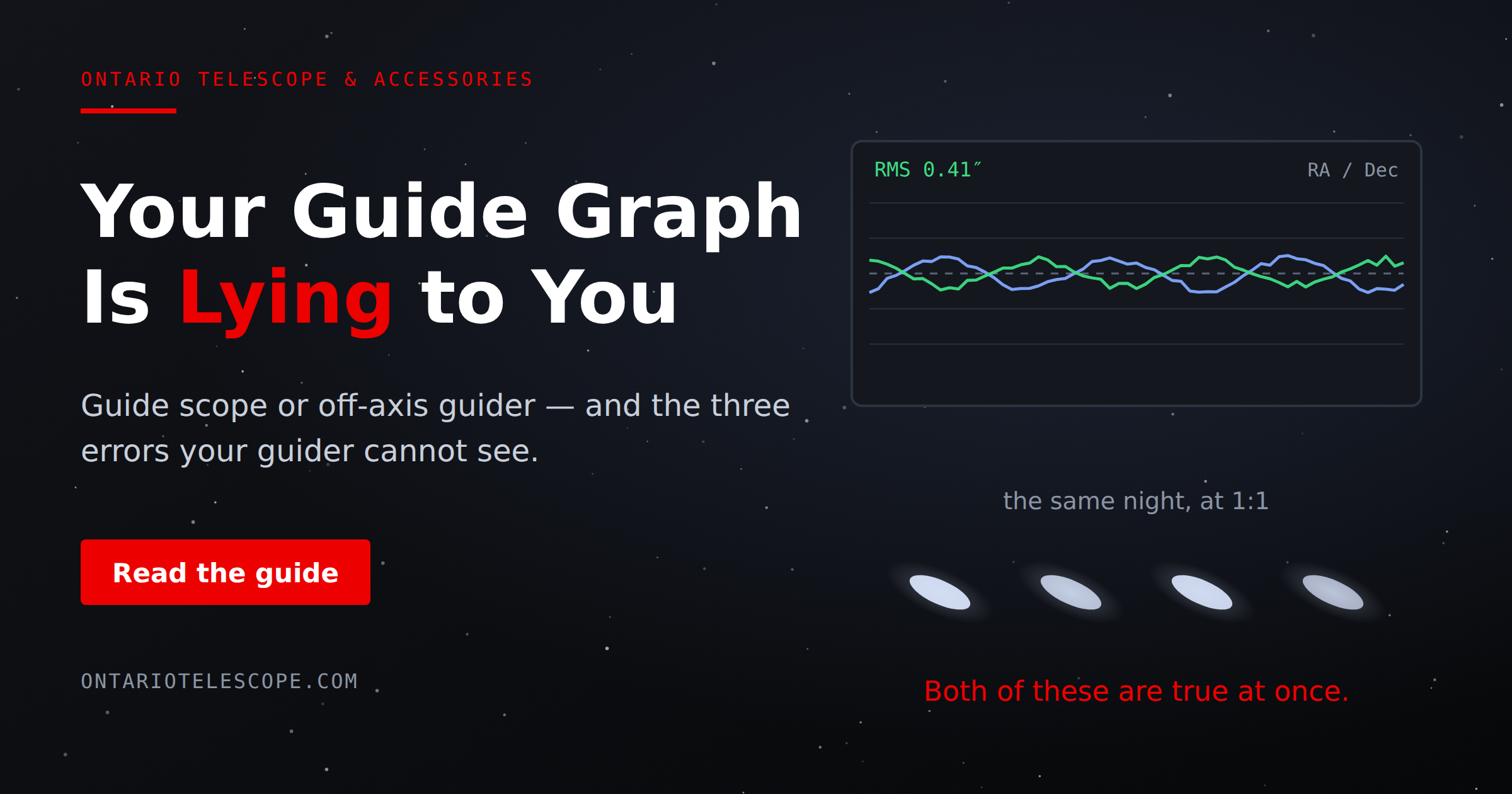
Your Guide Graph Is Lying to You
You drove ninety minutes to dark sky, PHD2 held 0.4 arcseconds all night, and half your subs still have eggs for stars. Here are the three things your
Read More
Read More
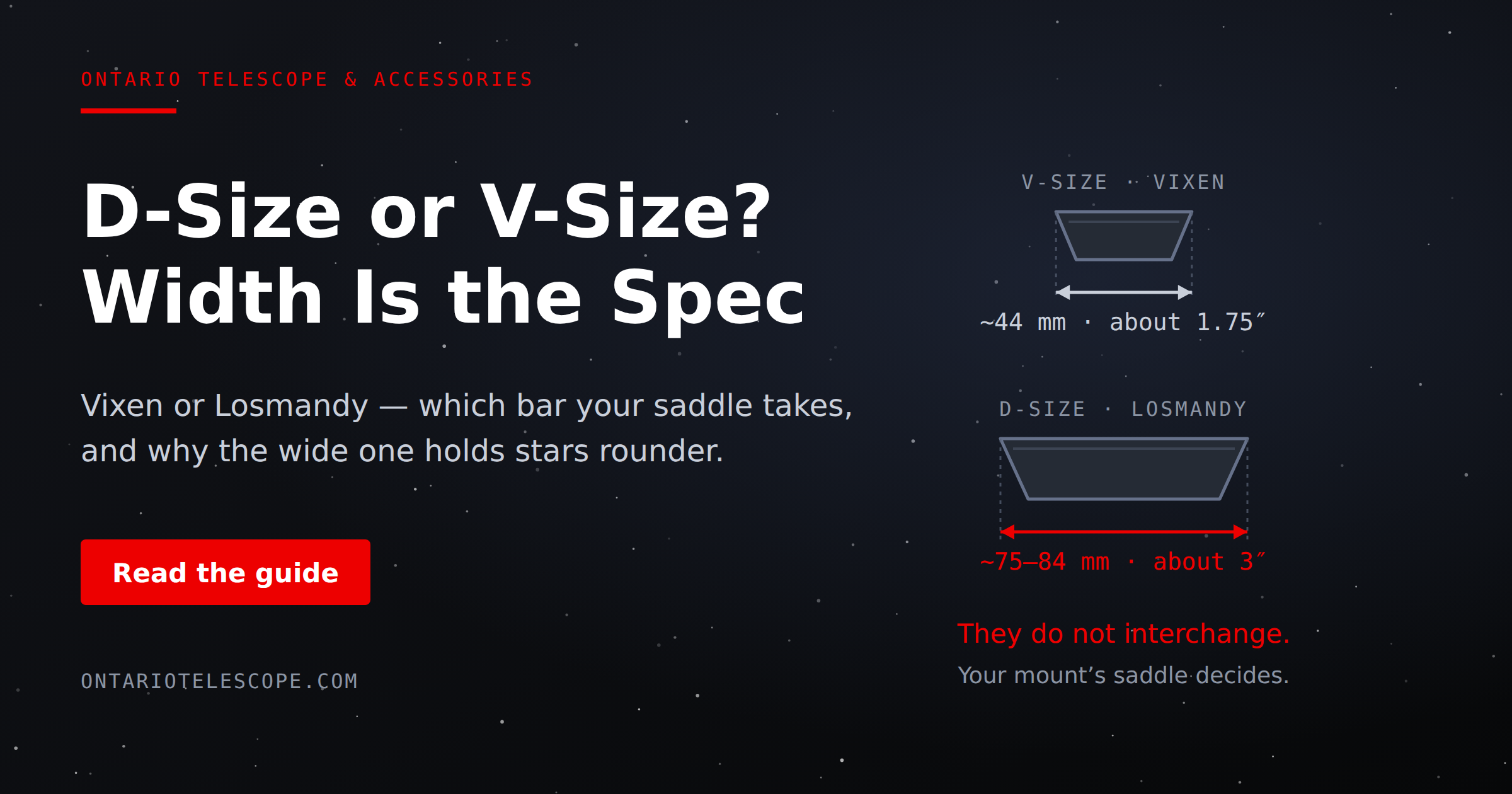
D-Size vs V-Size: A Complete Guide to Telescope Dovetail Systems
What's the difference between D-size and V-size telescope dovetails? Here's everything you need to know.
Read More
Read More
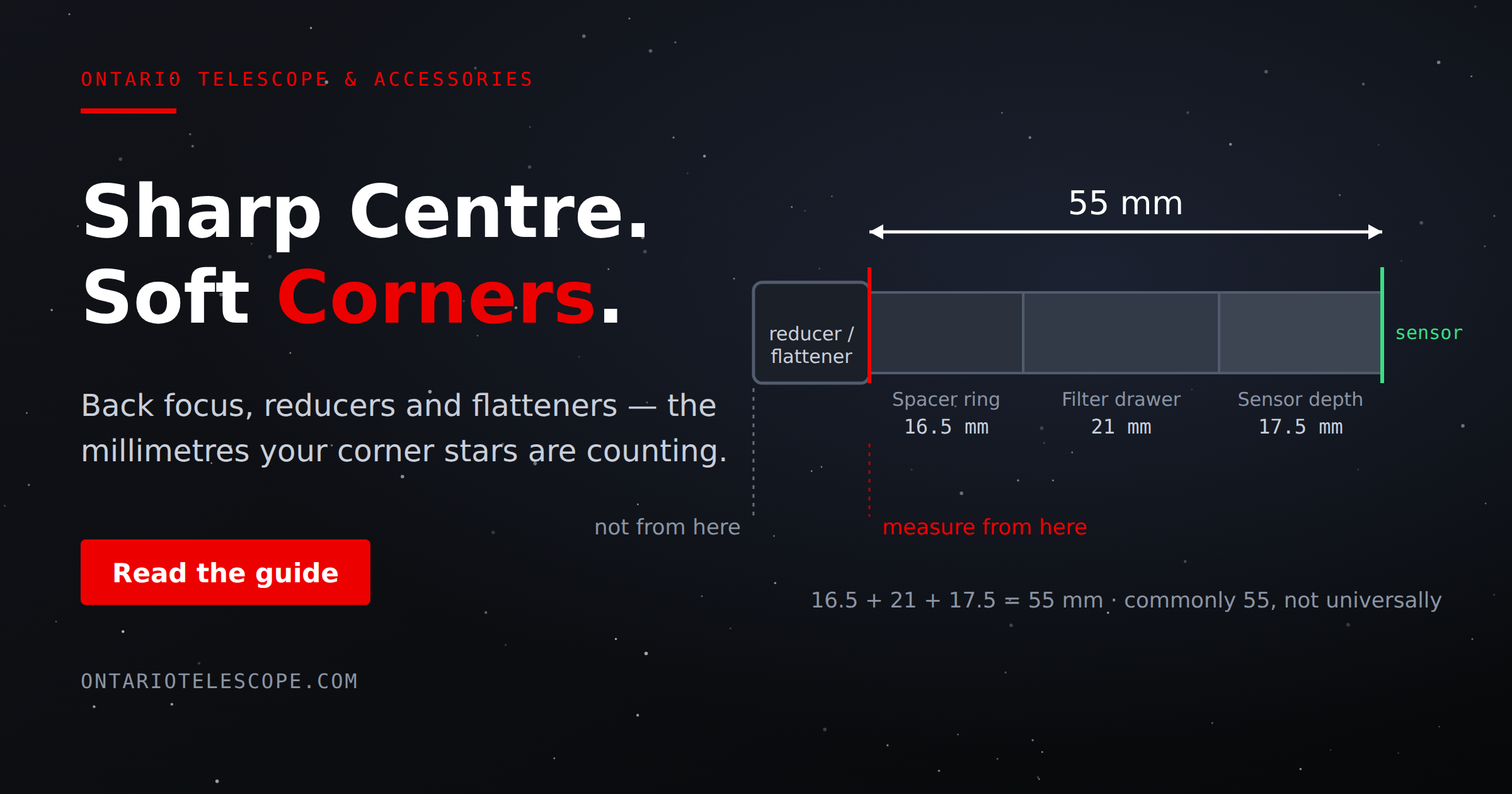
What Is Back Focus in Astrophotography? Telescope Reducers, Flatteners, and Spacing Explained
What Is Back Focus in Astrophotography? Telescope Reducers, Flatteners, and Spacing Explained
Back focus is one of those astrophotography terms that c
Read More
Read More