


- Description
- Specifications
Product Overview
The Player One Solar Fast Tilter (SFT) is a sensor-tilt adapter built to defeat Newton's rings in solar narrowband imaging. By letting you tilt the camera slightly, up to about ±9 degrees, in seconds rather than minutes, it breaks up the interference rings that plague etalon-based solar imaging so you can get to a clean image quickly.
Who It's For
The SFT is for solar imagers, especially those shooting hydrogen-alpha and other narrowband setups, who fight Newton's rings and want a fast, controllable way to dial in sensor tilt at the telescope.
Key Features & Design
- Fast ±9° tilt: a two-screw adjustment tilts the sensor up to roughly ±9 degrees, letting you clear Newton's rings in seconds instead of fiddling for minutes.
- M42 threads both ends: M42 × 0.75 threads on both sides drop it into standard imaging trains.
- 1.25″ adapters included: a 1.25″ holder and 1.25″ T-mount are provided for flexible connection.
- Compact aluminum body: a 15 mm-thick Aluminum 6061-T6 body adds only 40 mm of total optical length.
Recommended Uses
Use the Solar Fast Tilter for narrowband solar imaging, particularly hydrogen-alpha work with etalons, where Newton's rings appear and a small, quickly adjustable sensor tilt cleans up the image.
Compatibility & Accessory Notes
- Connections: M42 × 0.75 on both ends, plus the included 1.25″ holder and T-mount, integrate it with common solar imaging trains.
- Backfocus: it adds 40 mm of optical length, so confirm your setup can still reach focus; for example, Player One notes the Lunt 40 does not have enough travel to reach focus with the SFT in place.
Good to Know Before You Order
- The SFT adds 40 mm of path length, so some short-tube solar scopes (Player One cites the Lunt 40) may not reach focus with it installed; check your available backfocus.
- Player One does not publish a weight for the SFT; contact us if you need it for balancing a specific rig.
FAQ
Is it difficult to set up? No. It threads into your imaging train via M42 (or the included 1.25″ adapters), and you set tilt with two screws; clearing Newton's rings takes seconds.
What are Newton's rings and why does tilt help? They are concentric interference rings that form in narrowband solar imaging; tilting the sensor a few degrees off-perpendicular breaks up the interference so the rings disappear.
How much can it tilt? About ±9 degrees, controlled by two adjustment screws.
Bottom Line
The Solar Fast Tilter gives solar narrowband imagers a quick, repeatable ±9° sensor tilt to eliminate Newton's rings without a lengthy fiddle at the eyepiece end.
| Function | Sensor tilt adapter for solar narrowband imaging |
|---|---|
| Tilt range | ±9° |
| Body thread | M42 × 0.75 (both ends) |
| Adapters | 1.25″ holder + 1.25″ T-mount |
| Extension length | 40 mm |
| Body thickness | 15 mm |
| Material | Aluminum 6061-T6 |
| Adjustment | Two-screw mechanism |
You may also like
Recently viewed
Recent Blog Posts
View all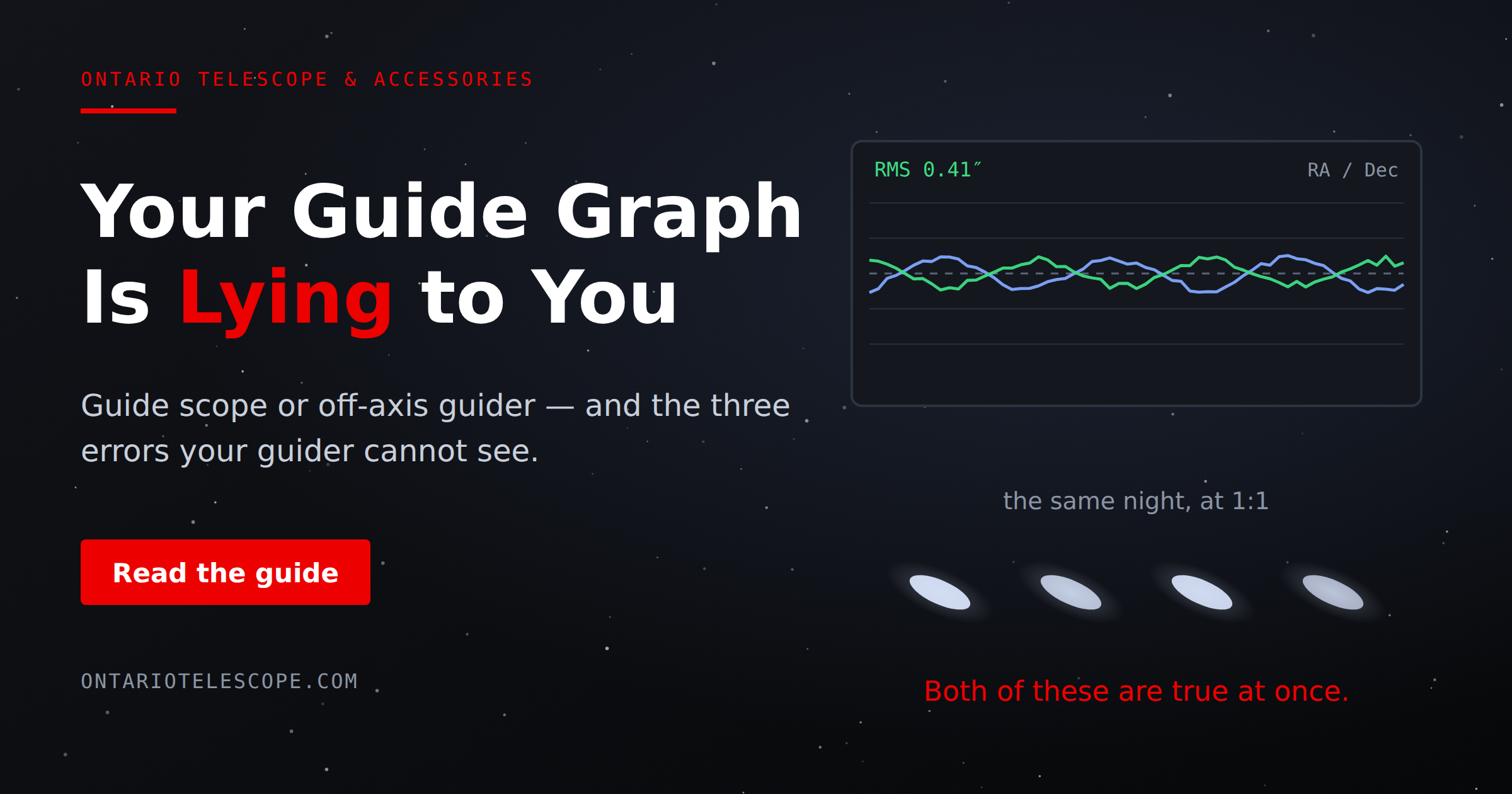
Your Guide Graph Is Lying to You
Read More
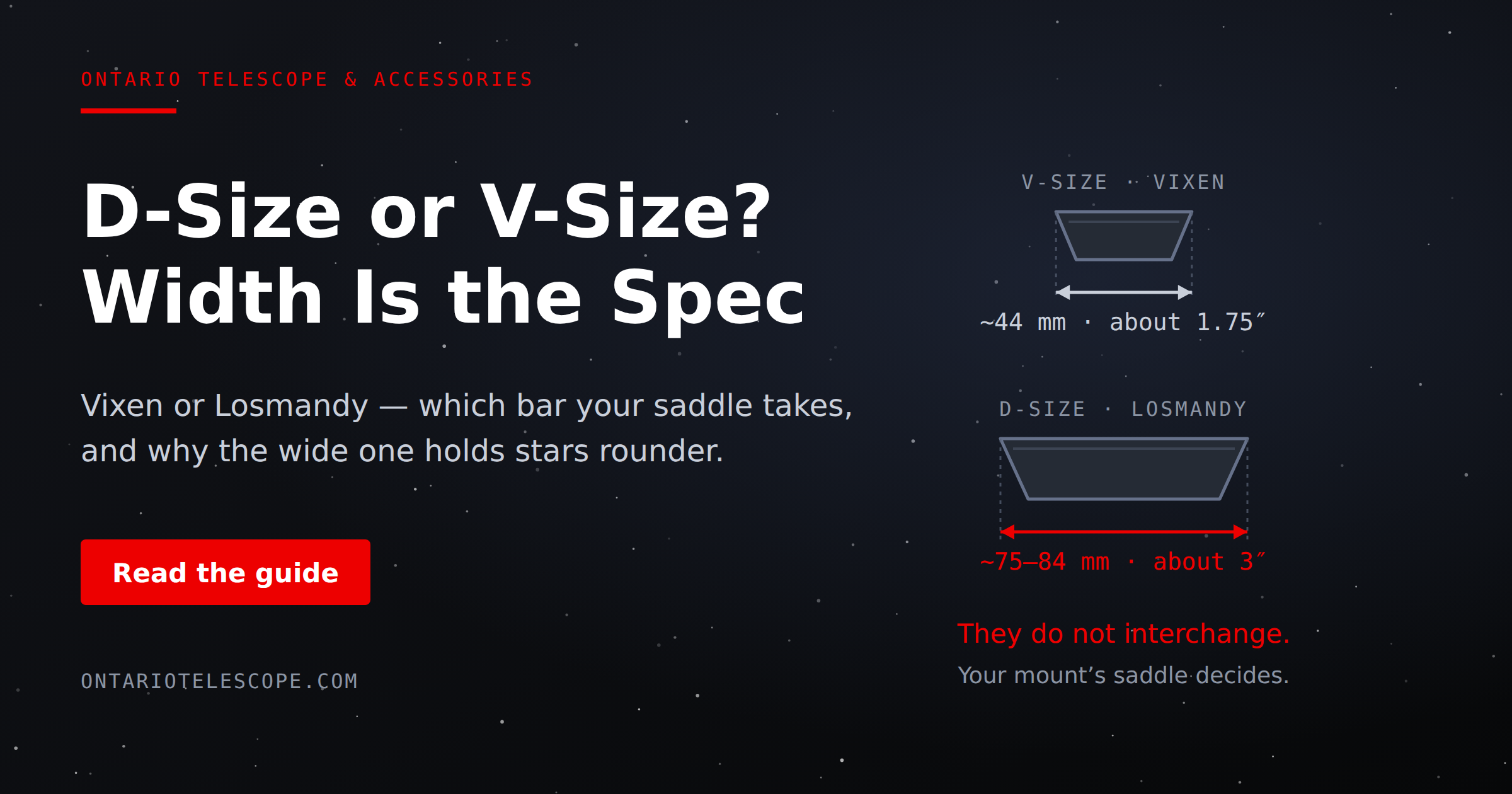
D-Size vs V-Size: A Complete Guide to Telescope Dovetail Systems
Read More
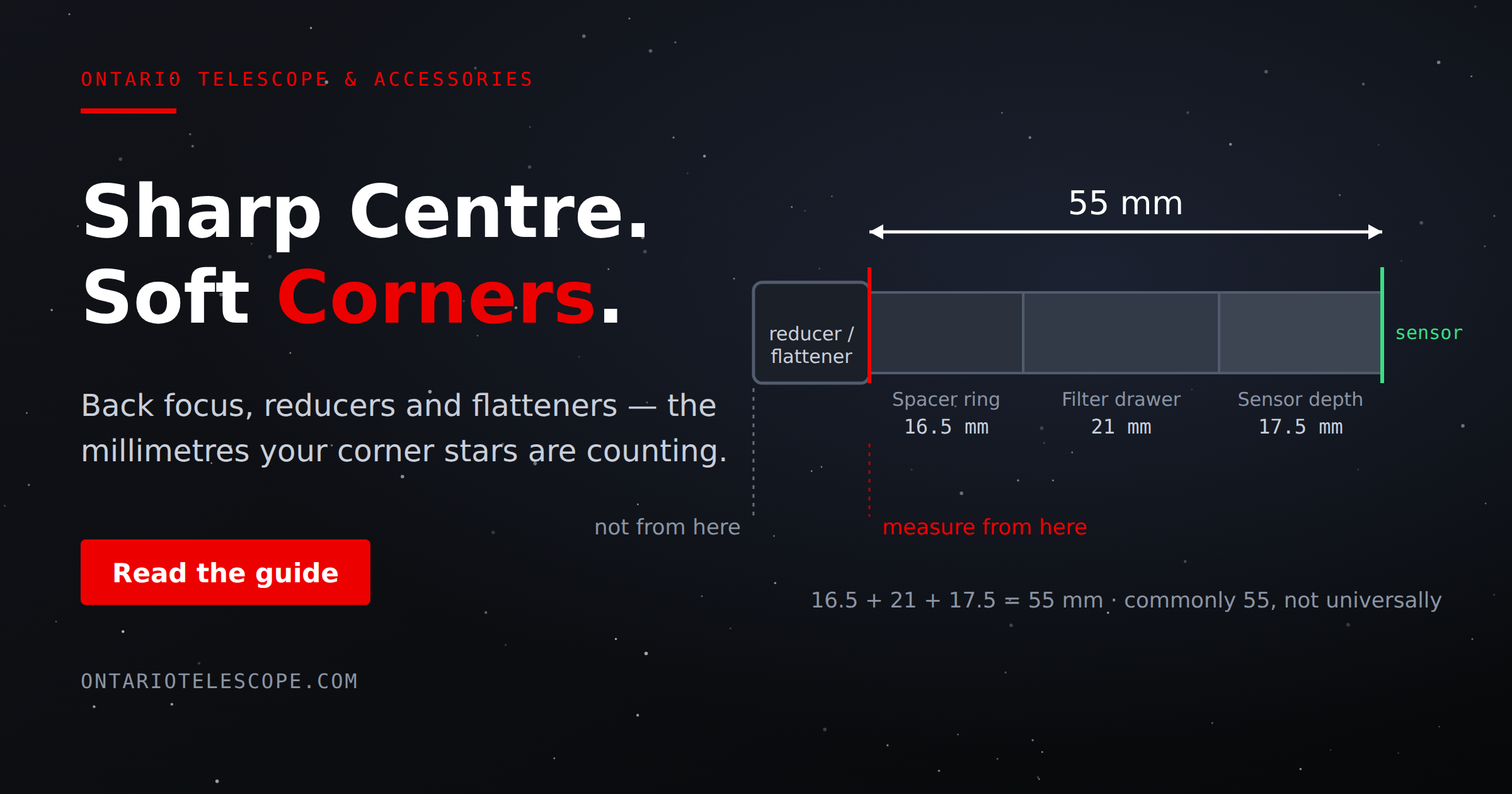
What Is Back Focus in Astrophotography? Telescope Reducers, Flatteners, and Spacing Explained
Read More