


- Description
- Specifications
Product Overview
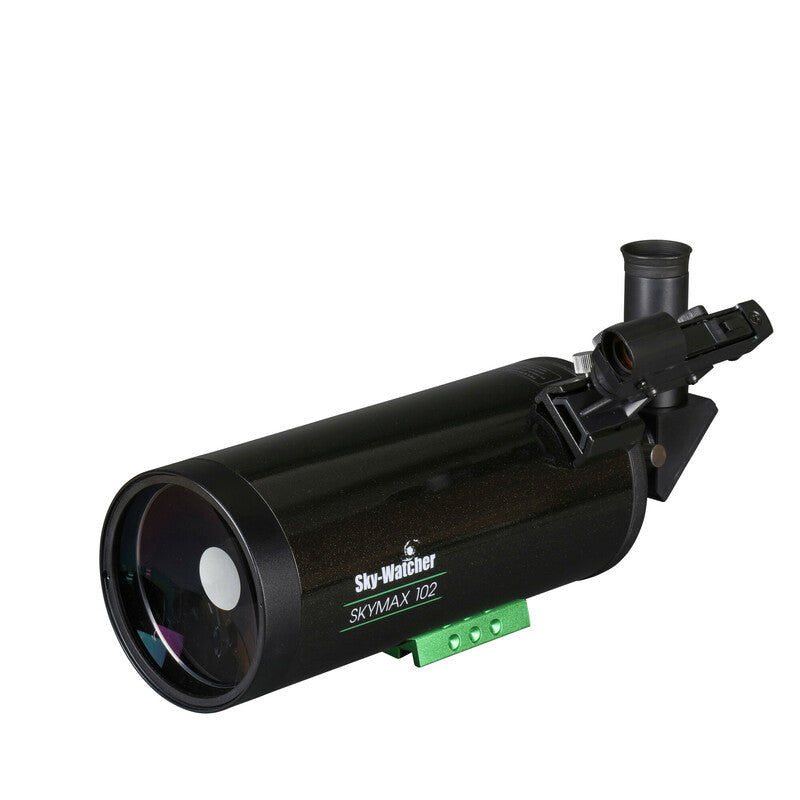
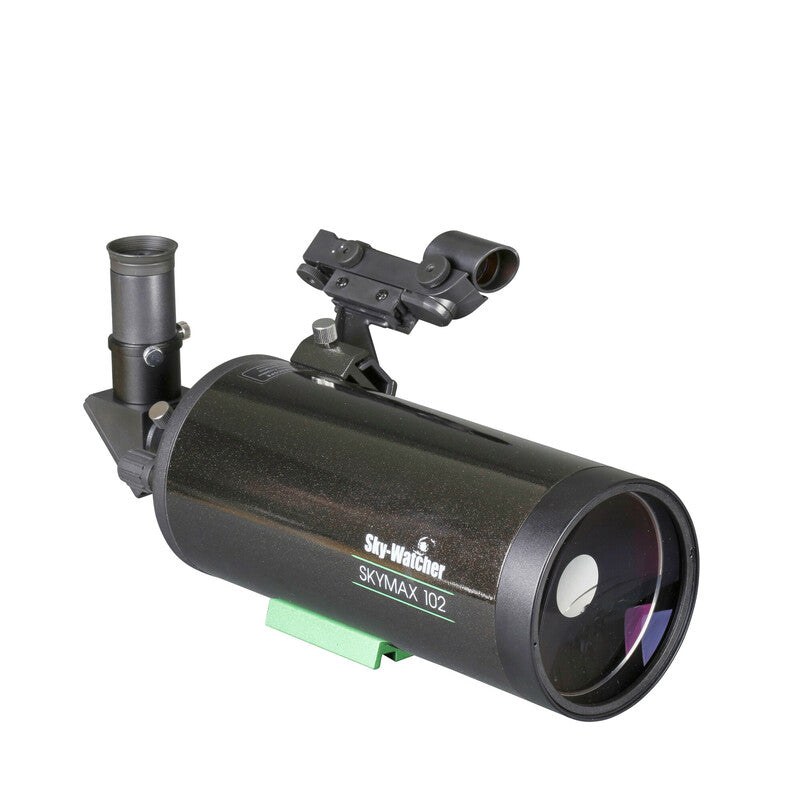
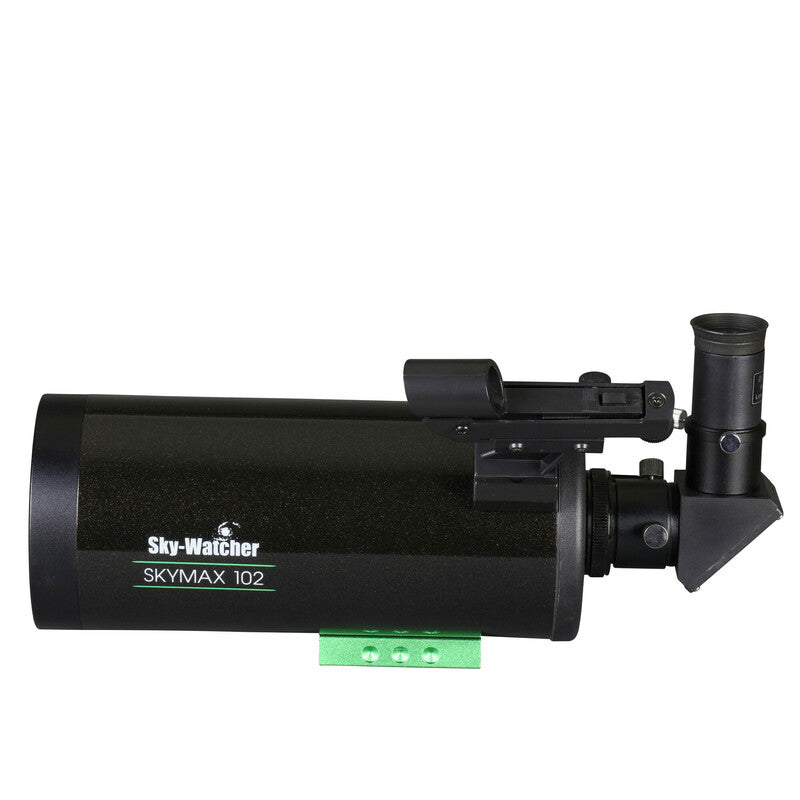
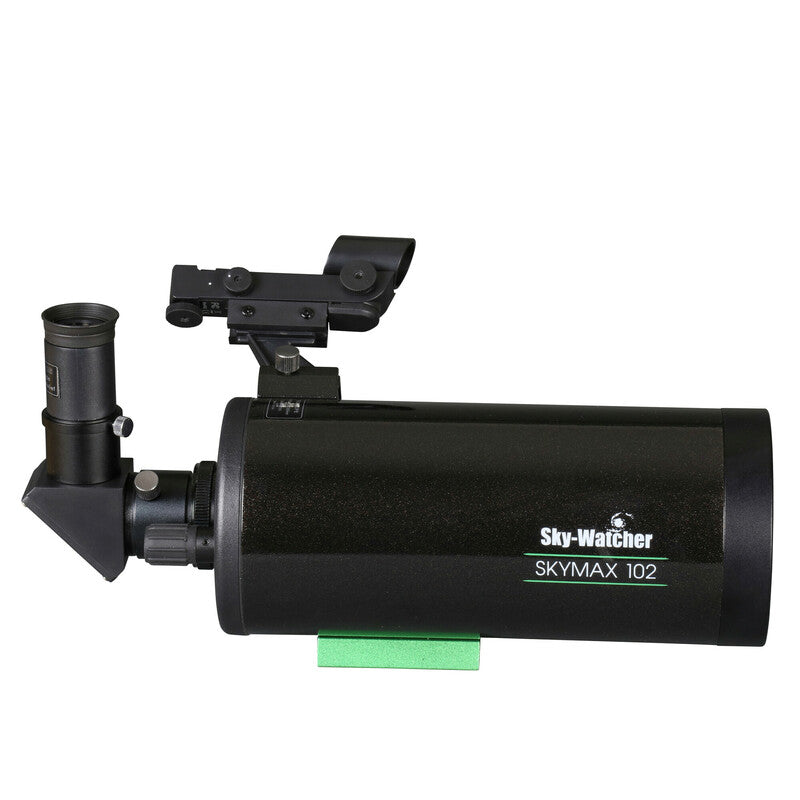
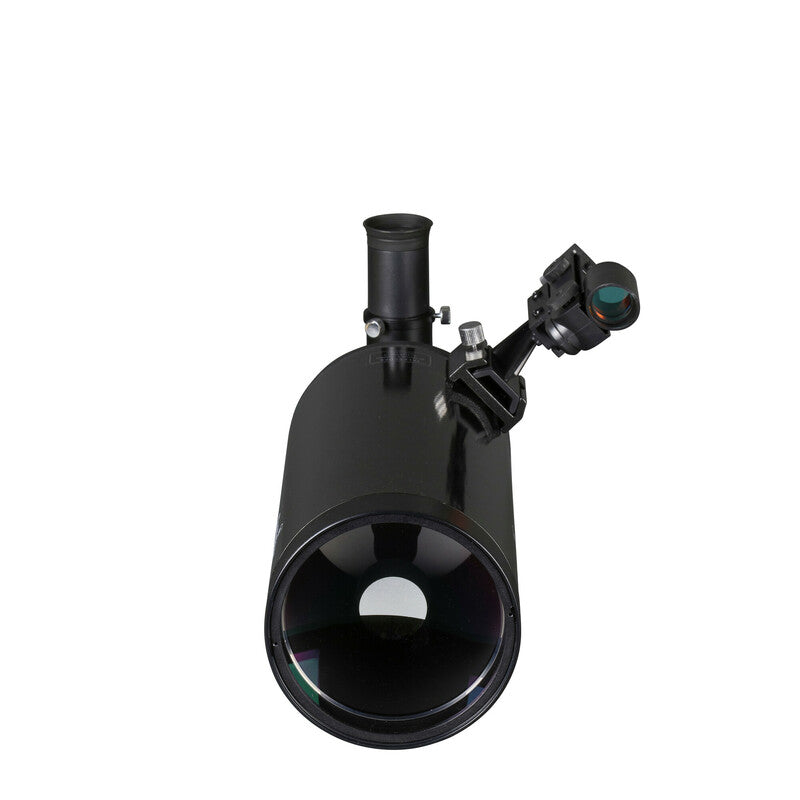
The Skymax 102 is a 102 mm Maksutov-Cassegrain optical tube working at 1300 mm of focal length and f/12.7. The Maksutov layout folds that long focal length into a tube 12.25 inches long and 4.625 inches across, weighing 4.6 pounds - so a focal length that would need a five-foot refractor fits under one arm.
This listing is the optical tube assembly. It is not the Skymax 102 AZ-GTi, which is the same optics sold as a bundle with Sky-Watcher's motorised AZ-GTi mount and tripod. What ships here is the tube with its visual accessories and a V-style dovetail plate; the mount and tripod are chosen separately, which is what most buyers want when they already own an AZ mount, a photo tripod head, or a small equatorial.
Who It's For
This is a good match if the Moon, the planets and double stars are what you want to look at, and you want an instrument that lives in a shoulder bag rather than a corner of the garage. The 1300 mm focal length is roughly five to seven times longer than a typical small Newtonian or refractor, so useful planetary magnification arrives with ordinary eyepieces instead of a Barlow stack.
It also suits anyone already carrying a mount. If you own an AZ-GTi, a Star Adventurer with a counterweight, an AZ5, or a sturdy photo tripod with a V-style saddle, the 4.6 pound tube slots straight in and you have a long-focal-length scope without buying another mount.
Travellers and balcony observers get the most out of it: the sealed tube means no collimation ritual before a session and no open tube to catch wind.
Key Features & Design
- 102 mm Maksutov-Cassegrain at 1300 mm f/12.7: long focal length in a 12.25 inch tube, which is where the contrast on planetary detail comes from.
- Borosilicate mirrors with Radiant Aluminum Quartz (RAQ) coatings: Sky-Watcher publishes 94% reflectivity for these coatings.
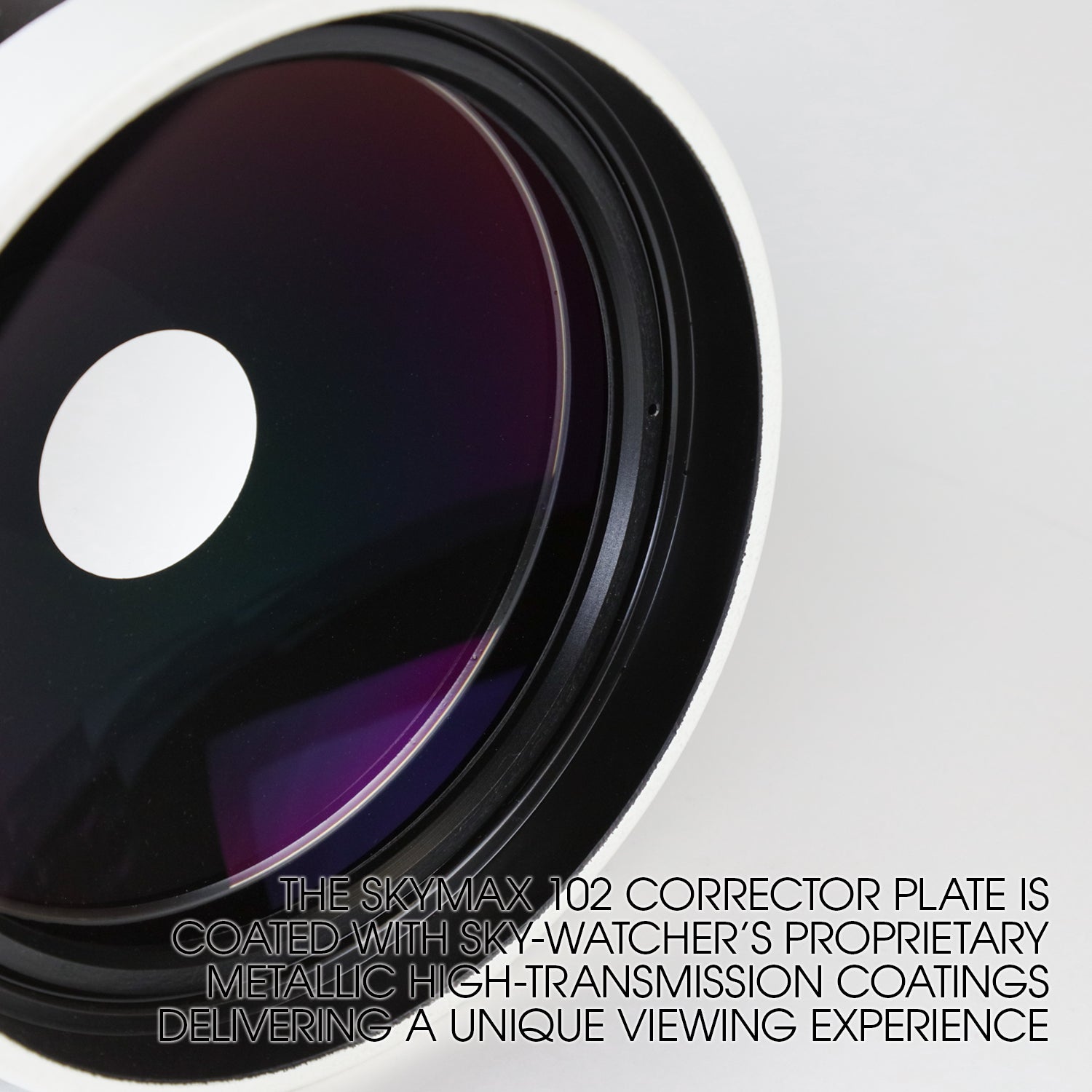
- Full-aperture meniscus corrector with MHTC coating: the corrector plate at the front seals the tube and carries Sky-Watcher's Metallic High-Transmission Coatings.
- Internal primary mirror focus: focusing moves the primary mirror inside the sealed tube, so nothing protrudes and the focuser cannot sag under an eyepiece.
- Sealed optical tube: the closed design keeps dust off the mirrors and holds collimation, so there is nothing to align before observing.
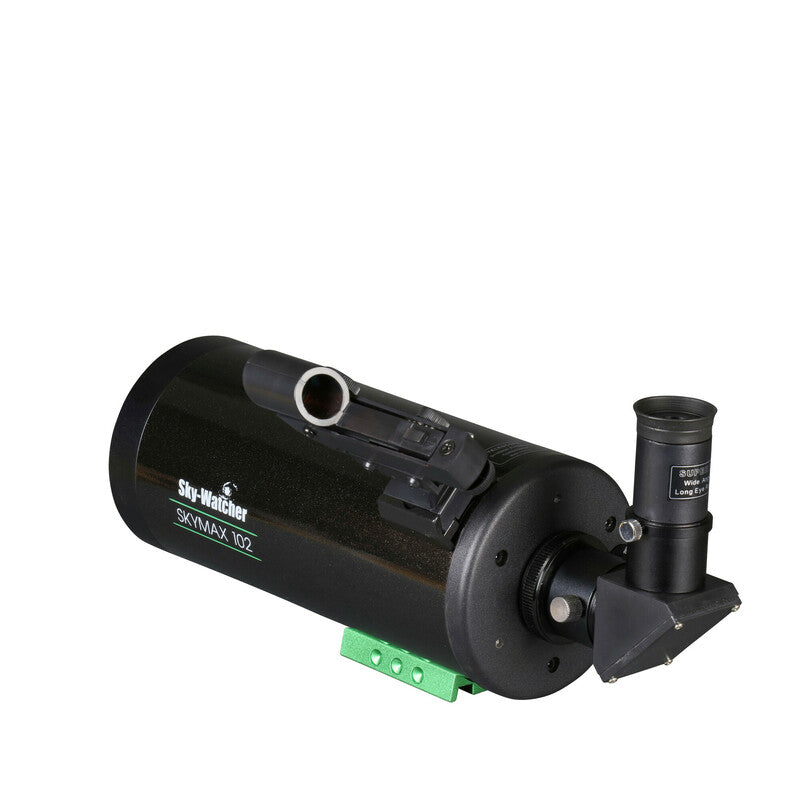
- V-style dovetail plate fitted: mates directly with Vixen-style saddles, which covers the large majority of small alt-azimuth and equatorial mounts.
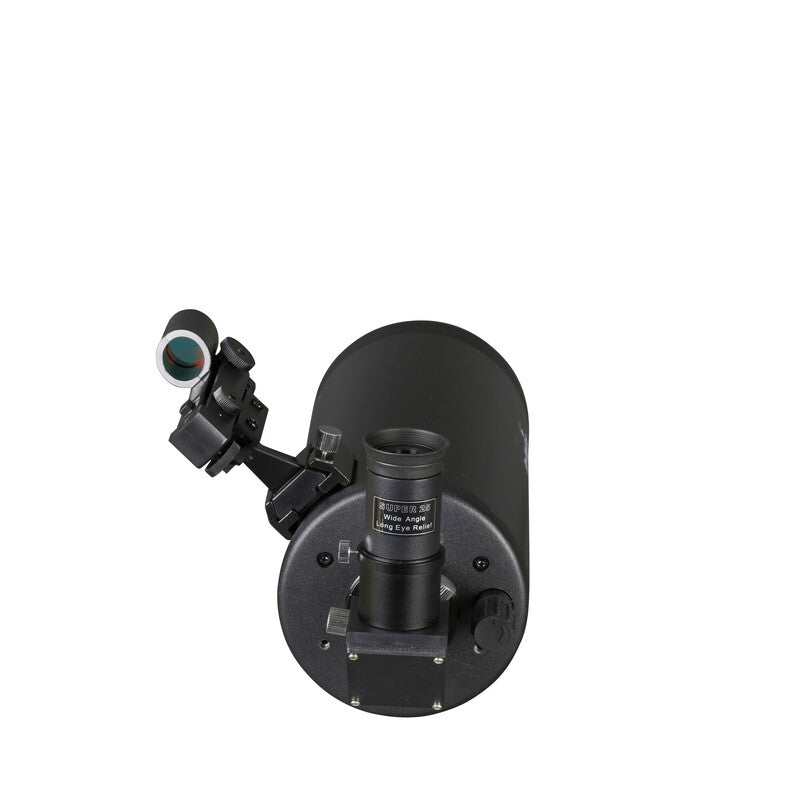
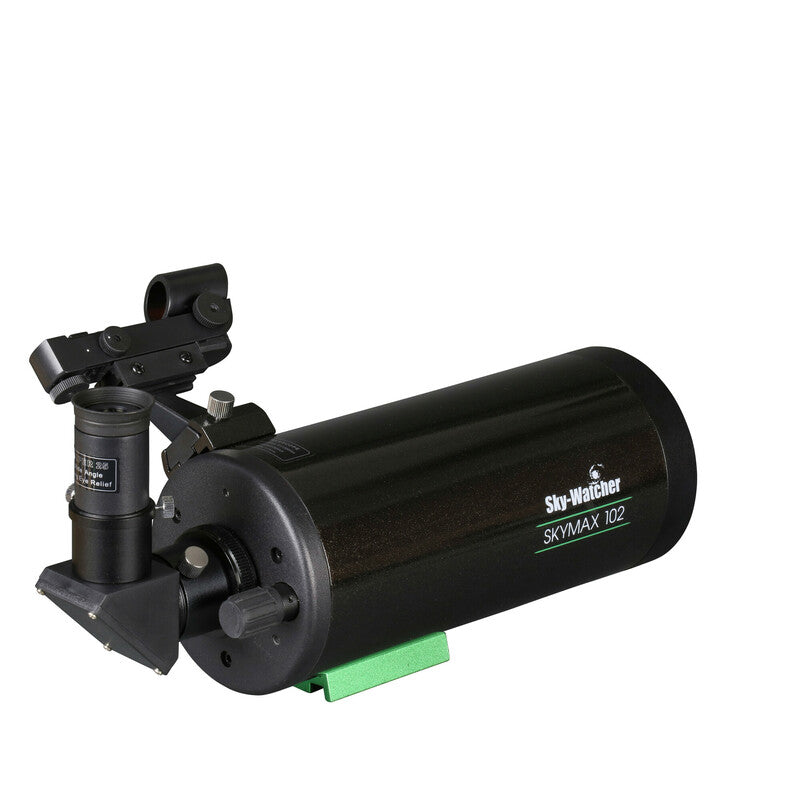
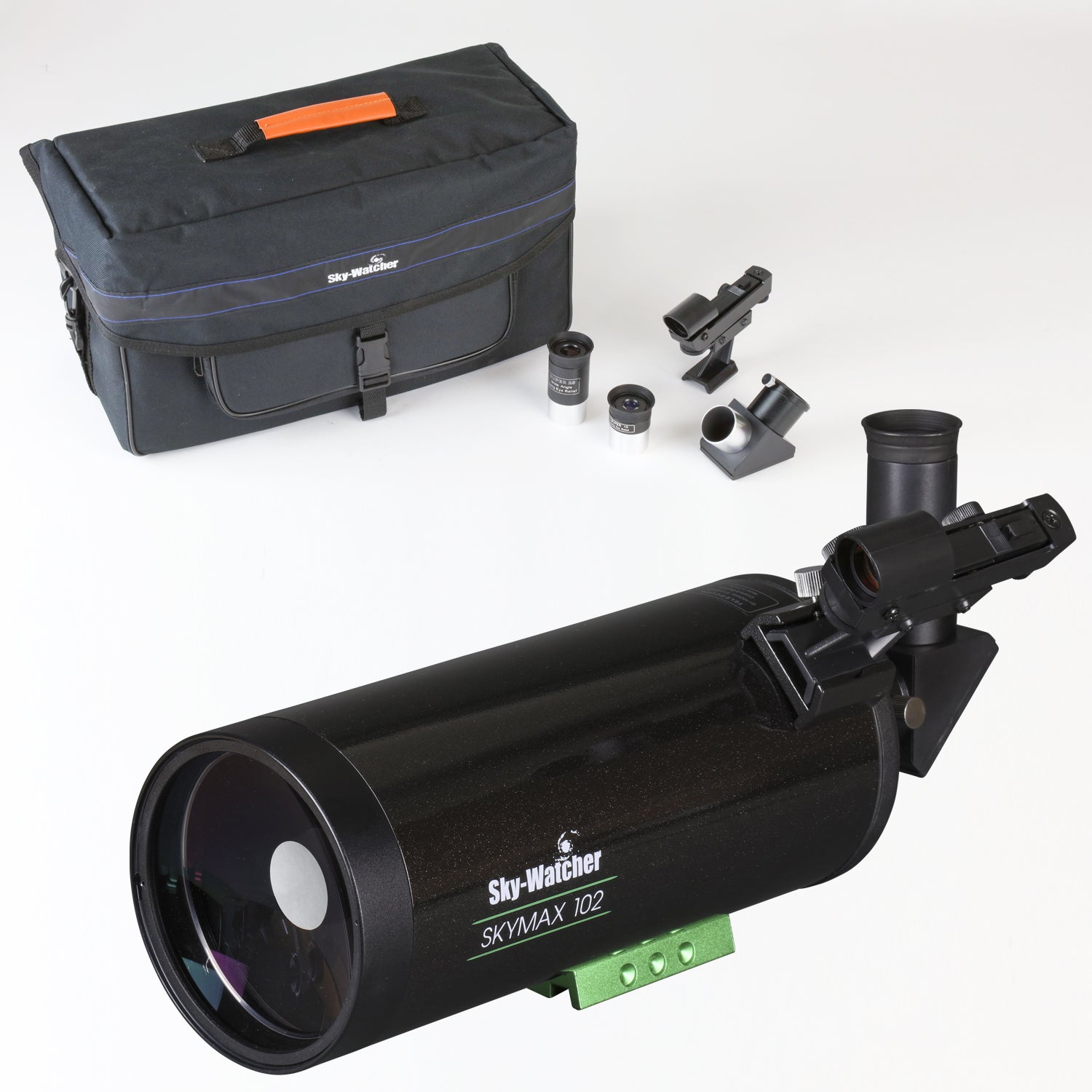
- Included per Sky-Watcher's product page: two 1.25-inch eyepieces, red dot finder, 1.25-inch star diagonal, V-style dovetail and a soft carrying case.
- Glossy black diamond metal-flake finish on the aluminium tube.
Optical / Mechanical Design
A Maksutov-Cassegrain starts with a thick, full-aperture meniscus lens - the corrector plate - at the front of the tube. Light passes through it to a borosilicate primary mirror at the back, reflects forward to a secondary spot aluminised directly onto the inner face of the corrector, and then back out through a hole in the primary to the eyepiece. Folding the path that way is how 1300 mm of focal length fits inside a 12.25 inch tube.
The optical consequence is the reason people buy Maksutovs. Sky-Watcher describes the design as generally regarded as producing a sharper image than a Schmidt-Cassegrain, and the mechanism is the meniscus itself: it is a spherical, easily figured element, and the secondary is a coating on its back surface rather than a separately mounted mirror, so there is no secondary support structure and no diffraction spikes. The corrector also reduces chromatic aberration and, being full aperture, seals the tube against dust and tube currents.
Focusing works by moving the primary mirror along the optical axis inside the tube. There is no external drawtube to flex and no focuser to rebalance, and back focus is effectively adjustable across a wide range - which is what makes the tube tolerant of diagonals, extension tubes and cameras of different depths.
The f/12.7 focal ratio is the trade. A long, slow cone delivers high contrast and a well-corrected central field at high power, and it means the exit pupil at any given eyepiece is small - excellent on the Moon and planets, less suited to sweeping large faint nebulae.
Recommended Uses
- Lunar observing: 1300 mm puts crater walls and rille detail at high scale with a mid-focal-length eyepiece.
- Planetary observing: the unobstructed-looking contrast of a small central obstruction on Jupiter's belts, Saturn's rings and Mars at opposition.
- Double stars: long focal length and a sealed, stable tube make close pairs a natural target.
- Lunar and planetary imaging: a planetary camera at native focal length gives a large image scale straight out of the visual back.
- Terrestrial and daytime spotting with an erecting diagonal.
- Travel and grab-and-go: 4.6 pounds of tube, a soft case, and no setup ritual.
Compatibility and Accessory Notes
The tube arrives on a V-style (Vixen-format) dovetail plate. That is the saddle standard on the AZ-GTi, AZ5, Star Adventurer GTi, EQM-35 and most small equatorial heads, so mounting is a matter of dropping it in and tightening the clamp. At 4.6 pounds it is well inside the payload of any of those.
The visual train is 1.25-inch: the supplied star diagonal and both eyepieces are 1.25-inch, and any 1.25-inch eyepiece, filter or camera nosepiece works directly. Because focusing moves the primary mirror rather than a drawtube, the tube reaches focus with a wide variety of accessory depths - a binoviewer, a longer diagonal, or a camera with a T-adapter will all come to focus without spacers in most cases.
For imaging, a standard 1.25-inch nosepiece planetary camera drops into the diagonal or straight into the visual back. If you are planning a specific camera or a T-thread connection, send us the model and we will confirm the adapter you need.
If you want this scope with a mount and tripod as one package, the Skymax 102 AZ-GTi bundle is the version to look at, and we stock it separately.
Good to Know Before You Order
- This is the optical tube assembly, not a complete telescope package. Eyepieces, diagonal, finder, dovetail and soft case are included; no mount and no tripod. The Skymax 102 AZ-GTi bundle is the mounted version, sold as its own product.
- Focal ratio is f/12.7. That is a long, slow cone - excellent for the Moon, planets and double stars, and a narrow field for large deep-sky objects. A 1.25-inch eyepiece at 1300 mm gives roughly a one-degree field at the low end.
- Sky-Watcher publishes tube weight as 4.6 pounds. Shipping weight is higher once the case and accessories are boxed.
- The finder specification differs between Sky-Watcher's two publications. Their product page lists a red dot finder for the Skymax 102; their Skymax Series product sheet lists a 6x30 straight-through finder. We confirm which finder is in the carton before shipping, and will tell you which one your unit has if you ask.
- Maksutovs need cooldown. The sealed tube and thick corrector reach ambient temperature more slowly than an open tube; the sharpest planetary views come after the optics have settled outdoors.
- Free shipping applies to this item per Sky-Watcher's listing.
Frequently Asked Questions
Is it difficult to set up?
It is about as simple as a telescope gets. The tube is sealed and collimated at the factory, so there is no mirror alignment to perform - now or later. Setup is: slide the dovetail into your mount's saddle, tighten the clamp, drop the diagonal and an eyepiece into the back, and aim with the finder. At 4.6 pounds the whole thing goes up one-handed. The only thing that takes patience is cooldown, and that happens while you are setting up the rest.
How is this different from the Skymax 102 AZ-GTi we also sell?
Same optical tube. The AZ-GTi version adds Sky-Watcher's motorised, app-controlled AZ-GTi mount head and a tripod. This listing is the tube on its own, for people who already have a mount.
What mount does it need?
Anything with a Vixen-style (V-format) saddle rated for 4.6 pounds plus eyepiece - an AZ-GTi, AZ5, Star Adventurer GTi with counterweight, or a small equatorial all work. Tell us what you own and we will confirm the fit.
Can I photograph with it?
Lunar and planetary imaging works well at 1300 mm with a planetary camera. The f/12.7 ratio makes long-exposure deep-sky imaging a slow proposition, so it is not the tube people choose for nebulae and galaxies.
Why a Maksutov instead of a Schmidt-Cassegrain of similar size?
Sky-Watcher's position is that Maksutovs generally produce a sharper image. The design has a smaller central obstruction and a secondary mirror coated onto the corrector rather than mounted on a spider, which lifts contrast on planetary detail.
Bottom Line
A sealed 102 mm Maksutov-Cassegrain optical tube that delivers 1300 mm of focal length in a 12.25 inch, 4.6 pound package, supplied with two 1.25-inch eyepieces, a diagonal, a finder, a V-style dovetail and a soft case. It is the tube-only version of the Skymax 102 - pair it with a mount you already own, or ask us and we will match one to it.
| SKU | S11510 |
|---|---|
| UPC | 050234115100 |
| Optical design | Maksutov-Cassegrain |
| Aperture | 102 mm |
| Focal length | 1300mm |
| F-ratio | 12.7 |
| Mirror substrate | Borosilicate |
| Mirror coatings | Radiant Aluminum Quartz (RAQ) coatings, 94% reflectivity |
| Corrector plate coatings | Metallic High-Transmission Coatings (MHTC) |
| Focuser | Internal primary mirror focus |
| Eyepieces | 1.25-inch 25mm, 10mm |
| Finderscope | Red dot finder |
| Diagonal | 1.25-inch Star diagonal |
| Mounting hardware | V-style dovetail plate |
| Tube material and finish | Aluminium, glossy black diamond metal-flake finish |
| Tube length | 12.25 inches |
| Tube outer diameter | 4.625 inches |
| Tube weight | 4.6 pounds |
| Included accessories | Two 1.25-inch eyepieces, red dot finder, 1.25-inch diagonal, V-style dovetail, soft carrying case |
| Mount | Not included - optical tube assembly only |
You may also like
Recently viewed
Recent Blog Posts
View all
Your Guide Graph Is Lying to You
Read More
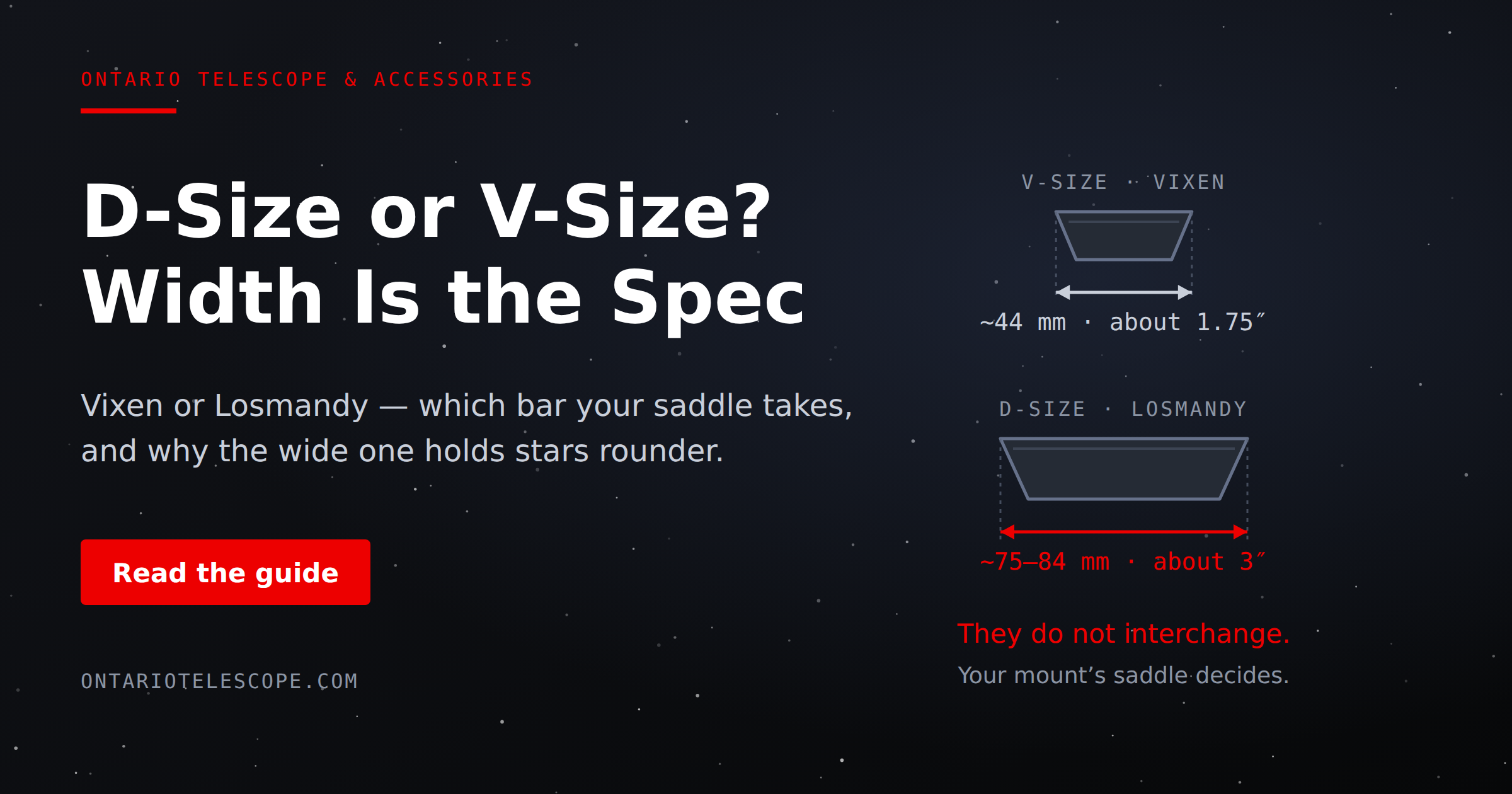
D-Size vs V-Size: A Complete Guide to Telescope Dovetail Systems
Read More
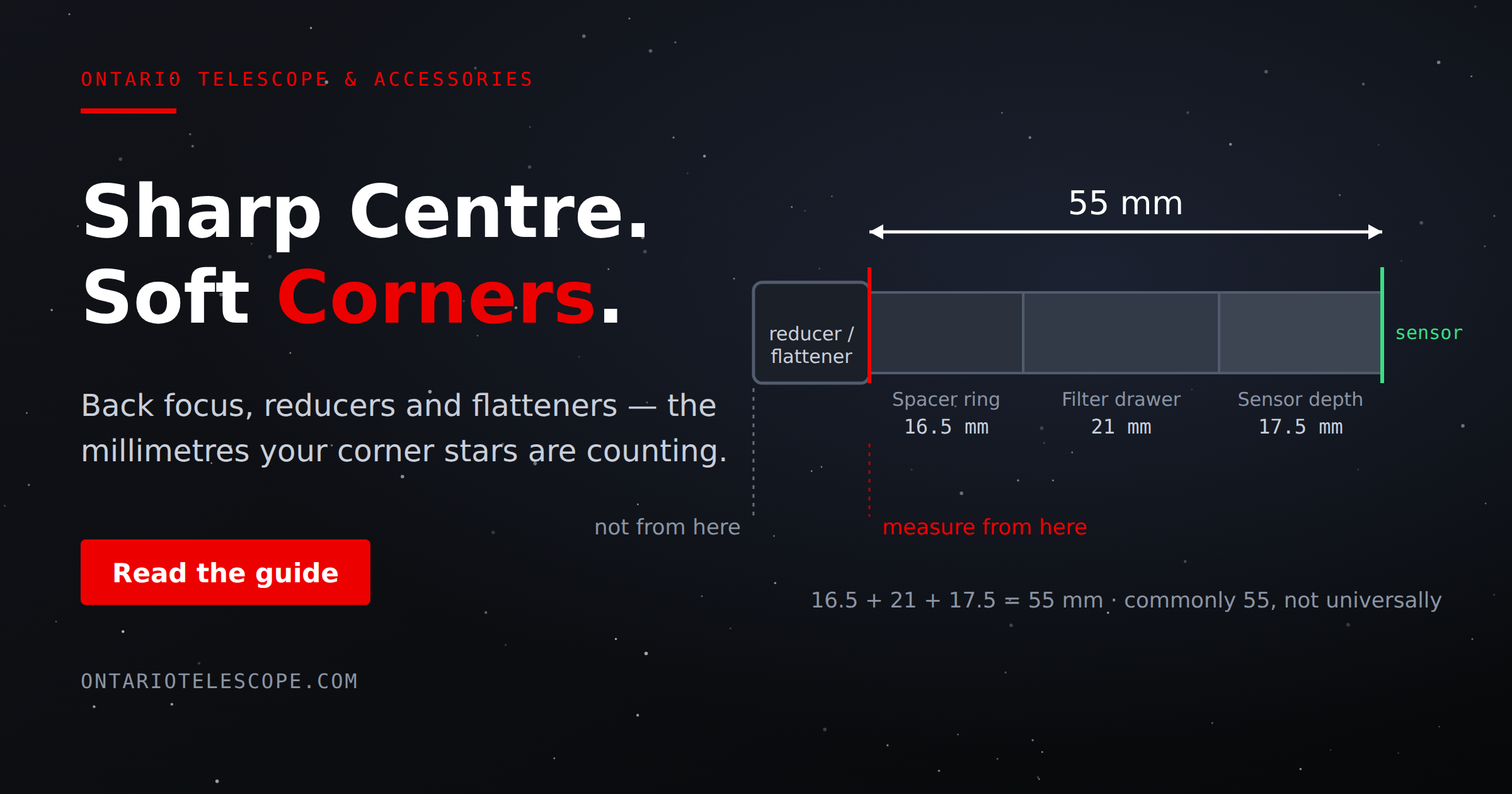
What Is Back Focus in Astrophotography? Telescope Reducers, Flatteners, and Spacing Explained
Read More