


- Description
- Specifications
Product Overview
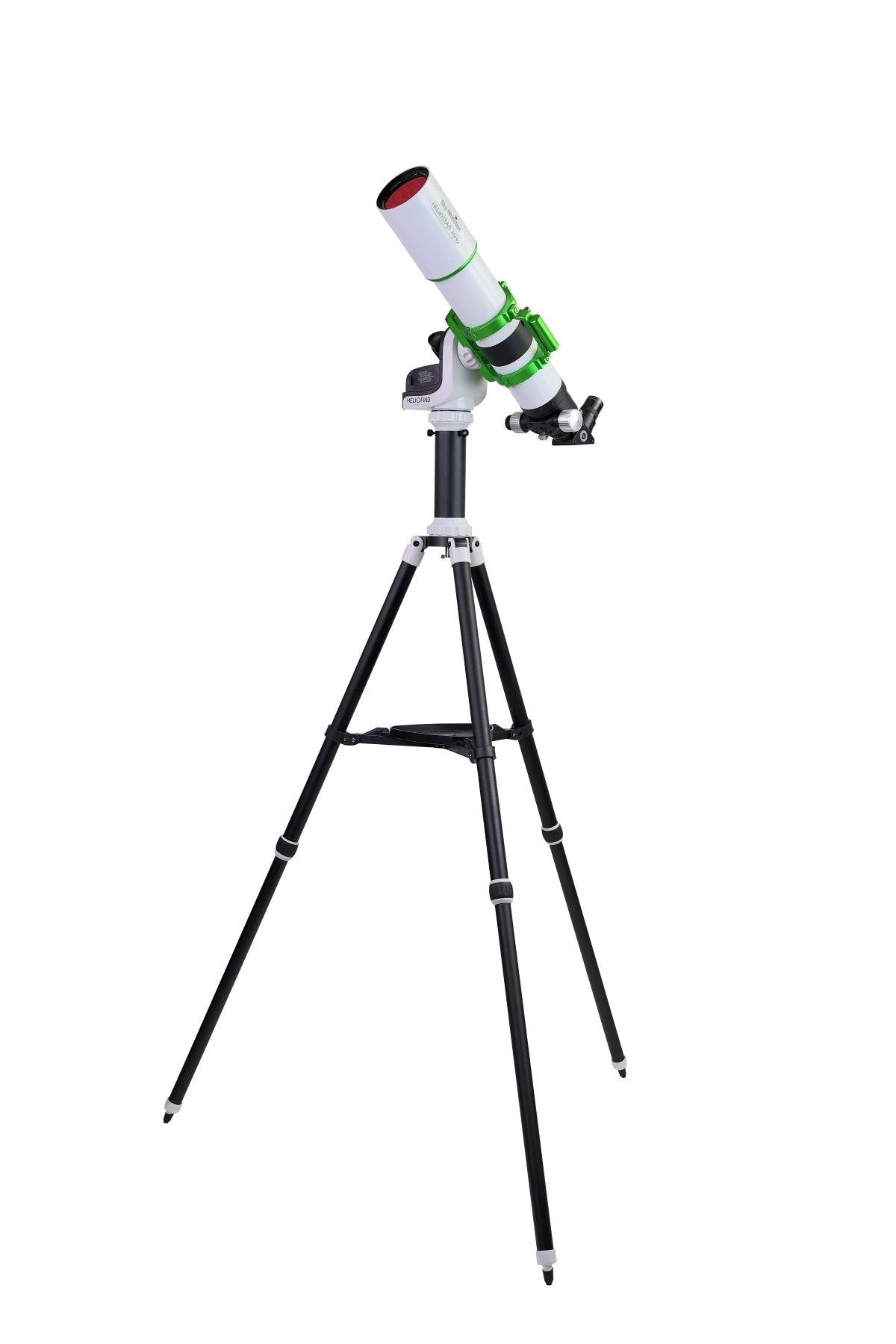
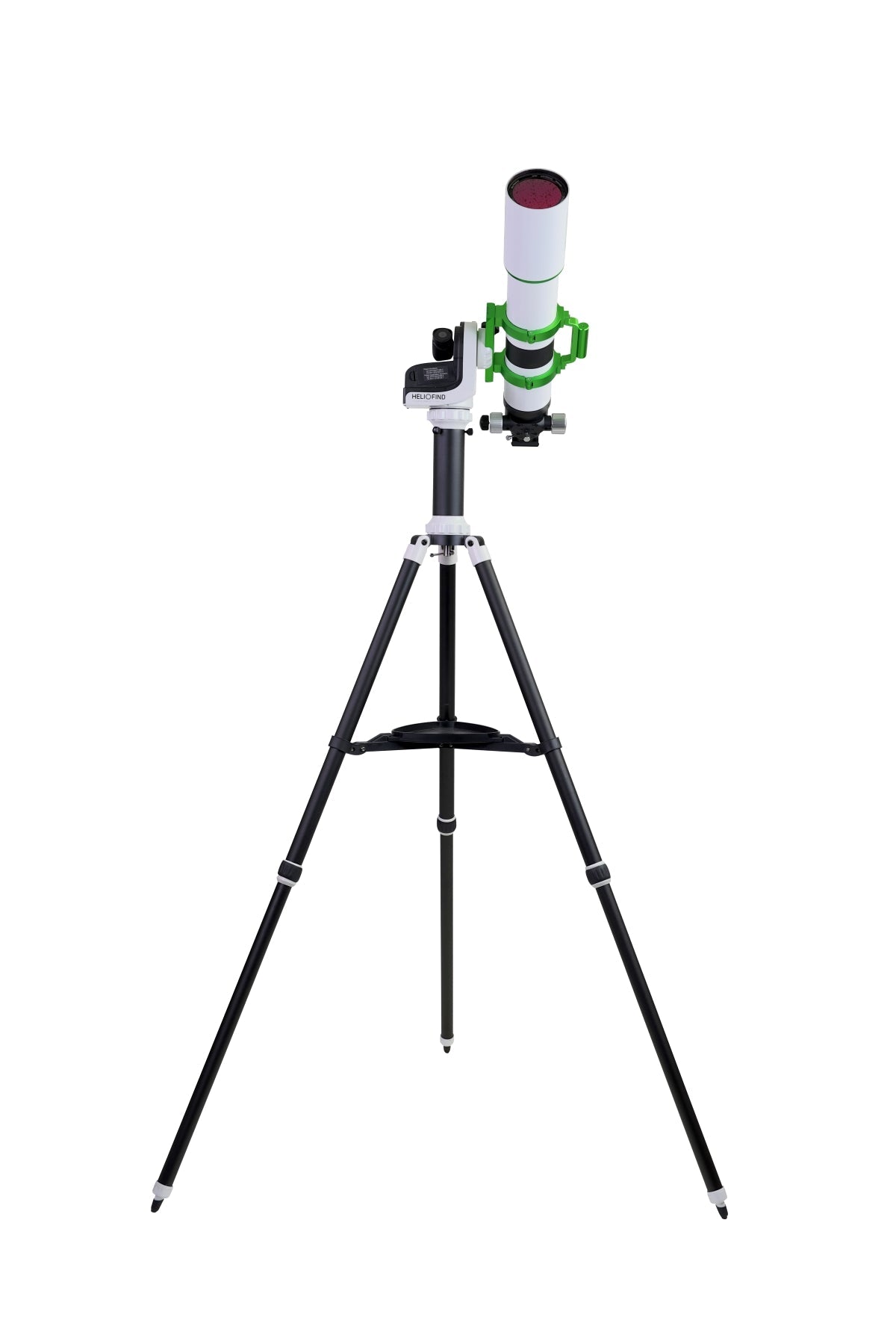
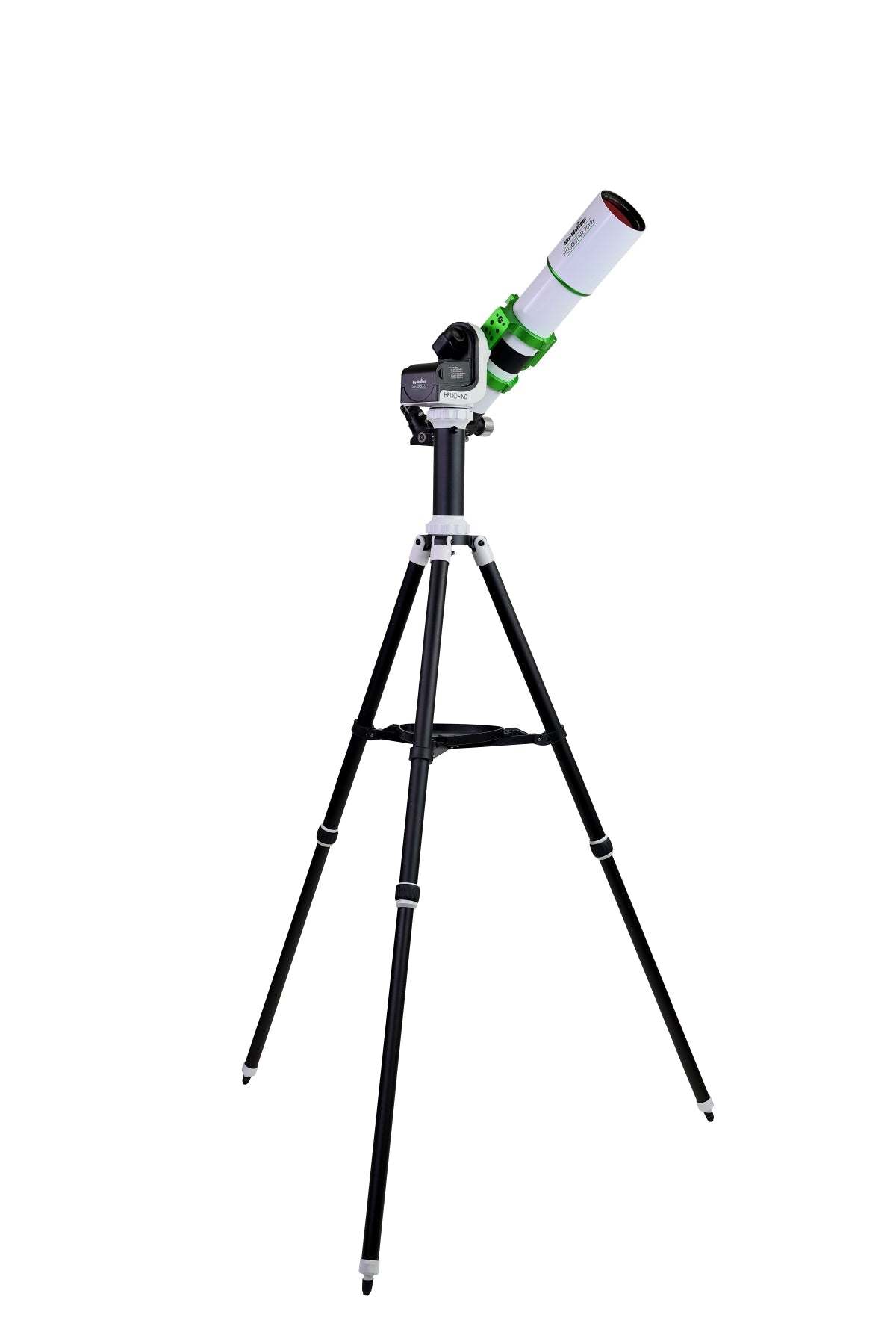
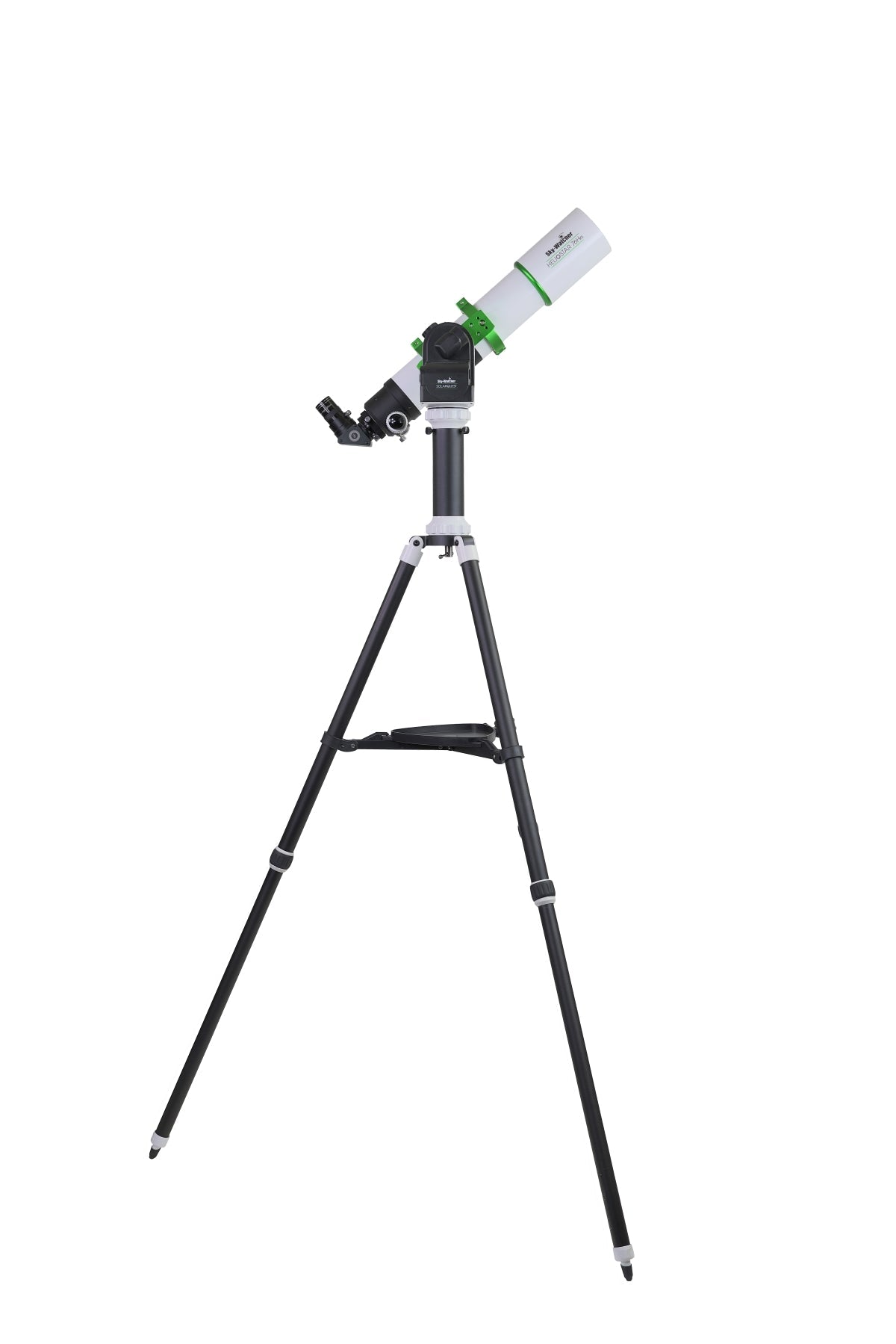
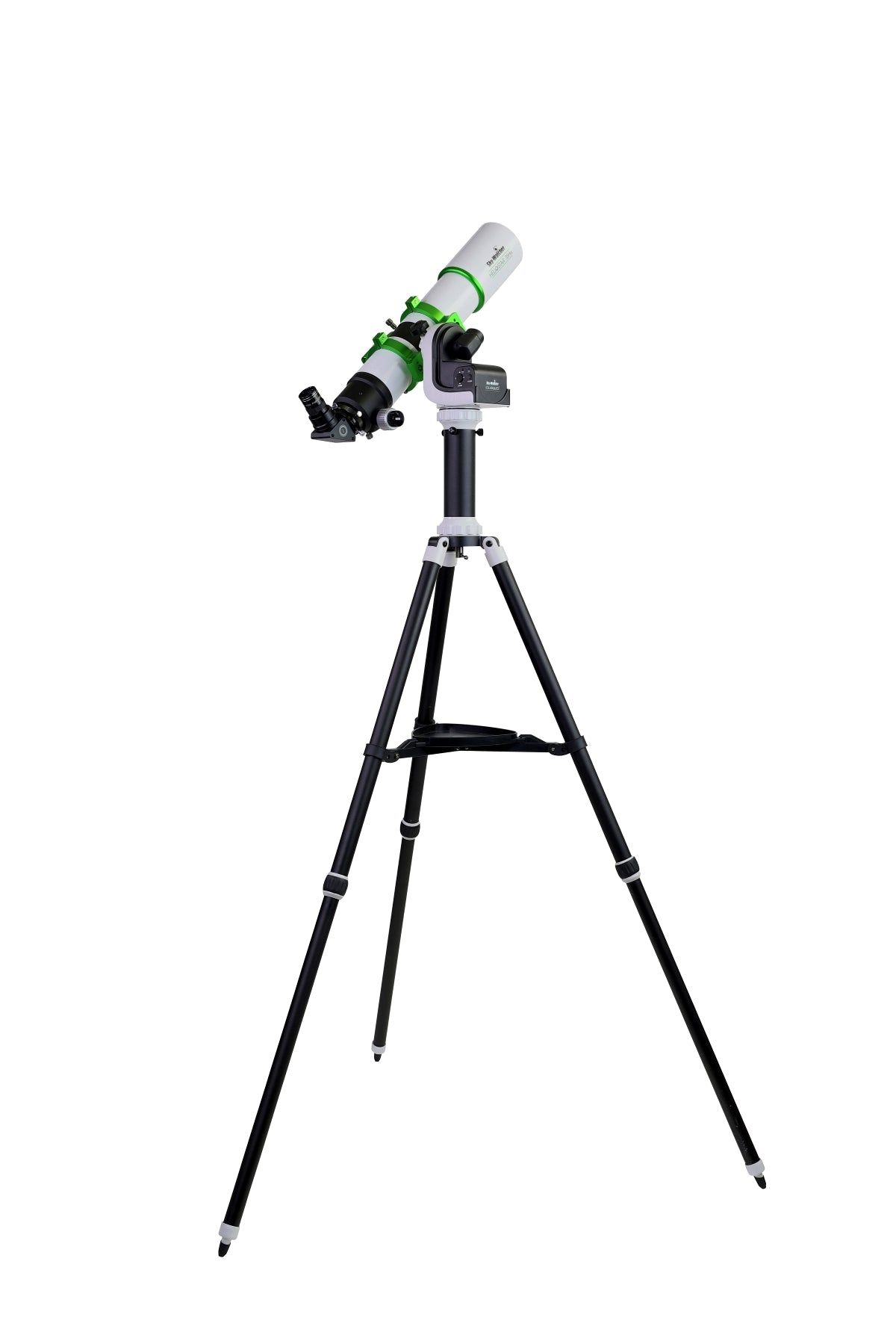
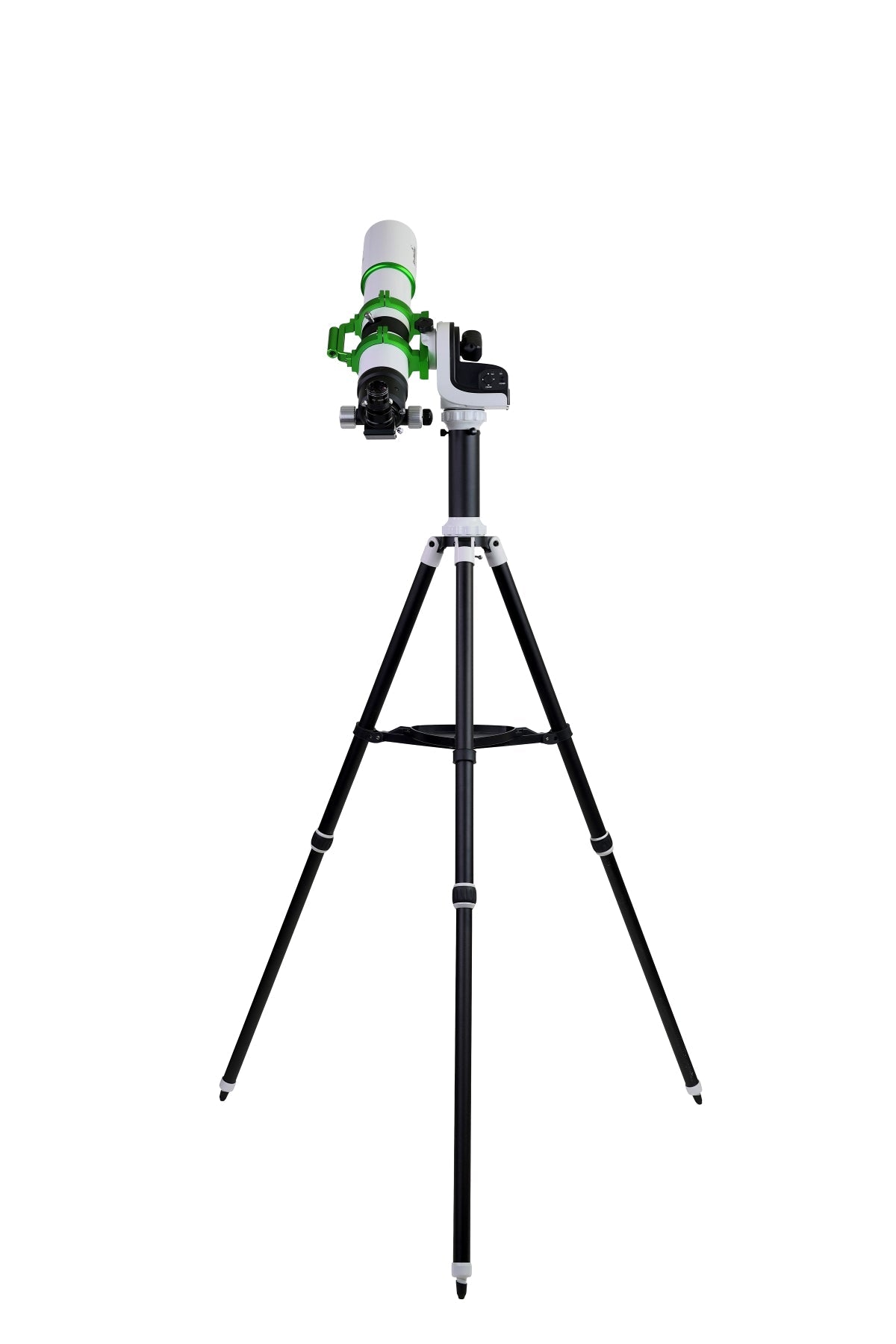
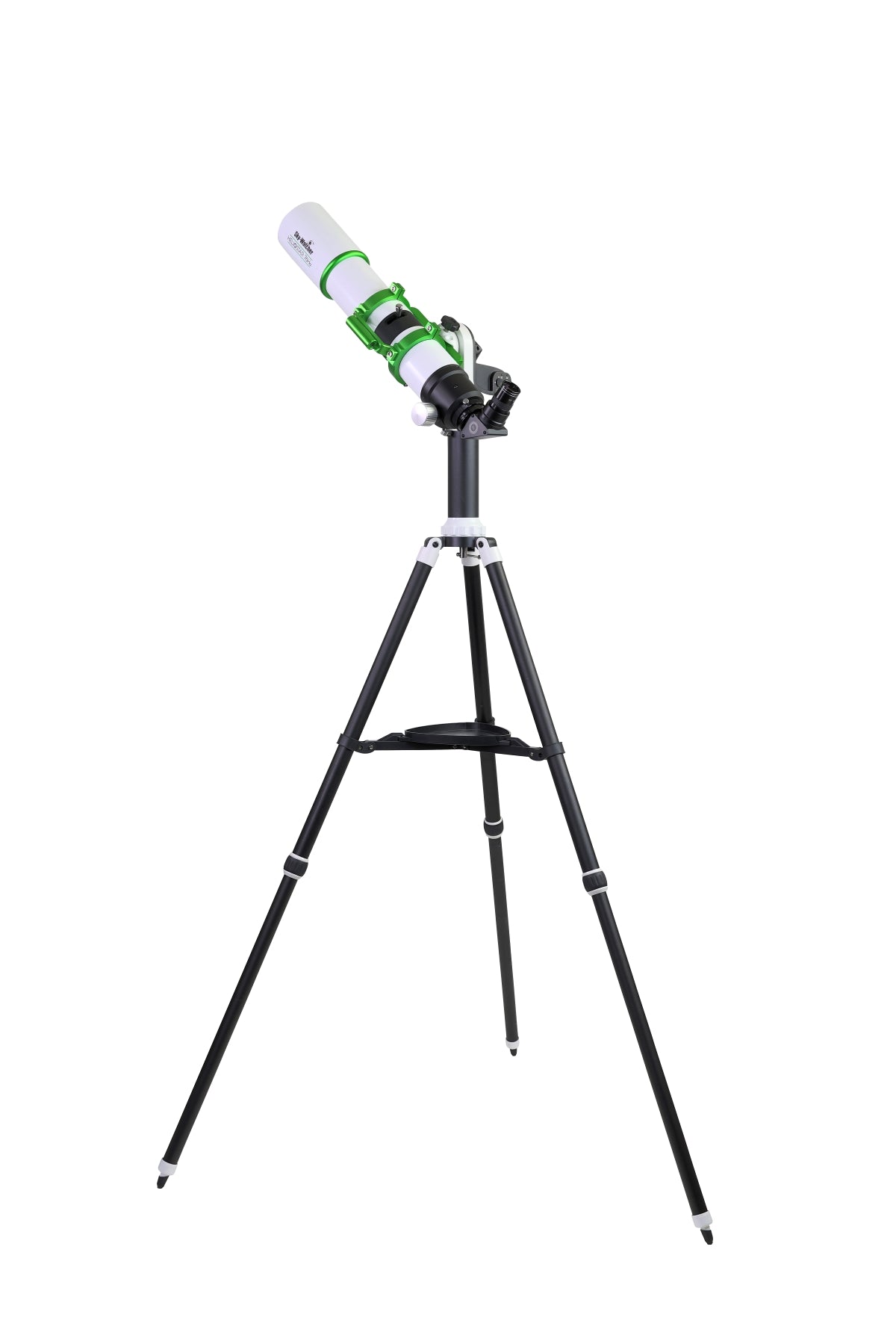
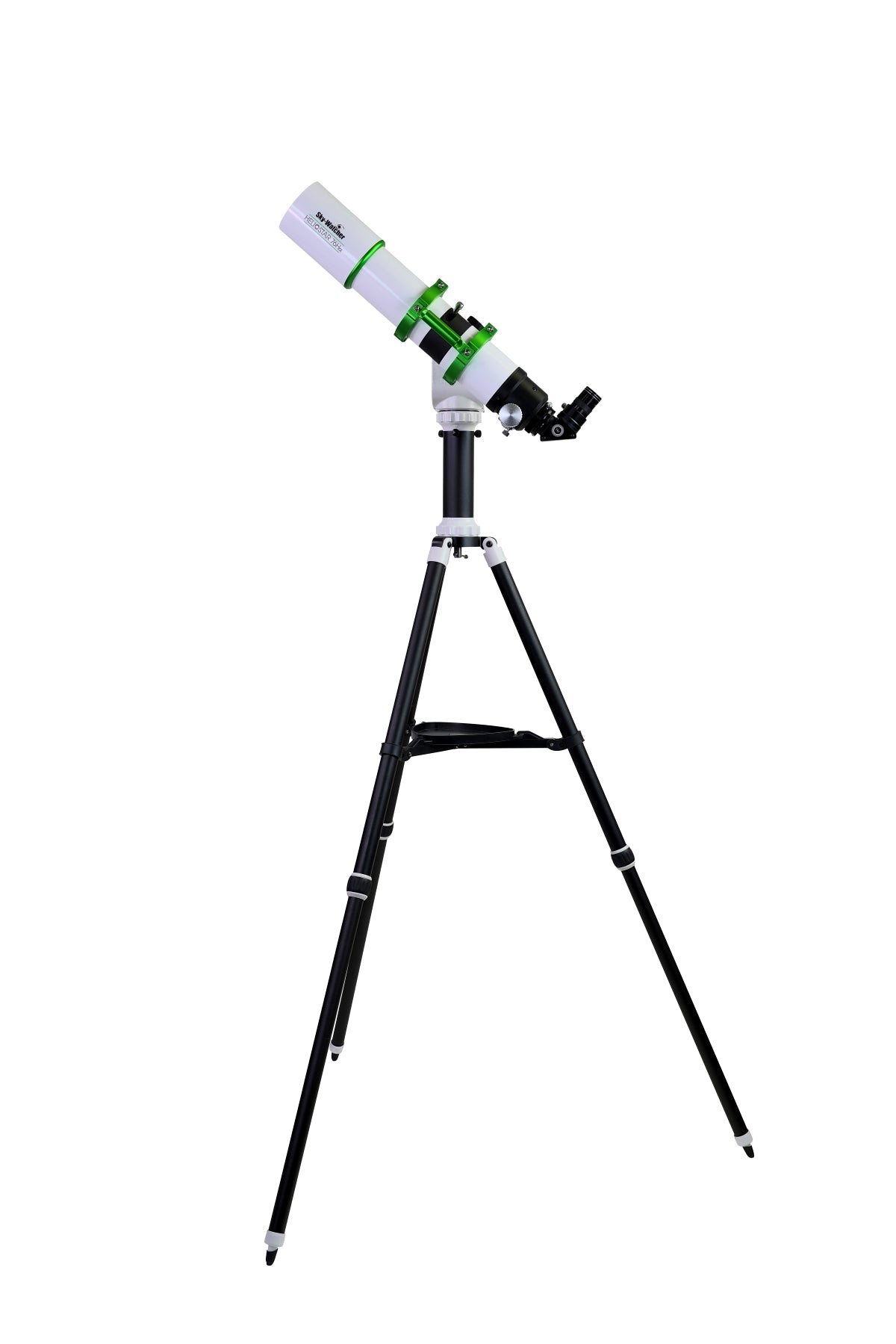
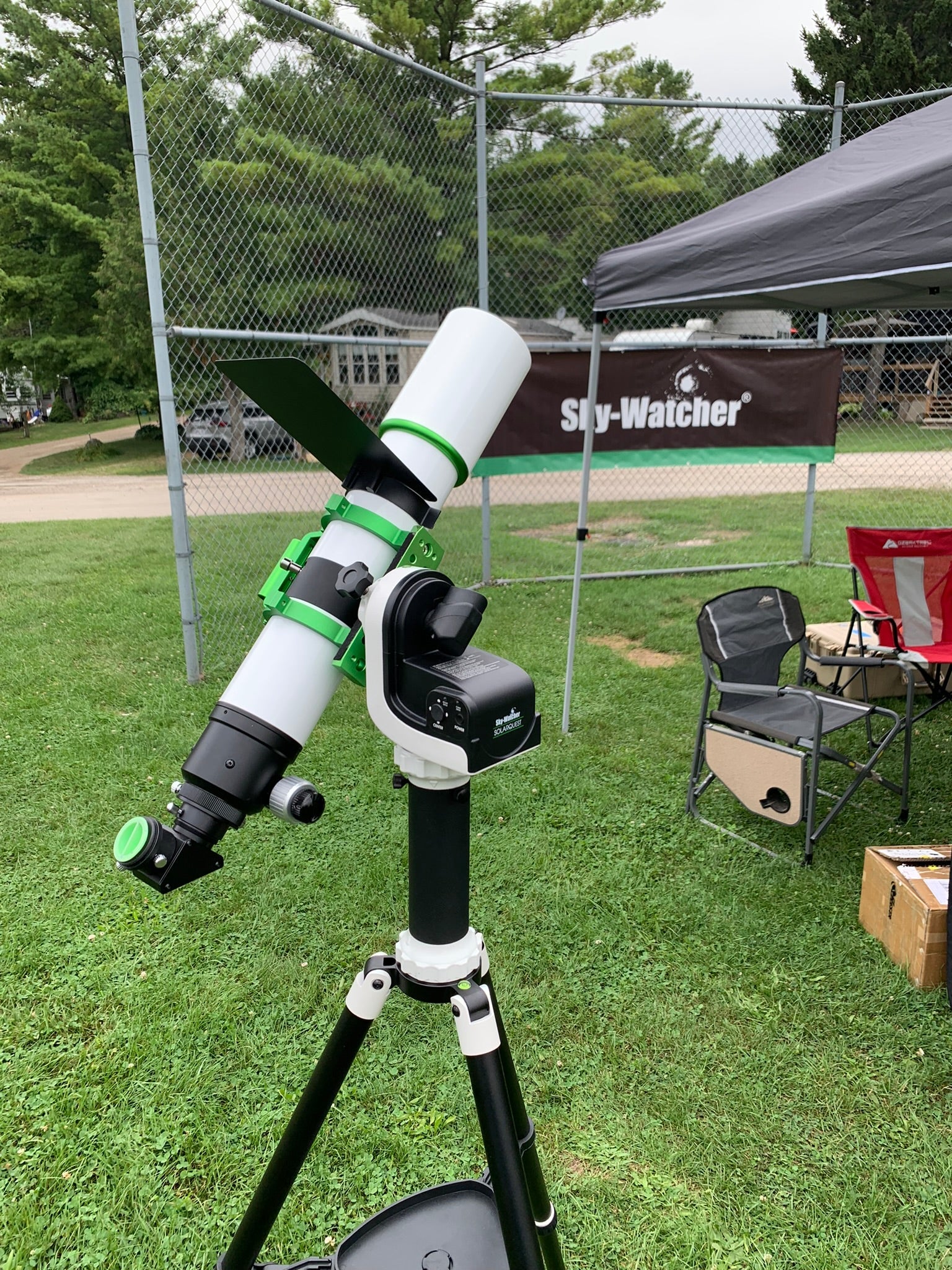
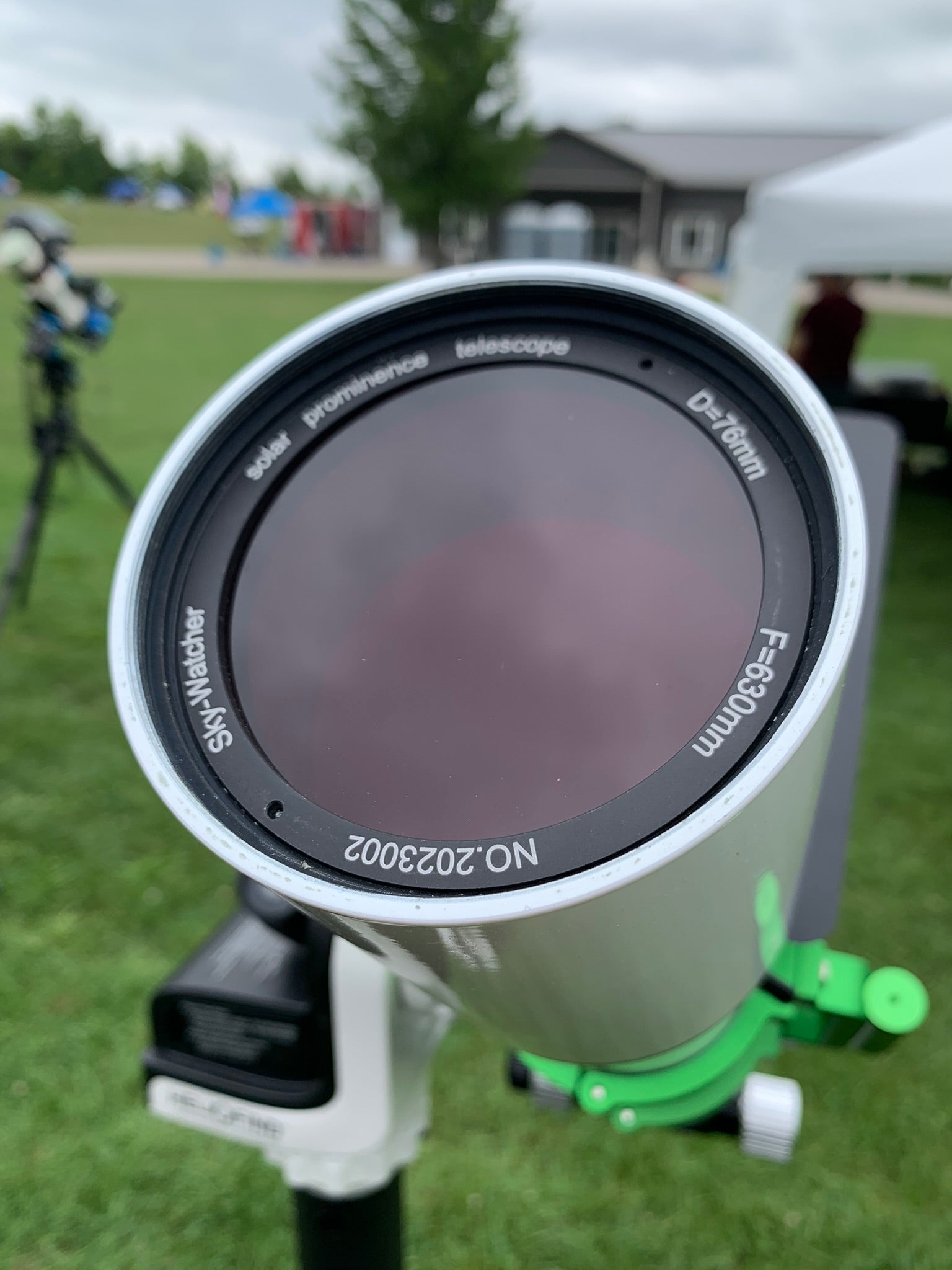
This kit pairs the Sky-Watcher Heliostar 76 hydrogen-alpha solar telescope with the SolarQuest self-aligning solar tracking mount, so the telescope and the platform that follows the Sun arrive together and already matched. The Heliostar 76 is a 76 mm f/8.3 dedicated Ha instrument with a 630 mm focal length, tuned natively to a bandpass under 0.5 angstroms. That bandwidth is what separates a solar telescope that shows the chromosphere — prominences on the limb, plage, filaments, spicules and the structure inside active regions — from a white-light filter that shows only sunspots on the photosphere.
The SolarQuest carries it on an Alt-Az motorized head with an 11-pound payload capacity, its own adjustable-height aluminium tripod, and built-in GPS. One button starts the HelioFind routine: the mount levels itself, works out the Sun's azimuth and altitude, finds it, and then tracks it for hours. There is no polar alignment and no star alignment, because there are no stars out.
The telescope weighs 8.4 lbs and the whole kit ships at 22.0 lb, tripod, hard case and all.
Who It's For
This is a good match if you want to observe or image the Sun on any clear day without waiting for night, and you would rather set up in a minute than align a mount. It suits eclipse chasers, outreach volunteers and educators running daytime sessions, imagers building a solar rig, and anyone who has looked through a white-light filter and wanted to see the part of the Sun that moves. Because SolarQuest aligns itself, the setup routine is the same on the first day as on the hundredth.
Key Features & Design
- 76 mm f/8.3 dedicated Ha telescope: 630 mm focal length. The aperture is what sets the resolution available on fine chromospheric structure, and 76 mm resolves detail that smaller Ha scopes smooth over.
- Sub-0.5 angstrom bandpass from a single etalon: Sky-Watcher's Solis etalon technology reaches this natively. A conventional route to that contrast is a second stacked etalon, which costs roughly 40 percent of the system's brightness; the single Solis etalon keeps the image bright.
- Trifid Tuner: applies pressure to the etalon plates through three support veins to move the passband onto the hydrogen emission line. Tuning is a routine part of solar observing, because local air pressure shifts the refractive index and Doppler motion in the chromosphere shifts the line itself.
- 11.5 mm blocking filter: in the 1.25-inch removable eyepiece diagonal, and part of the telescope's certified safety path.
- 2-inch dual-speed Crayford focuser: fine focus control, which matters when the useful depth of focus on solar detail is shallow.
- Integrated Heliostar solar finder: puts the Sun in the field without pointing anything at it by eye.
- SolarQuest HelioFind alignment: built-in GPS, automatic levelling, one-button acquisition, then dual-axis solar tracking. An 8-way joystick centres the Sun.
- SolarQuest tripod and power: adjustable-height aluminium tripod on 1.25-inch legs, running from eight AA batteries or the included 12V adapter.
- ISO 12312-2 tested: lab tested in the United States, and each individual unit is checked on the actual Sun before shipping.
Optical / Mechanical Design
A hydrogen-alpha telescope works by isolating a single emission line at 656.3 nm out of the Sun's full spectrum. The component that does the isolating is the etalon — a pair of precisely spaced parallel mirrors that reflect light between them and pass only the wavelengths that meet the resonance condition. Change the spacing or the angle of incidence and the passband moves, which is why an Ha telescope has a tuner at all.
Narrower bandpass means more contrast on surface features. The traditional way to get there is to stack a second etalon, which narrows the band but also darkens the image by around 40 percent, and doubles the most expensive part of the instrument. Solis reaches the same territory with one etalon, so the Heliostar 76 delivers double-stack contrast at single-etalon brightness and single-etalon cost. The Trifid Tuner is the mechanism that positions the passband: three support veins press on the etalon plates, distributing the load so that the tuning does not stress the surrounding optics.
On the mount side, SolarQuest is a motorized Alt-Az head on a DC servo drive with dual-axis tracking at solar rate, slewing at 16x and 1200x. Its V-style saddle takes the Heliostar's dovetail directly. Built-in GPS supplies time and position, and HelioFind converts that into a pointing solution, so the alignment step that normally requires a visible sky reference is handled internally.
Recommended Uses
- Visual hydrogen-alpha solar observing: prominences, filaments, plage, spicules and active-region structure, day to day.
- Solar imaging: the tracking is steady enough for video capture and stacking; a camera phone adapter is included for quick captures.
- Solar eclipses: self-alignment and GPS make a travel setup practical, which is what SolarQuest was designed around.
- Outreach and classroom astronomy: daytime sessions with a one-button setup and continuous tracking for queues of viewers.
- Following the solar cycle: tracking sunspot groups, flare activity and coronal mass ejection signatures over weeks.
Compatibility and Accessory Notes
The telescope mounts on a V-style (Vixen) dovetail and the SolarQuest saddle accepts V-style, so the two are matched as supplied. The mount's 11-pound payload capacity against the telescope's 8.4 lbs leaves 2.6 lbs of headroom for a camera and diagonal.
The 11.5 mm blocking filter lives inside the removable 1.25-inch eyepiece diagonal and is part of the safety chain that carries the ISO 12312-2 test result. The Heliostar is used with that diagonal and no other; substituting a different diagonal removes the blocking filter from the light path. Eyepieces are standard 1.25-inch, and the supplied 20 mm 70-degree eyepiece gives 31.5x on the 630 mm focal length.
The SolarQuest runs on eight AA batteries or the included 12V adapter, and has a 3/8-inch threaded mounting hole and a built-in 8.5-inch pier extension. If you are planning a camera for solar video capture, send us the model and we will check the weight against the 11-pound payload and the back focus through the blocking-filter diagonal.
Good to Know Before You Order
- This is a dedicated solar instrument. Sky-Watcher states it will not provide views or images of anything except the Sun. The etalon passes one 656.3 nm line, so there is nothing left for night-time targets.
- The supplied diagonal is the safety path. The 11.5 mm blocking filter is built into it. Solar observing done incorrectly can cause serious and permanent eye damage, and every unit is individually tested on the Sun before it ships precisely because that margin matters.
- The bandpass is quoted two ways. The specification list gives <0.5Å; the descriptive text on the same vendor page cites 0.55Å for the Solis etalon. Both come from Sky-Watcher.
- Payload headroom is 2.6 lbs. The 8.4 lb telescope against an 11 lb capacity accommodates a light camera and diagonal. A heavy imaging train is worth checking with us first.
- AA batteries are not included. The 12V adapter is.
- Tuning is part of using it. The Trifid Tuner is adjusted at the start of a session and again as conditions change, because atmospheric pressure and Doppler shifts in the chromosphere move the line. It is a knob, not a calibration procedure.
Frequently Asked Questions
Is it difficult to set up?
It is one of the simplest setups in astronomy. The tripod goes down, the telescope drops into the V-style saddle, and you press one button. SolarQuest levels itself, reads its GPS position, finds the Sun and starts tracking. There is no polar alignment, no star alignment and no time or date entry. From there you tune the etalon for the view you want and focus.
What will I actually see that a white-light filter does not show?
The chromosphere instead of the photosphere: prominences arcing off the limb, dark filaments snaking across the disc, bright plage around active regions, spicule texture and the fine structure inside sunspot groups. A white-light filter shows sunspots and granulation and stops there.
Can I image with it?
Yes. The mount tracks at solar rate on both axes, which is what video capture and stacking need. A camera phone adapter is included for quick captures, and the 1.25-inch focuser accepts a dedicated solar camera through the supplied diagonal.
Do I need to double-stack it?
No. The single Solis etalon is tuned to under 0.5Å natively, which is the contrast a stacked pair is usually added to reach — without the 40 percent brightness loss the second etalon costs.
How much magnification does the supplied eyepiece give?
The 20 mm eyepiece on a 630 mm focal length works out to 31.5x, a full-disc view with room for the prominences around the limb.
Does it come with everything I need?
Yes, for visual use. Telescope, mounting rings, V-style dovetail, solar finder, blocking-filter diagonal, clip-on Sun shade, 20 mm eyepiece, camera phone adapter, hard case, and the SolarQuest mount with its tripod and 12V adapter. AA batteries and a dedicated camera are the only things you would add.
Bottom Line
A 76 mm sub-0.5Å hydrogen-alpha telescope with single-etalon brightness and double-stack contrast, on a GPS mount that finds and tracks the Sun at the press of one button. Both halves ship in cases, and daytime observing starts about a minute after the tripod is down.
| SKU | S11330 |
|---|---|
| UPC | 810098970662 |
| Kit contents | Heliostar 76 H-Alpha solar telescope + SolarQuest solar tracking mount |
| Heliostar 76 H-Alpha telescope | |
| Aperture | 76mm |
| Focal length | 630mm |
| Focal ratio | f/8.3 |
| Bandpass | <0.5Å (vendor descriptive text elsewhere cites 0.55Å for the Solis etalon) |
| Etalon technology | Solis Etalon Technology with Trifid Tuner (single etalon) |
| Observing wavelength | Hydrogen-alpha, 656.3 nm |
| Blocking filter | 11.5mm, 1.25" diagonal format |
| Focuser | 2-inch dual-speed Crayford |
| Finder | Integrated Heliostar solar finder |
| Safety certification | Lab tested to ISO 12312-2; each unit individually tested on the Sun |
| Telescope weight | 8.4 lbs |
| Telescope included accessories | OTA, mounting rings, V-style dovetail, clip-on Sun shade, 20mm 70° 1.25" eyepiece, camera phone adapter, hard-shell carrying case |
| SolarQuest mount | |
| Mount type | Motorized Alt-Az |
| Payload capacity | 11 pounds |
| Mount weight | 8.9 pounds |
| Drive type | DC servo |
| Slew speeds | 16x and 1200x |
| Tracking rate | Solar |
| Tracking modes | Dual Axis Tracking |
| Alignment | HelioFind™ Solar Alignment Technology for one button alignment |
| Control method | Built-in 8-way joy stick for centering of the sun |
| Positioning | Built-in GPS and Wifi |
| Saddle | Accepts V-style dovetail |
| Tripod | Adjustable height, aluminum tripod legs (1.25-inch diameter), accessory tray; includes 8.5-inch pier extension |
| Power requirement | Eight AA batteries (not included) or included 12V adapter |
| Mounting thread | 3/8 thread mounting hole |
| Kit | |
| Shipping weight | 9979 g (22.0 lb) |
You may also like
Recently viewed
Recent Blog Posts
View all
Your Guide Graph Is Lying to You
Read More

D-Size vs V-Size: A Complete Guide to Telescope Dovetail Systems
Read More

What Is Back Focus in Astrophotography? Telescope Reducers, Flatteners, and Spacing Explained
Read More