


- Description
- Specifications
Product Overview
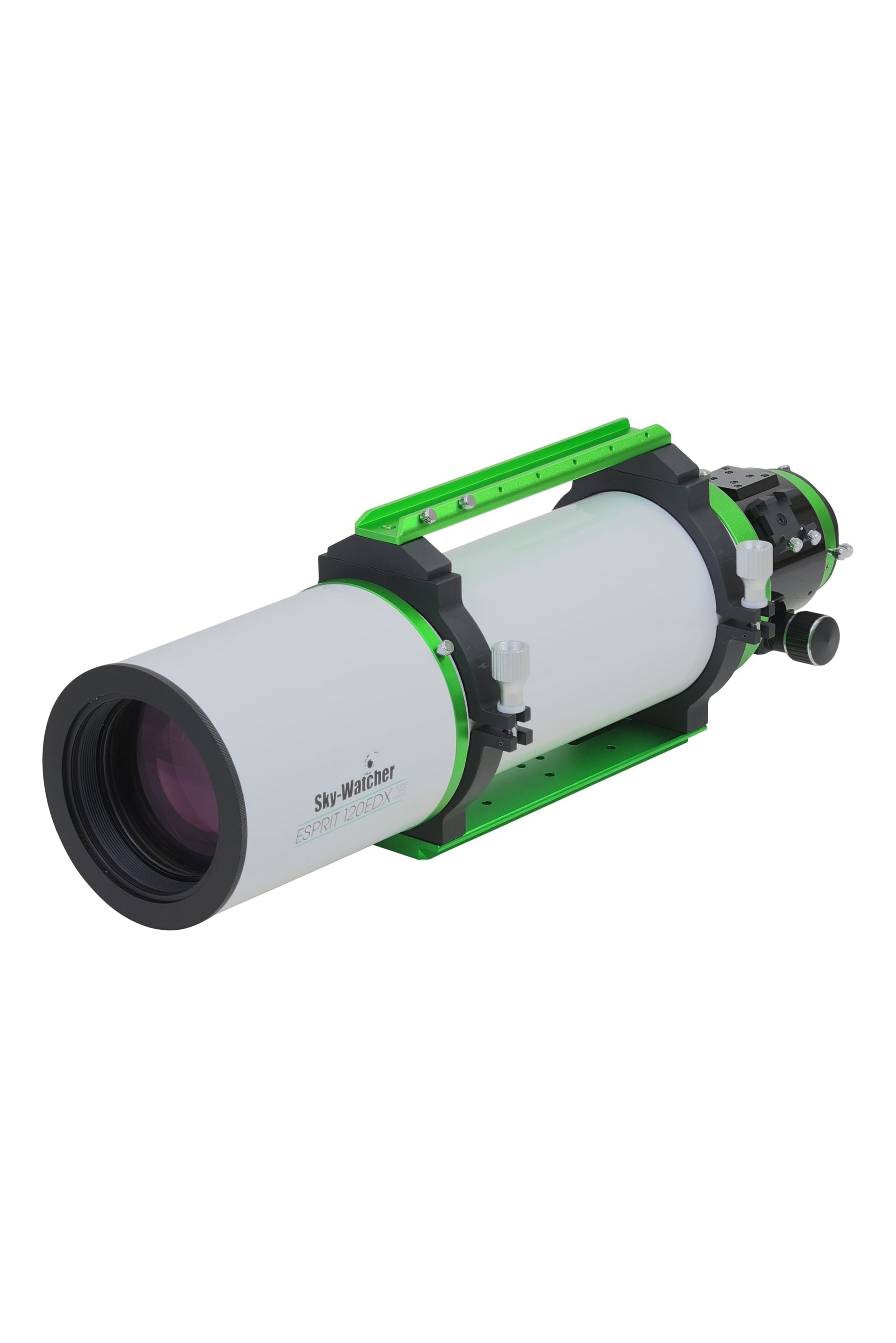
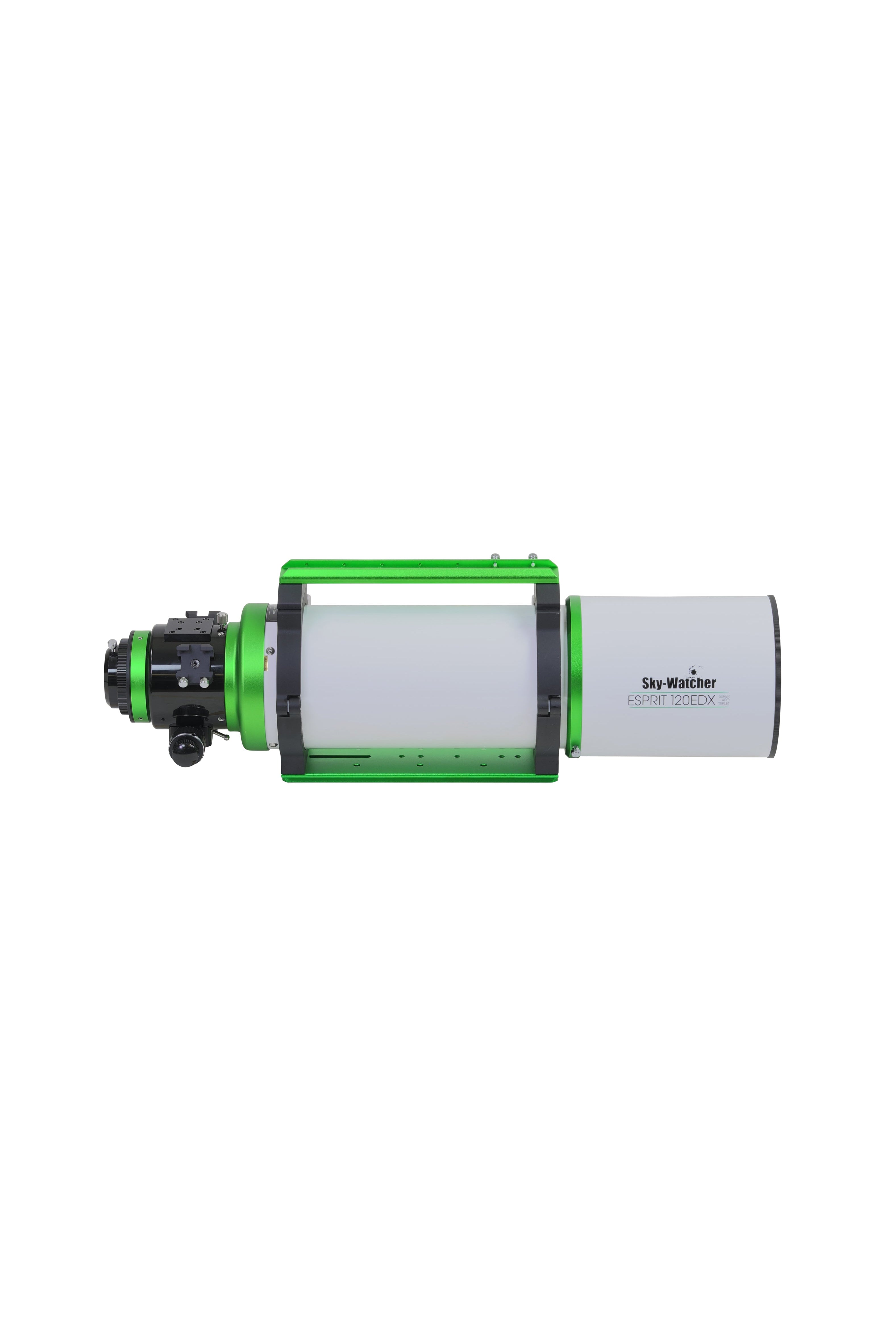
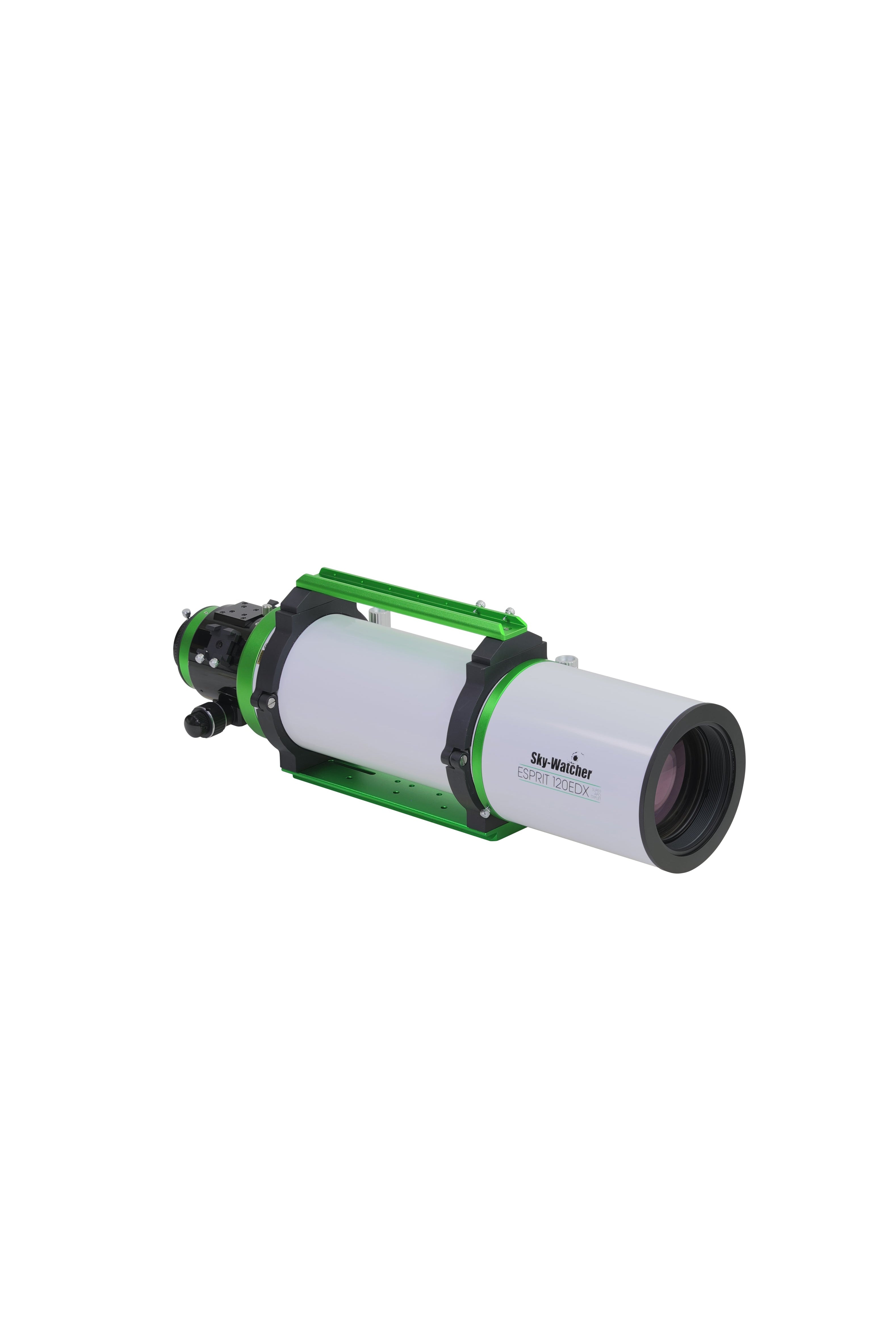
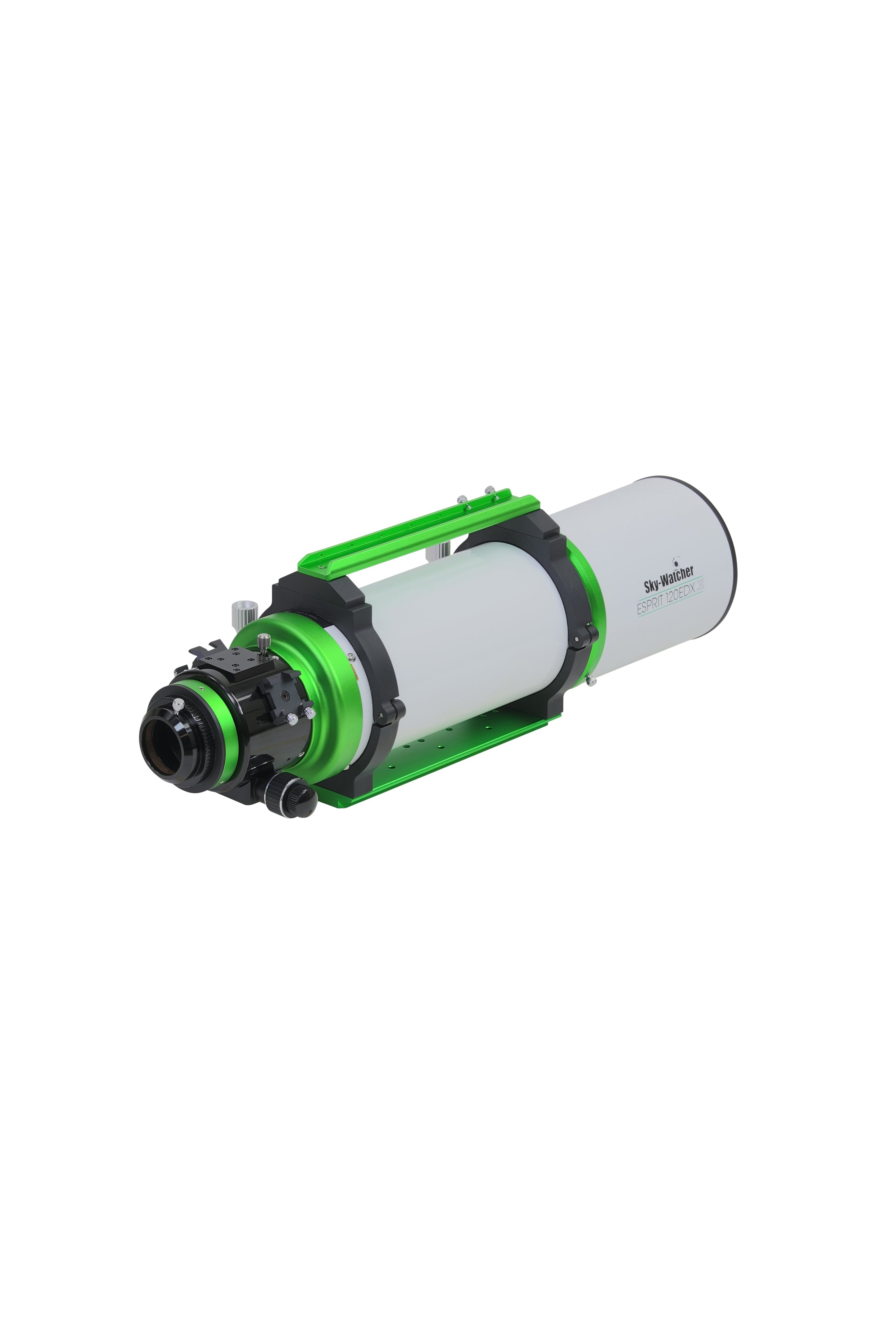
The Esprit 120EDX is a 120 mm f/7 air-spaced triplet apochromat, the size in the Esprit EDX line where aperture and focal length start delivering resolution rather than just field. At 840 mm it is long enough for galaxies, globulars and planetary nebulae while still holding a usable field on a large sensor, and it resolves to 1.16 arc seconds by the Rayleigh criterion. The objective uses FPL-53 extra-low dispersion glass in a three-element air-spaced cell, fully multi-coated with Sky-Watcher's Metallic High-Transmission Coatings (MHTC), and gathers 294 times the light of the unaided eye.
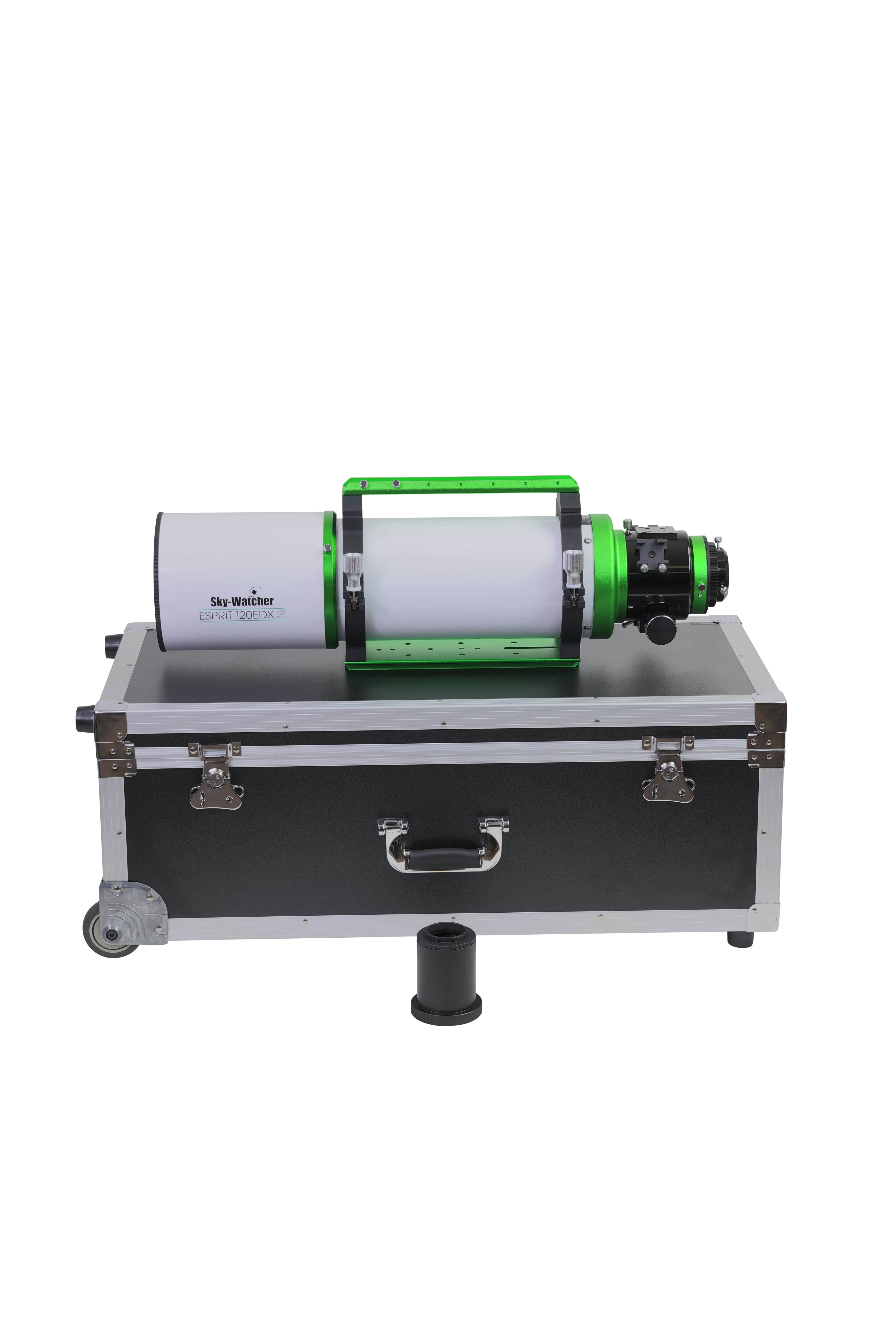
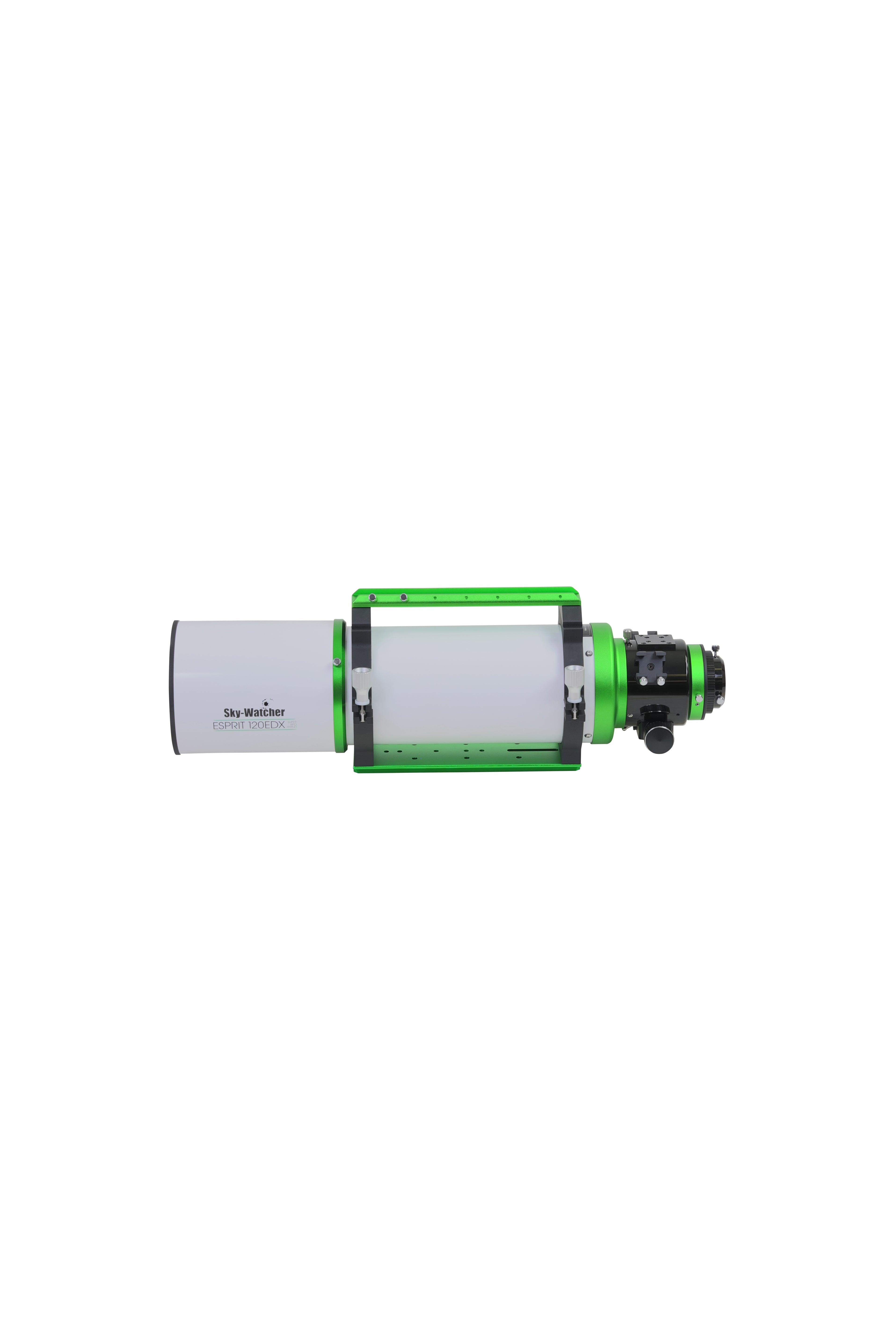
The tube weighs 10.7 kg (25 lbs) and measures 70 cm (28 in) with the dew shield retracted. It ships with tube rings, a D-style dovetail, an accessory rail, an M48 camera adapter and a padded hard case.
Who It's For
This is a good match if you have a mount with real capacity and want a single refractor that images galaxies and shoots high-resolution lunar and planetary work without changing instruments. It suits imagers running full-frame or large APS-C sensors, observers who want a 120 mm apochromat for double stars and planets at 283x, and anyone stepping up from a 70 mm to 100 mm class refractor who has hit the resolution ceiling of the smaller aperture. At 10.7 kg it is a permanent-pier or heavy-portable instrument rather than a grab-and-go one.
Key Features & Design
- Air-spaced FPL-53 triplet: three elements with air gaps, built around FPL-53 extra-low dispersion glass. This is the glass type that lets a 120 mm f/7 stay apochromatic rather than needing to be slowed down to control colour.
- Metallic High-Transmission Coatings (MHTC): fully multi-coated throughout, so the six air-glass surfaces of the triplet do not eat into the light the 120 mm aperture collects.
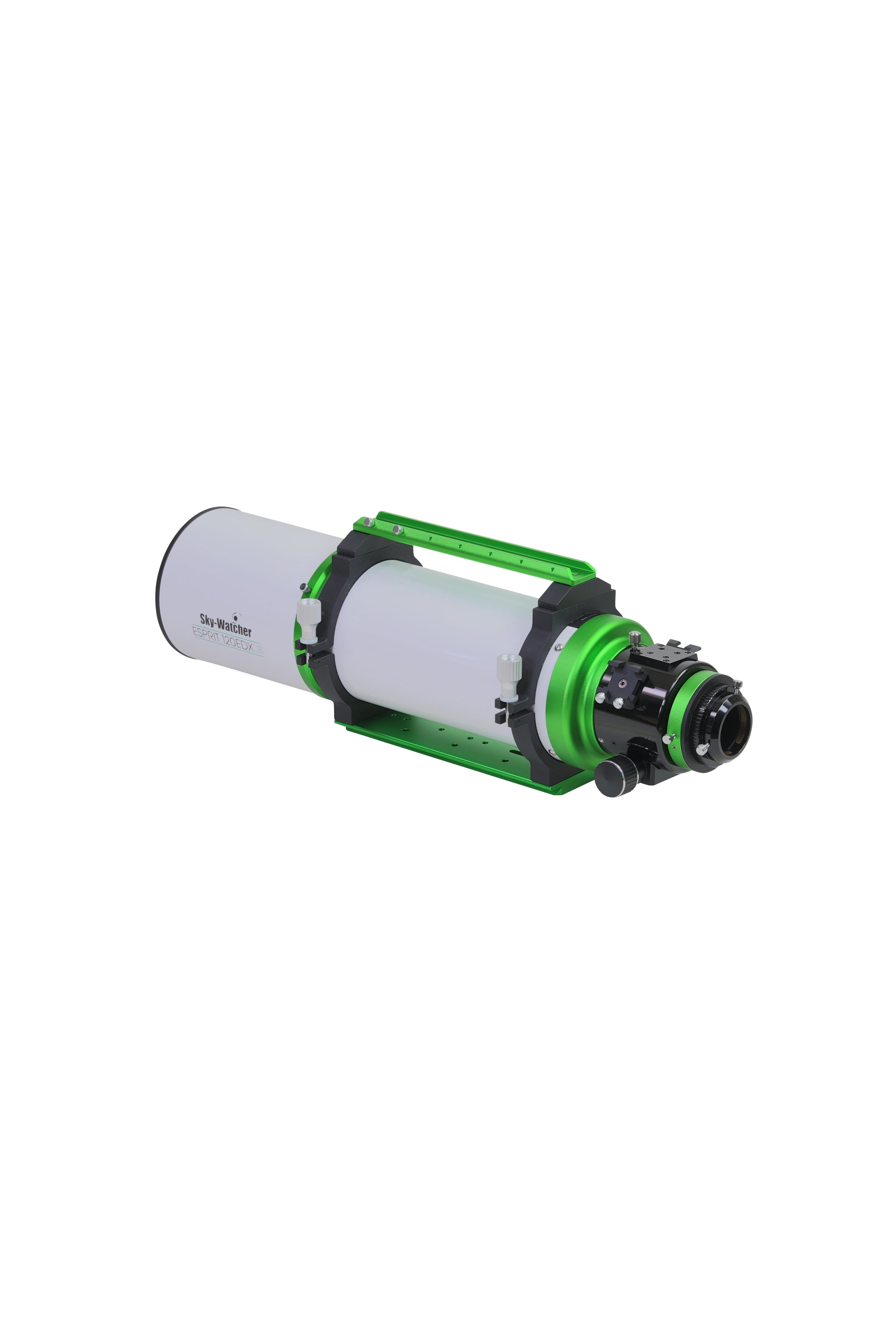
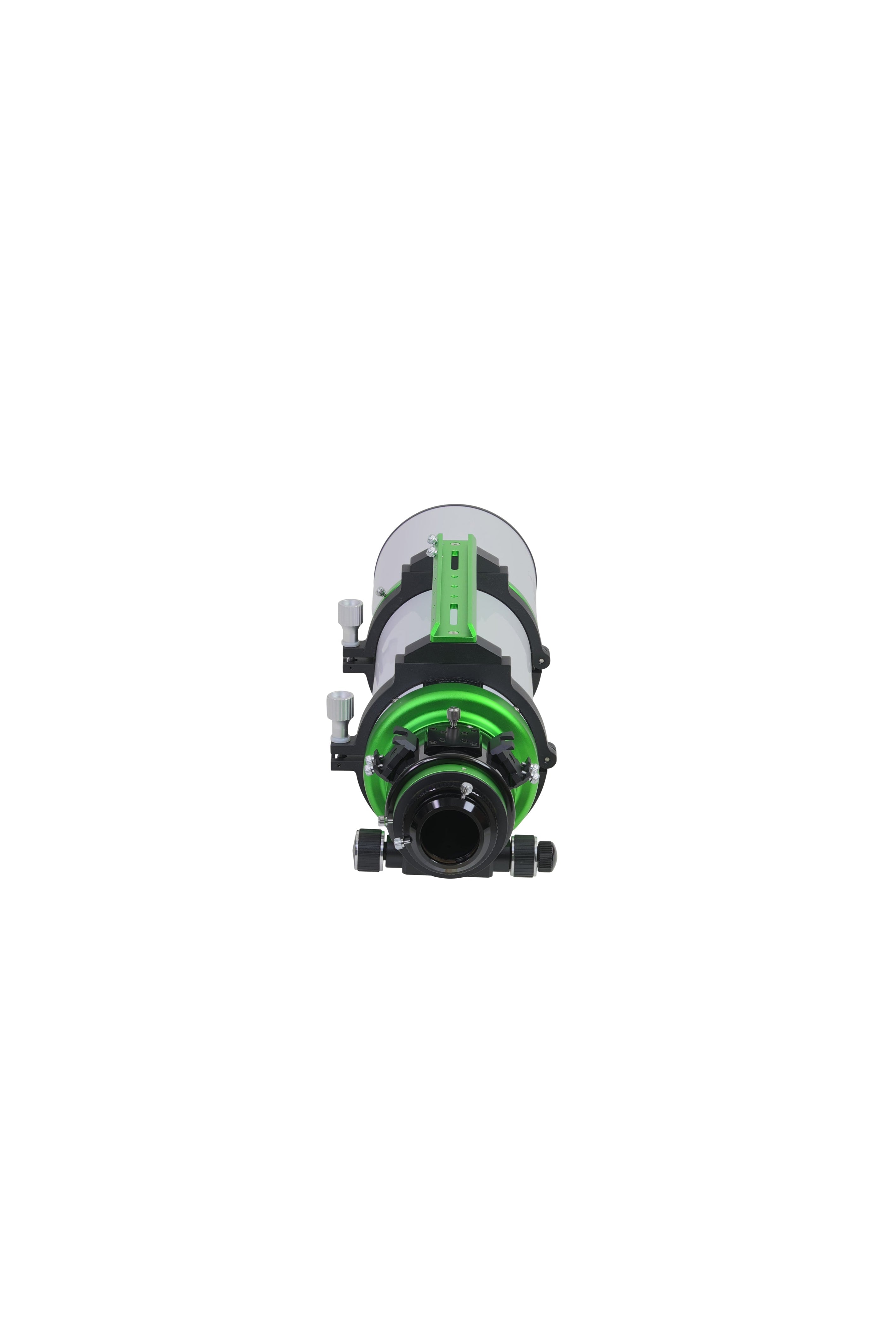
- Rotatable dual-speed focuser: a double-speed rack-and-pinion of 74 mm (3 in) diameter running on a linear rail. The 120EDX is one of the sizes that comes with a rotatable focuser as standard, in addition to the Camera Angle Adjuster.
- Camera Angle Adjuster: at the end of the drawtube, it orients a camera or eyepiece without rotating the focuser body.
- Retractable dew shield: slides back over the tube, which is what keeps the packed length at 70 cm on a scope with an 840 mm focal length.
- Deep back focus: greater than 225 mm (8.7 in) visually, which leaves room for long diagonals, binoviewers and deep camera trains.
- Included: tube rings, D-style dovetail, accessory rail, M48 camera adapter and a padded hard case.
Optical / Mechanical Design
The three elements sit in an air-spaced cell rather than a cemented doublet-plus-corrector stack. Each surface is figured independently, and the FPL-53 element carries the dispersion correction that brings red, green and blue to a common focus. The published performance follows from the aperture: 1.16 arc second Rayleigh resolution, 0.97 arc second by the Dawes limit, a limiting stellar magnitude of 12.9, and 294x the light-gathering power of the human eye. Useful magnification runs from 17x at the low end to 283x at the top.
Mechanically, the 74 mm rack-and-pinion focuser is sized for the load a 120 mm astrograph attracts. Its linear rail keeps the drawtube travelling straight under a full imaging train, and the dual-speed fine control is what makes focusing at f/7 repeatable. The output thread is M74 x 1 with 6 mm of screw depth. The tube is aluminium with a white gloss finish, and the retractable dew cap shortens it for transport.
Recommended Uses
- Deep-sky astrophotography: 840 mm at f/7 frames galaxies, globular clusters, planetary nebulae and the compact end of the emission-nebula catalogue.
- Full-frame imaging with the matched flattener: the corrector covers a 44 mm imaging plane.
- Wider fields with the reducer-flattener: a shorter effective focal length over a 34 mm circle.
- High-resolution visual observing: double stars, lunar detail and planets at up to 283x with 1.16 arc second resolution.
- Binoviewing: back focus greater than 225 mm accommodates the light path a binoviewer adds.
Compatibility and Accessory Notes
Two correctors are published for this tube, each with its own spacing and its own covered circle. With the field flattener, the sensor sits exactly 75 mm behind the back of the flattener and full illumination extends across a 44 mm imaging plane, which covers full frame. With the reducer-flattener, the sensor sits exactly 95 mm behind the last lens and full illumination extends across 34 mm, which covers APS-C comfortably. Corner star shape depends on landing on those distances; for a CCD or a camera with an unusual back-focus depth, Sky-Watcher specifies a custom ring rather than a stack of generic spacers.
Thread interfaces are M74 x 1 at the focuser output, M62 x 1 female at the field flattener, and an M78 x 1 thread securing the ring at the reducer-flattener exit. The supplied M48 camera adapter connects a camera to the drawtube directly.
The D-style (Losmandy) dovetail fits any Losmandy-format saddle, which is what a 10.7 kg tube generally wants. These figures are published for the Esprit 120EDX; the other Esprit EDX sizes pair with their own correctors. Send us your camera, filter wheel and spacer list and we will work the 75 mm or 95 mm out with you before you order.
Good to Know Before You Order
- The flattener and the reducer-flattener are separate purchases. Sky-Watcher states they are designed specifically for the Esprit 120 and must be bought separately. We stock the matching corrector and can supply it spaced.
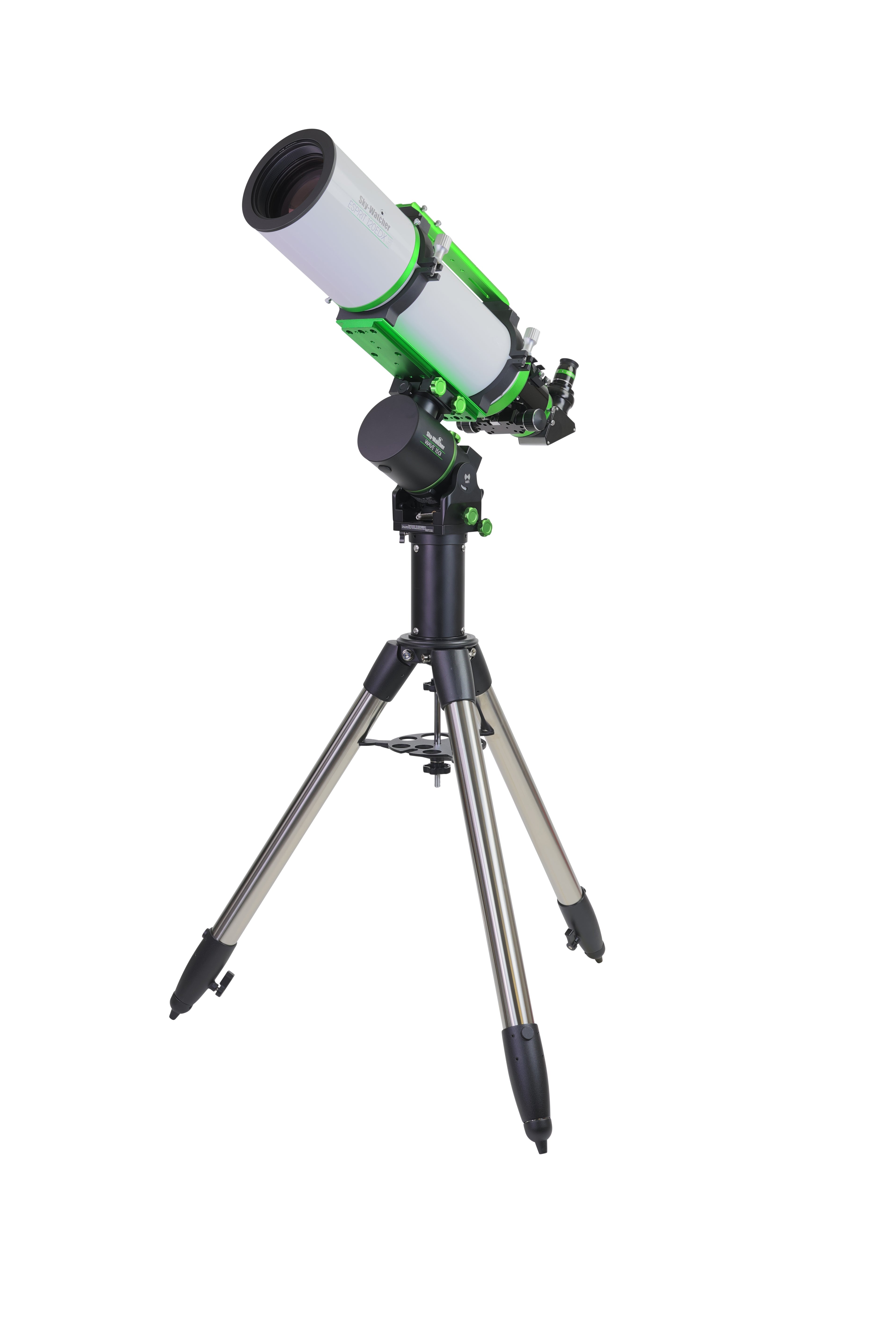
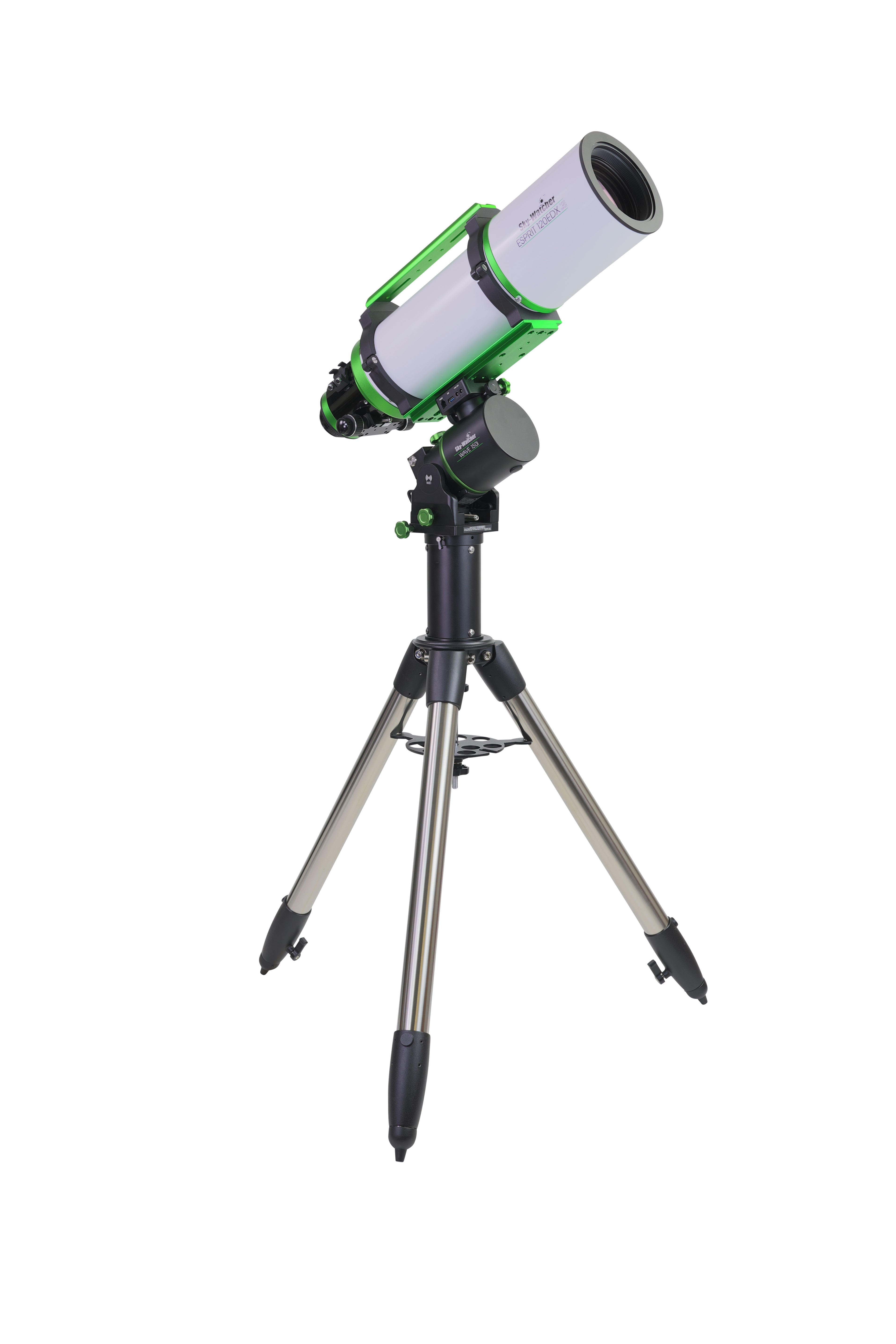
- No mount is included. The tube alone is 10.7 kg (25 lbs), and a camera, filter wheel and guider add to that. It is worth accounting for in your mount's payload; the D-style dovetail and accessory rail come fitted, so the mounting hardware itself is already handled.
- The two correctors are not interchangeable in spacing. 75 mm for the flattener, 95 mm for the reducer-flattener, measured from different reference surfaces. The 44 mm and 34 mm circles differ with them.
- The vendor quotes the focuser two ways. The manual specifies a double-speed rack and pinion of 74 mm (3 in) diameter; the product page describes a 3.4-inch linear rail rack-and-pinion with micro focus. Both refer to the same focuser on the same tube.
- Two weights are published. The optical tube is 10.7 kg (25 lbs); the shipping figure of 58.0 lb covers the tube, rings, dovetail, rail, adapter and the foam-lined hard case together.
Frequently Asked Questions
Is it difficult to set up?
The optical side is straightforward: the tube arrives in its rings with the D-style dovetail and accessory rail fitted, so mounting is a single clamp. What takes planning is the handling, since 10.7 kg is a two-hand lift onto a saddle at chest height, and the imaging spacing, which is 75 mm with the flattener or 95 mm with the reducer-flattener. Measure the train once and it stays measured.
Will it cover a full-frame sensor?
With the field flattener, yes: full illumination across a 44 mm imaging plane, and full frame has a 43 mm diagonal. With the reducer-flattener the circle is 34 mm, which covers APS-C rather than full frame.
What mount does it need?
Something with headroom well past 10.7 kg once your camera train is attached, and a Losmandy-format saddle to take the D-style bar. Send us your mount model and we will tell you where you will land.
How good is it visually?
1.16 arc second Rayleigh resolution, limiting magnitude 12.9, and 283x of useful magnification. Back focus greater than 225 mm means a 2-inch diagonal and a binoviewer both reach focus.
What is the difference between FPL-53 and ordinary ED glass?
Dispersion. FPL-53 has a lower dispersion figure than common ED types, which is what allows a 120 mm triplet to stay colour-corrected at f/7 instead of needing a slower focal ratio.
Bottom Line
A 120 mm f/7 FPL-53 air-spaced triplet with a rotatable 74 mm dual-speed focuser, over 225 mm of back focus, and published corrector options covering 44 mm and 34 mm imaging planes. It is the Esprit EDX package at the aperture where resolution, not just field, is the point.
| SKU | S11445 |
|---|---|
| UPC | 810098970723 |
| Optical design | Refractor (air-spaced triplet APO) |
| Aperture | 120 mm (4.7 in) |
| Focal length | 840 mm (33 in) |
| Focal ratio | 7 |
| Glass | FPL-53 |
| Optical coatings | Fully multi-coated (Metallic High-Transmission Coatings / MHTC) |
| Focuser type | Rack and pinion, double speed, diameter 74mm (3 in) — product page describes it as a 3.4-inch linear rail rack-and-pinion with micro focus |
| Focuser rotation | Rotatable focuser (standard on EDX 100/120/150) plus Camera Angle Adjuster |
| Focuser output thread | M74 x1 M, 6mm screw depth |
| Highest useful magnification | 283 x |
| Lowest useful magnification | 17 x |
| Limiting stellar magnitude | 12.9 |
| Resolution (Rayleigh) | 1.16 arc seconds |
| Resolution (Dawes) | 0.97 arc seconds |
| Light gathering power | 294 x (Compared to Human Eye) |
| Telescope visual backfocus | >225mm (8.7 in) |
| Field flattener spacing | 75mm from the back of the field flattener to the sensor (custom ring for CCD) |
| Field flattener illuminated field | 44 mm imaging plane, fully illuminated |
| Reducer-flattener spacing | 95mm from the last lens of the reducer flattener to the sensor (custom ring for CCD) |
| Reducer-flattener illuminated field | 34 mm imaging plane, fully illuminated |
| Field flattener thread | M62X1 F. |
| Reducer-flattener exit thread | M78 x1 |
| Dovetail | D-style (Losmandy) dovetail bar |
| Dew shield | Retractable dew cap |
| Optical tube | Aluminum, white glossy finish |
| Optical tube length | 70 cm (28 in) (Retracted Dew Cap) |
| Optical tube weight | 10.7kg (25 lbs) |
| Shipping weight | 26308 g (58.0 lb) |
| Included accessories | Tube rings, D-style dovetail, accessory rail, M48 camera adapter, padded hard case |
You may also like
Recently viewed
Recent Blog Posts
View all
Your Guide Graph Is Lying to You
Read More

D-Size vs V-Size: A Complete Guide to Telescope Dovetail Systems
Read More

What Is Back Focus in Astrophotography? Telescope Reducers, Flatteners, and Spacing Explained
Read More