
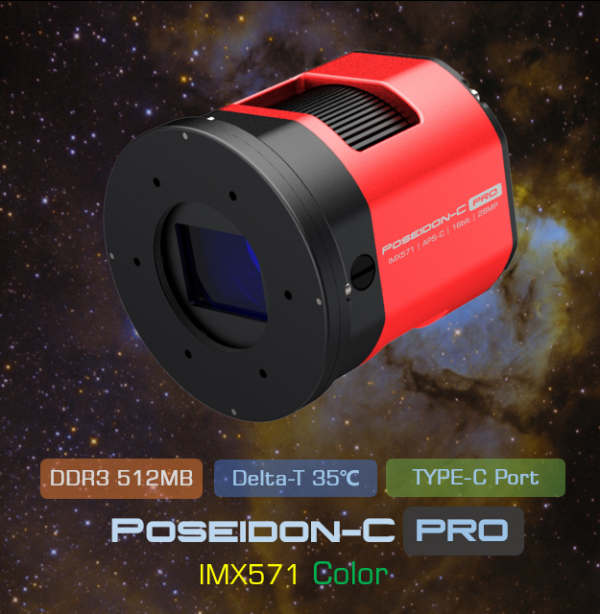
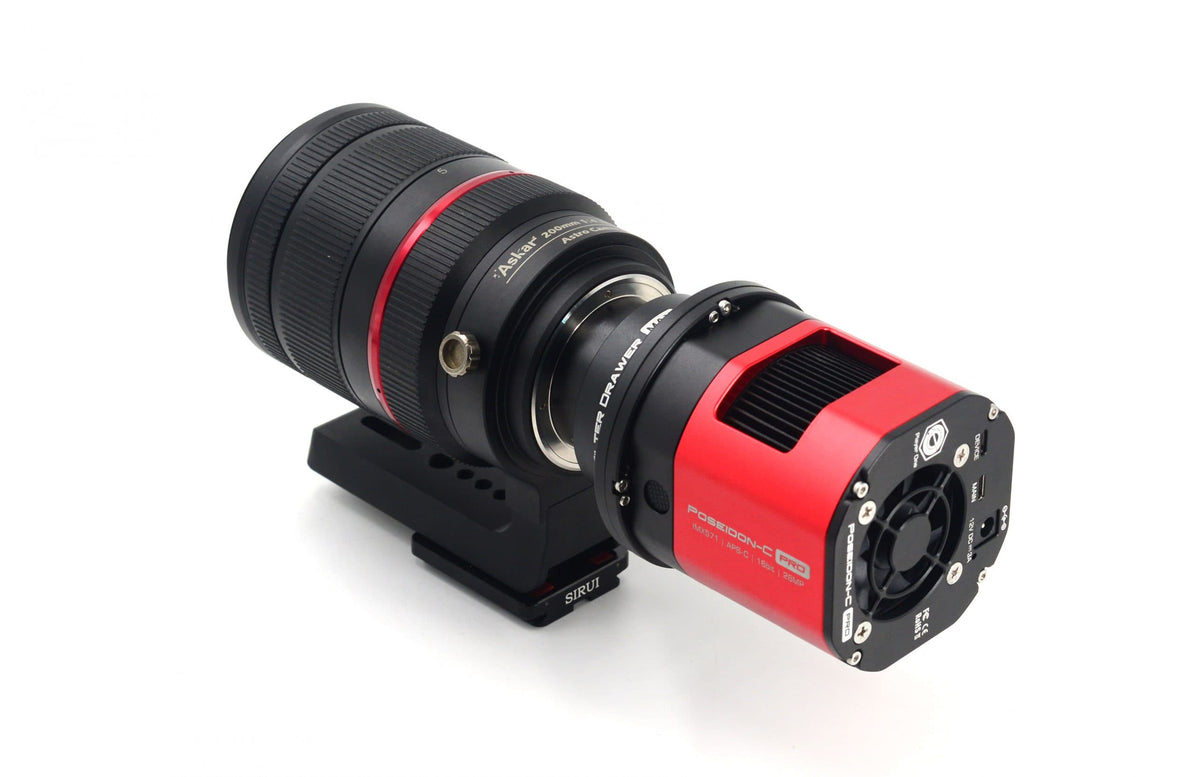


- Description
- Specifications
Product Overview
The Poseidon-C Pro is a cooled one-shot-color astronomy camera from Player One Astronomy, built on Sony's APS-C IMX571 CMOS sensor. Its 26-megapixel array (6252×4176, 3.76 µm pixels) spans a 23.5 mm×15.7 mm frame with a 28.3 mm diagonal, digitised at a true 16-bit. Two-stage TEC cooling holds the sensor about 40 °C below ambient, and a large 71.7k e− full well gives it the dynamic range for demanding deep-sky work without changing filters.
Who It's For
This is a good match if you shoot deep-sky astrophotography and want a large, high-resolution colour sensor in a single, cooled package — broadband galaxies and nebulae, wide star fields, and colour narrowband through a dual/tri-band filter. The APS-C format and 3.76 µm pixels pair well with refractors and mid-focal-length reflectors.
Key Features & Design
- Sony IMX571 APS-C CMOS (color): 26 MP across a 23.5×15.7 mm frame for wide, detailed fields.
- 16-bit ADC: fine tonal gradation across the 71.7k e− full well.
- Two-stage TEC cooling: regulated to 40 °C ±2 °C below ambient, dropping dark current to 0.000105 e/s/pix at −20 °C.
- Low read noise: 3.9 e− down to 1.0 e− depending on gain.
- 512 MB DDR3 buffer over Type-C USB3.0: a stable data path for large 26 MP frames.
- AR-coated window and tilt plate: D46×2 mm multi-layer AR glass with an adjustable sensor tilt plate.
Optical / Mechanical Design
The IMX571 is an APS-C back-illuminated colour CMOS with a RGGB Bayer matrix, 3.76 µm pixels, 71.7k e− full well and read noise from 3.9 e− to 1.0 e−, digitised at 16-bit with a peak QE near 80%. At full 26 MP resolution the camera runs about 10 fps (10-bit) over USB3.0. Sensor-to-flange backfocus is 17.5 mm with the tilt plate installed (12.5 mm without it), a figure to carry through the imaging train. Two-stage thermoelectric cooling regulates the sensor to 40 °C ±2 °C below ambient. The 90 mm body offers M48×0.75, 2" and 1.25" interfaces.
Recommended Uses
- Broadband deep-sky: galaxies, star clusters and reflection nebulae in one-shot colour.
- Narrowband colour: emission nebulae through dual- or tri-band filters.
- Wide-field imaging: the APS-C frame frames large targets and mosaic panels efficiently.
Compatibility and Accessory Notes
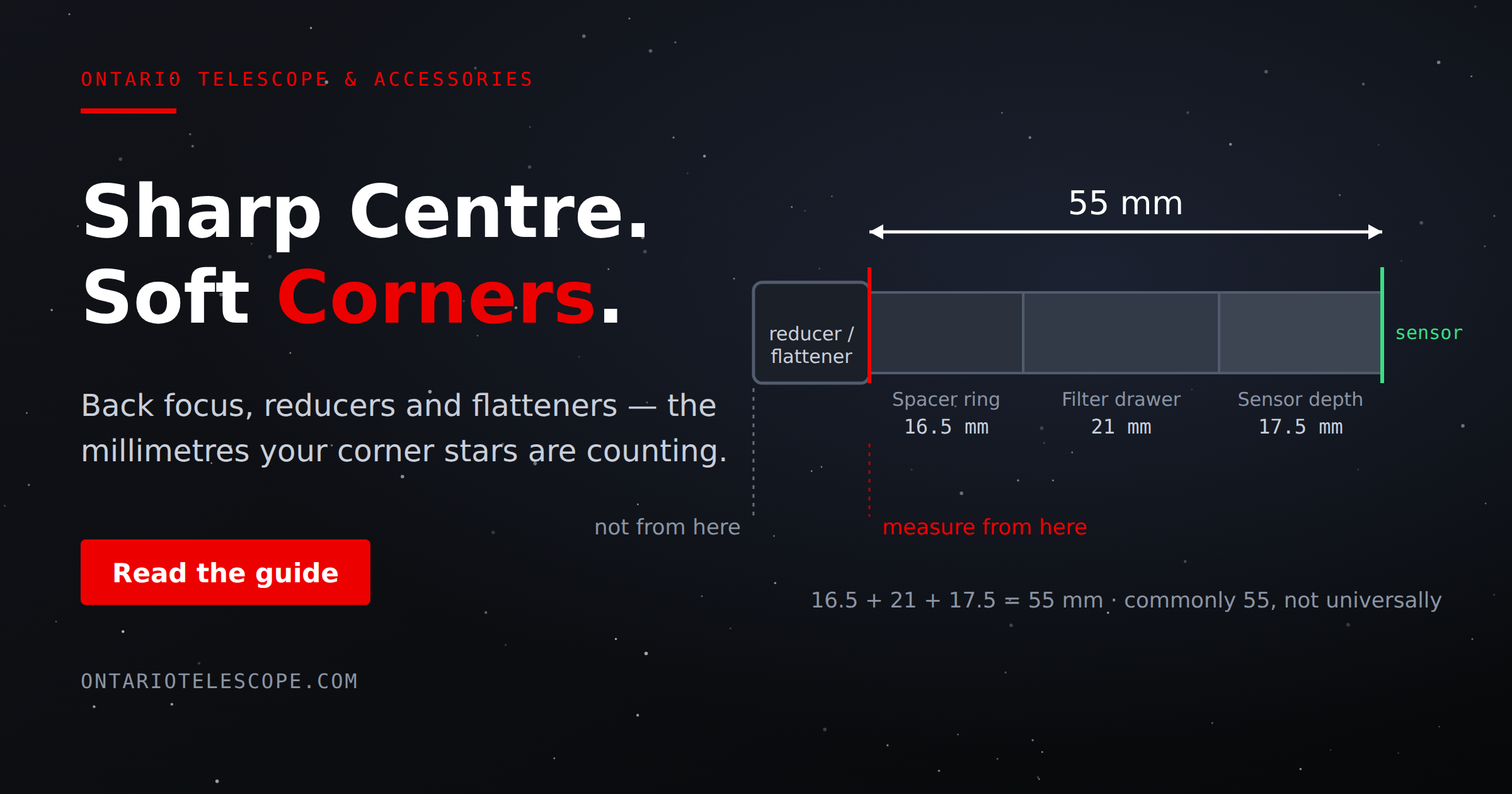
The camera provides M48×0.75, 2" and 1.25" connections and needs 17.5 mm of backfocus with the tilt plate fitted — the standard 55 mm imaging-train figure is reached by adding a filter drawer or spacer set to the flattener/reducer. Data runs over Type-C USB3.0. The TEC draws up to 3 A, so a 12 V DC supply rated to at least 5 A powers the cooling. As a one-shot-color camera it needs no filter wheel for RGB, though a light-pollution or dual-band filter is common from suburban skies.
Good to Know Before You Order
- Cooling needs its own 12 V supply: a 5 A (or higher) adapter runs the TEC; USB carries data only.
- Backfocus is 17.5 mm with the tilt plate: plan spacers so the total train reaches your flattener's specified distance.
- One-shot color: convenient for RGB in a single exposure; a dual-band filter helps under light pollution.
- Published weight is 650 g: a factor in focuser and mount balance once the filter drawer and adapters are attached.
Frequently Asked Questions
Is it difficult to set up?
No. It threads to a flattener or field-flattener train through its M48/2" interface, connects over USB-C, and adds one step over an uncooled camera — a 12 V, 5 A supply for the cooler.
What is it best used for?
Cooled, one-shot-color deep-sky astrophotography across an APS-C field.
Do I need a filter wheel?
Not for colour — the Bayer sensor captures RGB directly. A dual- or tri-band filter in a drawer is common for narrowband and light-polluted skies.
How does it differ from the mono cooled cameras?
It captures colour in a single exposure rather than through separate filters, trading the ultimate flexibility of mono for a simpler colour workflow.
Bottom Line
In short: a 26 MP APS-C IMX571 one-shot-color camera with 16-bit output and two-stage cooling to about 40 °C below ambient — a large-sensor deep-sky imager that reaches a standard 55 mm train with the right spacers behind your flattener.
| Sensor | Sony IMX571, APS-C CMOS (color) |
|---|---|
| Shutter | Rolling shutter |
| Sensor size | 23.5 mm × 15.7 mm (28.3 mm diagonal) |
| Resolution | 26 MP (6252×4176) |
| Pixel size | 3.76 µm |
| Bayer matrix | RGGB |
| Full well | 71.7k e- |
| Read noise | 3.9~1.0 e- |
| ADC | 16-bit |
| Peak QE | ≈80% |
| Cooling | Two-stage TEC, 40°C ±2°C below ambient |
| Dark current | 0.000105 e/s/pix at -20°C |
| Max frame rate | 10 fps (10-bit) at full resolution |
| Interface | Type-C USB3.0 / USB2.0 |
| Buffer | 512 MB DDR3 |
| Protective window | D46×2 mm AR Plus multi-layer coating |
| Back focal length | 17.5 mm (12.5 mm without tilt plate) |
| Adapters | M48×0.75, 2", 1.25" |
| Diameter | 90 mm |
| Power | Max 3 A; 12 V DC, 5 A adapter minimum |
| Weight | 650 g |
You may also like
Recently viewed
Recent Blog Posts
View all
Your Guide Graph Is Lying to You
Read More
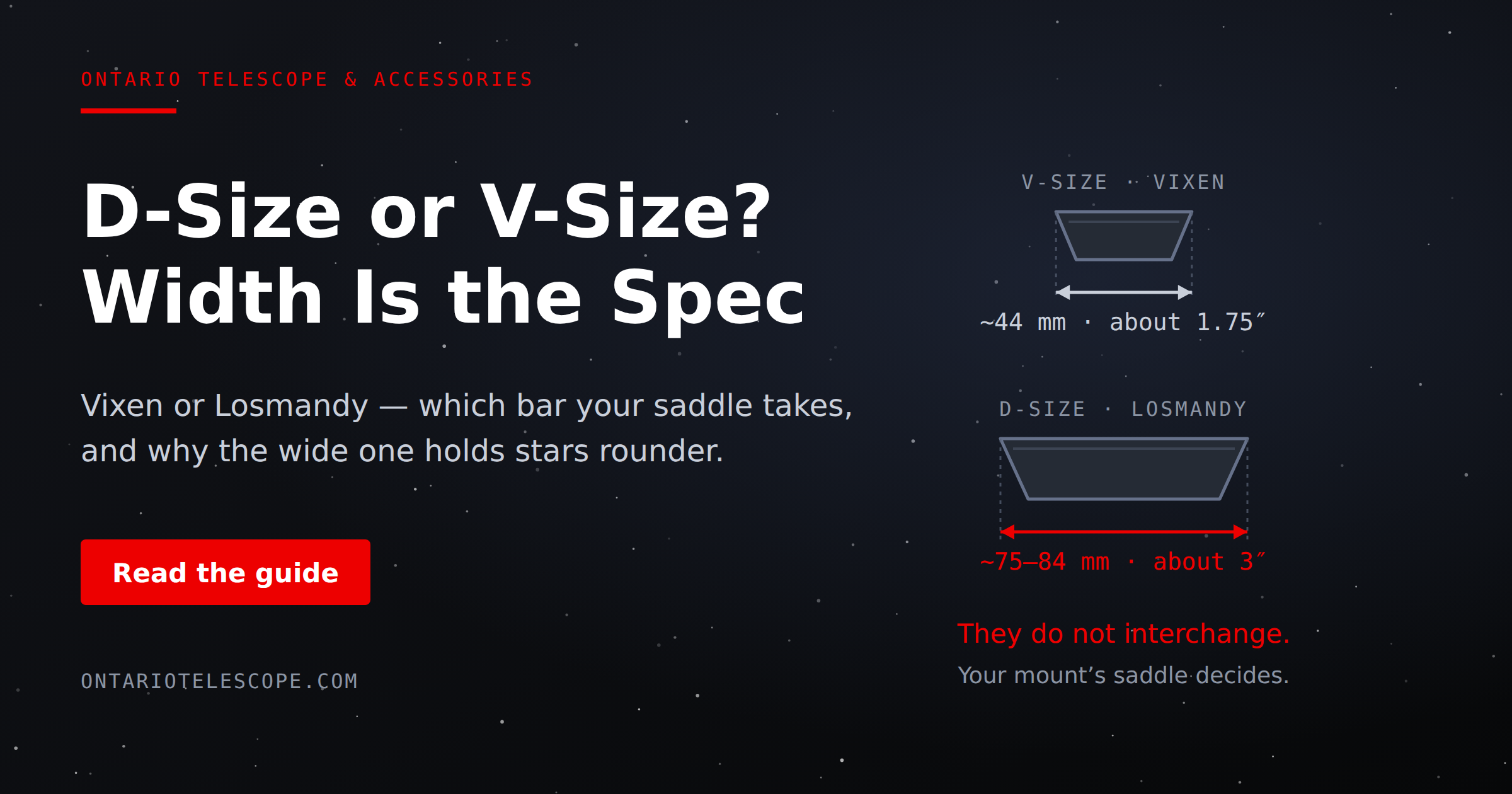
D-Size vs V-Size: A Complete Guide to Telescope Dovetail Systems
Read More
What Is Back Focus in Astrophotography? Telescope Reducers, Flatteners, and Spacing Explained
Read More