


- Description
- Specifications
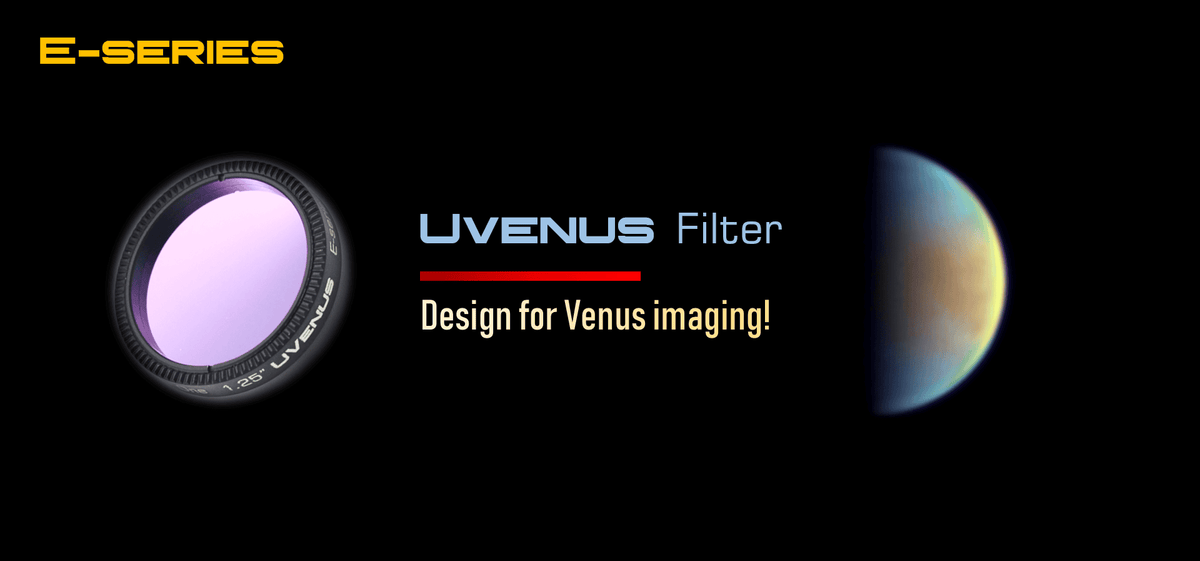
Overview. The Player One Uvenus 1.25" UV-Pass Filter is an E-series ultraviolet bandpass filter centered at 350nm. It transmits a 60nm ultraviolet band (approximately 320–380nm) while deeply blocking visible and infrared light, revealing the ultraviolet cloud structure of Venus that is otherwise hidden in visible-light imaging. The filter is built on a color optical glass substrate with an extensive multi-coating process and threads into standard 1.25" mounts.
Who It's For. This filter suits advanced planetary imagers using UV-sensitive monochrome cameras who want to capture the dynamic ultraviolet cloud markings and atmospheric rotation of Venus.
Key Features & Design.
- 350nm UV band: a center wavelength of 350nm targets the ultraviolet band where Venus cloud contrast is strongest.
- 60nm passband: transmits roughly 320–380nm ultraviolet light.
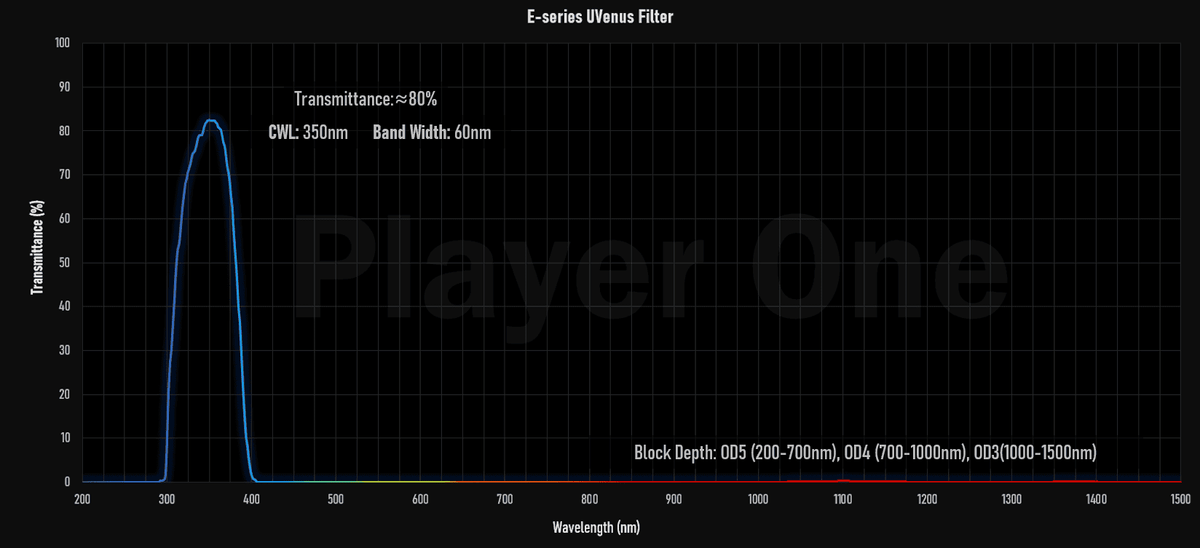
- Deep multi-band blocking: OD5 across 200–700nm, OD4 across 700–1100nm, and OD3 across 1000–1500nm suppress visible and infrared leakage.
- Strong UV throughput: approximately 80% peak transmittance for a photon-limited application.
- Standard 1.25" format: M28.5×0.6 cell fits common 1.25" filter wheels, drawers, and nosepieces.
Optical/Mechanical Design. The filter passes a 60nm ultraviolet band centered at 350nm (about 320–380nm) at approximately 80% peak transmittance, with blocking of OD5 across 200–700nm, OD4 across 700–1100nm, and OD3 across 1000–1500nm. The surface is figured to 1/4 lambda, and an extensive multi-coating process (over 100 layers) is applied to a color optical glass substrate 1.85mm thick. The anodized cell uses M28.5×0.6 (1.25") threads and measures 7.5mm overall (5mm body plus 2.5mm thread).
Recommended Uses. Ultraviolet imaging of Venus to record cloud-top markings and atmospheric super-rotation; UV-band planetary studies with UV-capable monochrome cameras and UV-transmitting optics.
Compatibility & Accessory Notes. The M28.5×0.6 cell fits standard 1.25" filter wheels, drawers, and nosepieces. Effective results require a camera with usable ultraviolet sensitivity and optics that transmit at 350nm; standard coated refractor optics may attenuate UV, so reflectors or UV-capable systems are preferred.
Good to Know Before You Order.
- UV-capable optics: the telescope and any correctors must transmit ultraviolet at 350nm for the filter to perform.
- Camera sensitivity: a monochrome camera with usable UV response is recommended.
- Shipping weight: a packaged weight is not published by the manufacturer; contact us if you need it before ordering.
FAQ.
Is it difficult to set up? No. The filter threads into any standard 1.25" filter wheel, drawer, or nosepiece and needs no adjustment once installed.
What does it show on Venus? At 350nm the filter reveals ultraviolet cloud markings and atmospheric structure on Venus that are invisible in ordinary visible-light imaging.
Do I need special optics? Yes, ideally. The optical train must transmit ultraviolet at 350nm and the camera must have usable UV sensitivity for best results.
Bottom Line. A deep-blocking 350nm UV-pass filter in the convenient 1.25" format, the Player One Uvenus opens up ultraviolet cloud imaging of Venus for dedicated planetary imagers with UV-capable gear.
| Specification | Value |
|---|---|
| Type | UV-pass bandpass (Uvenus), E-series |
| Center wavelength (CWL) | 350nm |
| Passband | 60nm (approximately 320nm–380nm) |
| Blocking depth | OD5 (200–700nm), OD4 (700–1100nm), OD3 (1000–1500nm) |
| Peak transmittance | About 80% |
| Surface flatness (PV) | 1/4 lambda |
| Glass thickness | 1.85mm color optical glass |
| Coating | Over 100-layer multi-coating process |
| Mount thread | M28.5×0.6 (1.25") |
| Frame thickness | 7.5mm total (5mm body + 2.5mm thread) |
You may also like
Recently viewed
Recent Blog Posts
View all
Your Guide Graph Is Lying to You
Read More
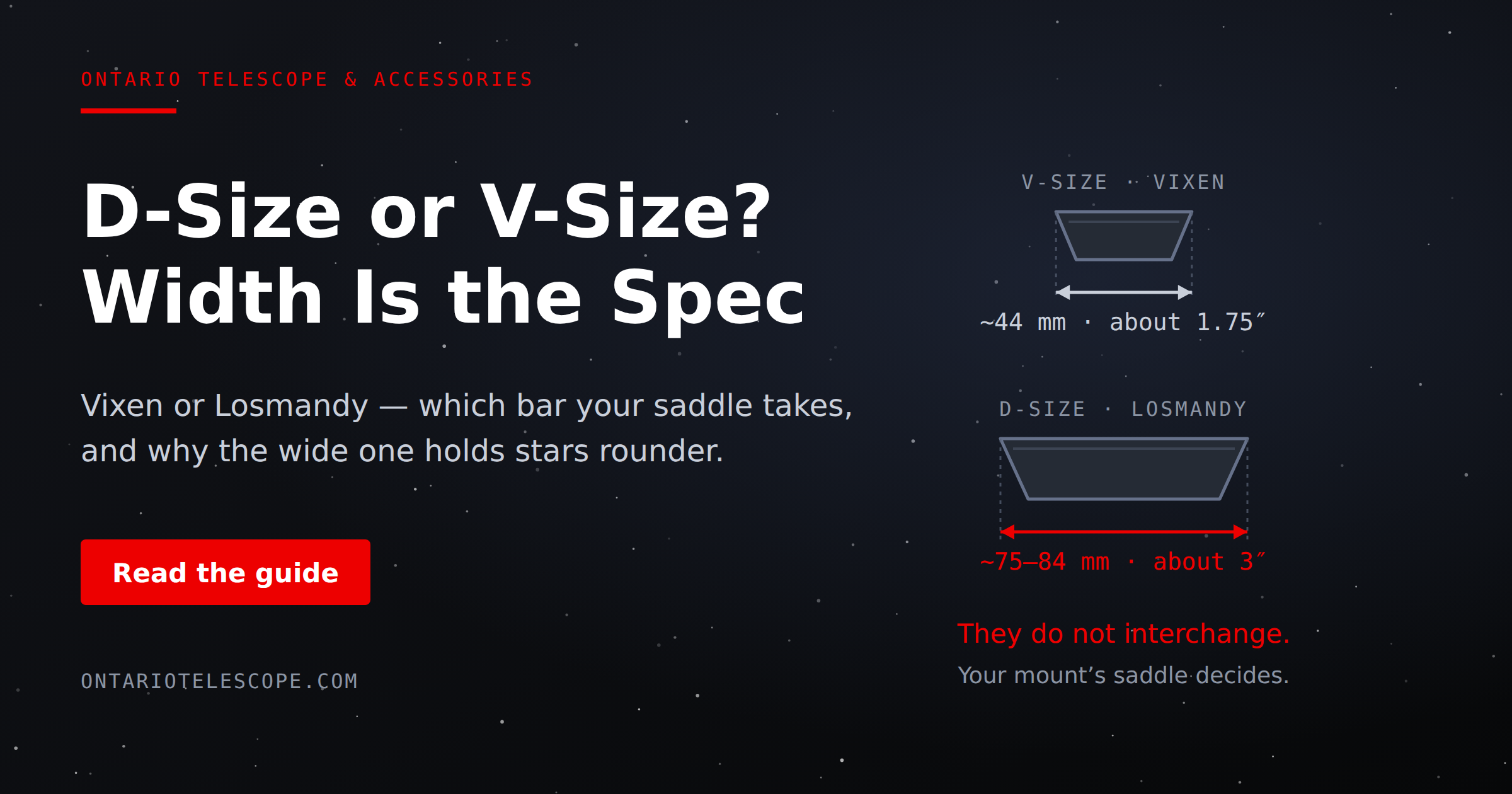
D-Size vs V-Size: A Complete Guide to Telescope Dovetail Systems
Read More
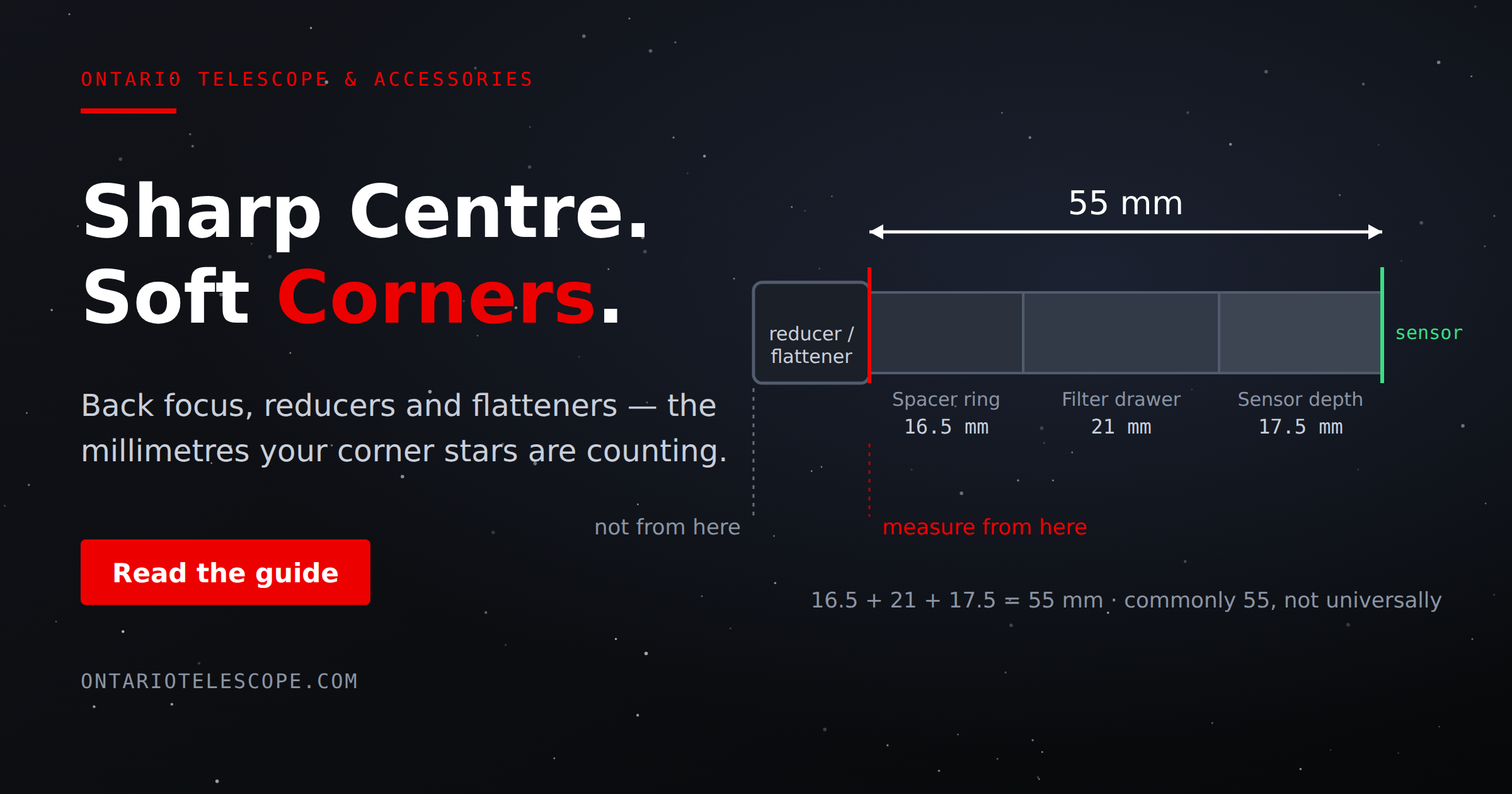
What Is Back Focus in Astrophotography? Telescope Reducers, Flatteners, and Spacing Explained
Read More