


- Description
- Specifications
Overview
The Player One R31+R27 Rear 4-Point Tilter Plate is a machined aluminum 6061-T6 tilt-adjustment plate for carbon-fiber cooled cameras. It mounts at the rear of the imaging train and uses four adjustment points to correct sensor tilt so stars stay round across the field. It carries an M42×0.75 female thread and is a purely mechanical part with no glass and no electronics.
Who It's For
This is a good match if you are imaging with a Player One carbon-fiber cooled camera and need to remove tilt between the sensor and the optical axis to get even corner stars.
Key Features & Design
- Four-point tilt adjustment: four adjustment points let you correct sensor tilt in the imaging train.
- M42 thread interface: M42×0.75 female thread on the plate.
- Rear-mounted plate: it fits at the rear of compatible cooled cameras, working with the R31 and R27 rings.
- Aluminum 6061-T6 body: light, corrosion-resistant, and dimensionally stable.
Recommended Uses
Use it to dial out sensor tilt on a compatible cooled-camera imaging train, so field stars are even from center to corner when paired with a filter wheel or filter drawer.
Compatibility & Accessory Notes
Player One lists it as compatible with the Ares series, Uranus PRO series, and Apollo PRO series cameras, and with the Phoenix wheel (7×36 mm, 7×2″, 7×50, and 5×2″) and the Filter Drawer MAX. If you want to confirm it fits your exact camera and filter combination, send us the models and we will check it with you.
Good to Know Before You Order
- Mechanical tilt plate only: it carries no optical elements and passes no electronic signal.
- Model-specific: it is designed for Player One carbon-fiber cooled cameras and the R31/R27 rings, not as a universal tilter.
- Adds to the imaging train: as a rear plate it occupies part of the backfocus budget, so account for it in your spacing.
Frequently Asked Questions
Is it difficult to set up?
Setting the tilt takes some care — you adjust the four points while checking corner stars — but the plate itself threads into the train with no special tools. If you would like guidance, send us your setup and we will walk through it with you.
What is it best used for?
Correcting sensor tilt on a compatible Player One cooled-camera imaging train.
Which cameras does it fit?
Player One lists the Ares series, Uranus PRO series, and Apollo PRO series, with the Phoenix wheel and Filter Drawer MAX.
Does it contain any optics?
No. It is a machined mechanical plate with no lenses or coatings.
Bottom Line
In short: a machined aluminum four-point tilt plate with an M42 thread that removes sensor tilt on Player One Ares, Uranus PRO, and Apollo PRO cooled cameras for even stars across the field.
| Type | Rear 4-point tilt-adjustment plate (mechanical) |
|---|---|
| Thread | M42×0.75 female |
| Adjustment | Four-point tilt adjustment |
| Compatible cameras | Ares series, Uranus PRO series, Apollo PRO series (carbon-fiber cooled) |
| Compatible filter units | Phoenix wheel (7×36 mm / 7×2″ / 7×50 / 5×2″), Filter Drawer MAX |
| Ring compatibility | R31 and R27 rings |
| Material | Aluminum 6061-T6 |
| Optics | None (mechanical only) |
| Weight | Not published by manufacturer |
You may also like
Recently viewed
Recent Blog Posts
View all
Your Guide Graph Is Lying to You
Read More

D-Size vs V-Size: A Complete Guide to Telescope Dovetail Systems
Read More
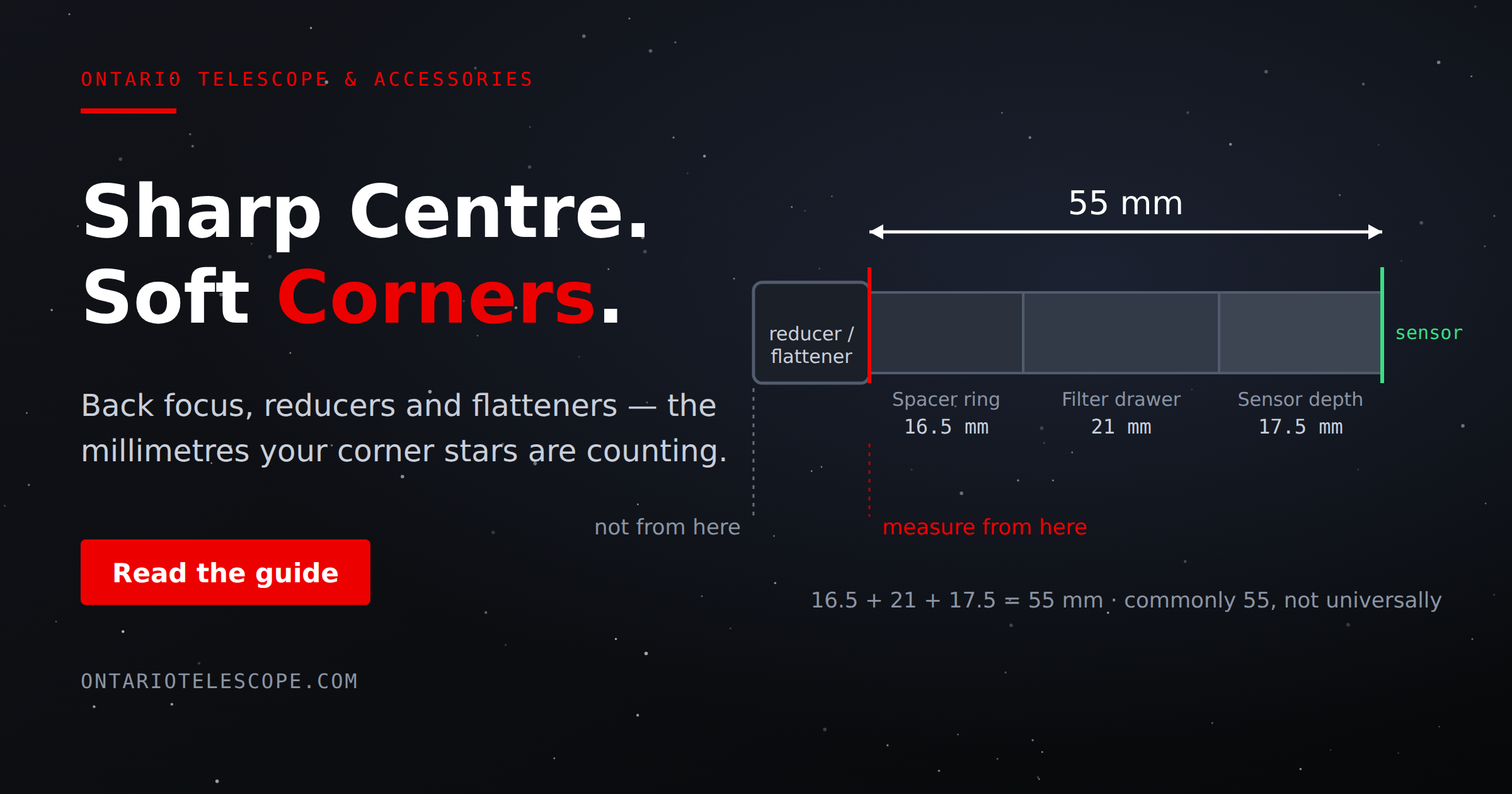
What Is Back Focus in Astrophotography? Telescope Reducers, Flatteners, and Spacing Explained
Read More