


- Description
- Specifications
Product Overview
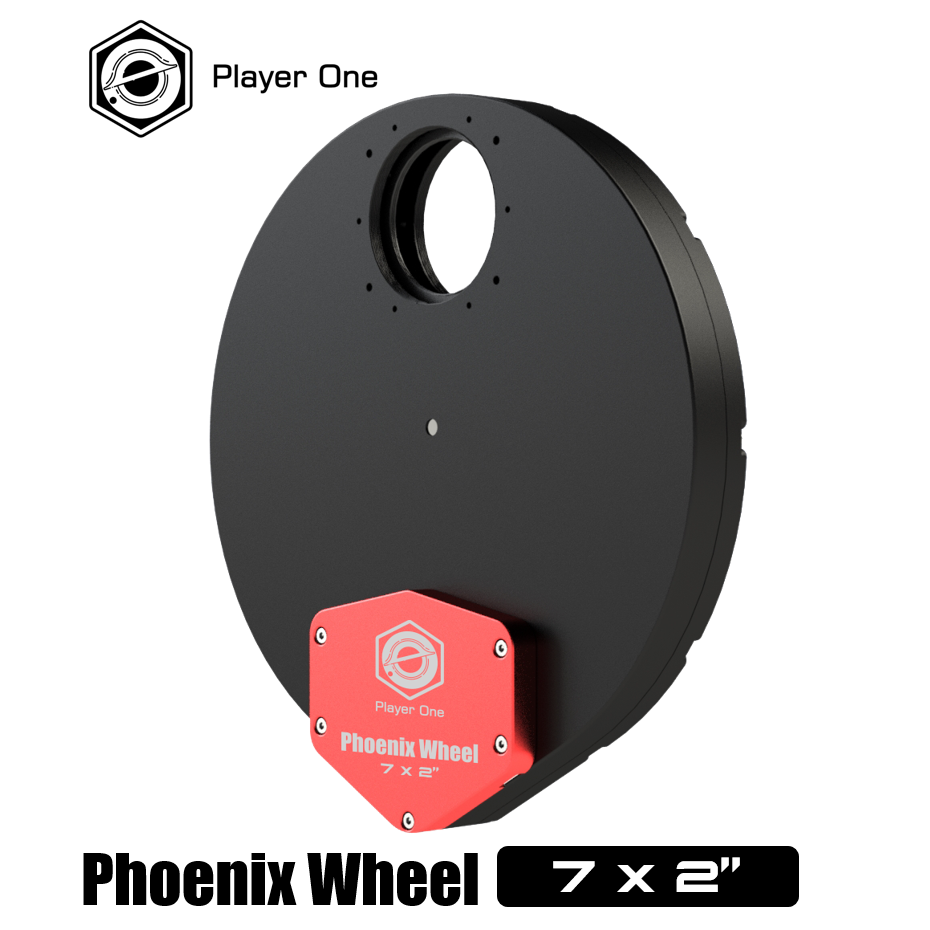
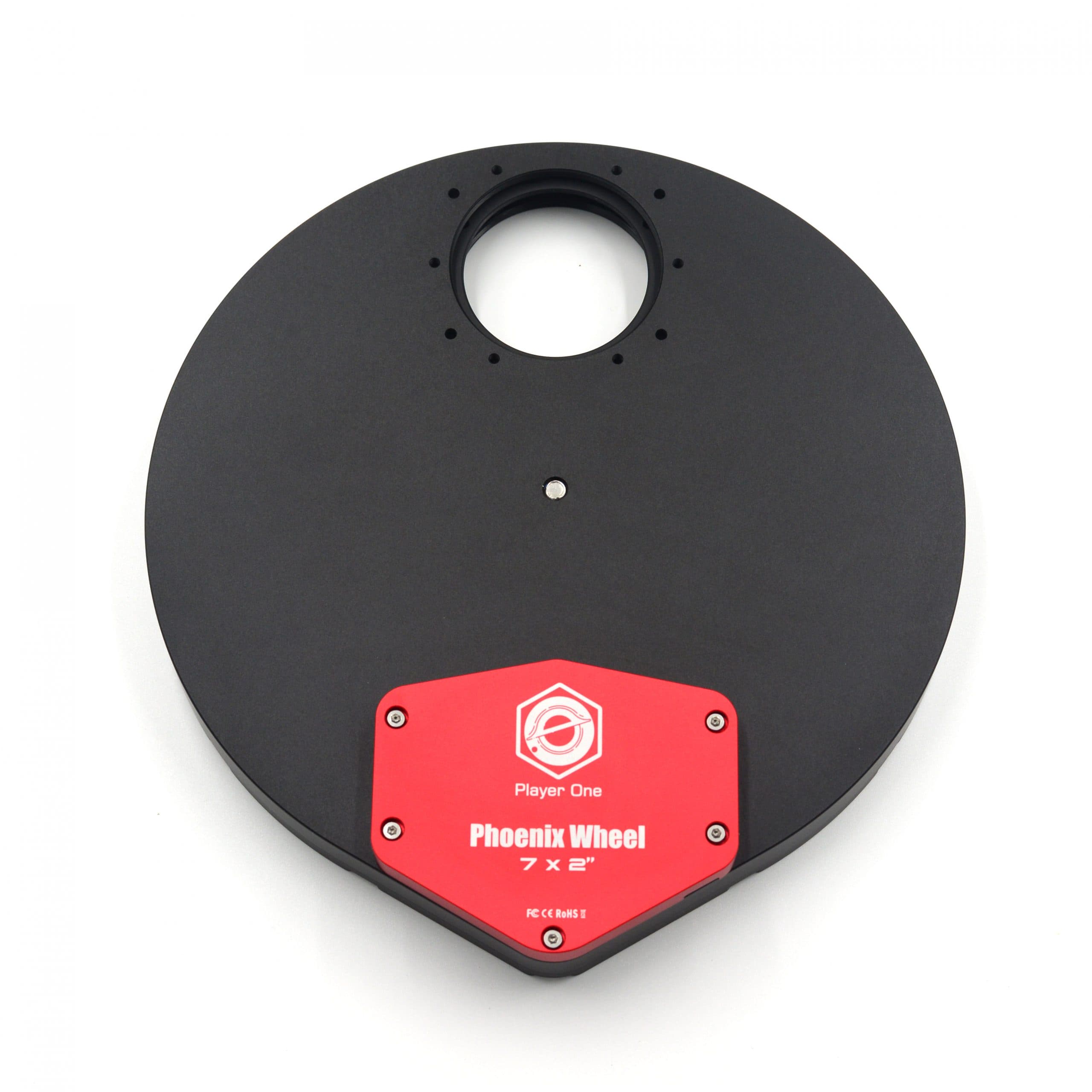
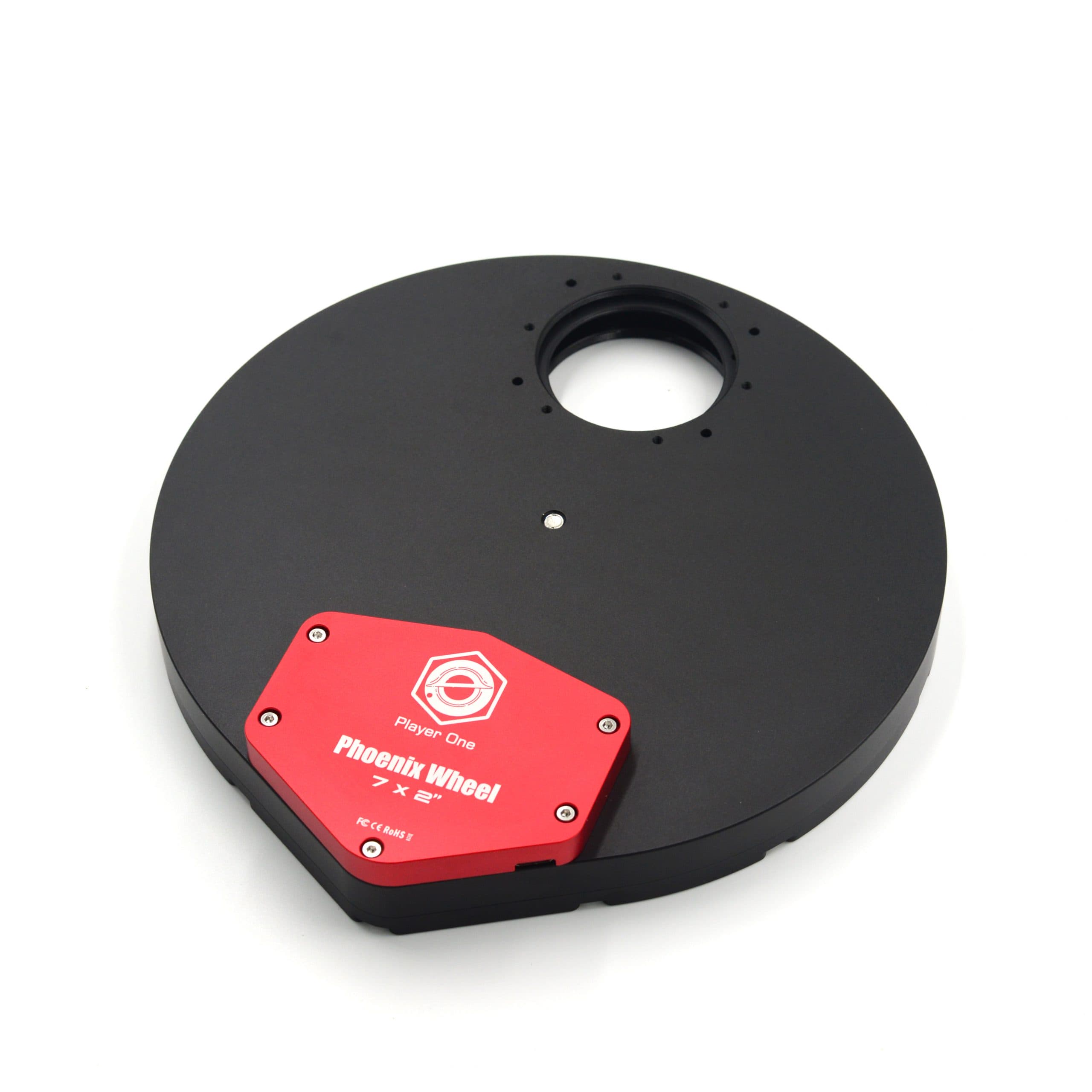
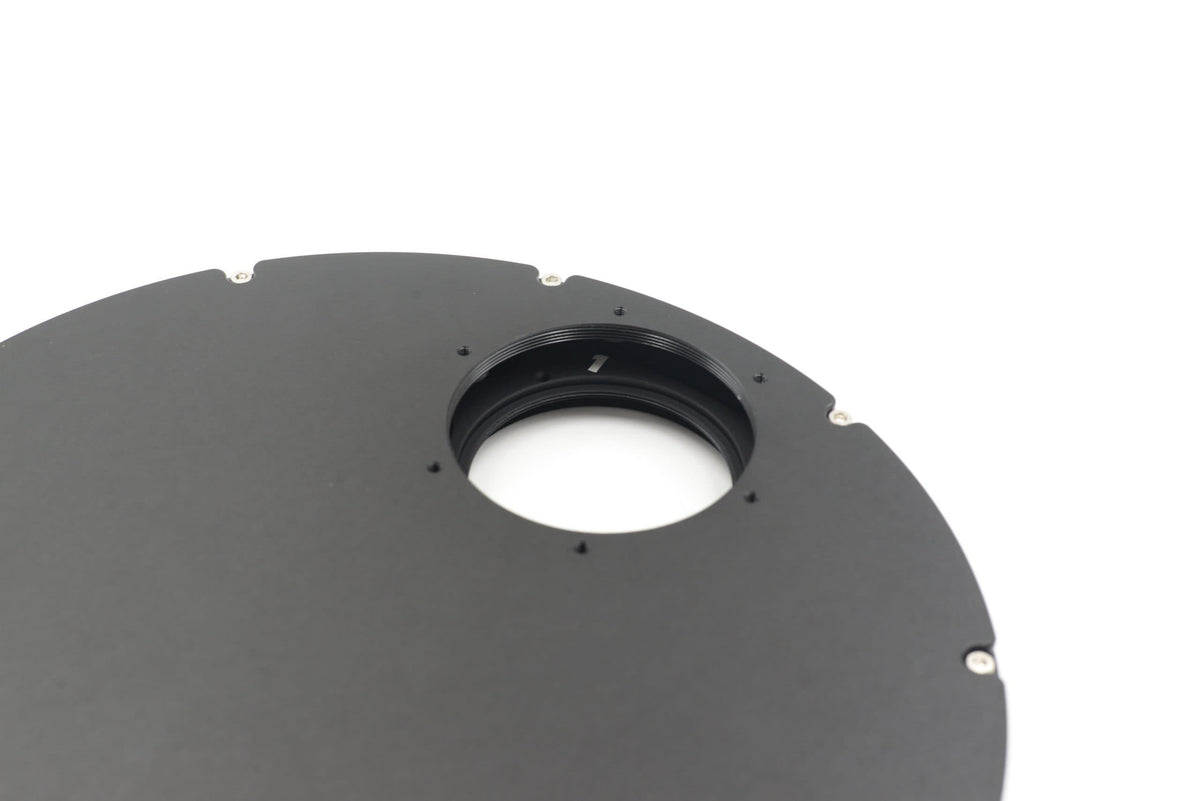
The Player One Phoenix Wheel 7x2" is a motorized, seven-position filter wheel built for cooled monochrome deep-sky imaging. It swaps your 2" filters under software control, so you can run automated LRGB and narrowband sequences without touching the imaging train. A hybrid stepping motor paired with Player One's Hall Sensing Technology returns each filter to the same position every time, and the whole assembly is powered and controlled over a single USB Type-C cable.
Who It's For
This wheel is made for astrophotographers running a dedicated monochrome camera with a set of 2" filters who want unattended, repeatable filter changes through the night. It is designed for camera-based imaging rather than visual observing.
Key Features & Design
- Seven 2" positions: Holds seven 2" mounted filters (or 50mm unmounted filters) — enough for a full LRGB set plus narrowband in one loadout.
- Hall-sensing positioning: Magnetic Hall sensors index each slot precisely, so filters return to the same spot for consistent flats and focus.
- Hybrid stepping motor: Drives smooth, quiet rotation between filters.
- Single-cable USB Type-C: One Type-C cable handles both control and power, so there is no separate power supply to route.
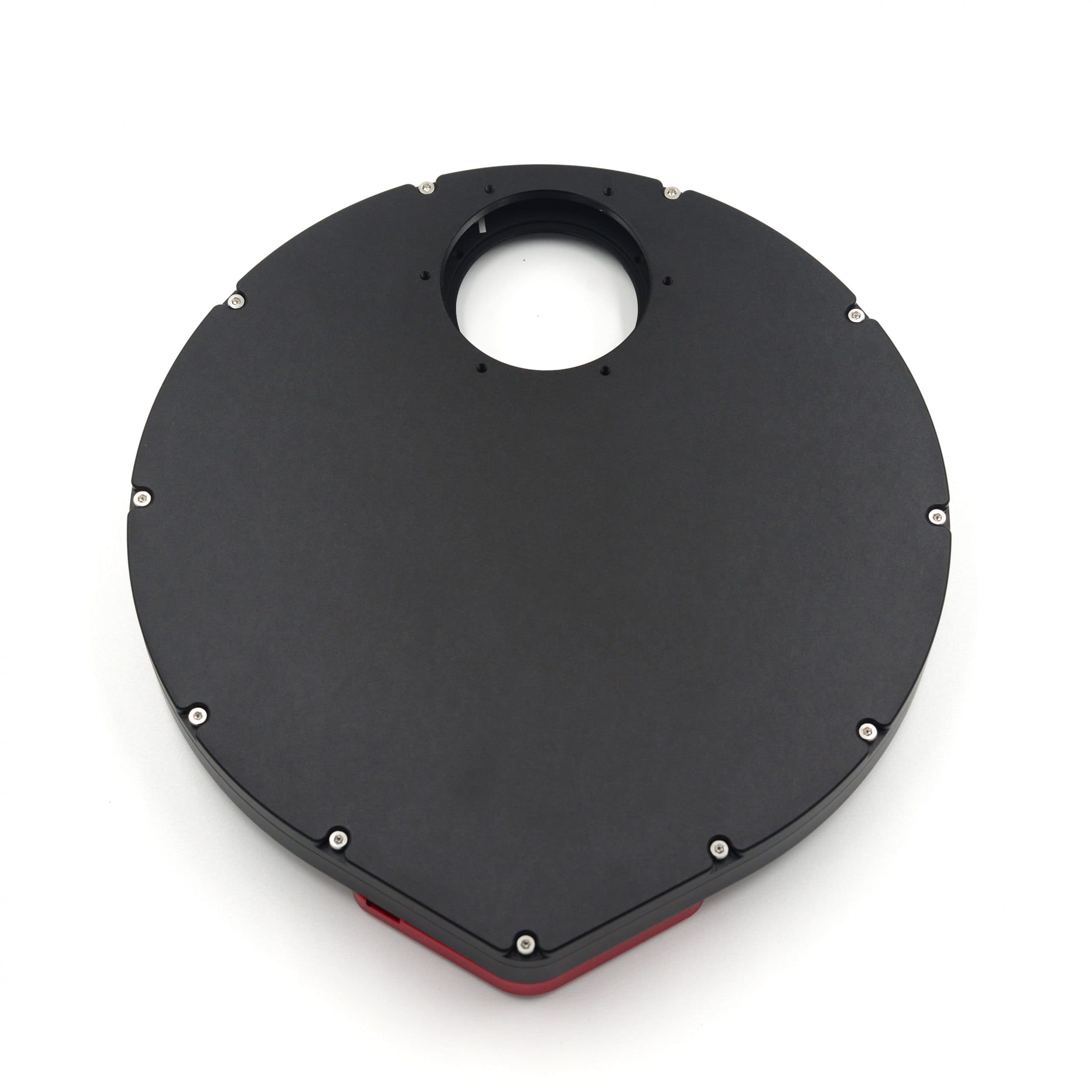
- Aluminum 6061-T6 body: A rigid, lightweight CNC-machined shell keeps the wheel flat and stable in the optical train.
Optical & Mechanical Design
- Filter capacity: 7 × 2" mounted or 50mm unmounted filters.
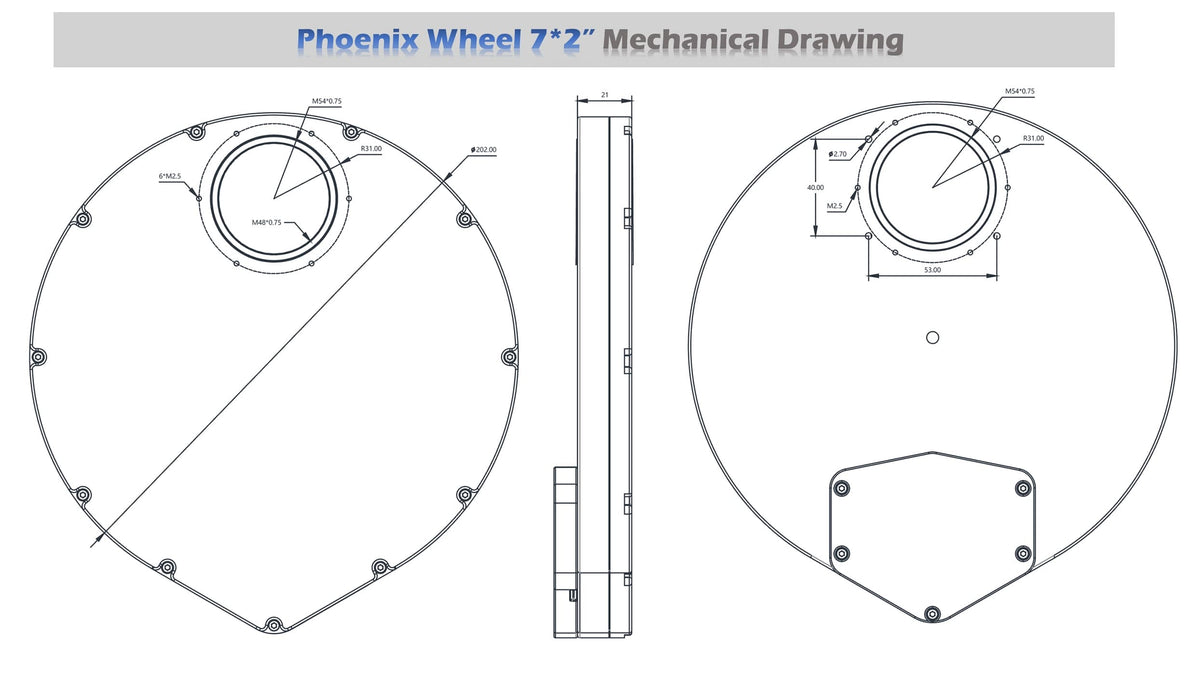
- Physical thickness: 21 mm — this fixed value is what you budget into your backfocus and spacing calculation.
- Connection: M54 × 0.75 threads on both the camera side and the telescope side.
- Control & power: USB Type-C data port.
- Weight: 665 g.
Recommended Uses
- Automated LRGB deep-sky imaging with a monochrome camera
- Narrowband imaging (Ha, OIII, SII) sequences
- Unattended, multi-filter runs under sequencing software
Compatibility & Accessory Notes
The M54 × 0.75 threads on both sides let the wheel sit inline between a compatible Player One camera and your adapters. Player One lists compatibility with the Poseidon, Zeus, Artemis, and Ares series, plus the Uranus PRO and Apollo PRO cameras. Because it accepts 2" mounted or 50mm unmounted filters, confirm your filters match one of those formats before ordering.
Good to Know Before You Order
- Filters are not included: The wheel ships empty, so plan for your own 2" or 50mm filter set.
- Filter thickness varies: 2" mounted filters differ in cell thickness, so check yours against Player One's published filter-size reference to be sure they seat in the filter pockets.
- Budget 21 mm of spacing: The wheel adds a fixed 21 mm to the optical path, which you account for when hitting your camera's backfocus.
FAQ
How many filters does it hold? Seven — either 2" mounted filters or 50mm unmounted filters.
Is it difficult to set up? No. It threads inline via M54 × 0.75 on both sides and connects to your computer with a single USB Type-C cable that carries both data and power; your sequencing software handles the filter changes.
Does it need a separate power supply? No. It runs off the USB Type-C connection.
Can I use it for visual observing? No — it is designed for camera-based imaging, not eyepiece use.
Bottom Line
The Phoenix Wheel 7x2" gives a monochrome imaging rig seven repeatable 2" filter positions in a compact 21 mm-thick, single-cable package — a clean way to automate LRGB and narrowband nights.
| Filter Positions | 7 |
| Filter Size | 2" mounted / 50mm unmounted |
| Physical Thickness | 21 mm |
| Body Threads | M54 x 0.75 (both sides) |
| Motor | Hybrid stepping motor |
| Positioning | Hall Sensing Technology |
| Data Port | USB Type-C |
| Material | Aluminum 6061-T6 |
| Weight | 665 g |
You may also like
Recently viewed
Recent Blog Posts
View all
Your Guide Graph Is Lying to You
Read More

D-Size vs V-Size: A Complete Guide to Telescope Dovetail Systems
Read More

What Is Back Focus in Astrophotography? Telescope Reducers, Flatteners, and Spacing Explained
Read More