


- Description
- Specifications
Product Overview
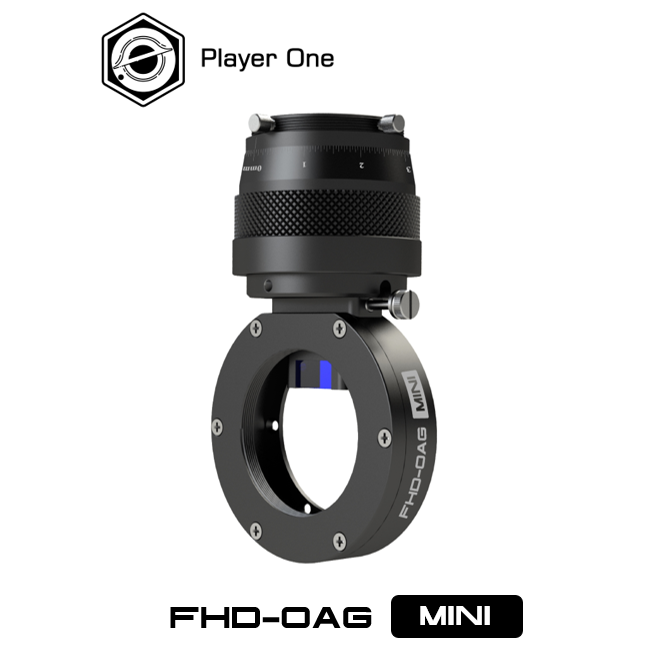
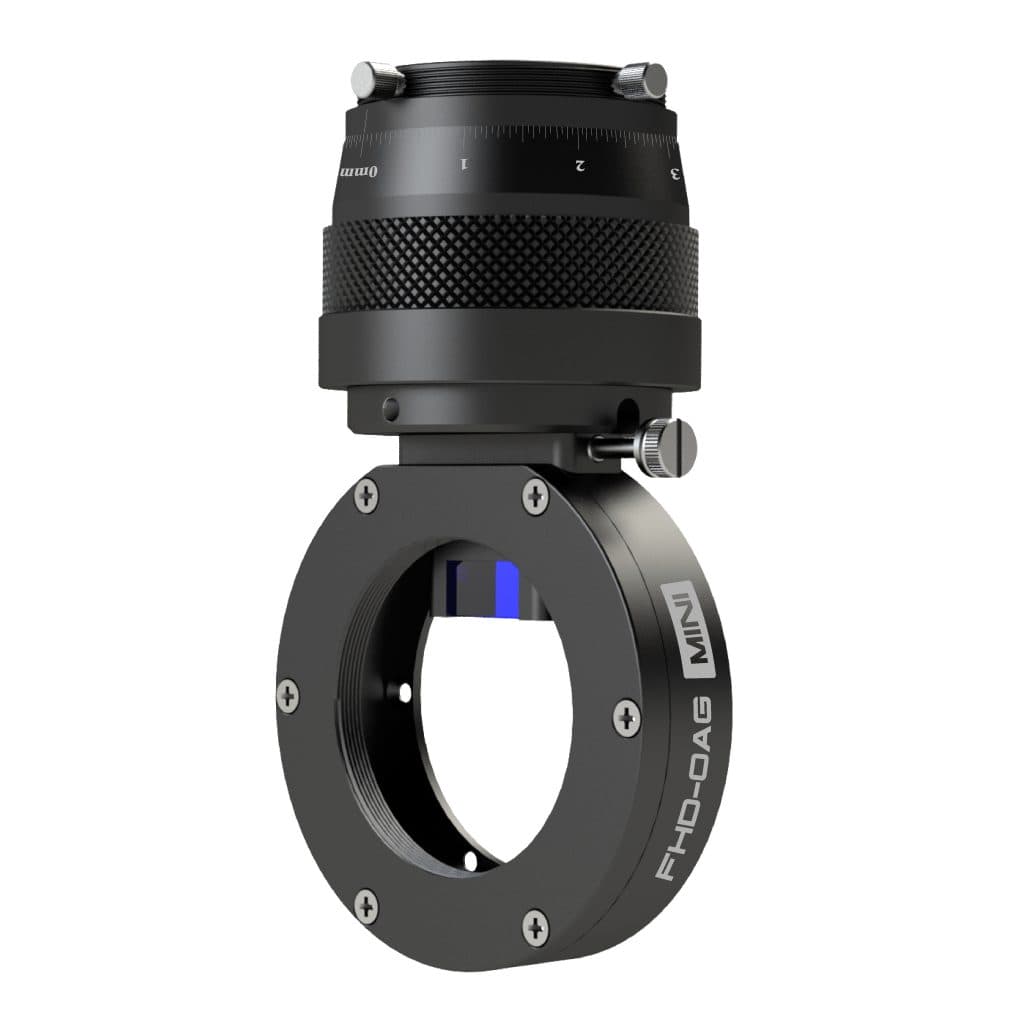
The Player One FHD-OAG MINI is a compact off-axis guider that drops a pickoff prism into your imaging train so a guide camera tracks on the same light path as your main sensor. Built around Player One's Ares-series and planetary cameras, it delivers flexure-free guiding in a small, low-profile aluminum body.
Who It's For
This OAG suits imagers running Player One Ares-series or planetary cameras who want off-axis guiding that shares the main optics rather than relying on a separate, flexure-prone guide scope.
Key Features & Design
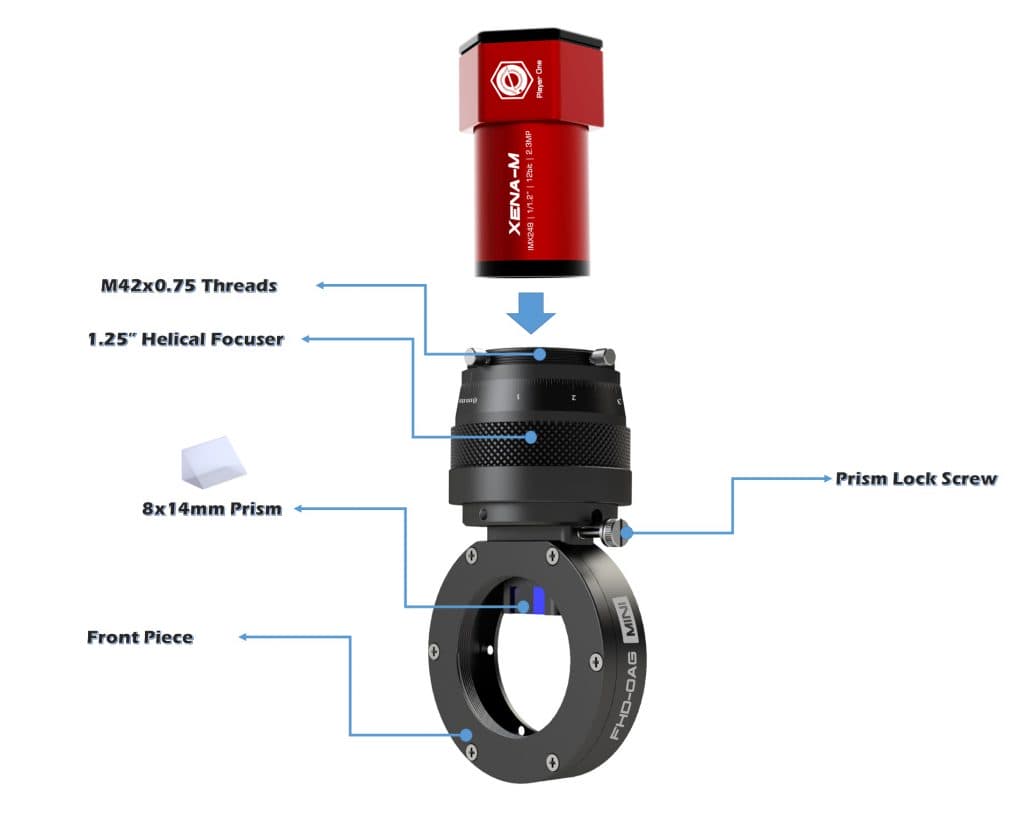
- 8 × 14 mm prism: the wide, near 16:9 prism scans more of the surrounding field for a guide star, so locking on is easier.
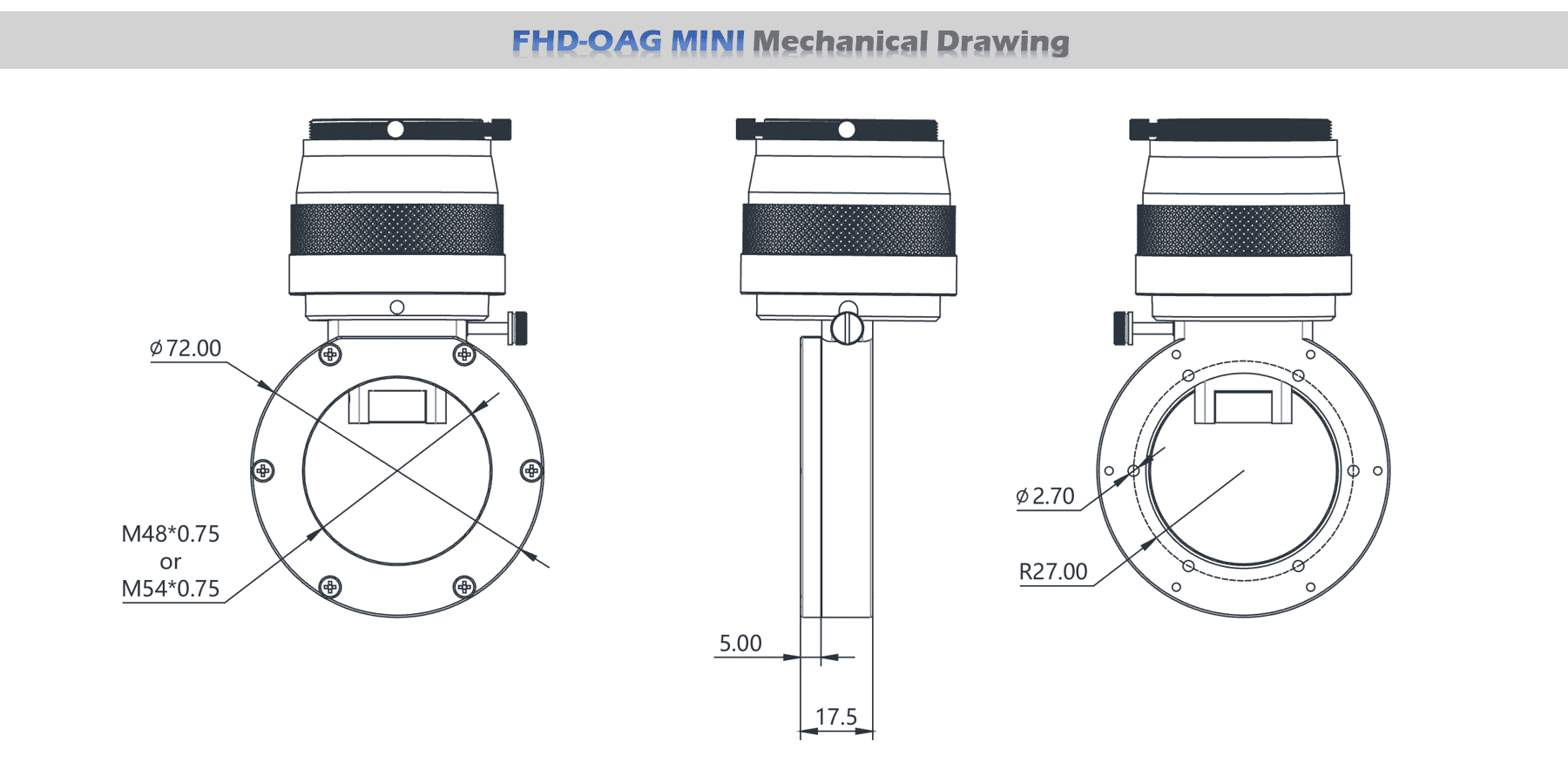
- Only 17.5 mm extension: minimal added optical length keeps your backfocus budget intact for filters and adapters.
- Aluminum 6061-T6 body: aircraft-grade aluminum holds the prism steady while keeping weight low.
Optical & Mechanical Design
The prism measures 8 × 14 mm and stands just 8 mm tall, set in a wide near-16:9 orientation so it sweeps a larger area beside your sensor for candidate guide stars. With only 17.5 mm of extension, the MINI fits into compact imaging trains where every millimeter of backfocus counts.
Recommended Uses
Use the FHD-OAG MINI for deep-sky and high-resolution imaging with compatible Player One cameras where you want the flexure-free tracking of an off-axis guider in a small package.
Compatibility & Accessory Notes
- Camera compatibility: Player One lists the MINI as supporting its Ares series and planetary cameras.
- Spacing: the low 17.5 mm profile helps keep total backfocus within budget alongside filters or a drawer.
Good to Know Before You Order
- Player One does not publish the guider's thread standard, exact backfocus, or weight; contact us if you need to confirm it fits a specific camera and train.
- You provide your own guide camera; the OAG supplies the prism and pickoff only.
FAQ
Is it difficult to set up? No more than any off-axis guider: thread it into your train, set your guide camera at the prism focus, and match it to your main camera's focus.
What is the advantage over a guide scope? It shares your main optics, eliminating differential flexure between a separate guide scope and the imaging scope.
Which cameras does it fit? Player One lists the Ares series and planetary cameras.
Bottom Line
The FHD-OAG MINI brings flexure-free off-axis guiding to Ares-series and planetary setups in a compact 17.5 mm-profile body.
| Prism | 8 × 14 mm (near 16:9 orientation) |
|---|---|
| Prism height | 8 mm |
| Extension length | 17.5 mm |
| Material | Aluminum 6061-T6 |
| Compatible cameras | Ares series, planetary cameras |
You may also like
Recently viewed
Recent Blog Posts
View all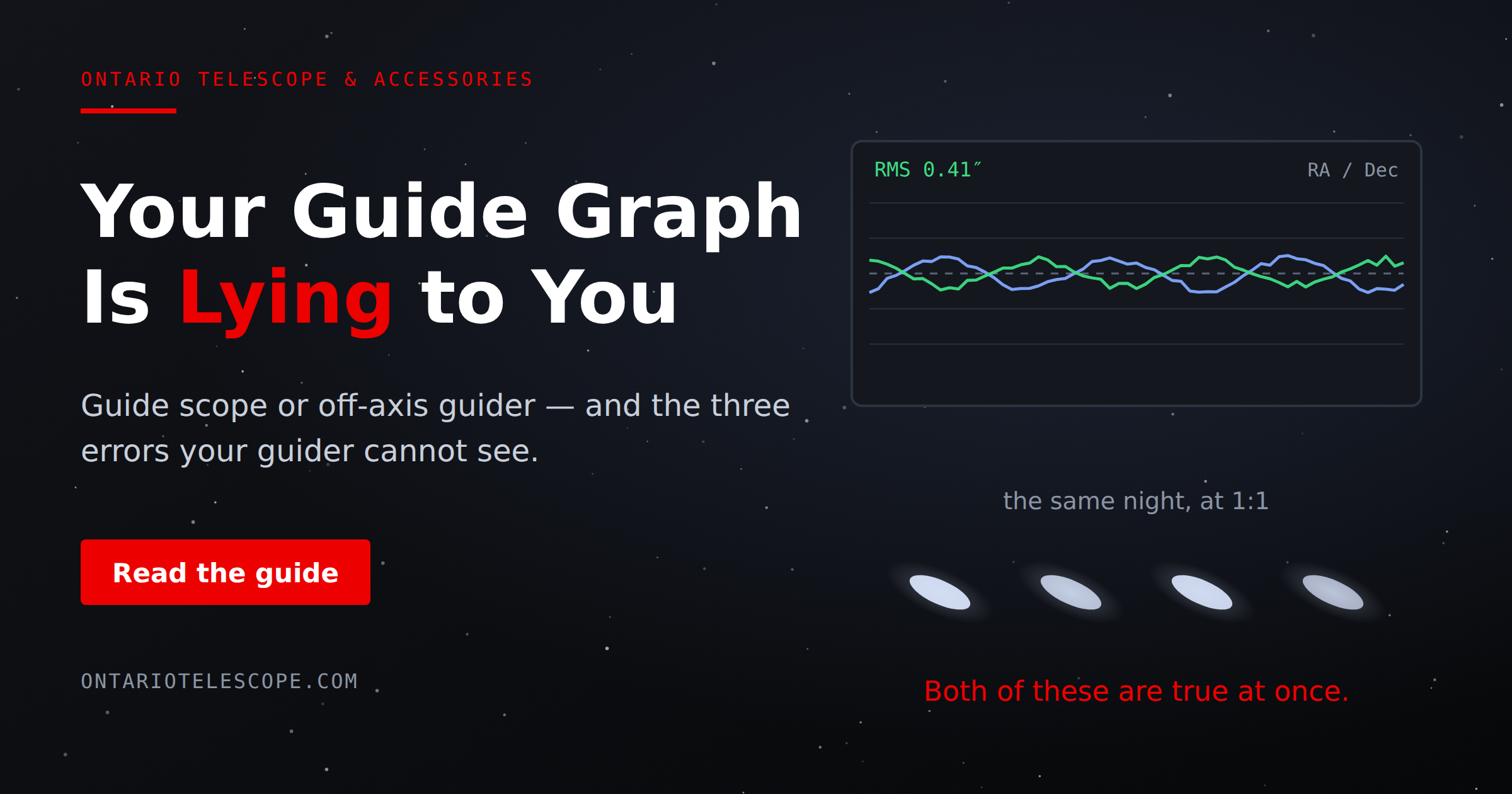
Your Guide Graph Is Lying to You
Read More
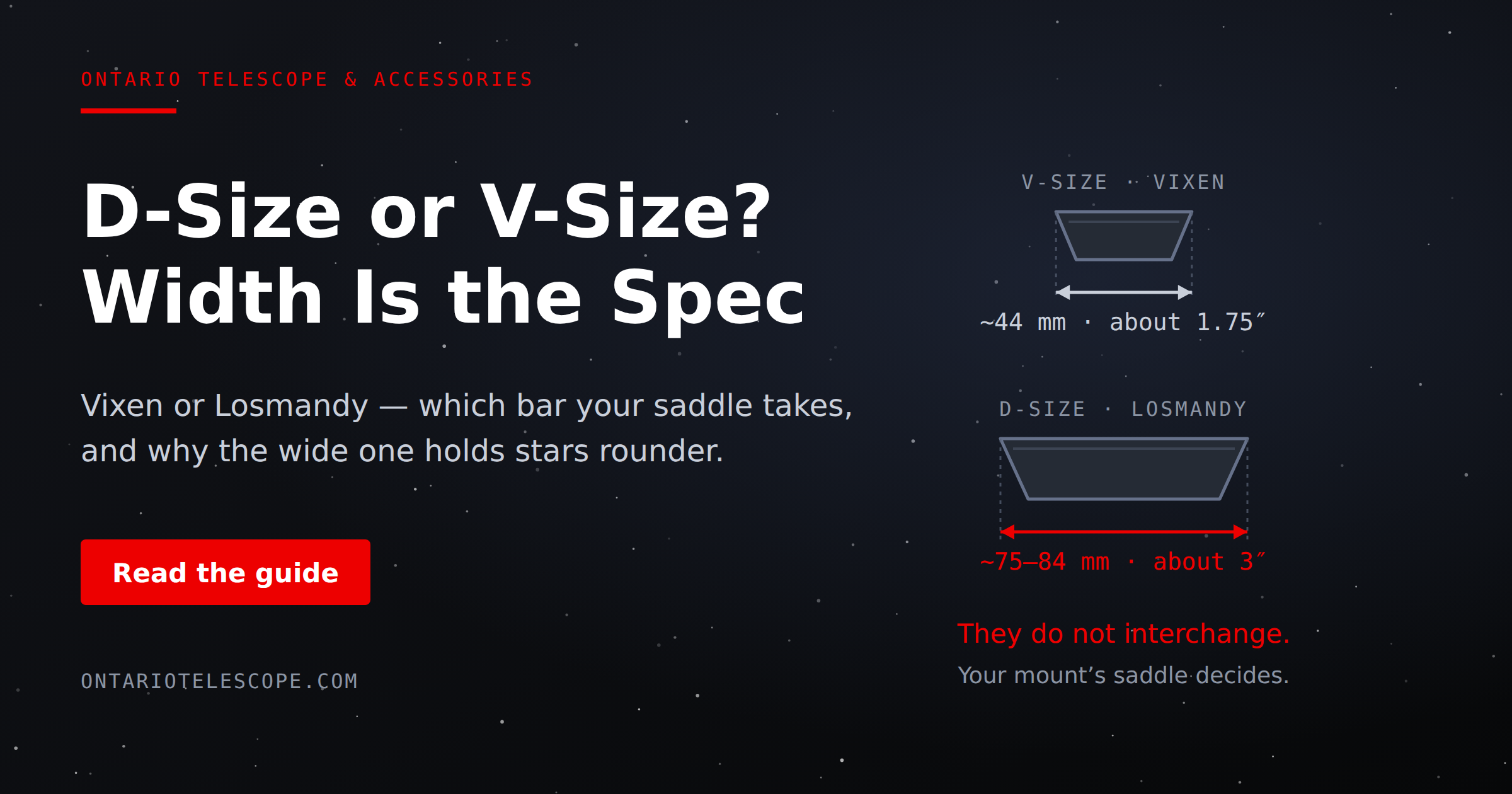
D-Size vs V-Size: A Complete Guide to Telescope Dovetail Systems
Read More
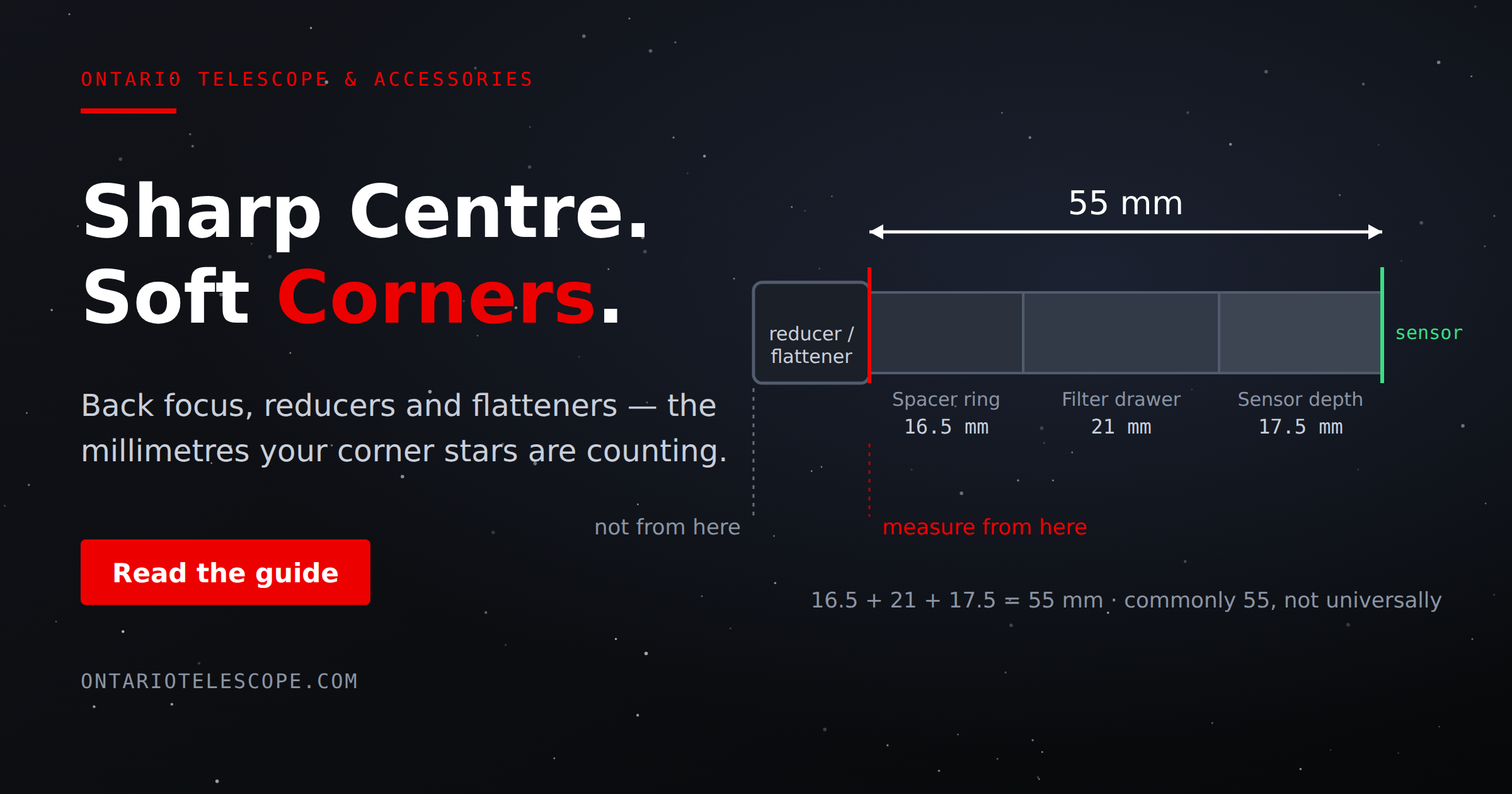
What Is Back Focus in Astrophotography? Telescope Reducers, Flatteners, and Spacing Explained
Read More