



- Description
- Specifications
Product Overview
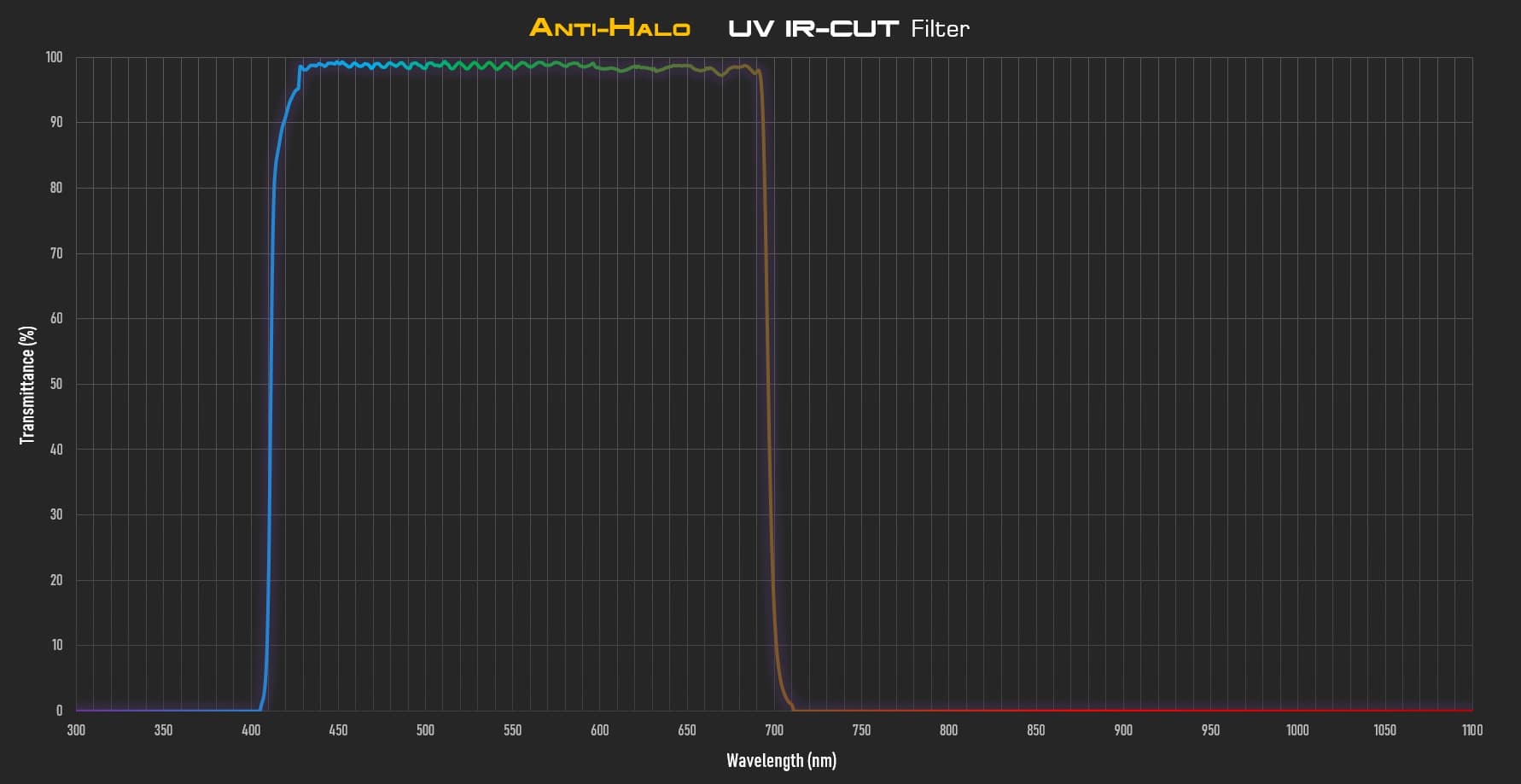
The Player One Astronomy Anti-Halo 2″ UV IR-CUT filter restricts your camera to the visible band, blocking the ultraviolet and infrared light that would otherwise bloat stars and soften planetary and lunar detail. The anti-halo coating adds reflection control on top, so bright targets stay clean instead of picking up glow rings. It transmits more than 95% of visible light while holding out-of-band blocking to OD4.
Who It's For
This filter suits imagers using refractors and other optics where uncorrected UV and IR light spreads the focus and degrades sharpness. If you shoot planets, the Moon, or luminance frames with a colour or mono camera and want tight, true-colour results, it belongs in your imaging train.
Key Features & Design
- UV and IR rejection: confines light to the visible band so stars focus to a tight point and planetary contrast improves.
- High visible transmission: ≥95% throughput preserves brightness and true colour.
- OD4 out-of-band blocking: suppresses the UV and IR wings that a bare sensor would otherwise record.
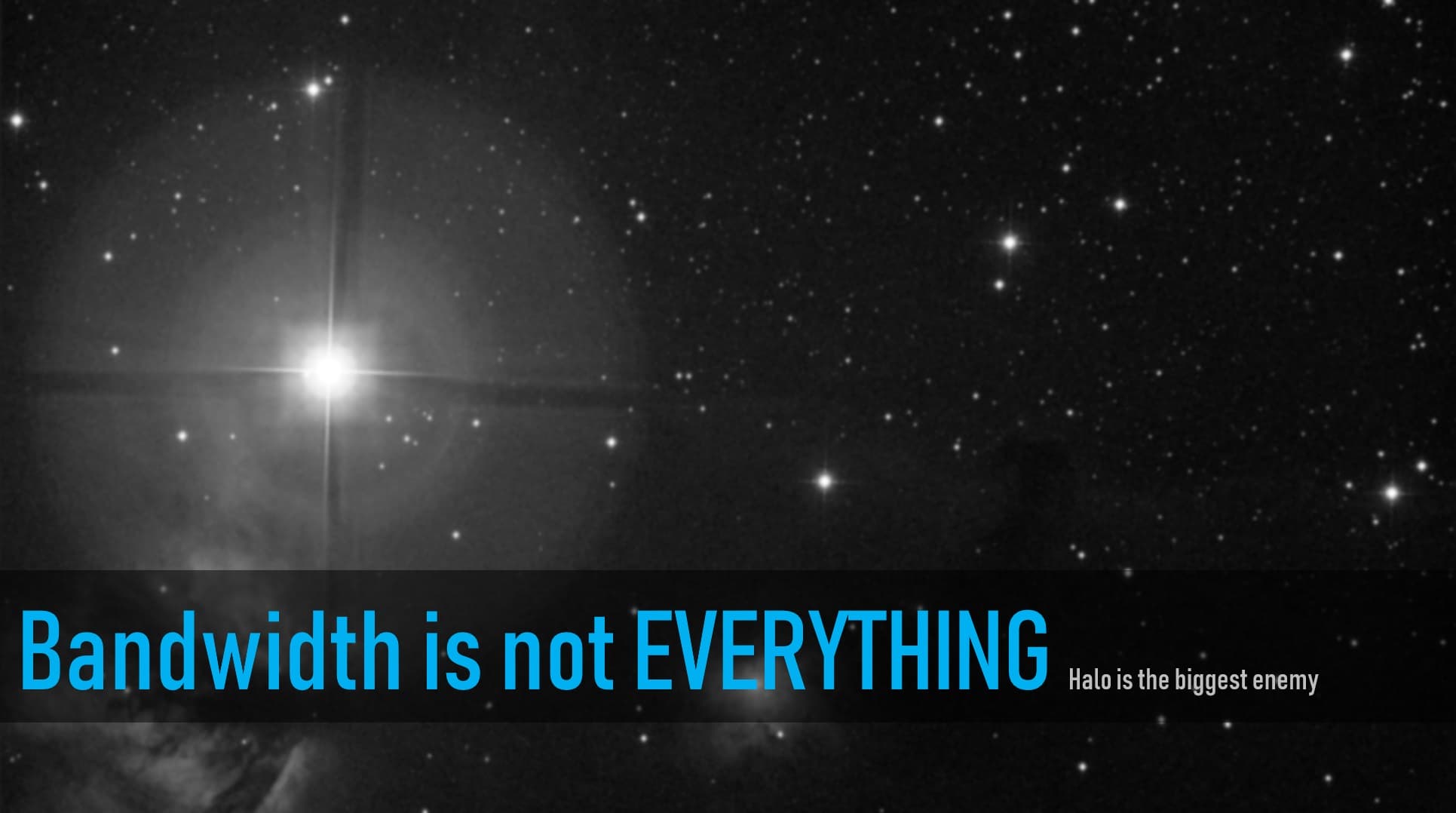
- Anti-halo coating: reduces the reflection halos that can form around bright stars and planets.
- Standard 2″ format: threads into any standard 2-inch cell, drawer, or filter wheel.
Optical/Mechanical Design
As a UV IR-CUT filter, it passes the visible band at high efficiency (≥95% transmittance) while rejecting ultraviolet and infrared light to optical density 4 (OD4). Removing those out-of-band wavelengths matters because most refractors are not colour-corrected in the UV and IR, so leaving them in spreads the focus and enlarges star images; cutting them tightens focus and lifts planetary and lunar contrast. Mechanically it is a 2-inch threaded filter with a 5 mm body plus a 2.5 mm thread section (7.5 mm total) and 1.85 mm-thick optical glass, so account for it in your backfocus budget.

Recommended Uses
- Planetary and lunar imaging with colour or monochrome cameras on refractors.
- Luminance capture where UV/IR bloat would otherwise soften stars.
- General visible-band imaging that benefits from tight focus and true colour.
Compatibility & Accessory Notes
- Fit: standard 2″ (M48) filter threads — works in 2-inch filter drawers, wheels, and threaded nosepieces.
- Cameras: pairs with one-shot-colour and monochrome astronomy cameras.
- Backfocus: the 7.5 mm cell and 1.85 mm glass add to your optical path; include them in your spacing calculation.
Good to Know Before You Order
- This is an imaging filter; it improves sharpness and colour by removing UV and IR, and does not act as a light-pollution or narrowband filter.
- Player One does not publish a net weight for this filter, so the shipping weight shown at checkout is an estimate. Contact us if you need an exact figure.
- Inserting any filter shifts focus slightly, so refocus after fitting it.
FAQ
Is it difficult to set up? No. It threads into a standard 2-inch holder, drawer, or wheel and needs no power or configuration; refocus once after it is installed.
What does a UV IR-CUT filter actually do? It limits the light reaching your sensor to the visible band, cutting the ultraviolet and infrared that most refractors do not focus to the same point, which sharpens stars and boosts planetary and lunar contrast.
How is the anti-halo version different? The coating stack adds reflection control to suppress the halo rings that can appear around bright stars and planets.
Will it change my colour balance? It preserves true visible colour by removing only the UV and IR wings; more than 95% of visible light passes through.
Bottom Line
The Anti-Halo 2″ UV IR-CUT filter keeps your imaging inside the visible band with OD4 UV/IR blocking and better than 95% transmission, giving you tighter stars, cleaner planetary detail, and halo-controlled results on refractor setups.
| Brand | Player One Astronomy |
| Model | Anti-Halo 2″ UV IR-CUT |
| Filter Type | UV/IR blocking (UV IR-CUT), anti-halo coating |
| Blocking | OD4.0 |
| Peak Transmittance | ≥95% |
| Thread / Format | 2″ (M48) |
| Cell Thickness | 7.5 mm (5 mm body + 2.5 mm thread) |
| Glass Thickness | 1.85 mm |
You may also like
Recently viewed
Recent Blog Posts
View all
Your Guide Graph Is Lying to You
Read More
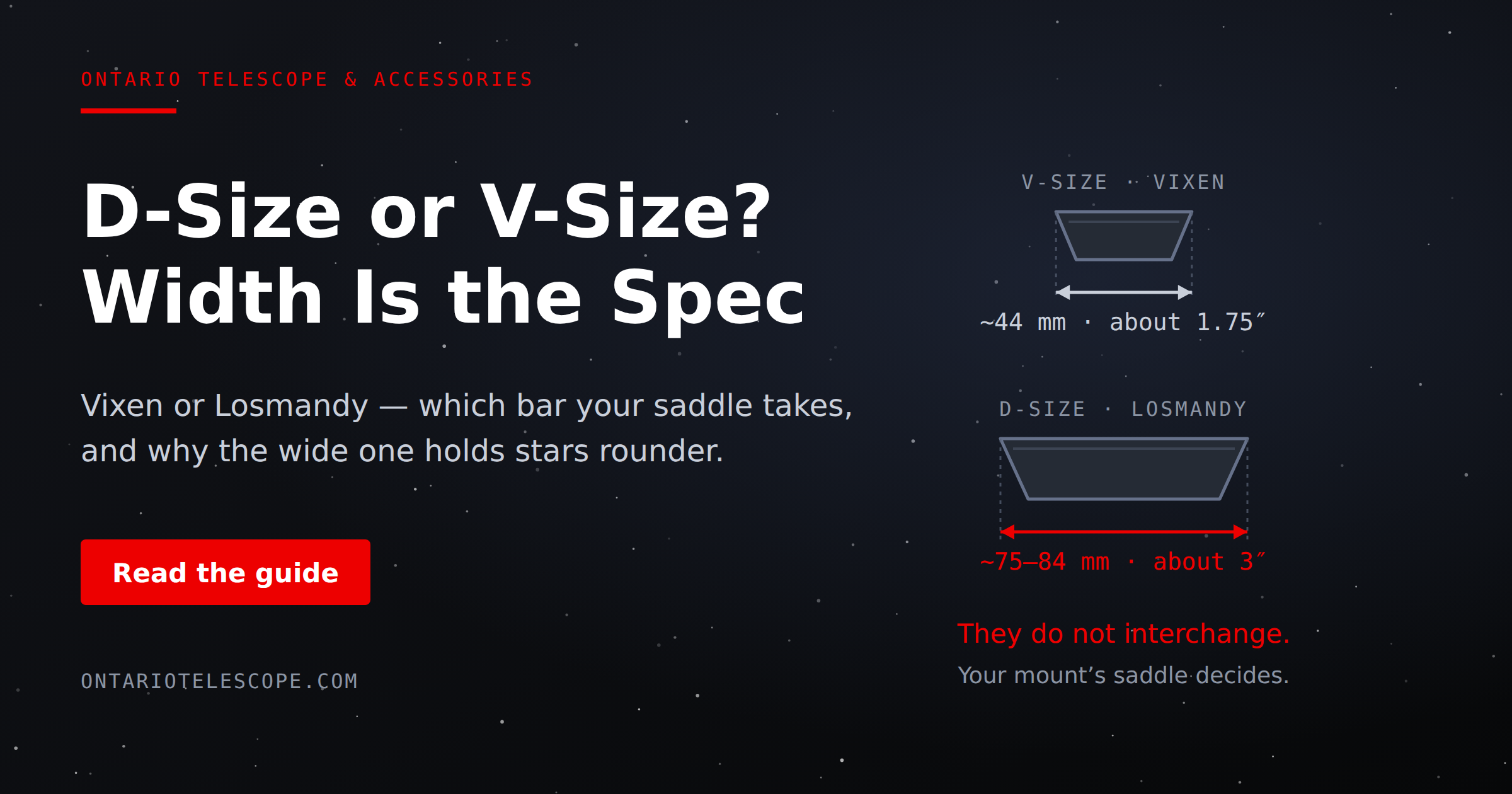
D-Size vs V-Size: A Complete Guide to Telescope Dovetail Systems
Read More
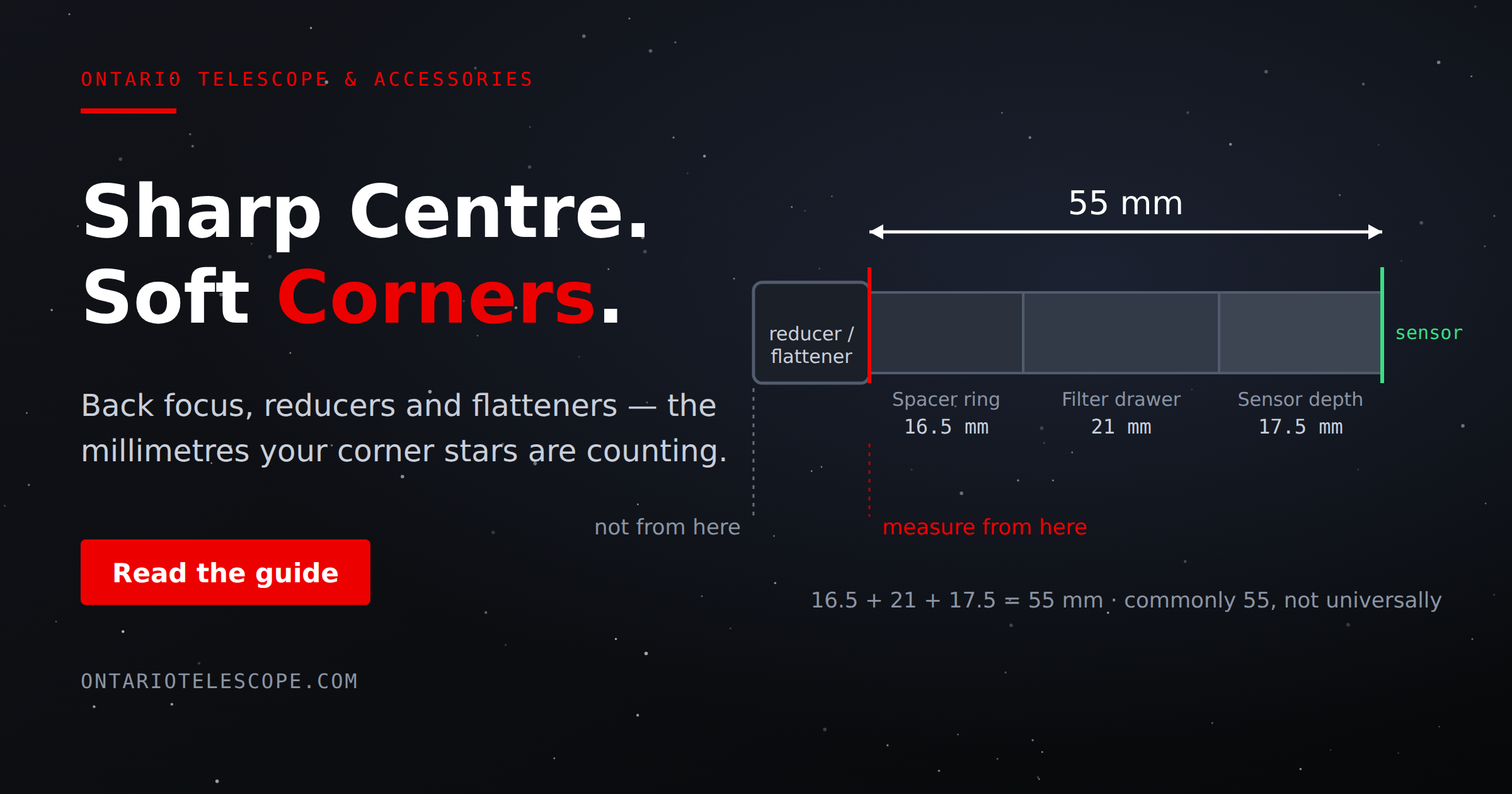
What Is Back Focus in Astrophotography? Telescope Reducers, Flatteners, and Spacing Explained
Read More