



- Description
- Specifications
Product Overview
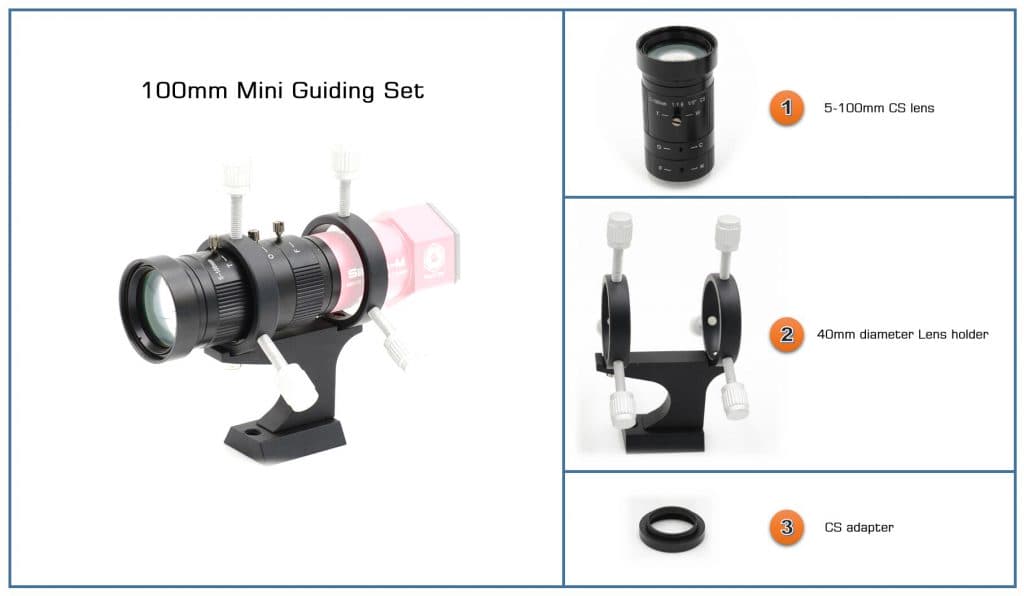
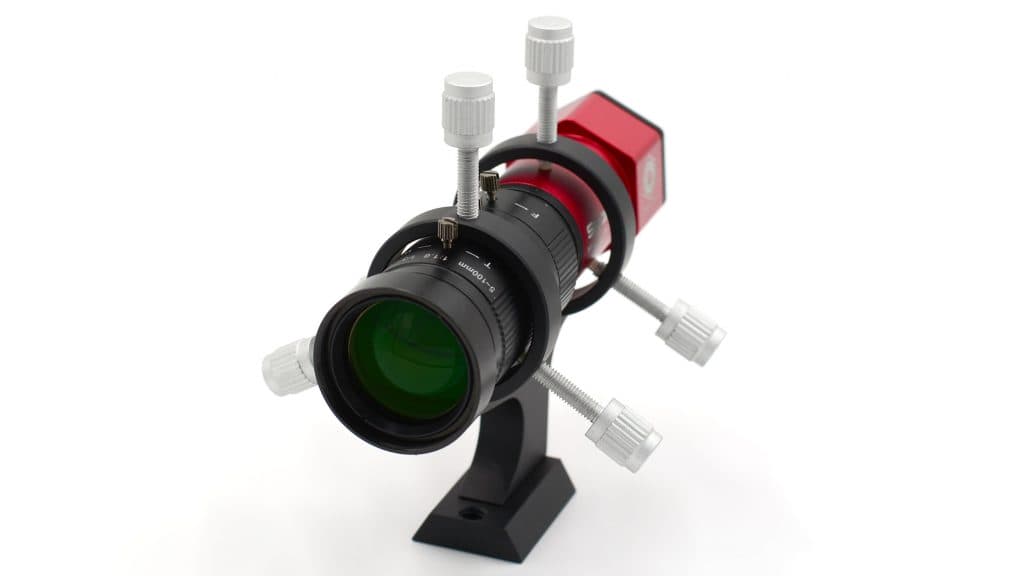
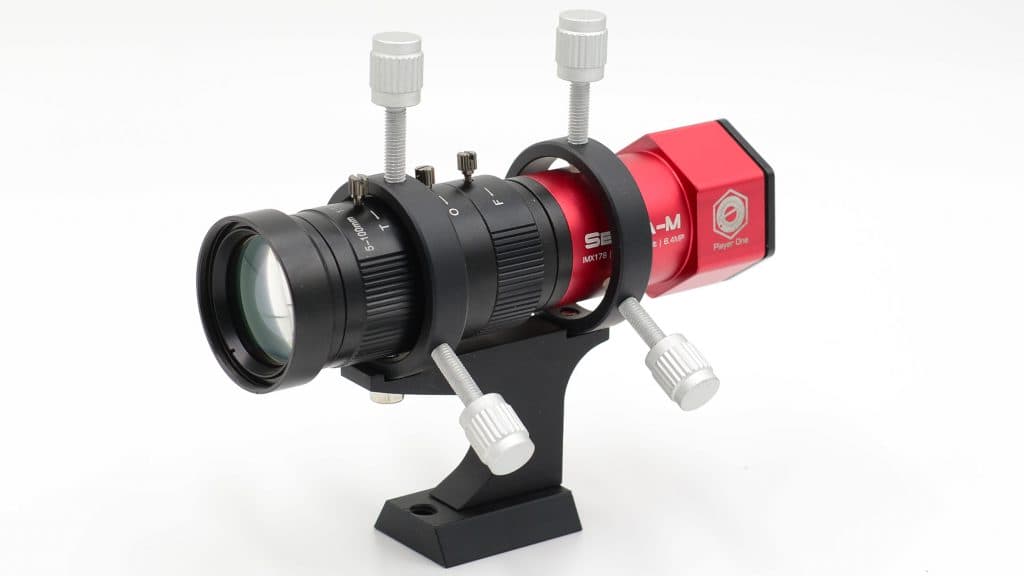
The Player One Astronomy 100mm Mini Guiding Set is a compact, all-metal guide package built to ride alongside your main imaging telescope and keep your mount locked on target during long deep-sky exposures. It ships as a three-part set that pairs a small guide lens with the hardware you need to point a lightweight guide camera at the sky, giving your autoguiding software a steady star to track.
Who It's For
This set is aimed at astrophotographers who guide their exposures with a small dedicated guide camera and want a low-profile, low-weight alternative to a full guide scope. If you image with a compact refractor or a portable rig where every gram on the saddle counts, the mini format keeps your guiding hardware out of the way.
Key Features & Design
- All-metal construction: the body and mounting parts are metal for rigidity, so flexure between the guide optic and your camera stays minimal during tracking.
- Three-part set: the package arrives as three components that assemble into a complete mini guiding solution, ready to accept a small guide camera.
- Compact footprint: the mini form factor adds very little bulk or weight to your imaging train, which matters on smaller mounts.
Recommended Uses
Use the 100mm Mini Guiding Set for autoguiding deep-sky astrophotography, pairing it with a compact guide camera and your guiding software (PHD2 or similar) to correct periodic error and keep stars round across long sub-exposures.
Compatibility & Accessory Notes
- Guide cameras: the set is designed around small guide cameras. A larger planetary camera body will not fit, so plan on a compact guide camera.
- Guide software: works with standard autoguiding workflows through your chosen guide camera and mount connection.
Good to Know Before You Order
- Player One does not publish a focal length, aperture, or weight for this set, so if your workflow depends on a specific guide focal length, contact us and we will help you confirm fit.
- The guide lens is sized for small guide cameras; a bulky planetary camera physically will not mount to it.
FAQ
Is it difficult to set up? No. The set assembles from three parts and mounts to your rig much like any small guide scope; you attach your guide camera, connect it to your guiding software, and calibrate.
Will my planetary camera work as the guide camera? No. The set is built for small guide cameras, and a larger planetary camera body will not fit.
What software does it use? Any standard autoguiding software that supports your guide camera, such as PHD2.
Bottom Line
The 100mm Mini Guiding Set is a light, rigid, all-metal way to add autoguiding to a compact imaging rig when you are pairing it with a small guide camera.
| Type | Mini guide-scope set (3 parts) |
|---|---|
| Construction | Metal |
| Camera compatibility | Small guide cameras (planetary cameras do not fit) |
You may also like
Recently viewed
Recent Blog Posts
View all
Your Guide Graph Is Lying to You
Read More

D-Size vs V-Size: A Complete Guide to Telescope Dovetail Systems
Read More

What Is Back Focus in Astrophotography? Telescope Reducers, Flatteners, and Spacing Explained
Read More