


- Description
- Specifications
Product Overview
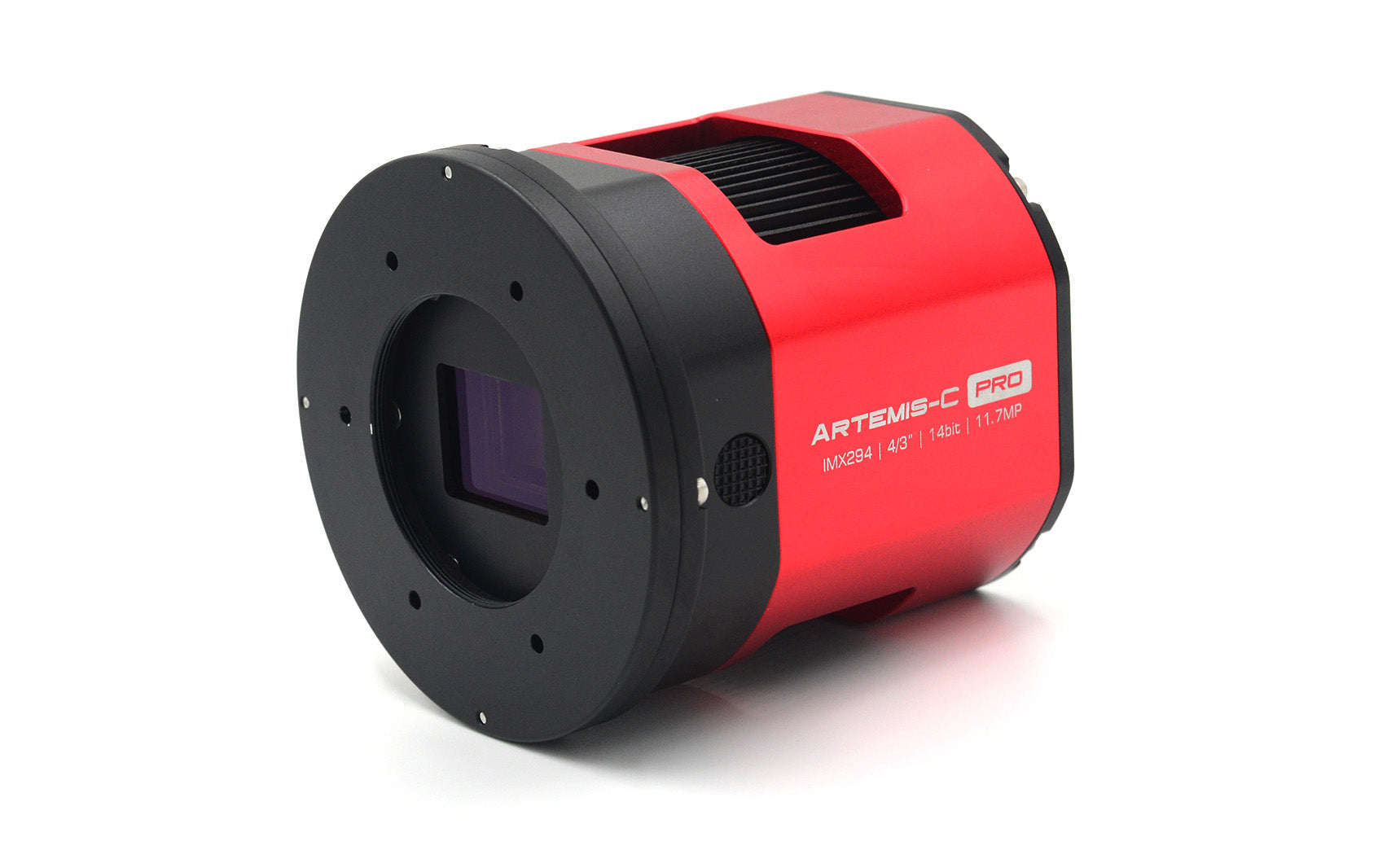
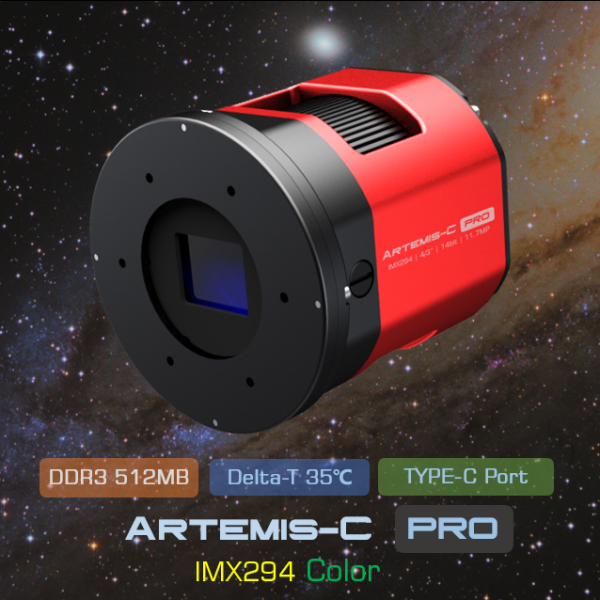
The Player One Astronomy Artemis-C Pro is a cooled one-shot-color USB3.0 camera built on the 11.7-megapixel Sony IMX294 CMOS sensor. The IMX294 is a 4/3″ sensor (19.2 mm × 13 mm, 23.2 mm diagonal) with 4.63 µm pixels — a large, sensitive pixel that gathers light quickly for its size. Its native full-well capacity is 65.8 ke-, read noise drops from 7.8e- to 1.2e- with gain, and a High Conversion Gain (HCG) mode keeps noise low. A two-stage TEC cools the sensor 40°C ± 2°C below ambient for long, clean deep-sky exposures.
Who It's For
This is a good match if you shoot wide-field deep-sky targets in one-shot color — large nebulae, star fields, and extended objects that suit a 4/3″ frame. The larger 4.63 µm pixels pair well with short-to-medium focal length refractors, and the cooling makes it capable on faint subjects under long exposure.
Key Features & Design
- Sony IMX294 4/3″ color sensor: 4144 × 2824 resolution with light-hungry 4.63 µm pixels.
- 65.8 ke- full well, 14-bit ADC: broad dynamic range for stars and nebulosity in the same frame.
- Read noise down to 1.2e- with HCG: low-noise capture at high gain for faint targets.
- Two-stage TEC, 40°C ± 2°C below ambient: strong cooling for low dark current.
- M48, 2″, and 1.25″ interfaces: flexible connection to a range of imaging trains.
- 512 MB DDR3 buffer: steadies the USB3.0 data stream.
Optical / Mechanical Design
The IMX294's 4.63 µm pixels are large for a modern CMOS, which gives high sensitivity and a generous full well relative to pixel count — well suited to wide-field color imaging. Peak quantum efficiency is about 76%, and the HCG mode combined with 14-bit sampling preserves dynamic range while lowering read noise at high gain. Cooling to 40°C ± 2°C below ambient controls thermal noise across long integrations.

Recommended Uses
- Wide-field deep-sky color: large nebulae and star fields on short-to-medium focal lengths.
- Cooled long-exposure imaging: faint targets from suburban or dark skies.
- Dual-band and light-pollution filtered work: the large sensor pairs well with 2″ filters.
Compatibility & Accessory Notes
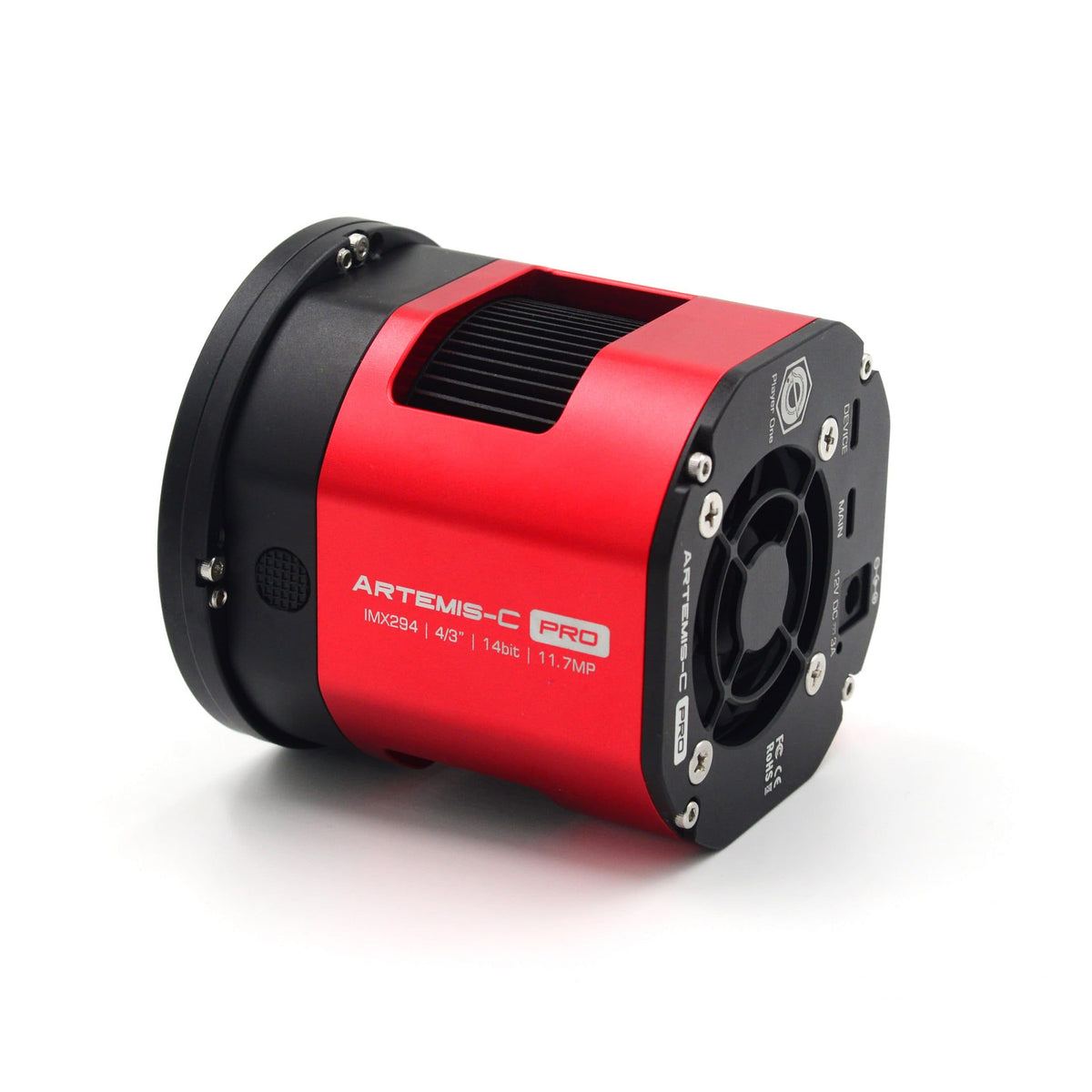
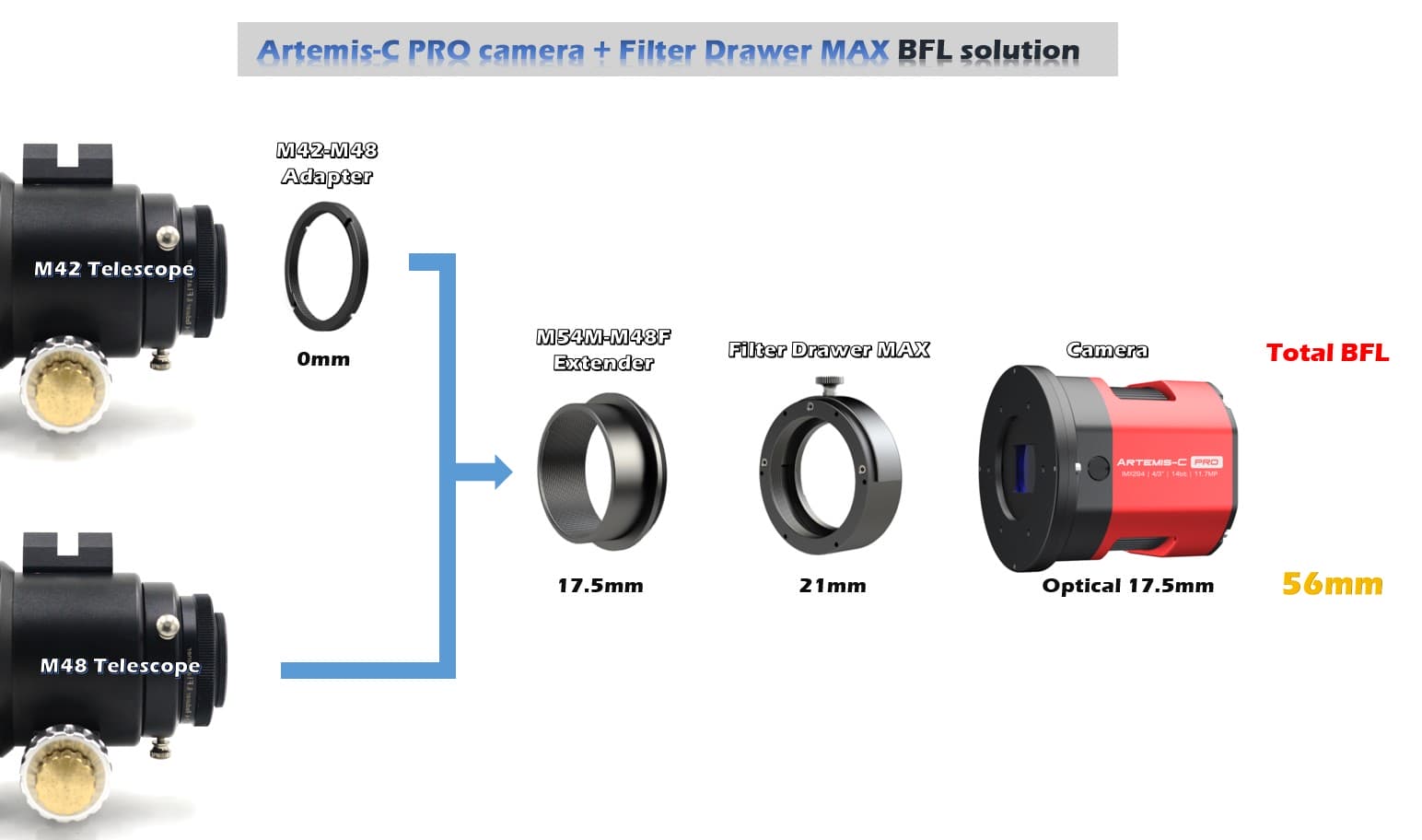
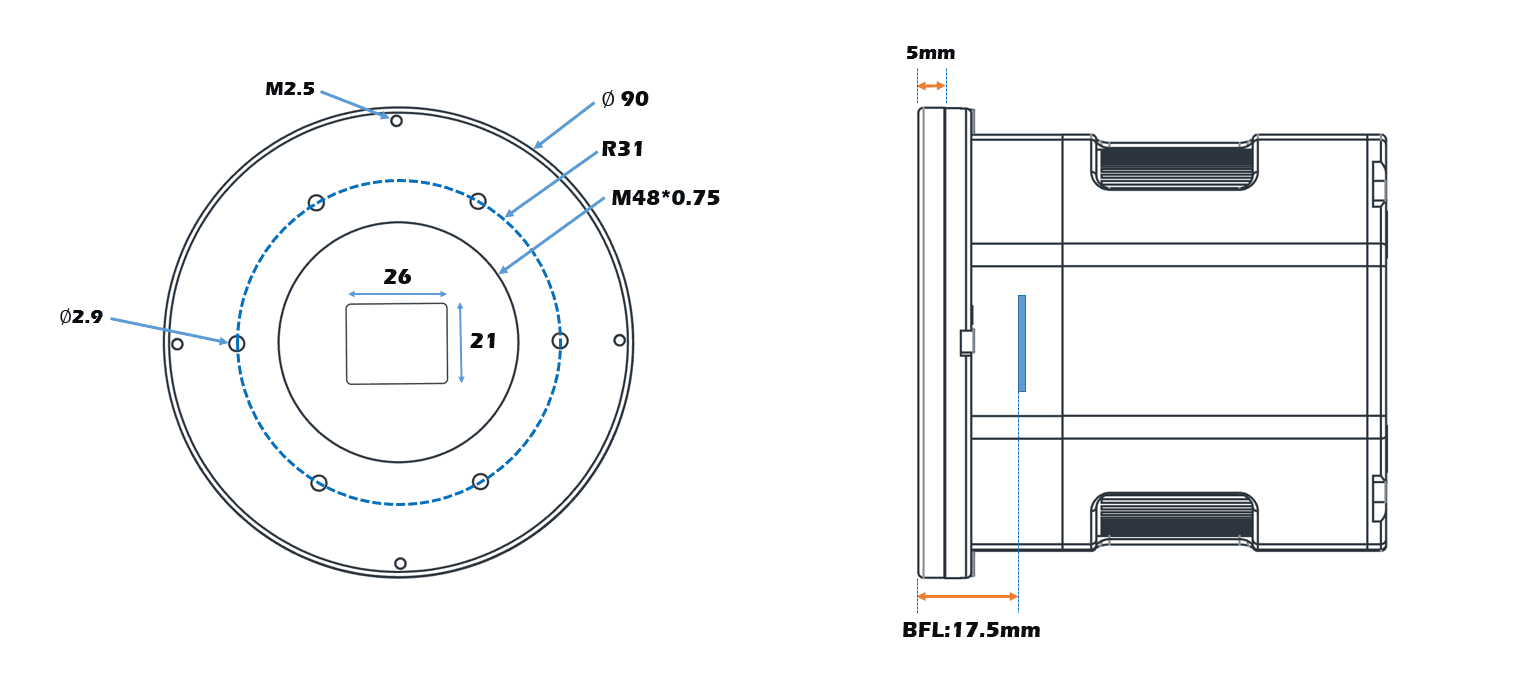
The Artemis-C Pro connects over USB3.0/USB2.0 (Type-C) and powers its cooler from a 12 V DC 5.5 × 2.1 mm input. It offers M48 × 0.75, 2″, and 1.25″ interfaces. With the sensor tilt plate fitted the back focal distance is 17.5 mm; without it the figure is 12.5 mm — note which configuration you are using when calculating spacing to a flattener or filter.

Good to Know Before You Order
- Back focus depends on the tilt plate: 17.5 mm with the plate, 12.5 mm without — build your spacing from the configuration you run.
- It is a dedicated imaging camera: it works through a computer and has no application in a visual eyepiece train.
- Cooling draws 12 V power: plan a 12 V DC supply for the TEC alongside the USB cable.
- Matching filters and flattener: send us your imaging train and we will confirm the spacing and thread adapters with you.
Frequently Asked Questions
Is it difficult to set up?
No. It threads onto M48, 2″, or 1.25″, connects with a single USB3.0 Type-C cable, and takes 12 V DC for cooling. Confirm whether your train uses the 17.5 mm or 12.5 mm back focus and the rest is set in software.
What is it best used for?
Cooled wide-field one-shot-color deep-sky imaging — large nebulae and star fields on short-to-medium focal lengths.
What does HCG mode do?
High Conversion Gain lowers read noise at higher gain settings, helping faint detail while keeping dynamic range usable.
What filters can I use?
As a color camera it captures full color in one exposure; 2″ dual-band or light-pollution filters improve contrast from brighter skies.
Bottom Line
In short: a cooled one-shot-color camera on the 4/3″ 11.7 MP Sony IMX294, with large 4.63 µm pixels, a 65.8 ke- full well, HCG low-noise mode, and 40°C of cooling below ambient. Give it 12 V power and a USB3.0 link and it is a strong wide-field deep-sky imager — just build spacing from the 17.5 mm (or 12.5 mm) back focus.
| Sensor | Sony IMX294 CMOS, color (Bayer RGGB) |
|---|---|
| Sensor format | 4/3″ (19.2 mm × 13 mm, 23.2 mm diagonal) |
| Resolution | 11.7 MP (4144 × 2824) |
| Pixel size | 4.63 µm |
| Full-well capacity | 65.8 ke- (gain 0); 14.5 ke- (gain 120, HCG) |
| Read noise | 1.2e- – 7.8e- |
| ADC | 14-bit |
| Max frame rate | 33 fps (RAW8); 16.5 fps (RAW16) |
| Peak QE | ≈76% |
| Shutter | Rolling shutter |
| Cooling | Two-stage TEC, 40°C ± 2°C below ambient |
| Exposure range | 32 µs – 2000 s |
| Back focal length | 17.5 mm (with sensor tilt plate); 12.5 mm (without) |
| Buffer | 512 MB DDR3 |
| Data interface | USB3.0 / USB2.0 (Type-C) |
| Power | 12 V DC (5.5 × 2.1 mm) |
| Adapters | M48 × 0.75, 2″, 1.25″ |
| Weight | 650 g |
| Working temperature | -10°C to 60°C |
You may also like
Recently viewed
Recent Blog Posts
View all
Your Guide Graph Is Lying to You
Read More

D-Size vs V-Size: A Complete Guide to Telescope Dovetail Systems
Read More

What Is Back Focus in Astrophotography? Telescope Reducers, Flatteners, and Spacing Explained
Read More