


- Description
- Specifications
Product Overview
The Player One 1.25" Extender is a machined metal spacer that adds a fixed 20 mm of optical-train length between 1.25-inch threaded components. It carries M28.5 × 0.6 female threads on one end and M28.5 × 0.6 male threads on the other, so it threads in line without changing the thread standard. It was designed for use with guide cameras and other M28.5 (1.25-inch) threaded accessories, where a small amount of extra spacing is needed to reach focus or clear a filter.
Who It's For
This is a good match if you are building a 1.25-inch guiding or imaging train and need to add length between two M28.5-threaded parts — for example, spacing a guide camera back from a filter or nosepiece so the assembly reaches focus.
Key Features & Design
- Fixed 20 mm spacing: adds 20 mm of length (plus 2.5 mm of engaged thread) in a single component.
- M28.5 × 0.6 threads: female one end, male the other — the standard 1.25-inch filter/accessory thread.
- Metal construction: machined metal body for a rigid, repeatable join.
- Mechanical only: no optical elements and no electronic connection.
Recommended Uses
- Guide-camera spacing: extend a guide camera back from a filter, nosepiece, or off-axis guider port.
- 1.25-inch train building: add a known 20 mm step when a threaded 1.25-inch assembly needs to reach focus.
Compatibility & Accessory Notes
Both ends use the M28.5 × 0.6 thread standard common to 1.25-inch filters and accessories — female on one side, male on the other. It passes the 1.25-inch thread straight through and does not adapt to any other standard. If you are not sure how much spacing your train needs, send us your camera and accessory setup and we will work it out with you.
Good to Know Before You Order
- Mechanical adapter only: it adds length and carries the thread — there are no optics and no electronic communication through it.
- Fixed length: the 20 mm step is not adjustable.
- Thread standard: both ends are M28.5 × 0.6; it does not convert 1.25-inch to any other thread.
Frequently Asked Questions
Is it difficult to set up?
No — it threads directly in line between two M28.5 components and needs no tools or adjustment.
How much length does it add?
20 mm, plus 2.5 mm of engaged thread.
Does it change the thread size?
No. Both ends are M28.5 × 0.6, so it keeps the 1.25-inch thread standard on both sides.
Does it have any optics?
No. It is a mechanical spacer with no optical elements and no electronic connection.
Bottom Line
In short: a machined metal 20 mm spacer with M28.5 × 0.6 threads on both ends, made to add a known step of length inside a 1.25-inch guiding or imaging train.
| Type | 1.25-inch optical-train extender (spacer) |
|---|---|
| Threads | M28.5 × 0.6 female (one end); M28.5 × 0.6 male (other end) |
| Length added | 20 mm (plus 2.5 mm threads) |
| Material | Metal |
| Function | Mechanical only — no optical elements or electronic connection |
You may also like
Recently viewed
Recent Blog Posts
View all
Your Guide Graph Is Lying to You
Read More

D-Size vs V-Size: A Complete Guide to Telescope Dovetail Systems
Read More
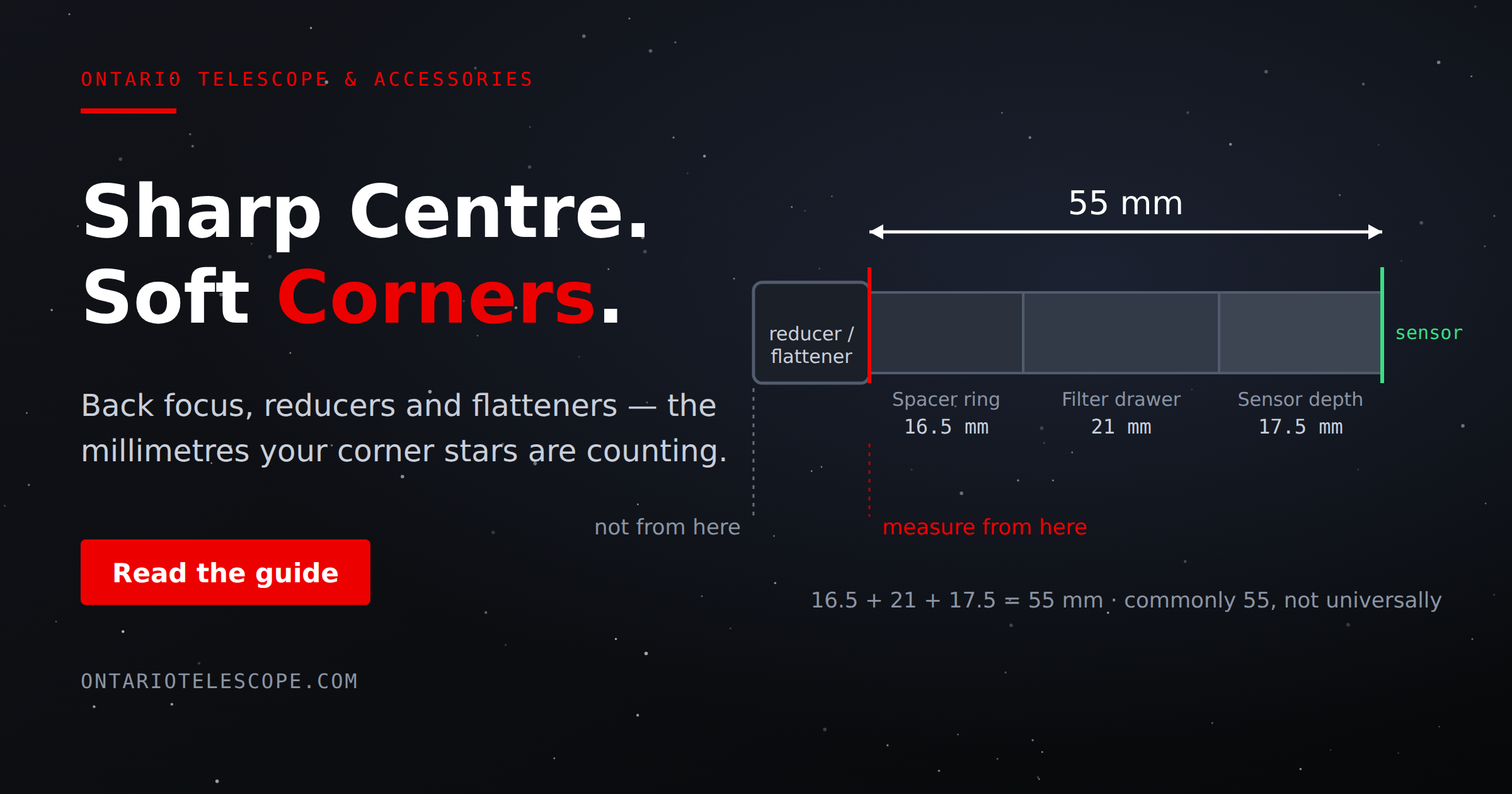
What Is Back Focus in Astrophotography? Telescope Reducers, Flatteners, and Spacing Explained
Read More