
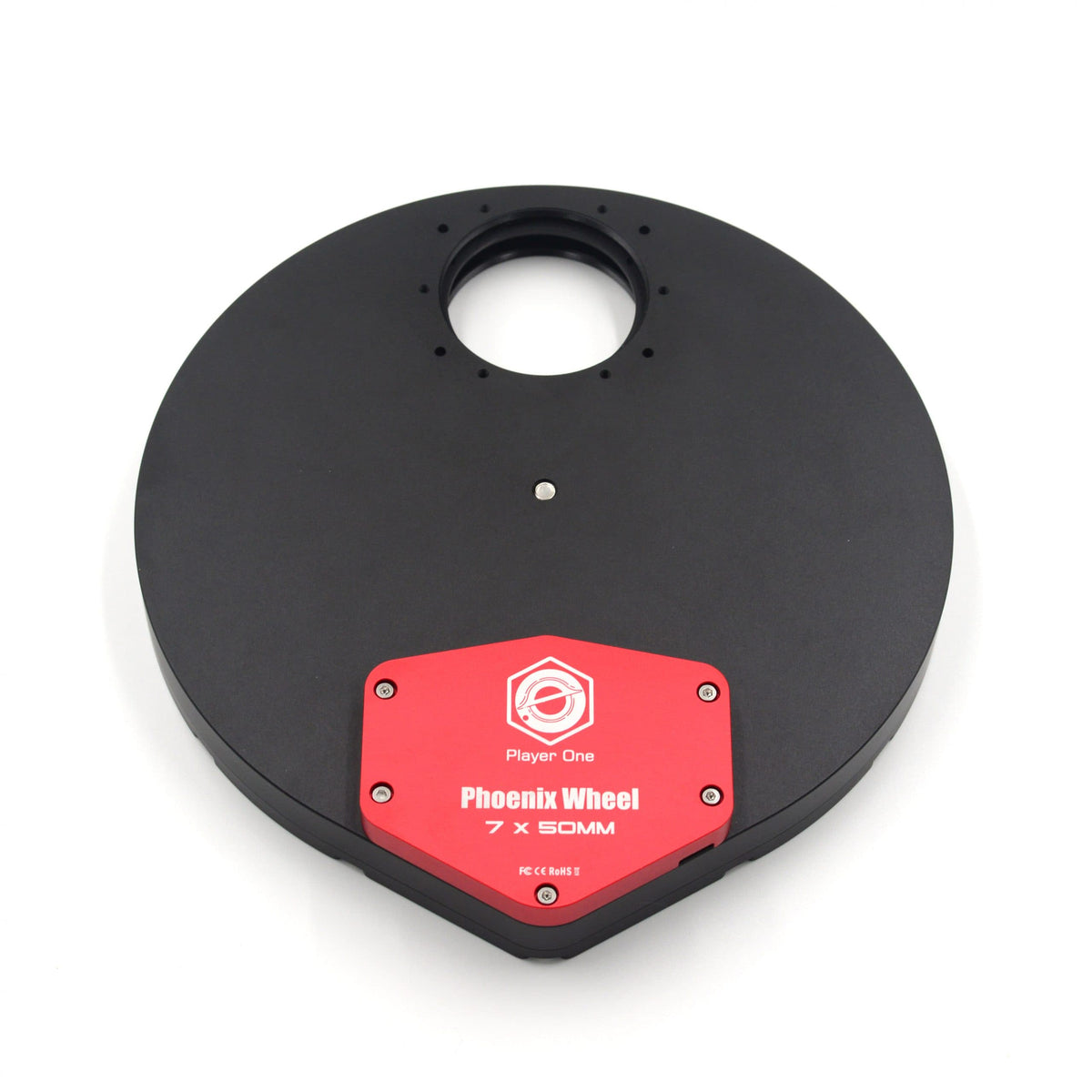
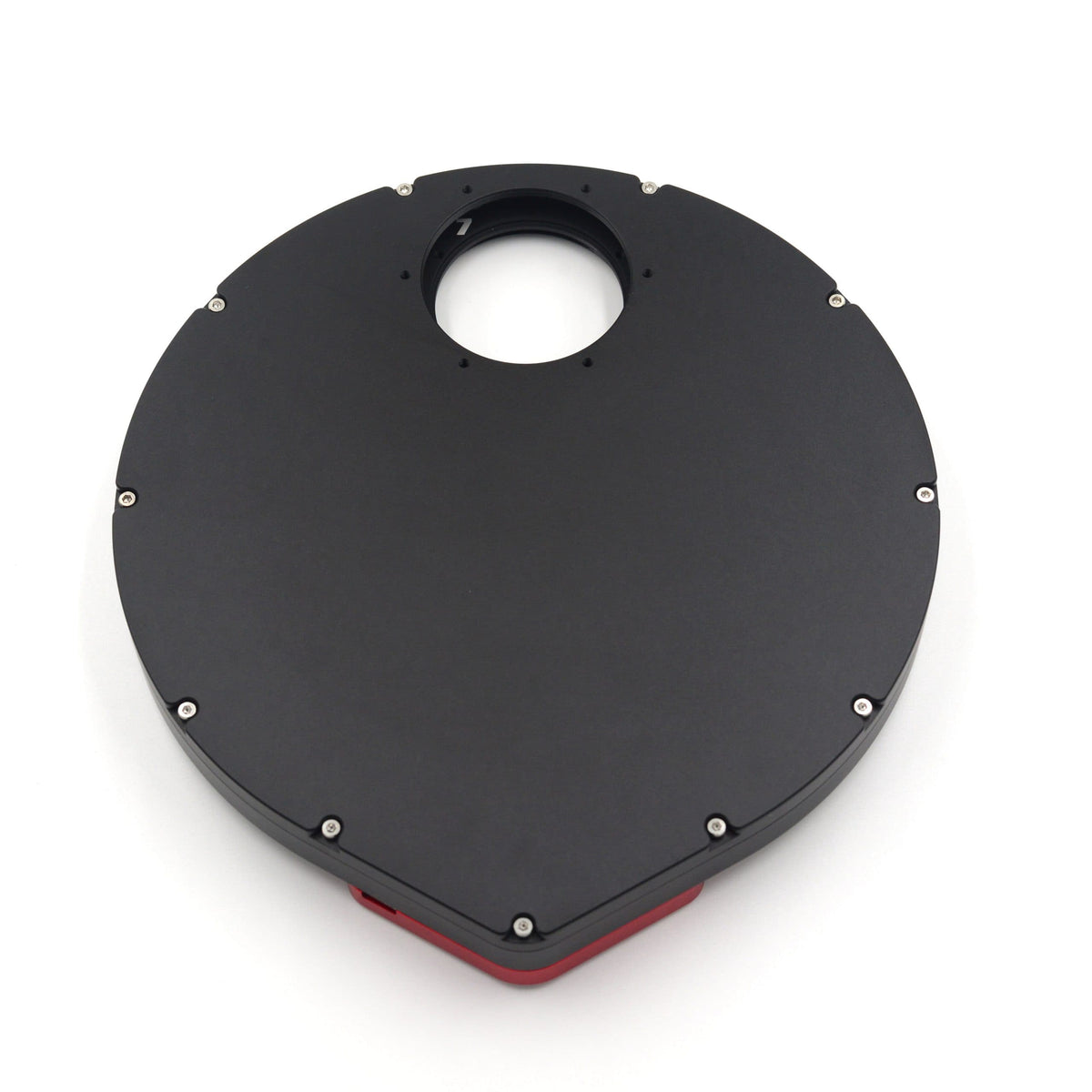


- Description
- Specifications
Product Overview
The Phoenix 7x50mm is a motorized filter wheel from Player One Astronomy that holds seven 50 mm unmounted filters and cycles them under software control. It threads into the imaging train with M54×0.75 on both faces, adds 21 mm of optical length, and offers a 49 mm clear aperture to keep large sensors free of filter-induced vignetting. A hybrid stepping motor with Hall-sensor positioning drives the wheel to each slot with nearly vibration-free changes.
Who It's For
This is a good match if you run a filtered deep-sky workflow with a larger sensor and want more than five positions — a full LRGB plus narrowband set, or several narrowband and dual-band options, changed automatically between subframes. The 49 mm clear path and 50 mm unmounted filters suit APS-C and larger sensors.
Key Features & Design
- Seven filter positions: for 50 mm unmounted filters.
- 49 mm clear aperture: a wide light path to reduce filter vignetting on larger sensors.
- M54×0.75 threads both sides: a direct interface into a standard M54 imaging train.
- 21 mm optical thickness: a fixed, known contribution to the backfocus budget.
- Hybrid stepping motor with Hall-sensor positioning: repeatable, nearly vibration-free slot changes.
- USB Type-C control: a single cable for computer control within capture software.
- Aluminum 6061-T6 body: a rigid housing at 665 g.
Optical / Mechanical Design
The wheel carries seven slots for 50 mm unmounted filters and presents a 49 mm clear aperture, threading M54×0.75 on both faces to sit between the camera and the optics. Its 21 mm physical thickness is the amount it contributes to the imaging train, added to the camera's own backfocus and any spacers when reaching a flattener or reducer's specified distance. A hybrid stepping motor turns the wheel with Hall-sensor (magnet) detection referencing each position, and the mechanism is designed for near-vibration-free filter changes. Control is over USB Type-C; the body is machined from Aluminum 6061-T6. This is a standalone motorized wheel.
Recommended Uses
- LRGB plus narrowband: a seven-slot set covering L, R, G, B and several narrowband filters in one wheel.
- Narrowband imaging: cycling Ha, OIII, SII and dual/tri-band filters between subframes.
- Large-sensor imaging: the 49 mm clear path and 50 mm filters cover APS-C and larger formats.
Compatibility and Accessory Notes
The M54×0.75 interfaces mate with Player One's M54 camera and adapter ecosystem — the wheel integrates with the Poseidon series, Zeus series, Artemis series, Ares series, Uranus PRO and Apollo PRO cameras. It accepts 50 mm unmounted filters only (not 2" mounted). Because it adds a fixed 21 mm to the train, the total distance to a flattener or reducer is met with the camera's backfocus plus the appropriate spacers. If you would like the spacing worked out for your specific camera and flattener, send us your imaging train and we will confirm it with you.
Good to Know Before You Order
- 50 mm unmounted filters only: this wheel takes 50 mm unmounted filters, not 2" mounted — worth matching when you choose your filter set.
- Filters are separate: purchased to suit your imaging.
- It adds 21 mm to the train: a fixed figure to include in the backfocus budget alongside the camera and spacers.
- M54×0.75 interface: pairs directly with M54 cameras and adapters; other threads are reached with the matching adapter.
- Published weight is 665 g: part of the load carried by the focuser once the camera and filters are attached.
Frequently Asked Questions
Is it difficult to set up?
No — it threads into the M54 train between the camera and optics, connects over USB Type-C, and is driven from capture software; the 21 mm thickness is a fixed figure to include when you set your backfocus.
What filters does it take?
Seven 50 mm unmounted filters. It does not accept 2" mounted filters.
Which cameras does it work with?
It integrates with Player One's Poseidon, Zeus, Artemis and Ares series, plus the Uranus PRO and Apollo PRO, through the M54×0.75 interface.
Will it vignette my sensor?
The 49 mm clear aperture is sized to pass the light cone for APS-C and larger sensors, reducing filter-induced vignetting compared with smaller filter formats.
Bottom Line
In short: a seven-position motorized wheel for 50 mm unmounted filters, M54×0.75 on both sides, 21 mm thick with a 49 mm clear path and USB-C control — an automated filter changer sized for larger sensors that drops into a Player One M54 imaging train with a known, fixed backfocus contribution.
| Filter positions | 7 |
|---|---|
| Filter size | 50mm unmounted (required) |
| Clear aperture | 49 mm |
| Threads | M54×0.75 (both sides) |
| Thickness (optical length) | 21 mm |
| Motor | Hybrid stepping motor |
| Positioning | Hall sensor (magnet detection) |
| Connection | USB Type-C |
| Type | Standalone motorized wheel |
| Compatible cameras | Poseidon, Zeus, Artemis, Ares series; Uranus PRO; Apollo PRO |
| Material | Aluminum 6061-T6 |
| Weight | 665 g |
You may also like
Recently viewed
Recent Blog Posts
View all
Your Guide Graph Is Lying to You
Read More
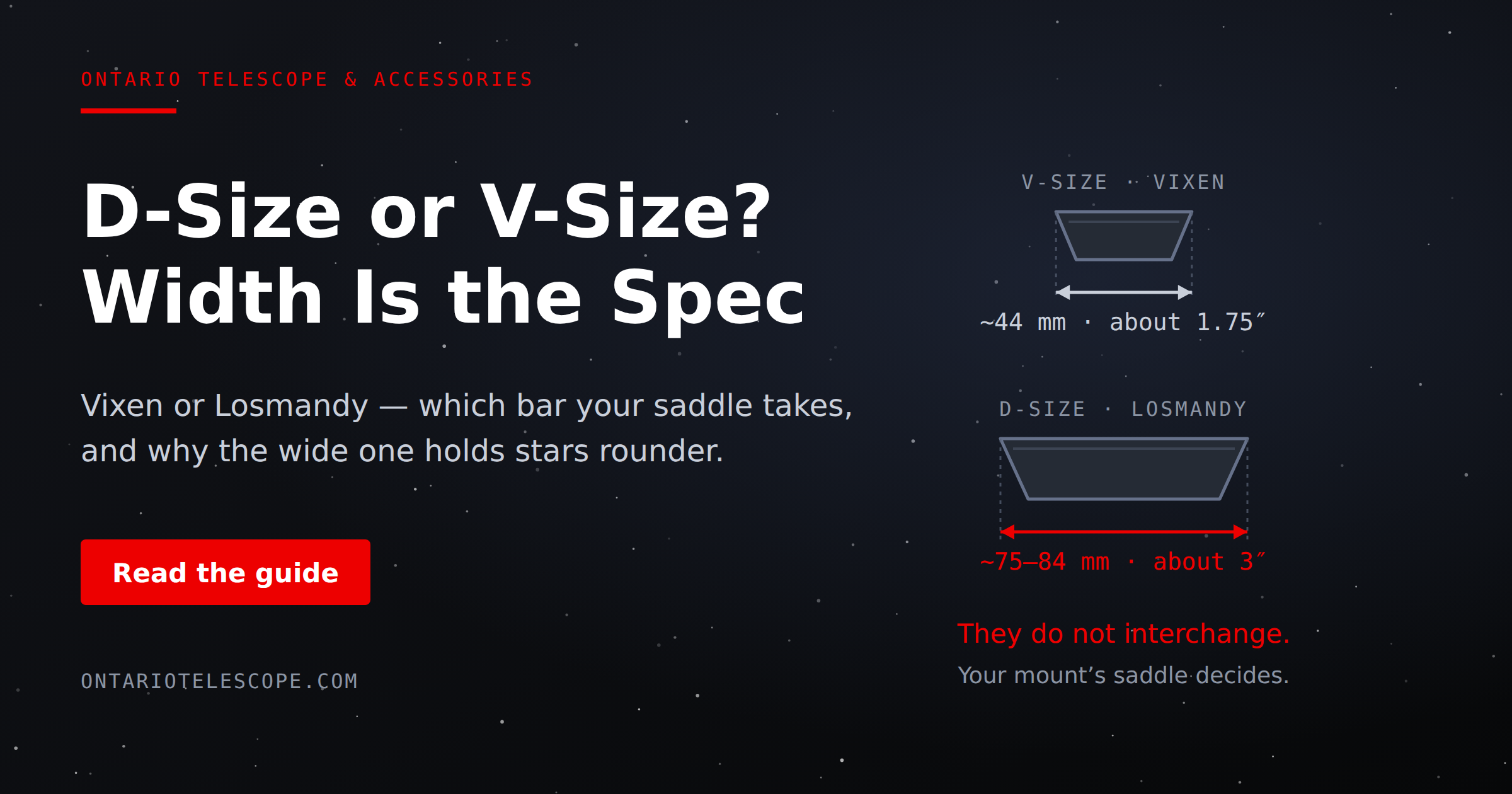
D-Size vs V-Size: A Complete Guide to Telescope Dovetail Systems
Read More
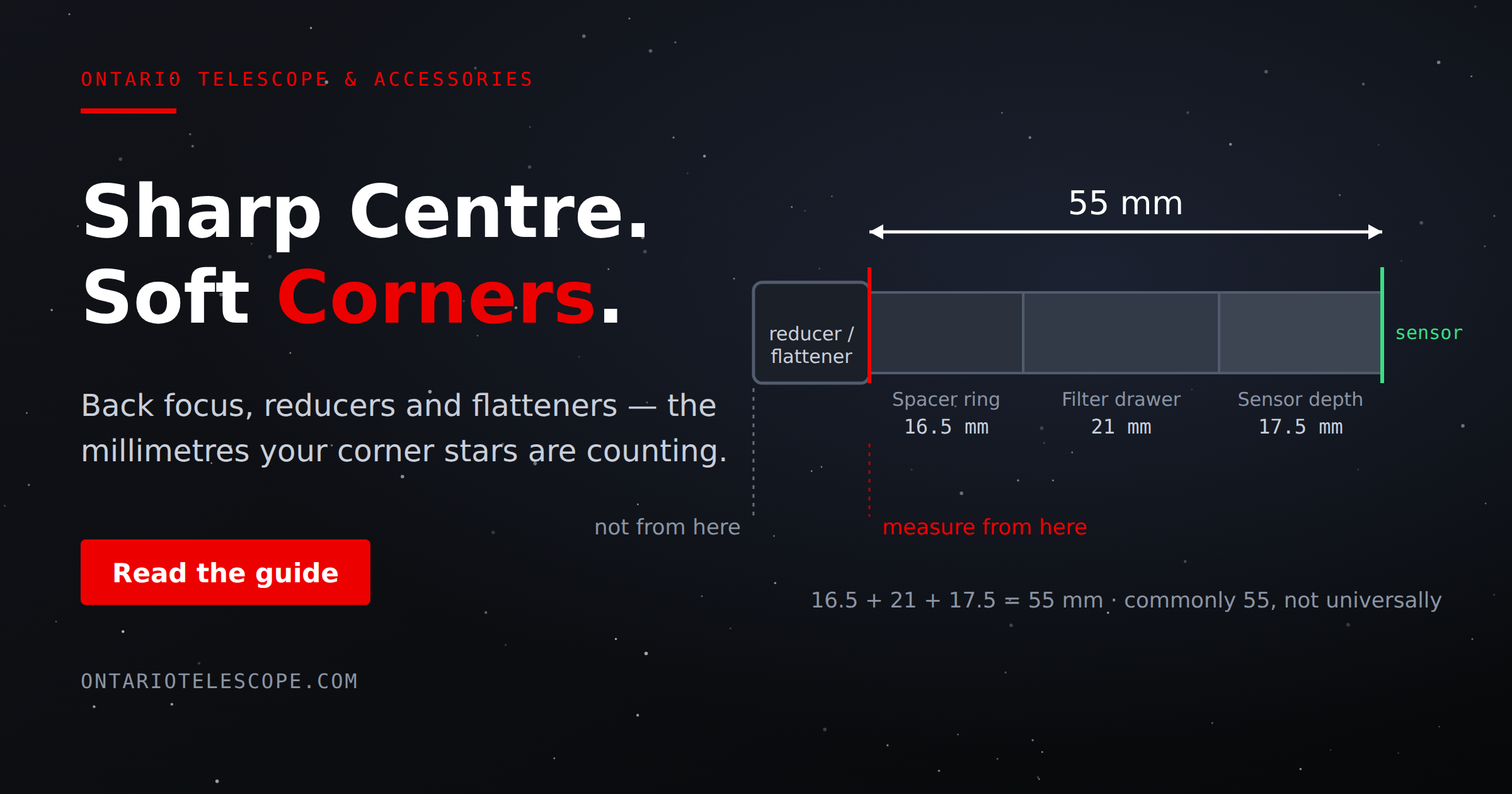
What Is Back Focus in Astrophotography? Telescope Reducers, Flatteners, and Spacing Explained
Read More