


- Description
- Specifications
Product Overview
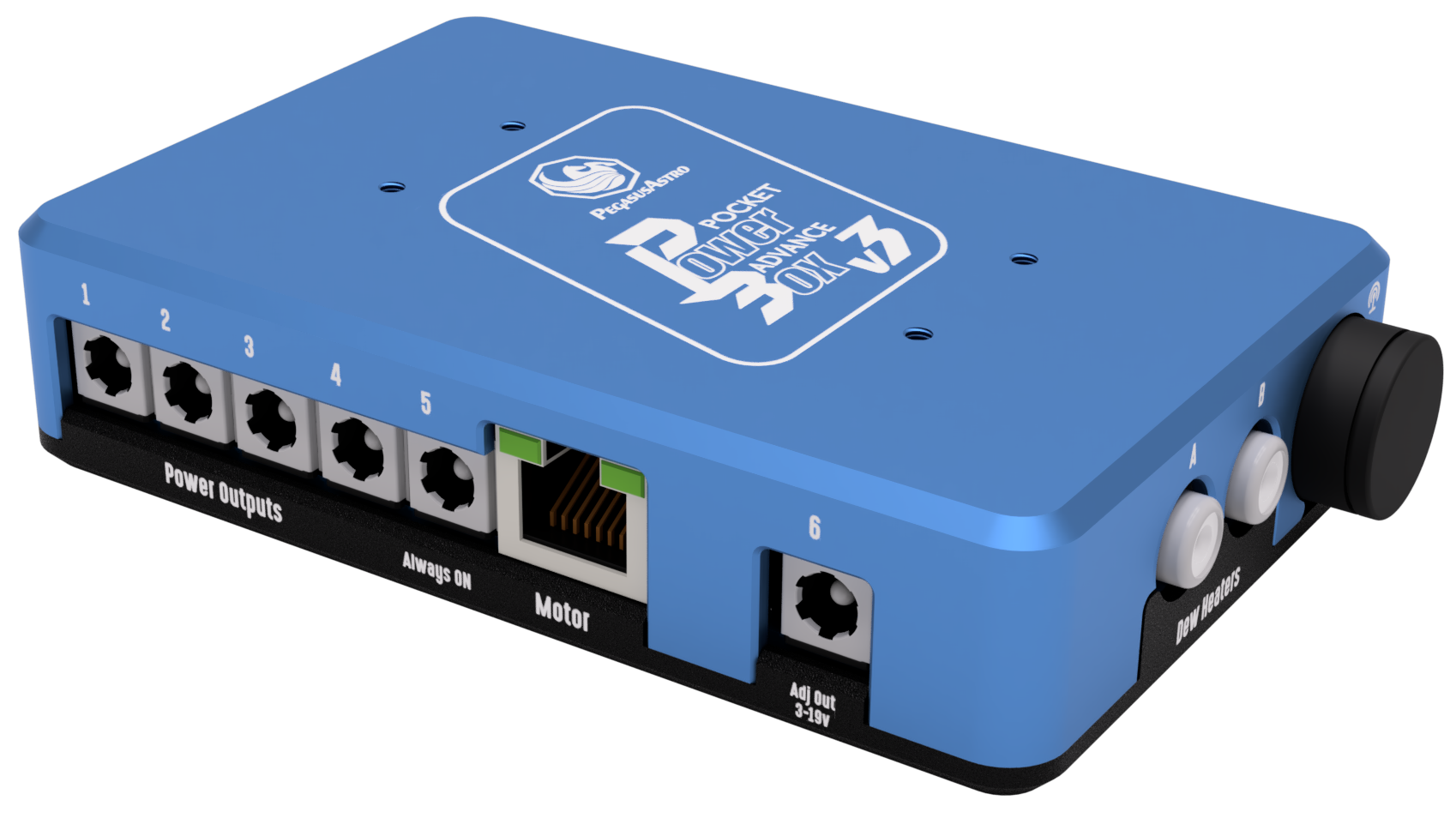
The Pocket Powerbox Advance Gen3 (PPBADV3) is Pegasus Astro's compact power, dew and connectivity hub for a telescope rig. It takes a single unregulated 12 V DC feed at up to 14 A (168 W) through a 2.1 mm centre-positive jack and redistributes it as four individually switchable 12 V outputs, an always-on 12 V output, a software-tunable 3–19 V output at 3 A, and two PWM dew-heater channels rated 5 A maximum on RCA connectors. Alongside the power side sits a six-port USB3 hub — four USB3 Type-A and two USB2 Type-C, 3 A per port — and a bipolar stepper motor driver at 1.5 A per coil, so a focuser runs from the same box.
The enclosure is blue anodised aluminium measuring 115 × 75 × 27.5 mm and weighing 350 g, with M3 blind mounting holes in the body. Control is through the built-in Wi-Fi web dashboard, ASCOM 7 and ASCOM Alpaca drivers, or the INDI framework — and the unit also runs standalone with no computer attached.

Who It's For
This is a good match if you:
- Run a portable astrophotography rig and want one cable from the battery or PSU to the mount instead of a loom of separate supplies.
- Image with a cooled camera, a mount and a focuser that together draw well inside the 14 A the input connector supports.
- Fight dew and want heater output tied to a real dew-point reading rather than a manual dial.
- Work remotely or from indoors and want power switching, focus and environmental data reachable over Wi-Fi, ASCOM Alpaca or INDI.
- Already own a stepper focus motor and would rather drive it from the power box than add a second controller to the saddle.
Key Features & Design
- Four switchable 12 V DC outputs, 6 A per port: 2.1 mm connectors, each with independent ON/OFF control in software.
- Always-on 12 V output: stays live for anything that should not be power-cycled with the rest of the rig.
- Adjustable 3–19 V output at 3 A: software tunable, for DSLR and mirrorless battery couplers and other non-12 V devices.
- Two PWM dew-heater channels, 5 A maximum: RCA outputs, level set in software, with automatic adjustment driven by the environmental sensor's dew-point reading.
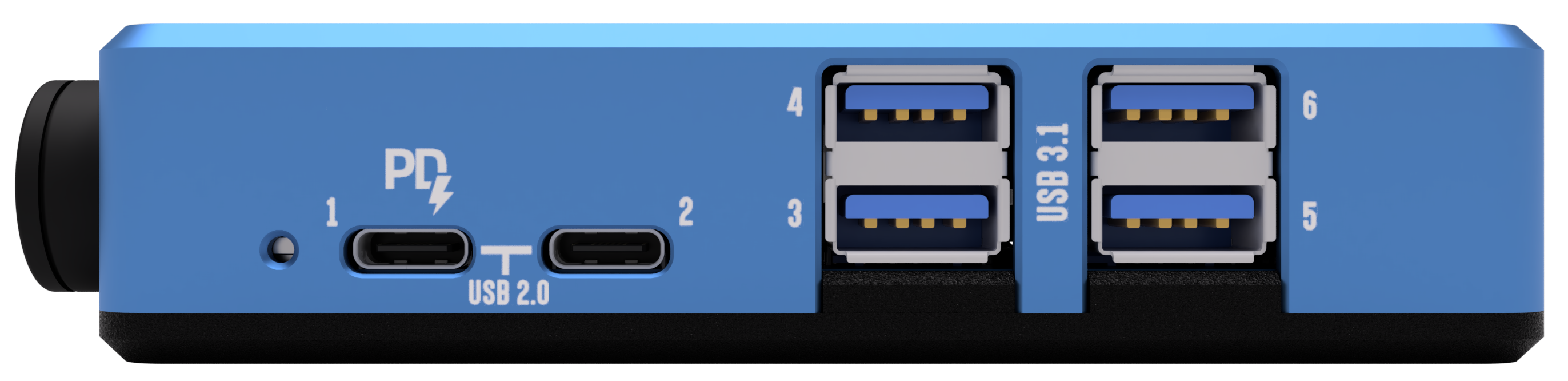
- Six-port USB3 hub: 4 × USB3 Type-A and 2 × USB2 Type-C at 3 A per port, each port individually enabled or disabled, with surge and ESD protection.
- Built-in stepper focuser controller: drives bipolar stepper motors at 1.5 A per coil.
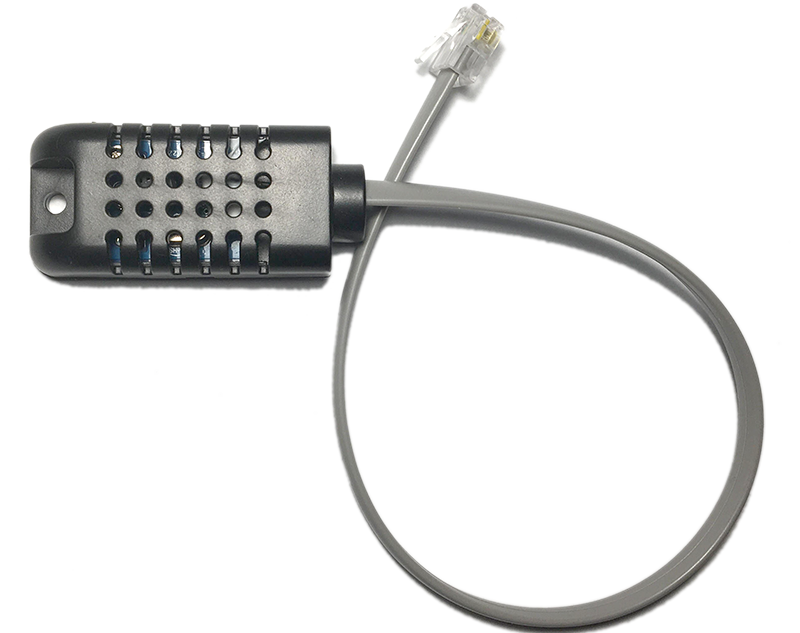
- Environmental sensor input: RJ12 socket reading 0–100 % relative humidity (±2–5 %) and −40 to 80 °C (±0.5 °C). The sensor is in the box.
- Wi-Fi web dashboard: the unit serves its own browser interface, with ASCOM 7, ASCOM Alpaca and INDI available for automation software.
- Protection circuitry: reverse-polarity and overvoltage protection to 50 V on the input, surge and ESD protection across the USB ports.
- Firmware upgradable: over USB or through the web interface.
- Blue anodised aluminium enclosure: 115 × 75 × 27.5 mm, 350 g, with M3 blind holes for mounting hardware.
Electrical & Mechanical Design
The Gen3 is built around a single high-current input path: 12 V DC nominal, tolerant to 15 V, entering on a 2.1 mm centre-positive jack rated for the full 14 A (168 W). That headroom is what makes per-port ratings of 6 A on the 12 V outputs and 5 A on each dew channel usable in practice — the ceiling on a real session is the total the supply and the input connector can carry, not any single port. Reverse-polarity and overvoltage protection to 50 V sit ahead of the distribution, so a miswired supply is handled at the input rather than downstream at the camera.
On the data side the six-port hub separates USB3 Type-A ports from USB2 Type-C, with 3 A available per port and individual enable/disable in software — useful for power-cycling a camera or guider that has stopped enumerating without touching anything else. Surge and ESD protection is applied across the USB ports. The 3–19 V adjustable rail is a separate regulated output at 3 A, tuned in software, which is what feeds a mirrorless or DSLR coupler at its native voltage instead of a nominal 12 V.

Mechanically the box is a 115 × 75 × 27.5 mm blue anodised aluminium enclosure at 350 g, with M3 blind holes tapped into the body so mounting hardware attaches directly rather than through a strap or a shim.
Recommended Uses
- Rig-top power distribution for a mount, cooled camera, guide camera, filter wheel and focuser from one 12 V supply.
- Automatic dew control on a refractor objective and a guide scope, with heater levels following the measured dew point.
- USB consolidation so a single USB3 Type-B cable runs down to the imaging computer instead of four or five separate leads.
- Motorised focusing using a bipolar stepper motor driven from the box, with no second controller on the saddle.
- Remote and observatory operation through the Wi-Fi dashboard, ASCOM Alpaca or INDI, including switching individual outputs and ports.
- Powering a DSLR or mirrorless body from the adjustable 3–19 V output through the matching battery coupler.
Compatibility and Accessory Notes
- Power input: unregulated 12 V DC, up to 15 V, on a 2.1 mm centre-positive jack. A supply able to deliver the current your whole rig draws is what sets the practical limit; we stock the matching Pegasus Astro power supply unit.
- 12 V outputs: 2.1 mm connectors, 6 A per port. Four are individually switchable and one is always on.
- Adjustable output: 3–19 V at 3 A, software tunable — used with a camera battery coupler matched to your body.
- Dew heaters: two PWM channels on RCA connectors, 5 A maximum. Standard RCA-terminated dew heater straps connect directly.
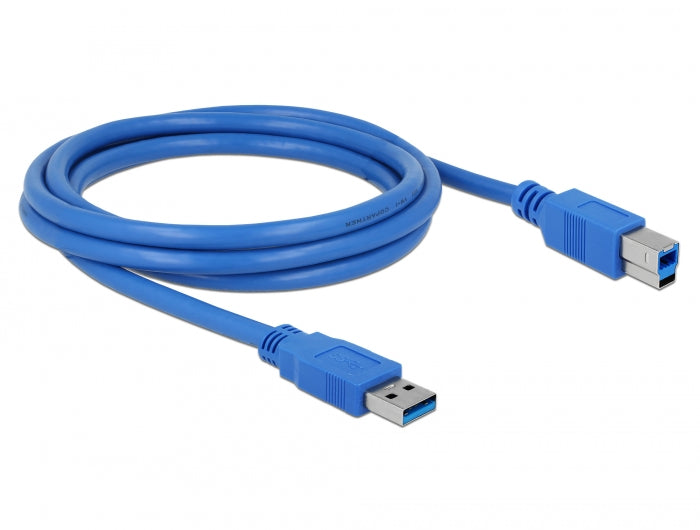
- USB: the hub connects upstream over USB3 Type B, with the 1.8 m cable supplied. Downstream there are four USB3 Type-A and two USB2 Type-C ports at 3 A each.
- Focus motor: bipolar stepper motors at 1.5 A per coil. Send us the motor you are using and we will confirm the pinout and current fit before you order.
- Environmental sensor: RJ12 socket. The temperature/humidity probe is included.
- Software: ASCOM 7, ASCOM Alpaca and INDI, plus the on-board Wi-Fi web dashboard. Alpaca and INDI cover Linux and Mac setups where a Windows ASCOM stack is not in play.
- Mounting: M3 blind holes in the enclosure. The Pegasus Shoe holder mounts the unit to a finder shoe. Brackets made for the Gen2 body are not carried over — the Gen3 enclosure is a different size, so ask us before reusing older hardware.

Good to Know Before You Order
- A power supply is not included. The Gen3 distributes 12 V; it does not generate it. A field battery or an AC supply sized to your rig's total draw is a separate purchase, and we stock both.
- The input is the real budget. Individual ports are rated at 6 A, but the input connector carries up to 14 A total, so that figure is what a full rig has to fit inside.
- Input voltage range is 12–15 V. Overvoltage protection covers up to 50 V on the input, which is a safety margin rather than an operating range.
- Dew heater output is PWM on RCA connectors. Heaters terminated in another connector need an adapter; tell us which straps you own and we will sort out the right lead.
- A focus motor is sold separately. The driver is built in; the stepper motor and its cable are not in the box.
- The two Type-C ports are USB2. High-bandwidth cameras belong on the four USB3 Type-A ports.
- Gen2 mounting hardware does not transfer. The Gen3 enclosure measures 115 × 75 × 27.5 mm against the Gen2's smaller body, so brackets bought for the older unit will not fit.
Frequently Asked Questions
Is it difficult to set up?
No. The unit runs standalone out of the box — connect 12 V to the input, plug your equipment into the 12 V outputs, and it distributes power without a computer attached. Adding software control is a matter of connecting the supplied USB3 cable or joining the unit's Wi-Fi dashboard, then loading the ASCOM 7, Alpaca or INDI driver for your capture program.
What does it replace on my rig?
A 12 V splitter, a separate dew controller, a USB hub, a DSLR power adapter and a standalone focus controller — all of which normally arrive with their own cables and their own power leads.
How much can I actually run from it?
The input connector is rated to 14 A (168 W). Each 12 V output handles up to 6 A and each dew channel up to 5 A, within that total.
Can I power a DSLR or mirrorless camera?
Yes, through the adjustable output. It is software tunable from 3 V to 19 V at up to 3 A, which covers the common coupler voltages; you supply the coupler for your camera body.
Does it control a focuser?
Yes. A bipolar stepper driver rated 1.5 A per coil is built in, so a stepper focus motor plugs into the Gen3 rather than into a separate controller.
Do the dew heaters adjust themselves?
They can. The included RJ12 temperature and humidity sensor gives the unit a dew-point reading, and the two PWM channels adjust their output from it. Manual level setting stays available.
Does it need a Windows PC?
No. Alongside ASCOM 7 there is ASCOM Alpaca and INDI support plus the on-board Wi-Fi web dashboard, so Linux, Mac and browser-only control are all covered — and standalone operation needs no computer at all.
How is it different from the Pocket Powerbox Advance Gen2?
The Gen3 adds the Wi-Fi web dashboard, a built-in stepper focuser controller, USB Power Delivery, ASCOM 7 and Alpaca support, and a larger USB hub — six ports (4 × USB3 Type-A, 2 × USB2 Type-C) against the Gen2's four. Input capacity rises to 14 A from the Gen2's 12 A, and the enclosure grows to 115 × 75 × 27.5 mm and 350 g from 100 × 71 × 24 mm and 250 g.
What comes in the box?
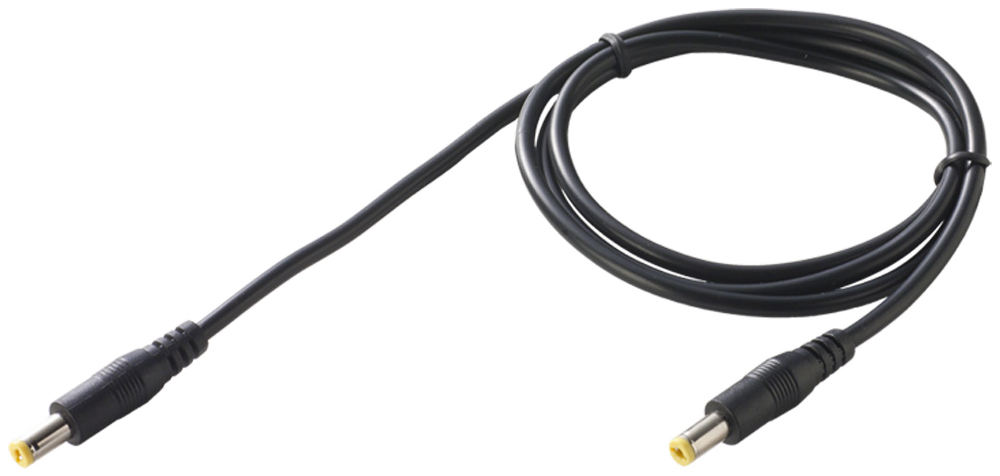
The Gen3 controller, the temperature/humidity sensor, four DC power cables (two at 1 m and two at 0.5 m, 2.1 mm connectors) and a 1.8 m USB3 Type-B cable.

Bottom Line
In short: a 350 g aluminium hub that turns one 12 V feed of up to 14 A into four switchable 12 V outputs, an always-on output, a 3–19 V adjustable rail, two automatic PWM dew channels, a six-port USB3 hub and a stepper focuser driver — controlled from a browser, ASCOM 7, Alpaca or INDI, or from nothing at all. Bring a 12 V supply sized to your rig and it handles the rest of the cabling.
| Supply voltage | Unregulated 12 V DC (up to 15 V) |
|---|---|
| Power input connector | DC 2.1 mm, centre positive — up to 14 A (168 W) |
| 12 V DC outputs | 4 individually switchable + 1 always-on; 6 A per port; 2.1 mm connectors |
| Adjustable output | 3–19 V; 3 A maximum; software tunable |
| PWM dew heater outputs | 2 channels; 5 A maximum; RCA connectors; software controllable |
| USB hub | 4 × USB3 Type-A; 2 × USB2 Type-C; 3 A per port; individual enable/disable; surge and ESD protection |
| Upstream connectivity | USB3 Type-B connector |
| Motor controller | Bipolar stepper motors; 1.5 A per coil |
| Sensor input | RJ12 socket; 0–100 % humidity (±2–5 %); −40 to 80 °C (±0.5 °C) |
| Protection | Reverse polarity; overvoltage up to 50 V; surge and ESD protection on USB ports |
| Control | Wi-Fi web dashboard; ASCOM 7; ASCOM Alpaca; INDI; standalone operation |
| Enclosure | Blue anodised aluminium with M3 blind mounting holes |
| Dimensions | 115 mm × 75 mm × 27.5 mm |
| Weight | 350 g |
| In the box | Pocket Powerbox Advance Gen3 controller; temperature/humidity sensor; 4 × DC power cables (2 × 1 m, 2 × 0.5 m, 2.1 mm); USB3 Type-B cable (1.8 m) |
You may also like
Recently viewed
Recent Blog Posts
View all
Your Guide Graph Is Lying to You
Read More
D-Size vs V-Size: A Complete Guide to Telescope Dovetail Systems
Read More
What Is Back Focus in Astrophotography? Telescope Reducers, Flatteners, and Spacing Explained
Read More