
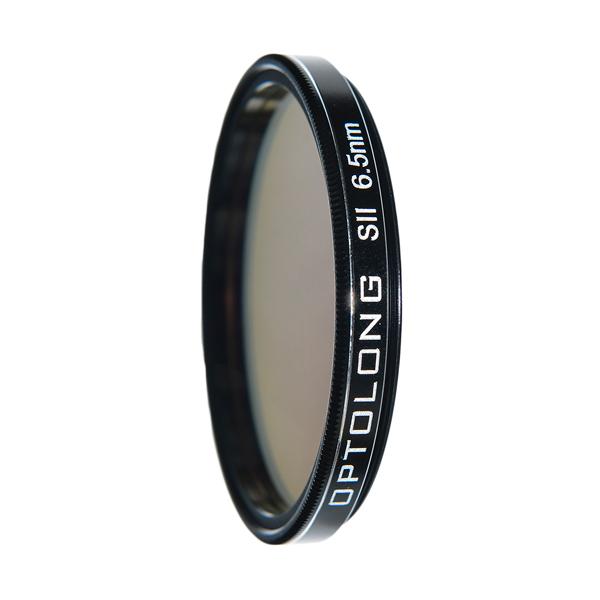


- Description
The SII-CCD 6.5 nm Deep Sky Imaging Filter:
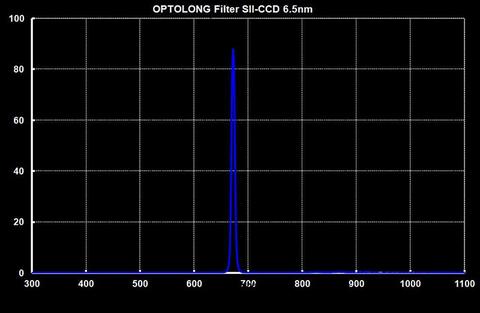
This filter is an extra narrowband SII-CCD 6.5 nm filter (Sulfur II for CCD) is designed for nebula observation allowing 6.5 nm bandwidth of light centered on a wavelength of 672 nm through, and reducing the transmission of certain wavelengths of light, specifically those produced by artificial light including mercury vapor, and both high and low pressure sodium vapor lights and the unwanted natural light caused by neutral oxygen emission in our atmosphere (i.e. skyglow).
Main Use and Performance
- Use with H-alpha and OIII-CCD extra narrowband filters (SHO Set) for tricolor CCD astrophotography
- Narrowband imaging with SHO set can be done with the moon up in heavy light pollution, so your equipment is not sitting dormant for several weeks
- Hubble look of images can be made by the combination of H-alpha, OIII-CCD and SII-CCD, such as the famous “Pillars of Creation” (M16 Eagle Nebula)
- Narrowband filter do not eliminate the effects of light pollution or increase the object’s brightness. In many cases, they increase the contrast between nebula and night sky, not brightening the nebula.
You may also like
Recently viewed
Recent Blog Posts
View all
Your Guide Graph Is Lying to You
You drove ninety minutes to dark sky, PHD2 held 0.4 arcseconds all night, and half your subs still have eggs for stars. Here are the three things your
Read More
Read More

D-Size vs V-Size: A Complete Guide to Telescope Dovetail Systems
What's the difference between D-size and V-size telescope dovetails? Here's everything you need to know.
Read More
Read More

What Is Back Focus in Astrophotography? Telescope Reducers, Flatteners, and Spacing Explained
What Is Back Focus in Astrophotography? Telescope Reducers, Flatteners, and Spacing Explained
Back focus is one of those astrophotography terms that c
Read More
Read More