



- Description
- Specifications
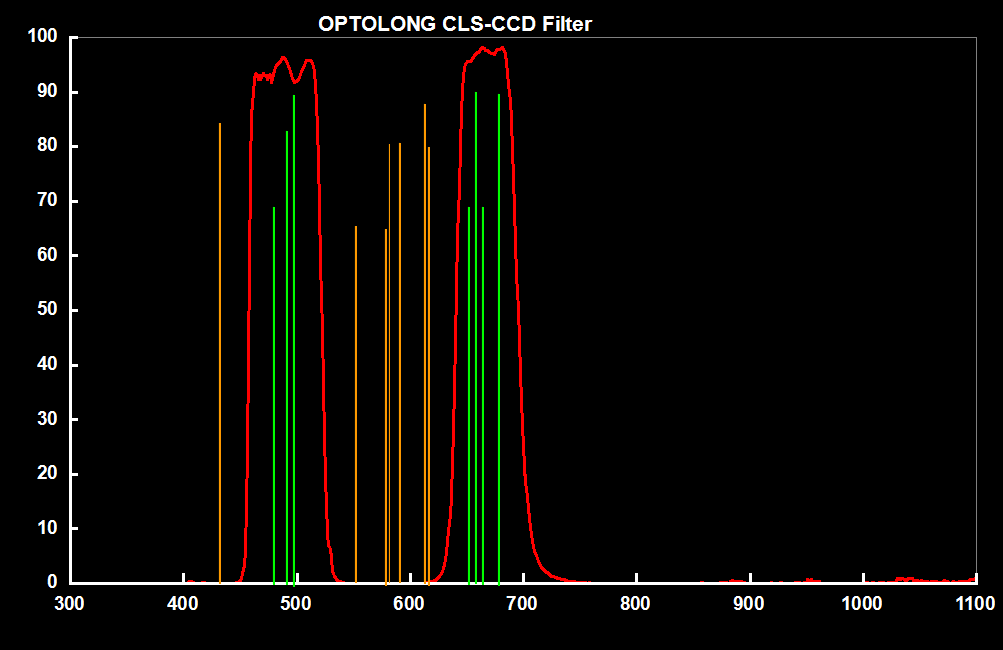
The CLS-CCD broadband filter is designed to improve the visibility of various deepsky objects. By selectively reducing the transmission of wavelengths of light pollutants, specifically those produced by artificial lightings including mercury vapor lamps, both high & low pressure sodium vapor lights and the unwanted natural light caused by neutral oxygen emission in our atmosphere (i.e. skyglow). Together with the highly transparent in main nebula emission lines at OIII(496nm and 500nm), H-beta (486nm), NII(654nm and 658nm), H-alpha(656nm) as well as SII(672nm), the filter is suitable for enhancing the contrast and details for photograghic purpose at light pollution area.
Main Use and Performance
- CLS-CCD is different from CLS with infrared wavelength 700-1100nm cut-off
- Fit with color CCD cameras and modified DSLRs for astrophotography
- Work well on most emission nebulae, planetary nebulae and supernova remnants
- Noticeable boost in contrast and visibility of the fainter outer detail
- Light pollution filter do not eliminate the effects of light pollution or increase the object’s brightness. In many cases, they increase the contrast between nebula and night sky, not brightening the nebula.
- WARNING: The filters of Optolong are not designed for sun observation. DO NOT LOOK AT THE SUN WITH OPTOLONG FILTER. You would be BLIND if you fail to observe the warning.
Spectral Curve
- The Major Emission Lines of Nebulae
- H-ß486.1nm OIII 495.9nm OIII 500.7nm H-a656.3nm
- The Major Emission Lines of Artificial Light Pollution
- Hg 435.8nm 546.1nm 577nm 578.1nm
- Na 598nm 589.6nm 615.4nm 616.1nm
Technical Data
- Schott substrate material
- Thickness 2.0 mm (1.25”/2”/36mm)
- Thickness 1.0 mm (Clip series)
- Surface Quality: 60/40 (Refer to MIL-O-13830)
- Fine-optically polished to ensure accurate 1/4 wavefront and <30 seconds parallelism over the both surfaces
- 95% transmission of main nebula emission lines (i.e. H-alpha 656nm, OIII 496nm and 500nm, SII 672nm and H-beta 486nm
- 0.1% transmission of off-band, specifically the major emission lines of artificial light pollution (i.e. Na 589nm, Hg 435nm and 578nm). Transmission of 0.1% is equivalent to OD3(Optical Density), and a high optical density value indicates very low transmission, and low optical density indicates high transmission.
Coating Parameter
- Multi-layers anti-reflection coating
- Non-cementing optical substrate coating
- Electron-beam gun evaporation with Ion-assisted deposition coating technology for durability and resistance to scratching, as well as stability on CWL(central wavelength) no deviation affected by temperature change
- Planetary rotation system offers precision and homogeneity of coatings ensuring high value on transmission of pass-band and Optical density of off-band
Filter Cell
- Ultra-thin filter cell minimize vignetting by maximize possible clear aperture (clear aperture is 26mm for 1.25”; 45mm for 2”)
- Aerometal Material | Precise CNC Machining | Sand Blasting Process | Black Anodized Finish | Extinction Treatment to Prevent Reflection | Laser Engraving No Fading
Canon Digital Rebel XS, Canon Digital Rebel XSi, Canon EOS 1000D, Canon EOS 500D, Canon EOS Kiss F, Canon EOS Kiss X2, Canon EOS Kiss X3, Canon EOS Rebel T1i
Canon EOS 60D + 60Da, Canon EOS 7D, Canon EOS 70D,
Canon EOS 50D, Canon EOS 650D, Canon EOS 600D, Canon EOS 550D
Canon EOS 700D, Canon EOS 1100D, Canon EOS 1200D, Canon EOS 40D, Canon EOS 30D, Canon EOS 20D, Canon EOS 10D, Canon EOS D60, Canon EOS D30
You may also like
Recently viewed
Recent Blog Posts
View all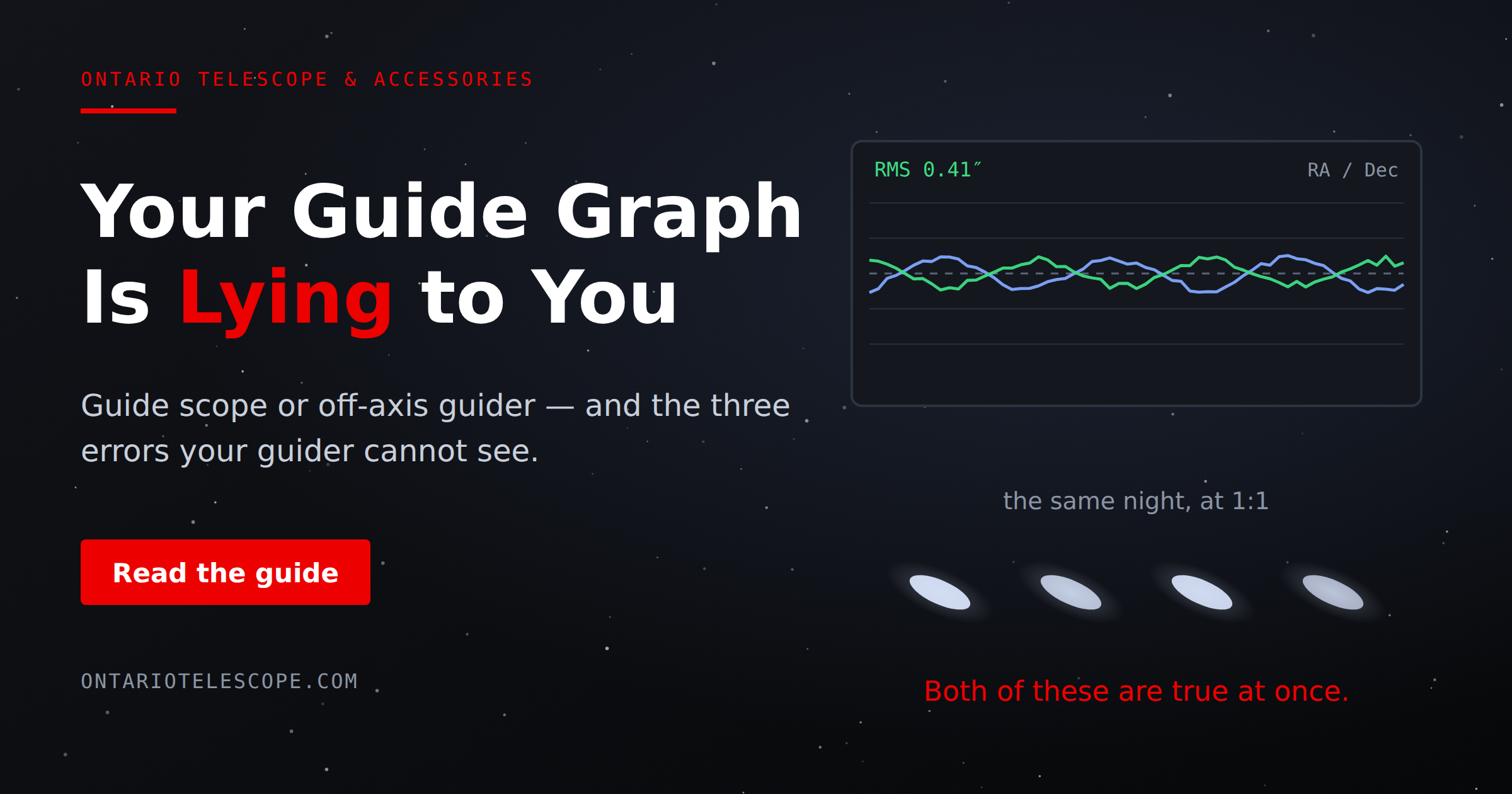
Your Guide Graph Is Lying to You
Read More
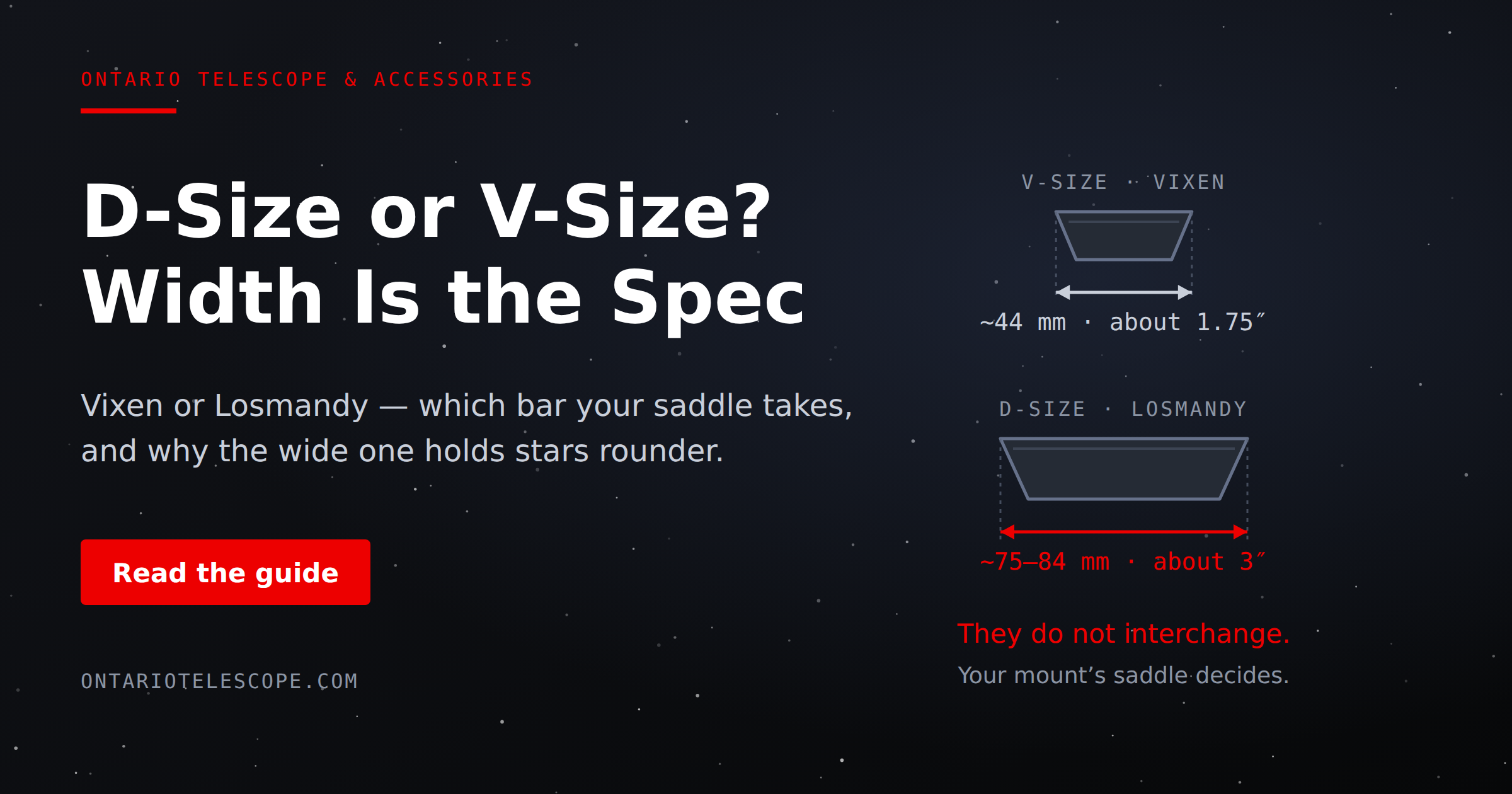
D-Size vs V-Size: A Complete Guide to Telescope Dovetail Systems
Read More
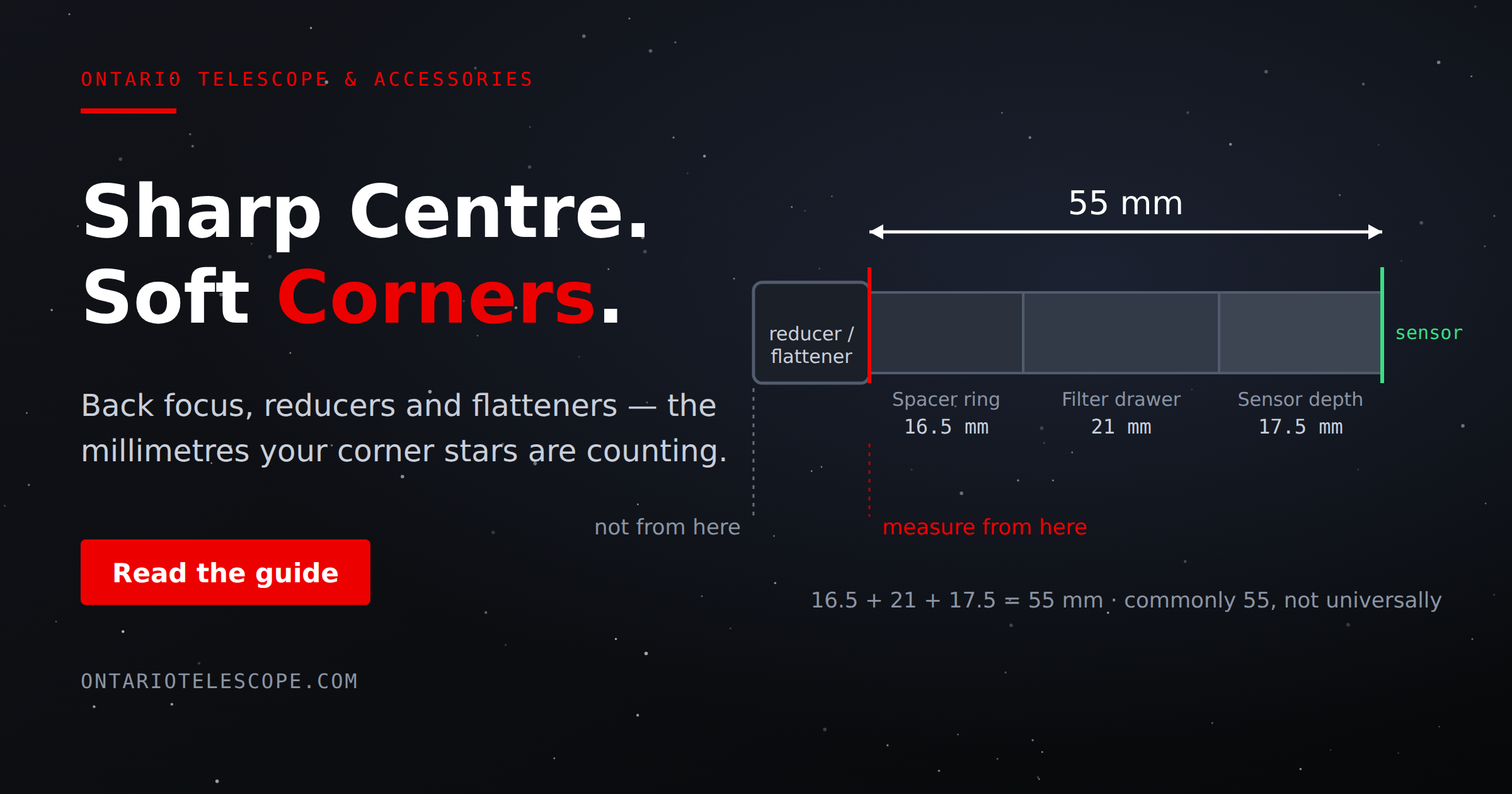
What Is Back Focus in Astrophotography? Telescope Reducers, Flatteners, and Spacing Explained
Read More