


- Description
- Specifications
Product Overview
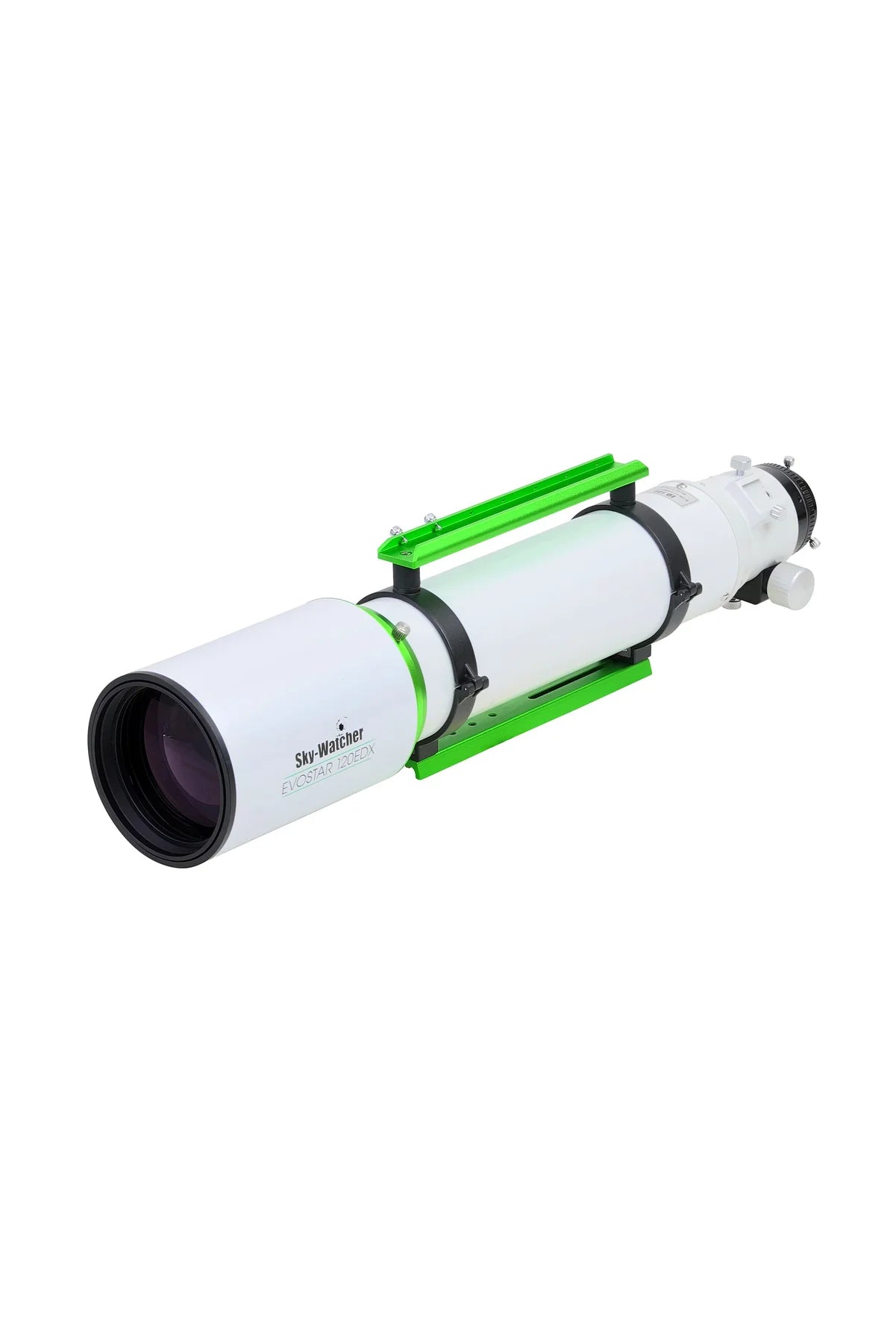
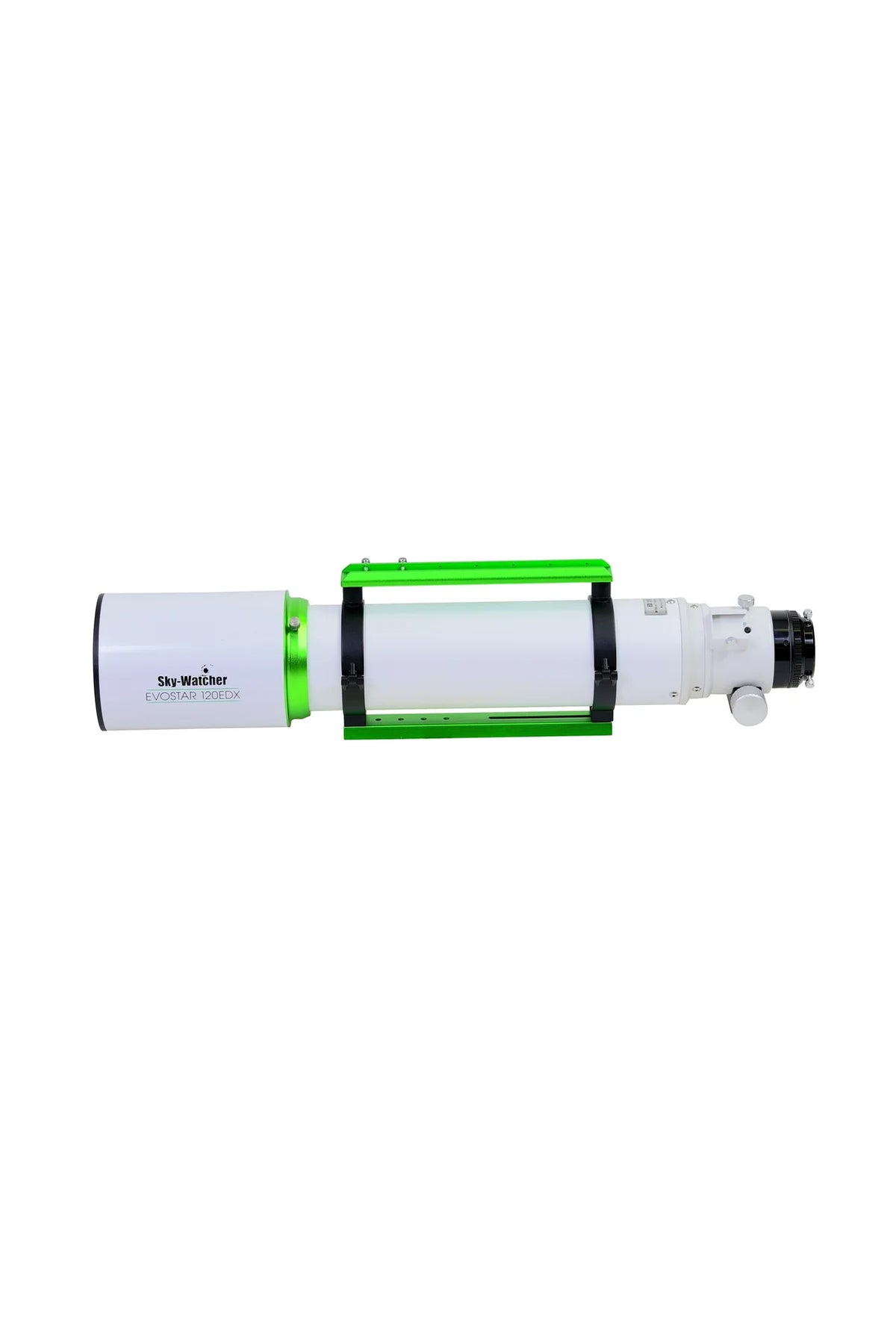
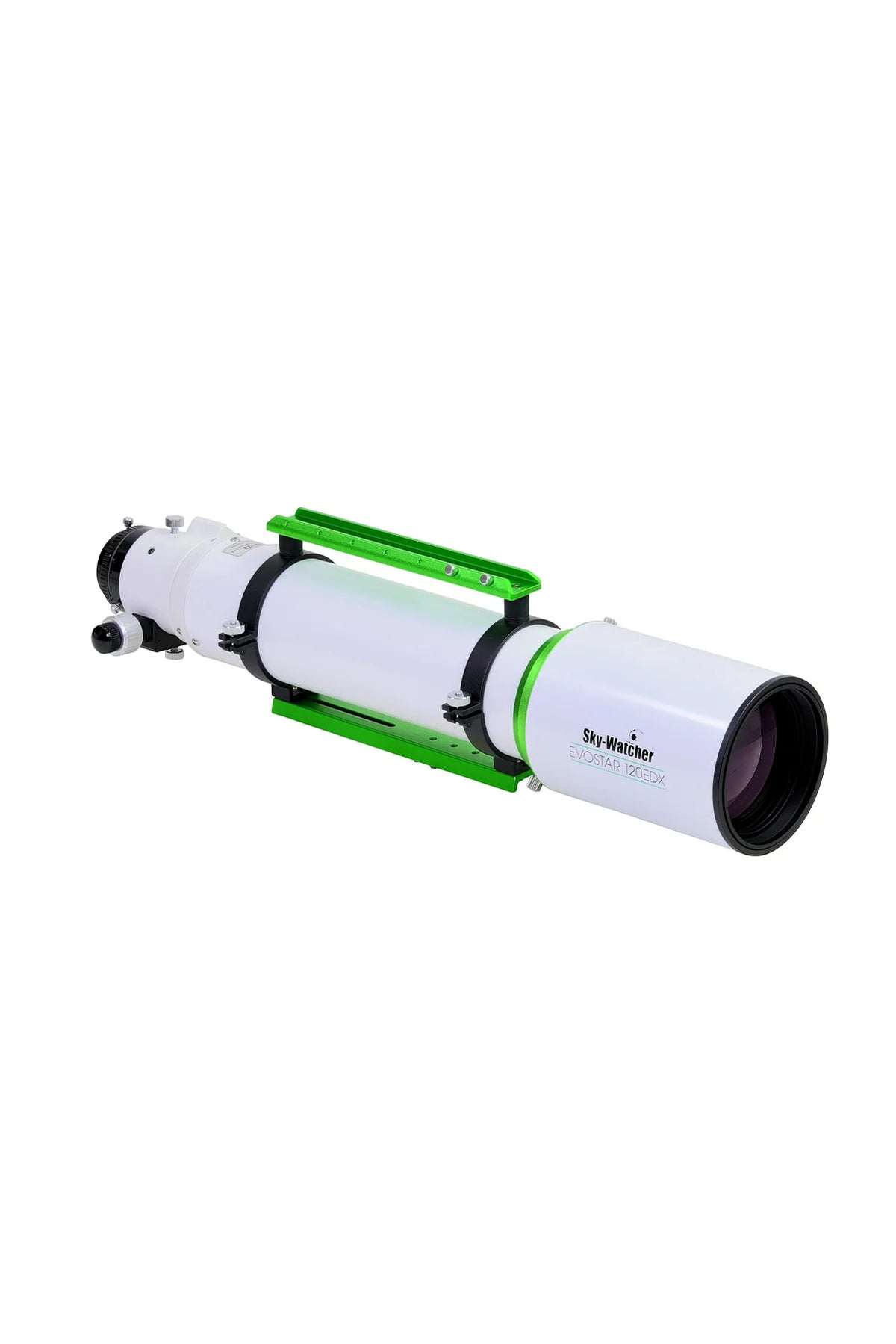
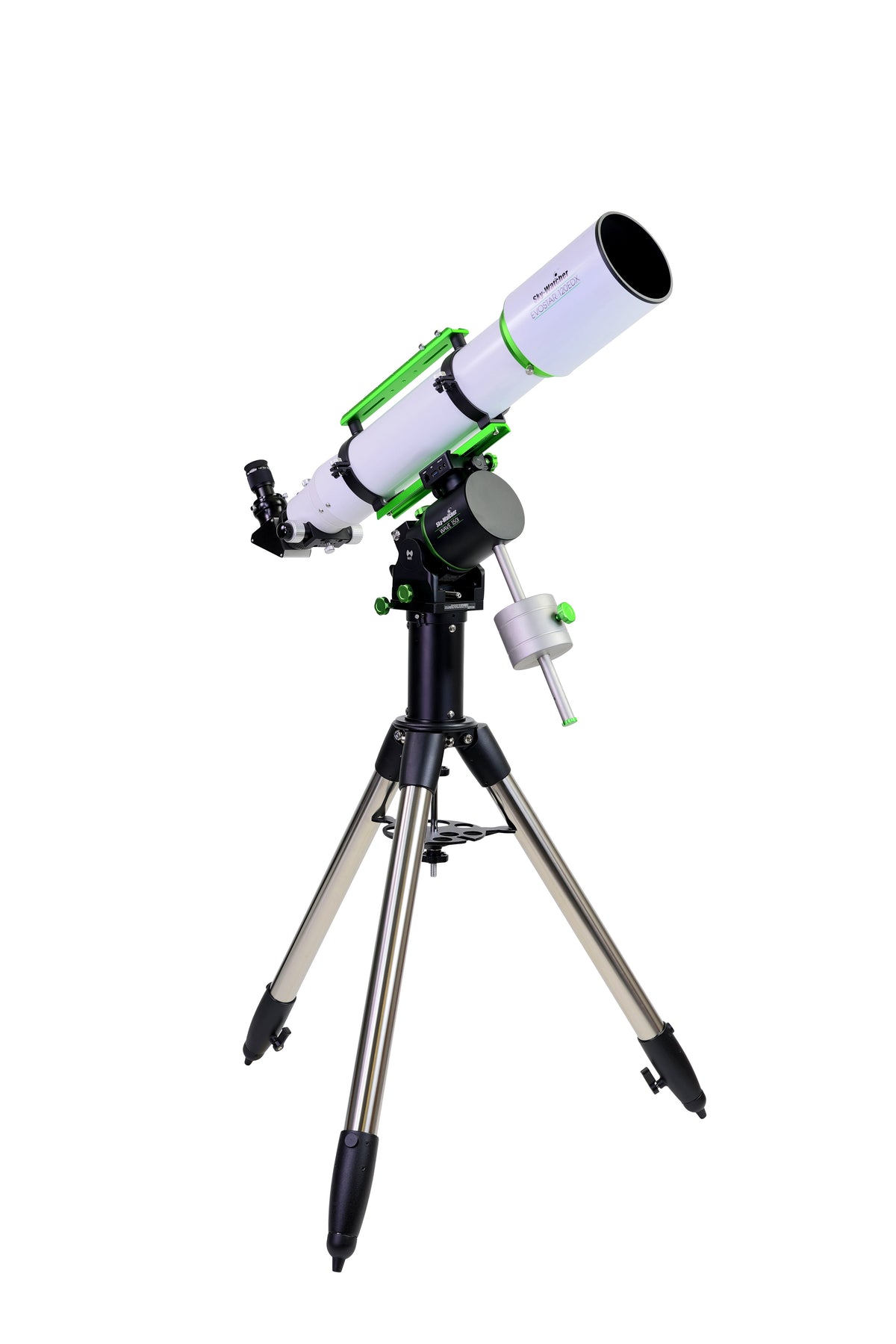
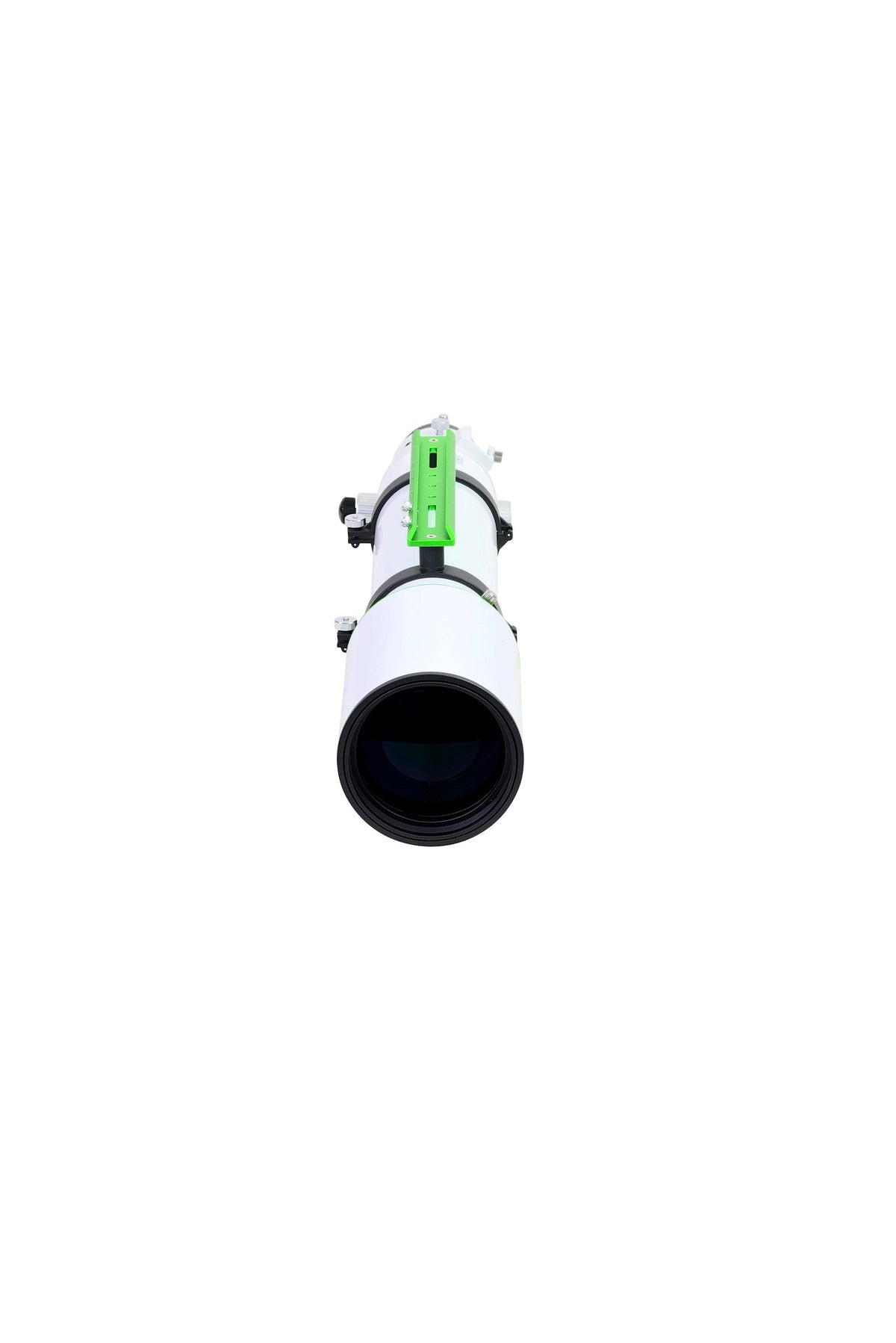
The Sky-Watcher Evostar 120EDX is a 120 mm apochromatic doublet refractor working at 900 mm of focal length and f/7.5. The objective is a matched, air-spaced two-element lens assembly that includes one FPL-53 extra-low dispersion element, with Sky-Watcher's Metallic High-Transmission Coatings (MHTC) and internal baffling. It is the largest aperture in the Evostar EDX line, which Sky-Watcher offers from 80 mm to 120 mm.
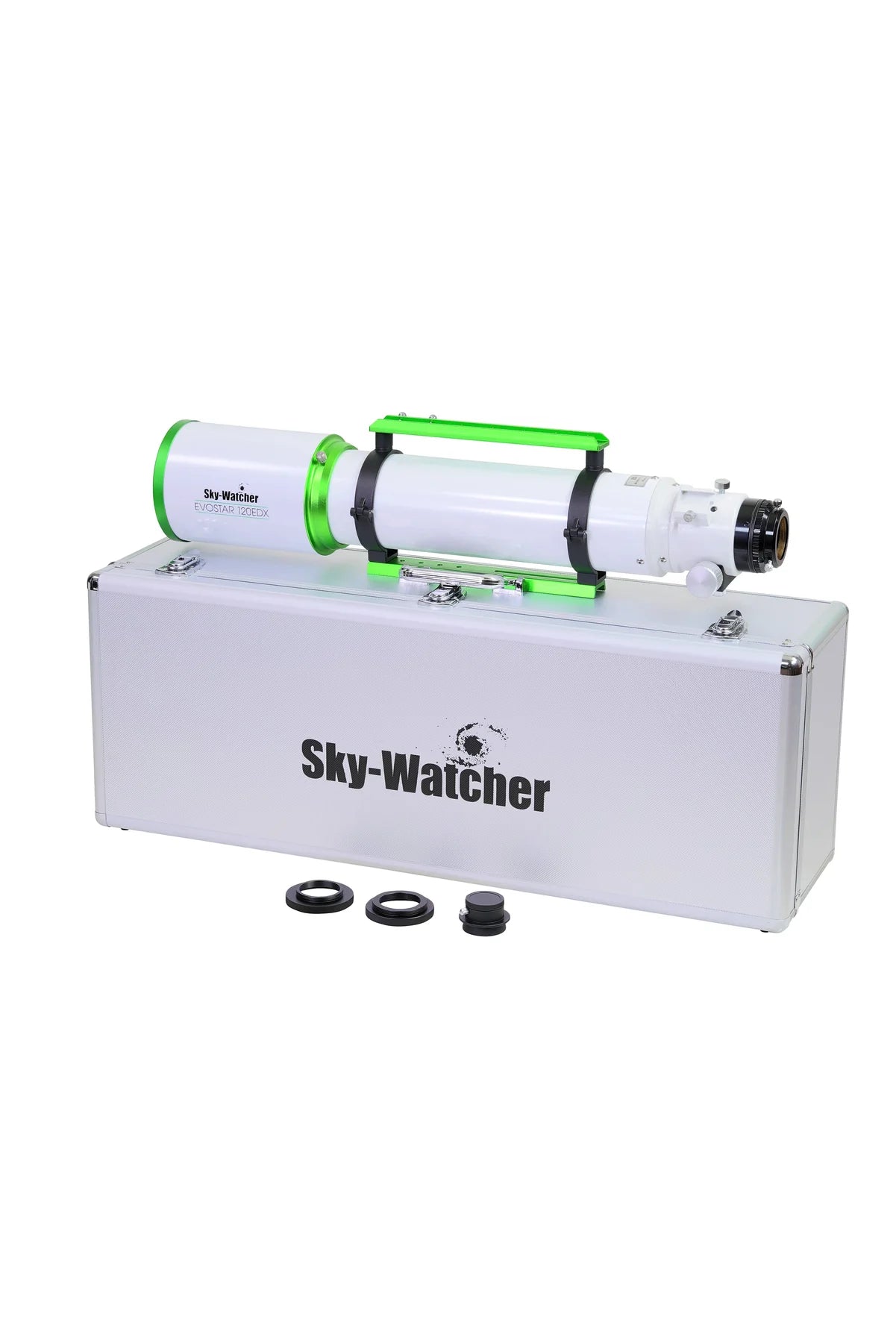
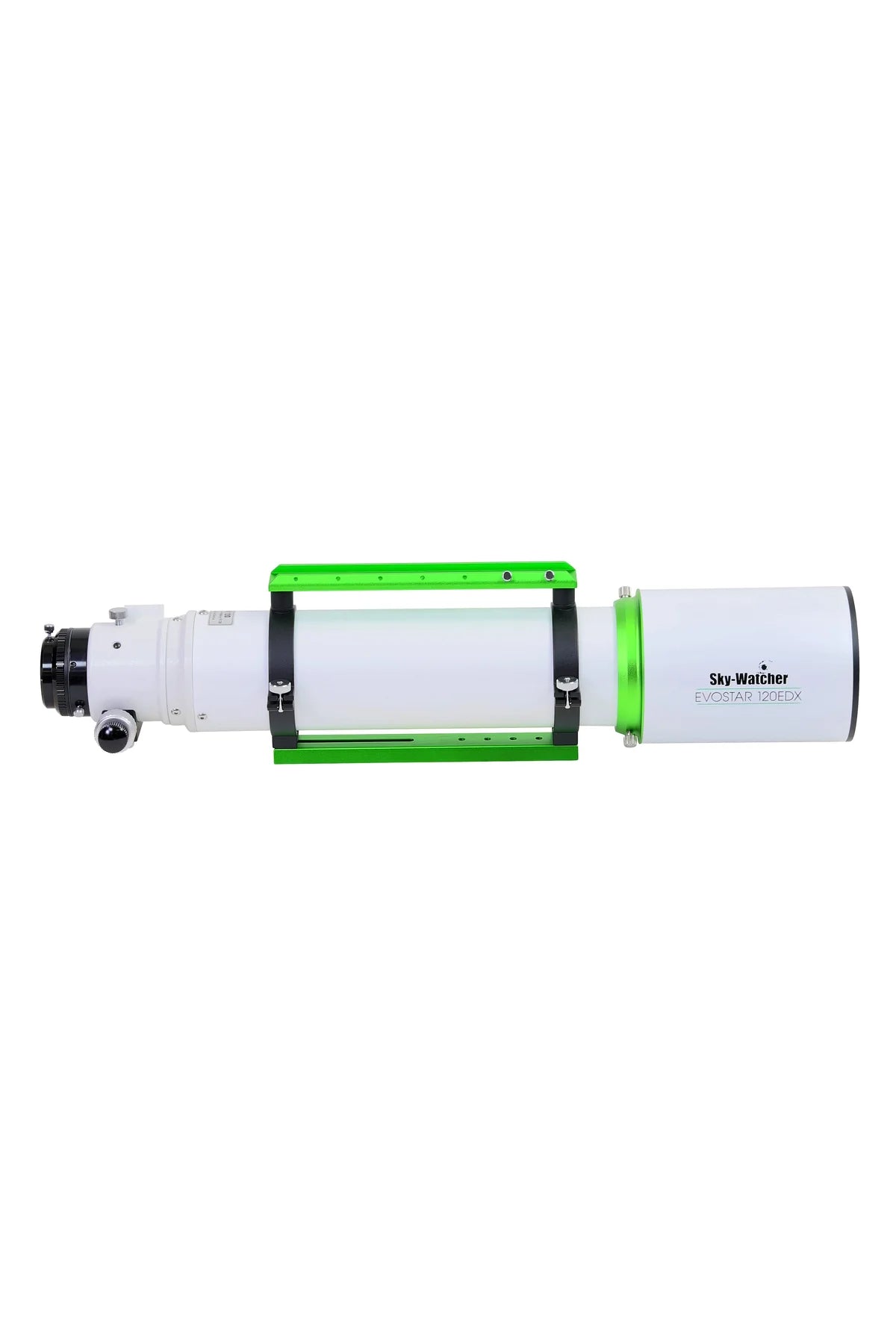
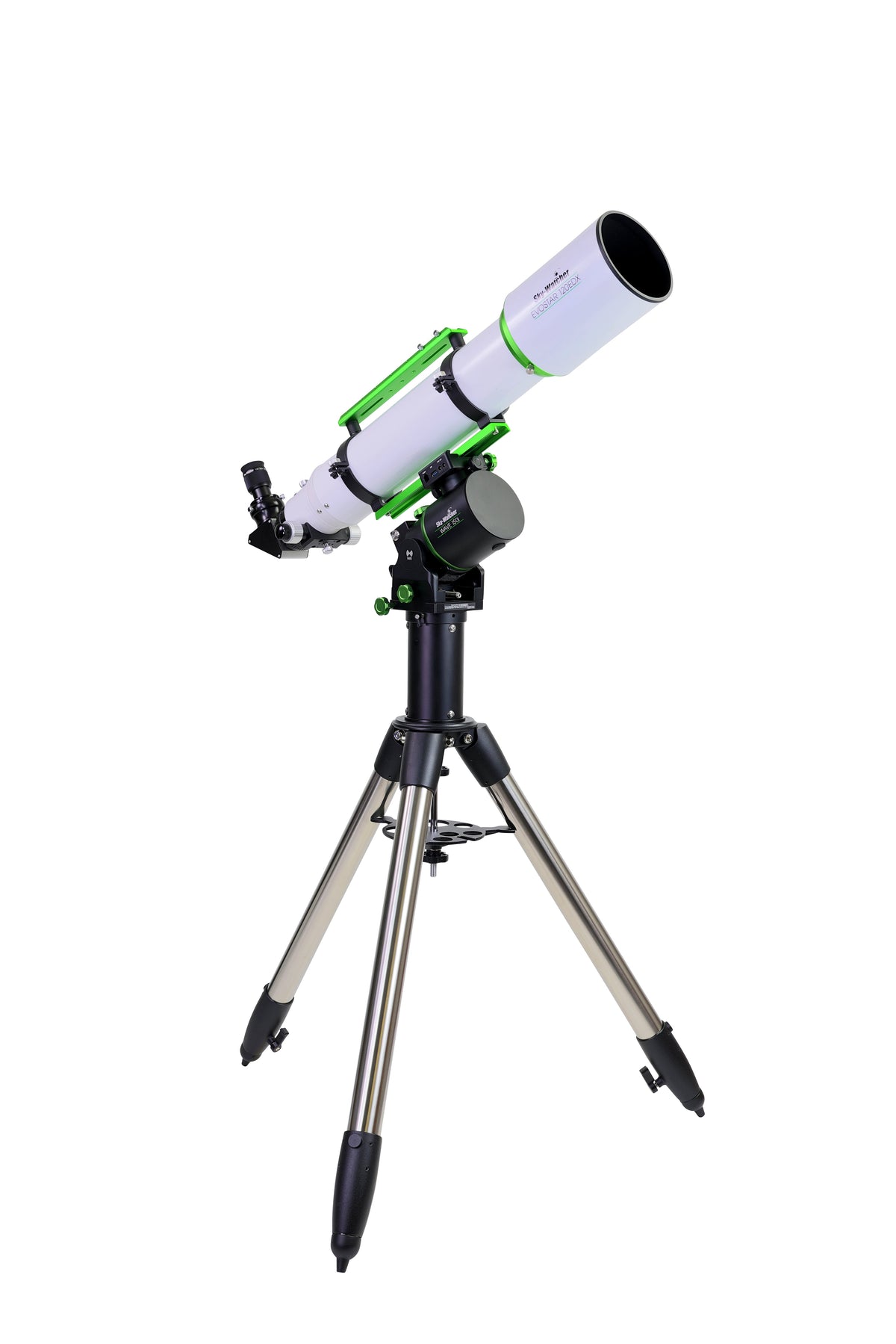
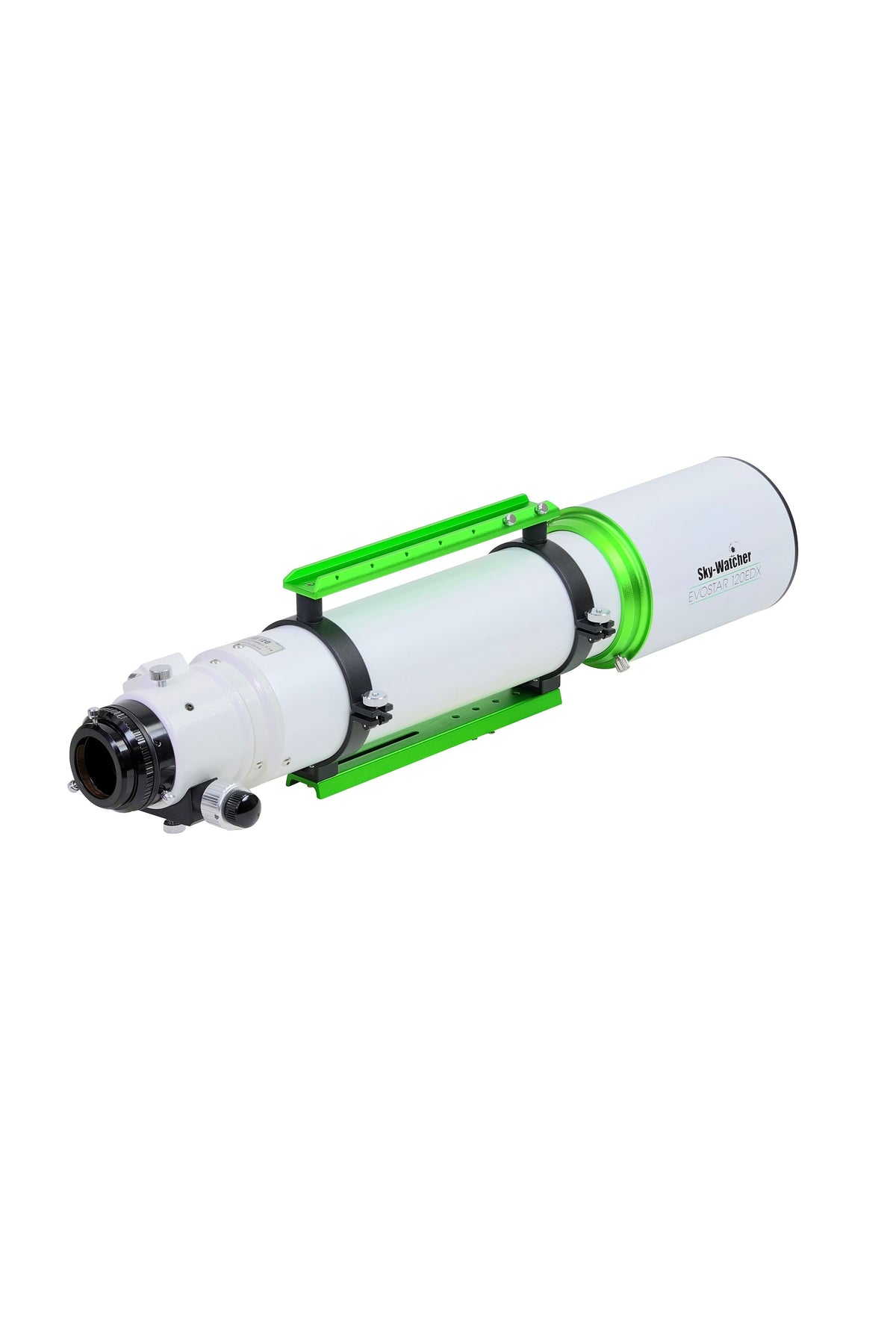
This listing is the optical tube assembly, supplied in a foam-lined, padded aluminium case with a 2.8-inch dual-speed Crayford-style focuser, mounting rings, a V-style dovetail plate, a carry handle and a thread-on dew shield. It is a Limited Edition release finished in glossy white metal-flake on an aluminium tube. The mount and tripod are chosen separately.
Who It's For
This is a good match if you want a step up in aperture from an 80 mm or 100 mm refractor while keeping the low-maintenance character of a lens-based telescope: no mirrors to collimate, no central obstruction, and a sealed tube that settles quickly. At 120 mm, resolution and light grasp are noticeably ahead of the smaller EDX models, which shows on close double stars, lunar detail and the brighter galaxies and globular clusters.
It also suits astrophotographers who want a 900 mm focal length for framing galaxies, planetary nebulae and smaller emission regions, and who would rather put their budget into the mount and camera. Sky-Watcher's own reasoning for the doublet layout is exactly that: less glass than a triplet means less weight and a lower cost, leaving more for the rest of the rig.
If you are moving up from a first telescope, the Evostar 120EDX is a comfortable place to land - the handling is the same as any refractor, and the 2.8-inch focuser and rings are already in the case.
Key Features & Design
- 120 mm apochromatic doublet at 900 mm, f/7.5: a two-element, air-spaced objective designed to minimise false colour.
- One FPL-53 ED element: Sky-Watcher describes the ED glass as fluorite-based, used in a proprietary matched lens combination for colour correction.
- Metallic High-Transmission Coatings (MHTC): Sky-Watcher's multi-coating on the optics, for transmission and contrast.
- Internal baffling: baffles inside the tube keep stray light off the image plane, which matters for contrast in both visual and photographic use.
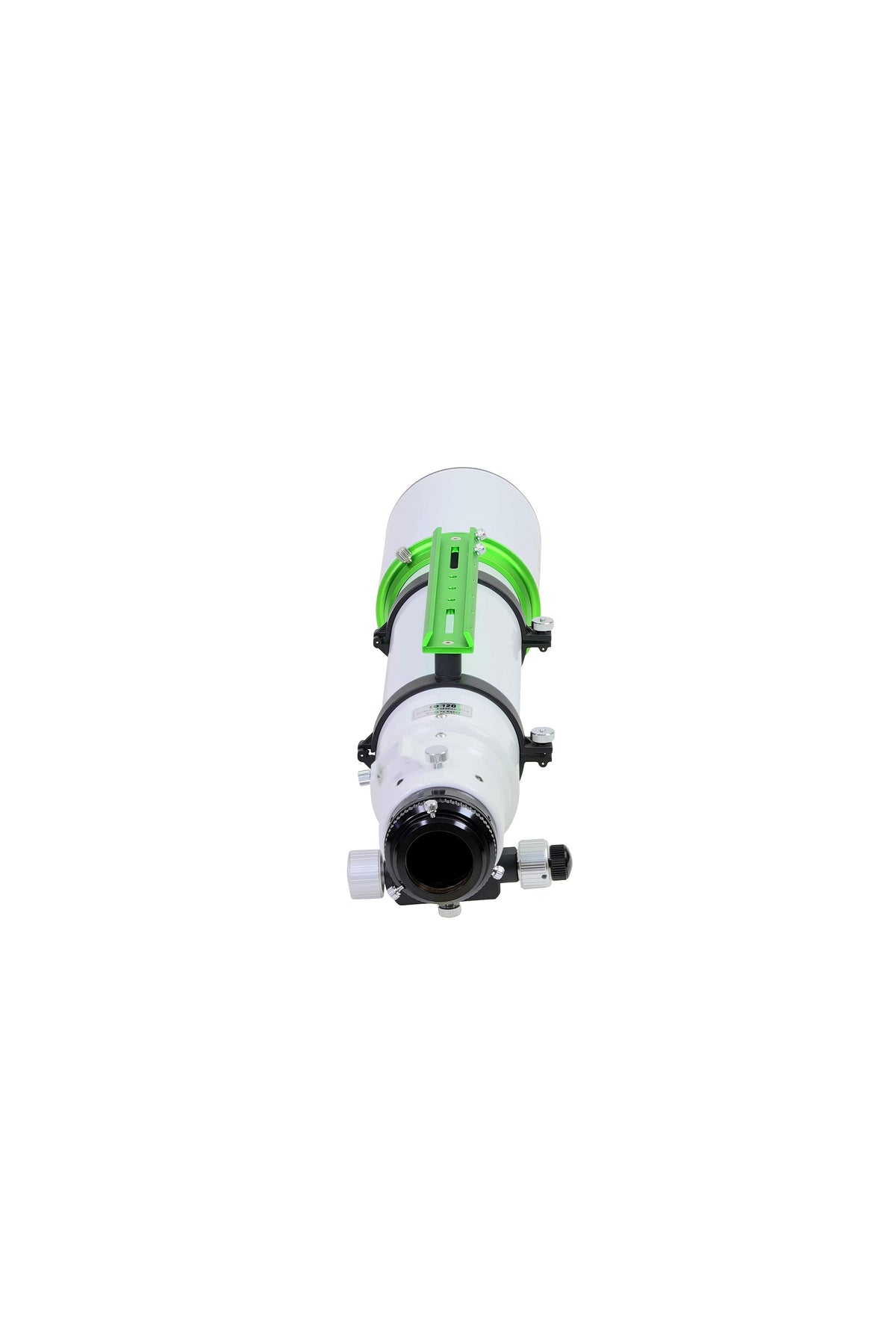
- 2.8-inch dual-speed Crayford-style focuser, 11:1 fine focus: a large-diameter drawtube for heavier imaging trains, with a reduction knob for fine focus at high power or on a camera.
- Mounting rings with V-style dovetail plate: fits Vixen-style saddles directly.
- Carry handle: the handle carries a 1/4-20 mounting hole, per Sky-Watcher's manual, for a finder or small accessory.
- Thread-on, extendable dew shield with a locking screw to hold it at the length you choose.
- Camera angle adjuster for rotating your camera to frame a target without re-mounting the tube.
- Glossy white metal-flake finish on the aluminium tube - this Limited Edition finish.
- Padded, foam-lined aluminium case for storage and transport.
Optical / Mechanical Design
The Evostar 120EDX uses a two-element, air-spaced objective in which one element is FPL-53, a low-dispersion glass that bends the different wavelengths of light by more nearly equal amounts than ordinary crown glass. Paired with a matched second element, it brings red, green and blue to focus much closer together than a standard achromat, which is what keeps bright stars, the lunar limb and planetary edges free of the purple fringe a conventional refractor shows. Sky-Watcher's position is that this delivers the best colour correction available in an ED doublet.
The doublet layout is a deliberate trade. A triplet adds a third element for even tighter colour correction across the spectrum, at the cost of weight, cooldown time and price. A doublet at f/7.5 keeps the cell lighter and lets the objective reach ambient temperature faster, while the relatively slow focal ratio gives the lens design room to control colour. The MHTC coatings and internal baffles then work on contrast - holding transmission up and keeping scattered light from washing out the background sky.
At the back end, the 2.8-inch Crayford-style focuser is sized for imaging work: the wide drawtube supports a camera, filter wheel and corrector without the vignetting a 2-inch focuser can introduce, and the 11:1 reduction knob makes the fine adjustments that critical focus on a camera sensor demands.
Recommended Uses
- Lunar and planetary observing: an unobstructed 120 mm aperture with good colour correction gives clean, high-contrast views of lunar terrain, Jupiter's belts and Saturn's rings.
- Double stars: the extra resolution of 120 mm over 80-100 mm splits closer pairs, with tight, colour-free star images.
- Deep-sky visual observing: star clusters, brighter galaxies and planetary nebulae at moderate magnification.
- Deep-sky astrophotography: 900 mm suits galaxies, planetary nebulae and compact emission regions on a capable equatorial mount.
- Lunar and planetary imaging with a planetary camera, alone or with a Barlow.
- Daytime and terrestrial viewing with an erecting diagonal.
Compatibility and Accessory Notes
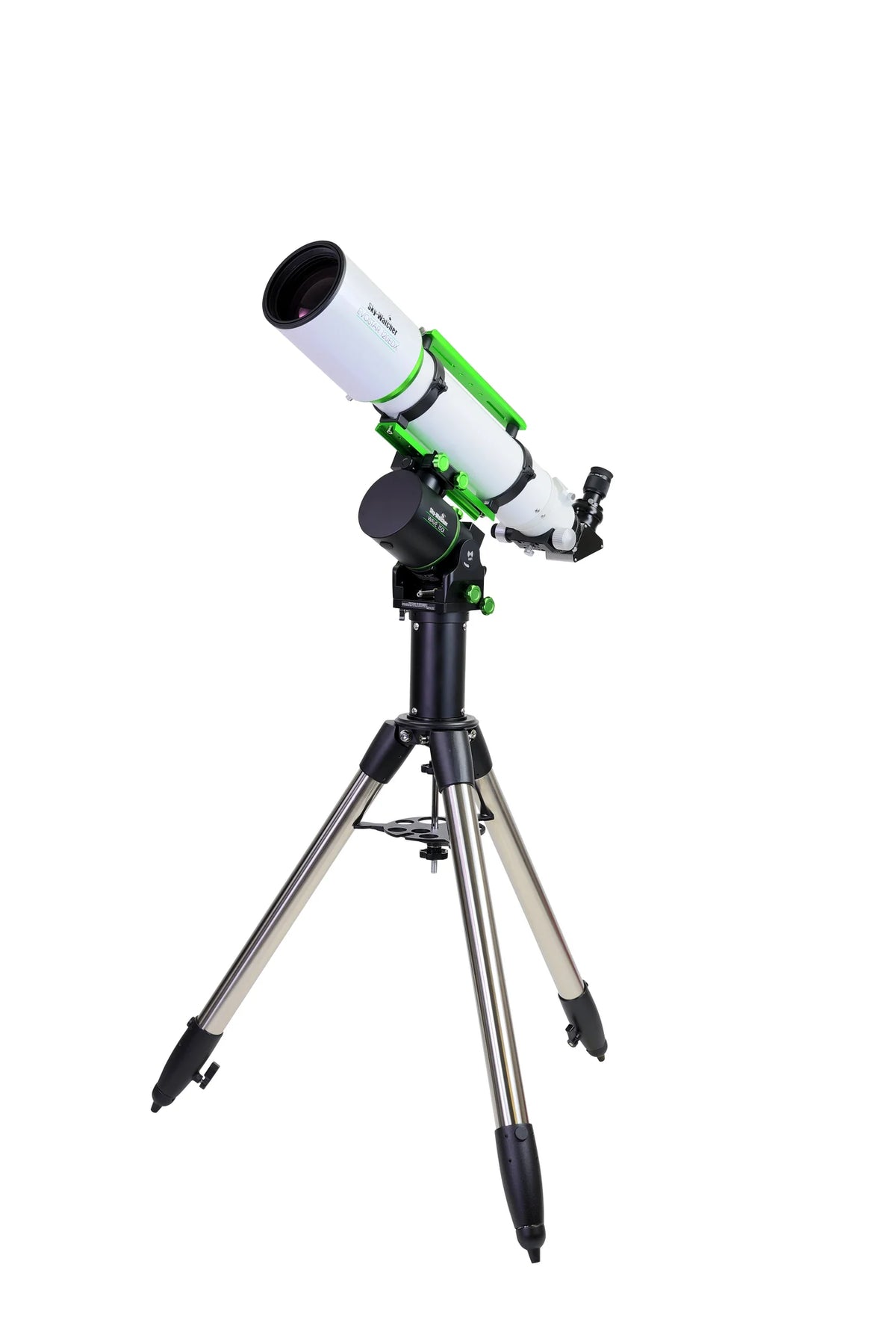
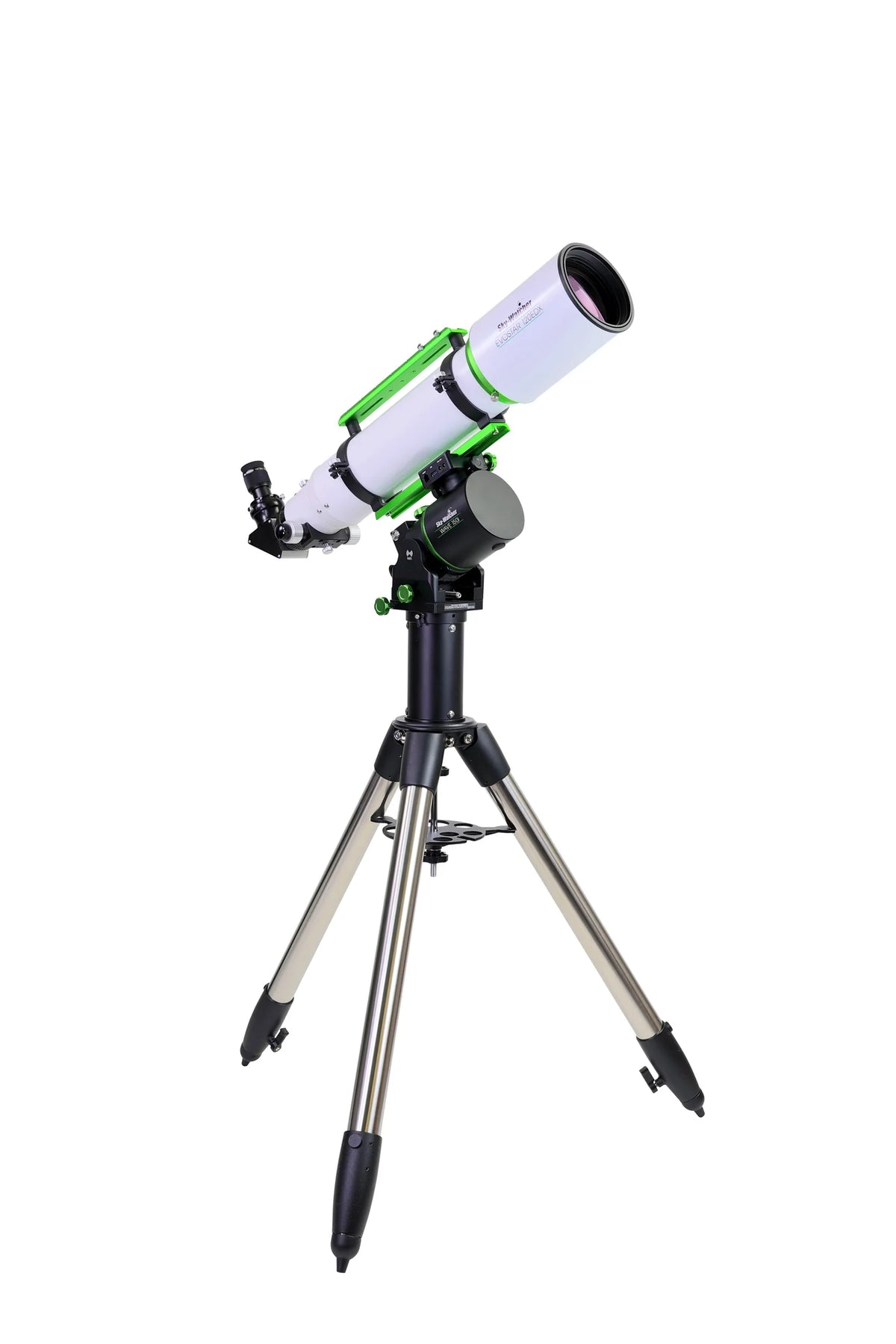
The tube rides in the supplied rings on a V-style (Vixen-format) dovetail plate, which fits the saddle on most small and mid-size equatorial mounts. A 120 mm refractor carrying a camera, focuser accessories and a guide scope is a substantial load for an imaging mount; we are glad to check a pairing against your mount's payload before you order.
For visual use, the 2.8-inch focuser accepts 2-inch eyepieces and diagonals, and the supplied 1.25-inch to 2-inch adapter takes 1.25-inch diagonals and eyepieces. Sky-Watcher's manual describes the adapter arrangement: one adapter accepts a 1.25-inch diagonal, and for imaging the 2-inch eyepiece adapter comes off and a second adapter goes on to accept a flattener. The focuser adapter ring and spacer supplied in the case are part of that connection.
No eyepieces, star diagonal or finderscope appear in Sky-Watcher's list of included accessories, so plan on adding a diagonal and at least one eyepiece for visual work. The handle's 1/4-20 hole and the dovetail give you places to fit a finder or guide scope.
For flat-field imaging, Sky-Watcher currently lists dedicated flatteners for the Evostar 100EDX and the Esprit EDX models, but does not yet list a flattener or reducer specifically for the Evostar 120EDX. If you are planning a camera on this tube, send us your camera and how you intend to connect it, and we will work out the correction and spacing with you.
Good to Know Before You Order
- This is the optical tube assembly. Rings, dovetail, focuser, dew shield, handle, adapters and case are included; the mount and tripod are separate. We can help you match a mount to it.
- Eyepieces, a diagonal and a finder are not in the box. Sky-Watcher's included-accessories list does not include them; a 2-inch or 1.25-inch diagonal and an eyepiece complete the visual setup.
- A matched field flattener for the 120EDX is not yet listed by Sky-Watcher. The Esprit 70EDX / Evostar 100EDX flattener is published for the 100EDX, not this model. Visual observing and small-sensor or planetary imaging need no corrector; for larger sensors, ask us and we will advise on the current options.
- Doublet, not triplet. The FPL-53 doublet controls false colour well; a triplet goes further on the brightest objects at the cost of weight and price. That is the trade Sky-Watcher made deliberately here.
- Limited Edition white finish. Sky-Watcher offers this release while supplies last.
- Free shipping applies to this item per Sky-Watcher's listing.
Frequently Asked Questions
Is it difficult to set up?
No. A refractor needs no collimation, and everything that attaches to the tube is already in the case. Fit the rings and dovetail, slide the dovetail into your mount's saddle, balance the tube in the rings, then add a diagonal and an eyepiece. The dew shield threads on and extends to the length you want. The carry handle on top gives you a secure grip when lifting the tube onto the mount.
What is it best used for?
Both visual observing and imaging. Visually it is strong on the Moon, planets and double stars, and shows deep-sky objects with a dark, contrasty background. Photographically, 900 mm is a natural focal length for galaxies and smaller nebulae.
How is it different from the Evostar 80EDX and 100EDX?
Same family, same design approach and finish. The 120EDX has the largest aperture and the longest focal length of the three, which gives more resolution and light grasp and a tighter field; the smaller models are lighter and wider-field.
Do I need a field flattener?
For visual use, no. For imaging, it depends on the sensor size: planetary cameras and small sensors use the centre of the field, while larger sensors benefit from a corrector to flatten the edges. Sky-Watcher does not yet list a dedicated 120EDX flattener; tell us your camera and we will advise.
What mount does it need?
A mount with a Vixen-style saddle and a payload rating comfortably above the tube plus whatever you hang on it. For imaging, an equatorial mount with room to spare gives the steadiest tracking. Tell us what you own or are considering and we will check the fit.
Bottom Line
A 120 mm f/7.5 FPL-53 apochromatic doublet with 900 mm of focal length, a 2.8-inch dual-speed Crayford-style focuser, rings, dovetail, handle, dew shield and a padded aluminium case, in a Limited Edition white finish. Add a mount, a diagonal and an eyepiece for observing - and for imaging with a larger sensor, talk to us about field correction.
| SKU | S11155 |
|---|---|
| UPC | 810098970846 |
| Optical design | Apochromatic doublet refractor, two-element air-spaced |
| Aperture | 120 mm |
| Focal length | 900 mm |
| Focal ratio | f/7.5 |
| ED glass | One FPL-53 element (matched lens assembly) |
| Coatings | Metallic High-Transmission Coatings (MHTC) |
| Baffling | Internal baffles |
| Focuser | 2.8-inch dual-speed Crayford-style, 11:1 fine focus |
| Dew shield | Thread-on, extendable with locking screw |
| Mounting hardware | Mounting rings with V-style dovetail plate |
| Carry handle | Yes, with 1/4-20 mounting hole |
| Tube material and finish | Aluminium, glossy white metal-flake finish (Limited Edition) |
| Case | Padded, foam-lined aluminium case |
| Included accessories | 2.8-inch Crayford-style focuser, tube rings, camera angle adjuster, thread-on dew shield, focuser adapter ring, spacer, 1.25-inch to 2-inch adapter, V-style dovetail, carry handle, aluminium case |
| Not included | Mount, tripod, eyepieces, diagonal, finderscope, field flattener |
| Recommended use | Lunar, planetary and double-star observing; deep-sky visual; deep-sky and planetary astrophotography |
You may also like
Recently viewed
Recent Blog Posts
View all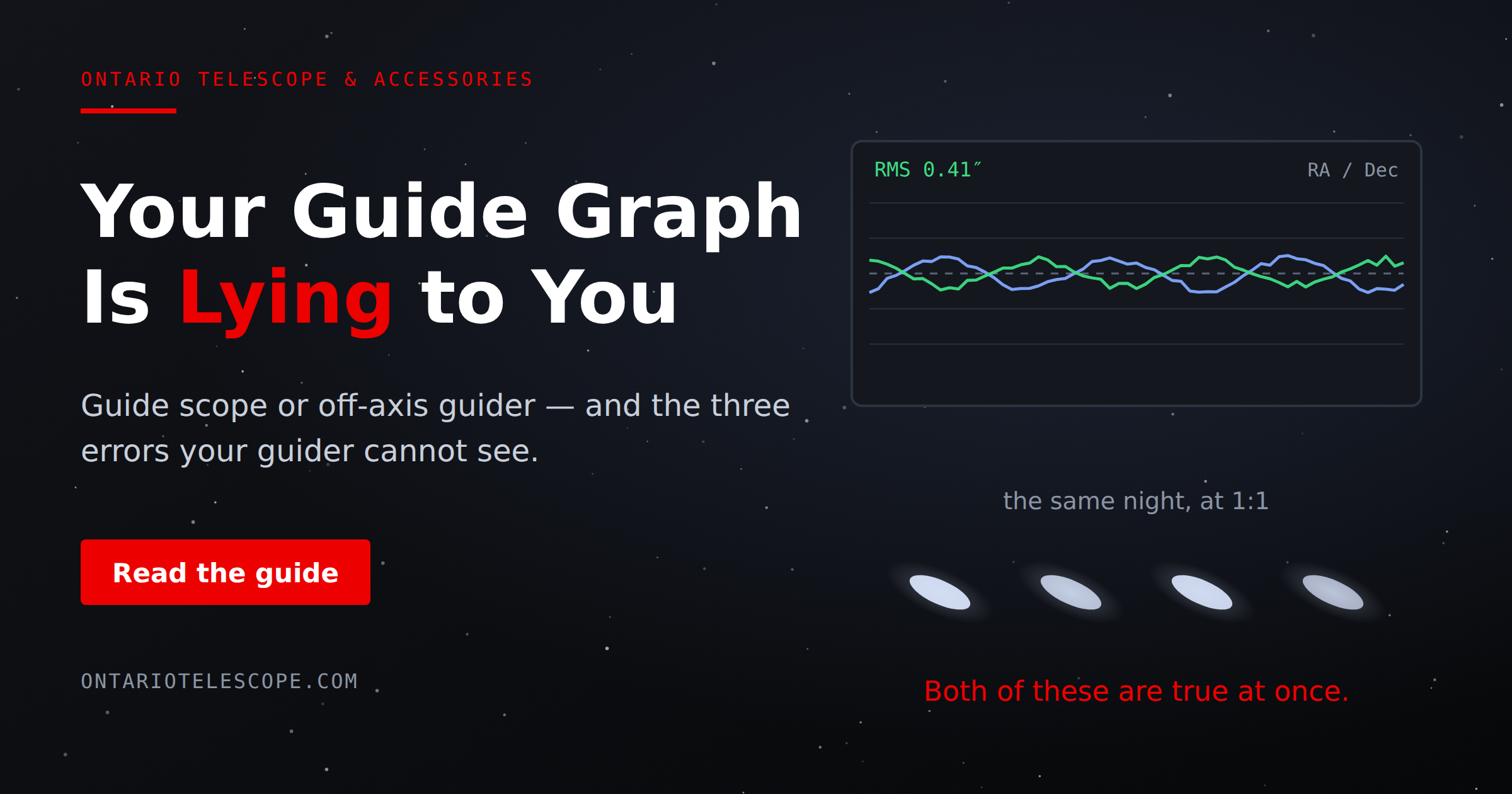
Your Guide Graph Is Lying to You
Read More
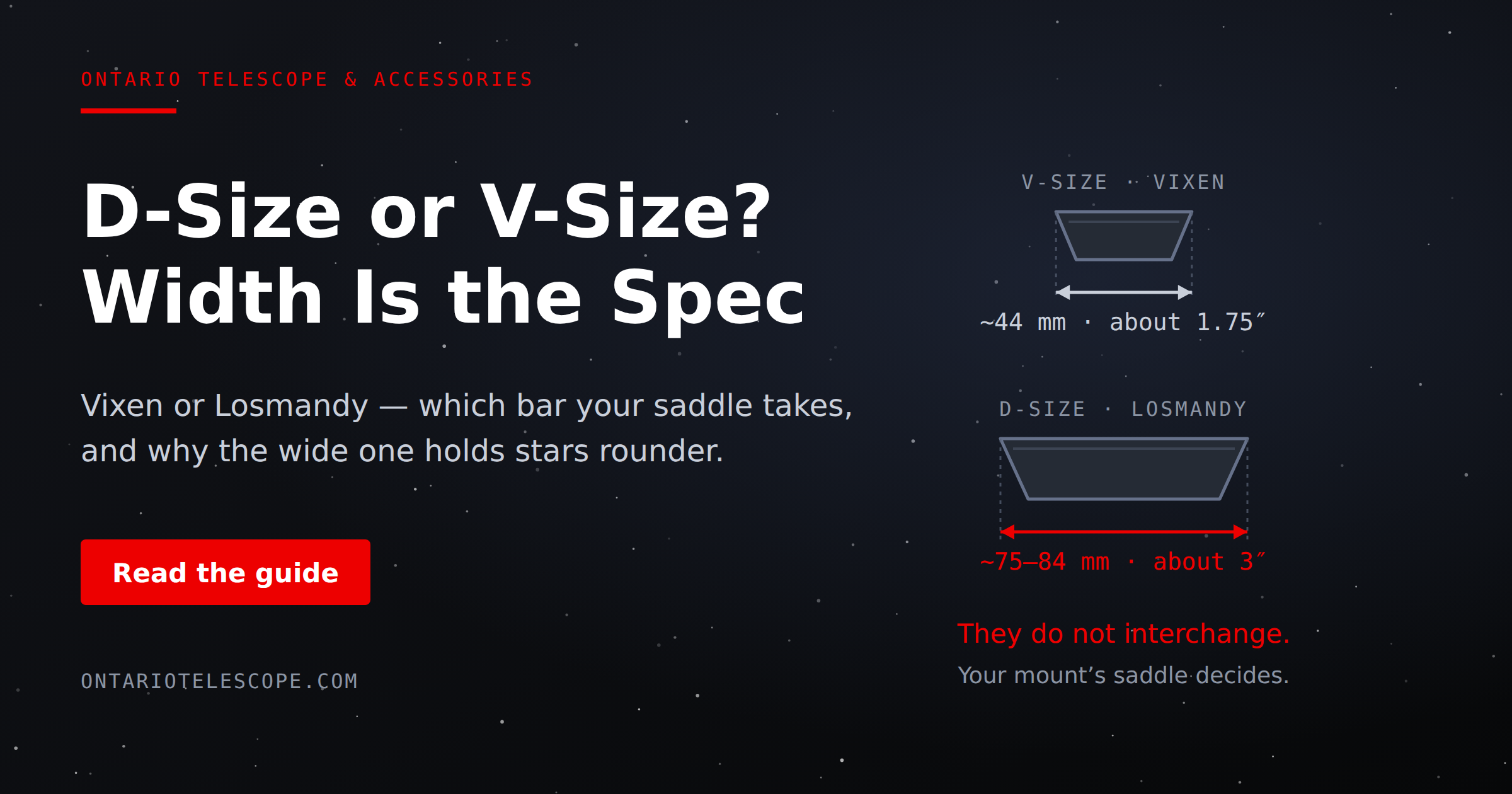
D-Size vs V-Size: A Complete Guide to Telescope Dovetail Systems
Read More
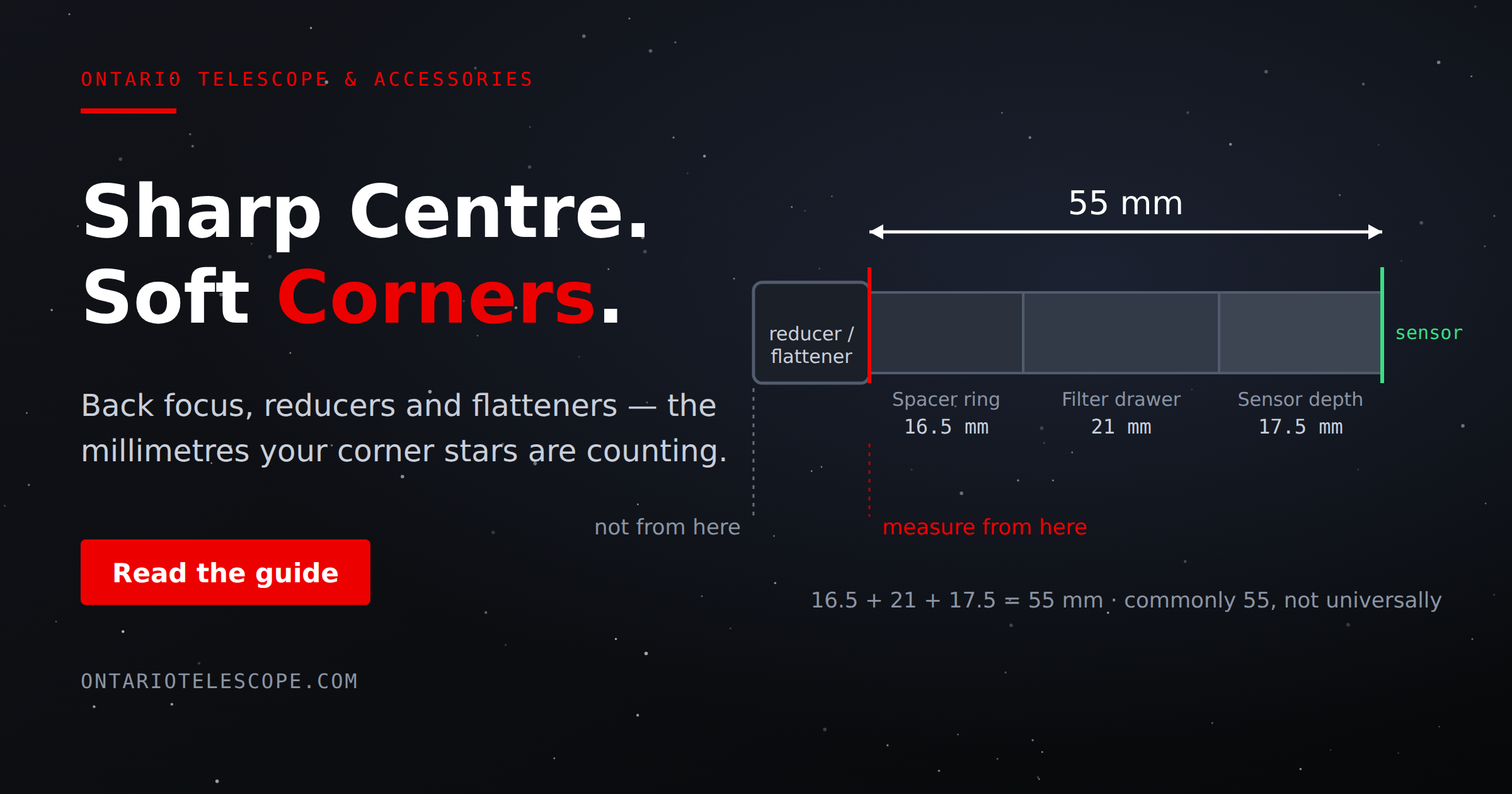
What Is Back Focus in Astrophotography? Telescope Reducers, Flatteners, and Spacing Explained
Read More