


- Description
- Specifications
Product Overview
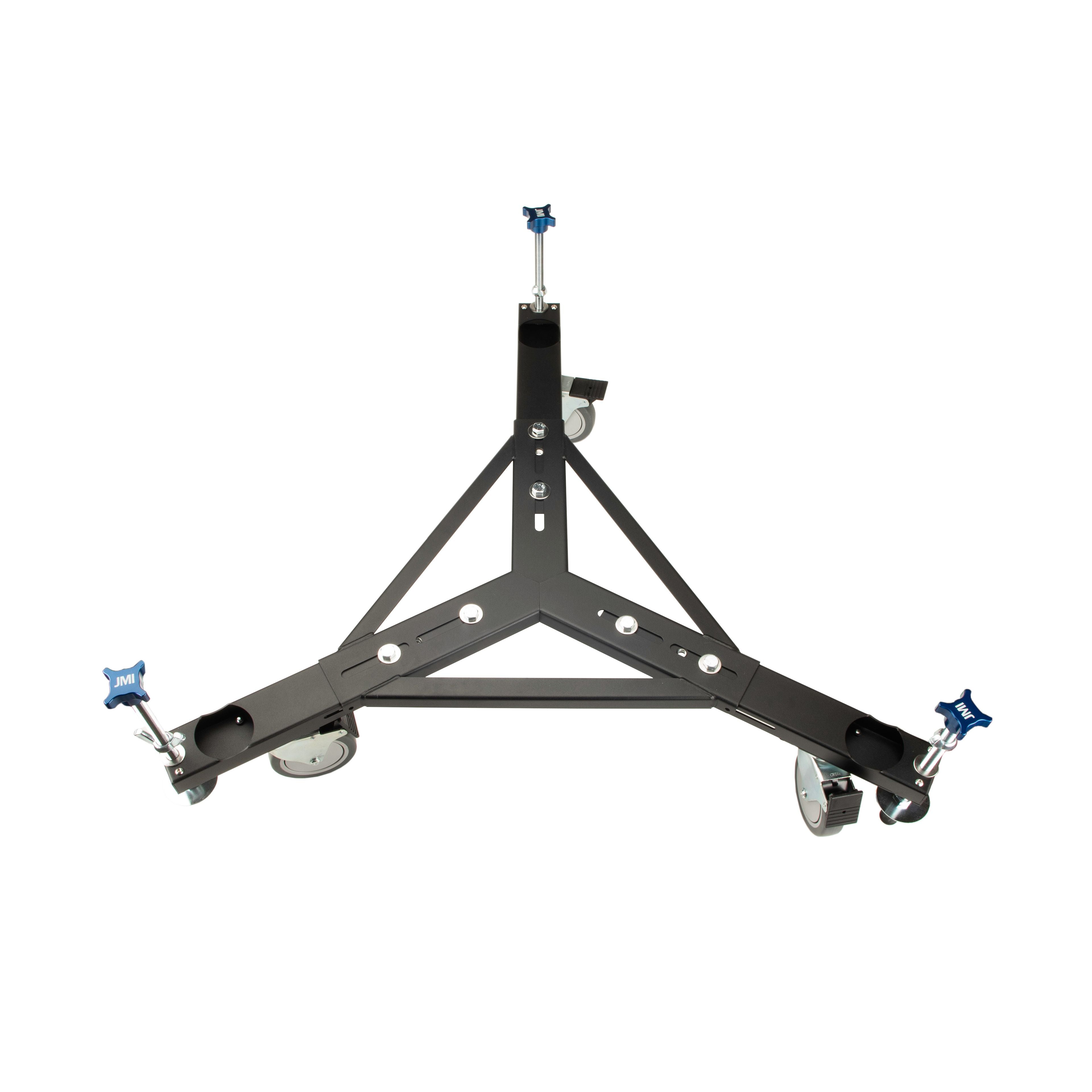
The JMI Heavy-Duty “Shorty” Universal Wheeley Bar is the shortest-span bar in JMI's heavy-duty Universal line. It carries 300 lb total — tripod, mount, OTA and accessories combined — on a welded steel frame riding 5″ polyurethane locking wheels, and it adjusts to tripods measuring 26.25″ to 31.25″ tip to tip, or from 28.25″ upward when 10″ pneumatic tires are fitted. The tripod foot receptacles have a 2-3/4″ inside diameter and accept feet up to 2-3/4″ across. Leveling is handled by 5/8″ heavy-duty screws. Made in the USA, 50 lb as shipped.
Who It's For
This is a good match if you run a loaded imaging rig that stays assembled between sessions and want to roll it out with the camera, cabling and power still attached; if the tripod footprint is on the compact side, measuring 26.25″ to 31.25″ tip to tip; and if the path to the observing pad runs through a narrow doorway or between parked cars, where the shortest span in the heavy-duty line has the clearance advantage.
Key Features & Design
- 300 lb load rating: Covers the tripod, mount, counterweights, optical tube and the full imaging train together.
- 26.25″–31.25″ tip-to-tip range: The most compact span JMI offers in the heavy-duty Universal series.
- 2-3/4″ foot receptacles: Sized for the larger feet found on heavy German equatorial tripods, up to 2-3/4″ in diameter.
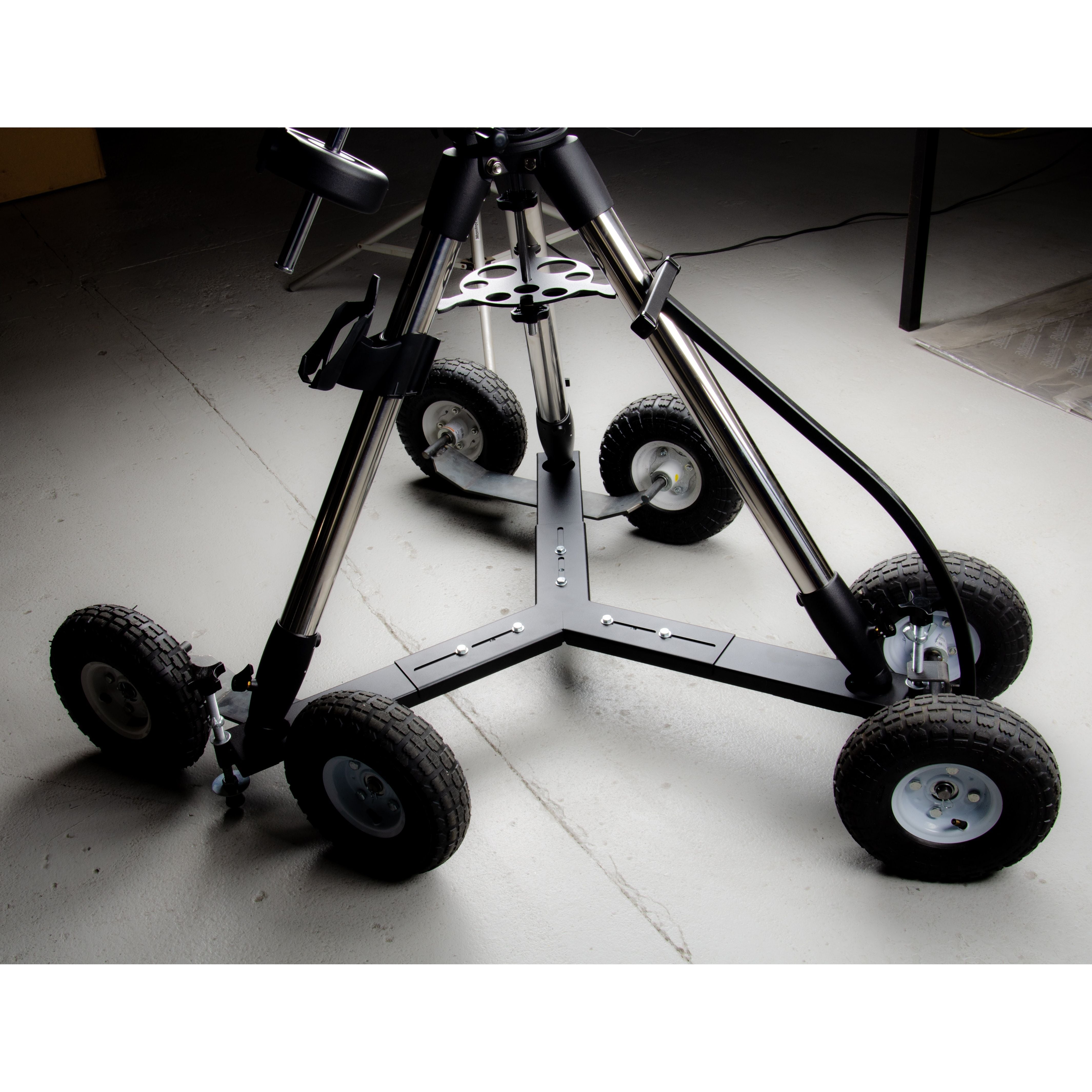
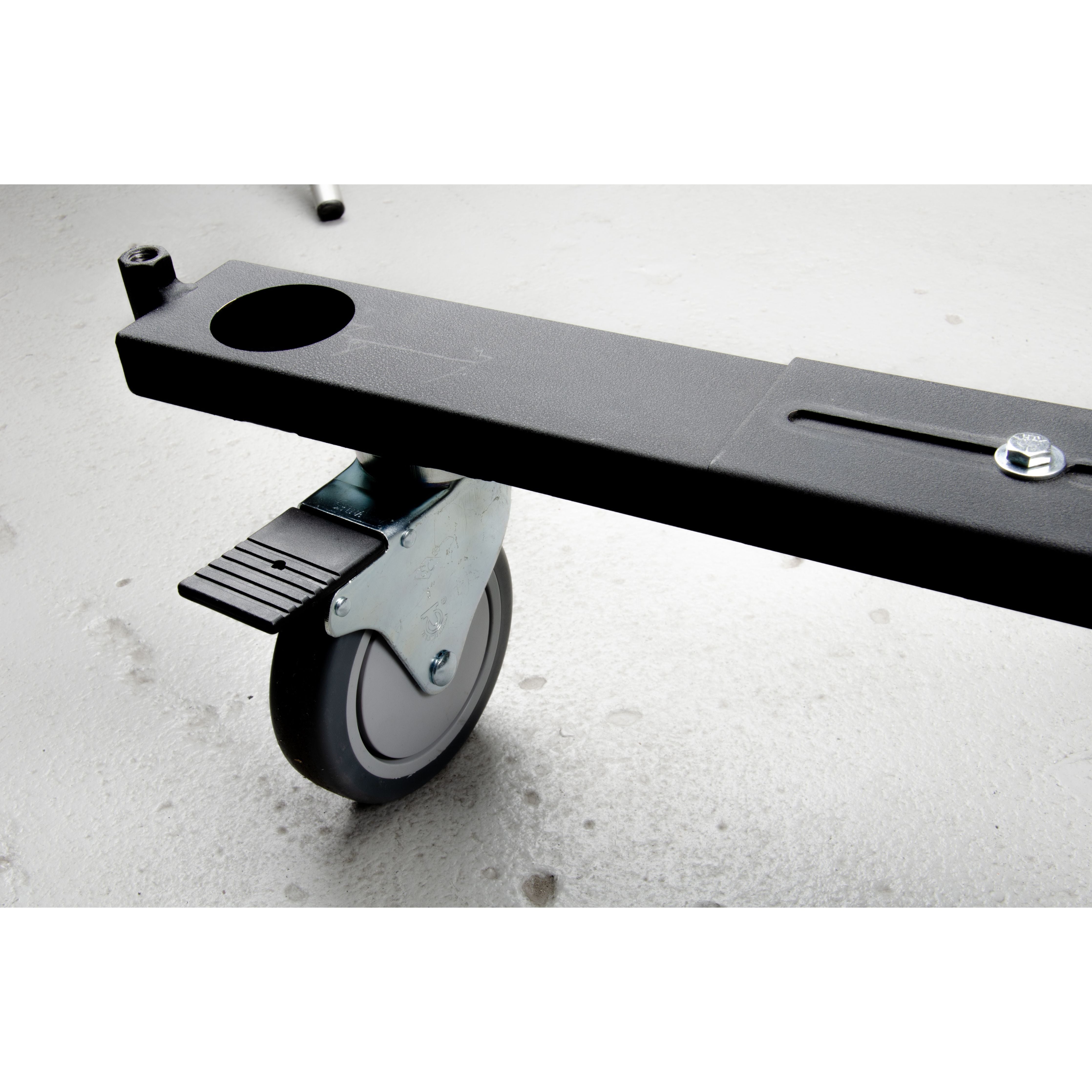
- 5″ polyurethane locking wheels: Standard equipment rather than an upgrade, and they roll over cracked concrete and expansion joints without stalling.
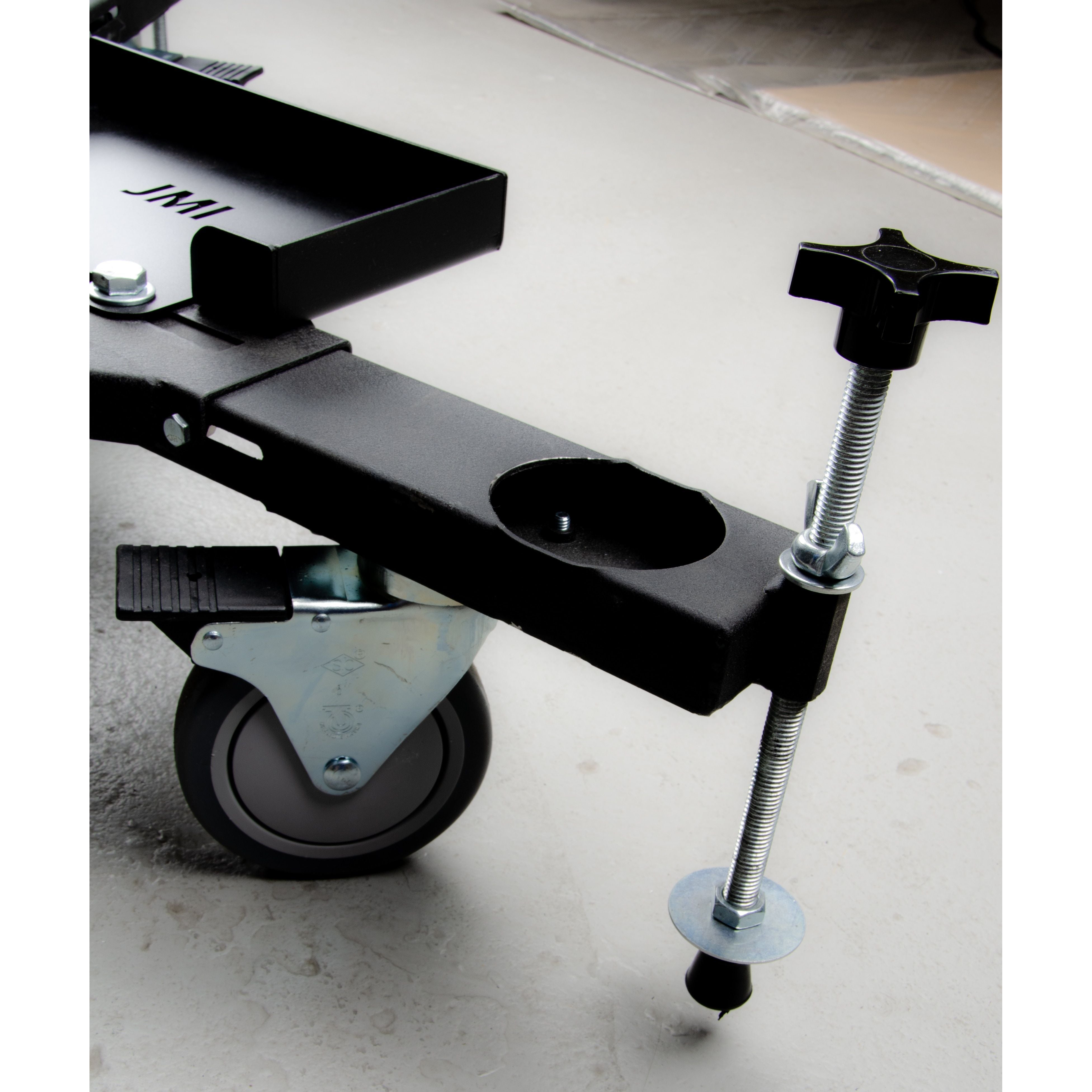
- 5/8″ heavy-duty leveling screws: Heavier thread than the standard-duty line, matched to the 300 lb rating.
- Welded steel frame: Powder-coated welded steel, made in the USA, 50 lb as shipped.
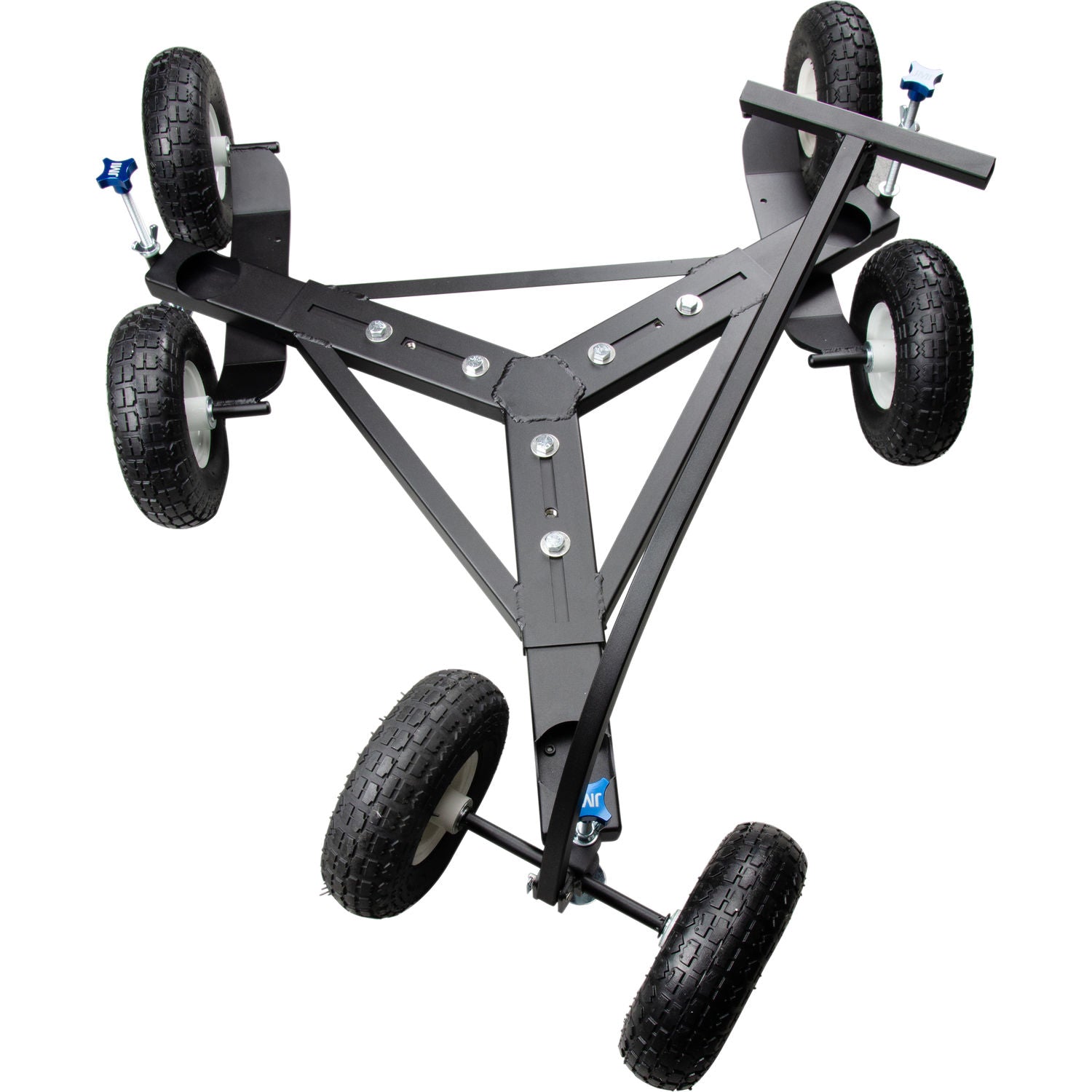
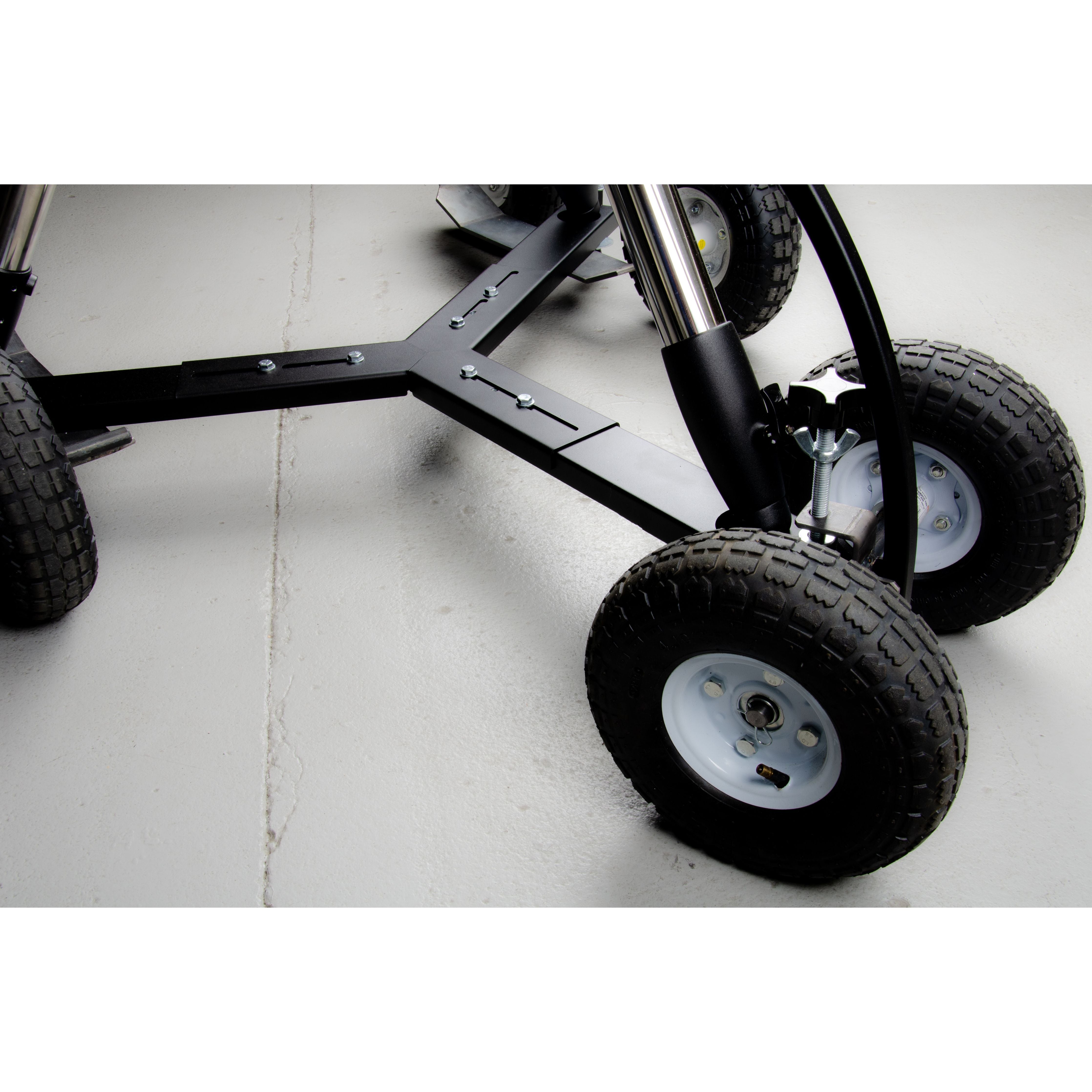
- 10″ pneumatic option: The 5/8″ version of JMI's 10″ all-terrain tire upgrade fits this bar and raises the minimum span to 28.25″.
Mechanical Design
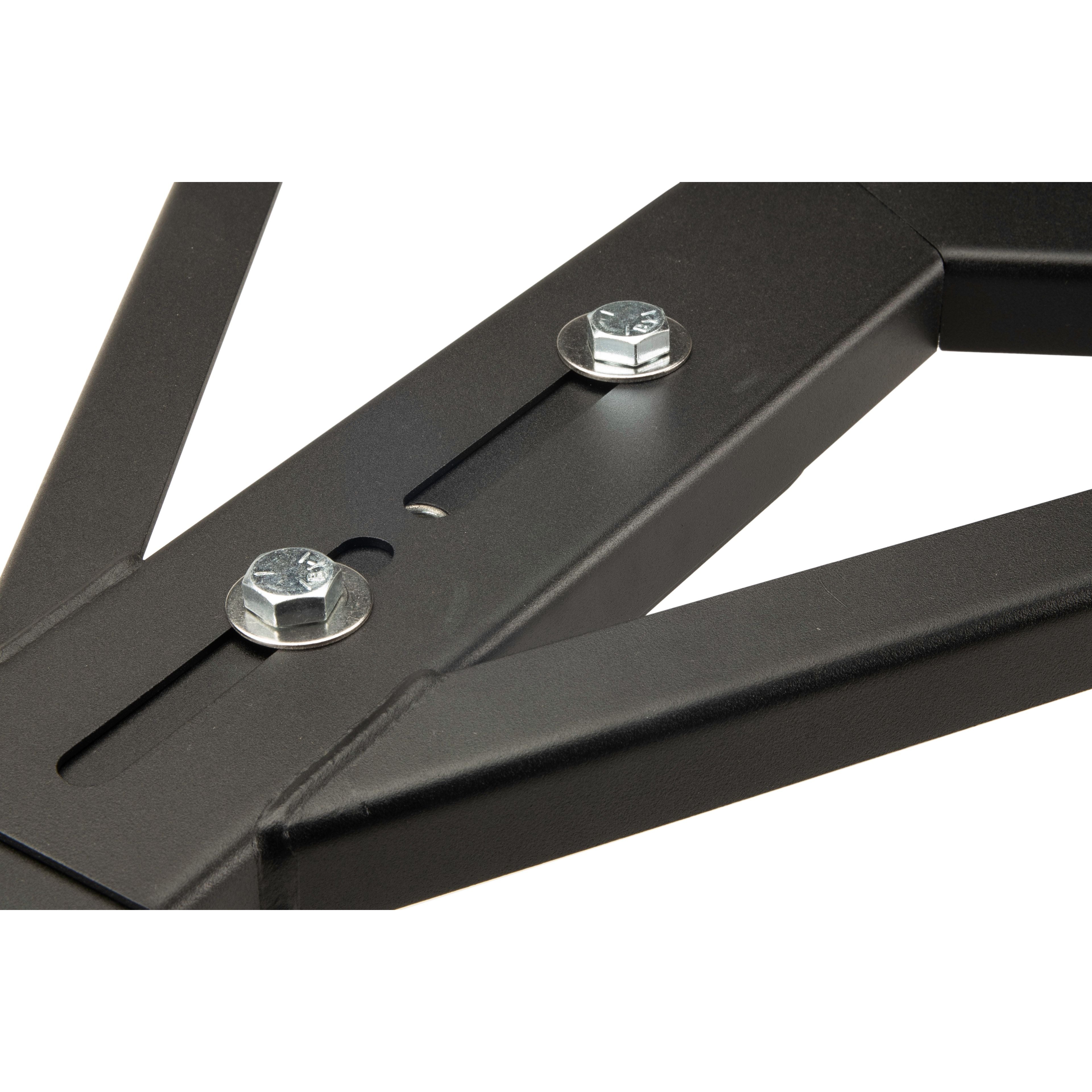
The frame is a welded steel spider with adjustable arms, each ending in a cup that captures one tripod foot. Nothing bolts to the tripod: the mass of the rig seats the feet in the cups and holds the geometry. Each arm carries a locking 5″ polyurethane caster and a 5/8″ leveling screw. Rolling is done on the casters; at the observing position the leveling screws thread down until they take the load off the wheels, which puts the rig on rigid steel feet instead of rubber and levels the base on a sloped pad. Because the span closes to 26.25″, the outside envelope of the loaded bar stays narrower than the rest of the heavy-duty line, which is what makes the difference at a doorway.
Recommended Uses
- Rolling an assembled astrophotography rig out of a garage bay and onto a driveway pad each night.
- Moving a compact-footprint German equatorial tripod loaded with counterweights and an imaging train.
- Passing through a standard interior or side-entry doorway where a wider bar would not clear.
- Working a crowded garage where the telescope shares floor space with vehicles.
- Returning a rig to a marked observing position session after session with alignment intact.
Compatibility and Accessory Notes
Fit is set by the tripod's tip-to-tip measurement at observing height, taken between any two feet: this bar covers 26.25″ to 31.25″, and 28.25″ is the minimum once 10″ pneumatic tires are fitted. The receptacles are 2-3/4″ inside diameter and take feet up to 2-3/4″. Wider tripods are covered by the Heavy-Duty Medium at 34″–42.5″ and the Heavy-Duty Large at 49″–56.5″, both rated to the same 300 lb. This bar uses 5/8″ leveling screws, so the 5/8″ versions of JMI's 10″ pneumatic wheel upgrade, tow handle, speed-dial drill adapter, replacement leveling screws and soft-ground feet are the matching parts; the 1/2″ versions belong to the standard-duty line. Tie-down bracket kits are sold separately. Tell us the make and model of your tripod and we will confirm the fit.
Good to Know Before You Order
- The span is the point of this model. At 26.25″ to 31.25″ it is the narrowest of the heavy-duty bars; tripods wider than 31.25″ at observing height fall to the HD Medium or HD Large.
- The 10″ tire upgrade raises the minimum span. With the pneumatic tires fitted the bar no longer closes below 28.25″.
- The 300 lb rating is for everything on the bar. Tripod, mount, counterweights, optical tube, cameras, dew heaters and power supplies all count toward it.
- 5/8″ leveling screws set the accessory version. Accessories listed for 1/2″ leveling screws belong to the standard-duty bars rather than this one.
- Wheel upgrades change the working height. The 10″ pneumatic tires raise the mounted scope roughly 3¼″ over the factory caster setup, which shifts the eyepiece position.
- Weight as shipped is 50 lb. The bar arrives as a welded steel frame in one carton.
Frequently Asked Questions
Is it difficult to set up?
The frame arrives welded and ready. Setup is a matter of opening the arms to the tripod's tip-to-tip measurement, lowering the three feet into the cups, and running the 5/8″ leveling screws down once the rig is parked. Nothing on the tripod is drilled or modified.
How is tip-to-tip distance measured?
With the tripod at observing height, the measurement runs between any two foot tips. This bar covers 26.25″ through 31.25″, with 28.25″ as the floor when 10″ pneumatic tires are fitted.
What is the difference between the Shorty and the HD Medium?
Both are welded steel and both carry 300 lb. The Shorty spans 26.25″–31.25″ and the HD Medium spans 34″–42.5″, so the choice follows the tripod's footprint and the clearance along the route.
Does polar alignment survive the trip?
The tripod is never disassembled, so alignment, cable routing and counterweight position stay as they were. Marking the tripod position on the pad reproduces the same alignment closely on the next run.
What surfaces does it roll on?
The standard 5″ polyurethane wheels handle concrete, asphalt, pavers and cracked driveways. Grass, gravel, mulch and sand are the ground the 10″ pneumatic upgrade is made for.
Bottom Line
In short: a 300 lb welded steel dolly on 5″ locking polyurethane wheels and 5/8″ leveling screws, spanning 26.25″ to 31.25″ tip to tip — the narrowest heavy-duty Wheeley Bar JMI builds, for loaded rigs that have to clear a tight doorway. Made in the USA, 50 lb as shipped.
| Specification | Value |
|---|---|
| Model | Heavy-Duty “Shorty” Universal Wheeley Bar |
| Part code | TPWUSHHD |
| Maximum load | 300 lb total — tripod, mount, OTA and accessories combined |
| Tip-to-tip range | 26.25″ – 31.25″ (28.25″ minimum with 10″ pneumatic tires) |
| Tripod foot receptacle | 2-3/4″ I.D. — fits tripod feet up to 2-3/4″ |
| Standard wheels | 5″ polyurethane locking wheels |
| Leveling screws | 5/8″ heavy-duty leveling screws |
| Construction | Welded steel, locking wheels, leveling bolts |
| Weight | 50.0 lb |
| Country of origin | United States |
You may also like
Recently viewed
Recent Blog Posts
View all
Your Guide Graph Is Lying to You
Read More

D-Size vs V-Size: A Complete Guide to Telescope Dovetail Systems
Read More

What Is Back Focus in Astrophotography? Telescope Reducers, Flatteners, and Spacing Explained
Read More