


- Description
- Specifications
Product Overview
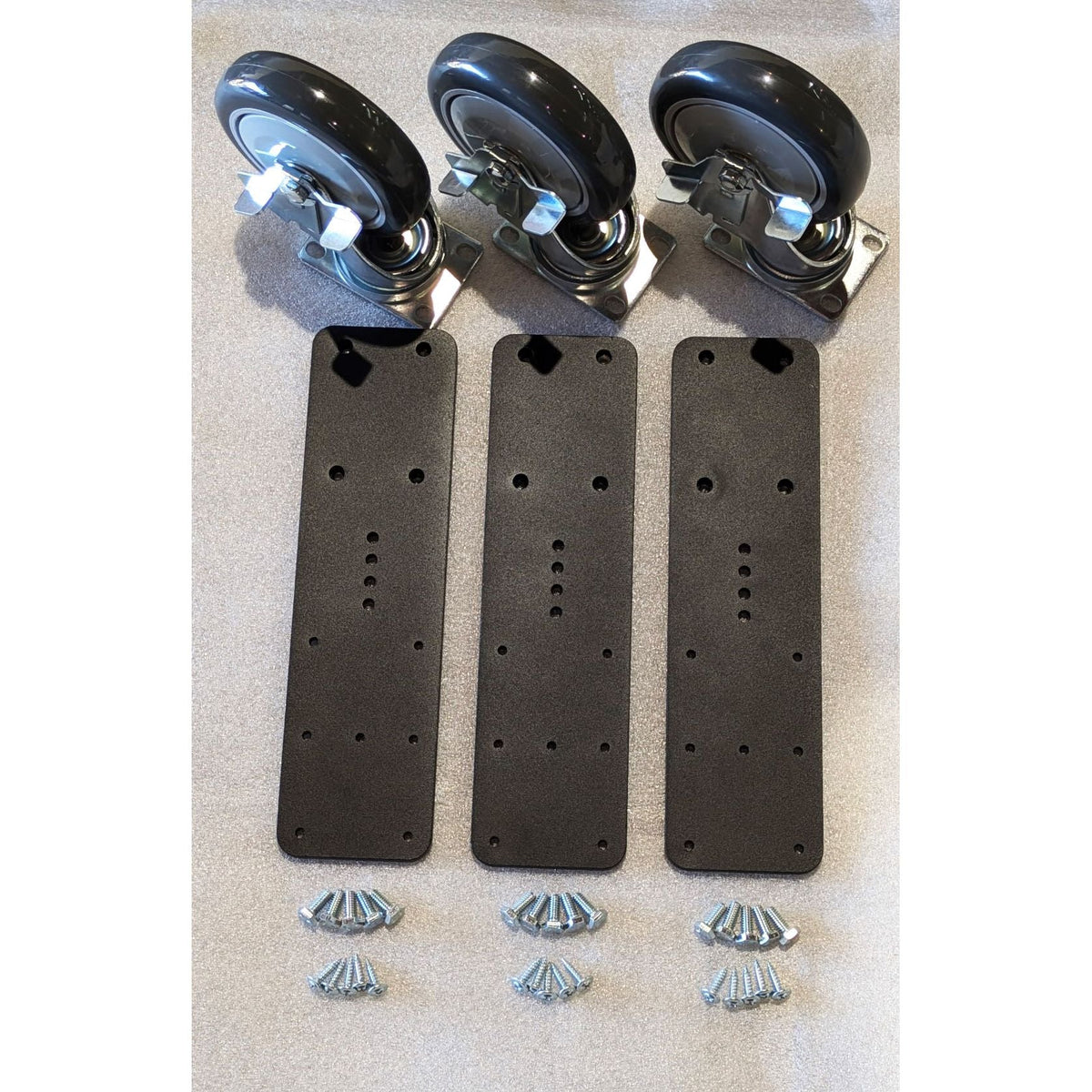
The JMI Ez-Glide Wheeley Kit puts casters on the Dobsonian itself rather than on a platform the scope has to be lifted onto. Three steel mounting plates bolt to the underside of the ground board and carry three 5″ Total Lock polyurethane casters, so the assembled telescope rolls from storage to the observing spot in one piece. The install also lifts the base about 7″, which raises the eyepiece by roughly the same amount. The kit is made in the USA by JMI.
Who It’s For
This is a good match if you…
- store a wooden-base Dobsonian indoors and roll it out to a driveway, patio or garage apron
- would rather not lift or disassemble an 8″ to 12″ Dob for every session
- want the eyepiece to sit about 7″ higher without changing the optical tube or base
- prefer a one-time permanent upgrade to a separate dolly that has to be stored alongside the scope
Key Features & Design
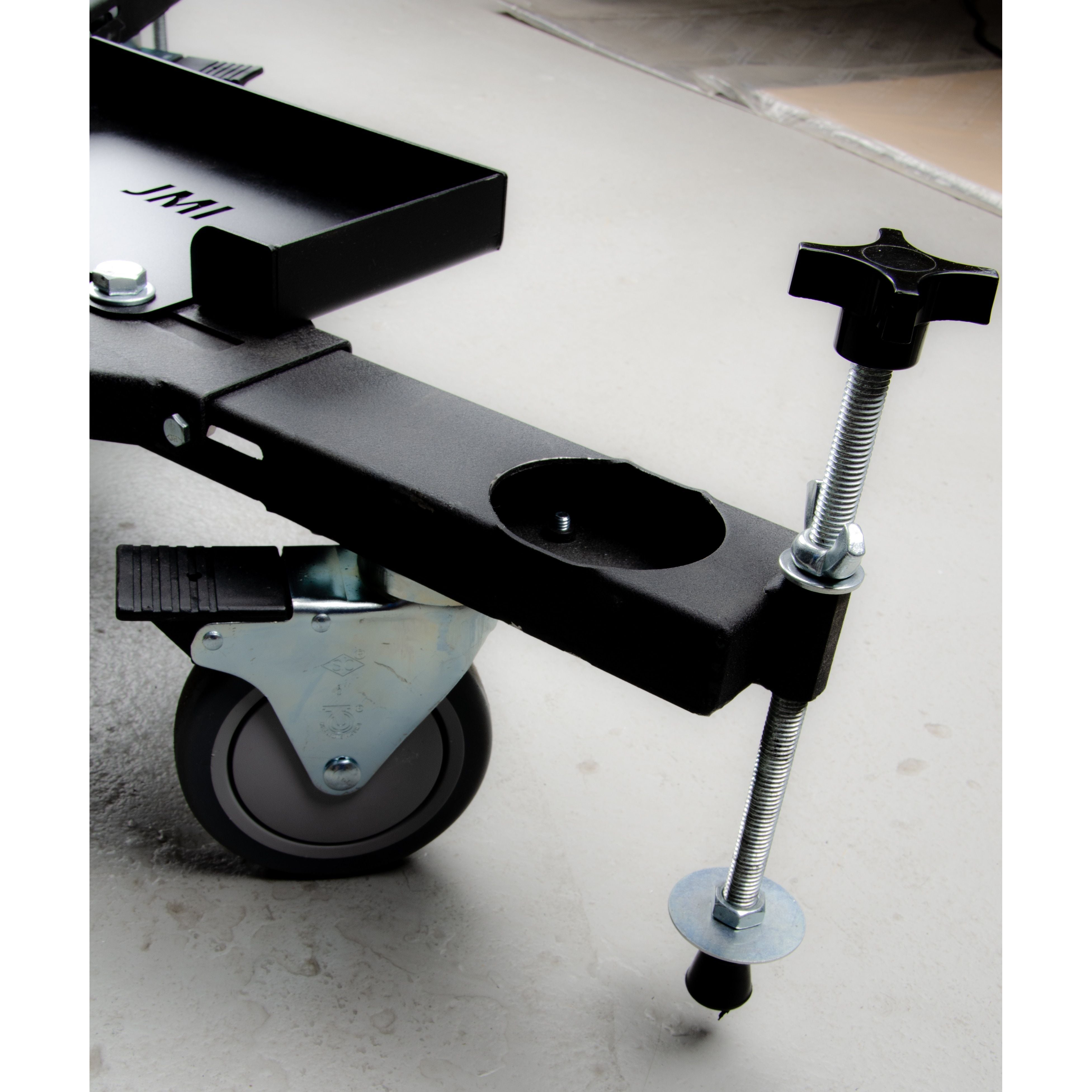
- Three 5″ Total Lock casters: a single lever locks both wheel rotation and swivel, so the base sits rigid once it is parked.
- Steel mounting plates: high tensile strength steel, roughly 2.7× stiffer than aluminum at the same weight, which keeps flex and vibration out of the tube.
- Powder-coat finish: UV-stable textured black powder coat on the plates for outdoor use.
- Multiple hole patterns: the plates carry several bolt patterns matched to the common GSO and Synta ground board layouts, so one kit spans many brands and apertures.
- Complete fastener set: self-tapping screws for the ground board and 1/4″-20 cap screws for the casters are included.
- Two hand tools: a Phillips screwdriver and a 7/16″ wrench cover the whole installation.
Mechanical Design
Each caster carries its load through a steel plate rather than directly through the wood of the ground board, which spreads the point load across the board and keeps the fastener heads from working loose. The Total Lock mechanism is the part that matters at the eyepiece: an ordinary caster brake stops the wheel but leaves the swivel free, so the base can still pivot under a hand on the tube. Locking the swivel as well removes that degree of freedom, which is what makes the kit usable at high magnification and for imaging from a fixed position. Polyurethane treads are chosen for hard surfaces — they roll quietly on concrete and do not mark floors.
Recommended Uses
- Moving a fully assembled Dobsonian from a garage or basement to a paved observing spot
- Repositioning the scope during a session to follow a target past a roofline or tree
- Public outreach and club nights on concrete pads, school lots and paved paths
- High-magnification lunar and planetary work, with all three casters locked
- Raising the eyepiece to a more comfortable standing or seated height on shorter Dobs
Compatibility and Accessory Notes
The Ez-Glide is built around the GSO and Synta ground board layouts, which covers most wooden-base Dobsonians sold today: Apertura AD series, Zhumell Z8, Z10 and Z12, Celestron Dobsonians including the StarSense Explorer models, Sky-Watcher Classic and Traditional Dobsonians, Orion SkyQuest and XT series, Meade LightBridge, and Antares Dobsonians. The requirement is a wooden ground board with the standard three-foot layout; metal or non-standard ground boards fall outside that pattern. Scopes that sit on a separate wheeled platform instead — encoder-equipped Dobs, or observers working on grass and gravel — are served by the Sky Trekker and Triangle Style Wheeley Bars rather than by this kit. If you are unsure which category your scope falls into, send us the model name and we will check it for you.
Good to Know Before You Order
- The kit is a permanent upgrade. The plates attach with self-tapping screws into the underside of the ground board. They can be backed out later, leaving small screw holes on a surface that is not visible in normal use.
- Polyurethane casters suit hard, smooth ground. Concrete, garage floors, pavement and indoor flooring roll well. Lawn, gravel, dirt and rough terrain are where 10″ pneumatic tires on the Sky Trekker series do better.
- Installation takes most observers under an hour. It is a bolt-and-screw job with two hand tools and no drilling of the optical tube.
- The eyepiece height gain is approximately 7″. The exact figure varies with the height of the original feet on a given base.
- Shipping weight is 40 lb. The kit ships as steel plates and casters, so the carton is heavier than its size suggests.
Frequently Asked Questions
Is it difficult to install?
It is a straightforward home installation. Three plates go onto the underside of the ground board with the included self-tapping screws using a Phillips screwdriver, and each caster bolts to its plate with the included 1/4″-20 cap screws using a 7/16″ wrench. Most observers finish in under an hour.
Will it fit my Dobsonian?
If the ground board is wood and uses the standard three-foot layout, the answer is almost always yes — the plates carry several hole patterns covering the GSO and Synta-built bases. Metal or non-standard ground boards are the exception, and we are glad to check a specific model for you.
How is this different from a Wheeley Bar?
The Ez-Glide bolts wheels onto the scope, so the wheels become part of the telescope. A Wheeley Bar is a separate wheeled platform that the assembled scope stands on. The Ez-Glide is the lower-cost route and adds about 7″ of eyepiece height; the Sky Trekker platforms add 10″ pneumatic tires and leveling screws instead.
What does Total Lock mean?
One lever locks the wheel and the swivel at the same time. A plain caster brake only stops the wheel turning and leaves the caster free to pivot, which lets the base shift under hand pressure at the focuser.
Can the casters roll on grass?
They are designed for hard, smooth surfaces. On lawn, gravel or dirt the 5″ polyurethane treads dig in and catch on irregularities, and pneumatic-tired platforms handle that ground far better.
Why steel plates rather than aluminum?
High tensile strength steel is about 2.7× stiffer than aluminum at the same weight. The extra stiffness keeps flex and vibration from travelling up into the optical tube, which shows most at high power and whenever a hand is on the focuser.
Bottom Line
In short: the Ez-Glide turns a wooden-base Dobsonian into a rolling telescope with three 5″ Total Lock casters and three steel plates, gains about 7″ of eyepiece height in the process, and installs in under an hour with a screwdriver and a 7/16″ wrench.
| Shipping weight | 40 lb |
|---|---|
| Casters | Three 5″ Total Lock polyurethane casters — one lever locks wheel rotation and swivel together |
| Mounting plates | Three high tensile strength steel plates, UV-stable textured black powder-coat finish |
| Plate stiffness | Steel, approximately 2.7× stiffer than aluminum at the same weight |
| Fasteners included | Self-tapping screws for the ground board; 1/4″-20 cap screws for the casters |
| Tools required | Phillips screwdriver and 7/16″ wrench |
| Eyepiece height gain | Approximately 7″ |
| Fits | Wooden-base Dobsonians with a standard three-foot ground board layout (GSO and Synta built) |
| Country of origin | United States |
You may also like
Recently viewed
Recent Blog Posts
View all
Your Guide Graph Is Lying to You
Read More
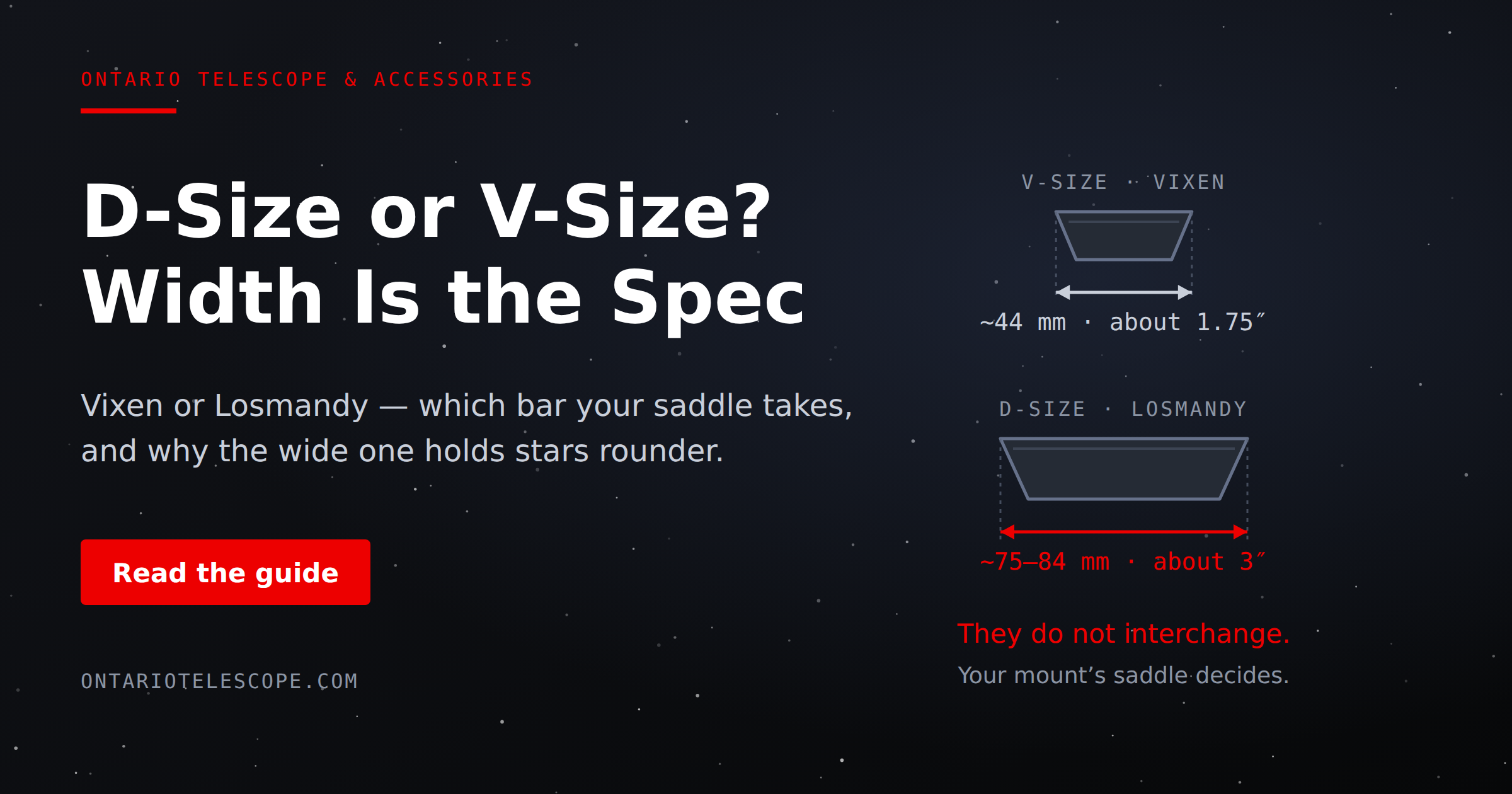
D-Size vs V-Size: A Complete Guide to Telescope Dovetail Systems
Read More
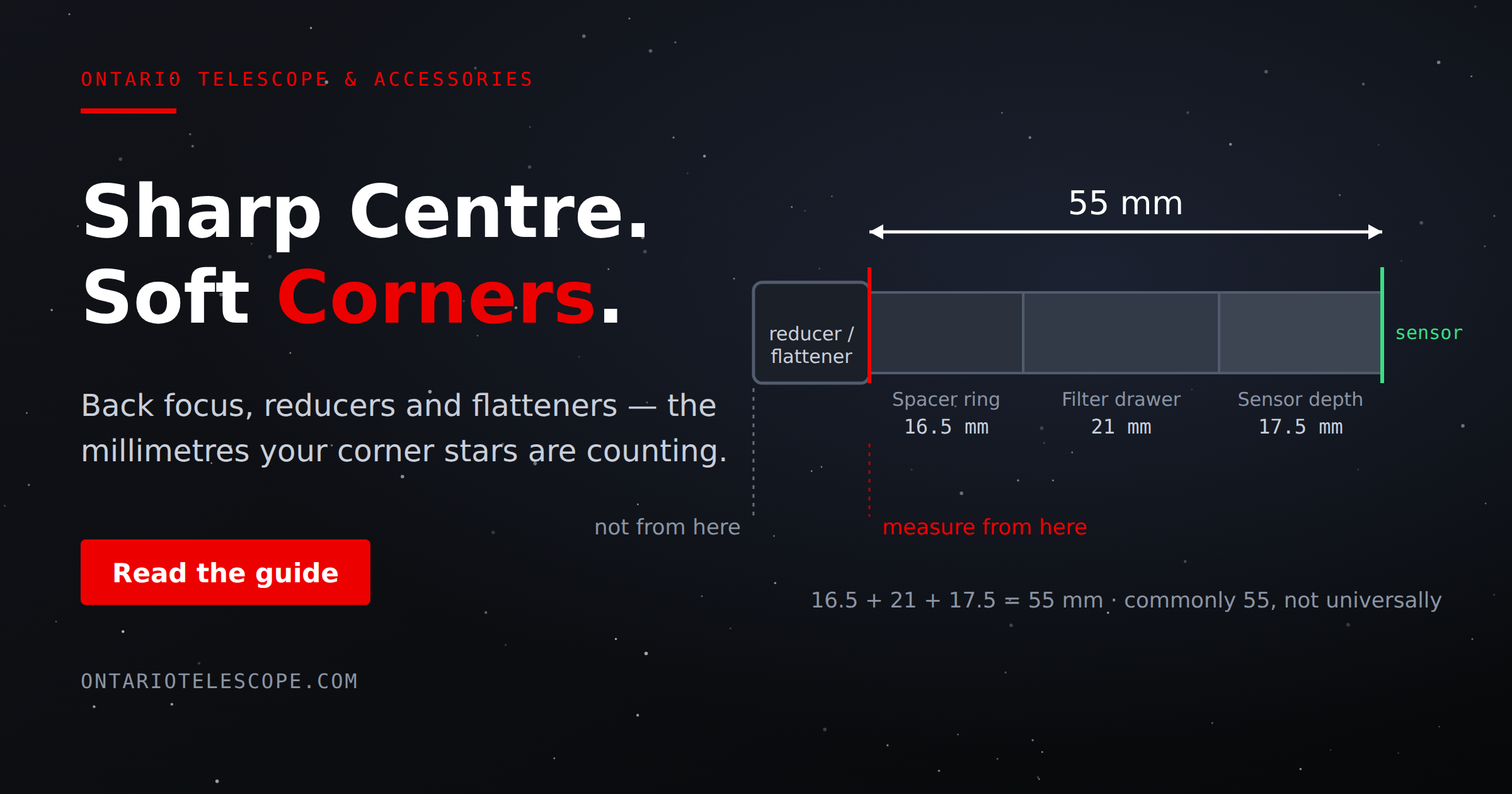
What Is Back Focus in Astrophotography? Telescope Reducers, Flatteners, and Spacing Explained
Read More