
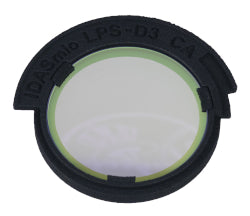


- Description
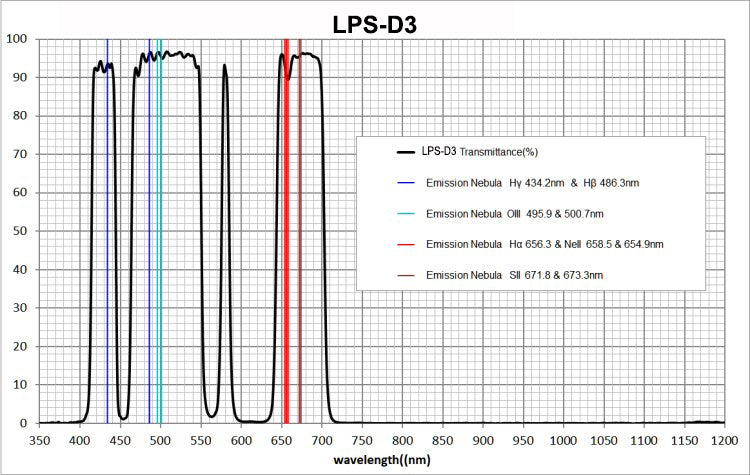
DAS LPS-D3 (formerly NGS1) light pollution suppression filters enhance the contrast of astronomical emission nebulae against a sky with both man-made and natural* sky glow sources, yet preserve color balance of broadband objects such as galaxies. As with other IDAS interference filters, the bandpasses are designed to accommodate the steep ray angles of fast optical systems.
- Ideal flat-top and moderate bandpass
- Excellent in-band transmission
- Steep bandpass edges minimize internal reflections
- Near IR (NIR) is blocked up to 1200nm
- Available in 52mm and 48mm sizes
- 2.5mm thickness (parfocal with other IDAS LPS filters)
- IDAS-proprietary IGAD/MBT/UFP quality
- Made in Japan
* Natural sky glow sources blocked include upper atmosphere oxygen and sodium lines which become visible from high-altitude, dark sky sites. See videos at the bottom of this page for background information on natural sky glow.
You may also like
Recently viewed
Recent Blog Posts
View all
Your Guide Graph Is Lying to You
You drove ninety minutes to dark sky, PHD2 held 0.4 arcseconds all night, and half your subs still have eggs for stars. Here are the three things your
Read More
Read More
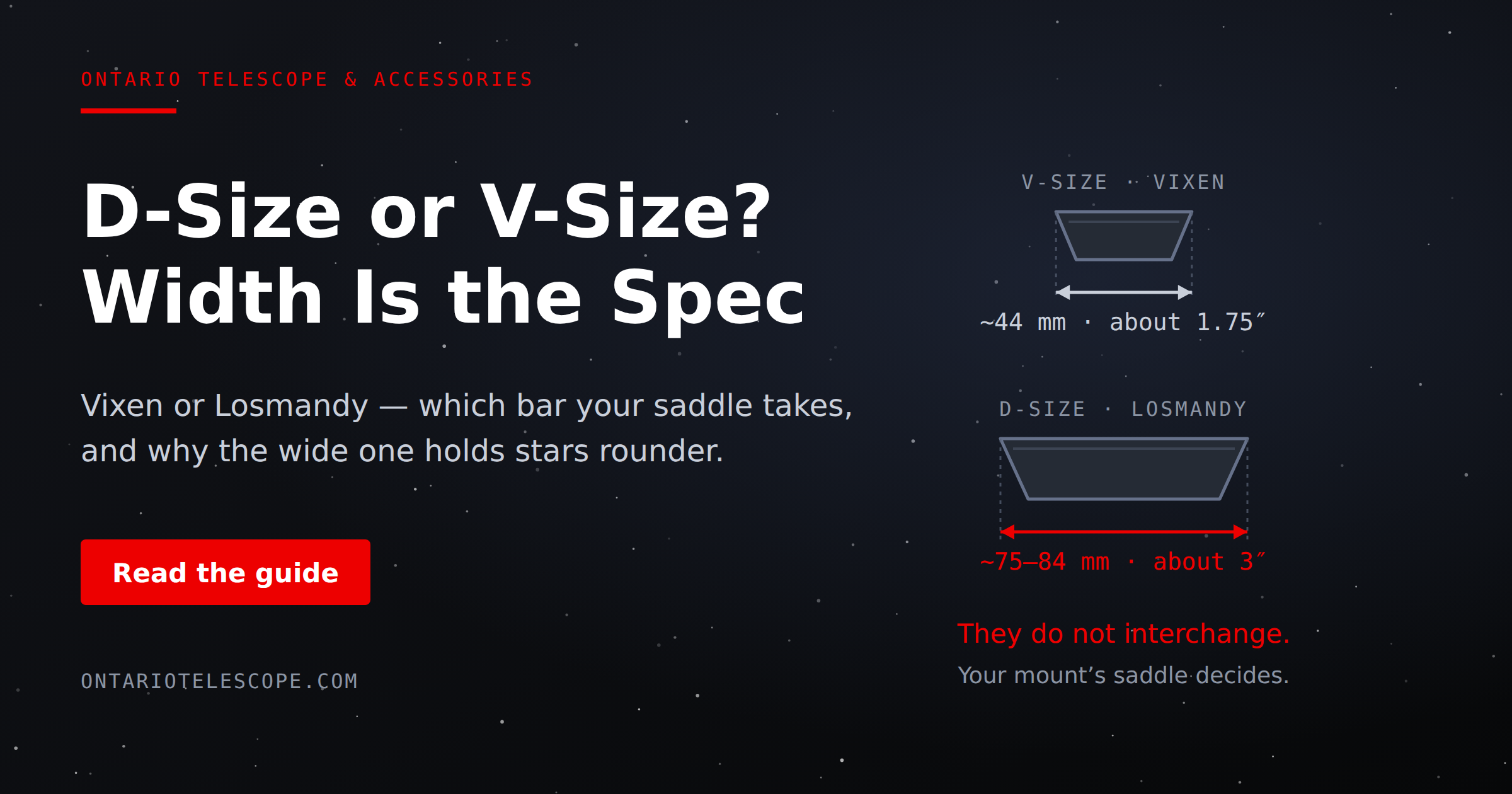
D-Size vs V-Size: A Complete Guide to Telescope Dovetail Systems
What's the difference between D-size and V-size telescope dovetails? Here's everything you need to know.
Read More
Read More
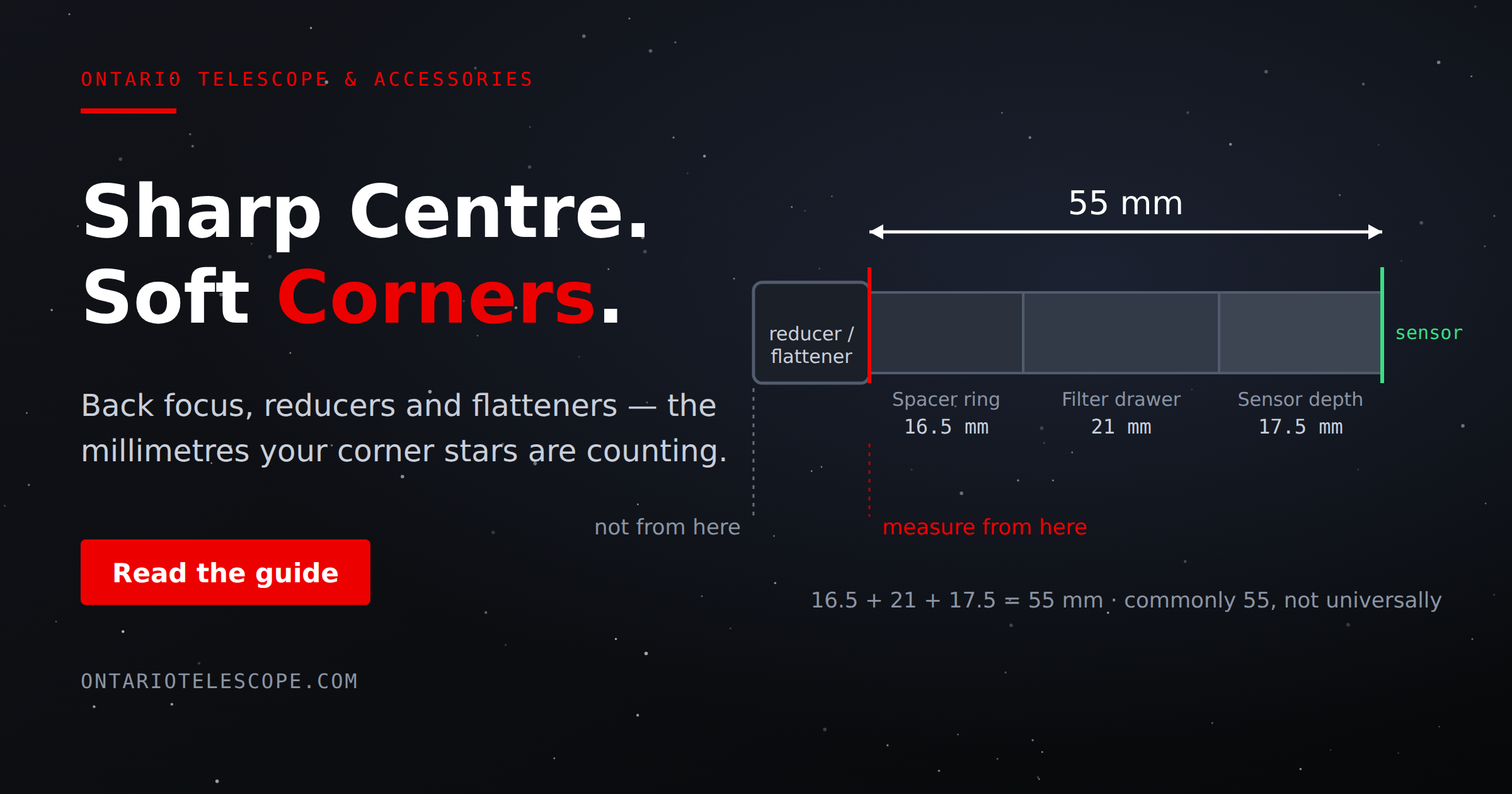
What Is Back Focus in Astrophotography? Telescope Reducers, Flatteners, and Spacing Explained
What Is Back Focus in Astrophotography? Telescope Reducers, Flatteners, and Spacing Explained
Back focus is one of those astrophotography terms that c
Read More
Read More