


- Description
- Specifications
At a Glance
- Aperture: 130 mm
- Focal length: 650 mm
- Focal ratio: f/5
- Optical design: Parabolic Newtonian, borosilicate primary
- Focuser: 1.25-inch helical
- Mount: Tabletop Dobsonian base, Teflon bearings
Product Overview
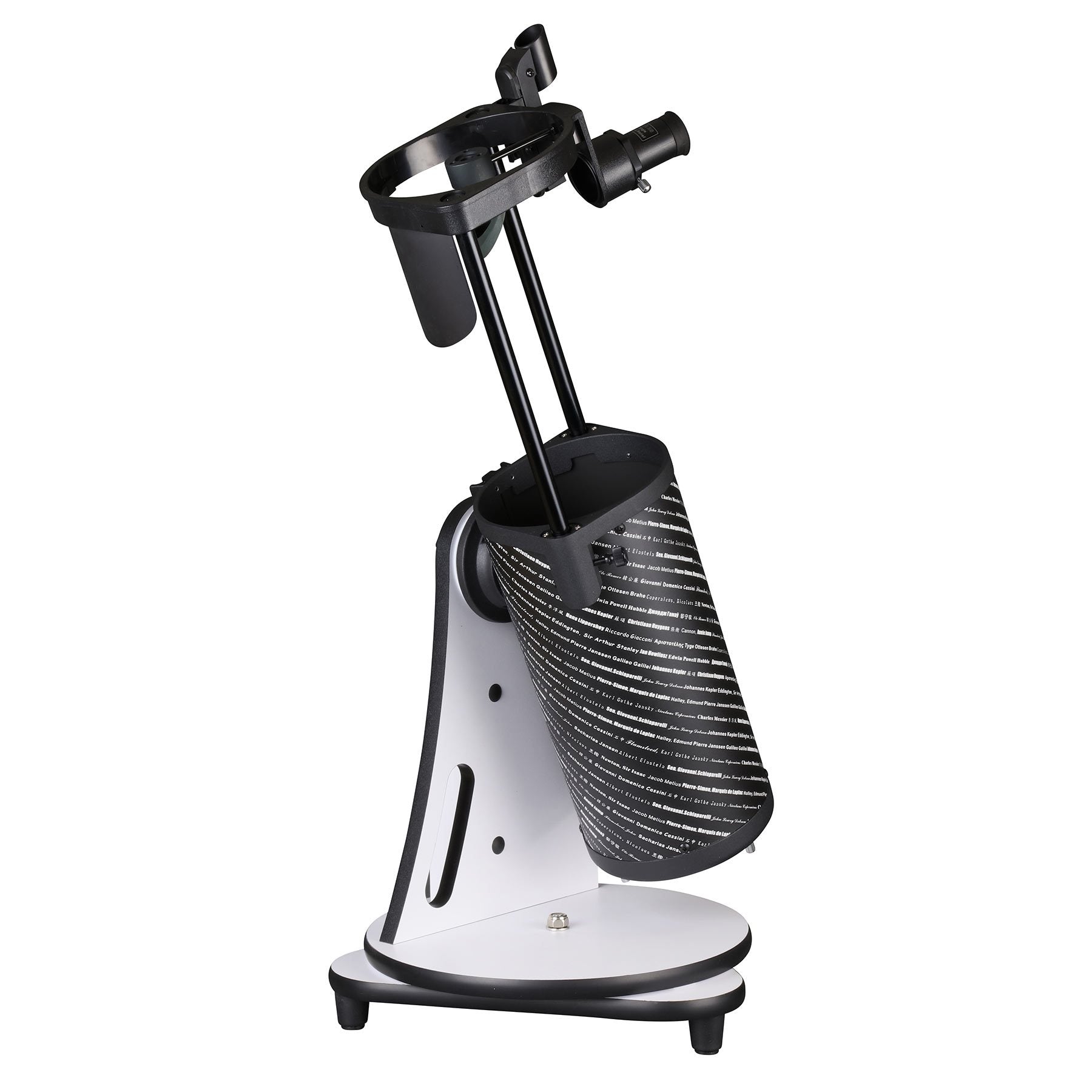
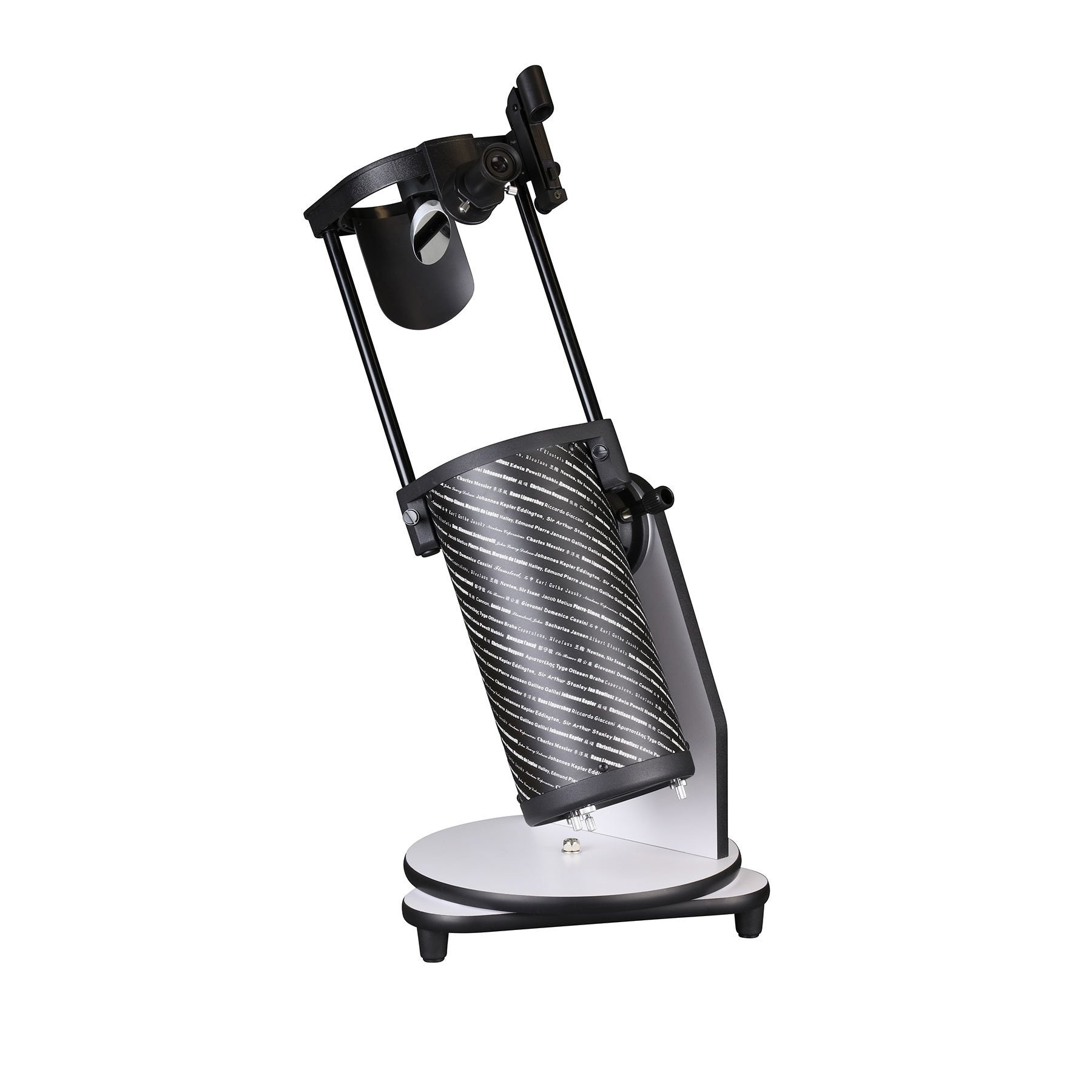
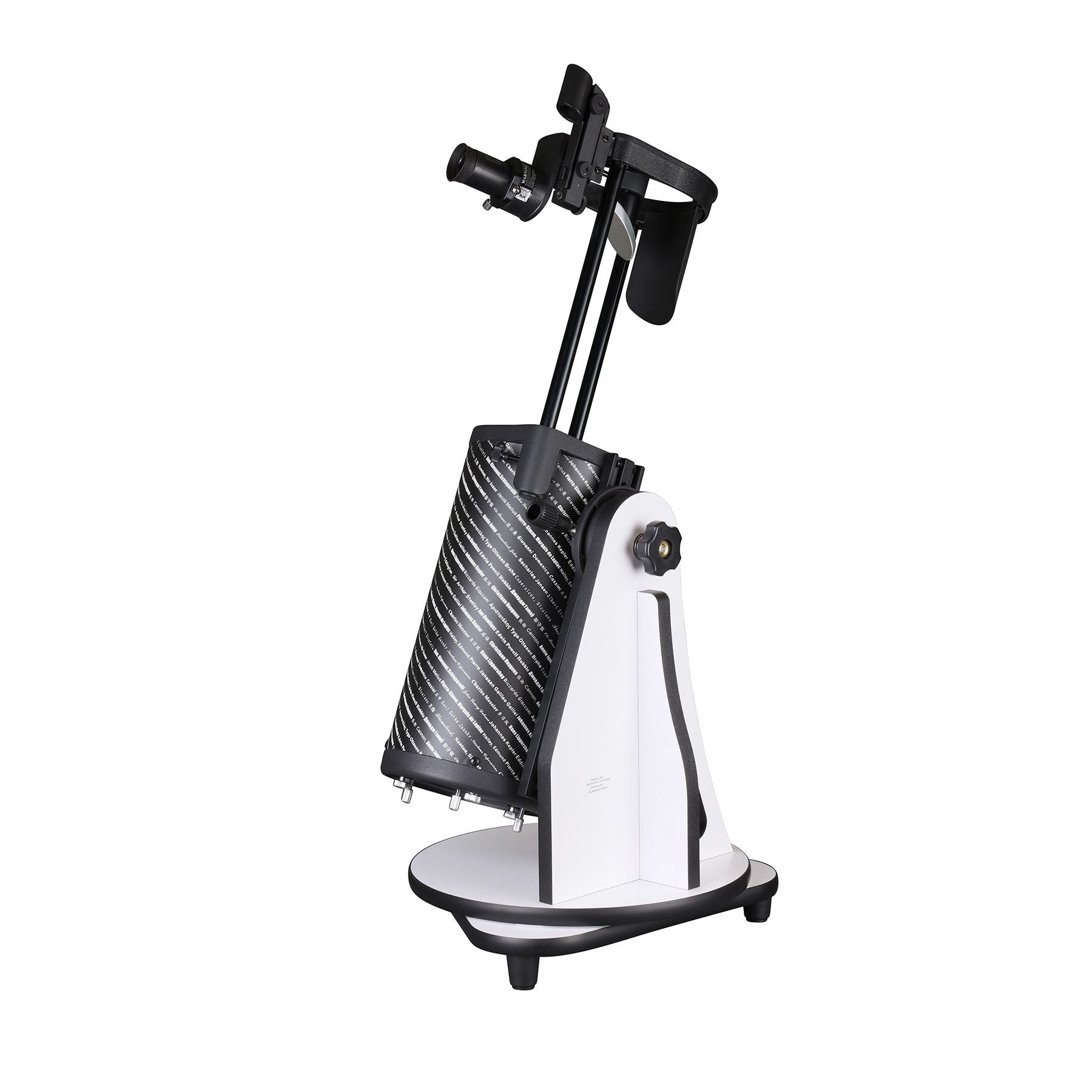
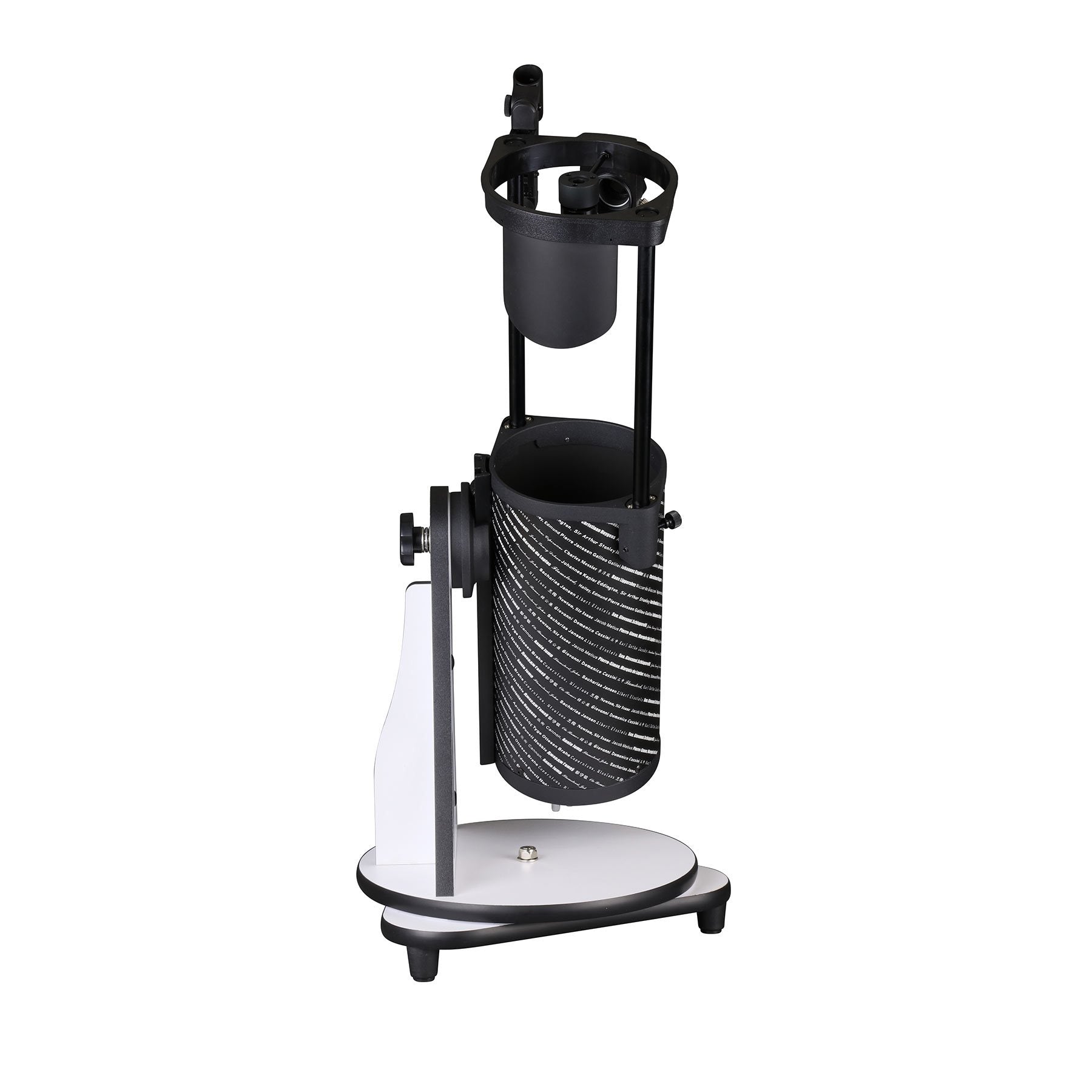
The Sky-Watcher Heritage 130 is a 130 mm f/5 tabletop Dobsonian with a tube that collapses for storage and transport. At 650 mm focal length it is a short, wide-field instrument, and the whole telescope sits on a compact azimuth base designed to be set on a table, a bench, a cooler lid, or a tailgate rather than on a tripod.
The primary is a parabolic borosilicate mirror with Sky-Watcher's Radiant Aluminum Quartz coating. Parabolic matters at this focal ratio: a spherical mirror at f/5 would show visible softness, and the parabola is what keeps stars tight across the field. The collapsing tube design retains collimation through the collapse, so packing it away is not something you pay for at the eyepiece afterwards.
Who It's For
This is a good match if you want a real telescope that lives somewhere accessible and gets used often. Aperture that sits in a cupboard by the door and comes out on a clear evening does more observing than a larger scope that requires a decision and a plan.
It suits camping, travel, cottages and balconies particularly well, since the base needs a flat surface rather than level ground and a tripod. It is also a sound choice as a first telescope: 130 mm shows lunar detail, the brighter planets, open and globular clusters, and the brighter nebulae and galaxies, and it does so without asking you to learn a control system first.
Key Features & Design
- Collapsible tube: the scope shortens for storage and travel and comes back to collimation on extension, so portability does not cost you optical alignment every time.
- Parabolic primary at f/5: the figure is correct for the focal ratio, so stars stay points rather than showing the softness a spherical mirror would produce at this speed.
- Radiant Aluminum Quartz coating: the quartz overcoat protects the soft aluminium layer beneath it, which matters on a scope that gets handled and transported rather than living in an observatory.
- Teflon bearings with an altitude locking knob: motion is smooth in both axes and the tube can be locked at a chosen altitude, so it holds position while several people take turns at the eyepiece.
- Rubber feet on the base: the pads resist skidding and damp vibration, so a nudge of the table does not end the view for several seconds afterwards.
- 650 mm focal length: low powers give genuinely wide fields, which suits large open clusters and makes finding objects without a computerised system considerably easier.
Optical / Mechanical Design
At 130 mm and 650 mm focal length the scope is f/5, which is fast for a beginner instrument and has two practical consequences. The useful one is field width: a given eyepiece delivers lower magnification and more sky than it would in a longer scope, which makes sweeping and star-hopping much more pleasant. The one to plan around is eyepiece behaviour, since fast focal ratios expose edge aberrations in inexpensive wide-angle eyepieces more readily than slow ones do.
The focuser is a 1.25-inch helical unit rather than a rack-and-pinion or Crayford. A helical focuser moves the eyepiece by rotating a threaded barrel, which is compact and light — appropriate for a tube this size — and gives fine control, though it takes a moment to get used to if you have used a knob-driven focuser before. It accepts 1.25-inch eyepieces only.
Recommended Uses
Lunar observing is where this scope makes an immediate impression: craters, terminator shadows and mountain ranges are well within reach. The brighter planets show their main features, with Jupiter's belts and moons and Saturn's rings clearly visible.
Wide-field deep-sky sweeping suits the short focal length — open clusters, the brighter globulars, the Orion Nebula, the Andromeda Galaxy and similar targets. It also works well for daytime and terrestrial viewing, and as a travel and camping telescope where its size and the tabletop base are the whole point.
Compatibility and Accessory Notes
The focuser takes 1.25-inch eyepieces. Because the scope is f/5, simpler eyepiece designs such as Plössls tend to perform better across the field than budget ultra-wide types, and a decent 1.25-inch eyepiece makes a visible difference here for modest money.
A collimation cap or laser collimator is worth having, as with any Newtonian. Nebula filters in 1.25-inch format work with the scope, though at 130 mm the brighter emission nebulae are where they earn their keep. The base needs a stable surface at a comfortable height — a small folding table or a sturdy stool works well, and many owners settle on one dedicated piece of furniture they keep with the scope.
If you would like help choosing eyepieces or a suitable table setup, tell us how and where you plan to observe and we will make some suggestions.
Good to Know Before You Order
It is a tabletop telescope and needs something to sit on. There is no tripod and no provision for one in the box. Any firm, flat surface at seated height works, and a folding camp table is the usual answer for field use. Worth arranging before the first clear night.
The focuser is 1.25-inch only. Two-inch eyepieces do not fit, so if you already own 2-inch oculars they will not carry over to this scope. The 1.25-inch range is large and inexpensive, so this limits the widest possible field rather than limiting your choices generally.
There is no tracking and no computerised pointing. You find objects yourself and nudge the tube to follow them, which at these magnifications is easy and quickly becomes automatic. If you want the scope to locate and follow targets, the Virtuoso GTi 130P is the same aperture class with a motorised GoTo base.
It is not built for astrophotography. The mount is alt-azimuth and undriven, so the field rotates and objects drift. Afocal snapshots of the Moon through the eyepiece with a phone work well and are genuinely satisfying; anything beyond that needs different equipment.
Frequently Asked Questions
Is it difficult to set up?
No, and this is one of the easiest telescopes to get observing with. Put the base on a table, extend the tube until it locks, insert an eyepiece, and you are looking. There is no alignment procedure, no power, and no software.
What can I actually expect to see?
Lunar craters in detail, Jupiter's cloud belts and its four bright moons, Saturn's rings, and the phases of Venus. On deep-sky objects, open clusters resolve nicely, the brighter globulars show granularity, and objects like the Orion Nebula and Andromeda are clear from a reasonably dark site. Faint galaxies remain faint smudges — that is aperture, not this scope specifically.
Do I need a special table?
No, but a stable one helps. Height is what matters most, since it determines whether you observe comfortably seated. A folding table or a solid stool is what most owners use, and the rubber feet on the base handle the rest.
How does it compare to the Virtuoso GTi 130P?
Same aperture class and the same collapsible tabletop concept. The Virtuoso adds a motorised GoTo base with Wi-Fi control, so it finds and tracks objects for you, and it costs more. If part of the appeal is learning the sky yourself, the Heritage does the observing just as well.
Will my 2-inch eyepieces fit?
No — the helical focuser is 1.25-inch. If you are moving up from another scope and own 2-inch eyepieces, they will not transfer to this one.
Does collapsing it upset the collimation?
The design is built to return to alignment on extension, so routine collapsing is not what knocks it out. Like any Newtonian it benefits from an occasional check with a collimation cap, which is a two-minute job once you have done it once.
Bottom Line
In short: a 130 mm f/5 parabolic Newtonian on a collapsible tabletop Dobsonian base, taking 1.25-inch eyepieces and needing nothing but a table to observe from. It is built to be easy to store, easy to carry, and easy to start using on the first clear evening.
- 130mm Collapsible optical tube
- 650mm (f/5)
- Table top dobsonian mound with carryhandle
- 25mm and 10mm 1.25" Super eyepieces
- 1.25" Helical focuser
- Red dot finder
You may also like
Recently viewed
Recent Blog Posts
View all
Your Guide Graph Is Lying to You
Read More

D-Size vs V-Size: A Complete Guide to Telescope Dovetail Systems
Read More

What Is Back Focus in Astrophotography? Telescope Reducers, Flatteners, and Spacing Explained
Read More