


- Description
- Specifications
Product Overview
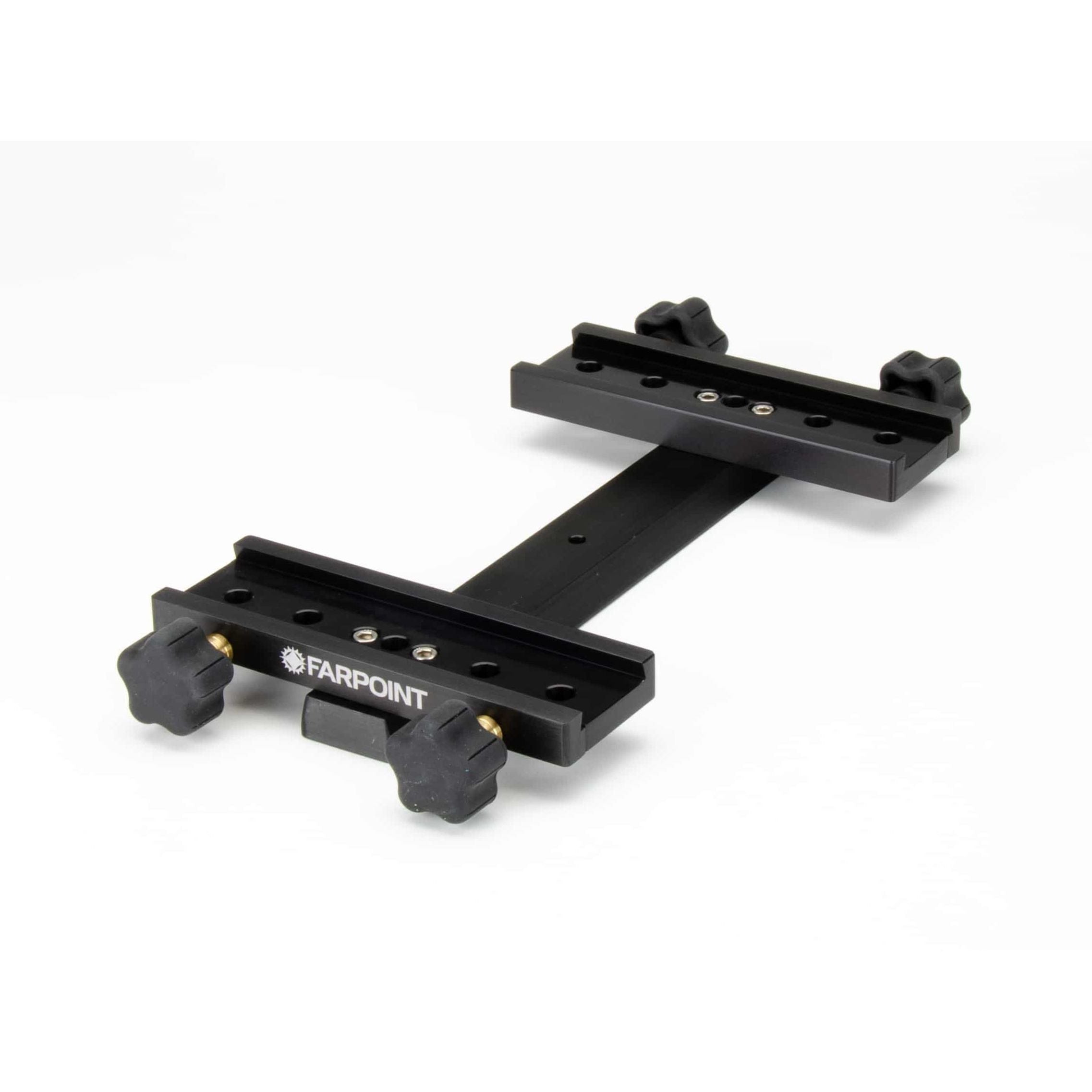
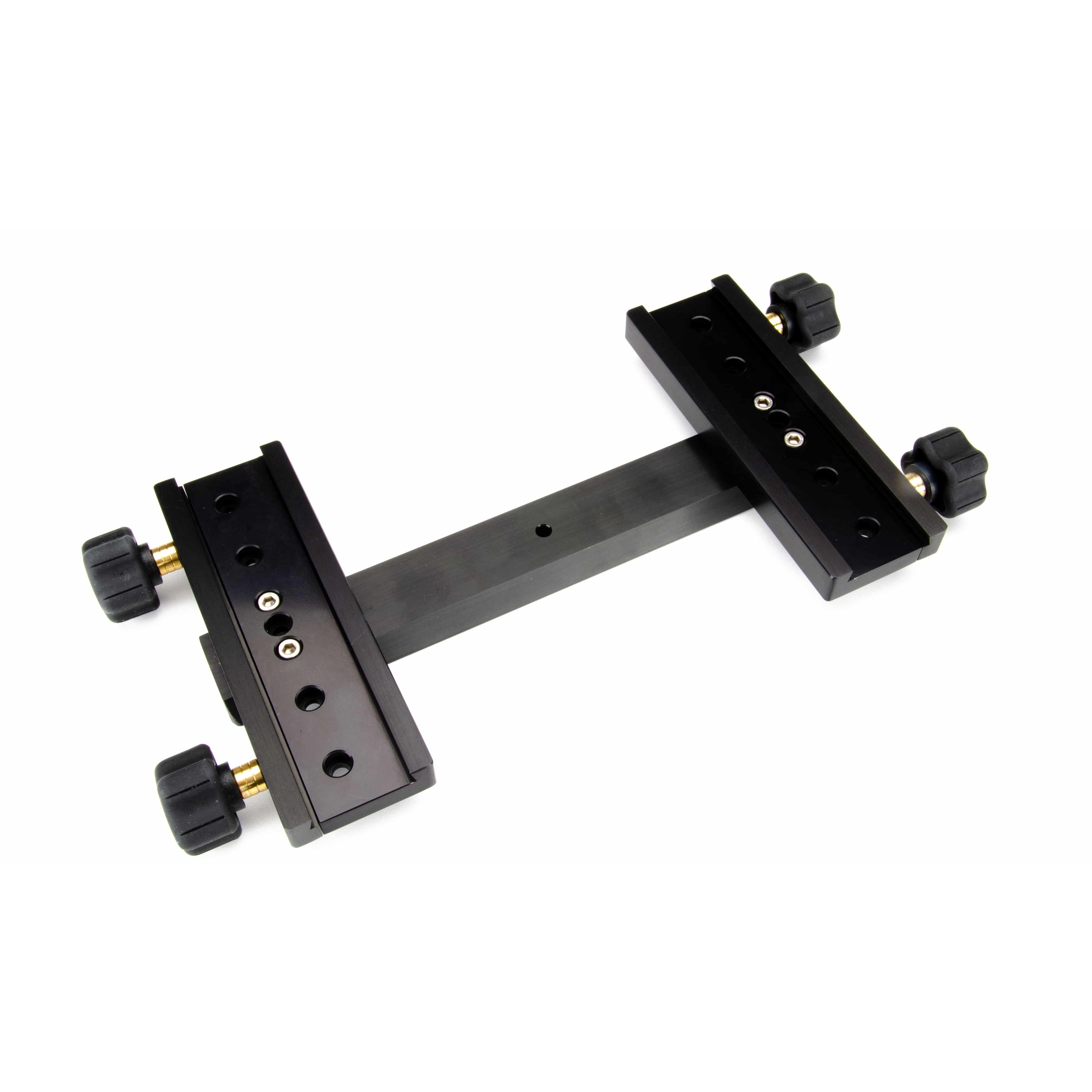
The Farpoint FVSBS carries two telescopes on one mount. A 12″ Vixen-style dovetail bar has two Farpoint V-size saddles mounted on it, so two optical tubes ride side by side where one used to sit. The bar itself is a V-size dovetail and drops into the mount's own Vixen saddle, while the two saddles above each clamp a telescope's V-size bar. Machined from aluminum with a black anodized finish, CNC-machined in the USA, and listed at 3.25 lb.
Who It's For
This is a good match if you…
- want an imaging scope and a guide scope on the same mount without stacking them
- pair a widefield refractor with a longer focal length tube and switch between them in a session
- observe visually through one telescope while the other images
- run a mount with a V-size saddle and want to use the capacity you already have
Key Features & Design
- 12″ connecting bar: the span that sets how far apart the two tubes sit and where each one balances.
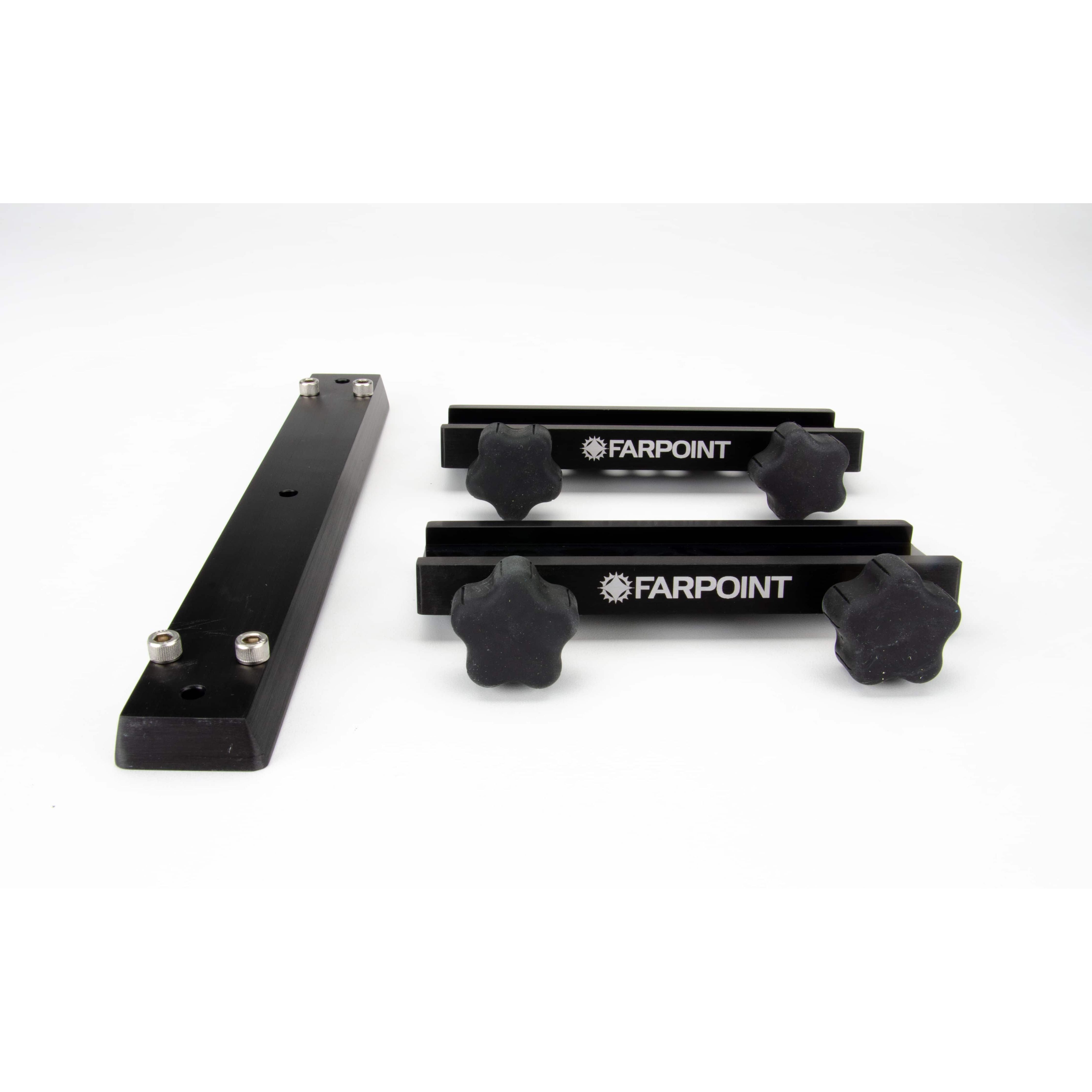
- Two Vixen saddles included: both Farpoint V-size saddles arrive mounted on the bar.
- Bar is itself a dovetail: the connecting bar is V-size, so it seats directly in the mount's Vixen saddle.
- Independent clamping: each saddle holds its own tube, so one can be removed without disturbing the other.
- Black anodized aluminum: a non-reflective finish over machined aluminum.
- CNC-machined in the USA: saddle spacing and dovetail angles repeat unit to unit.
Mechanical Design
A side-by-side arrangement moves the second tube out along a horizontal bar rather than stacking it above the first. That keeps both optical axes at a similar height above the mount head, which makes the pair easier to balance in both axes, and it avoids the long moment arm a piggybacked scope creates. The 12″ bar sets the separation between saddles; each tube can then be slid fore and aft in its own saddle to trim the balance. Because the connecting bar is a V-size dovetail on its underside, the whole assembly is removed from the mount the same way a single telescope would be.
Recommended Uses
- Running an imaging scope alongside a dedicated guide scope
- Pairing a widefield refractor with a planetary or long focal length tube for a mixed session
- Visual observing through one telescope while the other collects images
- Comparing two optical tubes on the same target under the same tracking
Compatibility and Accessory Notes
Everything on this assembly works to the V-size (Vixen) standard. The underside bar drops into any mount saddle cut for a Vixen dovetail, and each of the two upper saddles takes a telescope carried on a V-size bar. Tubes on a D-size (Losmandy) bar call for a D-to-V adapter assembly before they will seat, and mounts with a D-size saddle take a V-to-D adapter saddle beneath the bar. Farpoint also sells the connecting bar on its own for astronomers who already own a pair of Vixen saddles. If you are unsure whether your two tubes and your mount will work together on this bar, tell us which telescopes and mount you have and we'll confirm the fit.
Good to Know Before You Order
- Payload adds up. Two optical tubes plus the 3.25 lb bar assembly all count against the mount's rated capacity, and a side-by-side load sits further from the mount axis than a single tube.
- V-size throughout. Both saddles and the connecting bar are Vixen standard; D-size bars and saddles need adapters.
- Fixed 12″ span. The bar length sets the maximum separation between the two tubes, which limits how large a pair can sit alongside each other without touching.
- Balance in two axes. An off-centre pair loads the declination axis as well as the right ascension axis, so counterweighting takes both into account.
- Bar only is a separate item. This listing includes both saddles; the connecting bar is also sold on its own.
Frequently Asked Questions
Is it difficult to set up?
The assembly drops into the mount's Vixen saddle as a single unit, and each telescope then clamps into its own saddle on top. The main work is balancing the pair afterwards, in both the right ascension and declination axes.
How does it attach to my mount?
The 12″ connecting bar is itself a Vixen-style dovetail, so it seats in the mount's V-size saddle just as a single telescope would. The two saddles above then each clamp a telescope's V-size bar.
What would I use a side-by-side rig for?
Anywhere two optical tubes serve better than one: an imaging scope with a guide scope alongside, a widefield refractor paired with a long focal length tube, or visual observing through one while the other images.
Can I buy just the bar?
Yes. Farpoint sells the Side by Side Connecting Bar, the same bar and screws without the two saddles, for astronomers who already own Vixen saddles.
Will a Losmandy-bar telescope fit?
The saddles are V-size, so a D-size bar calls for a D-to-V adapter between tube and saddle.
Bottom Line
In short: a 12″ Vixen-standard connecting bar with two V-size Farpoint saddles already mounted, carrying two telescopes on one mount, machined in the USA and weighing 3.25 lb.
| Configuration | 12″ connecting bar with two Vixen-style (V-size) saddles — mounts two telescopes side by side |
|---|---|
| Bar standard | V-size (Vixen-style) — the bar drops into the mount's V-size saddle |
| Saddles | Two Farpoint Vixen-style saddles, mounted |
| Material | Black anodized aluminum |
| Weight | 3.25 lb |
| Construction | CNC-machined in the USA |
| Country of origin | United States |
You may also like
Recently viewed
Recent Blog Posts
View all
Your Guide Graph Is Lying to You
Read More

D-Size vs V-Size: A Complete Guide to Telescope Dovetail Systems
Read More

What Is Back Focus in Astrophotography? Telescope Reducers, Flatteners, and Spacing Explained
Read More