


- Description
- Specifications
Product Overview
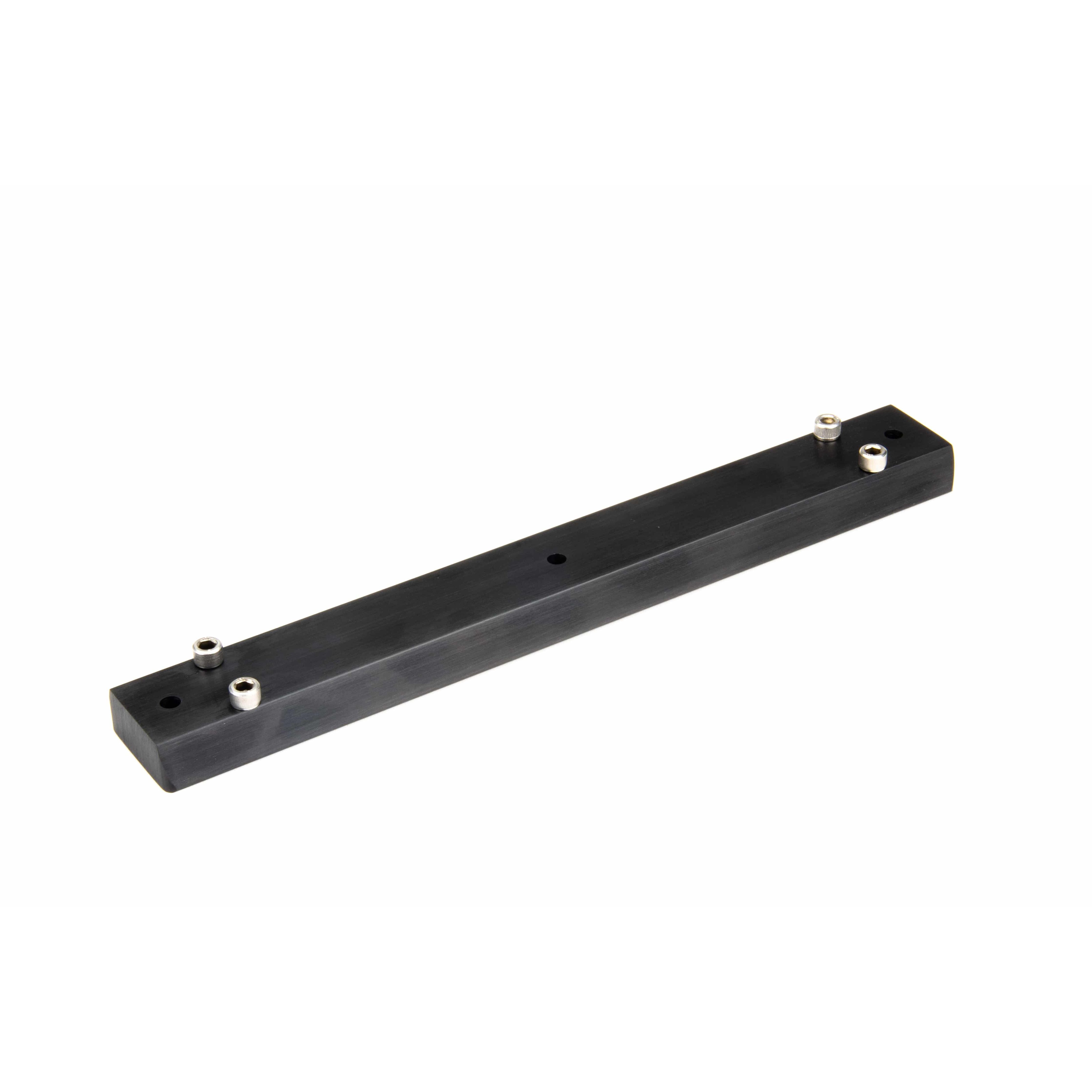
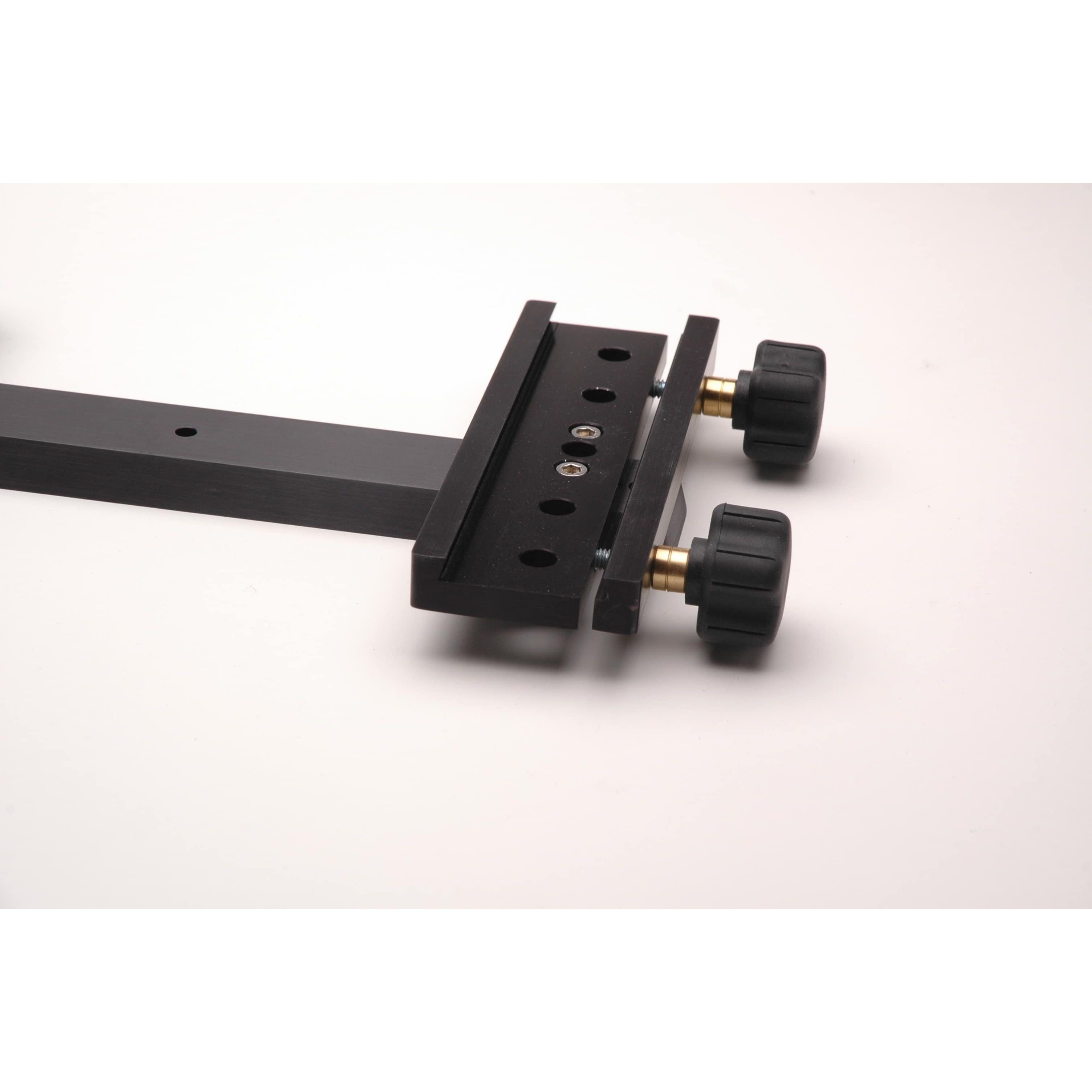
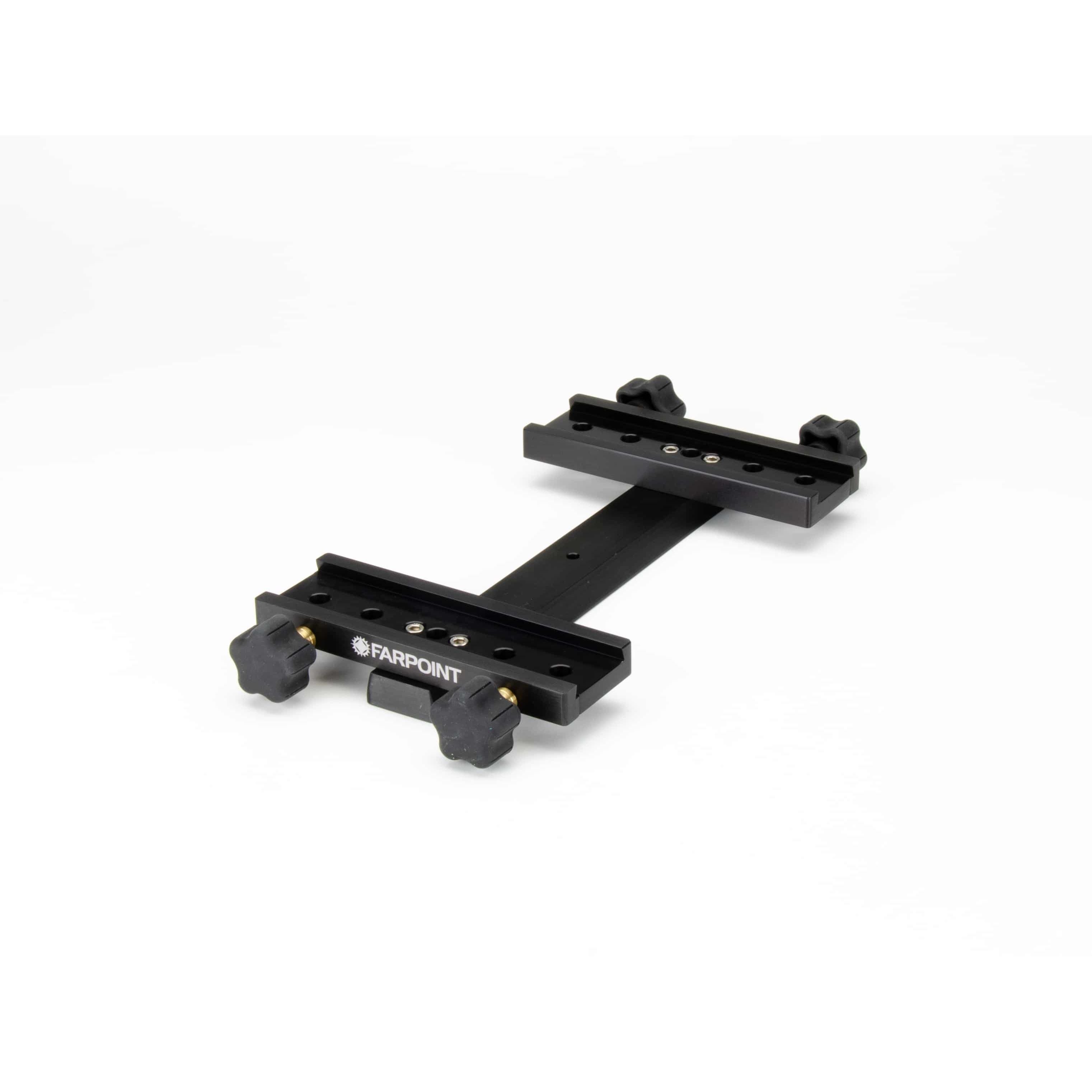
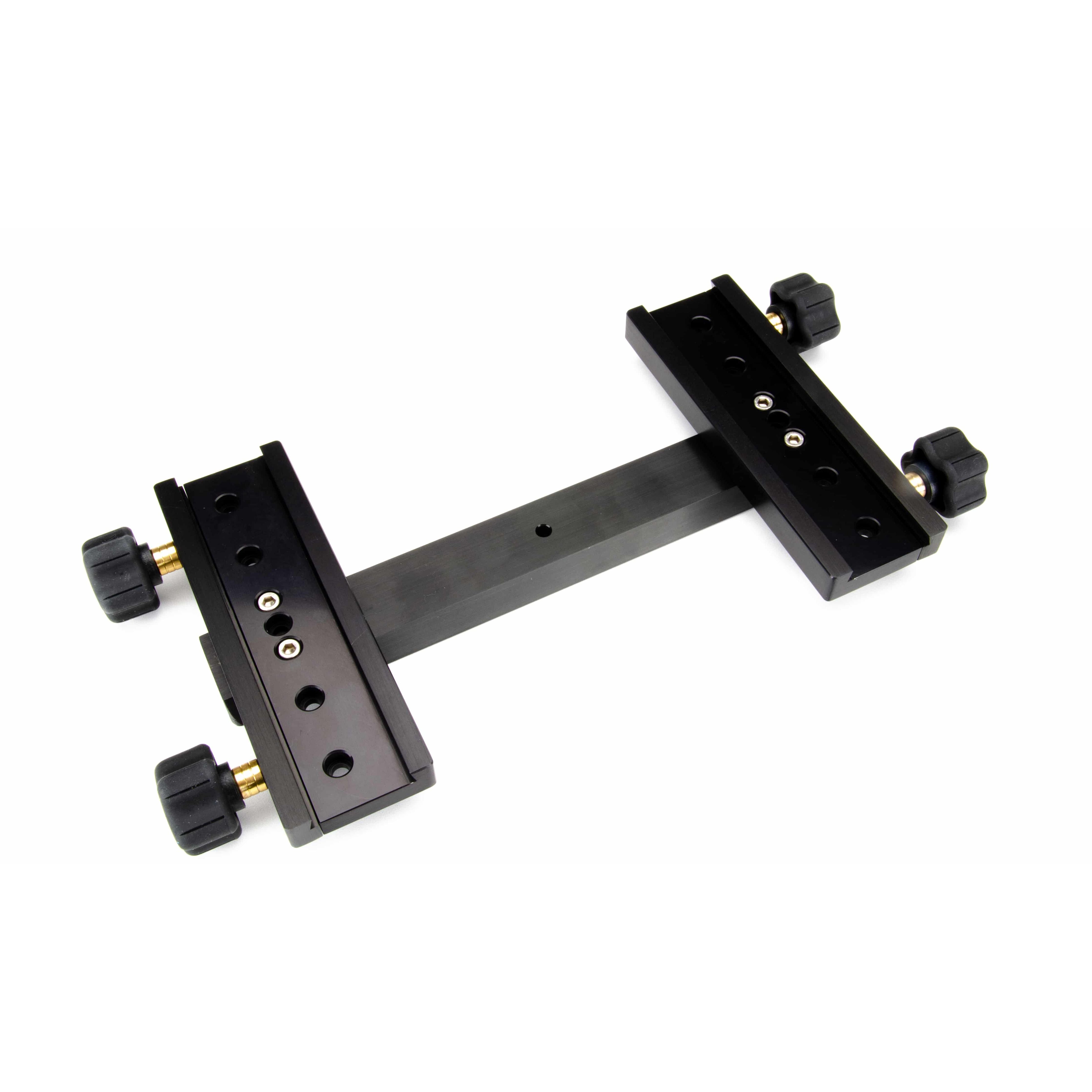
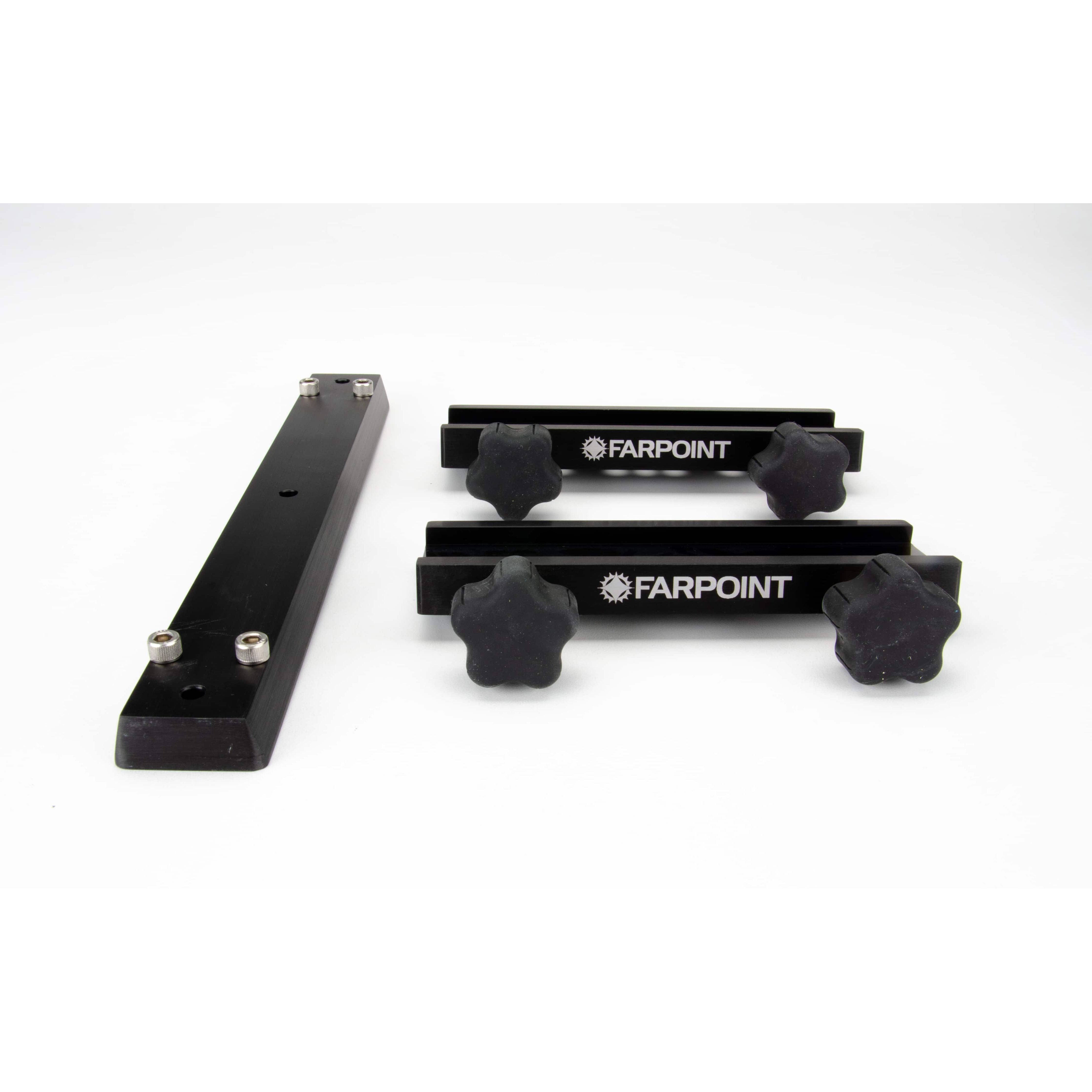
The Farpoint FVSBS-Bar is the 12″ connecting bar and screws from the Farpoint Vixen Side by Side Dovetail Saddle, supplied on its own. It is the structural piece of a two-telescope rig: the bar is itself a V-size (Vixen-style) dovetail that drops into the mount's saddle, and two Vixen saddles bolt to its upper face to hold a telescope each. CNC-machined in the USA, it ships at 3.25 lb.
Who It's For
This is a good match if you already own two Farpoint Vixen saddles and want the side-by-side arrangement without paying for saddles a second time. It also suits a rig being reconfigured — a guide scope and an imaging scope moving from a stacked arrangement to a side-by-side one, or a pair of shorter tubes that balance better across the declination axis than in line with it.
Key Features & Design
- 12″ span: enough width to set two tubes apart without their dew shields or focusers meeting.
- Bar and screws only: the connecting bar and its fasteners, supplied without the two saddles.
- V-size dovetail underside: the bar drops straight into a Vixen-style saddle on the mount.
- Saddle mounting face: drilled to take Farpoint Vixen saddles on the upper surface.
- CNC-machined in the USA: cut to the same program as the complete side-by-side saddle.
Mechanical Design
A side-by-side arrangement moves both payloads off the mount's optical axis, which changes what the connecting piece has to resist. Rather than bending along its length as a single-tube bar does, this bar works mainly in torsion — each tube applies a moment about the bar's long axis, and the two moments oppose each other only when the payloads balance. The 12″ span sets how far apart those loads act and therefore how much counterweight and declination adjustment the rig needs. The bar's own dovetail underside keeps the whole assembly a single V-size interface to the mount, so the side-by-side structure is carried in the saddle jaws the same way one telescope would be.
Recommended Uses
- Running an imaging telescope and a guide scope beside one another rather than stacked.
- Pairing a refractor with a wide-field camera lens or a second short tube on one mount.
- Rebuilding a side-by-side rig from Vixen saddles already in the accessory box.
- Visual sessions where two tubes of different focal lengths stay ready at once.
Compatibility and Accessory Notes
The bar's underside is the V-size (Vixen-style) dovetail — the narrower of the two common standards — and it drops into any mount saddle cut for V-size. The upper face takes two Farpoint Vixen saddles, such as the Sure Grip Vixen Dovetail Saddle; those saddles are separate items and are not part of this package. Each saddle then clamps its own telescope's V-size bar. A mount with only a D-size (Losmandy-style) saddle takes a V-to-D adapter, or a D-size version of the side-by-side arrangement. If you'd like the saddles you already own checked against this bar's hole pattern, we're glad to look at it before you order.
Good to Know Before You Order
- Saddles are not included. The package is the connecting bar and its screws; the two Vixen saddles that hold the telescopes are bought separately.
- The complete version exists. The Farpoint Vixen Side by Side Dovetail Saddle ships as the bar and both saddles assembled, for a setup starting from nothing.
- V-size interface. Both the bar's underside and the saddles it carries work to the Vixen standard rather than the wider D-size one.
- Balance shifts in two axes. Two payloads set 12″ apart call for declination balancing as well as the usual counterweight adjustment.
- Shipping weight. 3.25 lb of aluminum, added to the mount's payload before either telescope goes on.
Frequently Asked Questions
What exactly is included?
The side-by-side connecting bar and its screws. The two Vixen saddles are not part of this package.
How does it attach to my mount?
The connecting bar is itself a Vixen-style dovetail, so it drops into the mount's V-size saddle exactly as a single telescope's bar would. The two saddles added on top then each clamp a telescope.
Is it difficult to set up?
The saddles bolt to the bar with the supplied screws on a bench, and the finished assembly drops into the mount as one piece. The longer part of the job is balancing the two payloads afterwards, in both the right ascension and declination axes.
Should I buy this or the complete version?
This bar suits someone who already owns two Vixen saddles. Starting with neither, the complete Side by Side Saddle arrives with both saddles fitted.
Bottom Line
In short: the 12″ V-size connecting bar and screws at 3.25 lb, machined in the USA — the side-by-side structure on its own, for Vixen saddles you already have.
| Configuration | 12″ side-by-side connecting bar — mounts two Vixen saddles for a two-telescope rig |
|---|---|
| Includes | Connecting bar and screws only — saddles not included |
| Dovetail standard | V-size (Vixen-style) — the bar drops into your mount's V-size saddle |
| Length | 12″ |
| Construction | CNC-machined in the USA |
| Weight | 3.25 lb |
| Country of origin | United States |
You may also like
Recently viewed
Recent Blog Posts
View all
Your Guide Graph Is Lying to You
Read More

D-Size vs V-Size: A Complete Guide to Telescope Dovetail Systems
Read More

What Is Back Focus in Astrophotography? Telescope Reducers, Flatteners, and Spacing Explained
Read More