


- Description
- Specifications
Product Overview
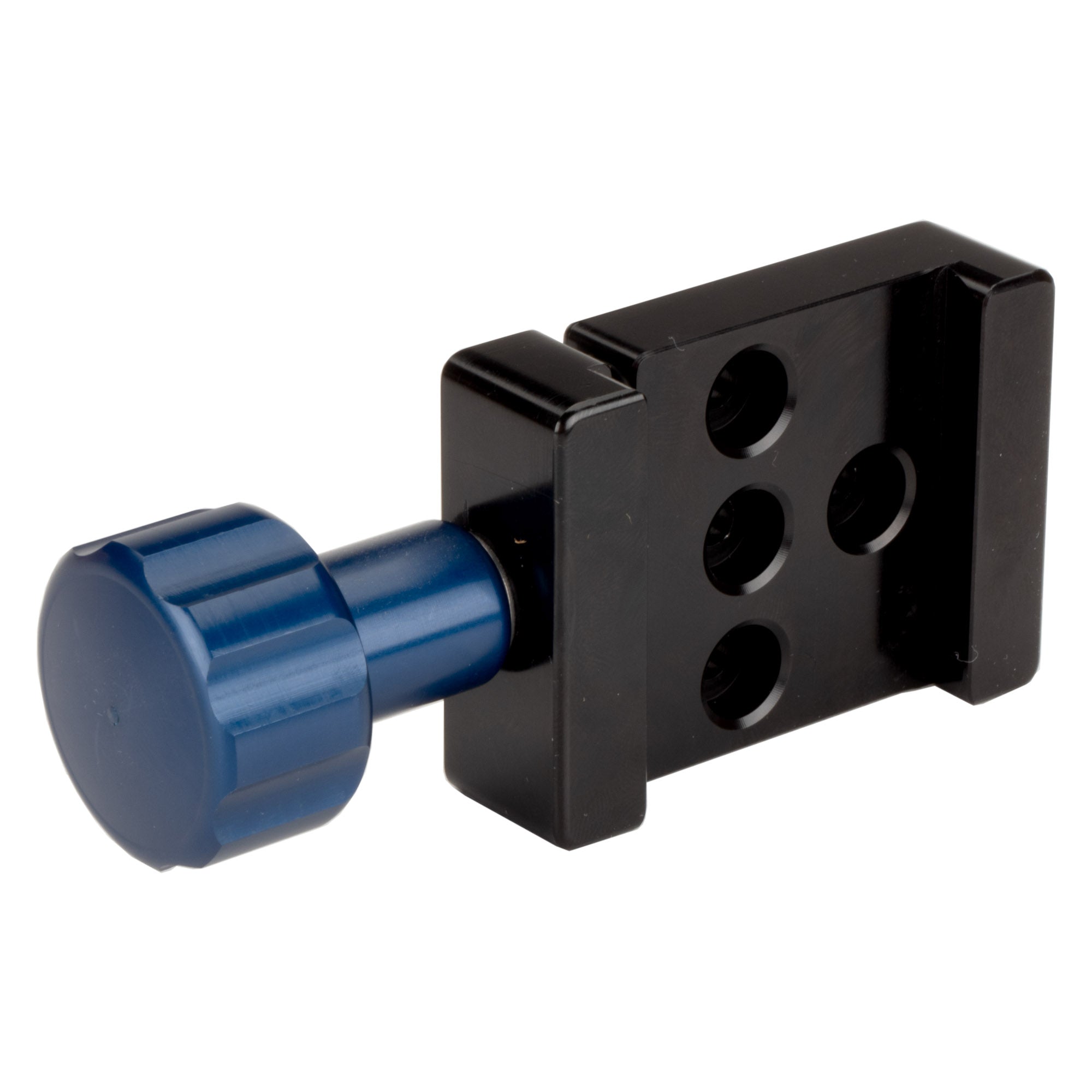
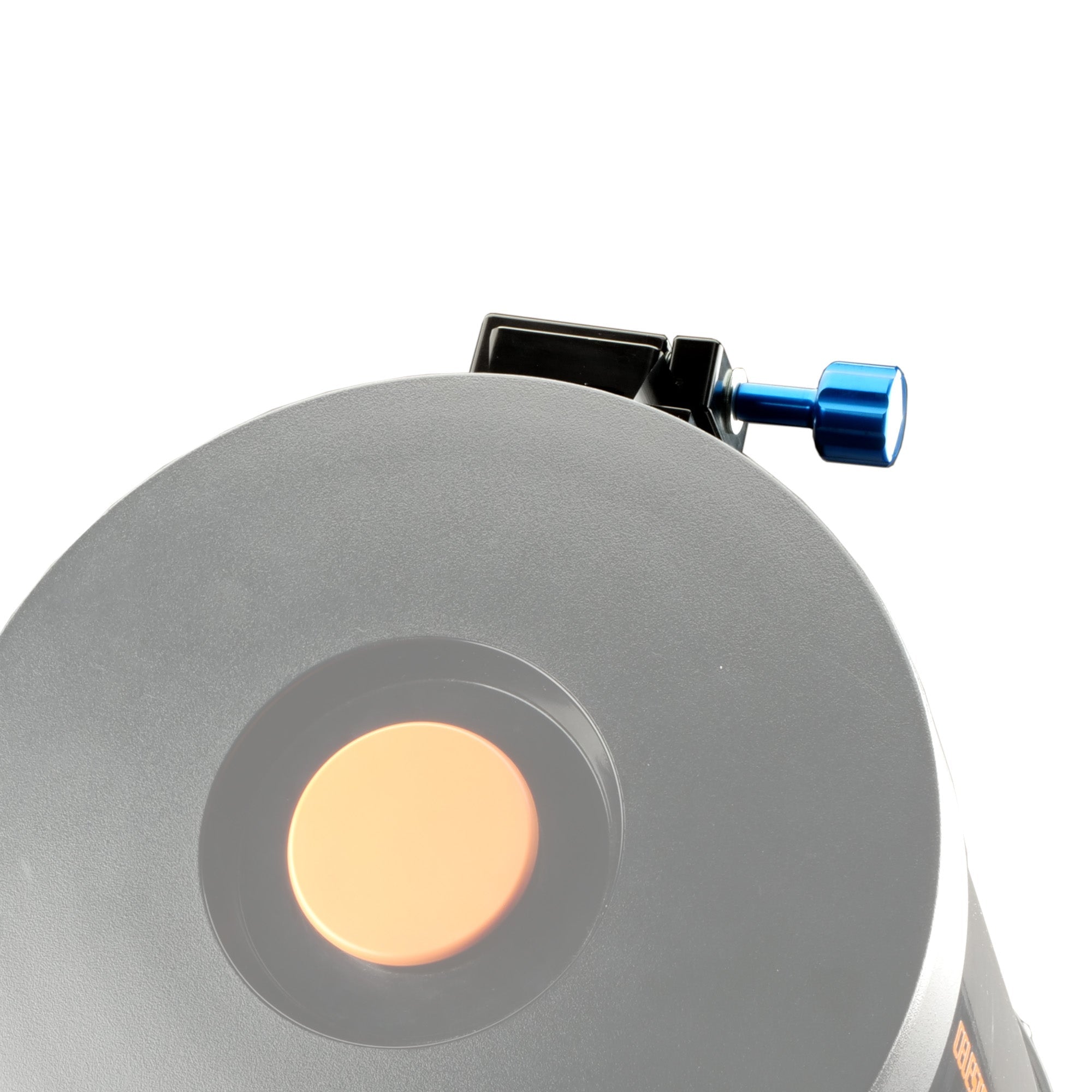
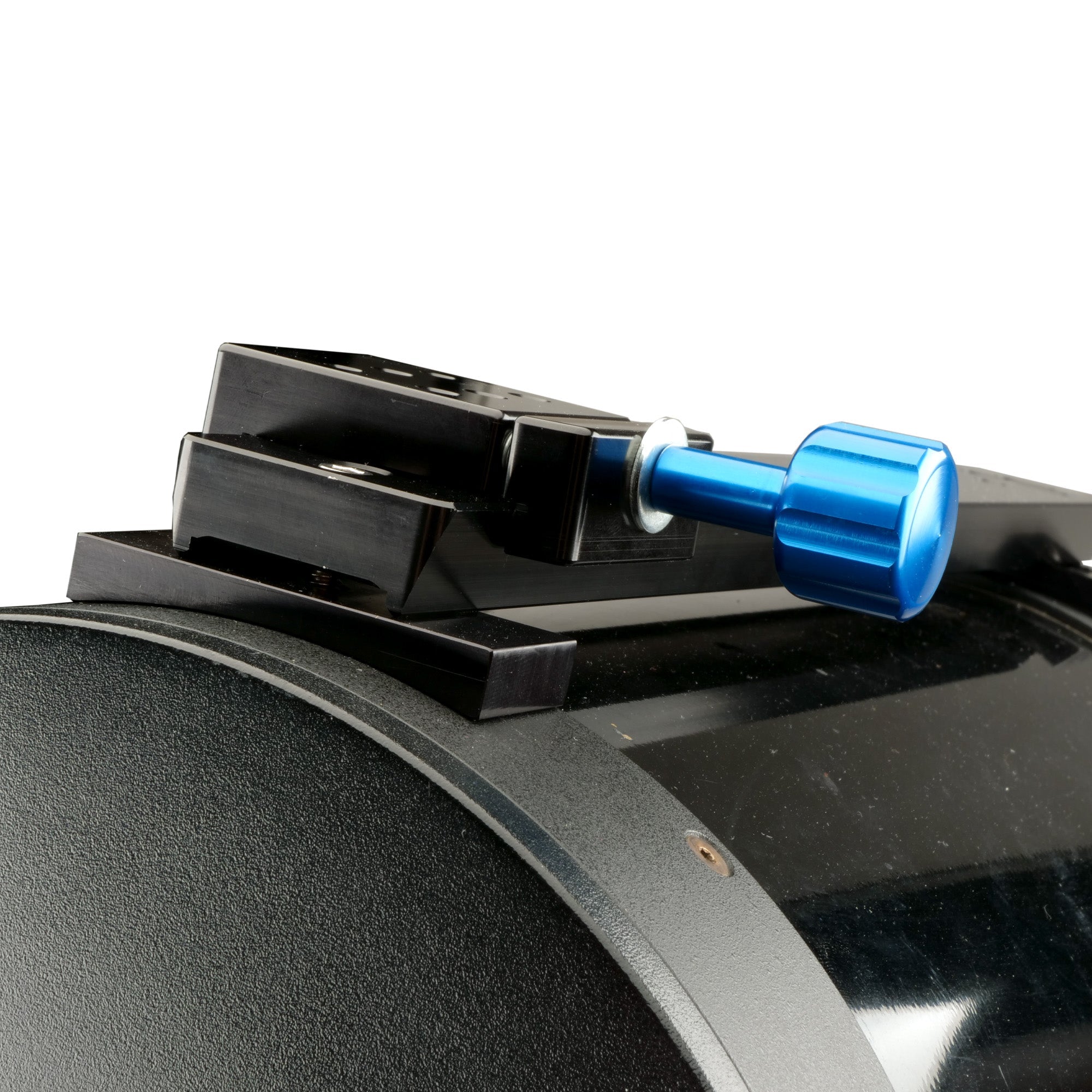
The Farpoint FVA gives a telescope accessory a quick-release V-size (Vixen-style) dovetail interface. The accessory bolts to the adapter, the adapter clicks onto a Vixen bar, and the whole assembly comes off again without tools and without re-aligning hardware. Made in the USA, with a published weight of 0.3704 lb.
Who It's For
This is a good match if you move a finder, guide scope or similar accessory between rigs or between sessions and would rather not unbolt it each time.
Key Features & Design
- Quick-release interface: the adapter clicks on and off a V-size bar by hand.
- Four through holes: sized for #10 screws, for bolting the accessory to the adapter.
- Two threaded holes: on the opposite side, tapped 8-32 and blind — they stop short rather than passing through.
- V-size standard: works with Vixen-style bars and accessories.
- Published weight: 0.3704 lb, made in the USA.
Mechanical Design
The adapter is a short clamp that grips the dovetail's angled flanks, so tightening draws it down onto the bar and squares it at the same time — the accessory returns to the same orientation each time it goes back on. Mounting is handled from both faces: four through holes take #10 screws from the accessory side, while two blind 8-32 threads on the opposite face let hardware be drawn in without a fastener protruding into the dovetail groove.
Recommended Uses
- Putting a finder or guide scope on a quick-release footing.
- Moving one accessory between two telescopes that both carry Vixen bars.
- Stripping accessories off a rig for transport and refitting them at the site.
- Adding a dovetail interface to hardware that came with a flat mounting face.
Compatibility and Accessory Notes
The adapter is V-size (Vixen-style) and works with Vixen bars and saddles; D-size (Losmandy-style) rigs use the wider Farpoint D-size accessory hardware. The four through holes take #10 screws, the two blind holes on the reverse face are tapped 8-32, and the published product drawing carries the hole pattern and measurements. If you would like the pattern checked against your accessory's mounting face, we can compare the drawing for you.
Good to Know Before You Order
- Screws are separate. The #10 and 8-32 fasteners come with the accessory or are bought to suit.
- Blind threads. The two 8-32 holes stop short of the far face, so screw length is limited by the tapped depth shown on the drawing.
- V-size only. The clamp geometry matches Vixen-style dovetails rather than Losmandy-style ones.
- Sub-pound item. The published weight is 0.3704 lb, and shipping is calculated at one pound.
Frequently Asked Questions
What is the Quick Mount Adapter for?
It gives any telescope accessory a quick-release dovetail interface, so the accessory attaches to and detaches from a V-size bar in seconds instead of being unbolted each session.
What screws does it take?
The four through holes are sized for #10 screws. The two threaded holes on the opposite side are blind and tapped 8-32. The product drawing shows the full hole pattern and measurements.
Is V-size the same as Vixen?
Yes. V-size is the Vixen-style dovetail, the narrower of the two common standards; the wider one is D-size, or Losmandy-style.
Is it difficult to install?
The accessory bolts to the adapter once through the existing holes, and from then on the adapter clamps onto the bar by hand. No drilling or machining is involved.
Bottom Line
In short: a 0.3704 lb USA-made clamp that turns an accessory into a tool-free, repeatable fit on a Vixen dovetail bar.
| Dovetail standard | V-size (Vixen-style) |
|---|---|
| Through holes | Four — sized for #10 screws |
| Threaded holes | Two on the opposite side — blind, tapped 8-32 |
| Construction | Made in the USA |
| Weight | 0.3704 lb |
| Country of origin | United States |
You may also like
Recently viewed
Recent Blog Posts
View all
Your Guide Graph Is Lying to You
Read More

D-Size vs V-Size: A Complete Guide to Telescope Dovetail Systems
Read More

What Is Back Focus in Astrophotography? Telescope Reducers, Flatteners, and Spacing Explained
Read More