
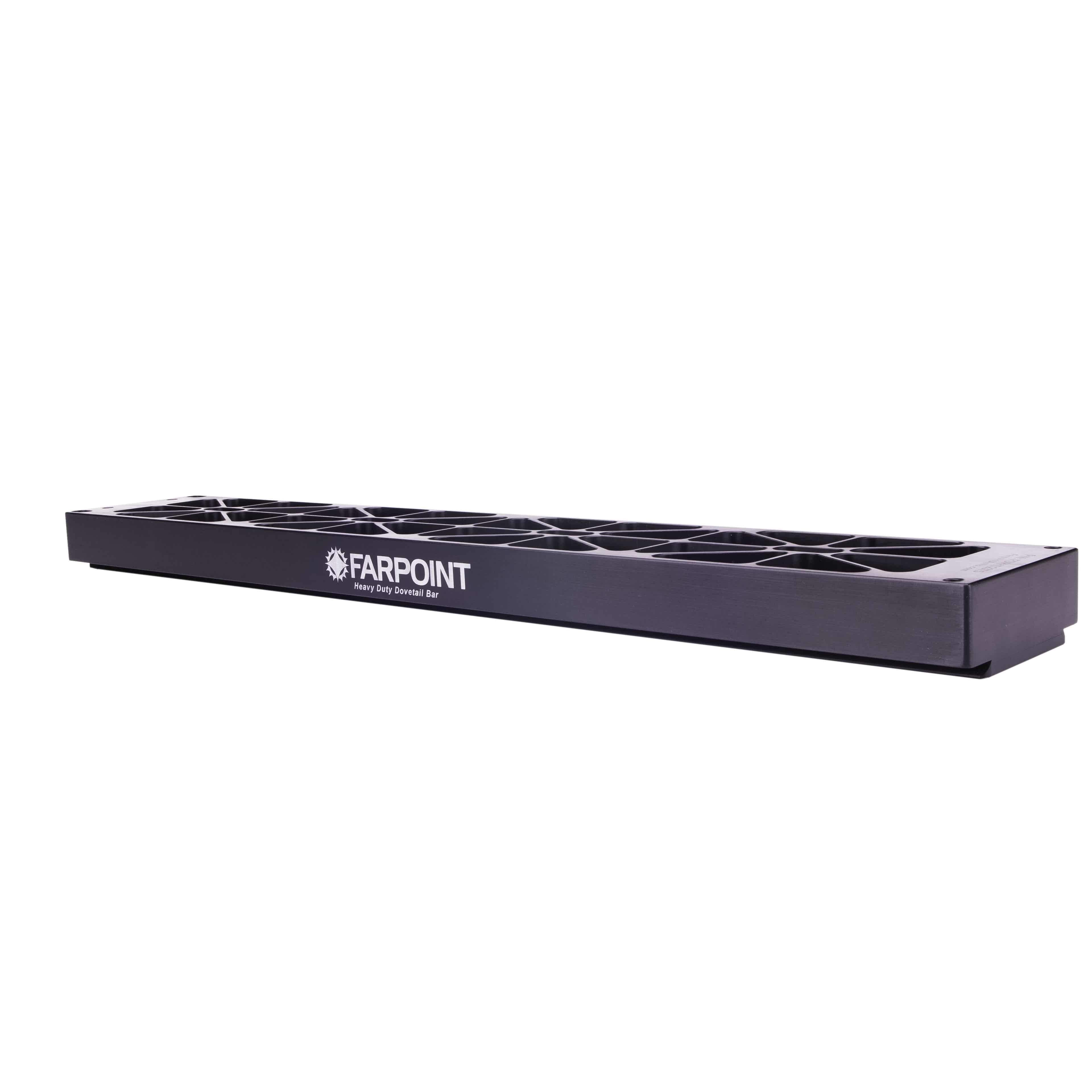


- Description
- Specifications
Product Overview
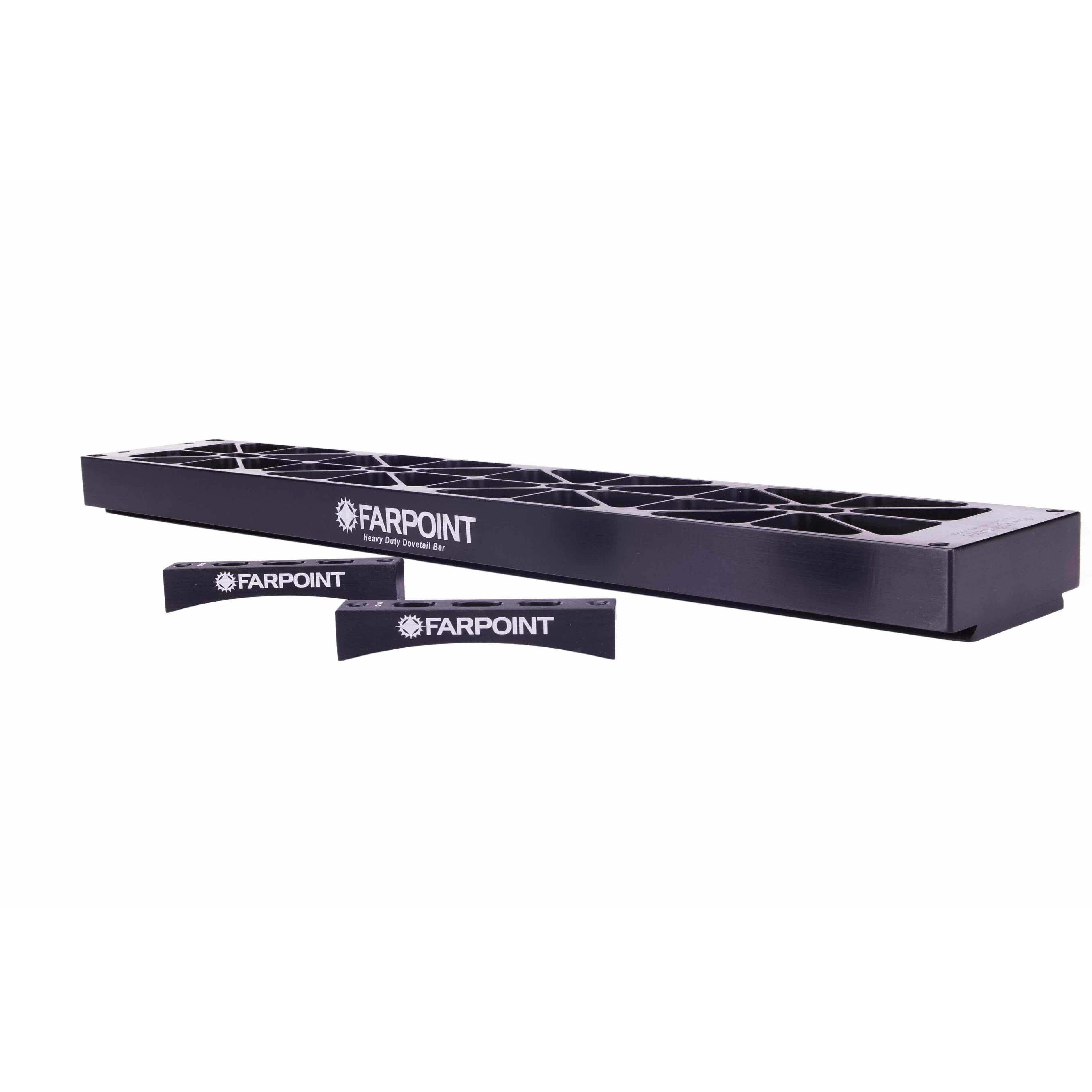
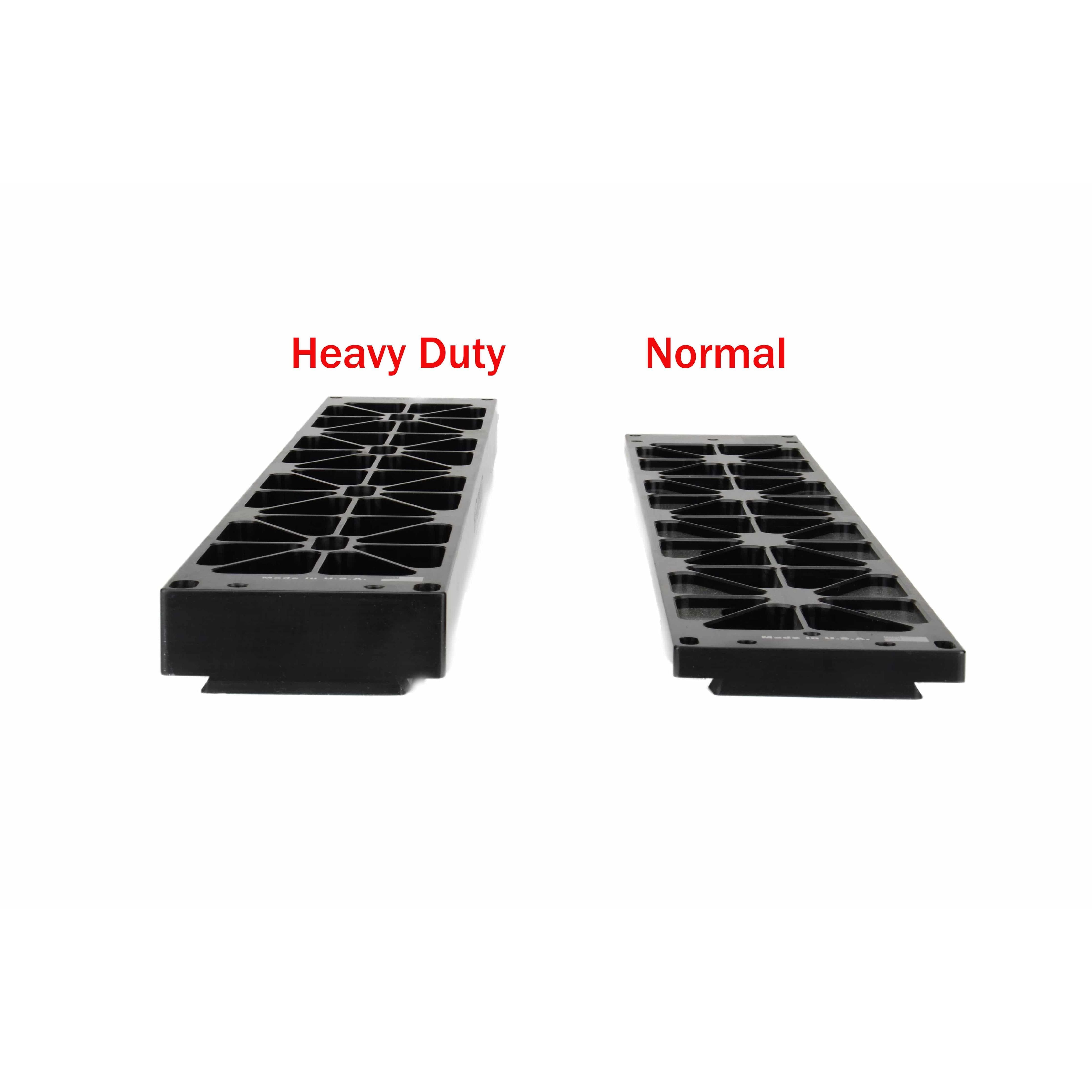
This is Farpoint's heavy-duty D-size (Losmandy-style) support plate for the Celestron C-14. The plate is 1.5″ thick — twice the thickness of the standard plate and many times stiffer — while spacecraft-style light-weighting holds it to 6 lb. The kit includes radius blocks matched to the C-14 tube. It is machined from aluminum with a black anodized finish and CNC-machined in the USA.
The Losmandy-style dovetail that became the standard for attaching Schmidt-Cassegrain tubes to German equatorial mounts was originally designed as an accessory mounting device, not as the sole support for an optical tube the size of a C-14. With high-precision mounts, automated pointing and unattended imaging now routine, the support bar is often the softest link in the chain.
Who It's For
This is a good match if you…
- own a Celestron C-14 and image with it on a German equatorial mount
- see settling time after a slew, wind sensitivity or guiding effort that traces back to flexure in the support bar
- run unattended sessions where pointing accuracy over a whole night matters
- want more stiffness under the tube without adding much weight to the payload
Key Features & Design
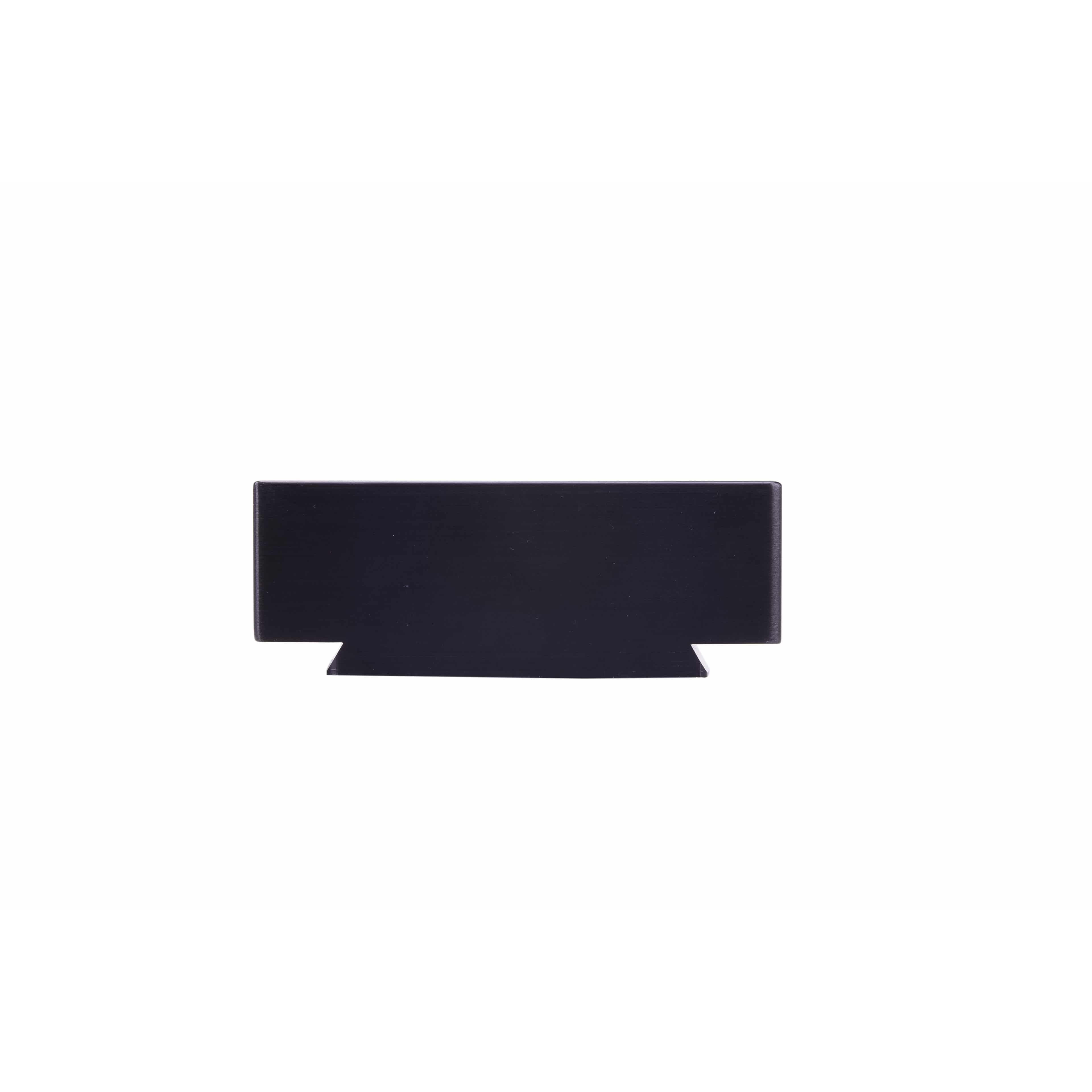
- 1.5″ plate thickness: twice the standard plate, and many times stiffer as a result.
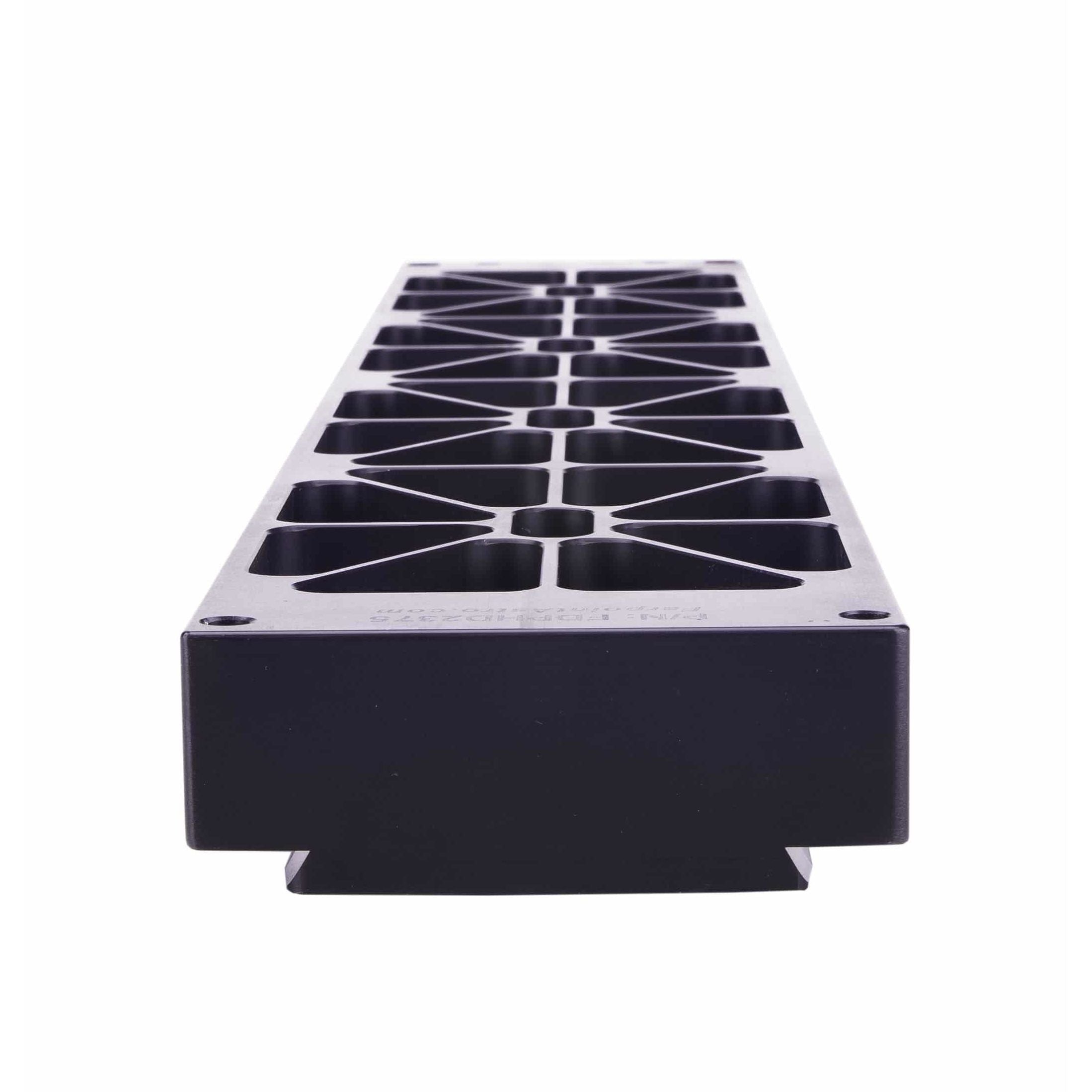
- 6 lb finished weight: spacecraft-style light-weighting removes material where it carries little load.
- D-size (Losmandy-style) profile: drops into any Losmandy-standard saddle.
- C-14 radius blocks: blocks matched to the curvature of the C-14 tube ship with the kit.
- Black anodized aluminum: machined from aluminum with a black anodized finish.
- Made in the USA: CNC-machined in the USA.
Mechanical Design
Bending stiffness rises with the cube of section depth, so doubling a plate from the standard thickness to 1.5″ multiplies its resistance to flexure several times over. Farpoint recovers the weight that extra depth would otherwise cost by light-weighting the section — pocketing out material near the neutral axis, where it contributes little to stiffness — which is how a plate twice as thick still comes in at 6 lb. The practical result is lower deflection under the C-14's mass and a higher first resonant frequency in the tube-to-mount path: less vibration amplitude, quicker damping after a pointing move, less sensitivity to wind, better pointing accuracy and less correction work for an auto-guider. The radius blocks distribute the load into the tube wall along a matched curve rather than concentrating it at the attachment points.
Recommended Uses
- Long-exposure imaging with a C-14 on a precision German equatorial mount.
- Unattended or remotely operated observatory rigs running all night.
- Sites with wind, where settling time between subs costs usable frames.
- Replacing a standard-thickness C-14 bar that visibly flexes under the tube.
Compatibility and Accessory Notes
- Telescope: Celestron C-14 optical tube assembly.
- Dovetail standard: D-size (Losmandy-style) saddles.
- Saddle depth: the plate is 1.5″ thick, so the saddle jaws need to open far enough to take it.
- Other Celestron kits: Farpoint publishes a 13.5″ bar for the 8″ SCT and HD8, a 17.25″ bar for the 2008-and-newer 9.25″ SCT, a 17.25″ bar for the 11″ SCT, a 23.75″ bar for visual and general-duty 14″ SCT use, and a 19″ bar for the 8″ RASA.
- Meade tubes: those are covered by the D-size telescope bar kits in the same line.
Tell us your mount and saddle and we’ll confirm that the 1.5″ plate fits before you order.
Good to Know Before You Order
- Kit only. The plate and radius blocks are what ship; the telescope is separate.
- Saddle opening is the fit question. Some Losmandy-standard saddles are cut for standard-thickness bars, and 1.5″ is deeper than that — we are glad to check yours.
- It is a C-14-specific kit. The radius blocks are matched to that tube's curvature; the 23.75″ standard 14″ SCT bar covers visual and general-duty use on the same tube.
- Published weight is 6 lb. Farpoint's shipping record for this item carries 7.5 lb, so the packed carton runs heavier than the plate itself.
- D-size only. A V-size (Vixen-style) saddle takes a narrower bar than this plate.
Frequently Asked Questions
What does the extra stiffness actually buy me?
Less vibration, which shows up as lower wind sensitivity, shorter settling time after every pointing move, better pointing accuracy and less work for the auto-guider. On an unattended imaging rig those gains compound across the night.
Is it difficult to install?
It is a bolt-on replacement. The radius blocks and plate fasten to the C-14's existing attachment points, and the plate then drops into the mount's Losmandy saddle. Nothing on the telescope is drilled or modified.
Is a 1.5″-thick plate heavy?
It comes in at 6 lb. The light-weighting is what keeps a plate of twice the standard thickness, and many times the stiffness, to that figure.
What mounts will this work with?
Any mount with a D-size (Losmandy-style) saddle whose jaws open to 1.5″. Send us your mount model and we’ll check the saddle for you.
Bottom Line
In short: a 1.5″-thick, light-weighted D-size support plate for the Celestron C-14, 6 lb with C-14 radius blocks included, CNC-machined in the USA for imaging rigs where support-bar flexure is the limiting factor.
| Fits telescope | Celestron C-14 optical tube assembly |
|---|---|
| Plate thickness | 1.5″ — twice the standard plate, many times stiffer |
| Weight | 6 lb |
| Bar standard | D-size (Losmandy-style) |
| Kit includes | Heavy-duty support plate and radius blocks matched to the C-14 tube |
| Material | Black anodized aluminum |
| Construction | CNC-machined in the USA |
| Country of origin | United States |
You may also like
Recently viewed
Recent Blog Posts
View all
Your Guide Graph Is Lying to You
Read More
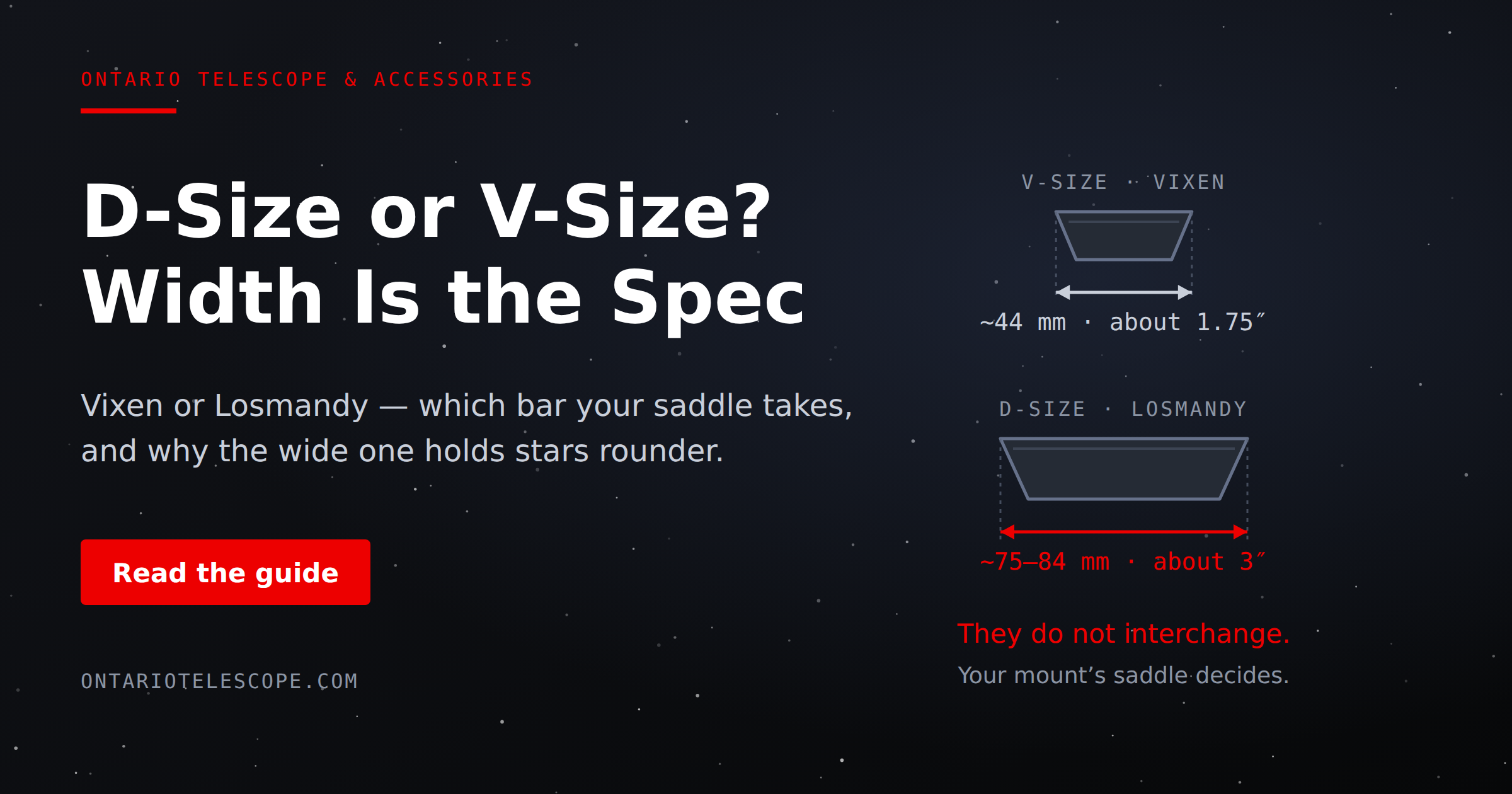
D-Size vs V-Size: A Complete Guide to Telescope Dovetail Systems
Read More
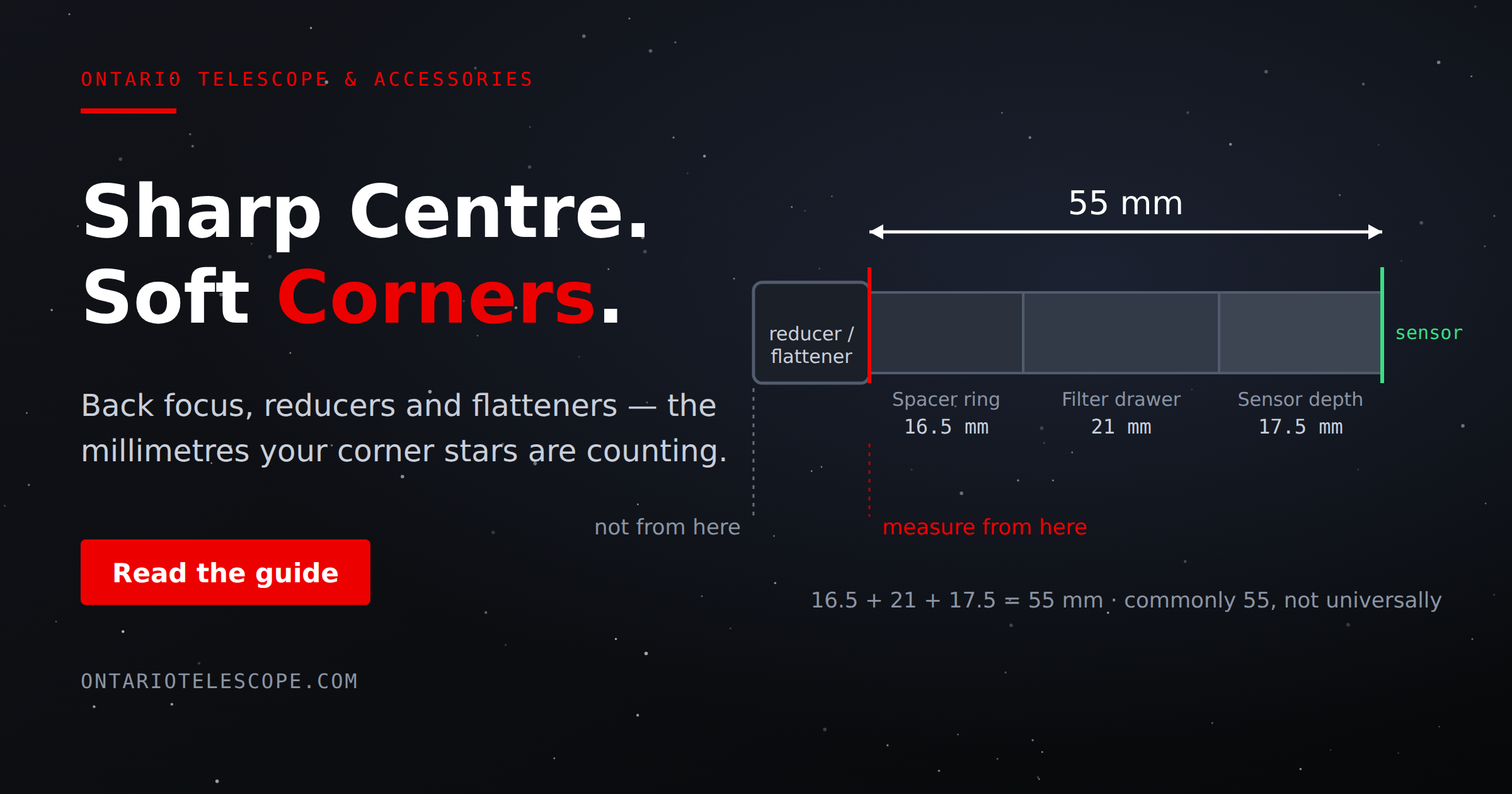
What Is Back Focus in Astrophotography? Telescope Reducers, Flatteners, and Spacing Explained
Read More