


- Description
- Specifications
Product Overview
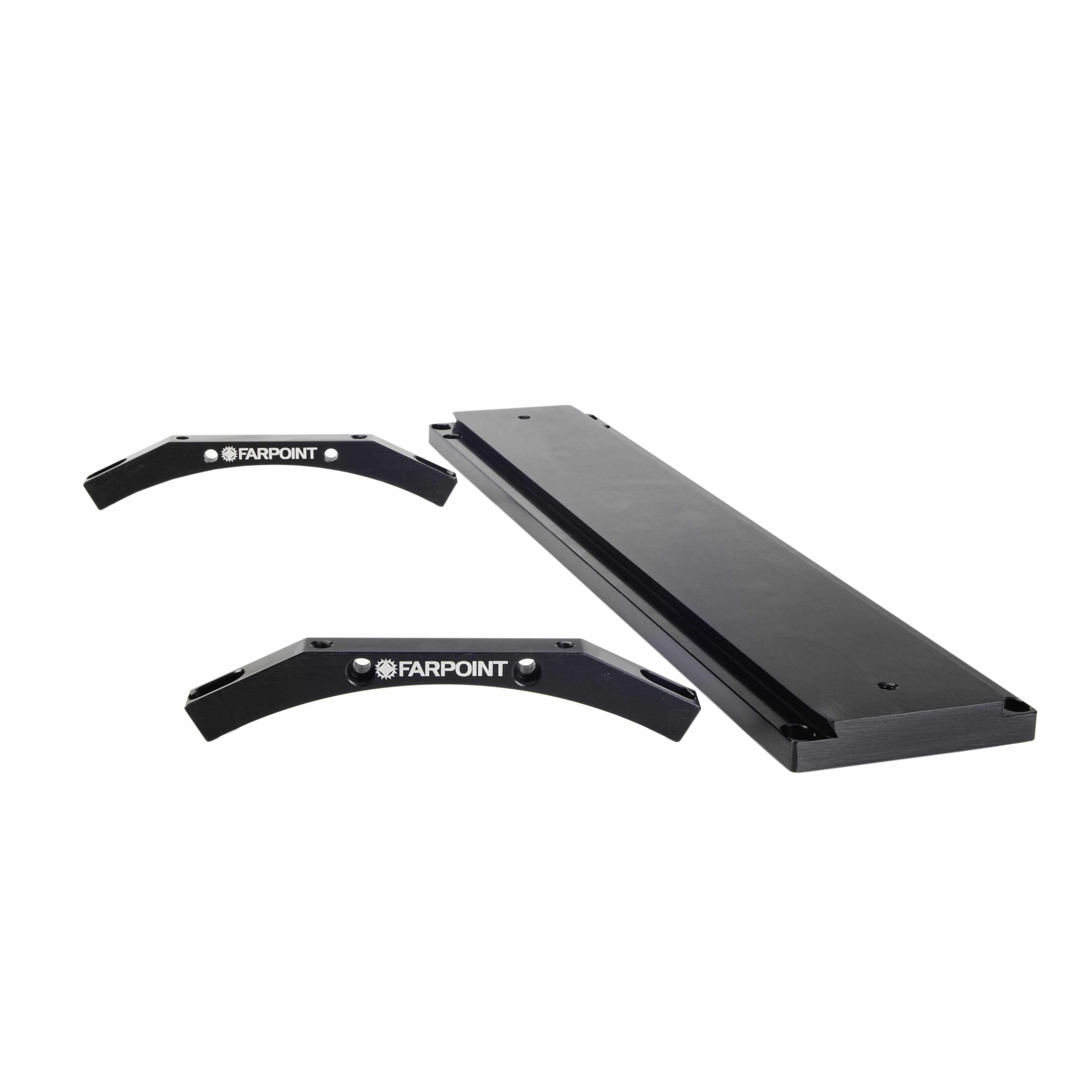
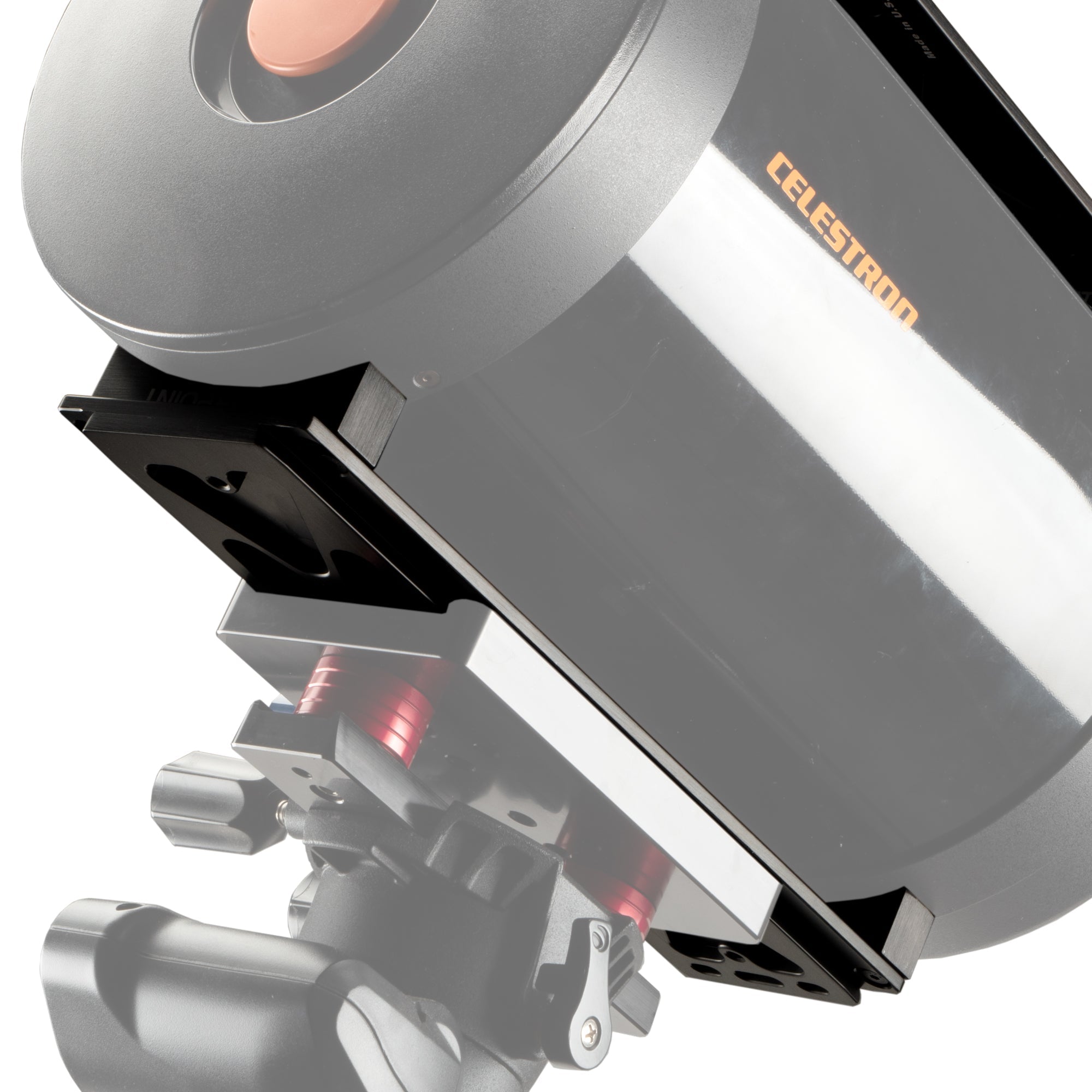
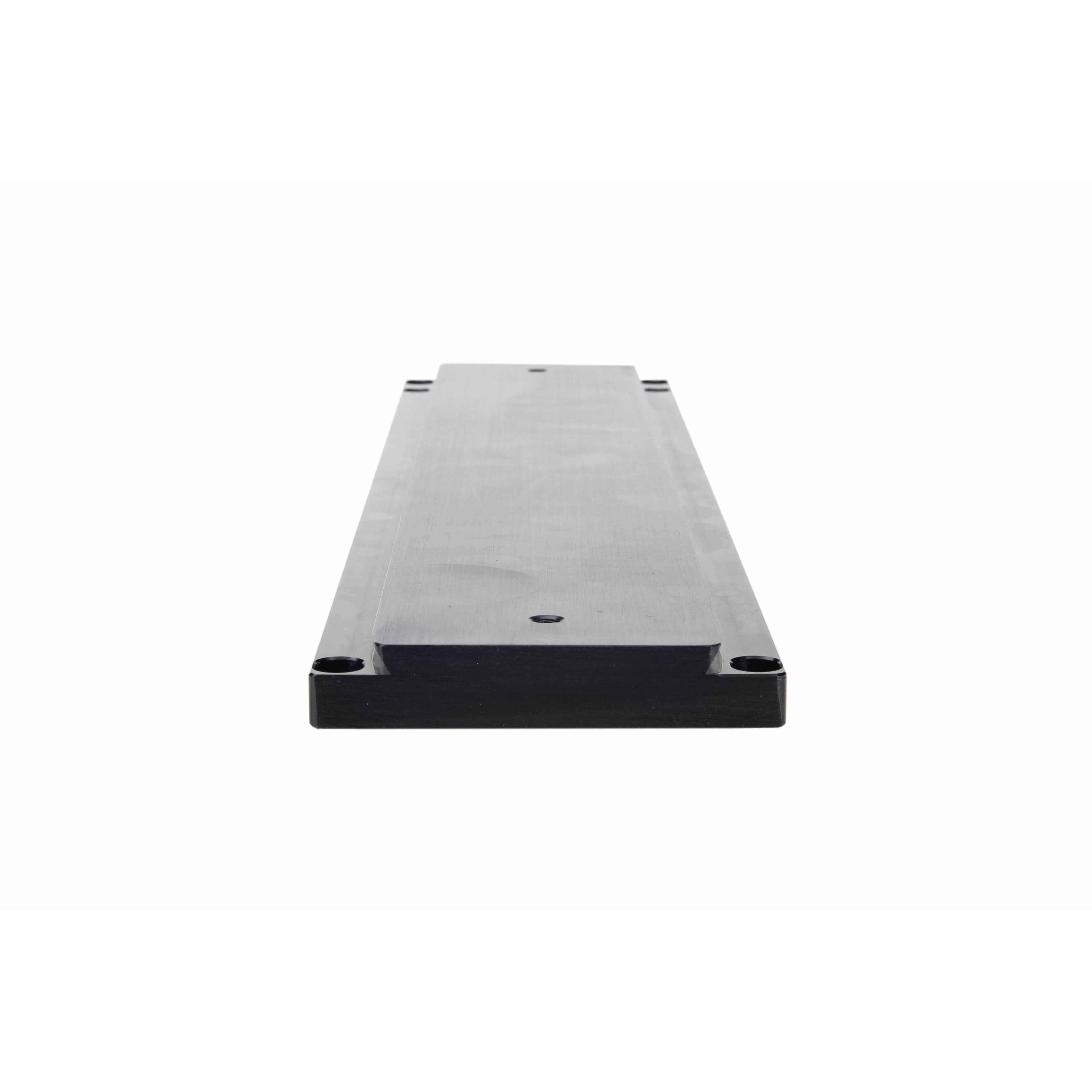
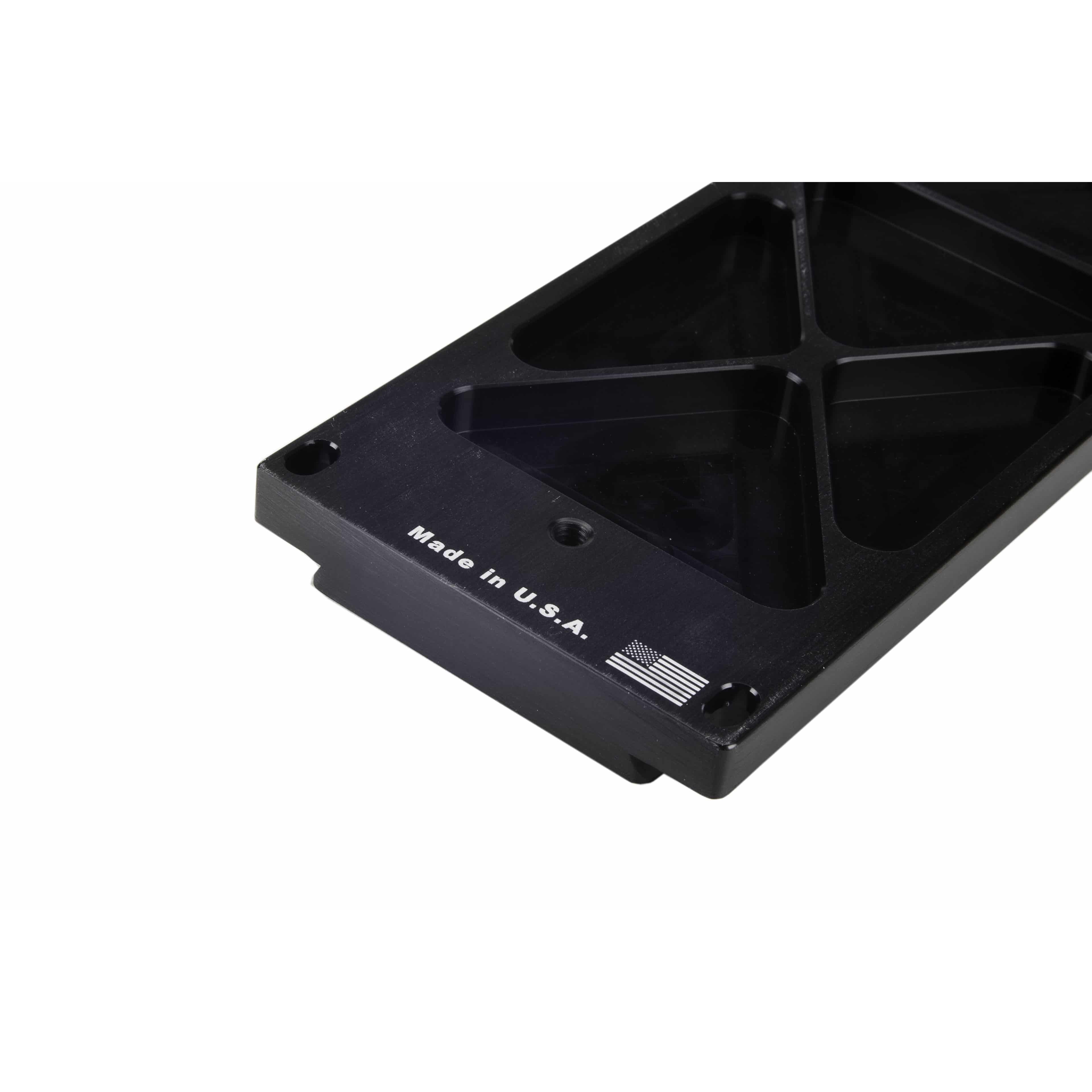
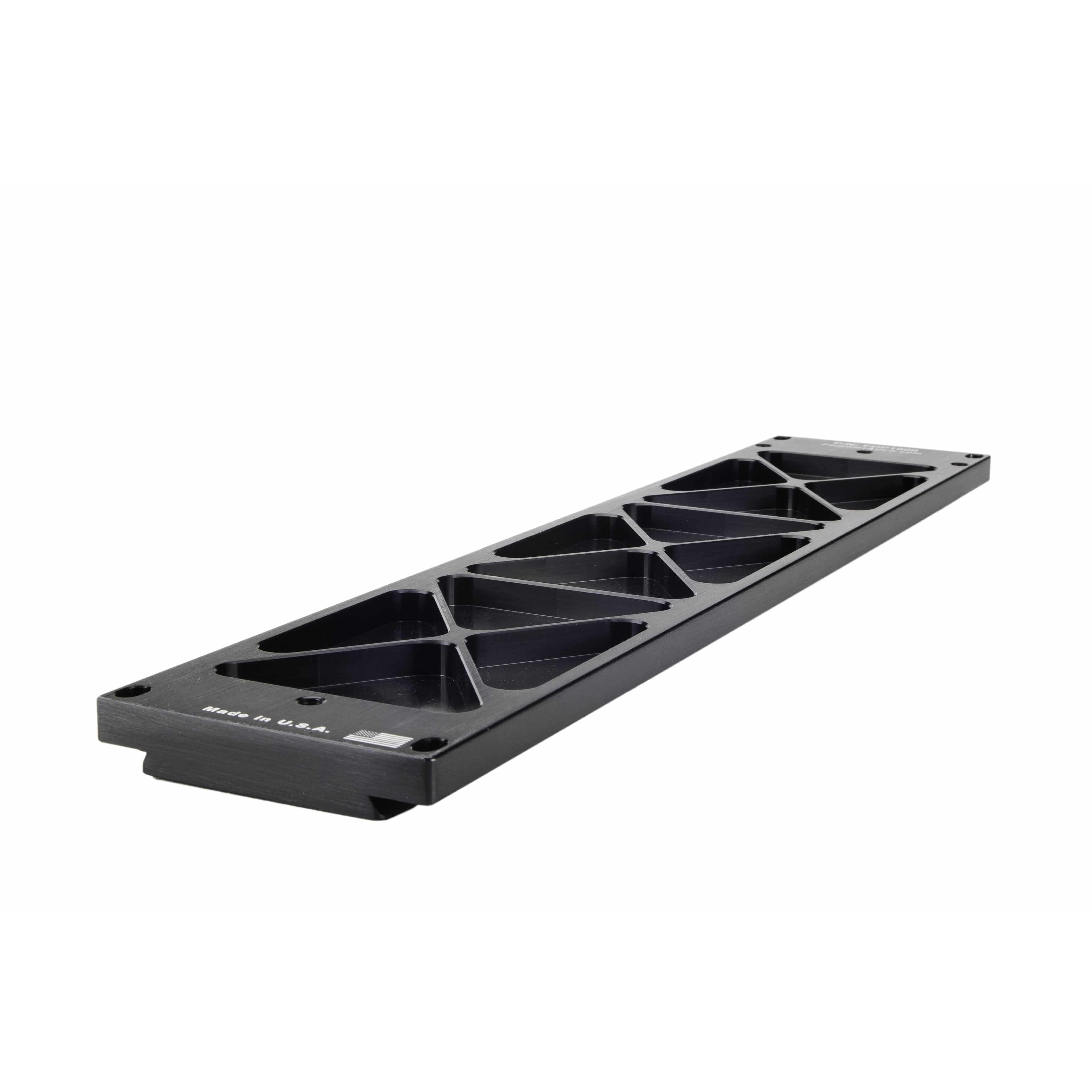
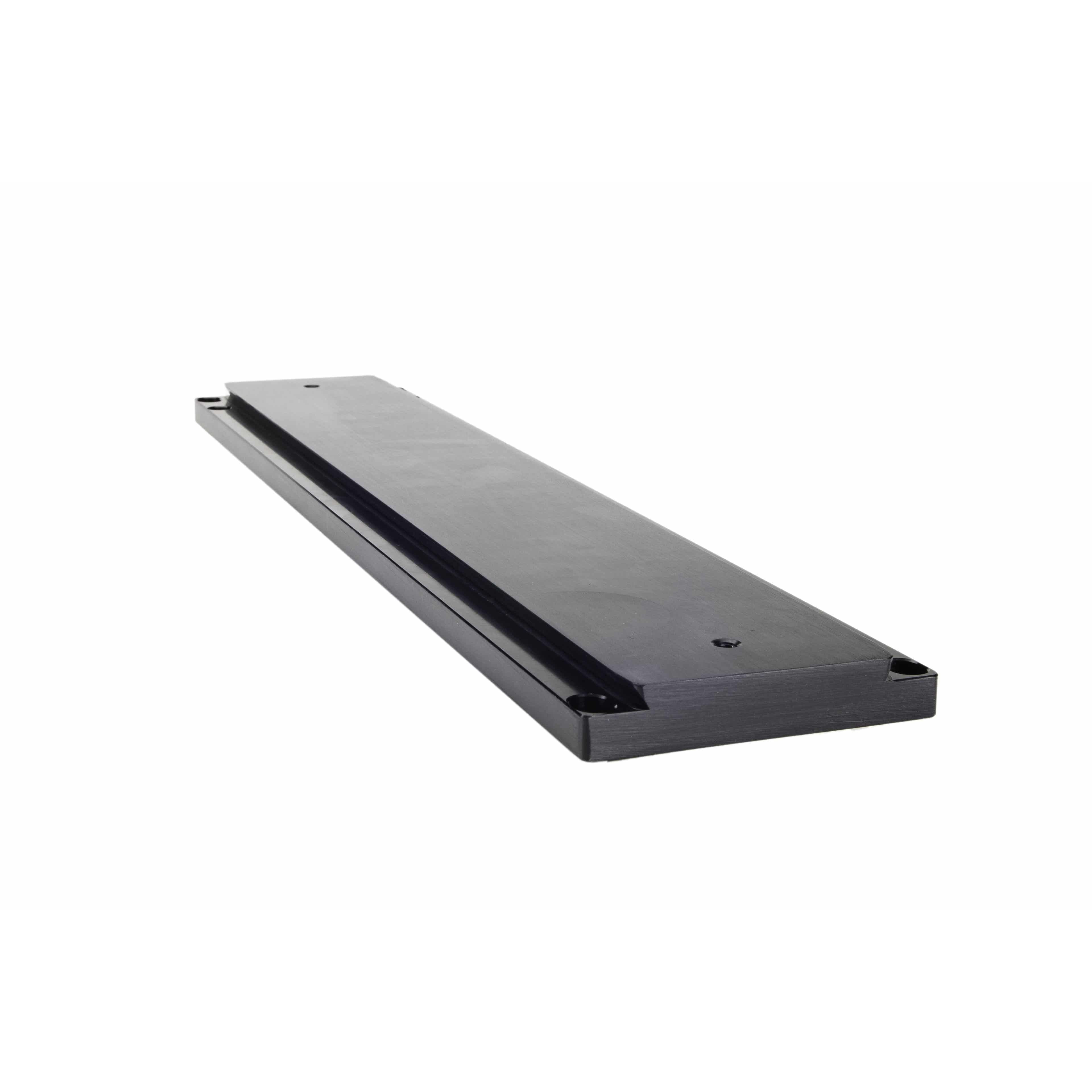
This kit puts a Meade 12″ f/10 SCT onto any D-size (Losmandy-style) saddle. A 19″ dovetail bar pairs with radius blocks machined to the curve of the 12″ tube, and the mounting screws are included. Everything is CNC-machined in the United States from black anodized aluminum. The kit weighs 4.0 lb.
Who It’s For
This is a good match if you…
- own a Meade 12″ f/10 SCT optical tube and are moving it onto a D-size mount.
- are taking the OTA off a fork and putting it on a German equatorial.
- want the clamping load spread along the tube rather than concentrated at two narrow contact lines.
- would rather buy the bar, blocks, and screws as one matched kit than assemble them separately.
Key Features & Design
- 19″ bar: long enough to give real fore-and-aft range for balancing a 12″ SCT, which is a heavy and back-loaded tube.
- Radius blocks matched to the 12″ tube: machined to the tube’s curvature so the bar sits on a curved seat rather than on two edges.
- D-size (Losmandy-style) profile: the wider of the two dovetail standards, which is the appropriate one at this mass.
- Mounting screws included: the kit arrives complete for the tube’s existing mounting holes.
- Black anodized aluminum: CNC-machined in the United States; the anodized surface holds up to repeated handling of a heavy tube.
Mechanical Design
The radius blocks are the part that earns the kit its price. A flat bar bolted straight to a round tube touches it only along two lines, and every bit of the clamping force lands on those lines — enough, on a thin-walled SCT, to pull the tube slightly out of round and put a small amount of stress into the corrector cell and primary baffle. Blocks cut to the 12″ tube’s radius seat against the curve instead, so the same bolt tension is spread across a wide arc of the tube wall. Two things come of that: the optical train stays undistorted under load, and the joint is stiffer, because a bar bearing on a curved seat resists twisting about the tube’s long axis in a way that a two-line contact does not. Stiffness at that joint is what shows up at the eyepiece, since any flex between tube and dovetail becomes a low-frequency wobble that takes a long time to damp on a tube this heavy. The 19″ length works the same way from the other end: the longer the bar, the further apart the blocks can sit, and the more leverage the assembly has against tube flexure.
Recommended Uses
- Moving a Meade 12″ SCT from its fork onto a German equatorial mount with a D-size saddle.
- Long-exposure imaging where flexure between tube and mount would show up as field drift.
- Visual work at high power, where joint stiffness sets how quickly the image settles after a focus touch.
- Setups where the tube is removed and remounted between sessions and needs to return to the same balance point.
Compatibility and Accessory Notes
- Fits: the Meade 12″ f/10 SCT optical tube assembly — LX3, LX5, LX6, LX200, LX600, LX850, pre-2012 ACF OTAs, and the current ACF f/10 OTAs.
- Dovetail standard: D-size (Losmandy-style). It goes into any mount or saddle cut for the D standard.
- Mounts with a Vixen saddle: a D-size saddle or a V-to-D conversion brings the mount up to the wider standard, which is the sensible route at this tube mass anyway.
- Bar length: 19″, with the hole pattern and measurements given on Farpoint’s published product drawing.
- In the box: the 19″ bar, the radius blocks, and the mounting screws.
Tell us your exact Meade model and we’ll confirm the fit.
Good to Know Before You Order
- It is cut for the 12″ f/10 tube. The radius blocks match that tube’s diameter, so other Meade apertures and the faster f/8 ACF tubes take their own kits.
- The mount needs a D-size saddle. A Vixen saddle takes this bar by way of a D saddle or a conversion.
- It adds 4.0 lb to the payload. On a 12″ SCT that is a small fraction of the total, but it is part of the mount’s capacity budget.
- The tube’s existing mounting holes are what it bolts to. The kit supplies the screws for them and does not call for new holes.
- A 19″ bar is a long item to ship. It travels in a correspondingly long carton.
Frequently Asked Questions
Is it difficult to install?
It is a bolt-on fit using the tube’s existing mounting holes, and the screws come in the kit. The radius blocks locate on the bar, the bar bolts up to the tube, and the assembly then drops into the mount’s D saddle. The one step worth taking slowly is bringing the screws up evenly so the blocks seat flat on the tube.
Which Meade 12″ models does this fit?
LX3, LX5, LX6, LX200, LX600, LX850, pre-2012 ACF OTAs, and the current ACF f/10 OTAs. Send us your model and we’ll check it.
What is included, and where are the dimensions?
The 19″ D-size dovetail bar, the radius blocks machined for the Meade 12″ tube, and the mounting screws. Farpoint’s product drawing gives the hole pattern and measurements.
Why radius blocks rather than a flat bar?
They seat against the curve of the tube, spreading the clamping load across a wide arc instead of pinching it along two lines. The tube stays round and the joint is stiffer.
Which mounts will this work with?
Any mount with a D-size (Losmandy-style) saddle, including Losmandy’s own and the many mounts that accept the wider D standard.
Bottom Line
In short: a complete 4.0 lb kit — 19″ D-size bar, matched radius blocks, and screws — that mounts a Meade 12″ f/10 SCT on a Losmandy-style saddle with the clamping load spread across the tube’s curve.
| Fits telescope | Meade 12″ f/10 SCT optical tube assembly — LX3, LX5, LX6, LX200, LX600, LX850, pre-2012 ACF OTAs, and the new ACF f/10 OTAs |
|---|---|
| Bar length | 19″ — see product drawing |
| Bar standard | D-size (Losmandy-style) |
| Kit includes | 19″ dovetail bar, radius blocks matched to the 12″ tube, mounting screws |
| Material | Black anodized aluminum |
| Construction | CNC-machined in the USA |
| Weight | 4.0 lb |
| Country of origin | United States |
You may also like
Recently viewed
Recent Blog Posts
View all
Your Guide Graph Is Lying to You
Read More

D-Size vs V-Size: A Complete Guide to Telescope Dovetail Systems
Read More

What Is Back Focus in Astrophotography? Telescope Reducers, Flatteners, and Spacing Explained
Read More