
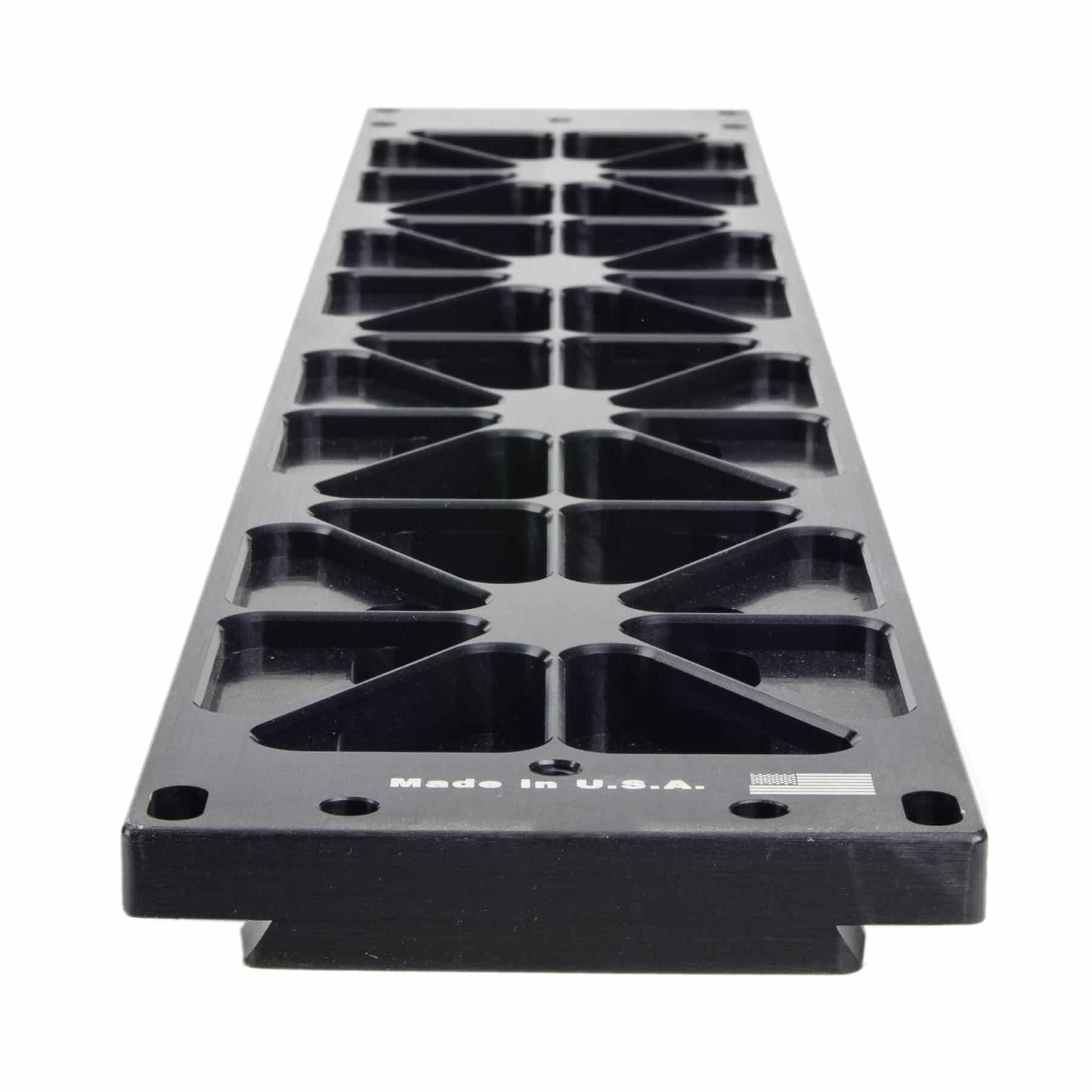


- Description
- Specifications
Product Overview
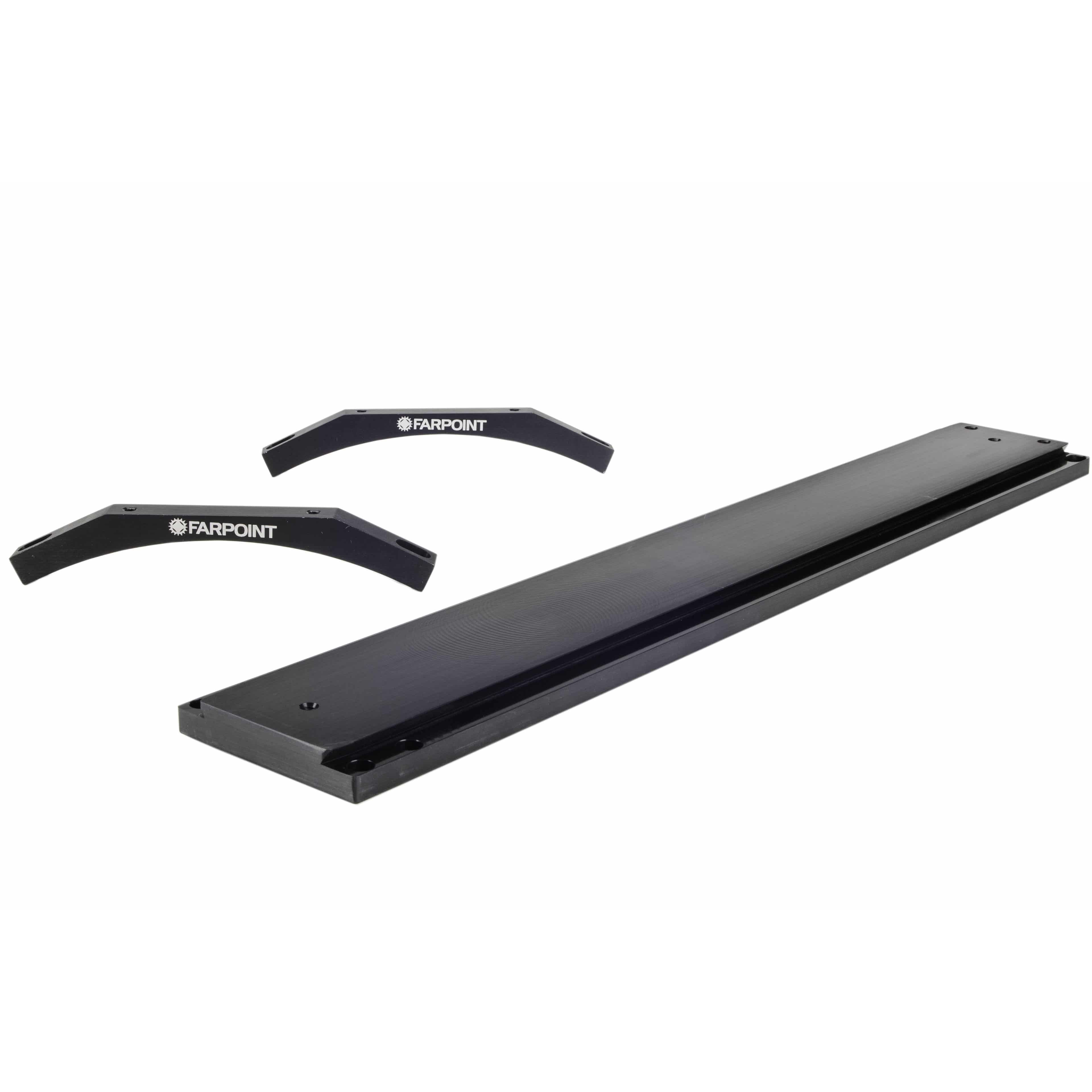
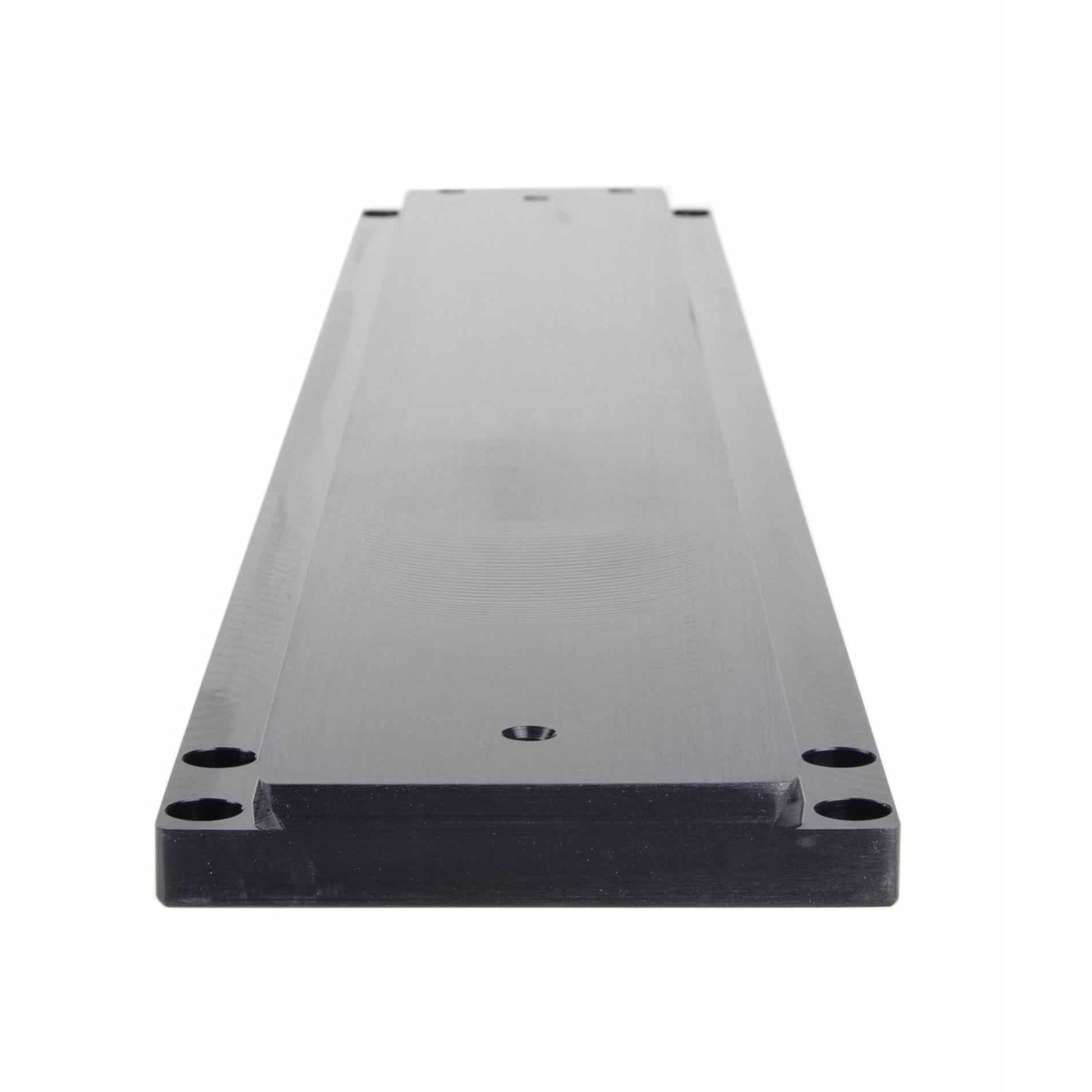
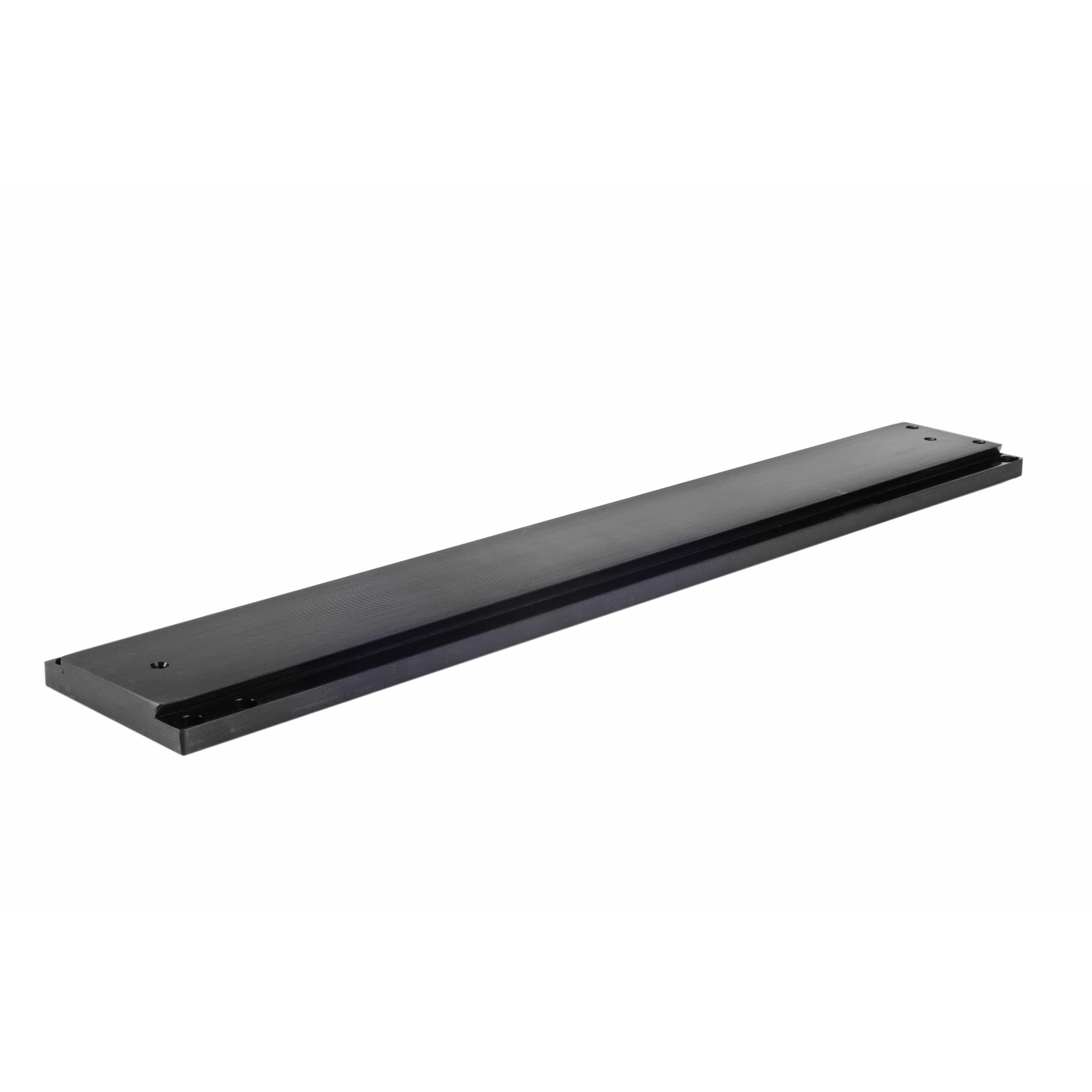
The Farpoint FDM14 is a complete D-size dovetail kit for the Meade 14″ f/10 LX200 Schmidt-Cassegrain optical tube. A 23.75″ Losmandy-style dovetail bar pairs with radius blocks machined to the curve of the 14″ tube, and the mounting screws are supplied. Every part is CNC-machined in the USA from black anodized aluminum, and Farpoint publishes a shipping weight of 5.0 lb for the kit.
Who It's For
This is a good match if you own a Meade 14″ f/10 LX200 SCT and want it carried on a D-size (Losmandy-style) saddle — whether you are replacing factory mounting hardware, fitting an observatory tube to a new mount, or bringing a large tube onto the same dovetail standard as the rest of your equipment.
Key Features & Design
- 23.75″ D-size bar: the Losmandy-standard dovetail profile, cut to length for the 14″ tube.
- Matched radius blocks: machined to the curve of the Meade 14″ tube so the bar seats against the tube wall.
- Mounting screws supplied: the hardware that fastens the bar and blocks to the optical tube ships in the box.
- Black anodized aluminum: an anodized finish over machined aluminum, matching the rest of the Farpoint dovetail line.
- Machined in the USA: CNC-machined by Farpoint.
- Long bearing length: at 23.75″ the bar gives the saddle a wide span to clamp along, and the same bar length serves the 16″ kit.
Mechanical Design
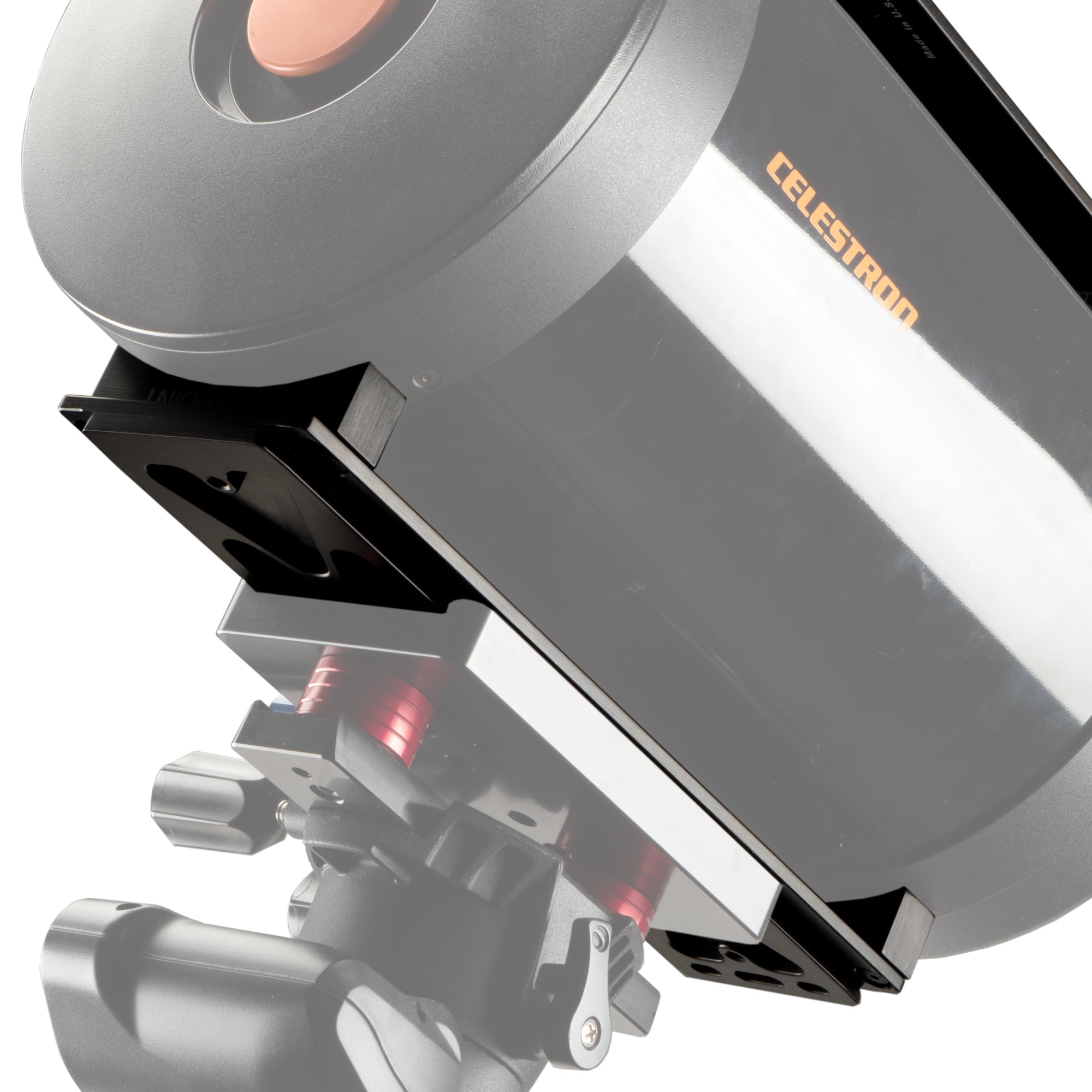
An SCT tube is round and a dovetail bar is flat, so a bar bolted straight to the tube carries its load at the bolt holes alone. The radius blocks sit between the two, machined to the exact curve of the 14″ tube, and they spread the clamping load across the contact surface instead. On a tube this large the difference is structural rather than cosmetic: the load path from optics to saddle stays stiff, and the bolt holes in the tube wall are relieved of stress the tube wall was not shaped to carry.
Recommended Uses
- Carrying a Meade 14″ f/10 LX200 SCT on any mount fitted with a D-size (Losmandy-style) saddle.
- Observatory installations where a large tube stays mounted and alignment is expected to hold.
- Long-exposure deep-sky imaging at the long focal length an f/10 14″ tube works at.
- Replacing worn or missing factory dovetail hardware on an older LX200 tube.
- Standardizing a large tube on the D-size dovetail so it interchanges with other mounts.
Compatibility and Accessory Notes
The kit fits the Meade 14″ f/10 LX200 SCT optical tube assembly. The bar follows the D-size (Losmandy-style) standard and clamps into any D-size saddle; a mount fitted with the narrower V-size (Vixen) saddle takes a D-size saddle conversion first, and at this tube weight the wider D standard is the one the payload suits. Bar length is 23.75″. Farpoint also sells the Meade 14″ radius blocks on their own, which is the route for anyone who already owns a D-size bar. If you are unsure which kit suits your tube, send us your telescope model and we'll confirm the fit.
Good to Know Before You Order
- The telescope is sold separately. The kit covers the dovetail bar, the radius blocks and the mounting screws.
- This is the D-size standard. A V-size (Vixen) saddle is the narrower profile and takes a V-size bar or a saddle conversion.
- The kit is specific to the f/10 14″ tube. Radius blocks are cut to that tube's diameter, and the 8″, 10″, 12″ and 16″ tubes each have their own kit.
- Farpoint publishes a shipping weight of 5.0 lb. The kit ships as one carton.
Frequently Asked Questions
What is included, and where are the dimensions?
The 23.75″ D-size dovetail bar, radius blocks machined to match the Meade 14″ tube, and the mounting screws — everything that attaches the bar to the optical tube. The telescope itself is separate.
Is it difficult to install?
It is a bolt-on job. The radius blocks locate on the tube's existing mounting holes and the bar fastens to the blocks with the supplied screws. The tube is heavy enough that a second pair of hands makes the job easier, and hand tools are all that is involved.
Why radius blocks instead of bolting the bar straight on?
The SCT tube is round and the bar is flat. Radius blocks are machined to the exact curve of the 14″ tube so the clamping load spreads across the contact surface instead of concentrating at the bolt holes — a stiffer connection that puts less stress on the optical tube.
What mounts will this work with?
Any mount with a D-size (Losmandy-style) saddle — the Losmandy line itself, and the many mounts that accept the wider D standard.
Bottom Line
In short: a complete USA-machined 23.75″ D-size dovetail kit that puts a Meade 14″ f/10 LX200 SCT onto a Losmandy-style saddle, with radius blocks matched to the tube curve and the mounting screws included.
| Fits telescope | Meade 14″ f/10 LX200 SCT optical tube assembly |
|---|---|
| Bar length | 23.75″ |
| Bar standard | D-size (Losmandy-style) |
| Kit includes | 23.75″ dovetail bar, radius blocks matched to the 14″ tube, mounting screws |
| Material | Black anodized aluminum |
| Construction | CNC-machined in the USA |
| Weight | 5.0 lb |
| Country of origin | United States |
You may also like
Recently viewed
Recent Blog Posts
View all
Your Guide Graph Is Lying to You
Read More

D-Size vs V-Size: A Complete Guide to Telescope Dovetail Systems
Read More

What Is Back Focus in Astrophotography? Telescope Reducers, Flatteners, and Spacing Explained
Read More