


- Description
- Specifications
Product Overview
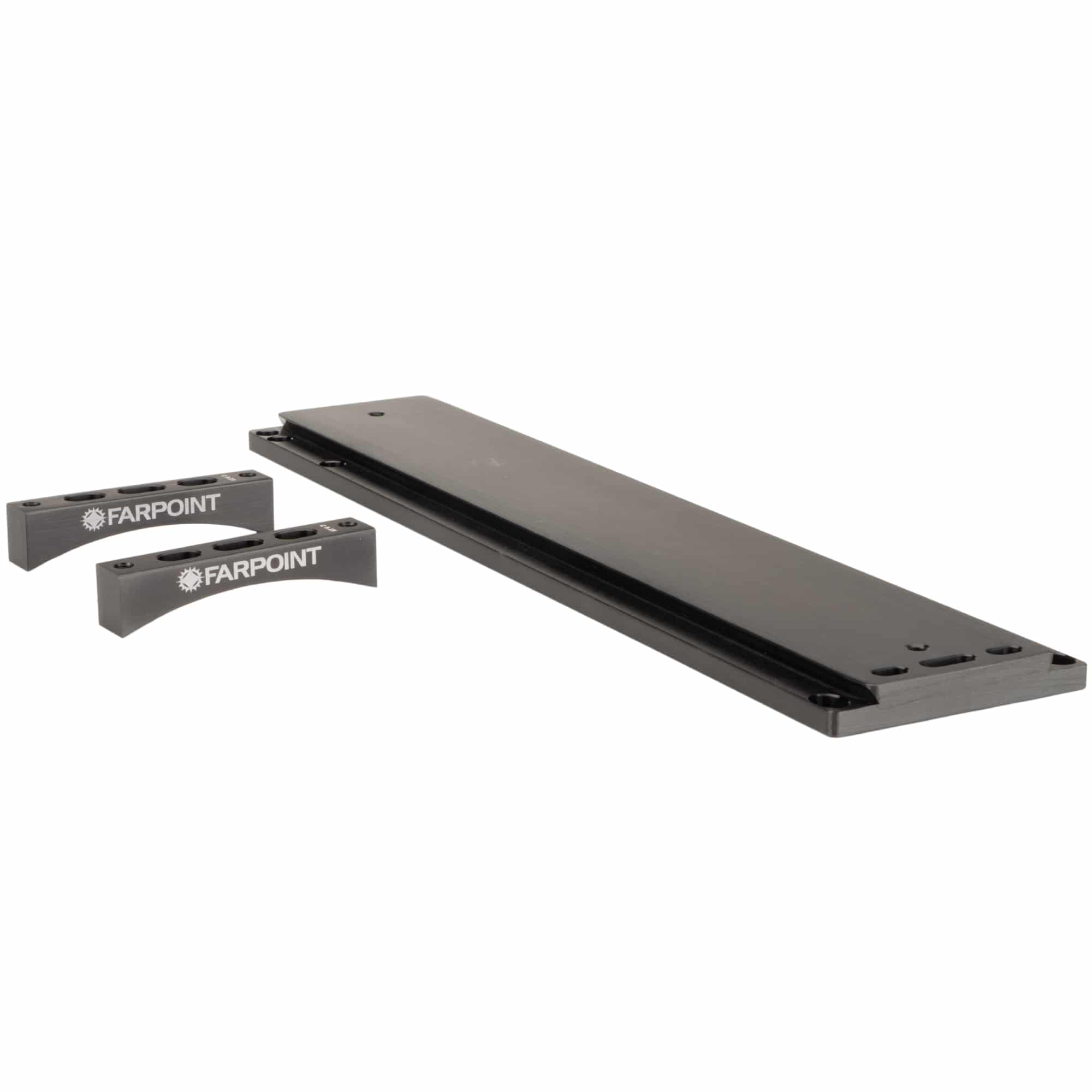
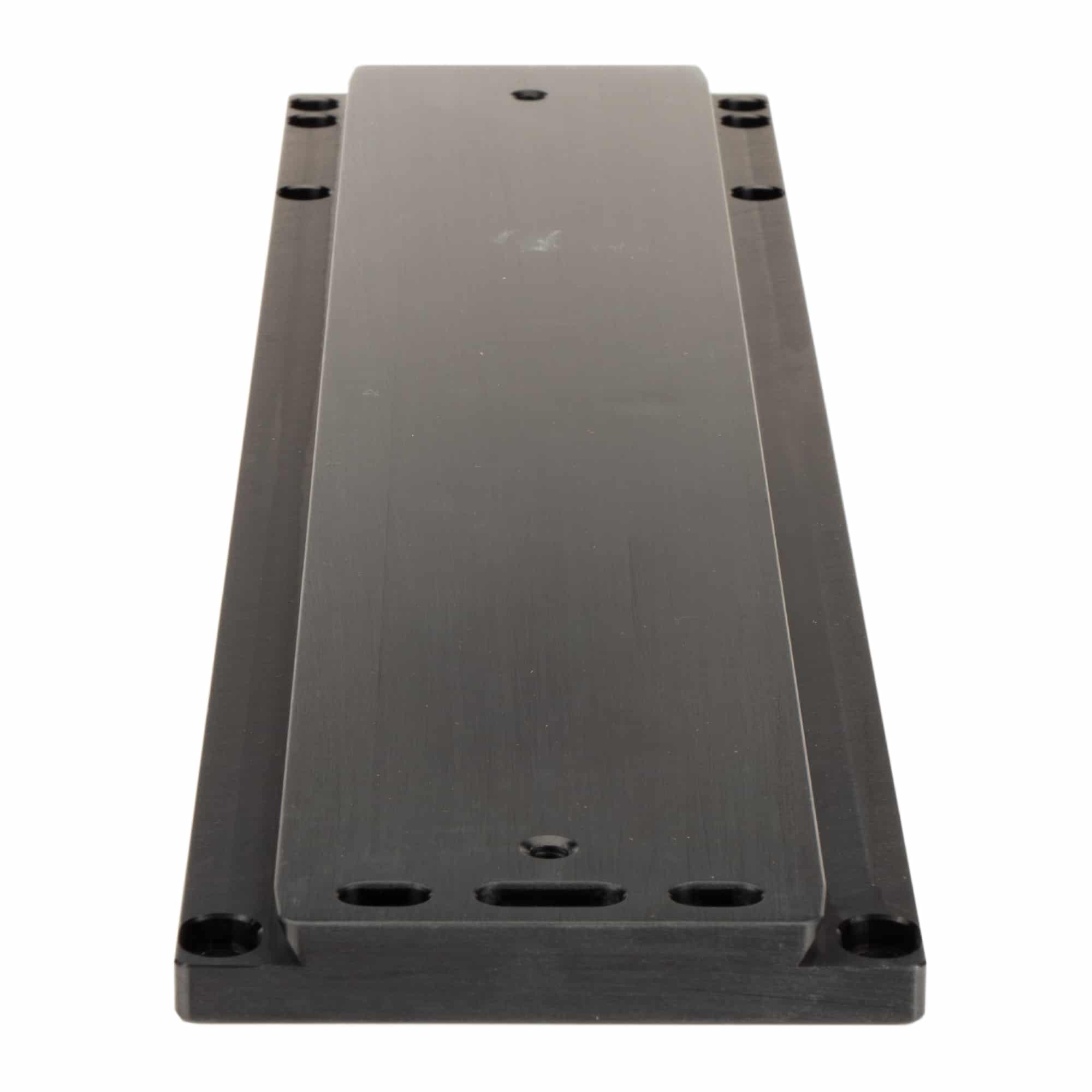
The Farpoint FDC9.25S is a complete mounting kit that carries a 2008-or-newer Celestron 9.25″ SCT on any D-size (Losmandy-style) saddle. It comprises a 17.25″ dovetail bar, a pair of radius blocks machined to match the 9.25″ tube, and the mounting screws to join them. The parts are CNC-machined in the USA from aluminum with a black anodized finish, and the kit weighs 2.6 lb.
Who It's For
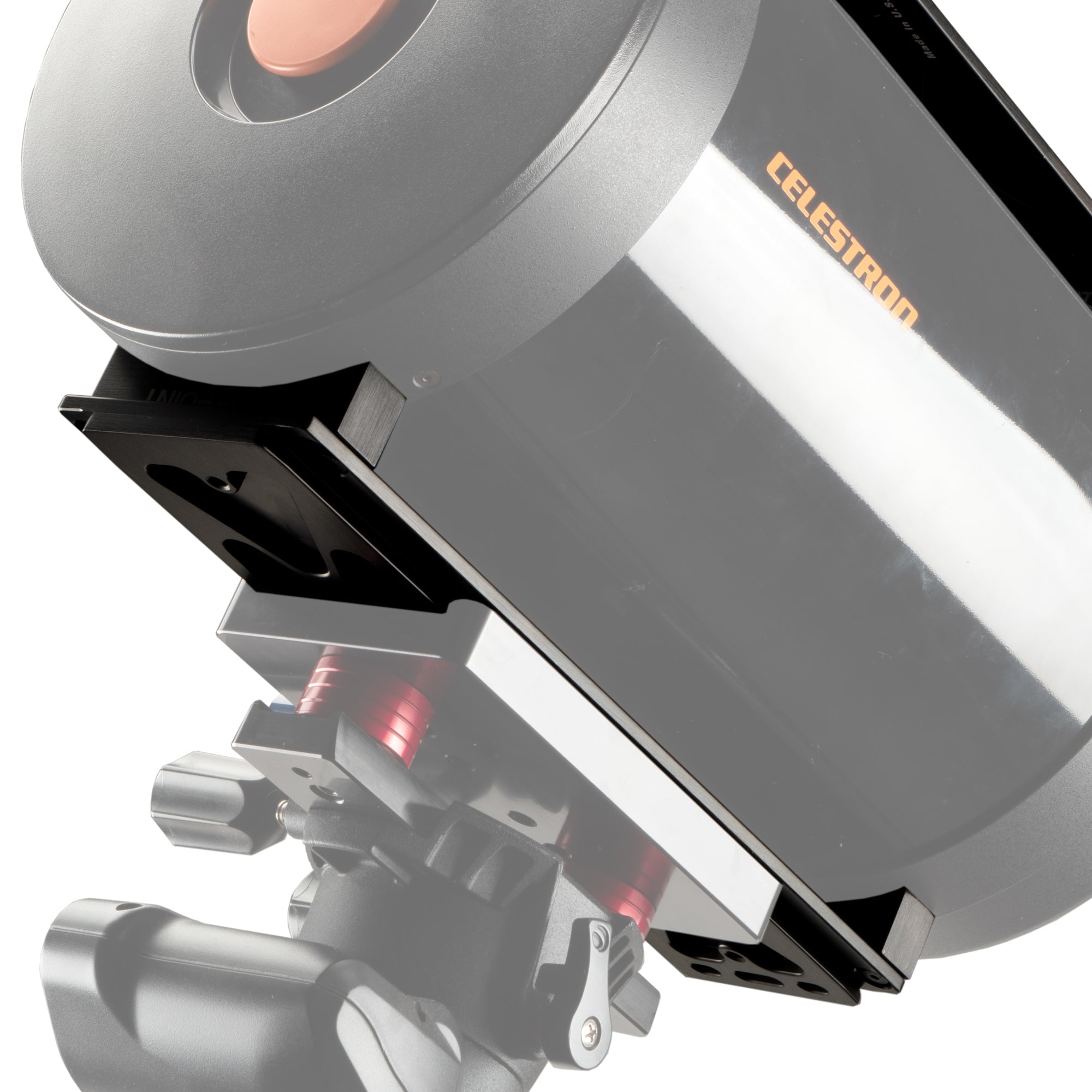
This is a good match if you own a Celestron 9.25″ SCT of 2008 or later and a mount with a D-size (Losmandy-style) saddle, and you want the bar, the tube interface and the hardware as one kit. It also suits you if the tube currently sits on a narrower Vixen bar and you are moving it to the wider D standard for a stiffer hold under imaging loads.
Key Features & Design
- 17.25″ dovetail bar: The long run gives the saddle a wide clamping span and leaves travel for balancing a rear-heavy SCT.
- Radius blocks matched to the tube: The blocks are machined to the curve of the 9.25″ tube, so they sit flush rather than touching along an edge.
- D-size (Losmandy-style) profile: The wider dovetail standard, which gives a larger clamping face than a Vixen bar.
- Mounting screws included: The screws that join the blocks to the tube's existing mounting points ship in the box.
- Black anodized aluminum: Non-reflective next to the optical path and resistant to handling marks.
- CNC-machined in the USA: Bar and blocks alike are machined parts.
Mechanical Design
An SCT tube is round and a dovetail bar is flat, so bolted straight together the two touch along a narrow line and the clamping force concentrates at the bolt holes. The radius blocks in this kit fill that curve. Each is machined to the 9.25″ tube diameter, which spreads the load across the whole contact surface rather than pinching the tube at two points. The chain from tube to saddle comes out stiffer, and the tube carries less local stress — which matters most on long exposures, where any flex in the mounting path turns into elongated stars.
Recommended Uses
- Mounting a Celestron 9.25″ SCT on a Losmandy-style German equatorial for imaging.
- Moving a 9.25″ tube up from a Vixen bar to the wider D-size standard.
- Rebalancing the tube after adding a focuser, camera train or off-axis guider at the rear cell.
- Carrying one tube between a permanent pier mount and a portable mount that shares the D-size saddle.
Compatibility and Accessory Notes
The radius blocks are cut for the 2008-and-newer Celestron 9.25″ SCT optical tube assembly. Celestron changed the tube and mounting arrangement on that model, so an earlier 9.25″ is outside the fit, as are the 8″ and 11″ tubes, which take blocks machined to their own diameters. The 17.25″ bar is a D-size (Losmandy-style) dovetail and seats in Losmandy saddles as well as the D-size saddles on mounts such as the Celestron CGEM and CGX families, iOptron and Sky-Watcher D heads, and any dual-fit saddle that accepts both V and D profiles. A V-size (Vixen) saddle takes the narrower bar and is a different fit. The kit bolts to the tube's own mounting points with the screws supplied. If you are unsure of your tube's year or which saddle standard your mount uses, let us know the models and we'll confirm the fit.
Good to Know Before You Order
- The telescope is not included. This kit is the bar, the radius blocks and the mounting screws.
- The fit is 2008-and-newer only. Earlier Celestron 9.25″ tubes use a different arrangement.
- The blocks are diameter-specific. They are machined to the 9.25″ tube curve and sit flush on that tube alone.
- The bar is D-size only. A Vixen-size saddle would call for a saddle change or an adapter.
- Kit weight is 2.6 lb. That mass rides on the mount with the tube and counts toward the mount's payload figure; the packed shipping weight is 3.563 lb.
Frequently Asked Questions
Is it difficult to install?
It is a bolt-on. The radius blocks fasten to the mounting points already in the 9.25″ tube with the supplied screws, then the bar attaches to the blocks. A hex key and a few minutes on a bench cover it.
Will it fit a pre-2008 Celestron 9.25″?
No — the kit is cut for the 2008-and-newer tube. Earlier examples use a different mounting arrangement.
Does it fit the 8″ or 11″ SCT?
The radius blocks are machined to the 9.25″ diameter. The other apertures have kits cut to their own curves.
How much does the kit weigh?
2.6 lb as a kit. The packed shipping weight is 3.563 lb.
Why radius blocks rather than bolting the bar straight to the tube?
The tube is curved and the bar is flat. The blocks fill the curve so the clamping load spreads across the contact surface instead of loading the bolt holes.
Bottom Line
In short: a 17.25″ D-size bar with radius blocks cut to the 2008-and-newer Celestron 9.25″ SCT and the screws to fit them, CNC-machined in the USA and weighing 2.6 lb — the full interface between that tube and a Losmandy-style saddle.
| Fits | 2008-and-newer Celestron 9.25″ SCT optical tube assembly |
|---|---|
| Bar length | 17.25″ |
| Dovetail standard | D-size (Losmandy-style) |
| Kit includes | Dovetail bar, matched radius blocks, mounting screws |
| Material | Black anodized aluminum |
| Kit weight | 2.6 lb |
| Shipping weight | 3.563 lb |
| Construction | CNC-machined |
| Country of origin | United States |
You may also like
Recently viewed
Recent Blog Posts
View all
Your Guide Graph Is Lying to You
Read More
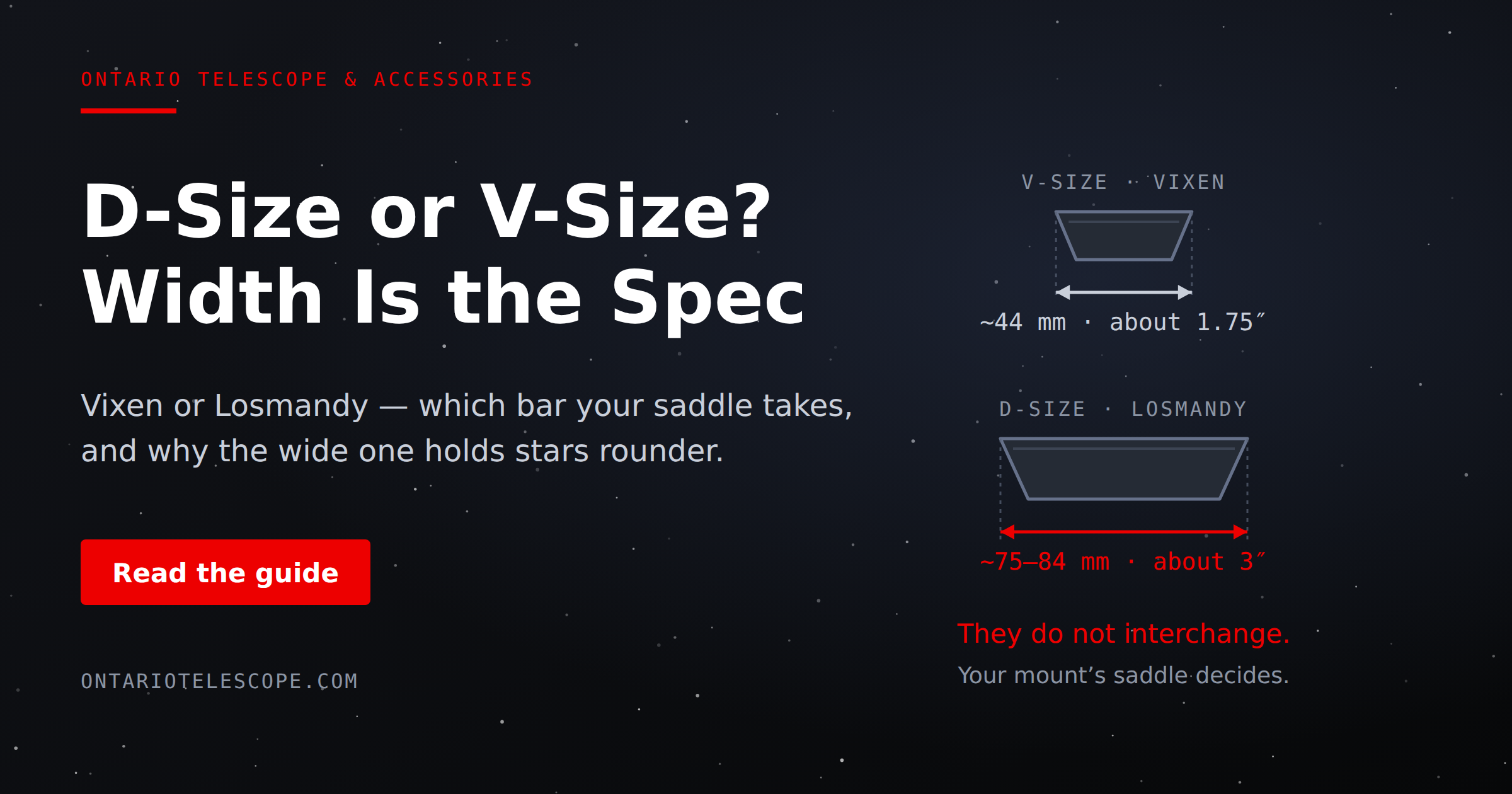
D-Size vs V-Size: A Complete Guide to Telescope Dovetail Systems
Read More
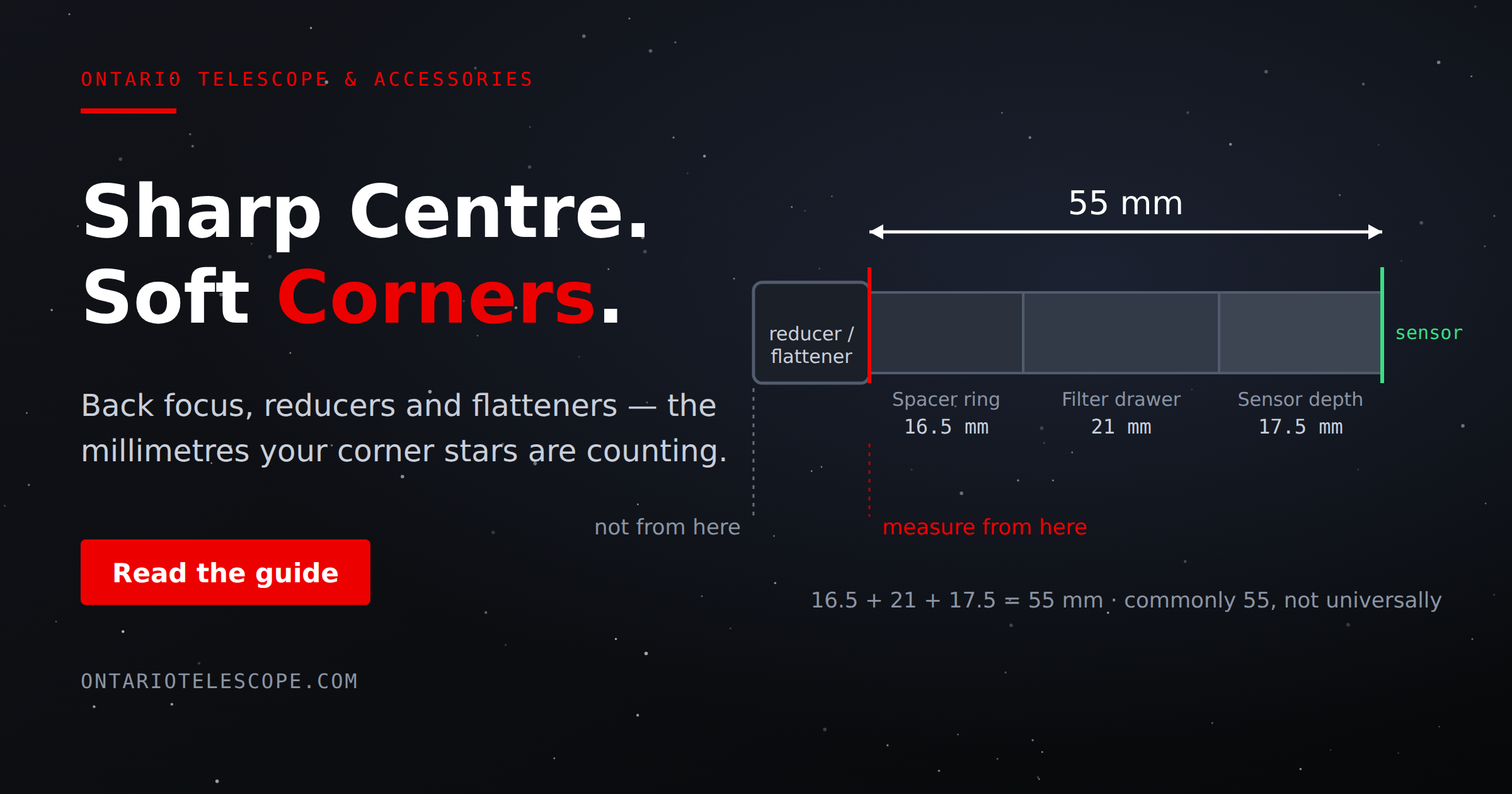
What Is Back Focus in Astrophotography? Telescope Reducers, Flatteners, and Spacing Explained
Read More