


- Description
- Specifications
Product Overview
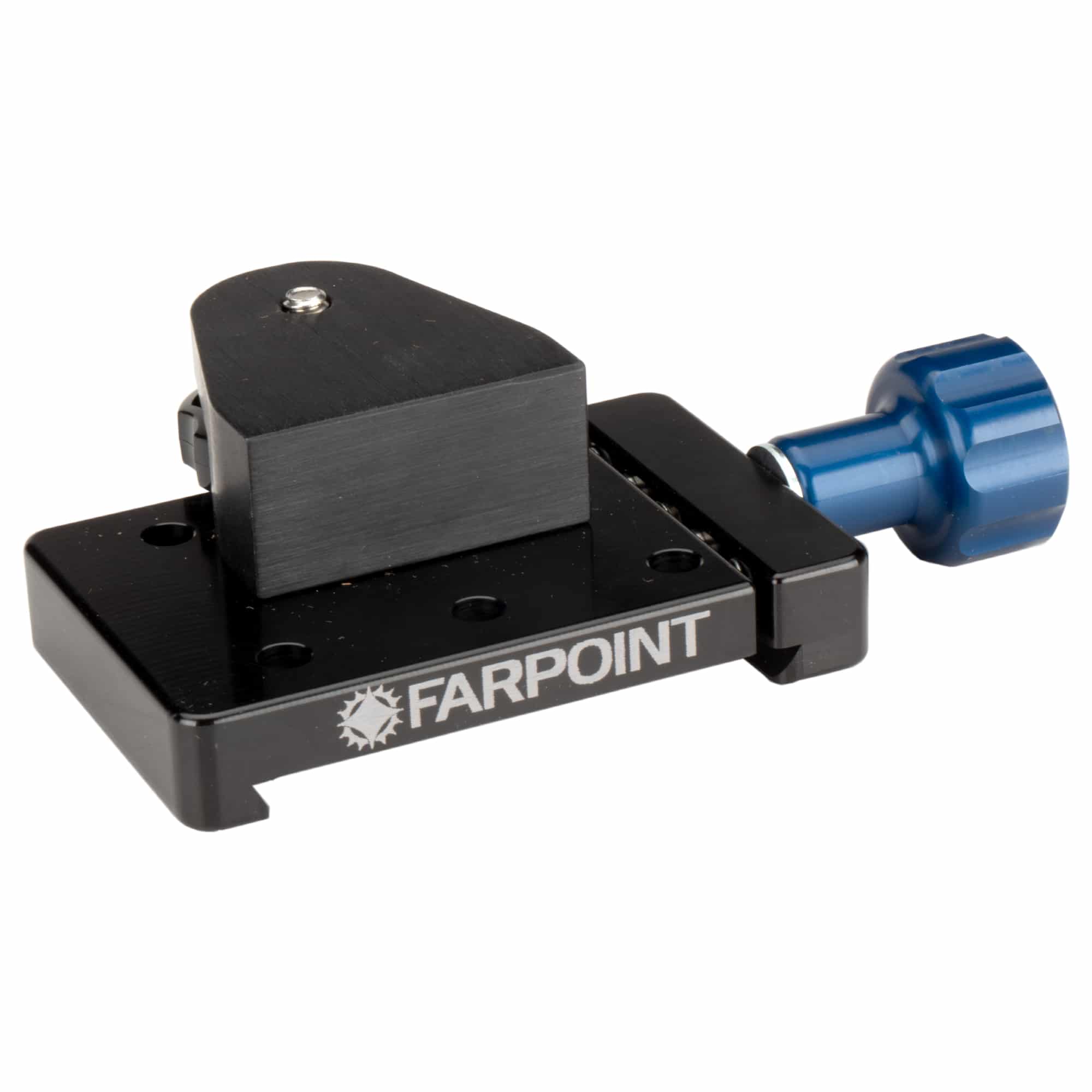
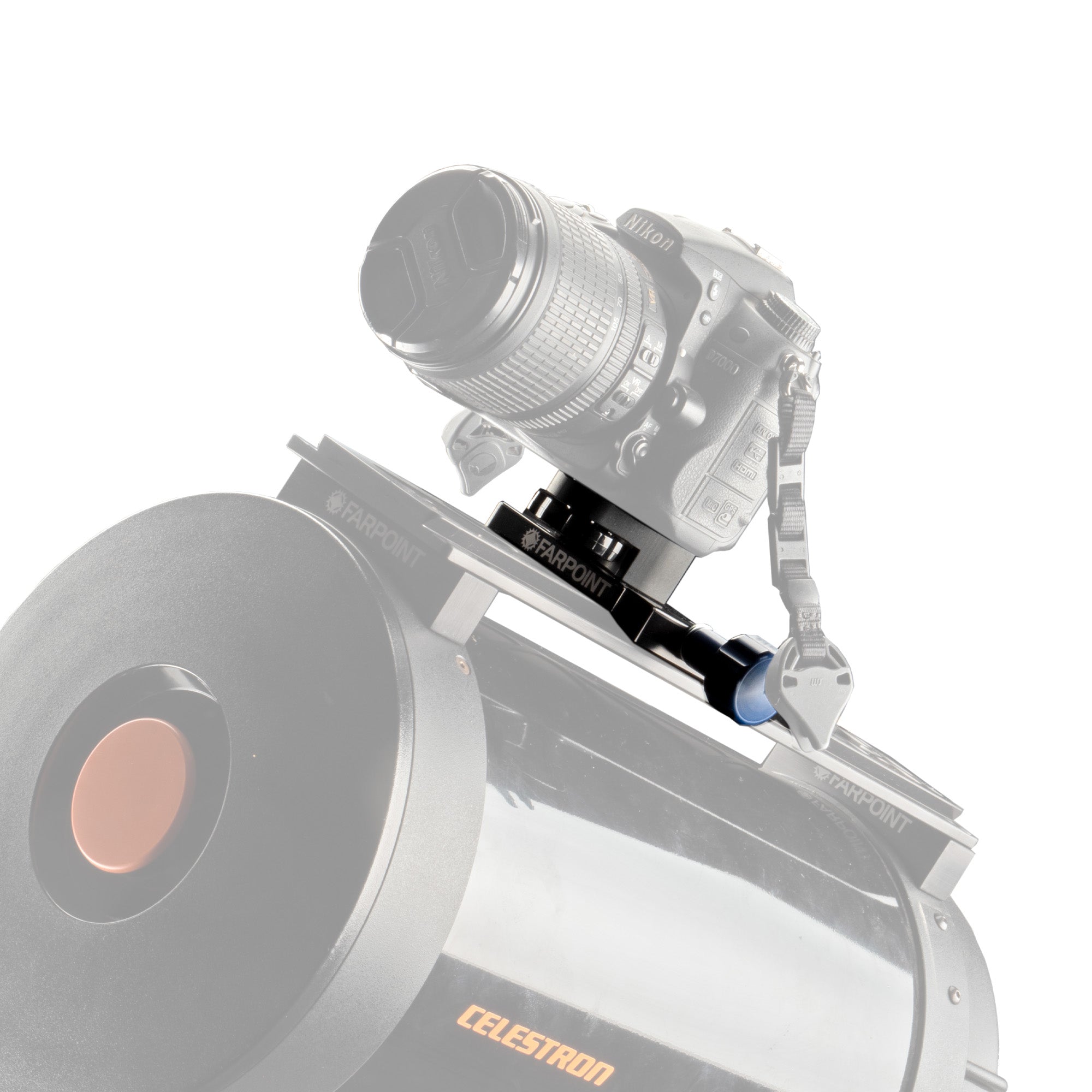
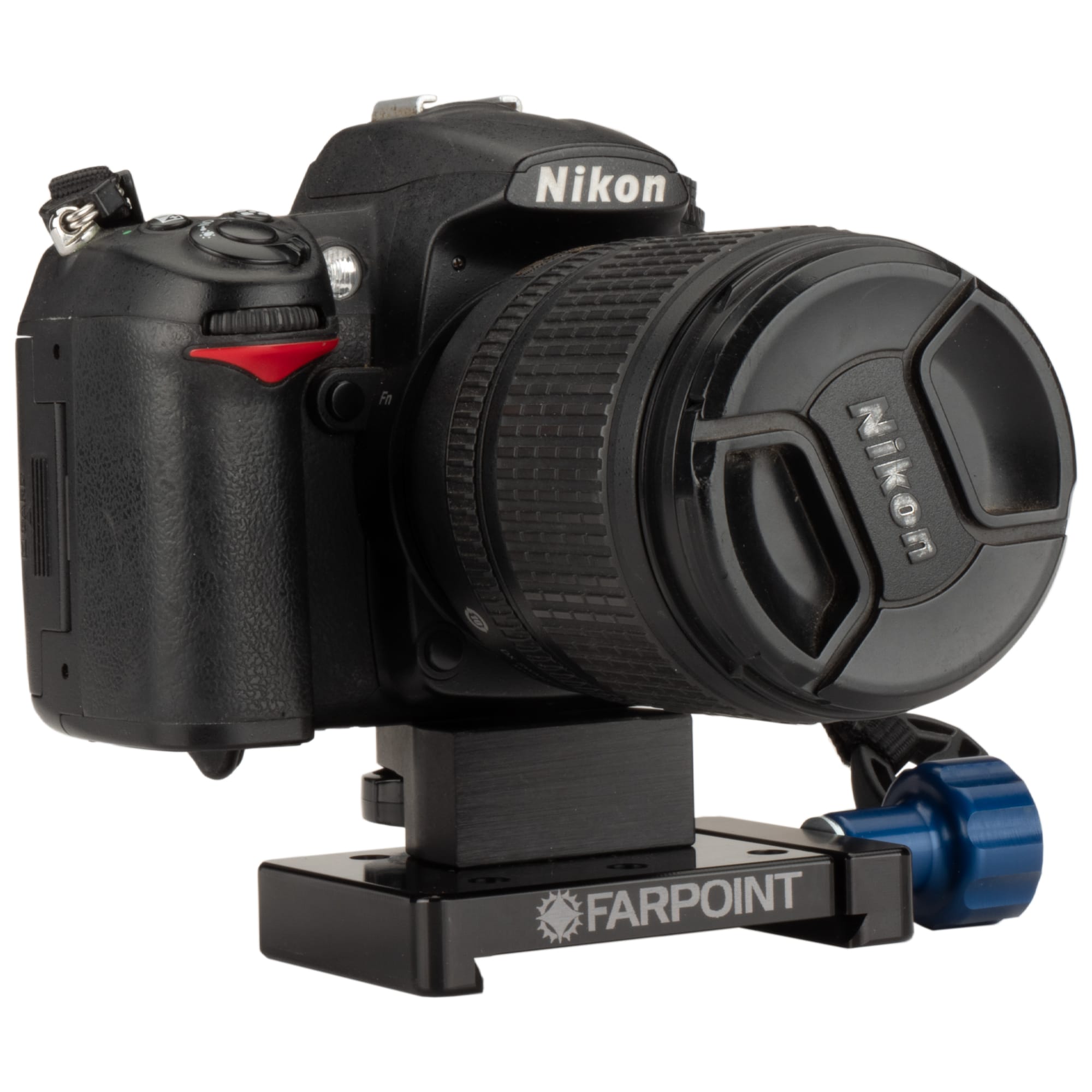
The Farpoint FDCM is a quick-release saddle with a camera platform on top. The saddle clamps onto any D-size (Losmandy-style) dovetail plate and presents a standard tripod thread, so a camera or accessory goes onto the telescope and comes off again without tools. CNC-machined in the USA, with a published weight of 0.9392 lb.
Who It's For
This is a good match if you want a rigid piggyback platform on a D-size bar and you would rather the camera follow the telescope's aim than be steered separately.
Key Features & Design
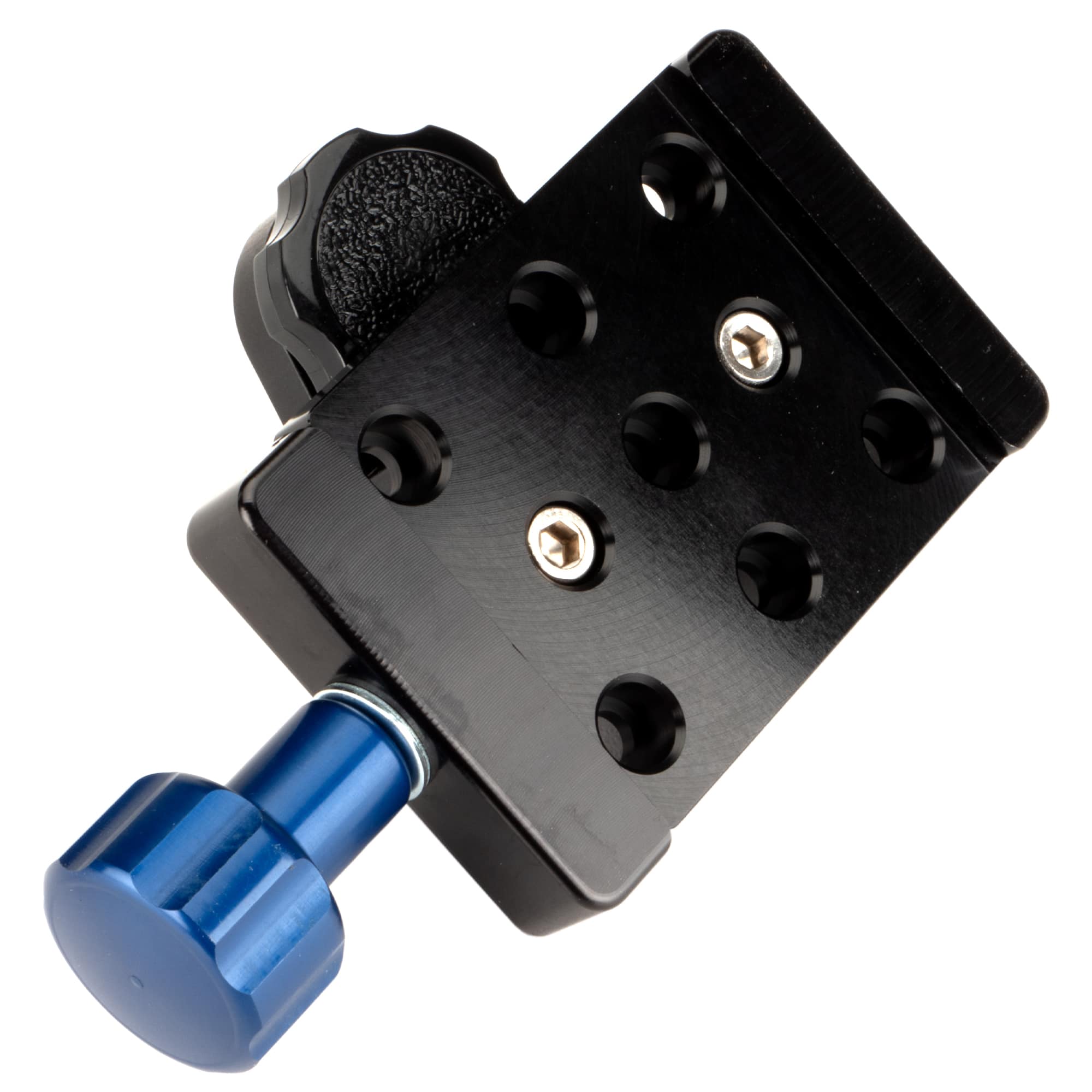
- Quick-release saddle: clamps and releases on a D-size dovetail plate by hand.
- Standard tripod thread: accepts any camera or accessory with a conventional tripod socket.
- Fixed orientation: the camera stays square to the bar, which keeps the load path short and the assembly rigid.
- Plate stays on the tube: the dovetail plate remains bolted in place and only the saddle moves.
- Published weight: 0.9392 lb, CNC-machined in the USA.
Mechanical Design
The saddle is a clamp that closes on the dovetail's angled flanks. Because those flanks are tapered, tightening pulls the saddle down onto the plate as well as inward, which takes up side play without needing a precise sliding fit. The camera platform sits directly over that clamp rather than on an arm, so the distance between the camera's thread and the dovetail is short and there is little for the assembly to flex about. Sliding the saddle along the plate before locking it is how balance is set.
Recommended Uses
- Piggyback camera work where the camera shares the telescope's aim.
- Carrying a guide camera, finder or small accessory on a D-size bar.
- Setups where the camera is fitted and removed between sessions while the plate stays on the tube.
- Balancing a payload by sliding the camera along the bar.
Compatibility and Accessory Notes
The saddle fits D-size (Losmandy-style) dovetail plates, the wider standard, as distinct from the narrower V-size (Vixen-style) profile. Any camera or accessory with a standard tripod socket attaches on top. The dovetail plate is a separate item, and Farpoint's universal D-size bars serve that role. If you are unsure which dovetail your scope carries, we can identify it from the mount or tube model.
Good to Know Before You Order
- Saddle only. The FDCM is the camera mount and quick-release saddle; the dovetail plate is bought separately.
- Fixed aim. The camera points where the bar points, so independent framing calls for the ball head adapter instead.
- D-size geometry. The clamp is cut for D-size (Losmandy-style) plates rather than V-size (Vixen-style) ones.
- Sub-pound item. The published weight is 0.9392 lb, and shipping is calculated at one pound.
Frequently Asked Questions
What will it hold?
Any camera or accessory that uses a standard tripod mount.
Is the dovetail plate included?
No — the FDCM is the camera mount and quick-release saddle on its own.
Is it difficult to install?
The saddle clamps onto the plate by hand and the camera threads on as it would to a tripod. No tools or drilling are involved.
FDCM or the ball head adapter?
The FDCM gives a fixed orientation and the simpler, more rigid assembly. The ball head adapter trades some of that rigidity for the ability to aim the camera away from the telescope's target.
Bottom Line
In short: a 0.9392 lb tool-free saddle that puts a standard tripod thread on any D-size dovetail plate, with the camera held square to the bar.
| Camera mount | Any camera or accessory with a standard tripod socket |
|---|---|
| Fits | Any D-size (Losmandy-style) dovetail plate, via the quick-release saddle |
| Dovetail standard | D-size (Losmandy-style) |
| Clamping | Quick release — tool-free on/off |
| Dovetail plate | Not included — see our universal D-size dovetail bars |
| Construction | CNC-machined in the USA |
| Weight | 0.9392 lb |
| Country of origin | United States |
You may also like
Recently viewed
Recent Blog Posts
View all
Your Guide Graph Is Lying to You
Read More

D-Size vs V-Size: A Complete Guide to Telescope Dovetail Systems
Read More

What Is Back Focus in Astrophotography? Telescope Reducers, Flatteners, and Spacing Explained
Read More