

- Description
- Specifications
Product Overview
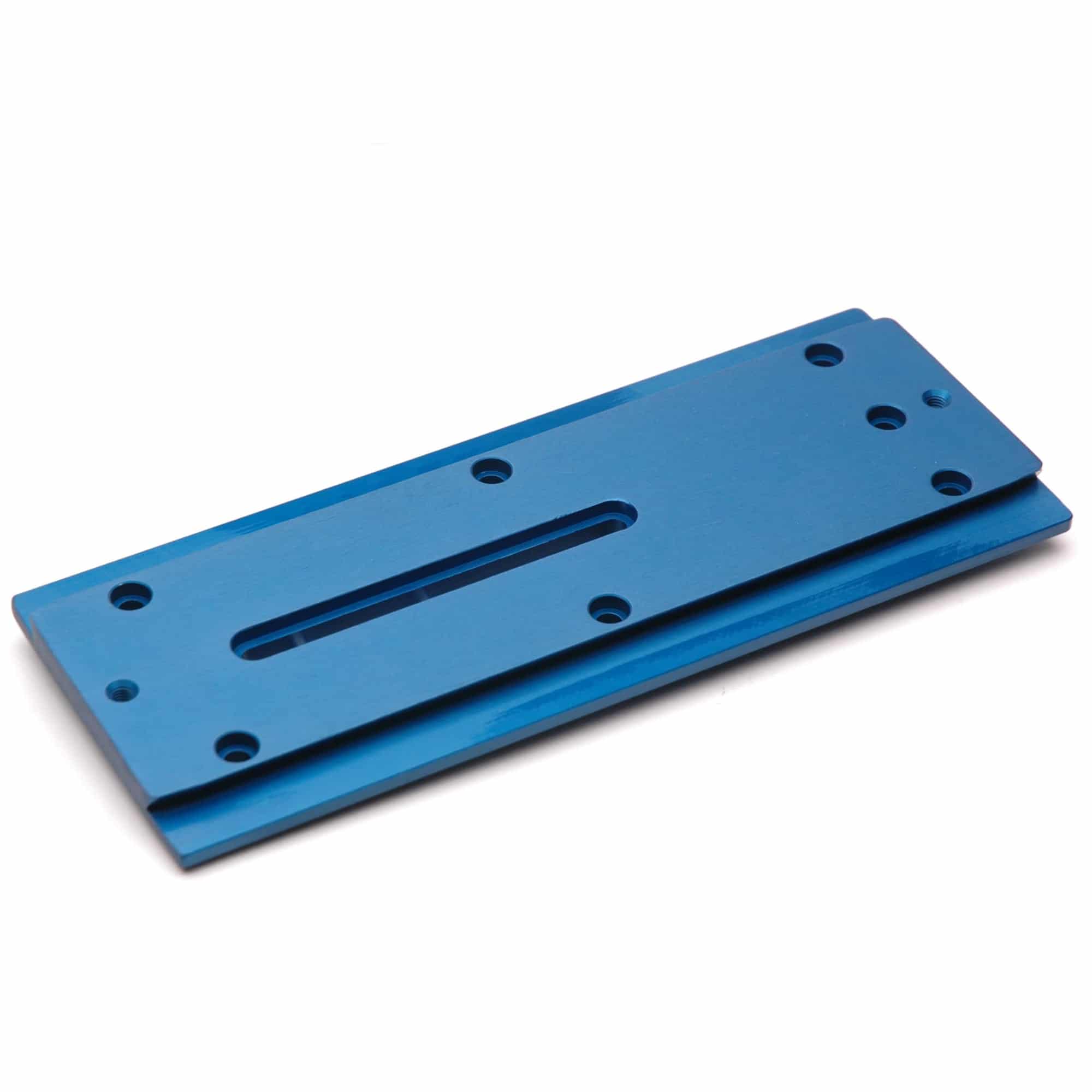
The Farpoint FMDUP is a 10″ metric universal dovetail bar cut to the D-size (Losmandy-compatible) profile. Its mounting holes sit on 60mm wide spacing — the pattern William Optics and most Asian-made clamshell rings are drilled for — so those rings bolt on directly, with no adapter plate and no re-drilling. The bar is machined from aluminum, finished in blue anodizing, and weighs 1.938 lb. At 10″ it is the middle length of Farpoint's metric family, which also runs 7″ and 14″. CNC-machined in the USA.
Who It's For
This is a good match if your rings use 60mm hole spacing and your mount carries a D-size (Losmandy-style) saddle, and you want more ring separation and balance travel than a 7″ bar allows without the full 14″ reach. It also suits a general-purpose D-size platform on a mid-size refractor or a compact imaging train, where 10″ covers the ring spacing and still keeps the bar from overhanging the tube.
Key Features & Design
- 10″ D-size bar: The middle length of the metric universal family, between the 7″ and the 14″.
- 60mm hole spacing: Drilled to the pattern used by William Optics and most Asian-made clamshell rings, so the rings mount without an intermediate plate.
- Losmandy-compatible profile: Seats in any saddle cut for the D-size standard, the wider of the two common dovetail formats.
- Blue anodized aluminum: Sturdy aluminum stock with an anodized layer giving the bar its blue finish.
- 1.938 lb bar: The published weight, which adds to the payload your mount carries alongside the tube and rings.
- CNC-machined in the USA: Produced on CNC equipment at Farpoint in the United States.
Recommended Uses
- Mounting a mid-size refractor in William Optics or similar clamshell rings onto a D-size saddle.
- Carrying a compact imaging train where 10″ of bar covers both the ring positions and the balance shift a camera adds.
- Building a general-purpose D-size platform for a guide scope or accessories riding alongside the main optic.
- Moving from a 7″ bar when a new tube or ring set needs a wider ring spread.
Compatibility and Accessory Notes
The FMDUP is a D-size bar in the Losmandy-style standard and clamps into any D-size mount saddle. A mount supplied with the narrower V-size (Vixen-style) saddle takes a D-size saddle or a saddle conversion before it will accept this bar. On the ring side, the 60mm wide hole spacing is the defining detail: it matches William Optics rings and most Asian-made clamshell rings. Farpoint's imperial universal bars carry a different assortment of hole options, so hole patterns do not carry across between the metric and imperial families. The 7″ and 14″ metric bars share this same 60mm spacing if you need a shorter or longer version. Farpoint publishes a dimensioned customer drawing for the FMDUP with every mounting hole and its measurement. If you are unsure whether your rings will line up, tell us your telescope and ring model and we'll confirm the fit.
Good to Know Before You Order
- The hole pattern is metric at 60mm. Rings drilled to another spacing will not line up, and Farpoint's imperial universal bars use their own separate hole variety.
- It is a D-size bar only. A V-size (Vixen-style) saddle is narrower and needs a D-size saddle or conversion in between.
- Rings are not included. This is the bar alone; the clamshell rings and their mounting screws come from your ring set.
- The bar adds 1.938 lb. On a mount close to its rated capacity, that figure belongs in the total with the tube, rings, and camera.
- Length sits in the middle. Where a longer balance travel or wider ring spread is wanted, the 14″ version covers it; where clearance is tight, the 7″ is shorter.
Frequently Asked Questions
Is it difficult to install?
No. The rings bolt to the bar through the 60mm-spaced holes and the bar slides into the mount's D-size saddle and clamps. Hex keys from your ring set handle the whole job.
What makes this bar metric?
The 60mm wide hole spacing, which matches William Optics and most Asian-made clamshell rings directly. The imperial universal bars carry a different variety of hole options instead.
Will my rings bolt to it?
If they are drilled on 60mm wide spacing, yes — that covers William Optics and most Asian-made clamshell rings. The product drawing gives the exact hole positions to check against your rings, and we are happy to check it for you.
What mounts does it work with?
Any mount with a D-size (Losmandy-style) saddle. Mounts that ship with a small Vixen saddle can take a D-size saddle or conversion.
Bottom Line
In short: a 10″ blue anodized D-size dovetail bar on 60mm hole spacing for William Optics and most Asian-made clamshell rings, weighing 1.938 lb and CNC-machined in the USA — the middle length of Farpoint's metric universal family.
| Bar length | 10″ |
|---|---|
| Bar standard | D-size (Losmandy-compatible) |
| Hole spacing | 60mm wide — fits William Optics and most Asian-made clamshell rings |
| Material | Aluminum, blue anodized finish |
| Construction | CNC-machined in the USA |
| Weight | 1.938 lb |
| Country of origin | United States |
You may also like
Recently viewed
Recent Blog Posts
View all
Your Guide Graph Is Lying to You
Read More

D-Size vs V-Size: A Complete Guide to Telescope Dovetail Systems
Read More
What Is Back Focus in Astrophotography? Telescope Reducers, Flatteners, and Spacing Explained
Read More