


- Description
- Specifications
Product Overview
The Farpoint 1.25″ Collimation Kit is the two-tool collimation set for Newtonian and Dobsonian reflectors with 1.25″ focusers. It pairs Farpoint's 650 nm laser collimator, in the 1.25″ barrel, with the 1.25″ Cheshire collimation eyepiece, and adds the mirror centre-marking template and triangle centre spots that both tools align to.
The pair covers the collimation sequence end to end: the laser aligns the secondary and brings the primary approximately into place, and the Cheshire finishes the primary precisely. The tools travel in a carrying case, and both are machined in the USA with a lifetime alignment guarantee on the laser.
Who It's For
This is a good match if your reflector has a 1.25″ focuser — common on smaller Newtonians, tabletop Dobsonians and many imported reflectors — and you want the whole collimation set in one purchase rather than assembled piece by piece. It suits visual observing, where the laser gives a fast pre-session check and the Cheshire is there when the primary has drifted, and it suits imaging, where the frame corners show every residual error and the Cheshire earns its place each time.
Key Features & Design
- 650 nm laser collimator: extra-bright red diode with a 0.76 mm beam aperture, the smallest Farpoint publishes for any collimator on the amateur astronomy market.
- 1.25″ stepped laser barrel: seats in standard 1.25″ focuser drawtubes.
- Eight-screw alignment system: directly opposing screws clamp both ends of the laser diode, rather than the three-screw arrangement used in cheaper designs.
- Single-piece machined laser body: barrel and diode housing cut from one aluminum blank, which keeps them concentric.
- 1.25″ Cheshire collimation eyepiece: reflective-pane design in the CATSEYE™ BlackCat style, with no crosshairs to interpret.
- No power of any kind on the Cheshire: no batteries and no electronics, so it reads the same on a cold night as a warm one.
- Mirror centre-marking template: acetate template and triangle centre spots for mirrors up to 12.5″.
- Carrying case: holds both tools and the marking components together.
- Made in the USA: with a lifetime alignment guarantee on the laser.
Mechanical and Optical Design
The two tools read the telescope by different physics, which is why they divide the work the way they do. The laser projects a single 0.76 mm beam down the focuser axis and reads where it lands. That makes it decisive about the secondary mirror, whose job is to sit centred under the focuser at the correct tilt, and it makes the primary check quick. Its limit is geometric: the laser reads the primary through a return path that is itself sensitive to how squarely the tool sits in the drawtube, so the last fraction of primary tilt is not where a laser is strongest.
The Cheshire projects no beam. Its reflective pane throws diffuse light down the tube and presents an illuminated field against which the primary's centre mark is judged by eye. Because that reading is a concentricity judgement on an extended field rather than the position of a spot, it resolves the primary more finely, and residual tilt of the tool in the focuser does not bias it. Running the laser first and the Cheshire second uses each instrument where its geometry is strongest.
Two details underpin the laser's own accuracy. Machining the barrel and diode housing from one aluminum blank removes the tolerance stack that comes with a barrel pressed or threaded into a separate body, and the eight-screw mount clamps the diode at both ends with directly opposing pairs, holding it in compression so alignment survives handling and transport.
Recommended Uses
- Full collimation of a 1.25″-focuser Newtonian or Dobsonian: secondary with the laser, primary finished with the Cheshire.
- Pre-imaging alignment: squaring the optics before a run of long exposures, where corner coma exposes small errors.
- Setup after transport: a tabletop Dobsonian or a Newtonian just out of a car reads with the laser in seconds.
- Mid-session confirmation: the laser return is visible without white light, so dark adaptation holds.
- First-time centre marking: the supplied template and triangle spots put the reference point on the primary that both tools use.
Compatibility and Accessory Notes
- Focuser fit: both tools take a standard 1.25″ focuser drawtube.
- 2″ focusers: the Farpoint 2″ Collimation Kit carries the 2″ Cheshire and the 1.25″/2″ combo-barrel laser, and we stock it.
- Telescope types: Newtonian and Dobsonian reflectors. Refractors, catadioptric and SCT designs collimate by other means.
- Primary mirror centre mark: both tools align to a mark on the primary, and the acetate template and triangle spots are supplied for mirrors up to 12.5″.
- Mirrors over 12.5″: the Farpoint LARGE centre-marking template covers 12″ to 26″ and is sold separately.
- Buying the laser alone: the same 650 nm collimator with the 1.25″ barrel is sold on its own as the FP211.
- Tell us your scope and we will confirm the fit.
Good to Know Before You Order
- Both tools in this kit are the 1.25″ versions. A reflector with a 2″ drawtube is served by the 2″ kit instead, which also carries the combo-barrel laser.
- The primary mirror needs a centre mark for either tool to align to. The template and triangle spots are in the box, and marking a mirror is a one-time job that lasts the life of the coating.
- The supplied template covers mirrors up to 12.5″. Larger mirrors take the LARGE template, which we also stock.
- The Cheshire has no crosshairs. It reads by the concentricity of the illuminated field against the centre mark rather than by lining up a wire.
- The 650 nm beam is bright by design. It is meant to be read off the mirror and the focuser face rather than viewed directly.
- Farpoint's lifetime alignment guarantee applies to the laser. The Cheshire carries no alignment to hold, having no diode or electronics in it.
Frequently Asked Questions
Is it difficult to set up?
No. Each tool drops into the focuser like an eyepiece and is read straight away. The one preparatory step is marking the centre of the primary mirror, and the template and triangle spots for that come in the kit — done once, the mark lasts the life of the mirror.
Will it fit my telescope?
If your reflector has a 1.25″ focuser drawtube, yes — both tools are sized for it. A 2″ drawtube takes the 2″ kit. Send us the make and model and we will check which one suits.
Why include a Cheshire when the kit already has a laser?
The laser reads the secondary decisively and puts the primary approximately right. The Cheshire judges the primary's centre mark against an illuminated field, which resolves the last of the primary tilt more finely. The pairing is the standard approach to Newtonian collimation.
Does the Cheshire need batteries?
No. It is a reflective-pane design with no electronics, so there is nothing to power or replace.
What does the 0.76 mm beam aperture change in practice?
It tightens the spot that returns off the mirror. A wider beam comes back as a larger, speckled patch that is harder to judge against the centre mark; at 0.76 mm the return is a small spot, so a slight misalignment stays visible.
Can it be used on an SCT or a refractor?
Those designs collimate by other methods, so these tools have no role there. Tell us what you have and we will point you at the right one.
Bottom Line
In short: a USA-made two-tool set for 1.25″-focuser Newtonians and Dobsonians — a 650 nm laser with a 0.76 mm aperture and an eight-screw diode mount, a 1.25″ reflective-pane Cheshire, the centre-marking template both align to, and a carrying case to keep them together.
| Kit contents | Farpoint 650 nm laser collimator (1.25″ barrel), Farpoint 1.25″ Cheshire collimation eyepiece, mirror centre-marking template with triangle centre spots, carrying case |
|---|---|
| Laser wavelength | 650 nm (red) |
| Laser beam aperture | 0.76 mm |
| Laser barrel | 1.25″ |
| Laser body | Single-piece machined aluminum |
| Laser alignment system | Eight screws — directly opposing screws at both ends of the diode |
| Cheshire | 1.25″ reflective-pane design, CATSEYE™ BlackCat style, no crosshairs |
| Cheshire power | None — no batteries or electronics |
| Centre-marking template | Fits mirrors up to 12.5″ (larger templates sold separately) |
| Telescope types | Newtonian and Dobsonian reflectors with 1.25″ focusers |
| Warranty | Lifetime alignment guarantee on the laser |
| Weight | 1.25 lb |
| Country of origin | United States |
You may also like
Recently viewed
Recent Blog Posts
View all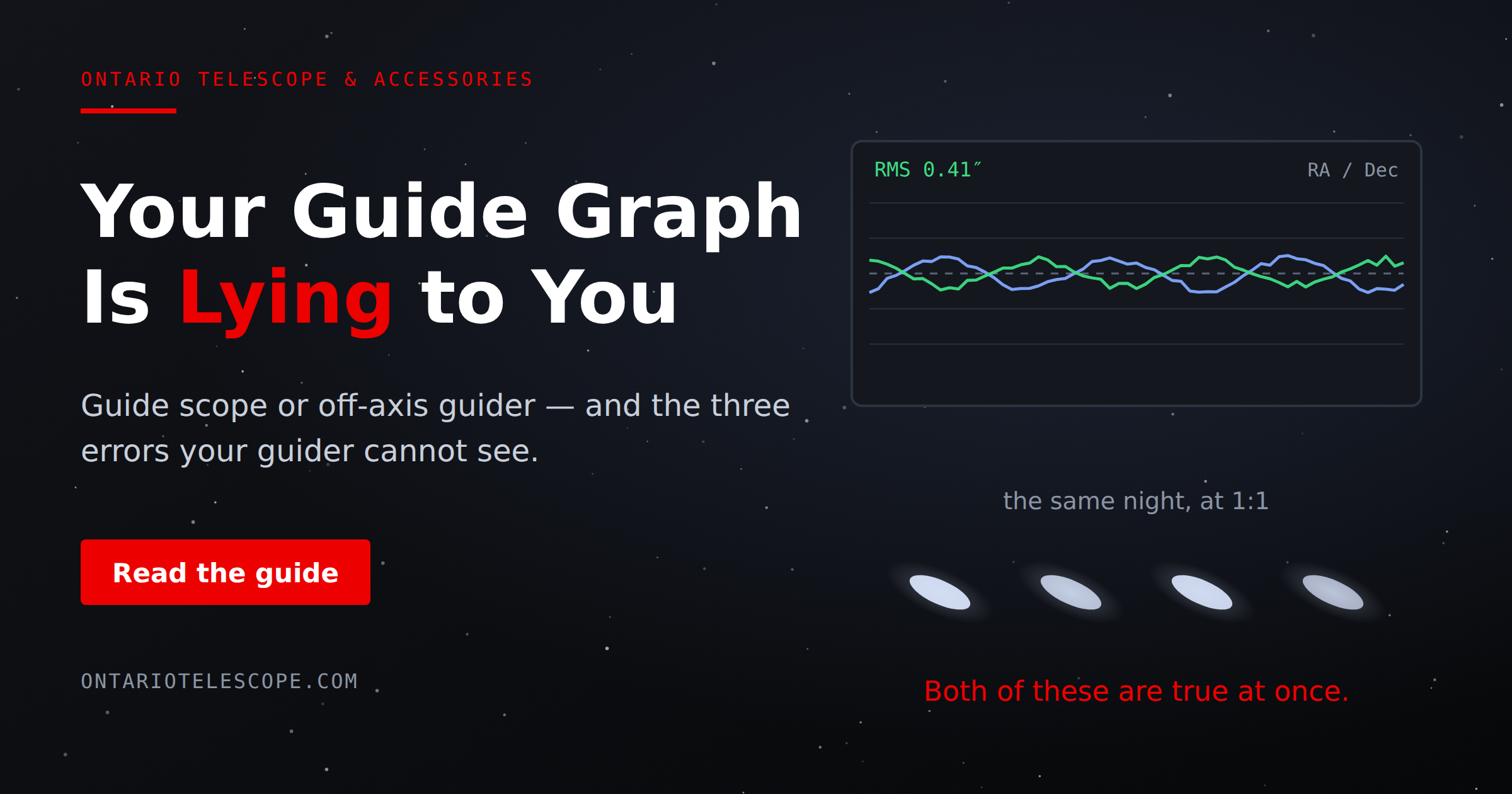
Your Guide Graph Is Lying to You
Read More
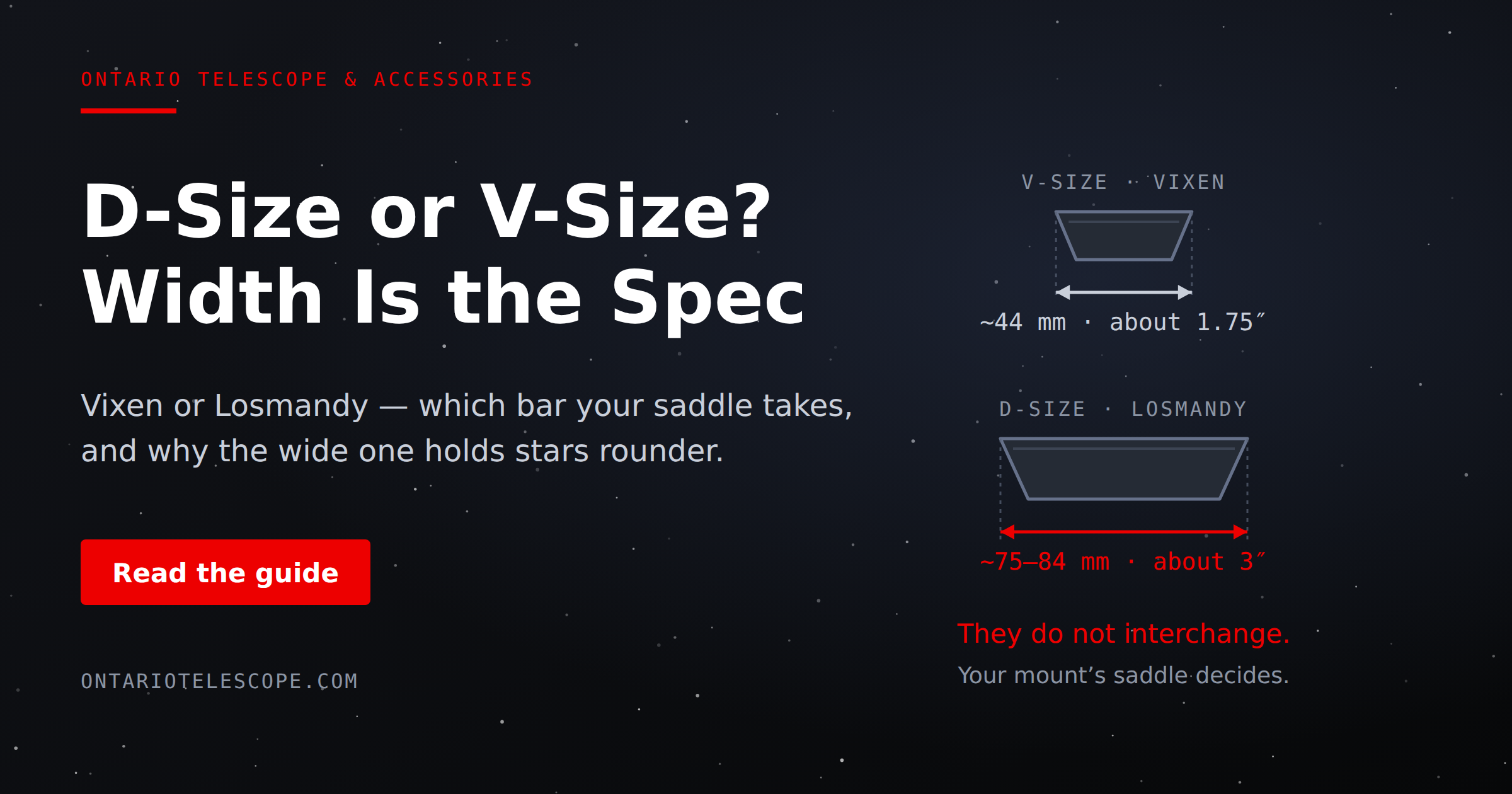
D-Size vs V-Size: A Complete Guide to Telescope Dovetail Systems
Read More
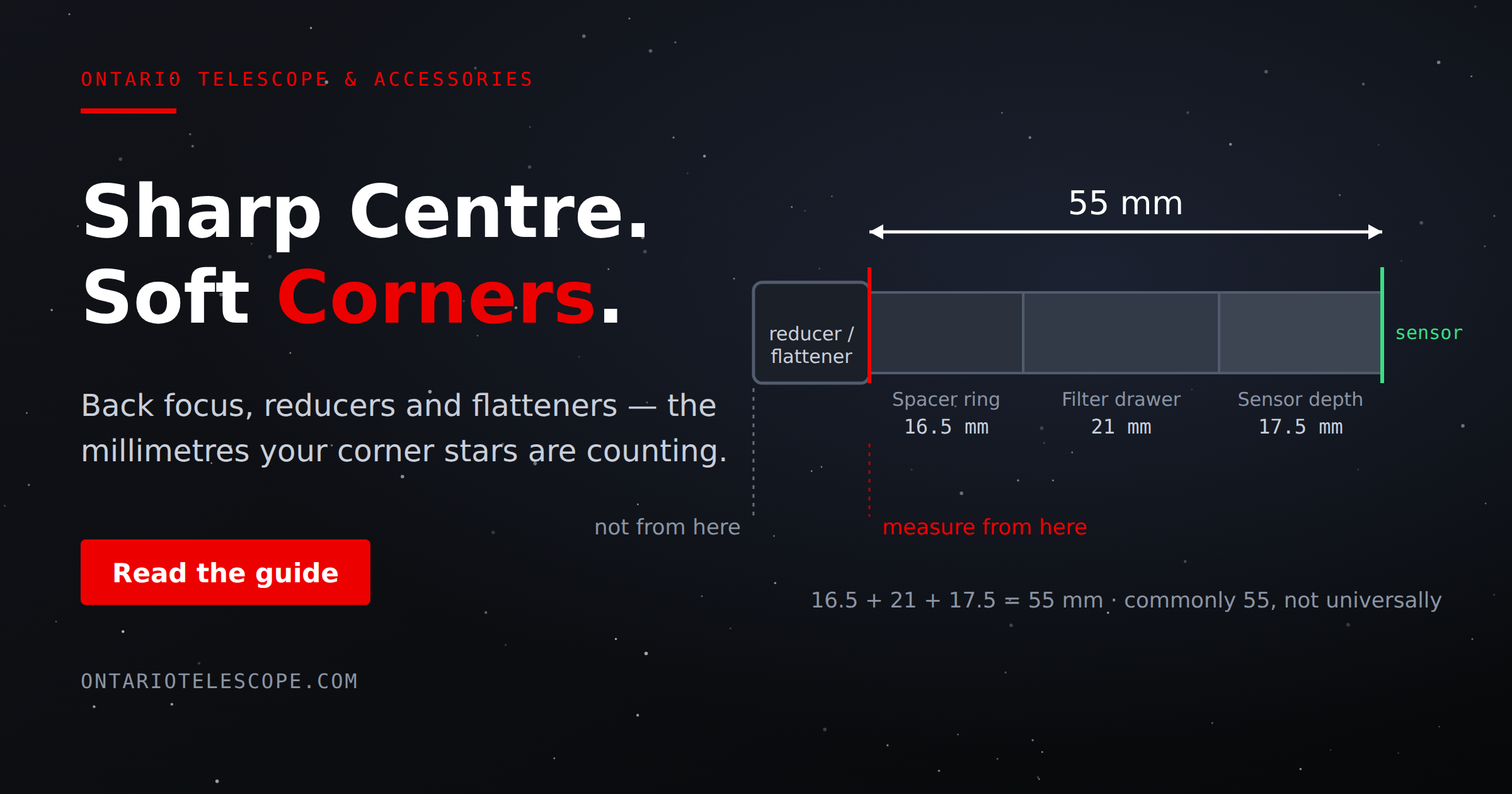
What Is Back Focus in Astrophotography? Telescope Reducers, Flatteners, and Spacing Explained
Read More