


- Description
- Specifications
Product Overview
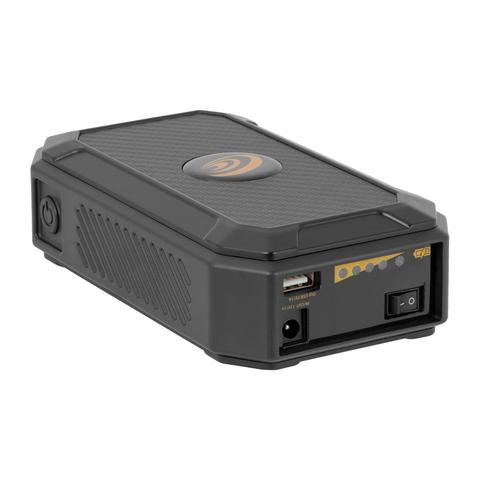
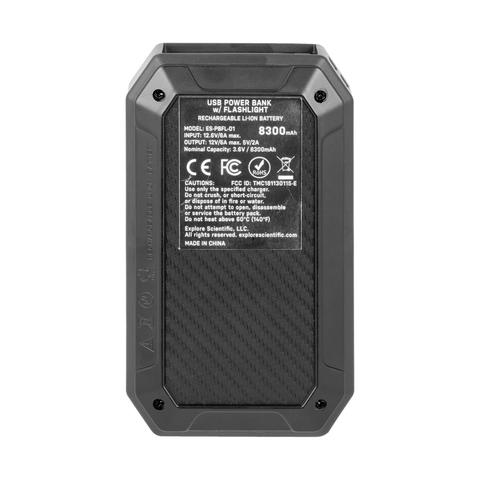
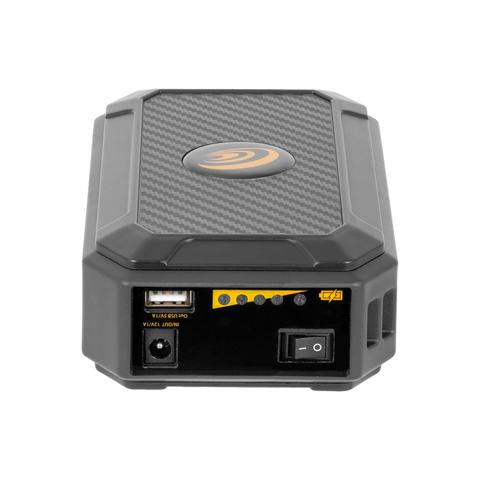
The Explore Scientific ES-PBFL-01 is a rechargeable lithium-ion power bank built for field use, rated at 8300 mAh / 99.6 Wh with two outputs: 12 V at up to 6 A for telescope mounts and accessories, and 5 V at 2 A over USB for phones, cameras and controllers. It measures 1.9 x 3.6 x 6.2 inches (48.5 x 91 x 158 mm), weighs 1.4 lbs (635 grams), and is specified to operate from -4 to 140 F (-20 to 60 C).
The two published capacity figures describe the same battery in different units, and the watt-hour figure is the more useful one for planning a night. 99.6 Wh divided by a 12 V load gives 8.3 amp-hours at that voltage. A goto mount tracking at around 0.5 A draws 6 W, which the pack will sustain for roughly sixteen hours on paper. A dew heater strip pulling 1.5 A draws 18 W, giving something in the region of five and a half hours. Running the mount and a heater together lands near four hours. Those are arithmetic from the published rating rather than tested runtimes, and real figures come out lower once cable losses and cold weather are counted — but they set the right expectation for a night's observing.
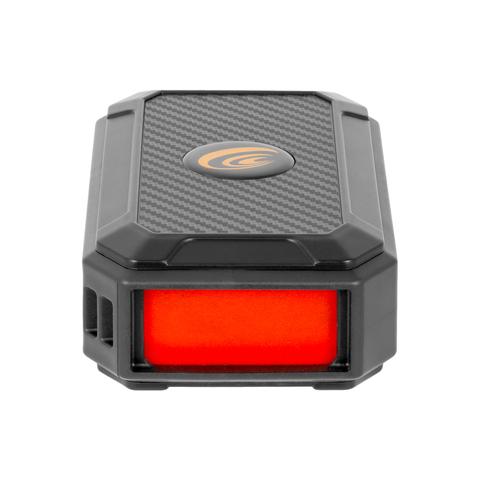
The red LED flashlight built into the body is there for the same reason red torches exist at every star party: the eye's dark adaptation survives red light far better than white, so a red beam lets you read a chart or find a dropped eyepiece cap without resetting the last twenty minutes of adaptation. A five-level charge indicator shows the remaining state, and the pack is wrapped in a rubber protective casing with attachment points so it can hang near the mount rather than sit in wet grass.
Who It's For
- Observers running a goto or tracking mount away from mains power: a 12 V output at up to 6 A covers the draw of most portable mounts with margin.
- Anyone fighting dew: heater strips are steady-current loads, and a 99.6 Wh pack is sized to run one through a long evening.
- Imagers in the field: the 5 V USB output handles a camera, a controller or a phone while the 12 V line carries the mount.
- Observers who want their night vision intact: the integrated red LED removes the need to carry a separate red torch.
- Travelling observers: at 1.4 lbs and roughly the size of a paperback, it packs alongside the eyepiece case rather than needing its own.
Key Features & Design
- 8300 mAh / 99.6 Wh lithium-ion cell: the published capacity, equivalent to about 8.3 amp-hours delivered at 12 V.
- 12 V output at 6 A maximum: up to 72 W available on the 12 V line, which covers a mount and a dew heater at the same time.
- 5 V USB output at 2 A: a second, independent supply for phones, cameras and accessories.
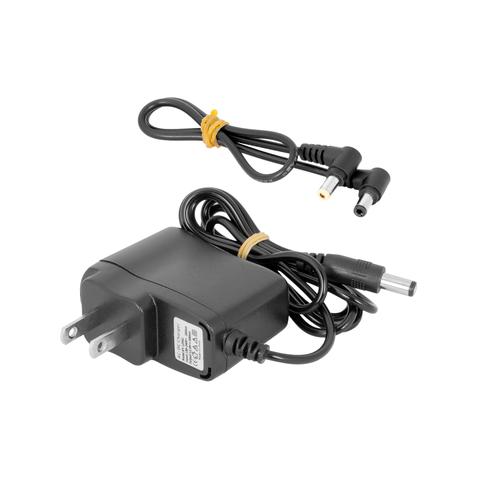
- Input rated 12.6 V at 6 A maximum, with a supplied 12.6 V 1.5 A charger.
- Red LED flashlight: built into the unit to preserve dark adaptation.
- Five-level charge indicator: tells you where the pack stands before a session rather than during one.
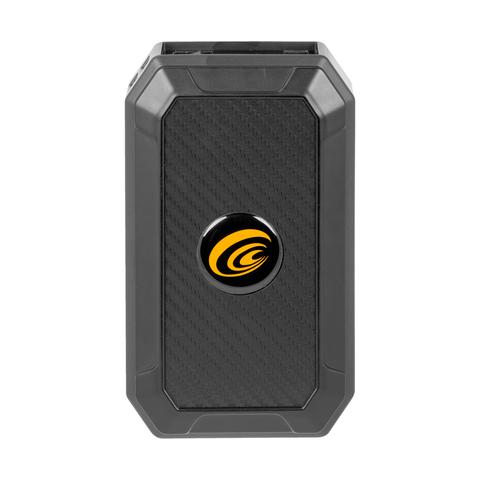
- Rubber protective casing with attachment points for hanging the pack near the equipment it is powering.
- Operating range -4 to 140 F (-20 to 60 C): a published range that covers most observing conditions.
- 1.9 x 3.6 x 6.2 inches, 1.4 lbs (635 g): the published size and weight.
- Supplied with a power cord with spring-loaded connectors and a 110 V-220 V AC to DC wall charger.
Recommended Uses
- Powering a portable equatorial or alt-az goto mount for a full observing session.
- Running dew heater strips on a corrector plate, objective or finder.
- Supplying 5 V over USB to a camera, an intervalometer, a phone or a hand controller.
- Serving as the field power source for a travel imaging setup where mains power is not available.
- Providing red-light illumination at the telescope without a separate torch.
- General emergency and camping power, given the two output voltages.
Compatibility and Accessory Notes
- 12 V devices: the output is rated at 6 A maximum, which is 72 W. Adding up the current draw of everything you intend to run and comparing it against that figure is the whole of the compatibility question, and we are happy to do the sum with you.
- Cables: the pack ships with a power cord with spring-loaded connectors. Mounts vary in the plug they expect, so if yours uses a different connector, tell us the model and we will sort out the right lead.
- Runtime arithmetic: divide 99.6 Wh by the wattage of your load. A 12 V device drawing 1 A is 12 W, giving roughly eight hours on paper; two such devices halve that.
- Charging: the supplied charger is rated 12.6 V at 1.5 A, so a full charge from empty is an overnight job rather than a top-up between sessions.
- USB devices: 5 V at 2 A suits phones, small cameras and hand controllers. High-draw USB devices that expect a fast-charge negotiation may charge more slowly than they would from a modern USB-C supply.
- Mounting: the attachment points let the pack hang from a tripod leg or an accessory tray, which keeps the cable run short and off the ground.
Good to Know Before You Order
- Lithium-ion capacity falls in the cold. The published operating range reaches -4 F (-20 C), and available capacity at the bottom of that range is lower than at room temperature. Keeping the pack inside an insulated bag or a jacket pocket between uses recovers most of the difference, and it is a habit worth having in winter regardless of which battery you own.
- 99.6 Wh sits just below the 100 Wh figure airlines commonly use as the threshold for carrying lithium batteries in cabin baggage. Policies differ between carriers and change over time, so the airline's own current rules are the place to look before a flight.
- The charger is a 1.5 A unit, so recharging is measured in hours rather than minutes. Putting it on charge the morning after a session is the simplest way to have it ready for the next one.
- The 12 V line has a 6 A ceiling. A mount, a dew heater or two and a camera together stay comfortably inside it; a high-draw device such as a large heated dew band on a big Schmidt-Cassegrain uses a meaningful share of the budget. Tell us your equipment list and we will check the total for you.
- Explore Scientific publish the pack's specifications but not a rated cycle life, so that row is absent rather than estimated. If it matters to you, we can put the question to our Explore Scientific rep.
Frequently Asked Questions
Is it difficult to set up?
No. It arrives with a power cord and a wall charger; a full charge before the first session and then plugging the mount into the 12 V output is the whole procedure. There is no software, no configuration and nothing to assemble.
How long will it run my mount?
Divide 99.6 Wh by the mount's draw in watts. A mount pulling 0.5 A at 12 V is 6 W, which comes to roughly sixteen hours on paper; expect somewhat less in practice, particularly in cold weather. Add a dew heater and the figure drops in proportion.
Can it run a dew heater and a mount at the same time?
Yes, within the 6 A ceiling on the 12 V output. A typical mount and a single heater strip together sit well inside that, and the runtime is the sum of the two loads against the 99.6 Wh capacity.
Why a red flashlight rather than white?
Dark adaptation takes twenty to thirty minutes to build and a moment of white light to undo. The eye is far less sensitive to deep red, so a red beam lets you read a chart or handle equipment with your night vision largely intact.
What comes in the box?
The power bank, a power cord with spring-loaded connectors, and a 110 V-220 V AC to DC wall charger.
Will it charge a phone?
Yes, through the 5 V 2 A USB output, which runs independently of the 12 V line.
Bottom Line
In short: an 8300 mAh / 99.6 Wh lithium-ion field battery with a 12 V 6 A output, a 5 V 2 A USB output, a red LED flashlight and a five-level charge gauge, in a rubber-cased 1.4 lb package with its charger and cable included. If you would like us to work out whether it will carry your mount, camera and dew heaters through a full night, send us the list and we will do the arithmetic with you.
| Item Number | ES-PBFL-01 |
|---|---|
| Battery Capacity | 8300 mAh / 99.6 Wh |
| Battery Type | Lithium-Ion |
| Input | 12.6v 6A max. |
| Output | 12v 6A max.; 5v 2A |
| Battery Charger | 12.6v 1.5A |
| Size | 1.9 x 3.6 x 6.2 inches; 48.5 x 91 x 158 mm |
| Weight | 1.4 lbs; 635 grams |
| Operating Temperature | -4 - 140 F; -20 - 60 C |
| Flashlight | Red LED |
| Charge Indicator | 5-level |
| Casing | Rubber protective casing |
| Supplied With | Power cord with spring-loaded connectors; 110v-220v AC to DC wall charger |
You may also like
Recently viewed
Recent Blog Posts
View all
Your Guide Graph Is Lying to You
Read More

D-Size vs V-Size: A Complete Guide to Telescope Dovetail Systems
Read More

What Is Back Focus in Astrophotography? Telescope Reducers, Flatteners, and Spacing Explained
Read More