


- Description
- Specifications
Product Overview
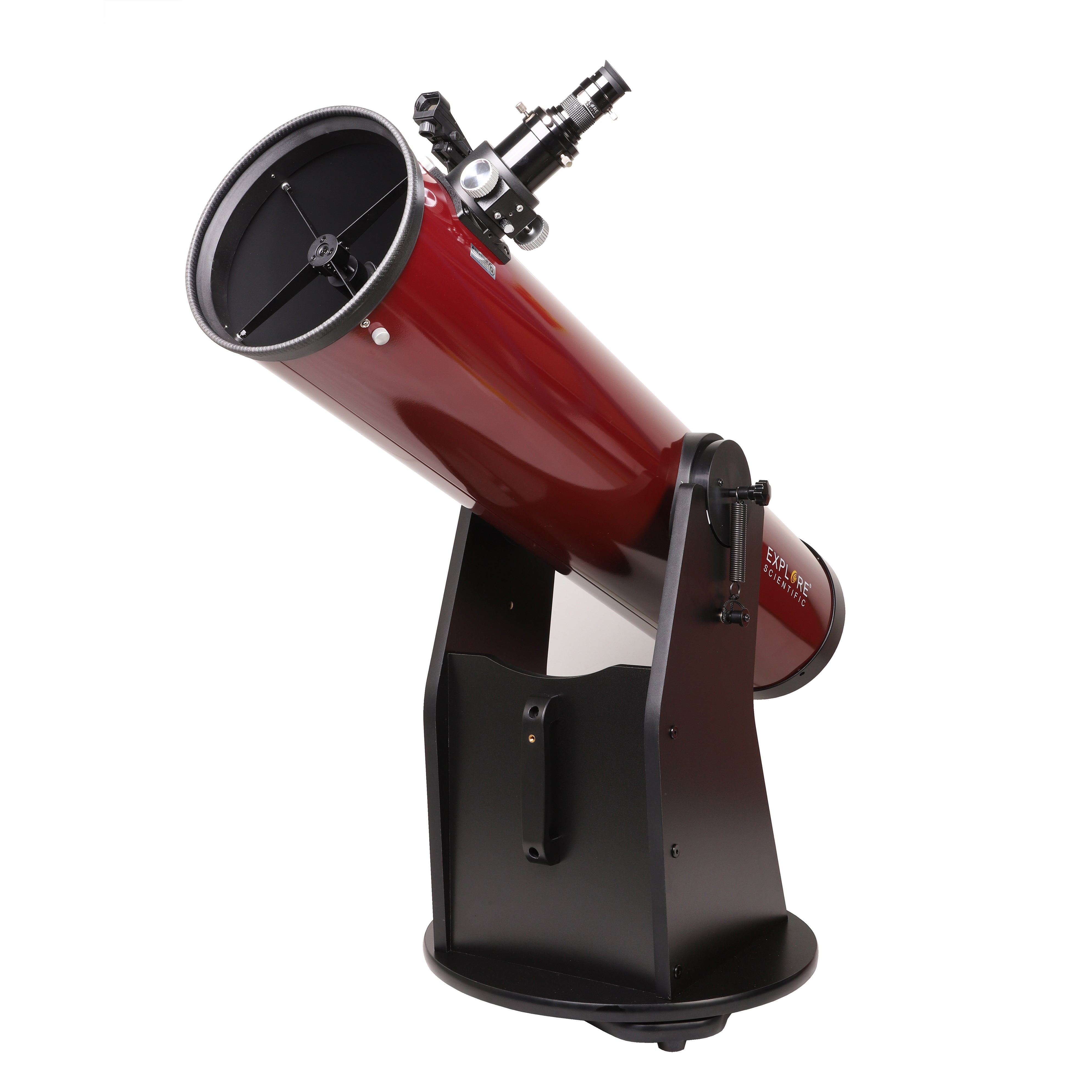
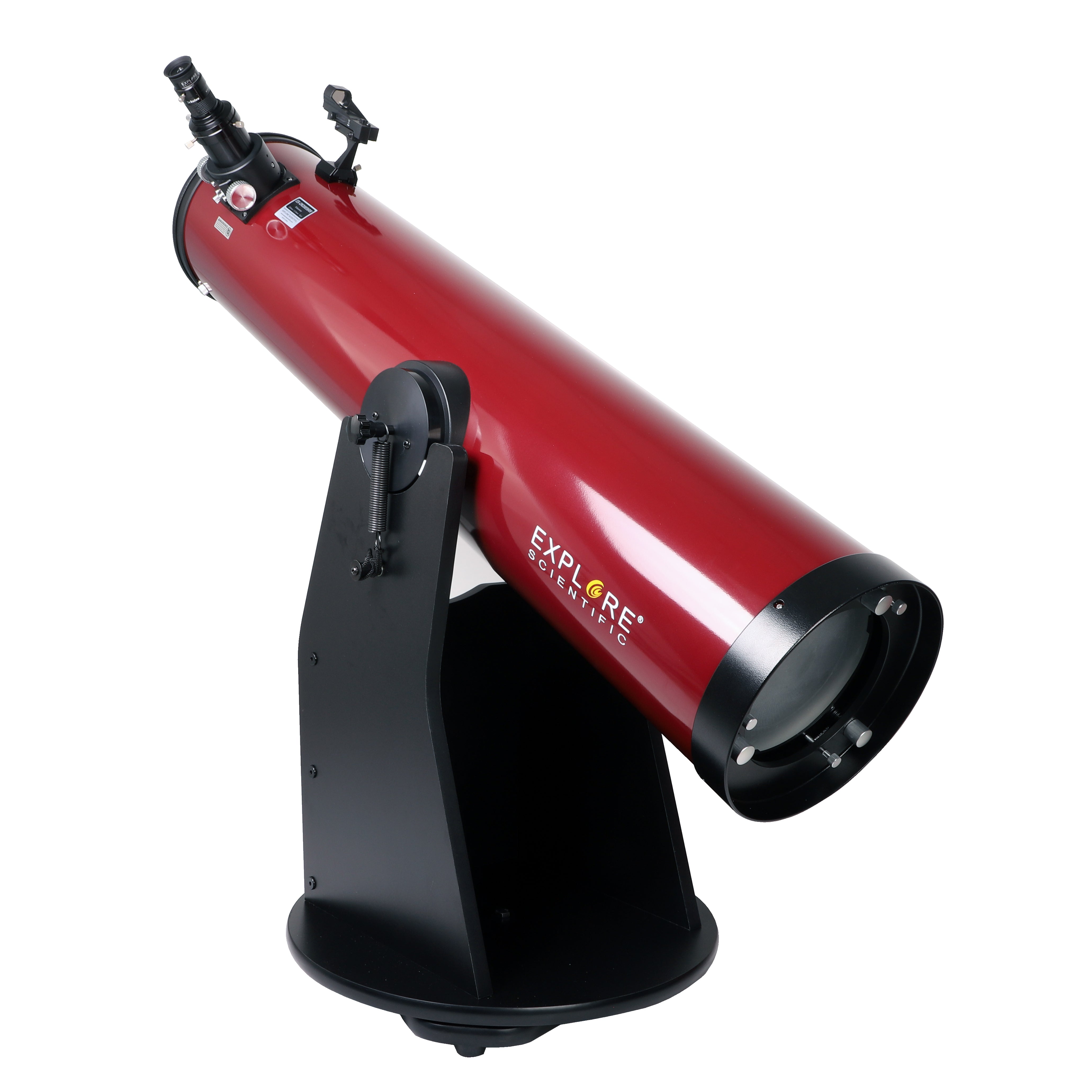
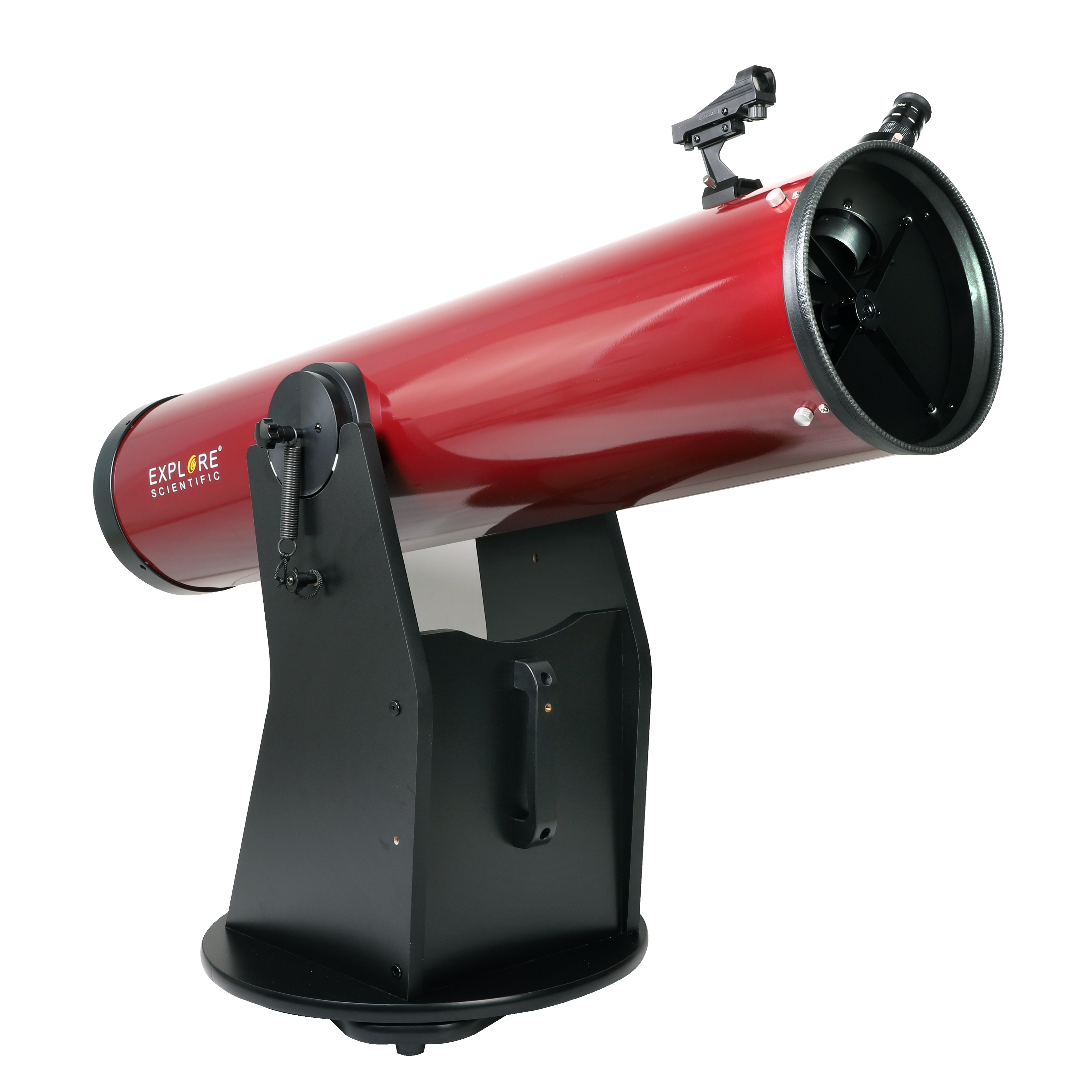
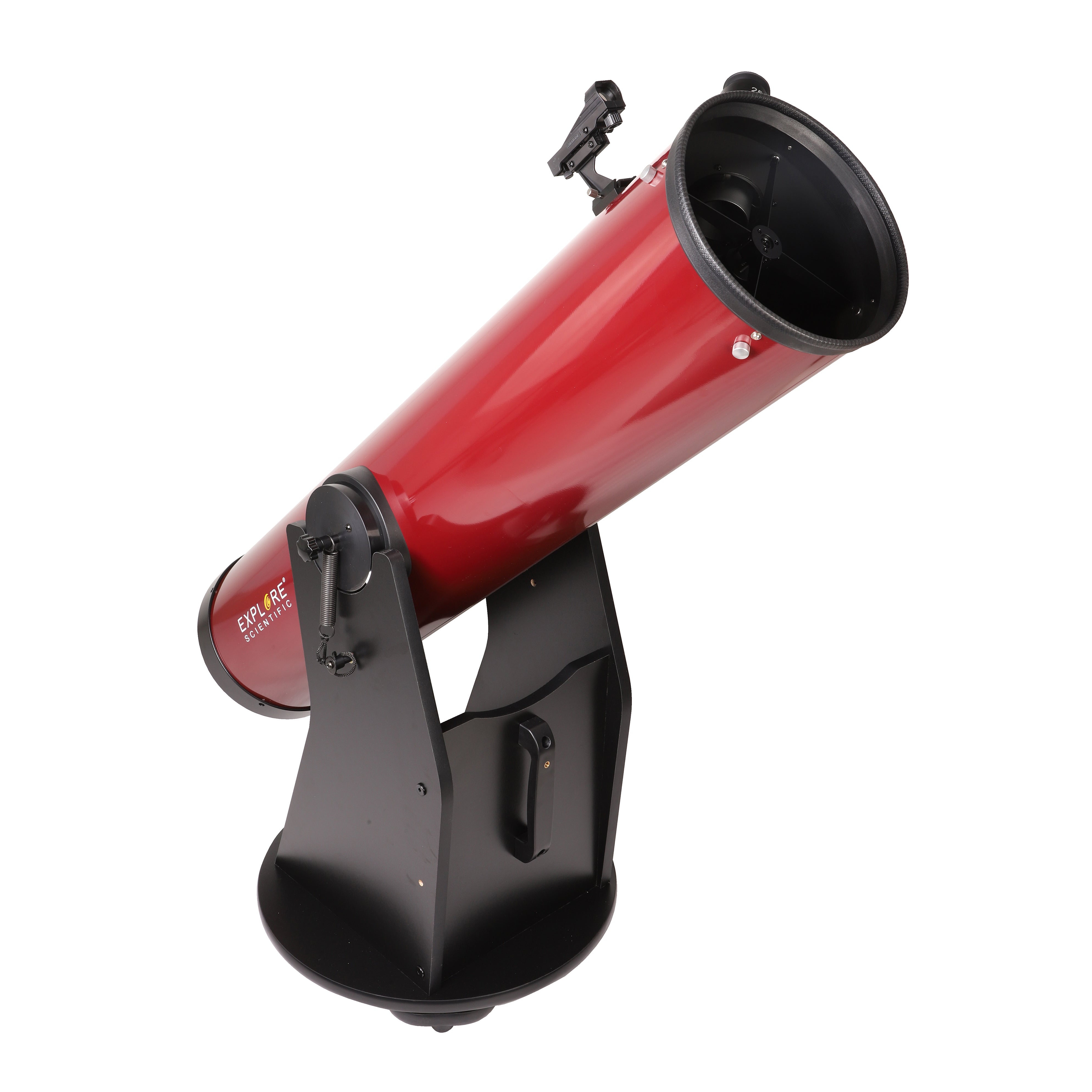
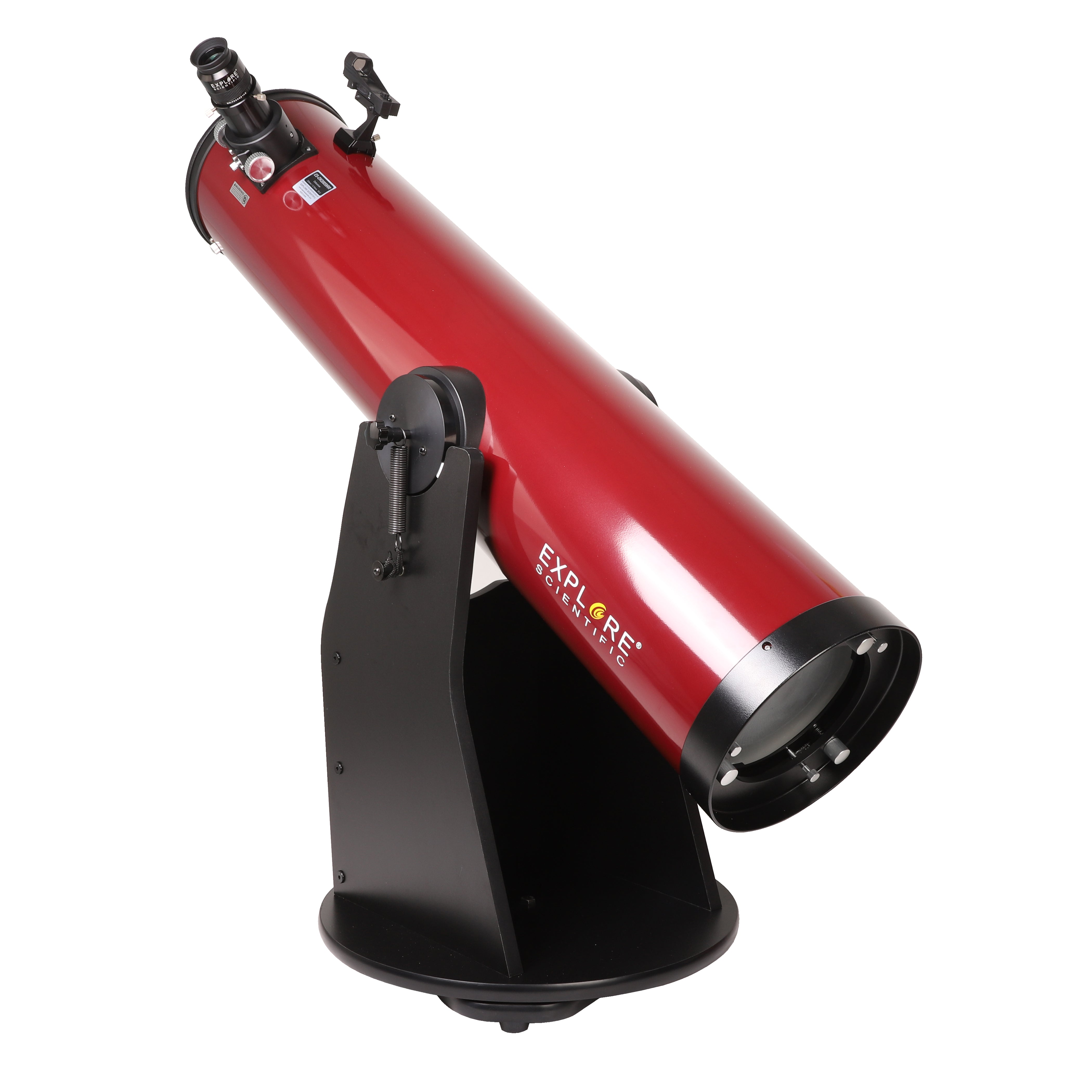
The Explore Scientific Limited Edition Ruby Red Dobsonian is an 8-inch solid-tube Newtonian reflector on a classic Dobsonian mount. The 208 mm primary mirror works at 1219 mm and f/5.9, and the telescope ships with two eyepieces, a 2x Barlow, a red-dot finder, and a smartphone adapter. The ruby red tube is a limited-run finish on Explore Scientific's standard 8-inch Dobsonian platform.
Who It's For
An 8-inch Dobsonian is the most light-gathering aperture most people can carry in one hand per piece, and it is the classic recommendation for someone who wants to see as much as possible for the money. This suits an observer stepping up from a small refractor who wants globular clusters to resolve into stars and galaxies to show structure, and it suits anyone who prefers pointing a telescope by hand to driving a mount by app.
Key Features & Design
- 208 mm (8-inch) primary mirror gathering roughly four times the light of a 102 mm refractor
- 1219 mm focal length at f/5.9, fast enough for wide-field views and bright enough for shorter exposures
- Solid optical tube on a classic Dobsonian base with a spring tension system for balance
- Explore Scientific 70° Series 25 mm eyepiece giving 49x, plus a 10 mm Plössl giving 122x
- 2x Barlow lens doubling both magnifications
- Red-dot finder, smartphone adapter for lunar and planetary snapshots, and a dust cover
- Limited edition ruby red tube finish
Optical and Mechanical Design
A Newtonian reflector puts all the aperture into a single parabolic mirror, which is why 8 inches of aperture costs what it does here rather than several times more in an apochromatic refractor. The Dobsonian base is an altitude-azimuth design that you nudge by hand; the spring tension system holds balance as you swap between a light eyepiece and a heavier one. The optical tube weighs 19 lb 15.5 oz and the base 18 lb 11 oz, so the telescope moves in two manageable pieces rather than one awkward one.
Recommended Uses
- Deep-sky observing — globular clusters, nebulae, and the brighter galaxies
- Lunar and planetary detail at 122x and above with the Barlow fitted
- Smartphone imaging of the Moon using the included adapter
- Backyard and driveway observing where setup speed matters more than tracking
Compatibility and Accessory Notes
The focuser takes 1.25-inch eyepieces as supplied. A 2-inch wide-field eyepiece is the usual first upgrade for this class of telescope and needs a focuser that accepts 2-inch barrels — contact us to confirm fit before ordering one. A collimation tool is worth having: Newtonian mirrors need occasional alignment, and it takes a couple of minutes once you have done it once. We stock collimation tools and a range of 1.25-inch and 2-inch eyepieces.
Good to Know Before You Order
The telescope arrives in two parts, tube and base, at 19 lb 15.5 oz and 18 lb 11 oz — worth knowing if it will be carried up stairs. Newtonians can shift out of collimation in transit; aligning the mirrors is a straightforward job and Explore Scientific's support team and ours will both walk you through it. The eyepiece sits about waist height at the zenith, so an observing stool makes long sessions more comfortable. This is a manual telescope with no tracking or GoTo, and the ruby red finish is a limited run.
Frequently Asked Questions
Is it difficult to set up? No. Set the base down, lift the tube into the cradle, and you are observing — a couple of minutes with no alignment procedure and no power needed.
Will it need collimating? Probably on arrival, and occasionally after that. It is a five-minute job with a collimation tool, and we are happy to talk you through your first time.
What can I expect to see? Cassini's Division in Saturn's rings, Jupiter's belts and moons, craters in sharp relief, the Orion Nebula's structure, and globular clusters resolving into individual stars from a reasonably dark site.
Can I photograph with it? The included smartphone adapter handles the Moon and bright planets well. Long-exposure deep-sky imaging needs a tracking mount, which this is not.
Bottom Line
Eight inches of aperture, two eyepieces and a Barlow in the box, and nothing to learn before your first night out. The ruby red finish makes it a distinctive version of the telescope most often recommended as the best all-round first serious instrument. Give our Bolton team a call if you would like eyepiece suggestions to grow with it.
| Item number | ES-ON20859RR |
|---|---|
| Optical design | Newtonian reflector on classic Dobsonian mount |
| Primary mirror diameter | 208 mm |
| Focal length | 1219 mm |
| Focal ratio | f/5.9 |
| Optical tube weight | 19 lb 15.5 oz |
| Base weight | 18 lb 11 oz |
| Tube finish | Limited edition ruby red |
| Eyepieces included | 70° Series 25 mm (49x) and 10 mm Plössl (122x) |
| Barlow included | 2x |
| Finder included | Red dot finder |
| Also included | Smartphone adapter, dust cover |
| Mount | Dobsonian alt-azimuth with spring tension system |
| Tracking or GoTo | None; manual |
You may also like
Recently viewed
Recent Blog Posts
View all
Your Guide Graph Is Lying to You
Read More

D-Size vs V-Size: A Complete Guide to Telescope Dovetail Systems
Read More

What Is Back Focus in Astrophotography? Telescope Reducers, Flatteners, and Spacing Explained
Read More