


- Description
Product Overview
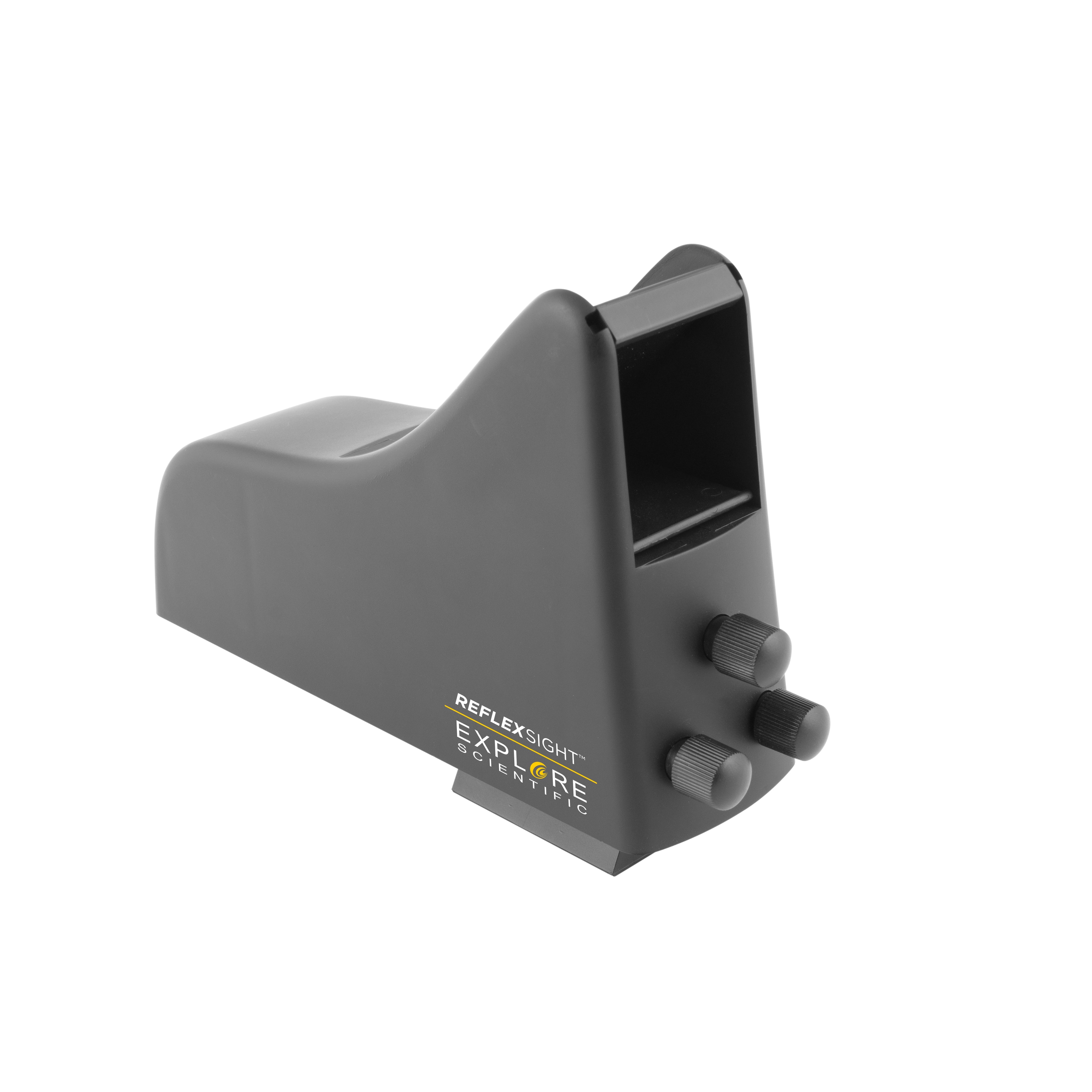
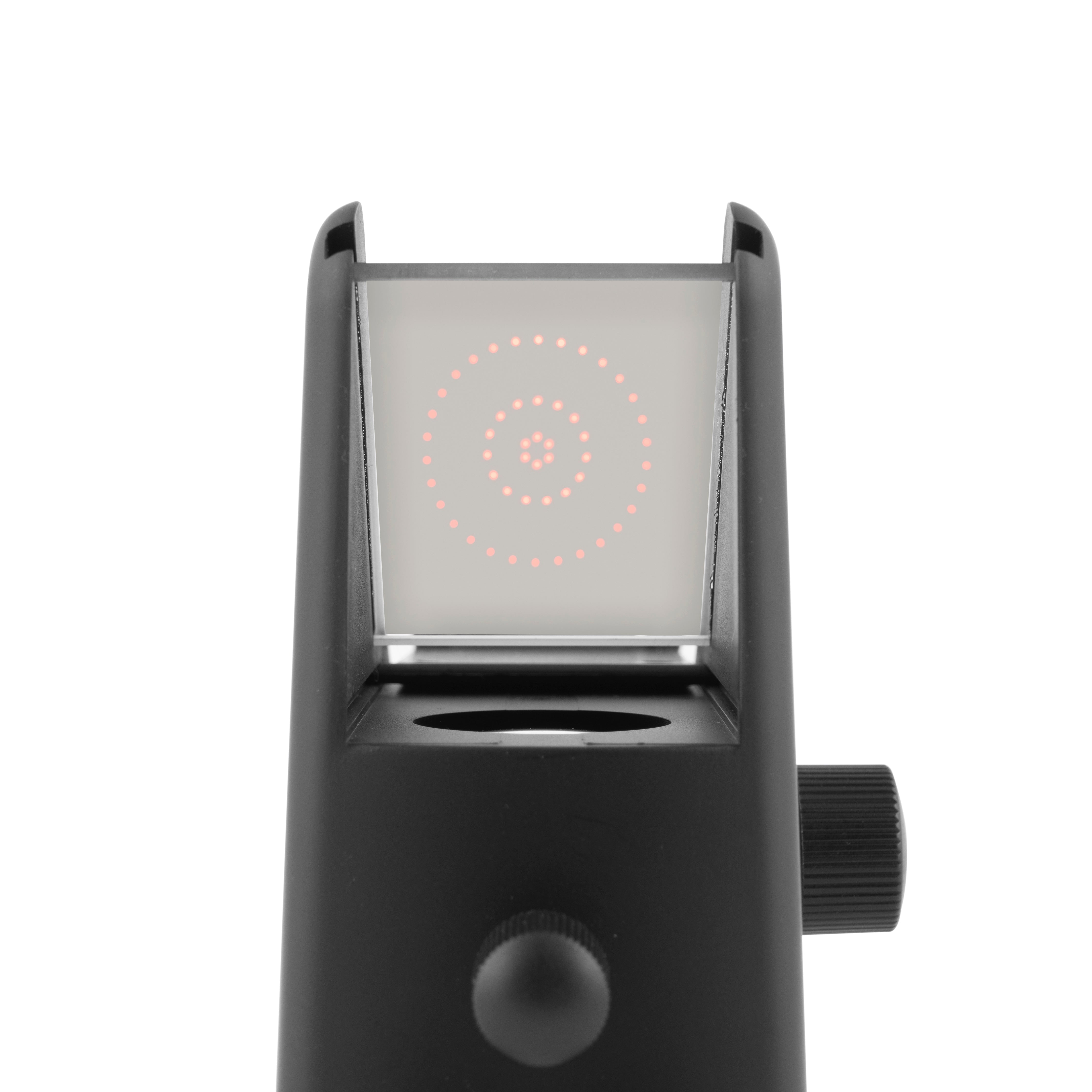
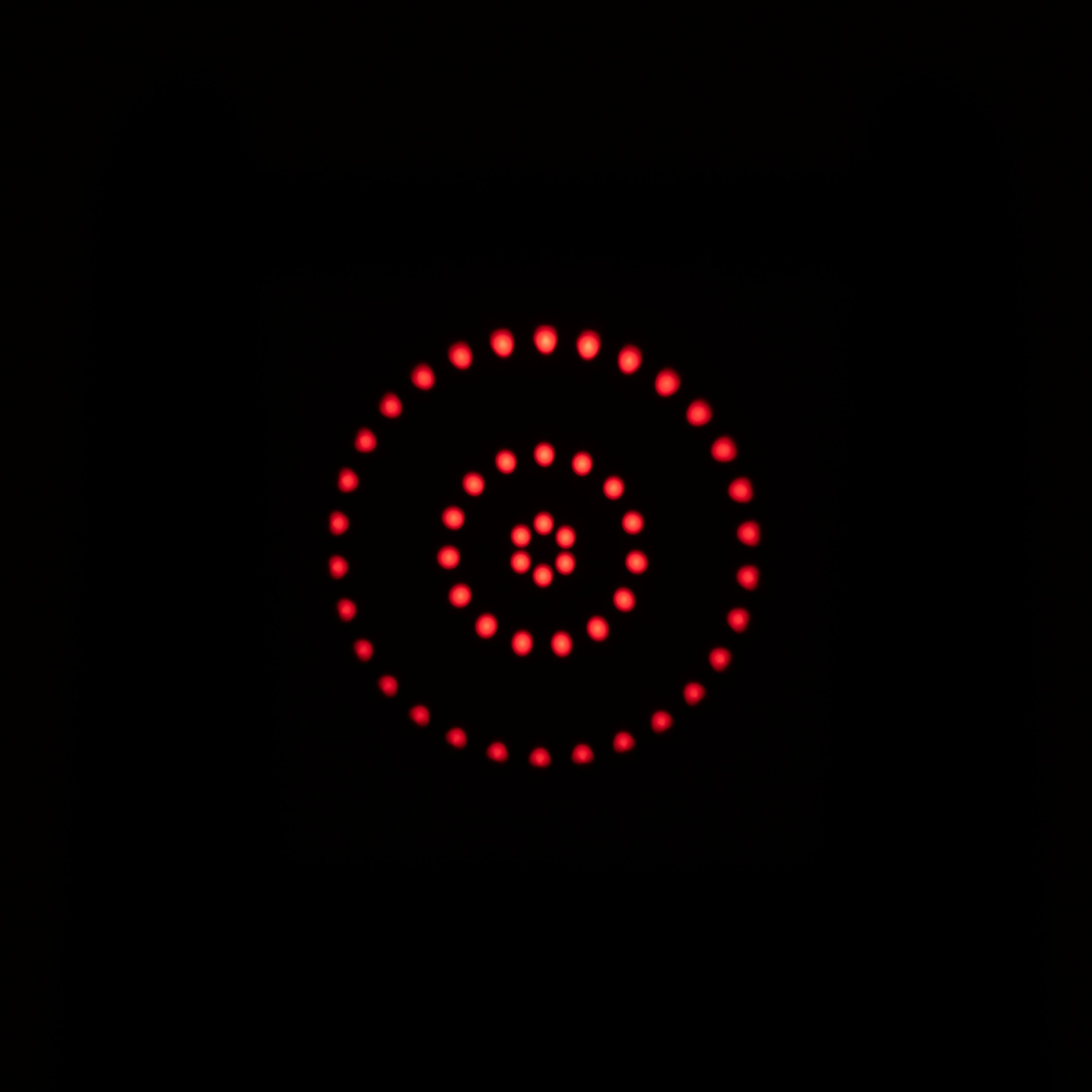
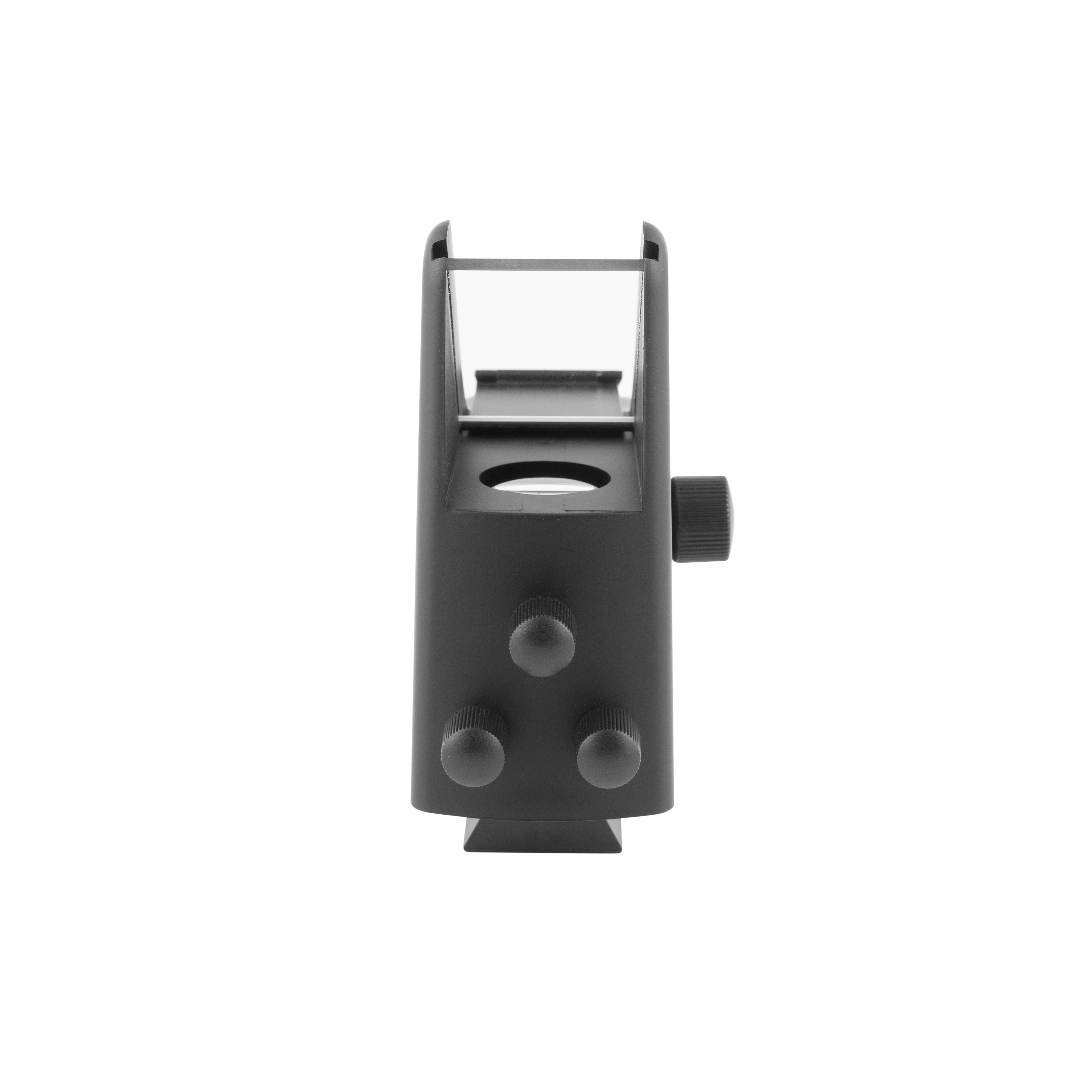
The Explore Scientific ReflexSight is a zero-power reflex finder that projects a deep red aiming pattern onto a coated glass window, letting you point a telescope by looking at the real sky rather than through a magnified, inverted eyepiece view. Explore Scientific specifies a multi-dot reticle in 4.0-degree, 2.0-degree and 0.5-degree circular patterns, with the target dots reflecting sharply at 9.8 MOA, illuminated by a long-life LED running from two AAA alkaline cells. The unit measures 7 inches long by 1.8 inches wide by 5 inches high (18 x 4.7 x 12.7 cm) with a projection glass of 1.375 by 2.165 inches, is built from a combination of metal, glass and plastic, and is water resistant. Explore Scientific publishes a weight of 0.55 lb (249 g).
Who It's For
Star hopping is the part of visual observing that defeats most newcomers, and it is almost never the telescope's fault. A conventional optical finder magnifies, which narrows the field, and most of them invert or mirror the image, so the pattern in the finder no longer matches the pattern on your chart or in your memory of the sky. You end up translating twice, once from chart to finder and once from finder to eyepiece, in the dark and at an awkward angle. A zero-power sight removes that translation entirely. You look through the glass at the actual constellation, put the illuminated circle on the star you want, and the telescope is already there.
This is also the finder you want if you observe with both eyes open, or if you hand the telescope to someone else at an outreach night. The concentric 4.0, 2.0 and 0.5 degree circles give you a nested set of angular references you can use directly: the outer ring roughly brackets a low-power eyepiece field, and the inner circle lets you place a target with real precision before you go to the eyepiece. For anyone chasing comets, satellites, bright variable stars, or simply learning the sky, that is faster and far less frustrating than any magnified finder.
Key Features & Design
- True zero-power (1x) reflex sight, with no magnification, no image inversion and no field restriction beyond the size of the projection window.
- Multi-dot reticle projected in 4.0-degree, 2.0-degree and 0.5-degree circular patterns, with target dots reflecting sharply at 9.8 MOA.
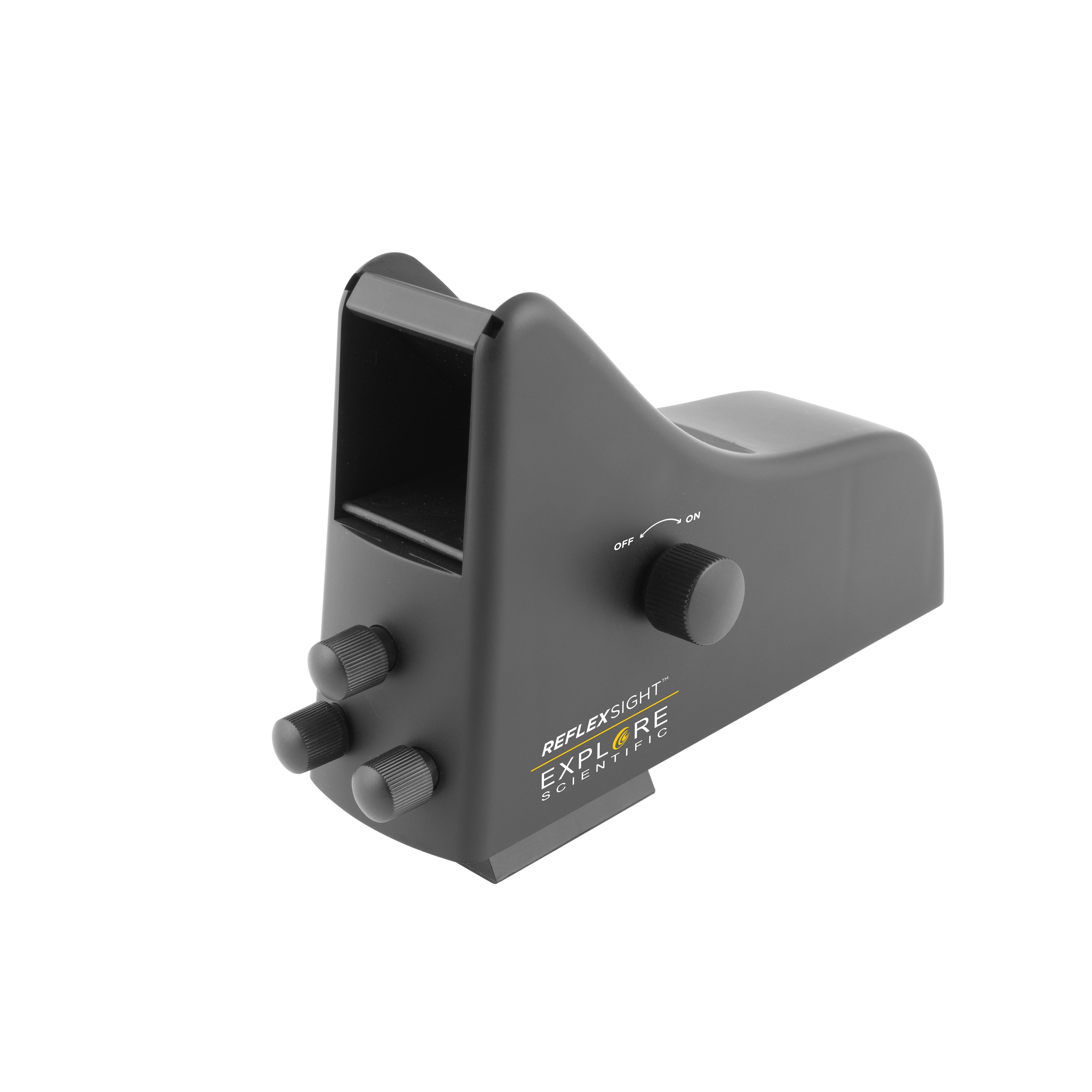
- Large, continuously adjustable brightness knob with a positive full-off click stop, sized to be operated while wearing winter gloves.
- Projection glass measuring 1.375 inches wide by 2.165 inches long, with a reflective coating tuned to the red LED.
- Tool-free parallax adjustment through three rear-facing smooth-head knobs, so alignment can be corrected at the telescope in the dark.
- Runs on two AAA alkaline batteries (not included), with a low-draw LED for long continuous operating time.
- Mini-Vixen-style dovetail foot plus a 1/4-20 threaded socket built into the base for piggyback adapters and photo tripods.
- Water-resistant housing of metal, glass and plastic with a smooth profile that resists snagging, supplied with an optical cover.
Optical Design
A reflex sight is not a telescope and does not form an image of the sky. An LED behind the housing illuminates a mask, and the coated projection window acts as both a partial mirror and a weak collimating element, throwing the reflected pattern back toward your eye as though it were focused at a great distance. Because the pattern and the sky both reach your eye effectively collimated, the two stay superimposed as your head shifts within the window, and that is the parallax-free behaviour the three rear adjusters exist to fine-tune. The coating is wavelength-selective, reflecting the deep red of the LED efficiently while transmitting the rest of the spectrum, which is why the star field behind the reticle stays bright and natural in colour. Deep red is also the least damaging choice for dark adaptation, and the continuously variable brightness matters more than it sounds: turned up, the circles stay visible against suburban skyglow; turned nearly off, they can be dimmed below the brightness of a faint star so they do not wash out the very target you are trying to centre. The 9.8 MOA dot size is a deliberate compromise, large enough to catch instantly with peripheral vision but small enough that it does not swallow the object inside the 0.5-degree circle.
Recommended Uses
- Primary zero-power finder on a Dobsonian, Newtonian or refractor used for visual star hopping.
- Companion to a magnified right-angle finder, where the reflex sight gets you into the neighbourhood and the optical finder closes the last degree.
- Outreach and public observing, where visitors need to aim the telescope themselves without a lesson in inverted images.
- Wide-field and nightscape photography, mounted on a camera bracket or tripod through the 1/4-20 socket, for aiming a lens at a specific patch of sky.
- Comet, meteor-radiant, satellite and bright variable star work, where fast approximate pointing beats precise magnification.
Compatibility and Accessory Notes
The ReflexSight mounts to mini-Vixen-style dovetail viewfinder bases, the common shoe found on a great many Vixen, Sky-Watcher, Explore Scientific and third-party telescopes. If your telescope does not carry that shoe, Explore Scientific offers a Hybrid Finder Scope Base that adapts it. Two exclusions are worth stating plainly because they catch people out: the ReflexSight does not fit the Explore Scientific and Meade-style upside-down T finder bases, and it does not fit the Explore Scientific educational telescope lines. Beyond telescope shoes, the 1/4-20 threaded socket in the base opens up piggyback adapters, camera brackets, ball heads and photo tripods, which is how most people use it for wide-field imaging. Finder shoes vary between brands more than they should, so if you tell our team in Bolton what telescope you own, we will confirm whether the ReflexSight drops straight on or whether you need the hybrid base first.
Good to Know Before You Order
The two AAA alkaline batteries are not included, so pick up a pair before your first clear night. This is a zero-power sight: it shows you where the telescope is pointing against the naked-eye sky, so it will not help you locate an object that sits nowhere near a naked-eye star, and it is not a substitute for a magnified finder if you routinely hunt faint galaxies from a light-polluted site. The housing is a mix of metal, glass and plastic rather than all-metal, which is how the weight stays at 0.55 lb, and it is water resistant rather than sealed and submersible. The sight also needs to be aligned to your telescope once, in daylight or on a bright star, using the three rear parallax knobs. It holds that alignment well afterwards, but the first setup is not optional.
Frequently Asked Questions
Does it magnify? No. It is a true 1x sight, so the sky through the window looks exactly as it does to your unaided eye, with the illuminated circles projected on top. That is the whole point: nothing is inverted, mirrored or cropped.
Will it fit my telescope? If your telescope has a mini-Vixen-style finder shoe, yes. If it has the Explore Scientific or Meade upside-down T-style base, no. The Explore Scientific Hybrid Finder Scope Base solves most of the awkward cases, and if you are unsure, send us your telescope model and we will check it for you.
How long do the batteries last? Explore Scientific rates the LED as low draw with long continuous operating time. In practice a pair of AAA cells lasts a long stretch of normal use, provided you use the full-off click stop rather than simply turning the knob most of the way down.
Can I use it on a camera instead of a telescope? Yes. The base carries a 1/4-20 thread, so it will take a camera bracket, a shoe adapter or a photo tripod head directly, which makes it a practical aiming aid for wide-field astrophotography.
Bottom Line
The ReflexSight makes star hopping feel natural: a bright, continuously adjustable, multi-circle red pattern laid directly over the real sky, on a mini-Vixen foot, at 0.55 lb. It is the fastest way to turn a chart in your head into an object in the eyepiece. If you are not certain about the finder shoe on your telescope, contact us and we will confirm the fit before you order.
You may also like
Recently viewed
Recent Blog Posts
View all
Your Guide Graph Is Lying to You
Read More

D-Size vs V-Size: A Complete Guide to Telescope Dovetail Systems
Read More

What Is Back Focus in Astrophotography? Telescope Reducers, Flatteners, and Spacing Explained
Read More