
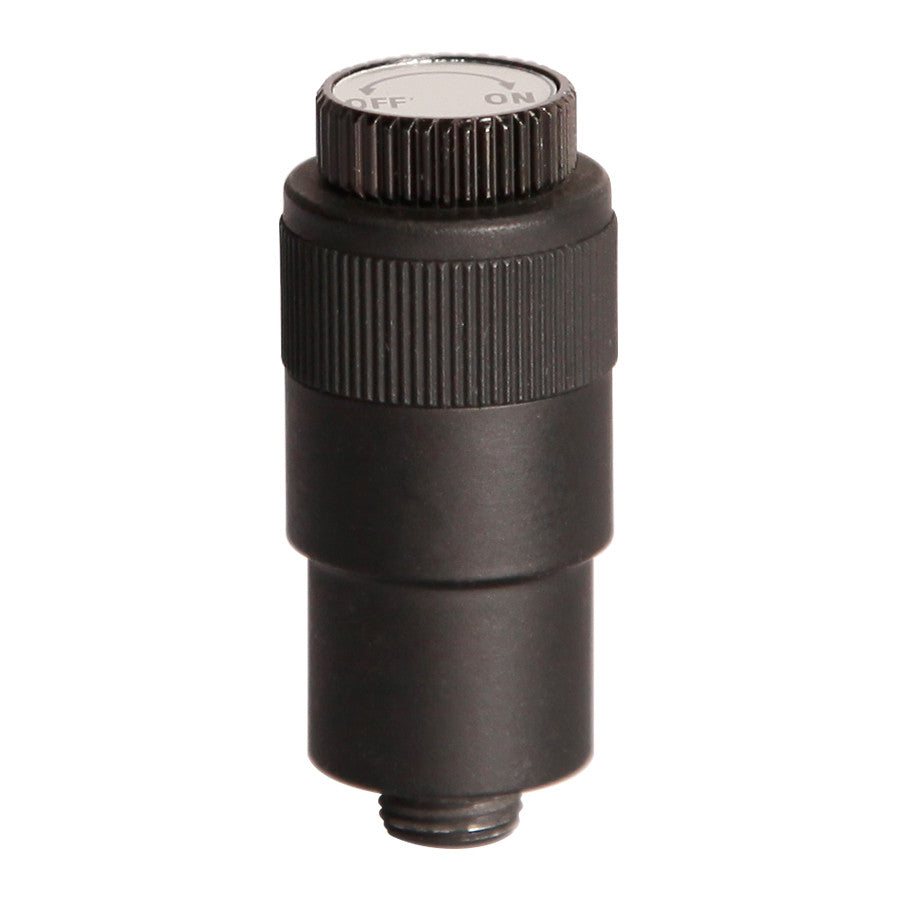

- Description
Product Overview
This is the replacement red LED illuminator Explore Scientific supplies for the polar finder fitted to the EXOS-2 and EXOS-2GT equatorial mounts, item EXOS2PFI. Explore Scientific describes it as designed to fit their 50 mm reticle finder scopes, giving deep red illumination with variable brightness and running on two AA batteries. It threads into the illuminator port on the side of the polar scope body and lights the etched reticle from the edge so the alignment pattern stands out against a dark sky.
Who It's For
Two people buy this part. The first has an EXOS-2 or EXOS-2GT whose original illuminator has been lost, dropped, or killed by a leaking cell — a common enough fate for a small component that lives outdoors and gets handled with cold fingers. Without it the polar reticle is effectively invisible at night, and polar alignment turns into guesswork with a red torch held awkwardly at the objective end of the polar scope.
The second is the observer already fighting the illuminator they have. Fixed-brightness units are almost always wrong: too dim to read the reticle before your eyes have settled, and bright enough an hour later to wash Polaris out of the field entirely. Variable brightness is the point of this unit. You want the reticle just barely visible with Polaris still a clean point beside it, and only a dimmer lets you sit at that balance as your dark adaptation improves through the session.
Key Features & Design
- Deep red LED output, chosen to preserve dark adaptation while you align
- Variable brightness control so the reticle can be dimmed until Polaris stays visible alongside it
- Powered by two AA cells, a battery you can buy anywhere and change with gloves on
- Specified by Explore Scientific to fit their 50 mm reticle finder scopes
- Direct replacement for the illuminator supplied with EXOS-2 and EXOS-2GT polar finders
- Threads into the illuminator port on the polar scope body, no tools needed
- Supplied as Explore Scientific item EXOS2PFI
Optical and Mechanical Design
A polar finder reticle is a pattern etched into a glass element sitting in the finder's optical path. It has no light of its own; you see it because light is injected from the side at a shallow angle and scatters off the etched grooves. That is why the illuminator screws into the barrel rather than shining down the tube — light entering along the optical axis would flood the whole field and drown the very star you are trying to place. Edge illumination lights the engraving and leaves the rest of the field dark. Red is used because the rod cells that do your night vision are least sensitive to long wavelengths, so a red reticle costs far less dark adaptation than a white one of the same apparent brightness. The variable control matters because reticle brightness and star brightness are independent of one another: turn it up and the pattern is obvious but Polaris vanishes in the glare, turn it down and Polaris returns while the pattern fades. The usable setting sits in a narrow band that keeps shifting as your eyes adapt, which is why a dimmer is a working necessity rather than a convenience.
Recommended Uses
- Replacing a lost, damaged, or battery-corroded illuminator on an EXOS-2 or EXOS-2GT polar scope
- Polar aligning an EXOS-2GT before a guided imaging run
- Illuminating an Explore Scientific 50 mm reticle finder scope
- Carrying as a spare in the accessory case for travel and star party use
Compatibility and Accessory Notes
Explore Scientific specifies this illuminator for their 50 mm reticle finder scopes and supplies it as the replacement part for the EXOS-2 and EXOS-2GT polar finders, so if you have one of those mounts with the factory polar scope this is the correct item. Illuminator ports are not standardised across manufacturers, and both thread diameter and body length have varied between the illuminator versions Explore Scientific has shipped over the years. If your mount came from another brand, or you are not certain which generation of polar scope you have, send us a photograph of the illuminator port and our team in Bolton will confirm fit before you order. Have two AA cells on hand as well, since none are supplied.
Good to Know Before You Order
Batteries are not included — Explore Scientific states this plainly, and two AA cells are needed to use it. This is the illuminator alone; it does not include the polar finder scope or its reticle, so if the polar scope itself is missing from your mount this is not the part that will fix it. Our vendor listing covers the short-bodied version of the illuminator, and more than one body length has existed, so ask us first if you need to match an existing unit exactly. Explore Scientific publishes no shipping weight for this item, so we are confirming it on our own scales before the listing goes live. That is why it is currently unpublished. Contact us and we will give you a shipping figure for your address.
Frequently Asked Questions
Does it come with batteries? No. Explore Scientific specifies two AA cells and does not supply them. Any standard alkaline or rechargeable AA will run it.
Will it fit my EXOS-2GT? Yes, provided you have the factory polar finder. Explore Scientific lists this as the replacement illuminator for the EXOS-2 and EXOS-2GT polar scopes.
Can I dim it? Yes. Variable brightness is built in, which is what lets you keep the reticle readable without washing out Polaris.
Why a red LED rather than white? Red preserves dark adaptation far better than white at the same visible brightness, so you can finish aligning and go straight to observing instead of waiting for your eyes to recover.
Bottom Line
Polar alignment on an EXOS-2 is quick when you can see the reticle and thoroughly irritating when you cannot. This is the correct Explore Scientific replacement illuminator for that finder, with the deep red LED and the dimmer the job actually requires. If you are unsure which version your polar scope takes, contact us and we will confirm it.
You may also like
Recently viewed
Recent Blog Posts
View all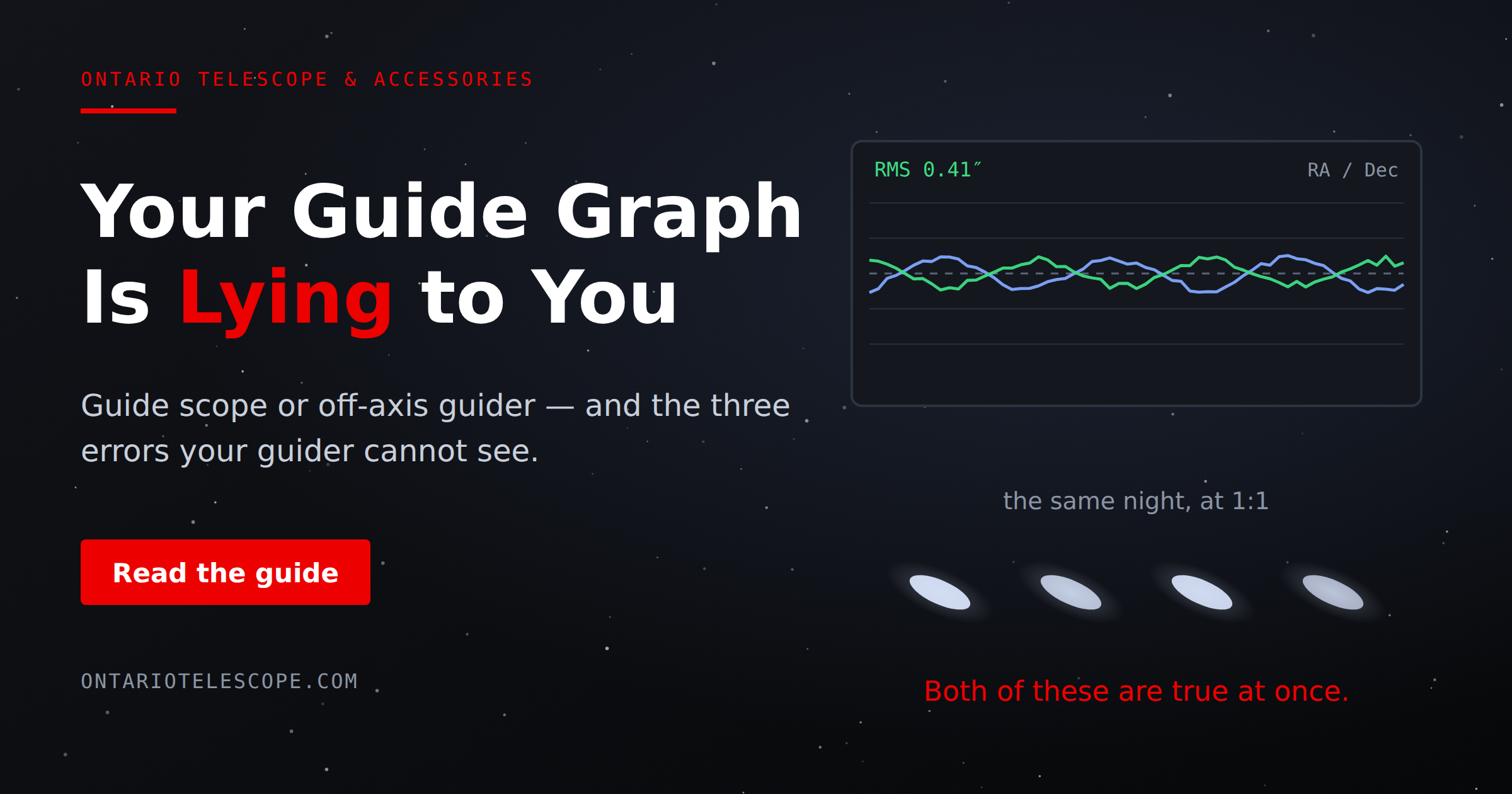
Your Guide Graph Is Lying to You
Read More
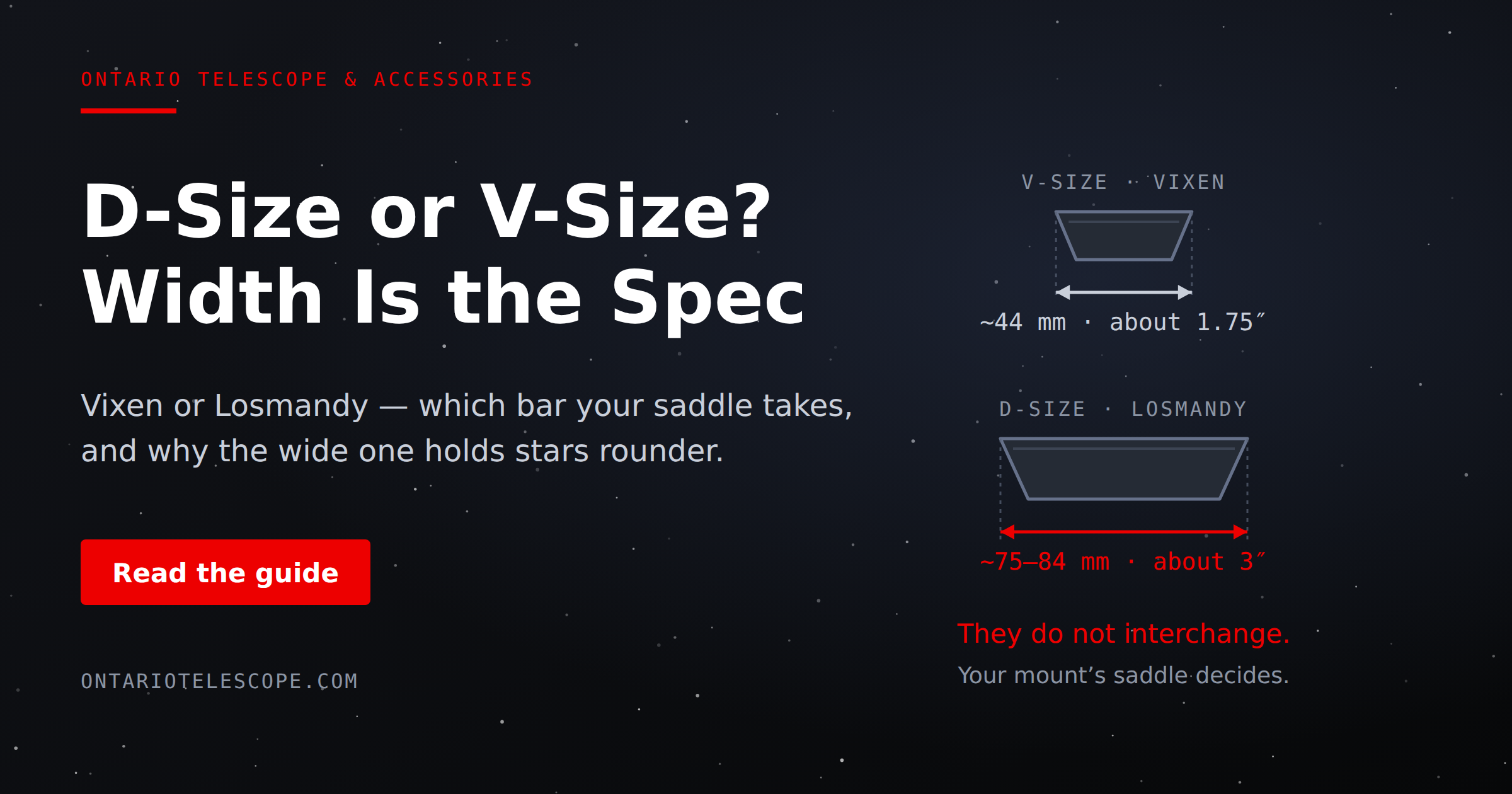
D-Size vs V-Size: A Complete Guide to Telescope Dovetail Systems
Read More
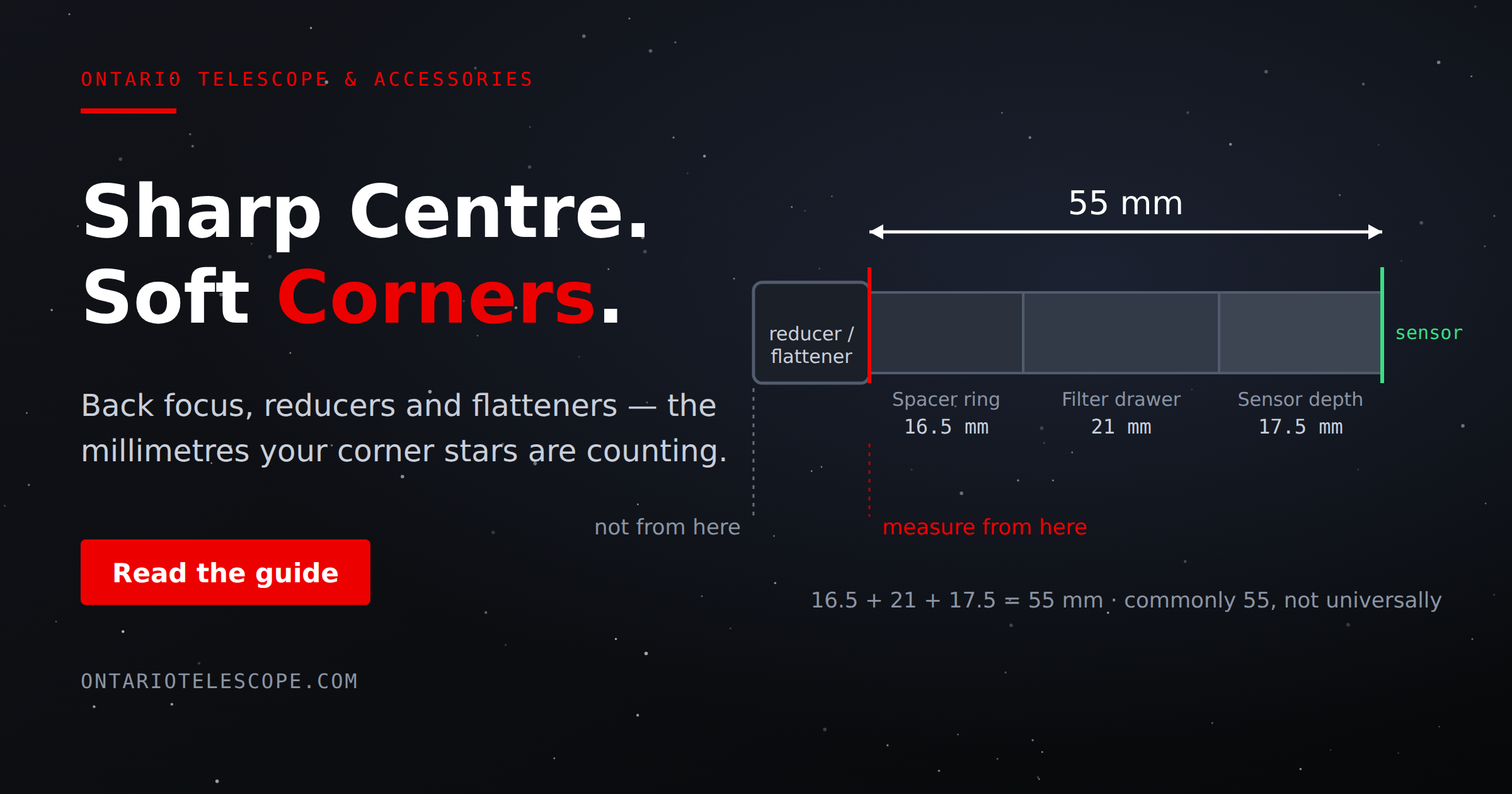
What Is Back Focus in Astrophotography? Telescope Reducers, Flatteners, and Spacing Explained
Read More