


- Description
Product Overview
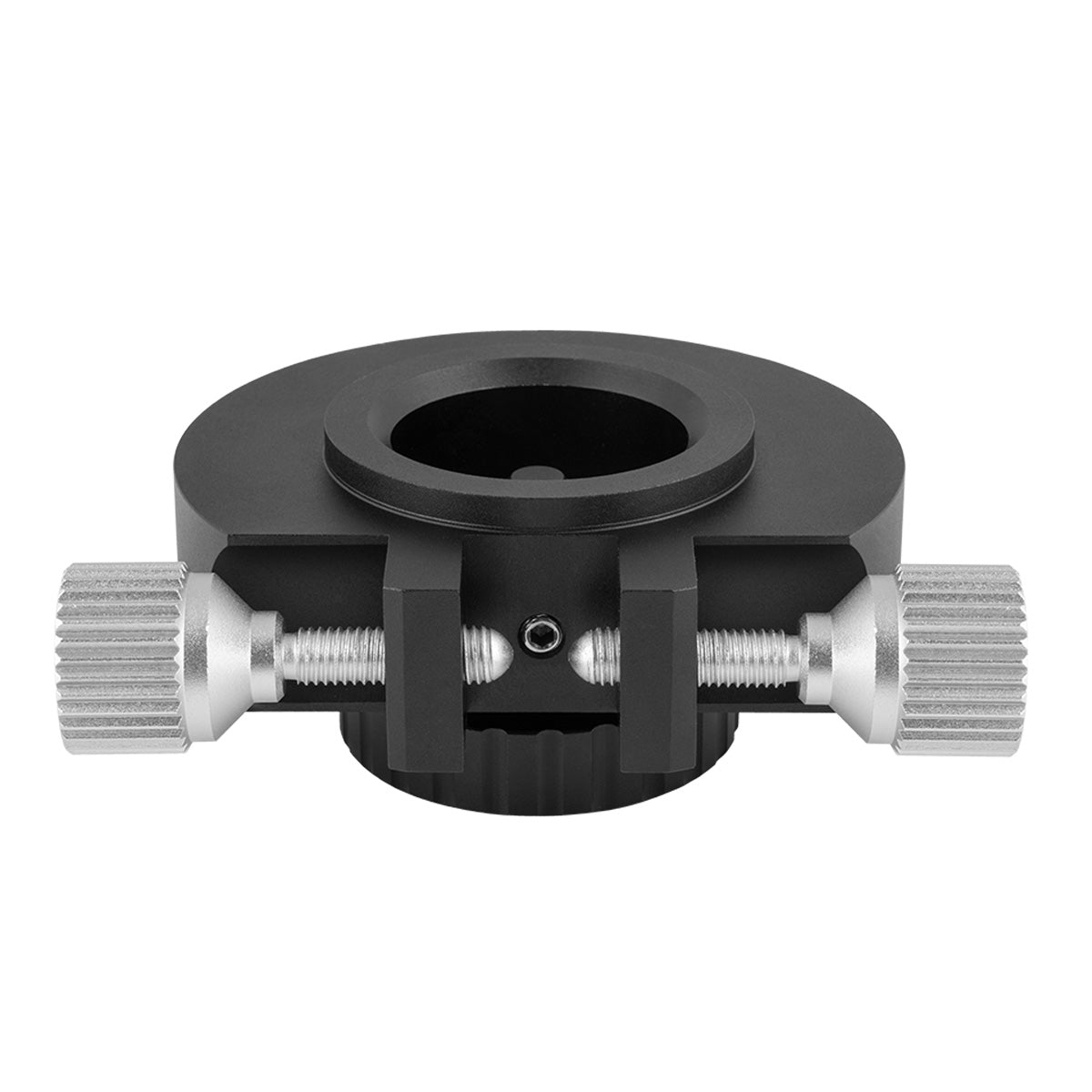
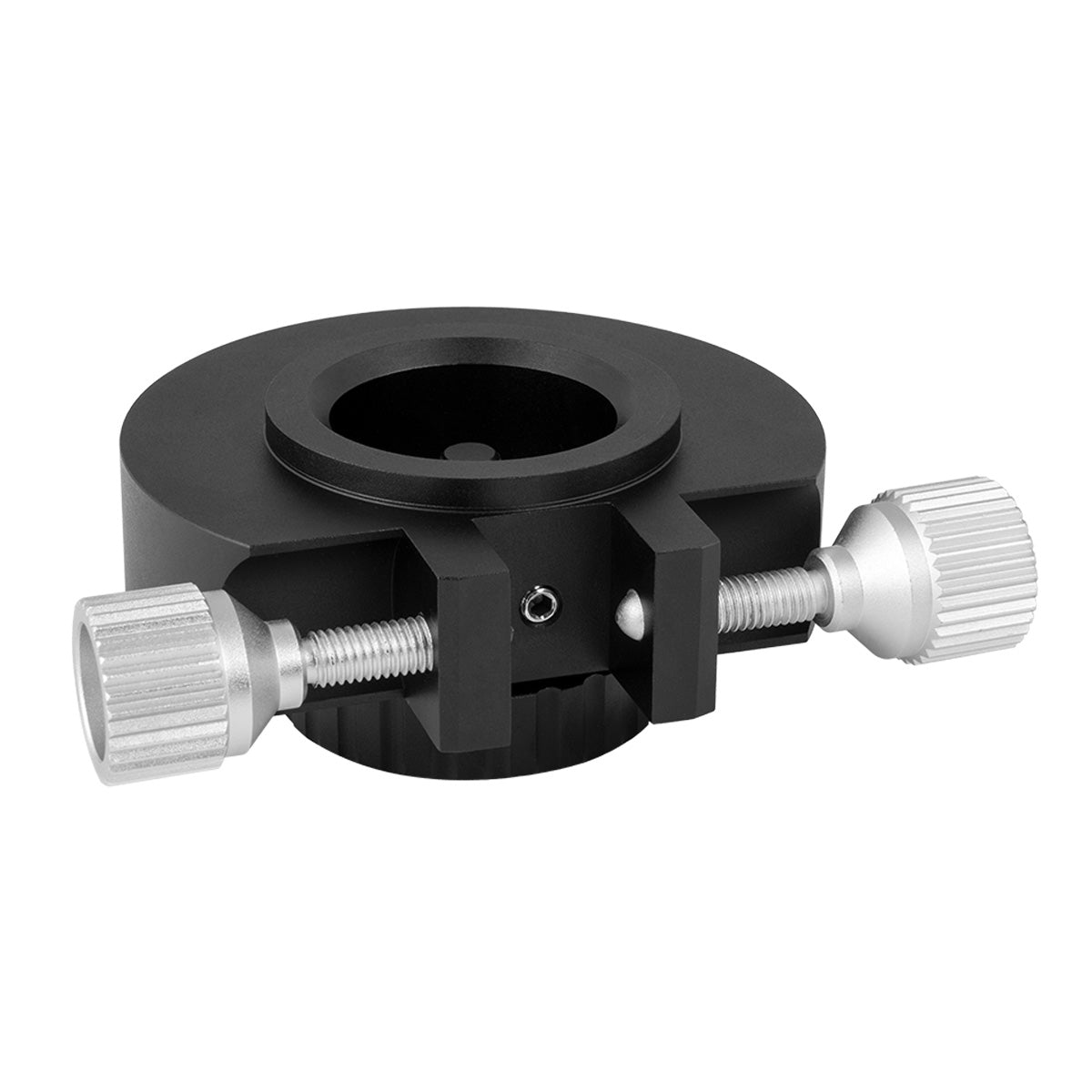
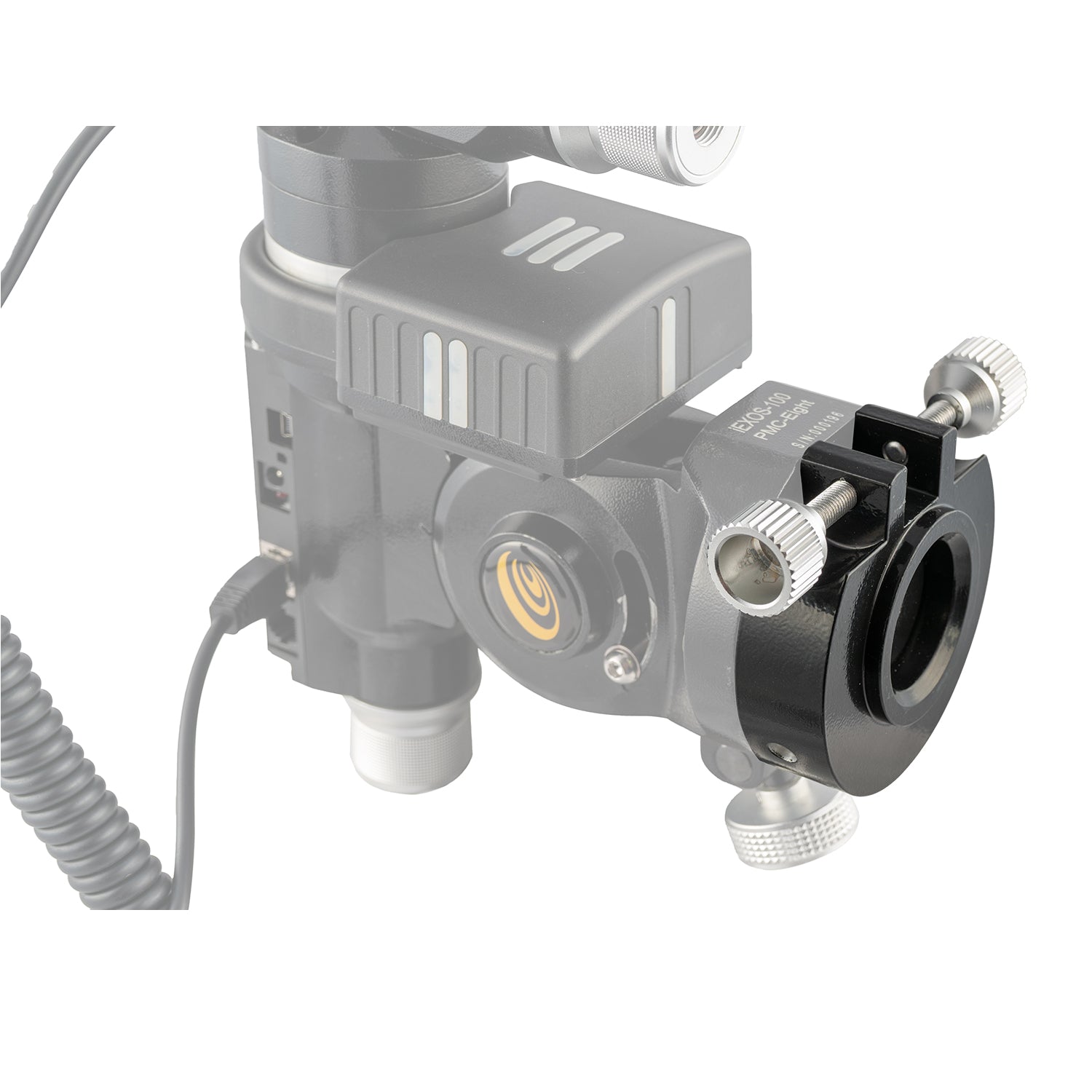
This is Explore Scientific's Azimuth Adjuster Adapter for the iEXOS-100, a small mechanical part that does one job: it gives you fine, screw-driven control of the mount's azimuth so you can polar align precisely instead of shoving the tripod around by hand. Explore Scientific specifies it for use on the Twilight Medium Duty and Twilight Heavy Duty tripods, and states that it also works with the Light Duty tripod supplied with the iEXOS-100 tracking goto system, but only after a modification to the tripod base that is described in the manual. Explore Scientific publishes a weight of 1.3 lb (0.59 kg).
Who It's For
Anyone who has tried to polar align a small equatorial mount without an azimuth adjuster knows the problem intimately. Getting the altitude right is straightforward, because there is a bolt for it and you turn the bolt. Azimuth is the other half of the alignment, and on a bare tripod the only way to change it is to lift or twist the whole assembly, telescope included, and hope you land closer than you started. You are trying to make corrections of a few arcminutes using a method with a resolution of about a degree. The result is the familiar sequence of overshooting, correcting the overshoot, knocking the altitude out in the process, and eventually settling for alignment that is merely acceptable.
That matters more on the iEXOS-100 than it would on a purely visual mount, because the iEXOS-100 is a tracking goto system. Polar alignment error does not just make objects drift, it degrades every pointing model the mount builds and shows up as slow drift across the field over the course of an exposure sequence. If you are imaging, even casually, the difference between rough and careful polar alignment is the difference between usable subframes and trailed ones. A dedicated azimuth adjuster turns that from a wrestling match into two screws you turn while watching the pole in a polar scope or a plate-solving routine.
Key Features & Design
- Provides fine azimuth adjustment for the iEXOS-100, the axis that is otherwise adjusted only by moving the tripod itself.
- Specified by Explore Scientific for the Twilight Medium Duty and Twilight Heavy Duty tripods.
- Also usable with the Light Duty tripod that ships with the iEXOS-100, provided the tripod base is modified as described in the manual.
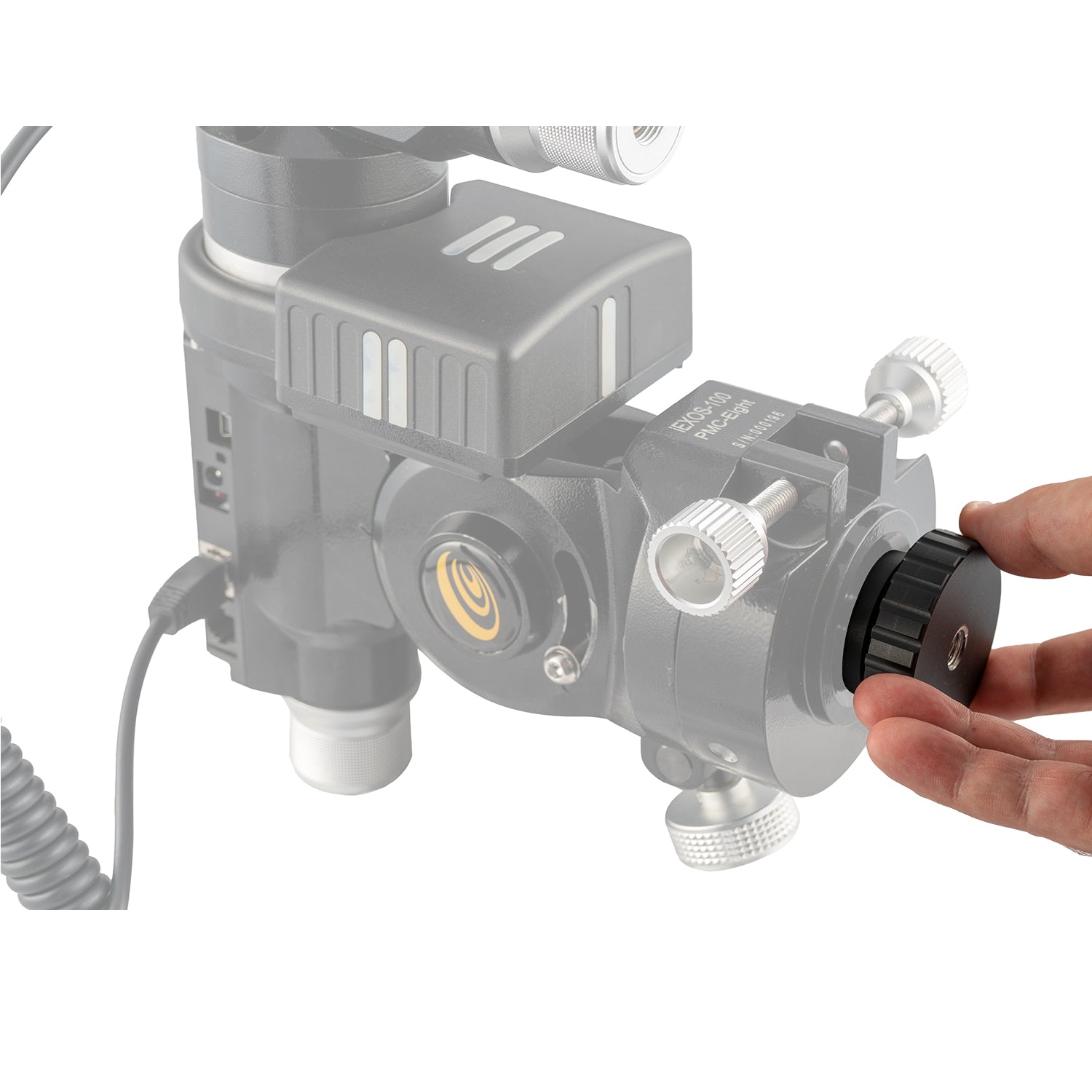
- Supplied with the parts needed to install the adjuster post, so it is a self-contained retrofit rather than a part list you assemble yourself.
- Adds a published 1.3 lb (0.59 kg) at the very bottom of the assembly, below the mount head, where added mass helps stability rather than eating into payload.
- Completes the two-axis adjustment set, letting altitude and azimuth be trimmed independently without one disturbing the other.
Mechanical Design
Polar alignment is a two-axis problem. The polar axis of an equatorial mount has to be aimed at the celestial pole, which means setting its altitude to your latitude and its azimuth to true north, and both need to be right to within a few arcminutes before tracking behaves. Altitude is easy to build a fine adjustment for, because the mount head already pivots on a bolt. Azimuth is harder, because the natural pivot is the tripod's own vertical axis, and nothing about a tripod is designed to rotate in controlled increments. What an azimuth adjuster does is create that missing joint. A fixed post rising from the tripod base engages the mount head, so the head can rotate about the vertical axis but is prevented from spinning freely, and a pair of opposing screws bear against that post from either side. Turning one in while backing the other out walks the mount head through a small, controlled arc, and because the two screws are working against each other, the assembly is preloaded and stays exactly where you left it when you stop. This is the same differential-screw principle used on the azimuth adjusters of much larger German equatorial mounts, scaled to a light mount. It also explains why the tripod base must have the correct provision for the post, and why the Light Duty tripod needs modification: without a properly located hard point for the post to react against, there is nothing for the screws to push on.
Recommended Uses
- Precise polar alignment of an iEXOS-100 for tracked astrophotography, where residual alignment error shows up as drift.
- Retrofitting fine azimuth control to an iEXOS-100 already mounted on a Twilight Medium Duty or Heavy Duty tripod.
- Speeding up setup for observers who tear down and re-align the mount at every session rather than leaving it in place.
- Improving repeatability of goto pointing accuracy by getting the underlying polar alignment closer before the alignment routine runs.
Compatibility and Accessory Notes
This is a fit-specific part, so it is worth being precise about the three cases. If you have an iEXOS-100 on a Twilight Medium Duty or Twilight Heavy Duty tripod, this is the adapter for you and it installs as intended. If you have the iEXOS-100 on the Light Duty tripod it ships with, the adapter will work, but Explore Scientific is explicit that the tripod base requires modification first, with the procedure given in the manual. That is a real physical alteration to your tripod, not a matter of tightening a different bolt, so decide whether you are comfortable doing it before you order. If you have any other tripod, including a photo tripod or a third-party pier, Explore Scientific does not list it and we would not want you to assume it works. Naming is the other thing that trips people up here, because Explore Scientific's tripods appear in different catalogues under duty ratings and under ST-series designations, and the label on your tripod may not match the wording on the box. Tell our team in Bolton which iEXOS-100 package you bought and what is stamped on your tripod, and we will confirm the fit before anything ships rather than leaving you to work it out from part numbers.
Good to Know Before You Order
This adapter is for the iEXOS-100 specifically and is not a general-purpose azimuth adjuster for other mounts. The single most important caveat is the Light Duty tripod: it is compatible only after the base modification described in the manual, so if that is the tripod you own, read the manual section before ordering and make sure you have the tools and the willingness to do it. Explore Scientific does not publish thread sizes, machined dimensions or a detailed contents list on the product page beyond noting that the parts needed to install the post are included, so if you need exact fastener specifications for a custom setup, ask us and we will check the manual for you. There is no tripod, mount or counterweight in the box, and this part does not change your mount's payload rating or add tracking capability of any kind. It improves how accurately you can aim the polar axis, and nothing else.
Frequently Asked Questions
Will this fit the tripod that came with my iEXOS-100? The Light Duty tripod supplied with the iEXOS-100 will take it, but only after the base modification Explore Scientific describes in the manual. On the Twilight Medium Duty and Twilight Heavy Duty tripods it fits without modification. If you are not sure which tripod you have, send us a photo and we will identify it.
Do I really need fine azimuth adjustment? For visual observing at modest magnification, no, rough alignment is tolerable. For tracked imaging it makes a large difference, because polar alignment error translates directly into drift and field rotation over an exposure sequence.
Does this add goto or tracking to my mount? No. The iEXOS-100 already provides the tracking and goto function. This adapter only lets you point the polar axis more precisely, which is what makes that tracking accurate.
Does it come with everything needed to install it? Explore Scientific notes that the parts required to install the post are included. It does not publish a full itemised contents list, so if you want that confirmed before ordering, contact us and we will check.
Bottom Line
A small, 1.3 lb part that removes the most irritating step in setting up an iEXOS-100, replacing a shove of the tripod with a controlled turn of two opposing screws. The only thing that needs settling first is which tripod you are putting it on, so tell us your tripod and we will confirm whether it drops on or needs the base modification.
You may also like
Recently viewed
Recent Blog Posts
View all
Your Guide Graph Is Lying to You
Read More

D-Size vs V-Size: A Complete Guide to Telescope Dovetail Systems
Read More

What Is Back Focus in Astrophotography? Telescope Reducers, Flatteners, and Spacing Explained
Read More