

- Description
Product Overview
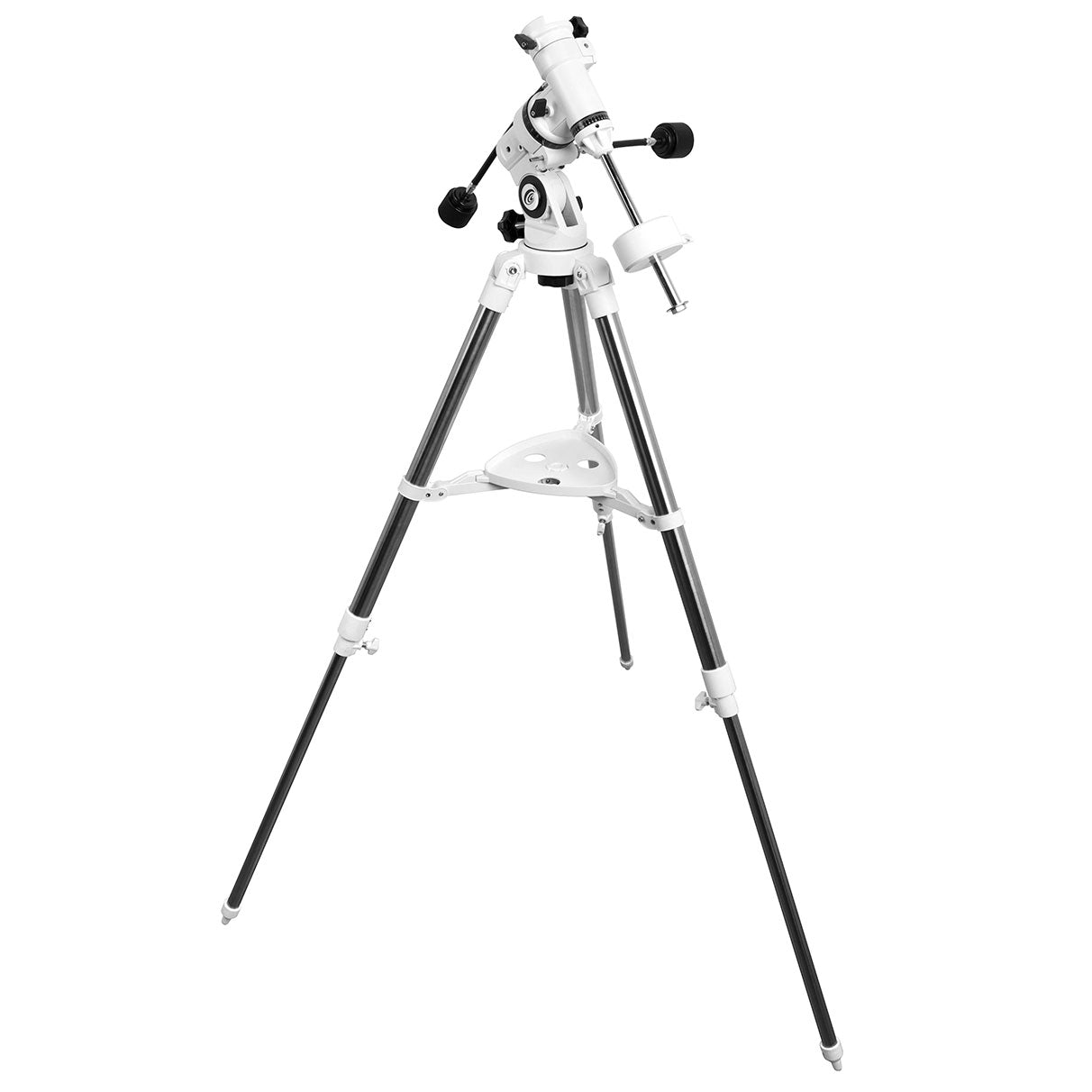
The Explore FirstLight EXOS Nano is a light-duty German equatorial head supplied on a steel tripod, intended for small telescopes that do not need, and cannot justify, a large mount. Explore Scientific rates it for a telescope of up to 15 pounds, fits it with a Vixen-style universal dovetail saddle, and supplies it on a 1.25-inch sturdy steel ST1 tripod whose legs extend from 25.5 inches to 45 inches. The mount head on its own, without counterweight, is quoted by Explore Scientific at 10 pounds. It is the mount Explore Scientific pairs with its own smaller instruments, and the company names the ED80 apochromat, small Maksutov-Cassegrains, small refractors, small solar scopes and short fast Newtonians as the intended load.
Who It's For
There is a specific frustration this mount answers. You buy a good small refractor or a compact Maksutov, and it arrives on an alt-azimuth head or a photo tripod. At low power that is fine. The moment you put 150x on Saturn, the object drifts diagonally across the field, and correcting it means nudging two axes at once while the whole thing shakes. An equatorial head fixes the geometry: once the polar axis is aimed at the celestial pole, the sky's apparent motion collapses onto a single axis, and following an object becomes one smooth motion in right ascension instead of a two-handed chase. That is the entire reason equatorial mounts exist, and it matters more on small, high-magnification telescopes than on almost anything else.
The second audience is anyone who has correctly concluded that a big mount is the wrong answer. A 15-pound rating is modest, but so is an ED80 or a 90 mm Mak, and carrying a forty-pound German equatorial into the back garden for a five-pound telescope is how observing sessions stop happening. The EXOS Nano is deliberately at the small end: light enough to move in one trip, tall enough at 45 inches to observe standing, and short enough at 25.5 inches to sit low and steady when the wind is up or when you want it on a table or a deck.
Key Features & Design
- German equatorial head, so telescope motion resolves onto the right ascension and declination axes rather than altitude and azimuth.
- Explore Scientific rates the instrument load at a maximum of 15 pounds of telescope.
- Vixen-style universal dovetail saddle, the most widely supported small-telescope mounting standard.
- Supplied on a 1.25-inch diameter sturdy steel ST1 tripod rather than aluminium, for mass and damping at the low end of the price range.
- Tripod legs extend from 25.5 inches to 45 inches, covering seated observing, standing observing and low wind-resistant setups.
- Mount head quoted at 10 pounds without counterweight, keeping the whole assembly within one-trip carrying range.
- Specified by Explore Scientific for the ED80, small Maksutov-Cassegrains, small refractors, small solar scopes and short fast Newtonians.
Mechanical Design
A German equatorial works by tilting the entire rotation axis of the mount until it is parallel to the Earth's axis, which is to say pointed at the celestial pole. Once that is done, the sky no longer moves in two dimensions from the telescope's point of view; it rotates about that one axis at fifteen degrees per hour, and a single slow rotation in right ascension holds an object still in the eyepiece. The counterweight shaft on the opposite side of the polar axis is not decoration, it is what makes this practical: balancing the telescope against a counterweight means the axis carries almost no net torque, so the bearings are only resisting friction rather than fighting the weight of the instrument. That is why a properly balanced 12-pound telescope on this mount feels lighter and moves more smoothly than a badly balanced 6-pound one. The 15-pound rating should be read as the point at which that balance stops rescuing you and the head's stiffness becomes the limit. Steel legs matter for the same reason: what you feel at the eyepiece is not the mount's static strength but how quickly a vibration dies away, and steel's higher mass and internal damping settle disturbances faster than thin aluminium tubing of the same diameter. Racking the legs down toward 25.5 inches shortens the lever arm between the ground and the telescope and will noticeably improve the damping time on a breezy night.
Recommended Uses
- Visual planetary and lunar observing with a small Maksutov-Cassegrain or refractor at high magnification, where equatorial tracking replaces two-axis nudging.
- Wide-field deep-sky observing with an ED80-class apochromat or a short fast Newtonian.
- White-light and hydrogen-alpha solar observing with a small dedicated solar telescope.
- A grab-and-go equatorial for observers who want a real polar-aligned mount without the bulk of a full-size German equatorial.
- A first equatorial mount for someone learning polar alignment and the equatorial coordinate system.
Compatibility and Accessory Notes
The saddle takes a Vixen-style universal dovetail bar, which is the standard fitting on the great majority of small refractors, Maksutovs and short Newtonians, and on essentially every set of tube rings sold for telescopes in this size class. A telescope with a wider Losmandy-style plate will not seat in this saddle, and a telescope supplied with no dovetail at all will need rings and a bar before it can go on. Payload is the other half of the question, and it is worth being blunt about it: 15 pounds is Explore Scientific's maximum, and the figure has to cover the telescope plus rings, dovetail, finder, diagonal and eyepiece, not just the bare tube. An ED80-class apochromat or a 90 to 127 mm Maksutov lands comfortably inside that budget. A 6-inch Newtonian or a heavy 4-inch achromat is the sort of load that will technically fit and will still show you every gust of wind. If you tell our team in Bolton which telescope you own, we will work out the fully dressed weight with you and give you a straight answer about whether this is the right mount or whether you should be looking one size up.
Good to Know Before You Order
Explore Scientific publishes no shipping weight for this item, so we are confirming it on our own scales before the listing goes live. That is why it is currently unpublished. Contact us and we will give you a shipping figure for your address. Two other things are worth knowing up front. First, tracking: this is an equatorial head, and Explore Scientific's product page does not specify a motor drive, so plan on manual tracking in right ascension unless you confirm otherwise with us first. If motorised tracking matters to you, tell us before you order and we will check what drive options exist for this head rather than let you find out afterwards. Second, the counterweight: Explore Scientific quotes the head weight explicitly as being without a counterweight but does not spell out what shaft and weight ship in the carton, so ask us and we will confirm exactly what is included. No telescope is included with the mount, and an equatorial mount only delivers its advantage once it is roughly polar aligned, which takes a few minutes at the start of a session and is a skill worth learning rather than a chore to dread.
Frequently Asked Questions
What size telescope will it actually hold? Explore Scientific rates it at 15 pounds maximum. In practice you want the telescope plus its rings, dovetail, finder, diagonal and heaviest eyepiece to sit meaningfully below that number, which puts an ED80 apochromat or a small to mid-size Maksutov right in the sweet spot.
Does it track the sky by itself? Not as described on Explore Scientific's page, which specifies no motor drive. As a German equatorial it lets you follow an object with a single axis once polar aligned, which is a large improvement over an alt-azimuth head, but do not assume hands-off tracking. Ask us and we will confirm the drive options before you commit.
Will my telescope's dovetail fit? If it is a Vixen-style bar, yes. If it is a wider Losmandy-style plate, no. Telescopes sold without any dovetail will need tube rings and a bar, and we can put that together for you.
Is the steel tripod better or worse than aluminium? For a mount this size, better. Steel is heavier, which is the point: the extra mass and damping shorten the time a vibration takes to die out after you touch the focuser, and that is what you actually notice at high magnification.
Bottom Line
The EXOS Nano is a sensibly scaled first equatorial: a 15-pound rating, a Vixen saddle and a steel ST1 tripod adjustable from 25.5 to 45 inches, matched to the small refractors, Maksutovs and solar scopes it was designed around. Send us the telescope you plan to put on it and we will confirm the payload maths, the dovetail fit and what ships in the carton before you order.
You may also like
Recently viewed
Recent Blog Posts
View all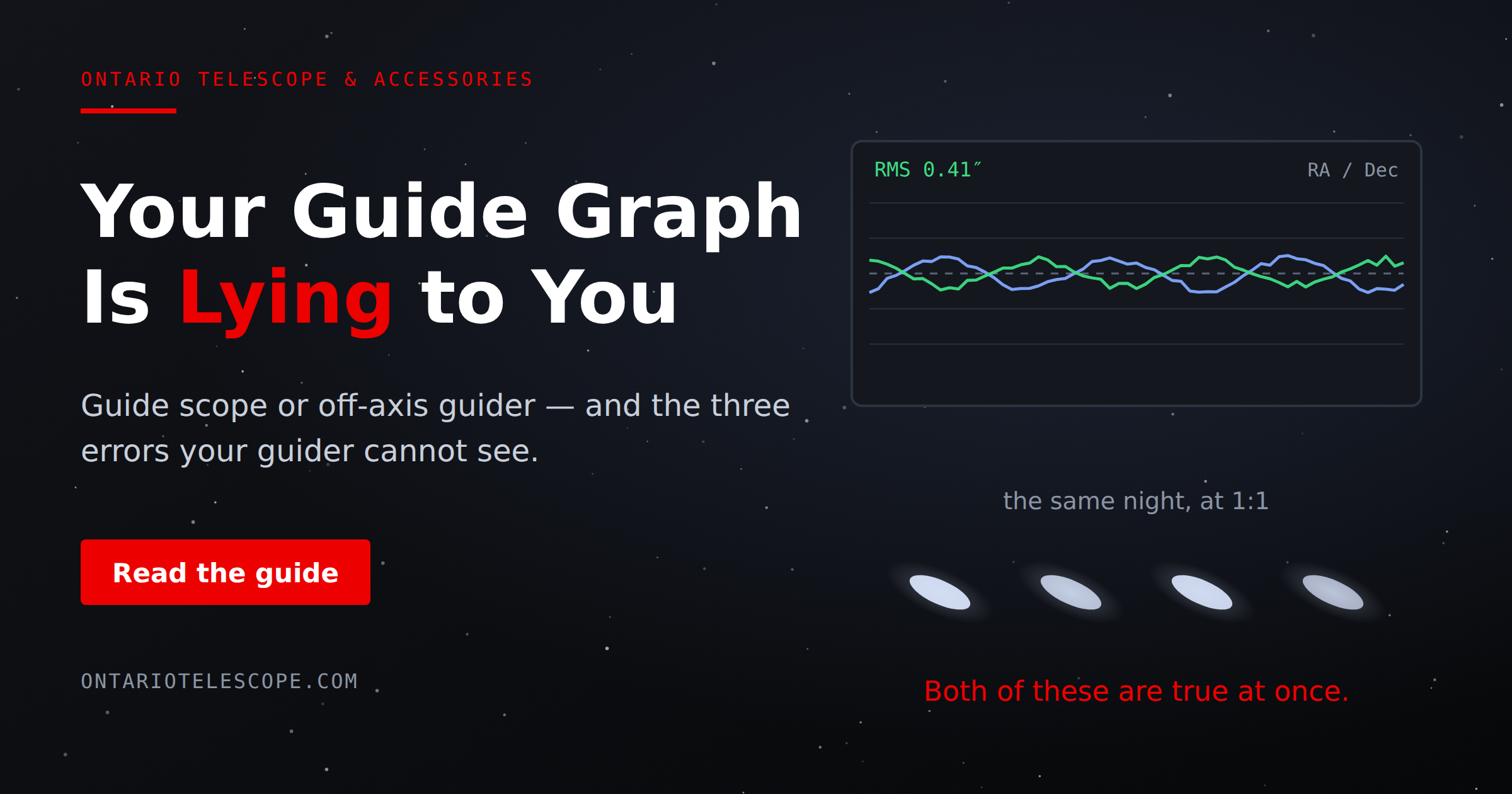
Your Guide Graph Is Lying to You
Read More
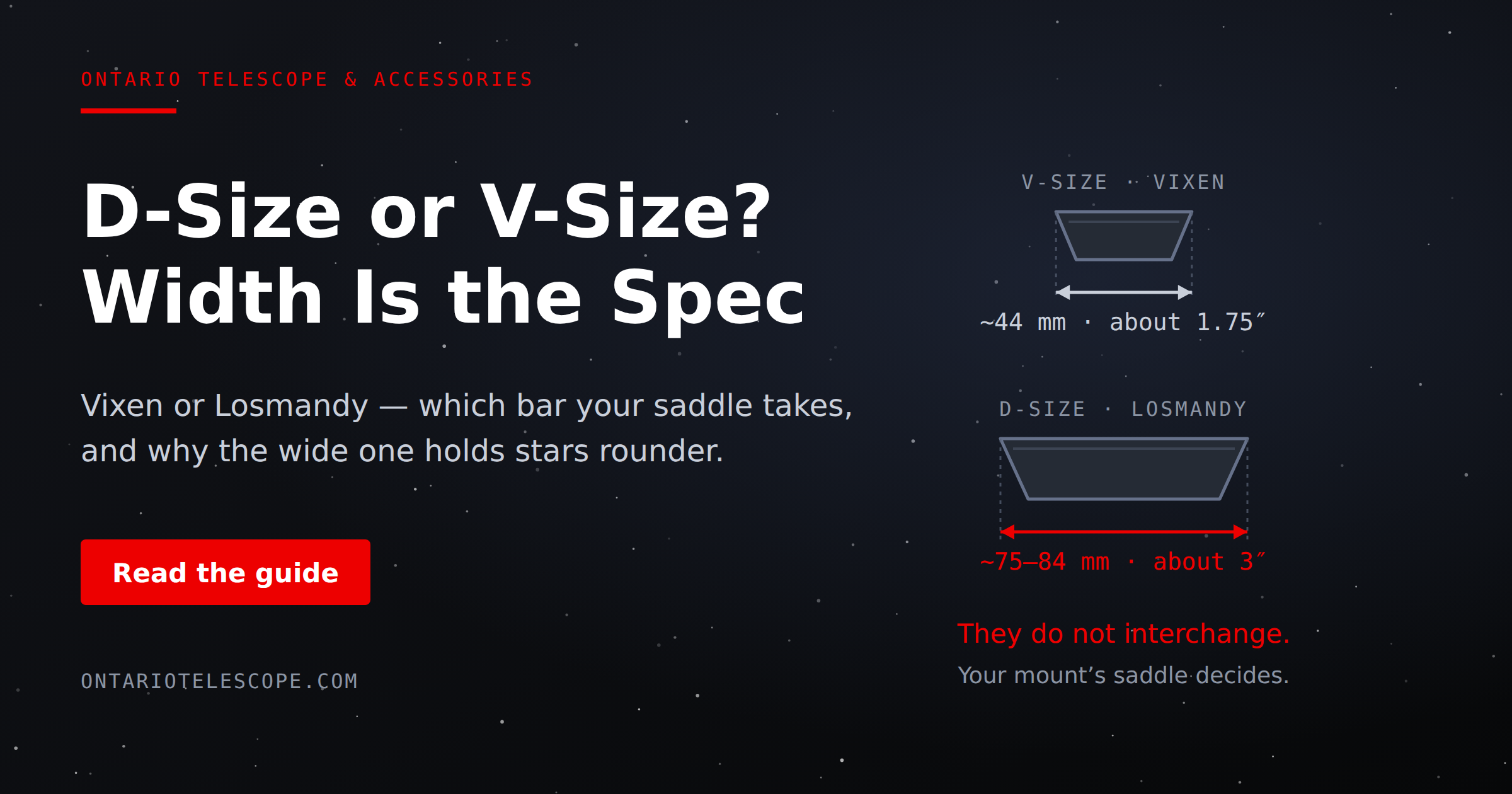
D-Size vs V-Size: A Complete Guide to Telescope Dovetail Systems
Read More
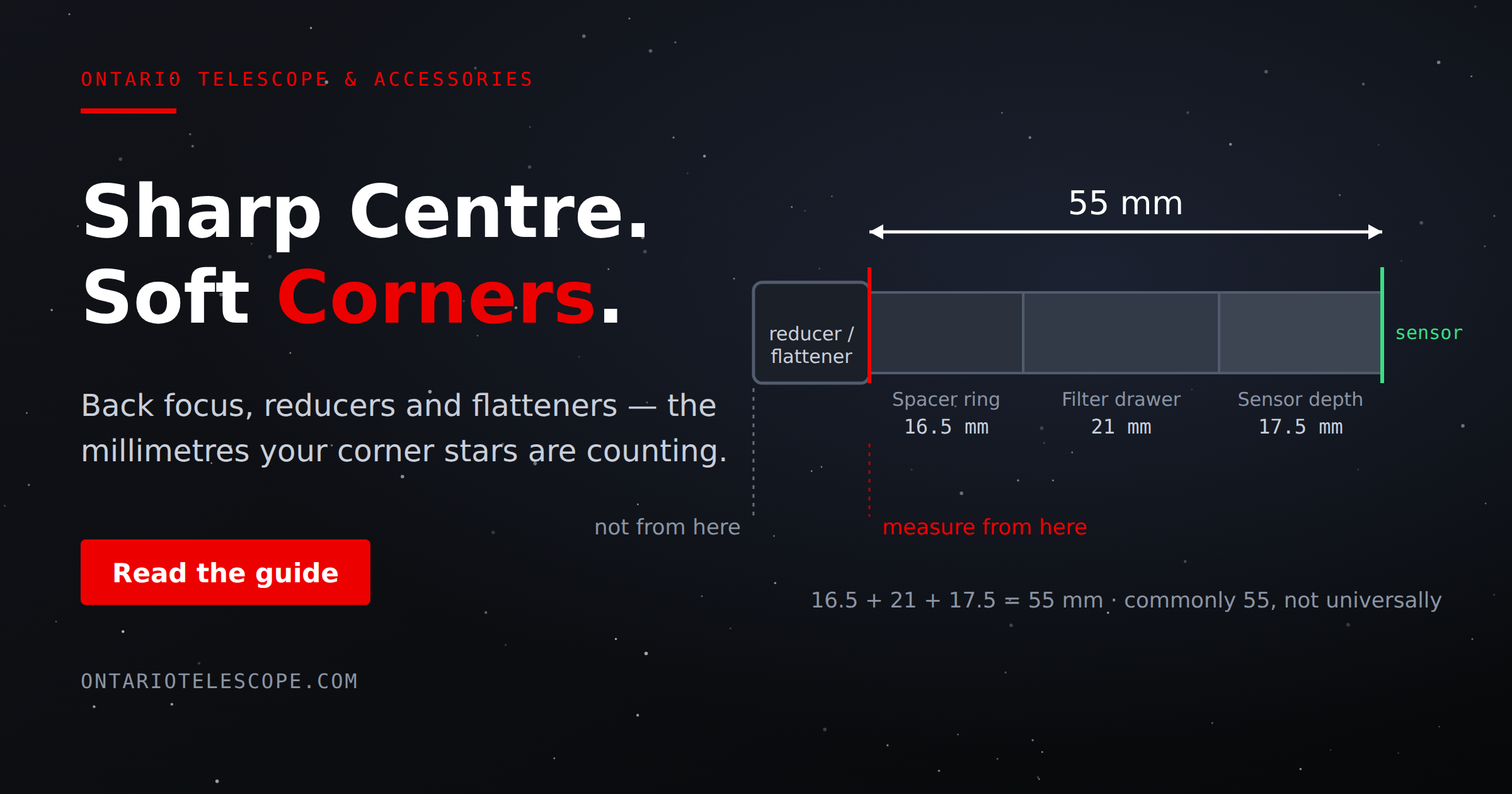
What Is Back Focus in Astrophotography? Telescope Reducers, Flatteners, and Spacing Explained
Read More