


- Description
- Specifications
Product Overview
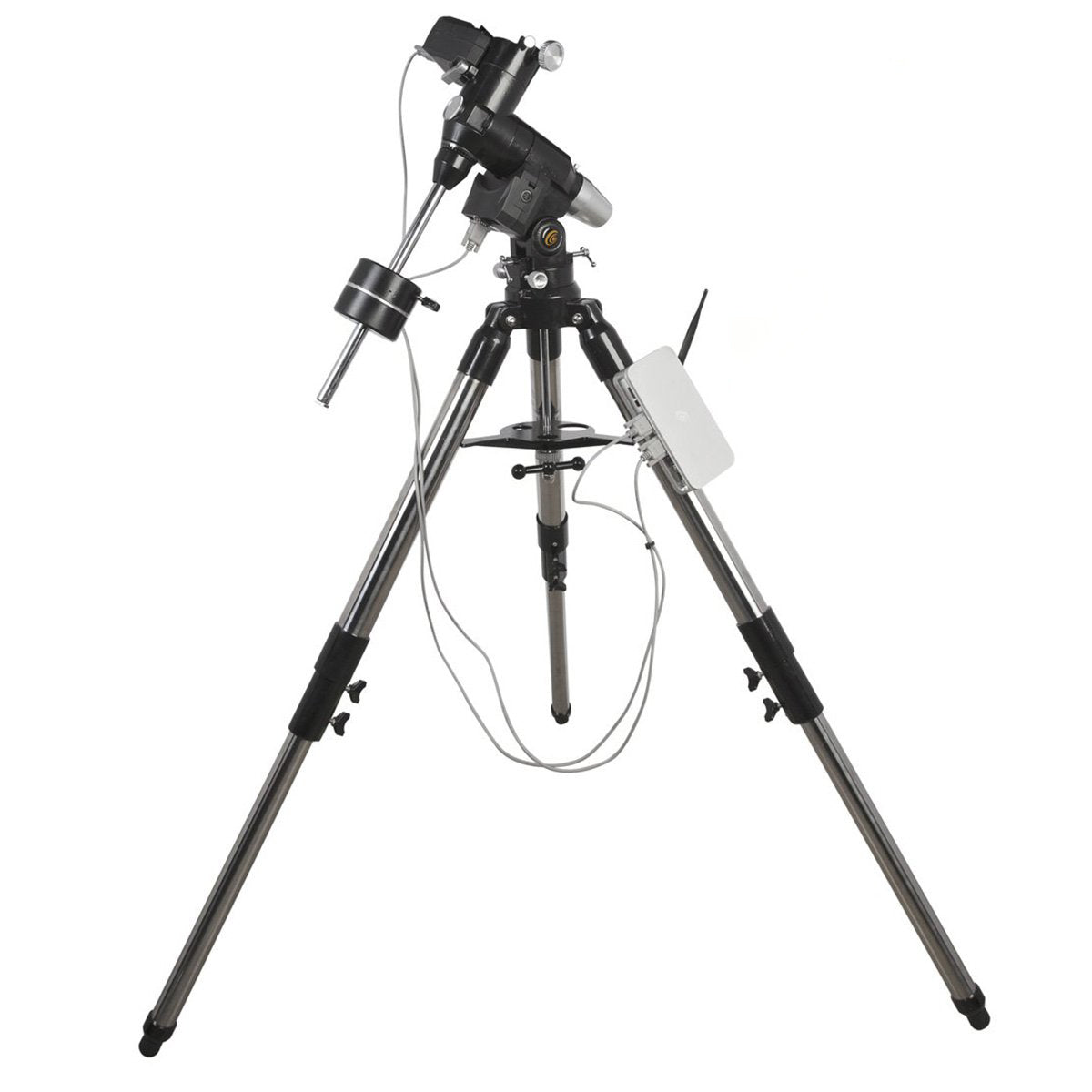
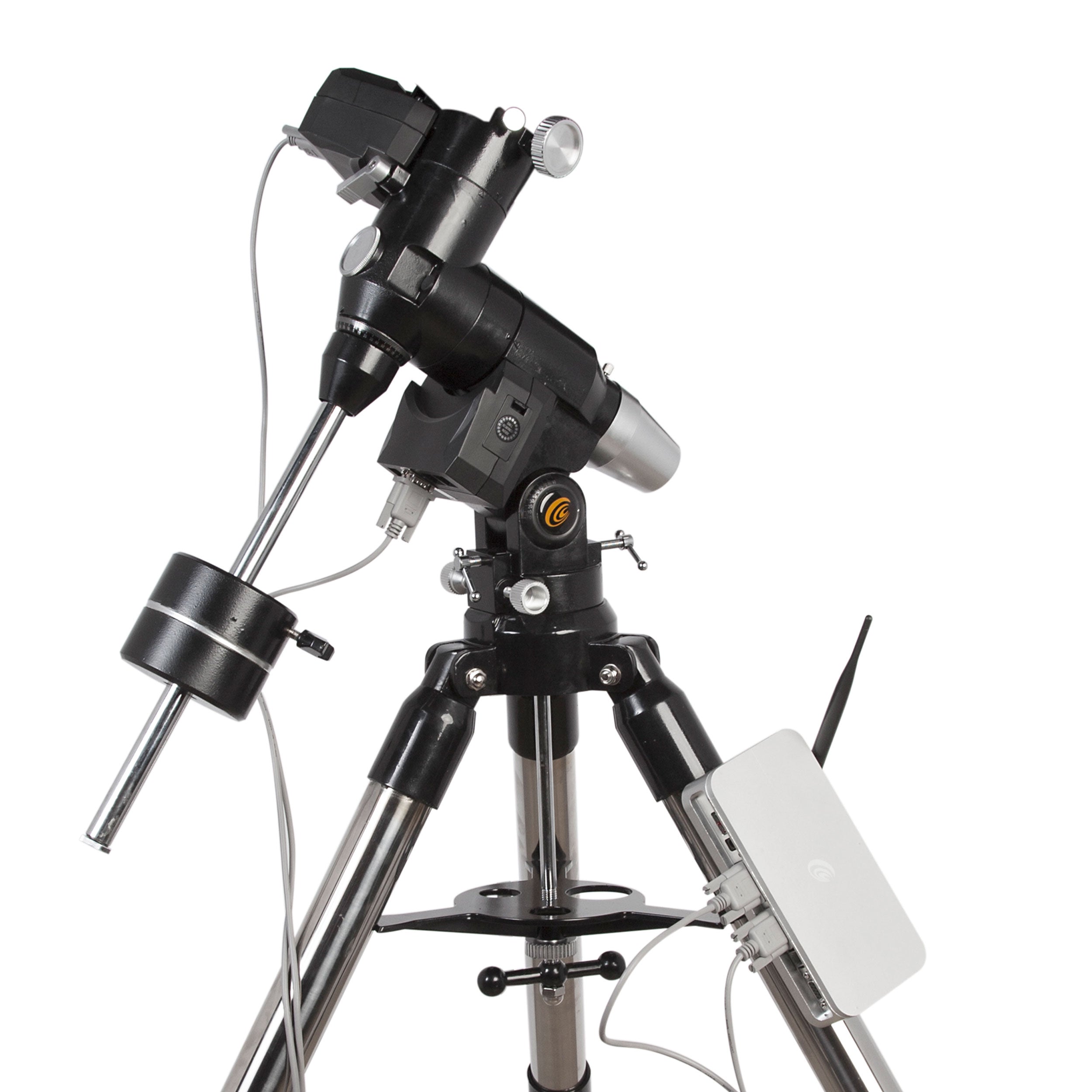
The Explore Scientific EXOS2-GT is a German equatorial mount and tripod driven by Explore Scientific's PMC-Eight GoTo system with WiFi and Bluetooth. It carries a 28 lb instrument payload for astrophotography, and rather more than that for visual use, which makes it a portable platform for telescopes that would normally call for a considerably larger mount. Two 11.25 lb counterweights and an AC adapter are included.
Who It's For
This is the mount for someone whose telescope has outgrown a light-duty equatorial — a 6-inch refractor, an 8-inch SCT, a fast Newtonian — and who wants tracking and GoTo without moving to a pier-mounted observatory setup. It suits imagers who need the mount to hold a camera, guide scope and filter wheel steady through long exposures, and visual observers who want objects found and kept centred while they concentrate on looking.
Key Features & Design
- 28 lb instrument payload capacity for astrophotography, with more available for visual work
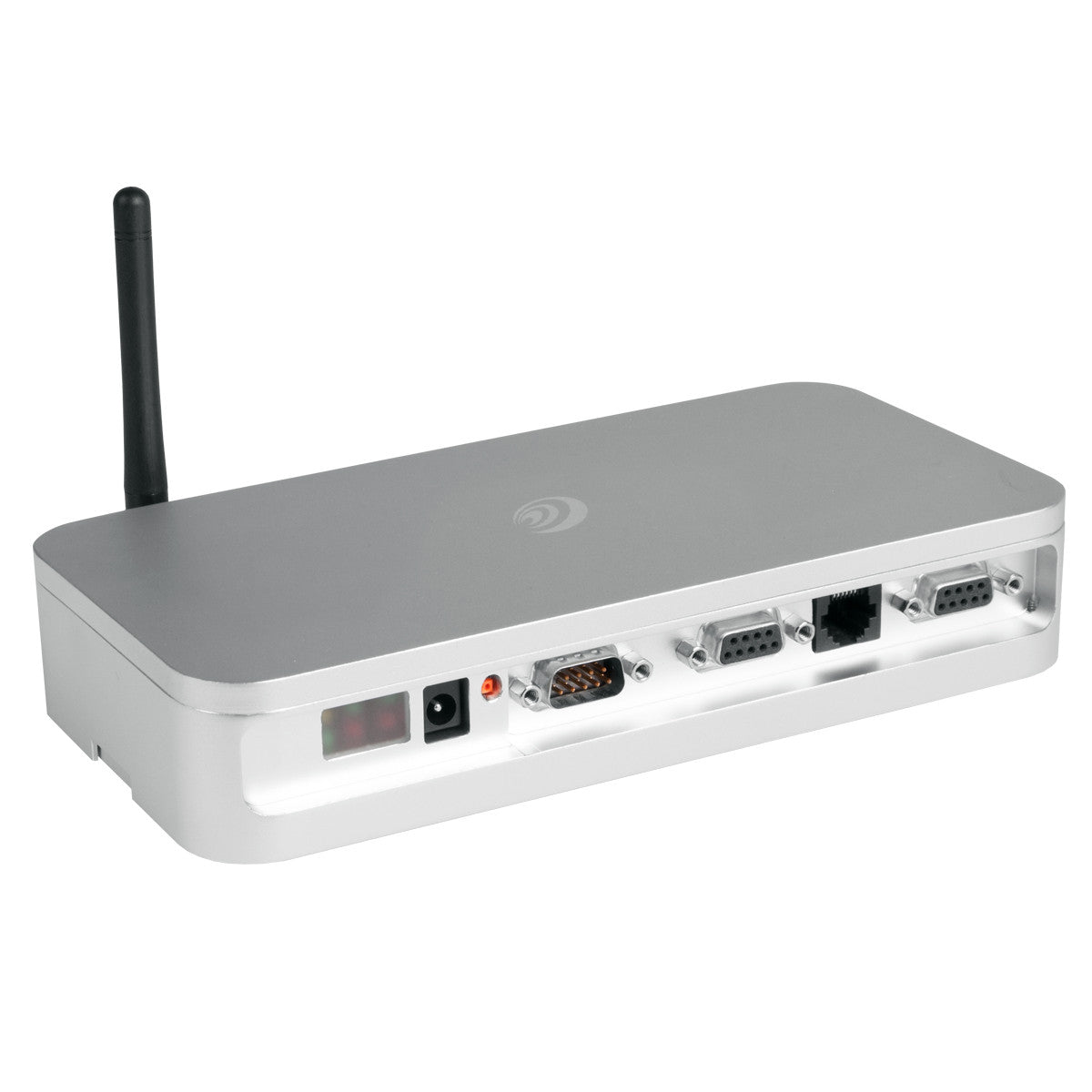
- PMC-Eight motion control using an eight-core microcontroller, with each CPU handling a defined task for responsive, accurate tracking
- WiFi and Bluetooth control from the free ExploreStars app on Windows, Android, Amazon Fire and Apple tablets
- ASCOM-compliant driver for use with virtually any ASCOM-aware sky software, wired or wireless
- Two 11.25 lb counterweights and an AC adapter supplied in the box
- 13.4 lb mount head; 30 lb for the complete mount and tripod before counterweights
Optical and Mechanical Design
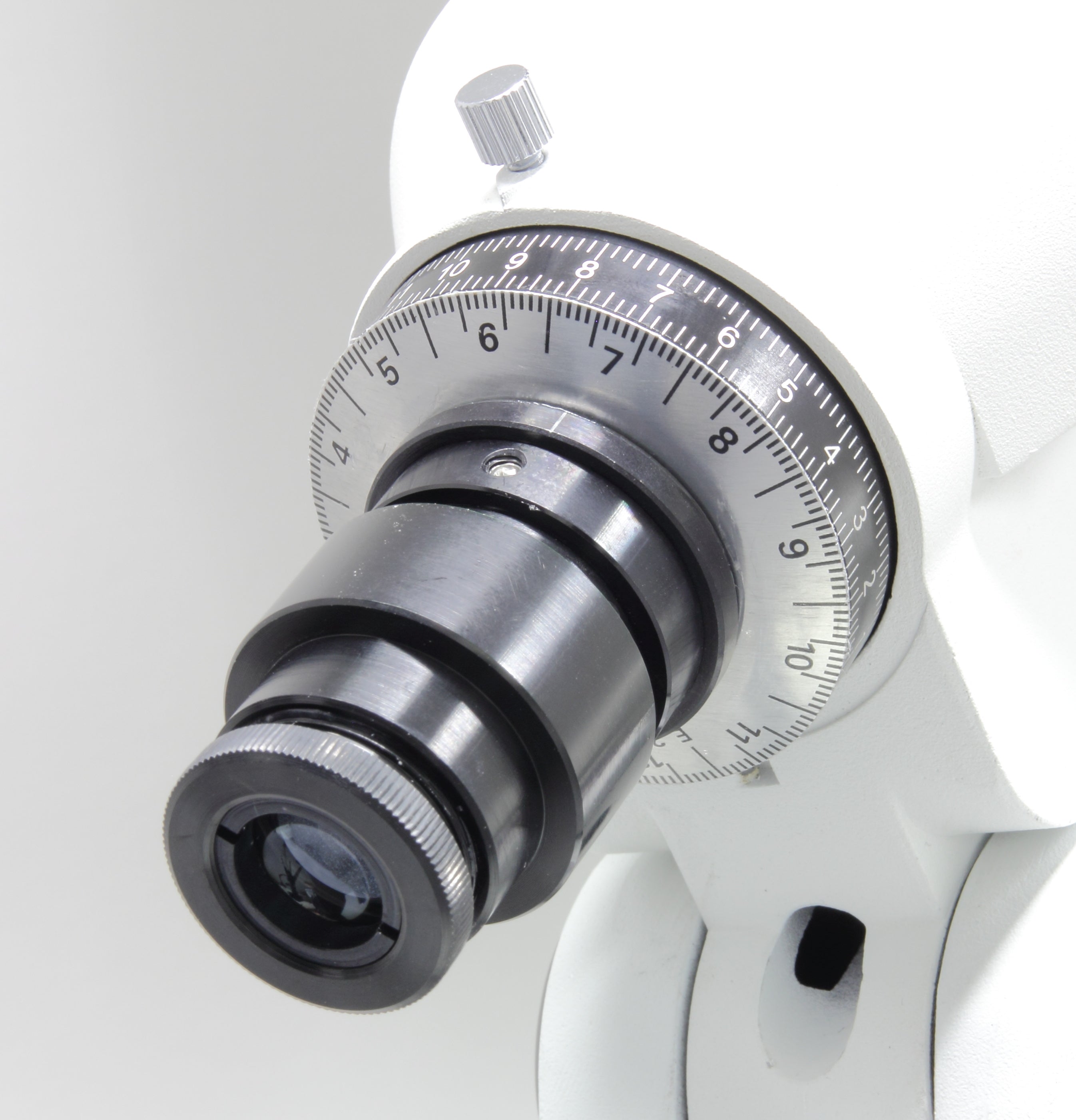
A German equatorial mount tilts one axis to match your latitude so that a single motor can follow the sky's rotation, which is what allows long exposures without star trails. The EXOS2-GT drives both axes through the PMC-Eight system; distributing motion control across eight independent processors keeps timing intervals short, which shows up as smoother tracking and cleaner round stars in a long sub-exposure. The head separates from the tripod for transport, so the heaviest single piece is 13.4 lb.
Recommended Uses
- Deep-sky astrophotography with a refractor, Newtonian or SCT up to 28 lb of equipment
- Visual observing with GoTo object location and tracking
- Lunar and planetary imaging where steady tracking at high magnification matters
- Portable use at a dark site, splitting into head, tripod and counterweights
Compatibility and Accessory Notes
The saddle accepts Vixen-style dovetails as standard, which covers most of the optical tubes we carry, including the Explore Scientific ED and FCD-100 refractors. Control is through the free ExploreStars app on a tablet you already own, or through ASCOM from a laptop — a tablet or computer is not included. For imaging from a location without mains power, a 12 V field battery pack is the usual addition; the supplied AC adapter covers use near an outlet. We stock additional counterweights, polar scope illuminators and Vixen saddle plates for this mount.
Good to Know Before You Order
The complete mount and tripod come to 30 lb before counterweights and about 53 lb with both fitted, so it travels in two or three trips to the car rather than one. Polar alignment is part of setting up any German equatorial; the published guide walks through it and it becomes a two-minute routine. No telescope is included — this is a mount, tripod and counterweight set. Explore Scientific maintains the ExploreStars app, the ASCOM driver and an active PMC-Eight user community, so the software side is well supported.
Frequently Asked Questions
Is it difficult to set up? The mechanical assembly is quick — head onto tripod, counterweights on the shaft, telescope into the saddle. Polar alignment and a star alignment in the app take a few minutes on your first outing and get faster with practice.
How much telescope will it hold? Explore Scientific rates it at 28 lb of instrument for astrophotography, and notes the visual capacity can be pushed further. Imaging benefits from staying under the rating.
Do I need a tablet or a computer? One or the other, yes. ExploreStars runs on Windows, Android, Fire and Apple tablets; ASCOM works from a laptop. Neither is included.
Will my telescope fit? If it has a Vixen-style dovetail and weighs under 28 lb with accessories, yes. Send us your setup and we will confirm.
Bottom Line
A 28 lb-capacity GoTo equatorial with counterweights and AC adapter in the box, wireless control from a tablet, and ASCOM support for imaging software. It is the natural step up for a telescope that has outgrown a light-duty mount. Our Bolton team can confirm payload and dovetail fit for your tube.
| Item number | ES-EXOS2GTPMCT3-01 |
|---|---|
| Mount type | German equatorial with PMC-Eight GoTo |
| Instrument payload capacity | 28 lb for astrophotography |
| Mount head weight | 13.4 lb |
| Total weight without counterweights | 30 lb |
| Counterweights included | Two, 11.25 lb each |
| Motion control | PMC-Eight, eight-core microcontroller |
| Wireless control | WiFi and Bluetooth |
| App | ExploreStars for Windows, Android, Amazon Fire and Apple tablets |
| Driver support | ASCOM compliant, wired or wireless |
| Saddle | Vixen style dovetail |
| Power | AC adapter included |
| Tripod | Included |
| Telescope included | None |
| Tablet or computer included | None |
You may also like
Recently viewed
Recent Blog Posts
View all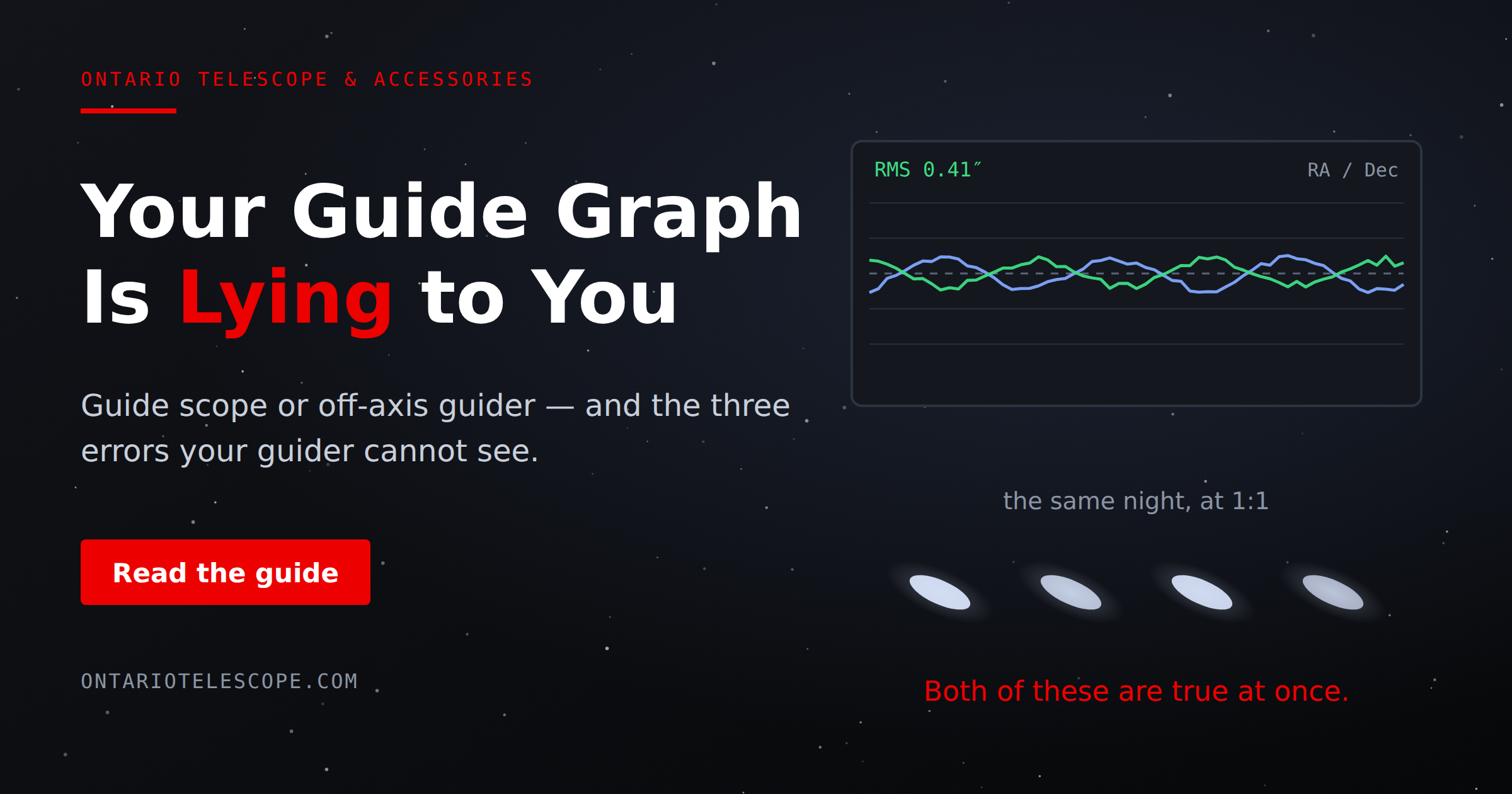
Your Guide Graph Is Lying to You
Read More
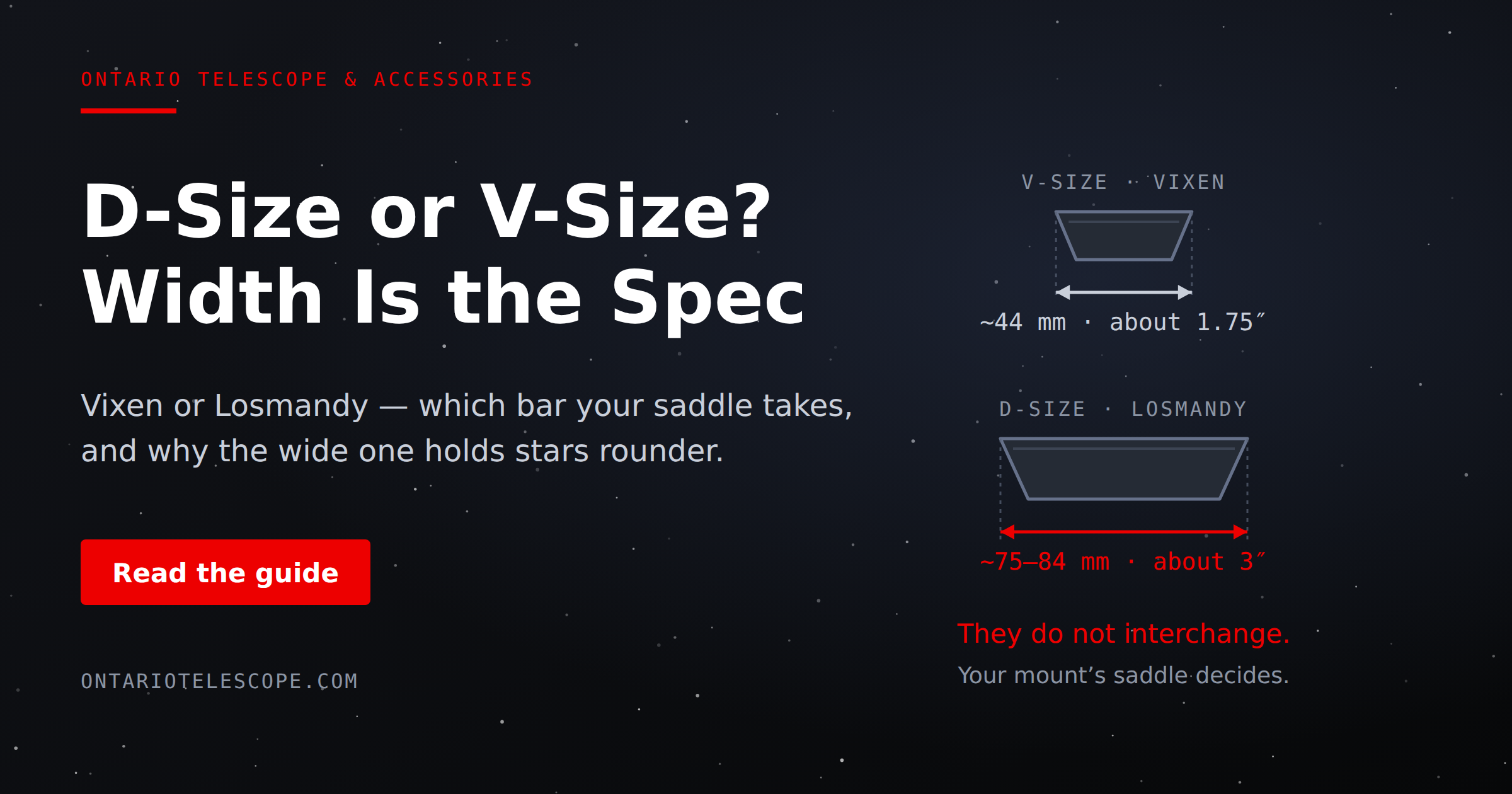
D-Size vs V-Size: A Complete Guide to Telescope Dovetail Systems
Read More
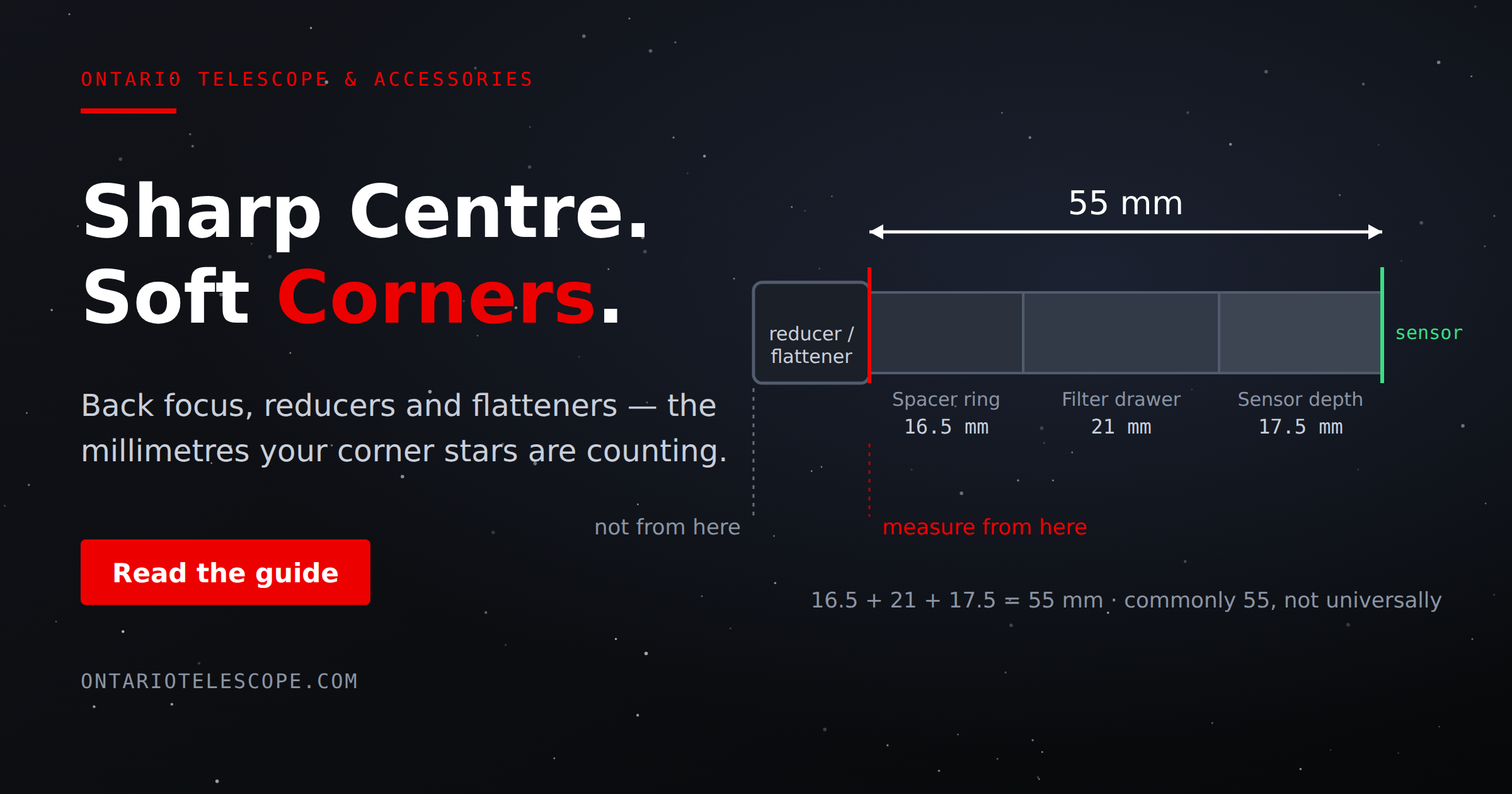
What Is Back Focus in Astrophotography? Telescope Reducers, Flatteners, and Spacing Explained
Read More