


- Description
Product Overview
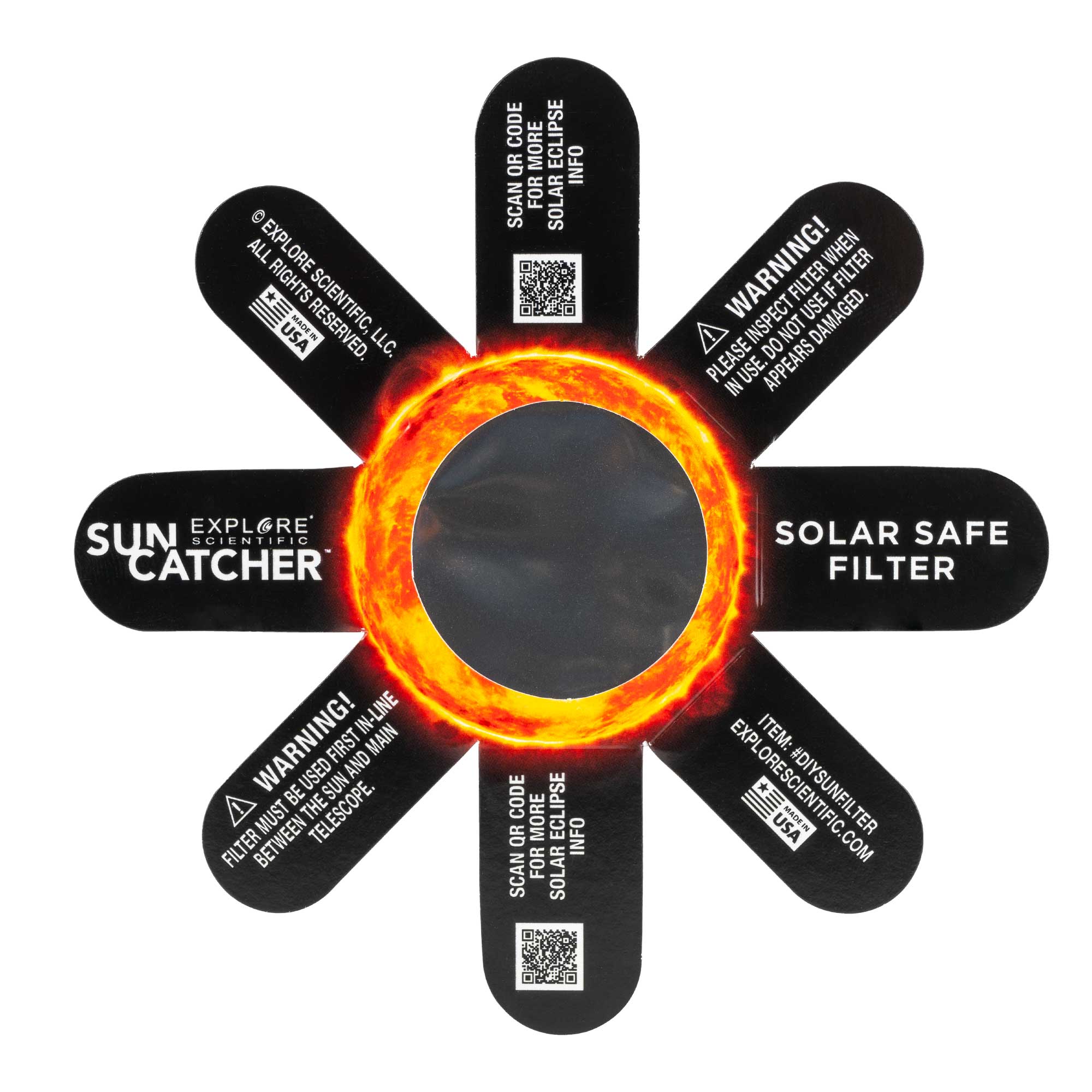
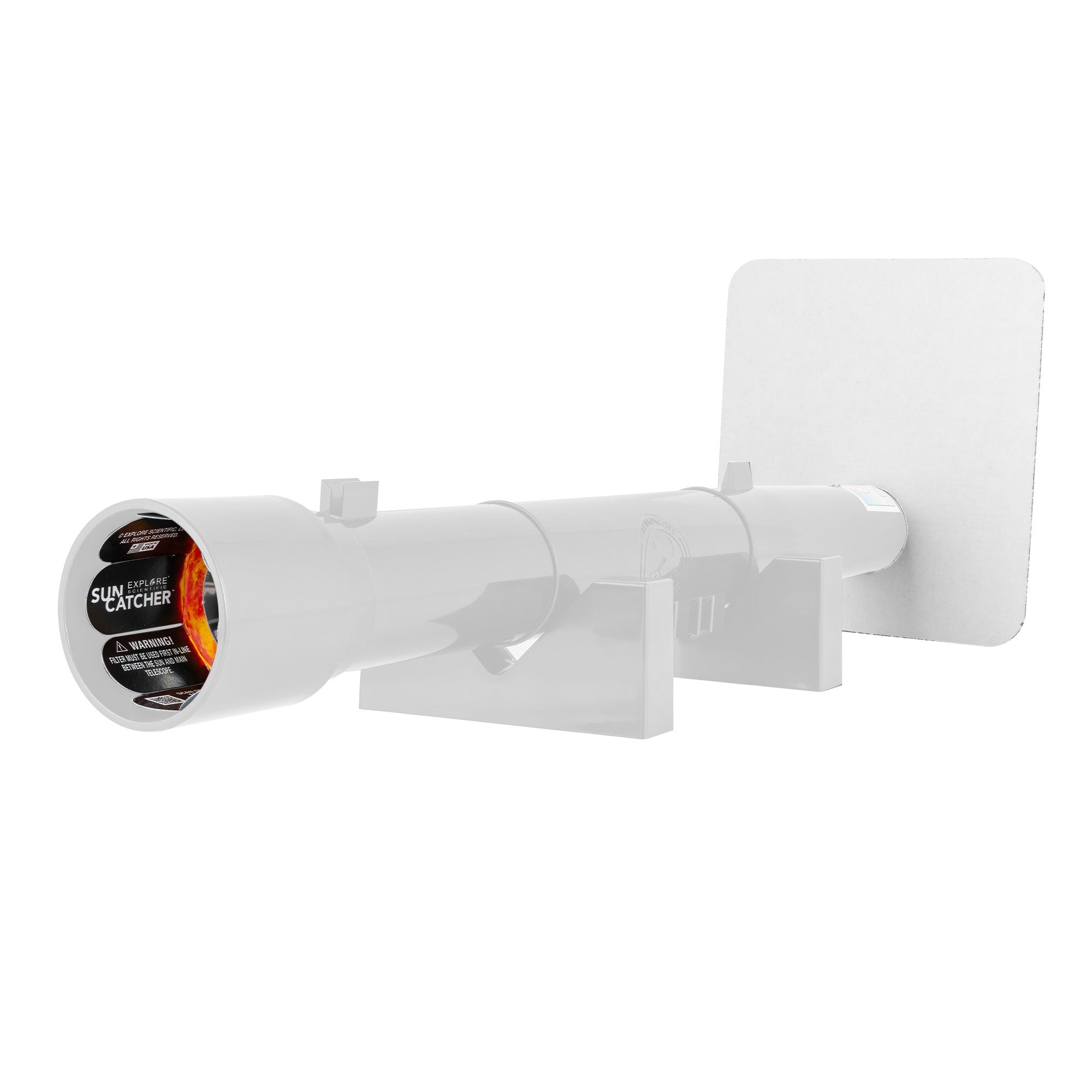
This is Explore Scientific's build-it-yourself solar filter and sun shade for the Galileoscope refractor STEM kit, catalogued as item DIYSUNFILTER. Explore Scientific describe it as an easy-to-assemble filter designed to fit snugly inside the dew shield of a Galileoscope, allowing users to safely observe the Sun. The filter is built around Thousand Oaks Optical Solarlite material, which Explore Scientific publish as having a film value of ND16 and which Thousand Oaks guarantee for fifteen years. A sun shade is included alongside the filter, and the product is made in the USA.
Who It's For
The Galileoscope is a kit telescope built to be assembled, understood, and used by a beginner, and most of the observing people do with it happens at night. The Sun is the one target that is available in the daytime, changes visibly from week to week, and gives a classroom or a family something concrete to track over a term. Sunspot groups rotate across the disc over roughly a fortnight, they grow and decay, and counting them across a season is one of the few genuinely useful measurements a small telescope can make. This filter is the piece that makes that possible on a Galileoscope specifically.
It is also a build. The Galileoscope itself is a construction project rather than a finished instrument, and this filter follows the same idea: you assemble it, you fit it to the dew shield, and in doing so you learn why solar observing needs the filter at the front of the telescope rather than at the eyepiece. For a teacher, a scout leader, or a parent working through the kit with a child, that assembly step is part of the point rather than an inconvenience.
Key Features & Design
- Build-it-yourself filter and sun shade sized specifically for the Galileoscope refractor STEM kit.
- Designed to fit snugly inside the Galileoscope's dew shield rather than clamping to the outside of the tube.
- Uses Thousand Oaks Optical Solarlite filter material, guaranteed by Thousand Oaks for fifteen years.
- Explore Scientific publish a film value of ND16 for the material.
- Explore Scientific describe the film as stronger than any other solar filter film on the market and highly resistant to tears and punctures.
- Produces a consistent yellow-orange solar image, the characteristic colour of this film type.
- Even density across the aperture, with a flat surface rather than the wrinkles and creases Explore Scientific note in thinner films.
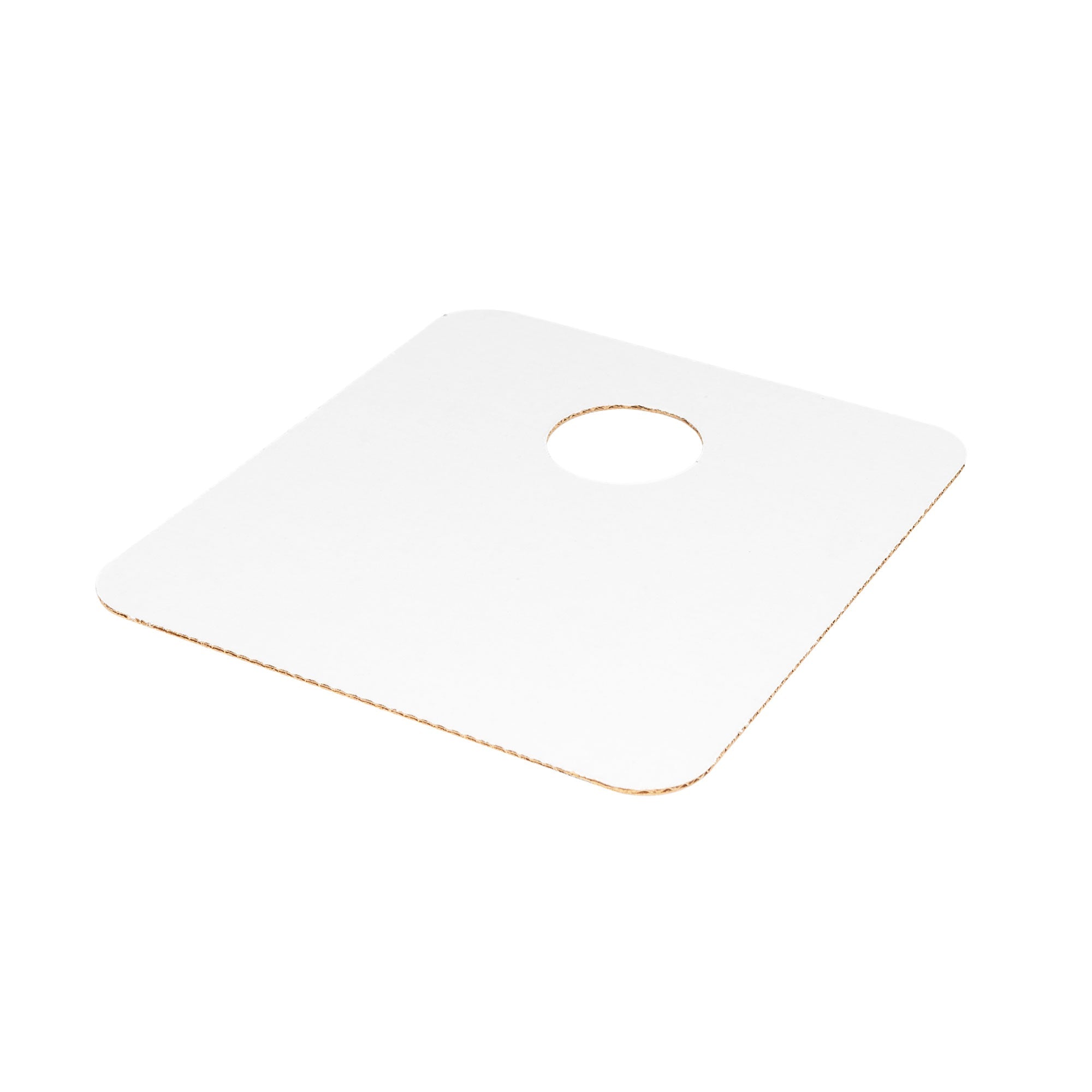
- Includes a sun shade. Made in the USA.
Filter Design
The important thing about any solar filter of this kind is where it sits. It goes at the front, over the full aperture, so that the overwhelming majority of the Sun's light and heat is rejected before it ever enters the telescope. The objective then forms an image from the small fraction that gets through, and the light reaching the eyepiece has already been attenuated. That is fundamentally different from a filter threaded onto an eyepiece, where the full solar beam has already been concentrated by the objective before it reaches the glass. Explore Scientific's design fits inside the Galileoscope's dew shield, which is what keeps the filter located over the aperture and gives it a positive seat rather than relying on friction against a painted tube. The film itself is the other half of the story: Solarlite is a polymer-based material rather than a coated glass filter, and Explore Scientific make the point that it holds an even density across the aperture with a flat surface, where thinner films can wrinkle and crease. Wrinkles matter because they scatter light and vary the transmission from point to point across the disc, which is exactly what you do not want when you are trying to judge whether a small sunspot is real. The yellow-orange rendering is characteristic of this film, and many observers prefer it to the flatter blue-white image other materials give because the granulation and the penumbral detail around spots read more easily against it. The included sun shade addresses the other daytime problem, which is stray light washing out the view and making the eyepiece hard to use at all.
Recommended Uses
- White-light solar observing with an assembled Galileoscope, including sunspot watching.
- Classroom and outreach work where the telescope is already part of a STEM programme.
- Tracking sunspot groups across successive days as a long-running student project.
- Daytime observing sessions where a night-time session is not practical.
Compatibility and Accessory Notes
This filter is made for one telescope. Explore Scientific specify that it is designed to fit snugly inside the dew shield of a Galileoscope, and they do not publish an aperture diameter, a filter cell dimension, or any fitting specification that would let you match it to another instrument. Treat it as a Galileoscope part and nothing else. The Galileoscope refractor STEM kit itself is a separate product and is not included here, and the filter is of no use without one. If you are looking for a solar filter for a different telescope, our team in Bolton can point you at a filter made and sized for your aperture instead, which is the correct way to solve that problem.
Good to Know Before You Order
Two things to be clear about. First, this is an assembly kit, not a finished filter that arrives ready to drop on the telescope: you build it, and how well it seats in the dew shield depends on that build being done properly. Second, and more importantly, Explore Scientific's product page for this item is thin on safety specifics. Beyond the statement that the filter is designed to allow users to safely observe the Sun, the page publishes no safety rating, no ISO 12312-2 or equivalent conformity statement, and no assembly or handling guidance that we can quote to you here. We are not going to invent that framing on their behalf. Observing the Sun with an inadequate or incorrectly fitted filter causes permanent eye injury without warning, so please confirm your intended use with us before you observe the Sun with this filter, and we will tell you exactly what Explore Scientific and Thousand Oaks document for this specific part. Separately, Explore Scientific publishes no shipping weight for this item, so we are confirming it on our own scales before the listing goes live. That is why it is currently unpublished. Contact us and we will give you a shipping figure for your address.
Frequently Asked Questions
Will this fit a telescope other than a Galileoscope? No, and we would not recommend trying to adapt it. Explore Scientific size it to fit inside the Galileoscope's dew shield and publish no dimensions that would let you fit it elsewhere. For another telescope, ask us for a filter made for that aperture.
Is the Galileoscope included? No. This is the solar filter and sun shade only. The Galileoscope refractor STEM kit is a separate item.
Why is the Sun orange through it? That is the natural rendering of Thousand Oaks Solarlite film. Explore Scientific describe it as a consistent yellow-orange solar image, and many observers find sunspot detail easier to read against that colour than against a neutral white one.
How long does the film last? Thousand Oaks Optical guarantee the Solarlite material for fifteen years. That is a guarantee on the material itself, so as with any solar filter, inspect the film before every session and stop using it if you find damage.
Bottom Line
For anyone already working with a Galileoscope, this is the accessory that opens up the daytime sky, built on well-regarded Thousand Oaks Solarlite film and assembled by the user as part of the exercise. Because Explore Scientific publish very little safety detail for it, contact us before you use it on the Sun and we will confirm what the manufacturer actually documents for your situation.
You may also like
Recently viewed
Recent Blog Posts
View all
Your Guide Graph Is Lying to You
Read More

D-Size vs V-Size: A Complete Guide to Telescope Dovetail Systems
Read More

What Is Back Focus in Astrophotography? Telescope Reducers, Flatteners, and Spacing Explained
Read More