


- Description
Product Overview
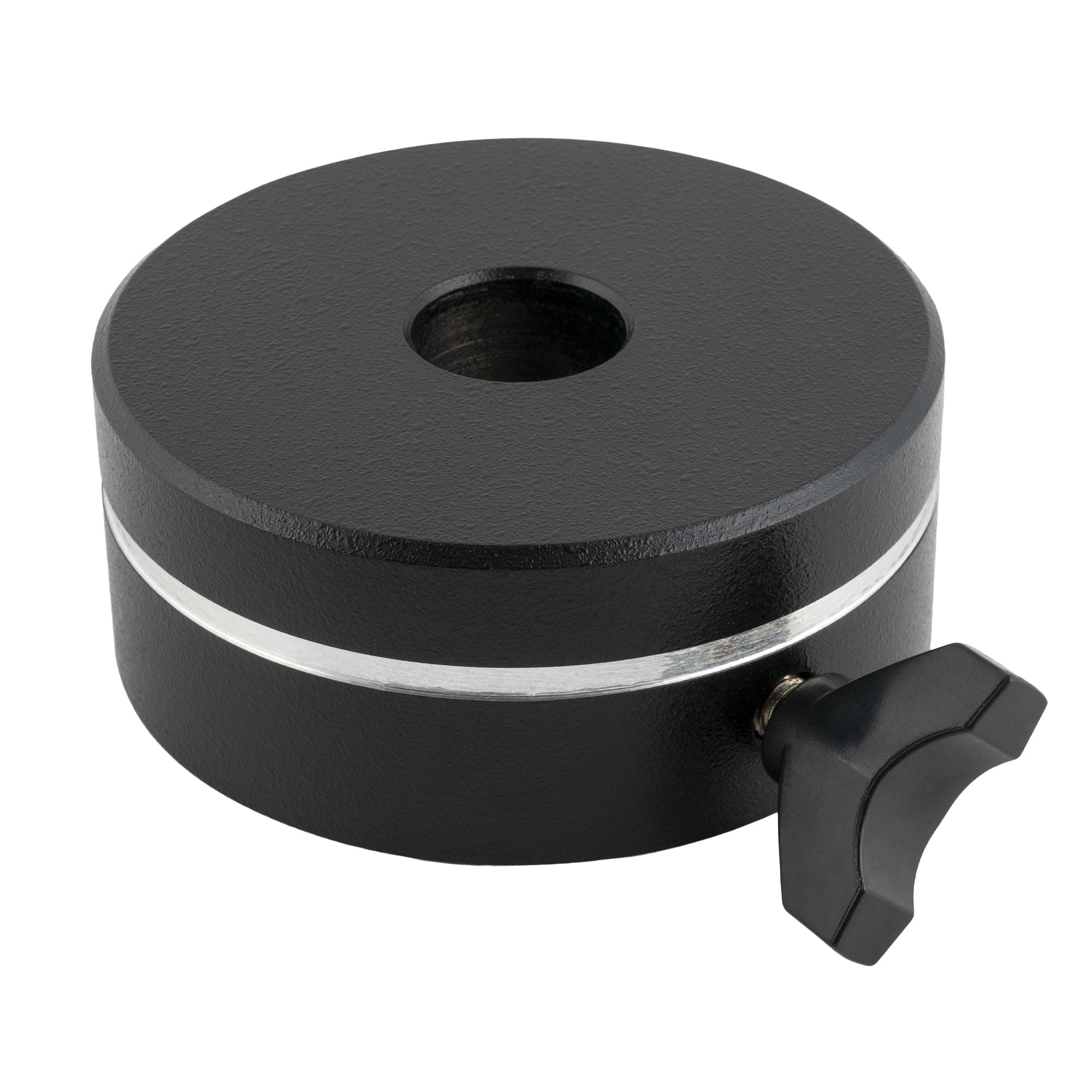
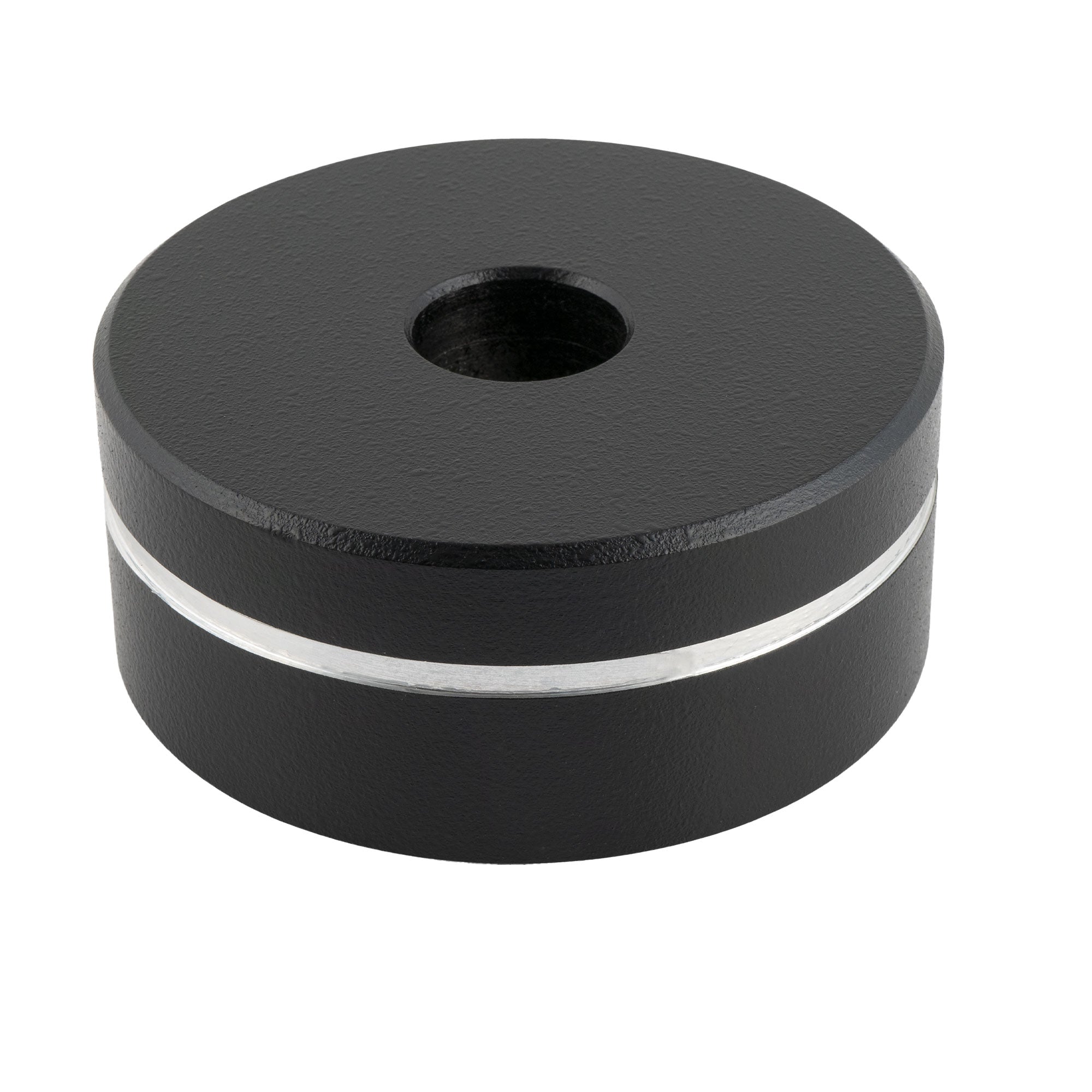
This is Explore Scientific's supplemental 5 pound counterweight for EXOS series equatorial mounts, item EXOS2CWB5. Explore Scientific publishes the mass as 5 pounds, or 2.25 kilograms, and supplies the locking knob with it. The body is black with a machined silver band around the circumference. It is the smaller of the two counterweights offered for this shaft, and it is the one to reach for when balance is a question of a small, controllable correction rather than a large shortfall of mass.
Who It's For
This weight is about resolution, not capacity. If you observe with a short refractor — an 80 or 102 millimetre apochromat, a small Maksutov, a guide scope and camera on a light dovetail — a large counterweight has to sit very close to the mount head to balance it, and that is an awkward place for it to live. Down there it can foul the azimuth adjusters or a tripod leg at Canadian latitudes, it gives you almost no useful travel because a centimetre of movement swings the moment enormously, and it loads the right ascension bearing with mass the mount never needed to carry. Five pounds balances the same tube from much further out along the shaft, where every centimetre is a small change and clearance stops being a problem.
The other group who want this weight already own a heavier one. Putting 5 pounds on the shaft alongside it gives you a second, independent adjustment: park the big weight roughly where the tube wants it and use the small one to trim. That is far quicker than re-sliding a heavy weight every time you swap a diagonal for a camera, add a dew heater and its battery, or hang a finder off the tube rings. Anyone who changes configuration mid-session, visual for an hour and then imaging, ends up working this way. And if you own tubes at both ends of the range, the honest answer is that you want both weights — this one alone for the small refractor, the pair together for anything substantial.
Key Features & Design
- Explore Scientific publishes a mass of 5 pounds, or 2.25 kilograms
- Locking knob included, ready to fit without sourcing additional hardware
- Black finish with a machined silver band around the body
- Listed by Explore Scientific for EXOS series mounts as a family rather than a single model
- Light enough to serve as a trim weight beside a larger counterweight already on the shaft
- Balances a given tube from further out on the shaft, keeping the mount head area clear
- Supplied as Explore Scientific item EXOS2CWB5
Mechanical Design
Because balance depends on mass multiplied by distance from the right ascension axis, the mass you choose sets how sensitive the adjustment is. Slide a ten pound weight one centimetre along the shaft and you change the restoring moment twice as much as moving a five pound weight the same distance. On a light tube that difference decides whether balancing is a calm, repeatable operation or a cycle of loosen, nudge, overshoot, retighten. The lighter counterweight also keeps total rotating mass down, and that matters more than it appears to: every pound on the shaft is a pound the right ascension bearing supports and the drive has to accelerate and decelerate on each slew. A mount running with only the counterweight it actually needs tracks and guides more smoothly than one carrying surplus steel. Where five pounds genuinely is not enough moment, the correct response is to add a second weight rather than to lean on the clutches — two weights on one shaft sum into a single moment while still giving you coarse and fine control at the same time.
Recommended Uses
- Balancing a short apochromatic refractor or a small Maksutov on an EXOS mount
- Trimming balance alongside a larger counterweight already fitted to the shaft
- Rebalancing quickly when swapping between a visual diagonal and an imaging train
- Compensating for a guide scope, dew heater, or camera added part way through a session
- Replacing a lost or damaged 5 pound counterweight
Compatibility and Accessory Notes
Explore Scientific lists this counterweight for EXOS series mounts as a family rather than naming a single model, and it is the standard 5 pound weight for the EXOS-2 and EXOS-2GT counterweight shaft. It stacks with the 9.9 pound counterweight on that same shaft, and since each weight ships with its own locking knob you can run both without sourcing anything extra. Order them sensibly along the shaft: the heavier weight belongs nearer the mount head with this one outboard of it, so that your fine adjustment is the one with the longest lever and the gentlest response. Because Explore Scientific's compatibility statement here is written for the series rather than one mount, and because bore diameters vary between mount generations and manufacturers, send us your shaft diameter if you are fitting this to an older EXOS, an iEXOS, or another brand entirely, and our team in Bolton will confirm the bore before it ships.
Good to Know Before You Order
Five pounds is a trim increment, not a capacity upgrade. If your existing counterweight already sits at the far end of the shaft and the tube still drops, this weight on its own will very likely not close the gap, and the 9.9 pound counterweight is the part you actually want. The counterweight shaft itself is part of the mount and is not supplied here. Explore Scientific publishes the mass and nothing more, so bore diameter, outer diameter, and thickness do not appear on their page — we can measure a unit in stock if those numbers matter to your setup. The silver band is a finish detail on the black body; it is not a graduated scale and it carries no markings.
Frequently Asked Questions
How much telescope will 5 pounds balance? That depends entirely on where it sits, since balance is mass multiplied by distance from the axis. On an EXOS-2 shaft it handles small and medium refractors comfortably, and it works as a trim weight for far heavier loads when paired with a larger counterweight.
Can I use it together with the 9.9 pound counterweight? Yes, and that is one of its most useful roles. Both fit the same shaft and each includes its own locking knob, so no extra hardware is needed.
Which should I buy if I can only buy one? If your tube weighs under roughly ten pounds with everything attached, start here. If it is heavier, or your current weight is already at the end of the shaft, the 9.9 pound counterweight is the better first purchase.
Is the silver stripe functional? No. It is a finish detail rather than a scale, and it does not indicate a balance position.
Bottom Line
A 5 pound counterweight buys you control rather than capacity, and on a light tube control is exactly what balancing actually requires. It works alone on a small refractor and as a fine trim beside a larger weight on anything bigger. Send us your tube and accessory list and we will tell you whether this one is enough on its own or whether you want it and the 9.9 pound weight together.
You may also like
Recently viewed
Recent Blog Posts
View all
Your Guide Graph Is Lying to You
Read More

D-Size vs V-Size: A Complete Guide to Telescope Dovetail Systems
Read More

What Is Back Focus in Astrophotography? Telescope Reducers, Flatteners, and Spacing Explained
Read More