


- Description
- Specifications
Product Overview
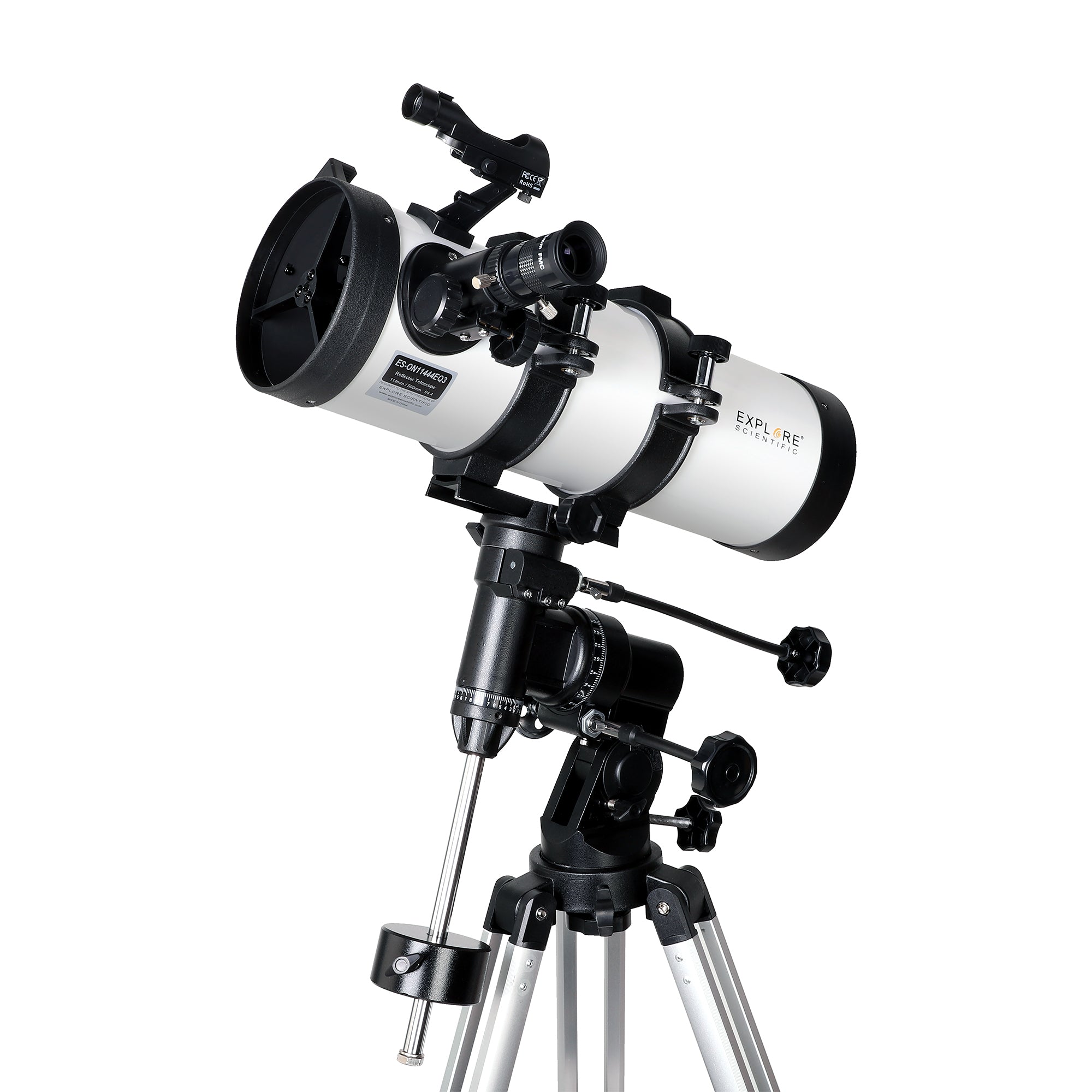
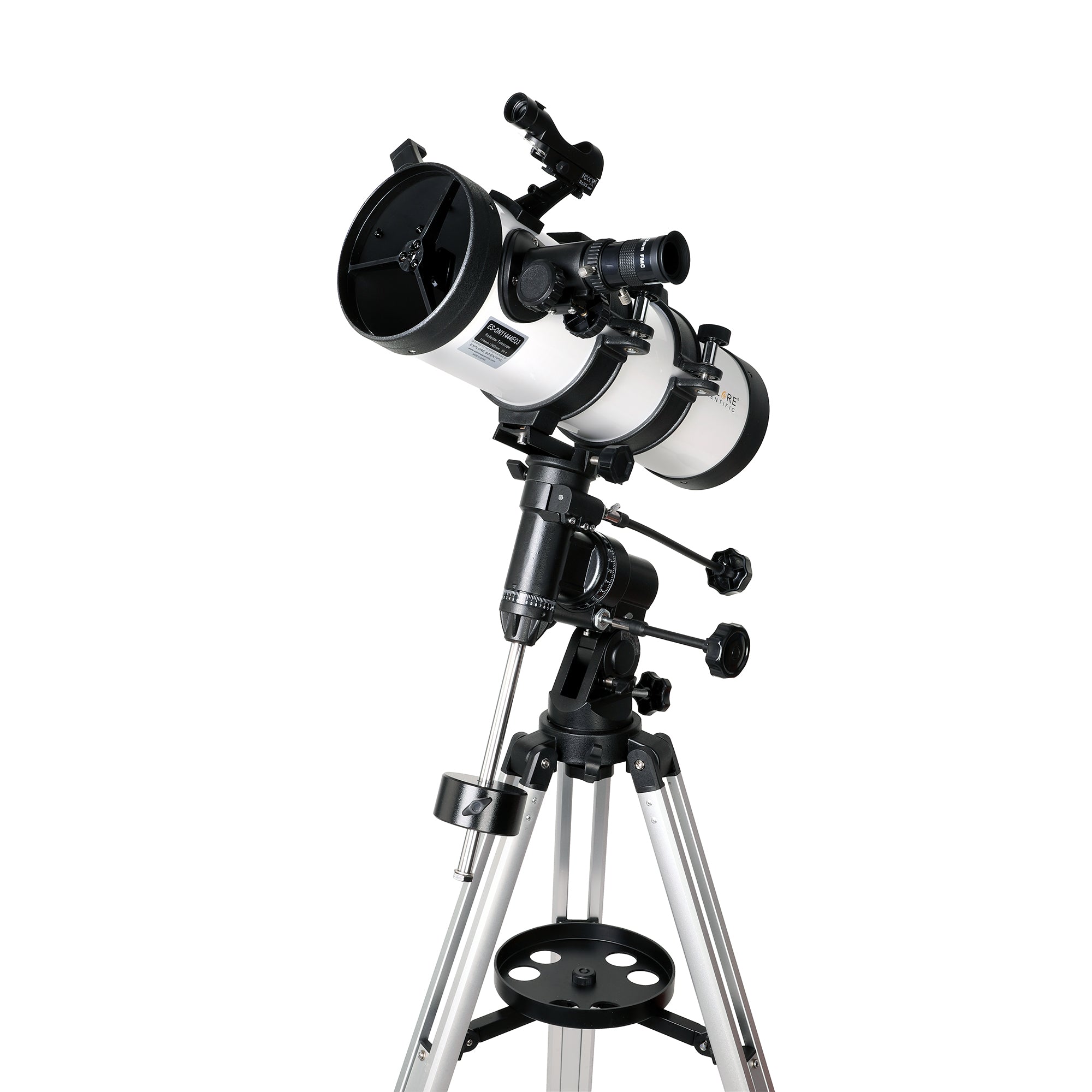
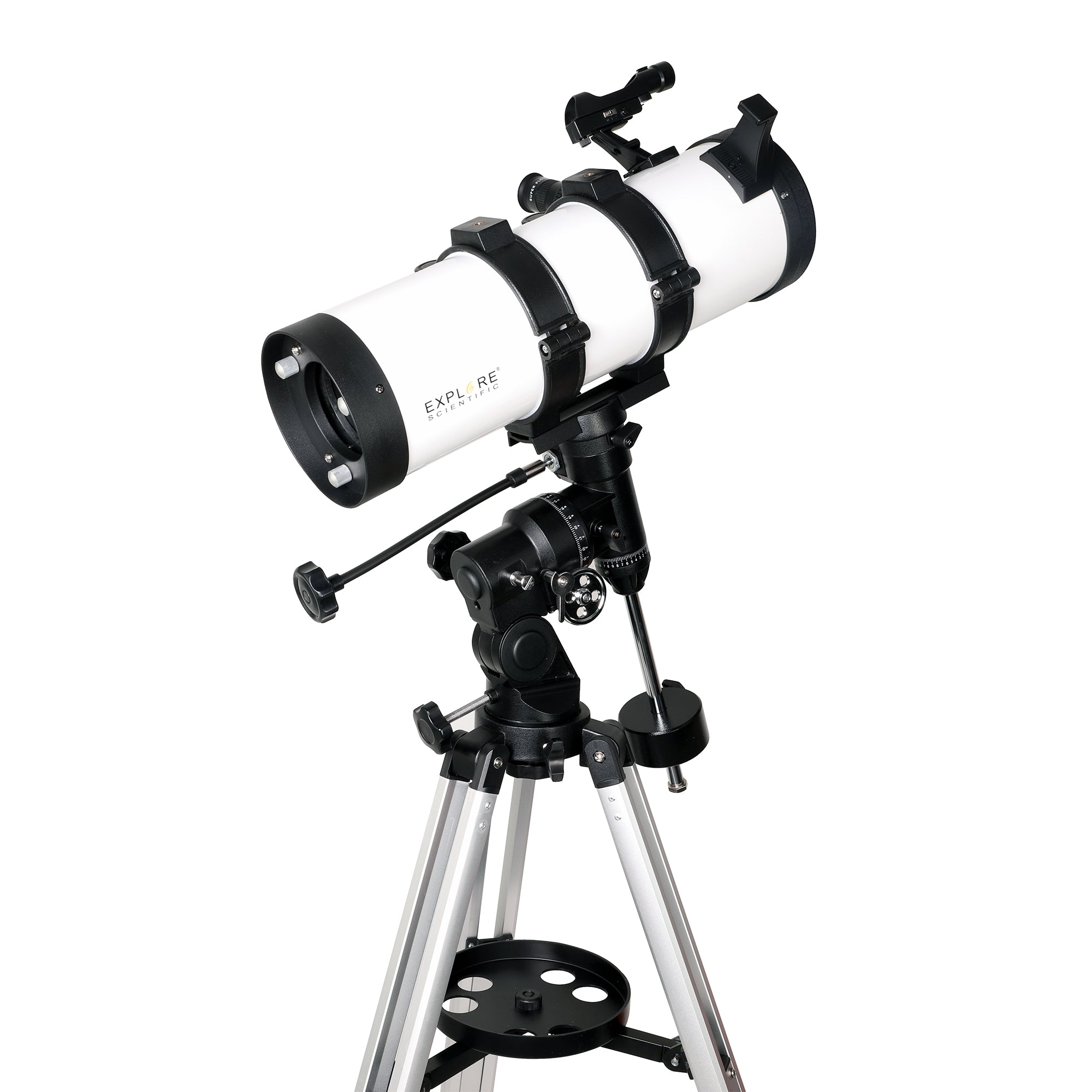
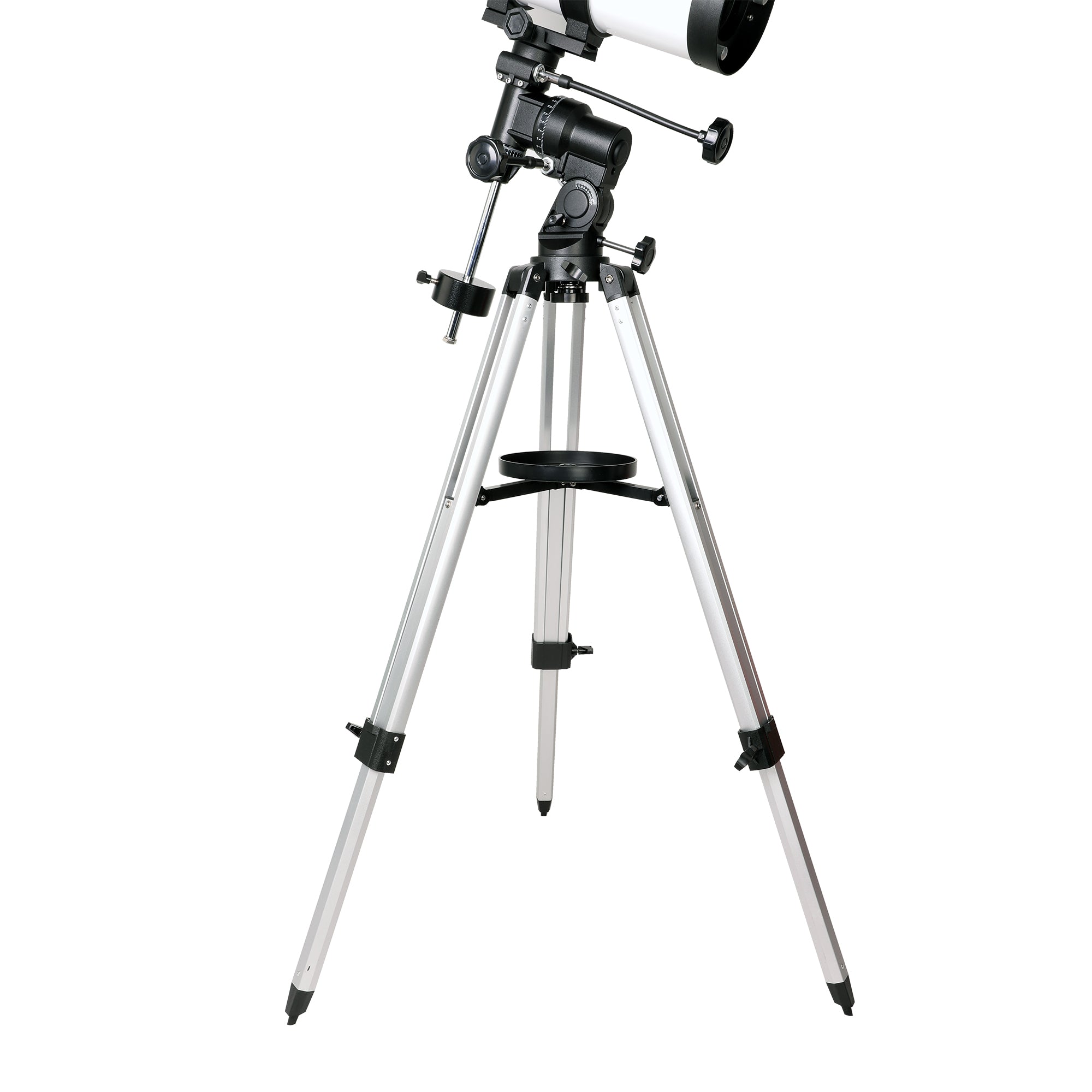
This Explore Scientific package pairs a 114 mm Newtonian reflector with an equatorial mount. The mirror works at 500 mm and f/4.4 — a fast, short optical system that gives wide, bright views. Two eyepieces, a red-dot finder, and a counterweight are included, and the whole setup weighs 16 lb 1.5 oz.
Who It's For
This is a first telescope that comes on an equatorial mount rather than a simple tripod head, which matters more than it sounds: an equatorial mount follows the sky's rotation on one axis, so once a target is centred you keep it there with a single slow turn rather than nudging two directions at once. That makes it a good fit for someone who wants to learn how the sky actually moves, and for a family scope where the Moon and the brighter planets are the main attraction.
Key Features & Design
- 114 mm Newtonian primary mirror, gathering far more light than a small beginner refractor
- 500 mm focal length at f/4.4 for wide, bright fields
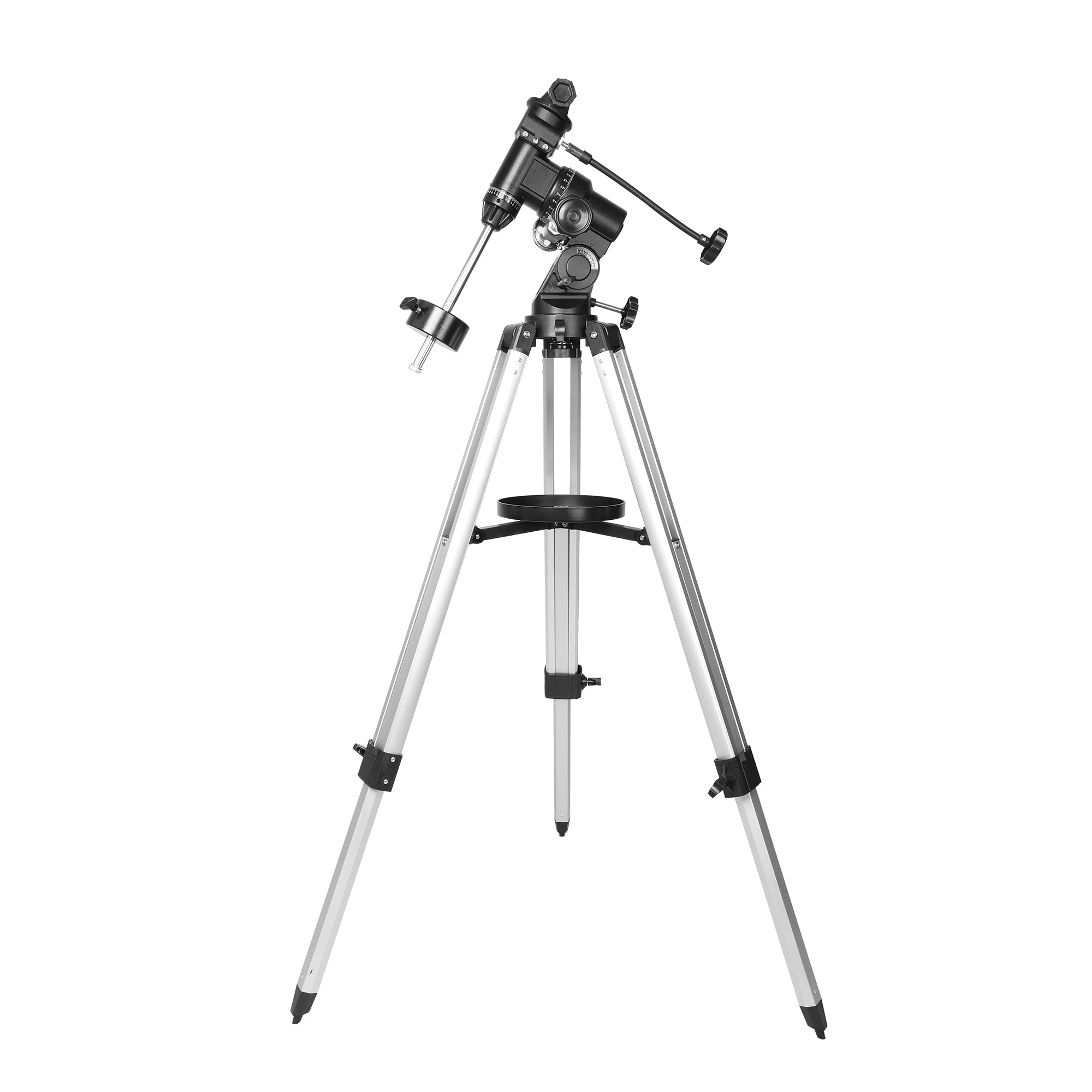
- Equatorial mount with counterweight, tracking the sky on a single axis
- 25 mm eyepiece giving 20x and 10 mm eyepiece giving 50x
- Red-dot finder scope for quick, intuitive target acquisition
- Counterweight included to rebalance as accessories are added
Optical and Mechanical Design
At f/4.4 this is a fast mirror, which is what produces the wide field and the bright image at low power — well matched to large targets like the Pleiades, the Orion Nebula, and sweeping through the Milky Way. The equatorial mount is aligned to the celestial pole once at setup; after that a single axis follows the sky. The counterweight balances the tube so the mount moves smoothly and holds position, and it should be repositioned whenever you change to a heavier eyepiece.
Recommended Uses
- Lunar observing, where 114 mm shows craters, mountain ranges, and terminator shadows clearly
- Jupiter's moons and belts, and Saturn's rings at 50x and above
- Wide-field sweeping of star clusters and the brighter nebulae
- Learning the constellations and how the sky rotates through a night
Compatibility and Accessory Notes
The focuser takes standard 1.25-inch eyepieces, so the two supplied can be joined by anything in that barrel size. A 2x Barlow is an inexpensive way to double both magnifications and is the usual next purchase. A fast f/4.4 mirror asks a little more of an eyepiece at the field edge than a slower one does, so a wider-field eyepiece designed for fast systems is a worthwhile upgrade — we can suggest one to suit. A collimation tool is useful for keeping the mirrors aligned.
Good to Know Before You Order
Explore Scientific publishes a total weight of 16 lb 1.5 oz for the complete setup, so it is easy to carry outside in one trip. The mount needs to be pointed at the celestial pole to track properly, which takes a few minutes the first time and rather less after that; the supplied manual covers it and so will we, on the phone, if it does not click straight away. Newtonians can arrive slightly out of collimation after shipping and the alignment is a quick job. The mount is manually driven with no motor or GoTo, and no eyepiece beyond the two supplied is needed to start observing.
Frequently Asked Questions
Is it difficult to set up? The telescope assembles in a few minutes. Polar alignment — pointing the mount's axis at the pole — is the one step that is new to most people, and it amounts to aiming the mount north and setting the latitude scale. We will happily walk you through it.
What magnification will I actually use? The 25 mm eyepiece at 20x for finding things and wide views, the 10 mm at 50x for the Moon and planets. Higher is not always better; steady air matters more than magnification.
Can I take photographs? Phone snapshots of the Moon work with a smartphone adapter, sold separately. Deep-sky photography needs a motorised mount.
Does it need collimating? Occasionally, and possibly on arrival. It is a short job with a collimation tool and we can talk you through it.
Bottom Line
A 114 mm reflector with two eyepieces, a finder, and an equatorial mount that tracks on one axis — enough aperture to show real detail and a mount that teaches you the sky. Everything needed for a first night is in the box. Call our Bolton team if you would like help choosing a Barlow or a second eyepiece.
| Item number | ES-ON11444EQ3 |
|---|---|
| Optical design | Newtonian reflector |
| Primary mirror diameter | 114 mm |
| Focal length | 500 mm |
| Focal ratio | f/4.4 |
| Total weight | 16 lb 1.5 oz |
| Mount | Equatorial with counterweight |
| Eyepieces included | 25 mm (20x) and 10 mm (50x) |
| Finder included | Red dot finder scope |
| Also included | Counterweight |
| Focuser | 1.25″ eyepiece fitting |
| Tracking or GoTo | None; manual equatorial |
You may also like
Recently viewed
Recent Blog Posts
View all
Your Guide Graph Is Lying to You
Read More
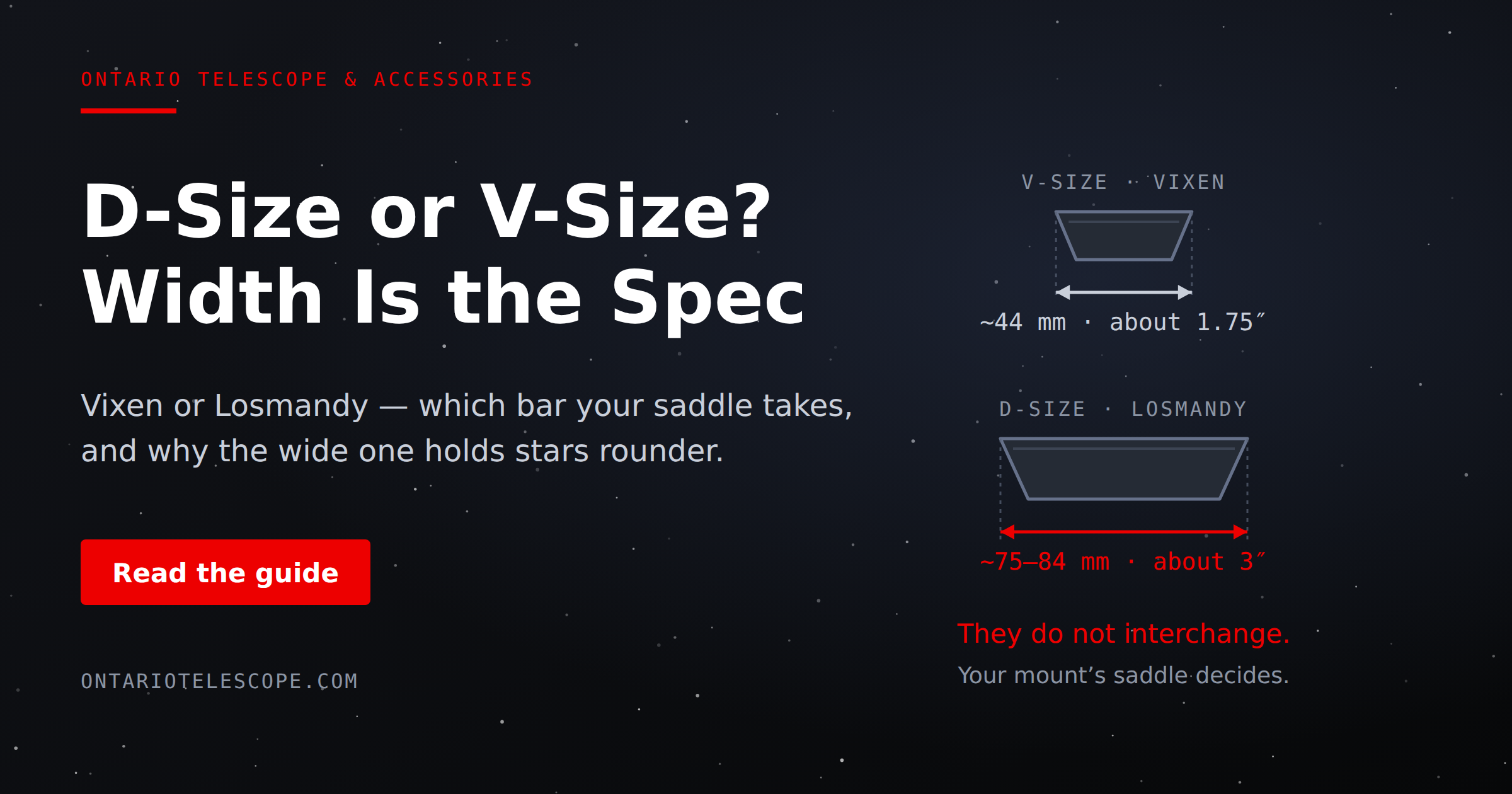
D-Size vs V-Size: A Complete Guide to Telescope Dovetail Systems
Read More
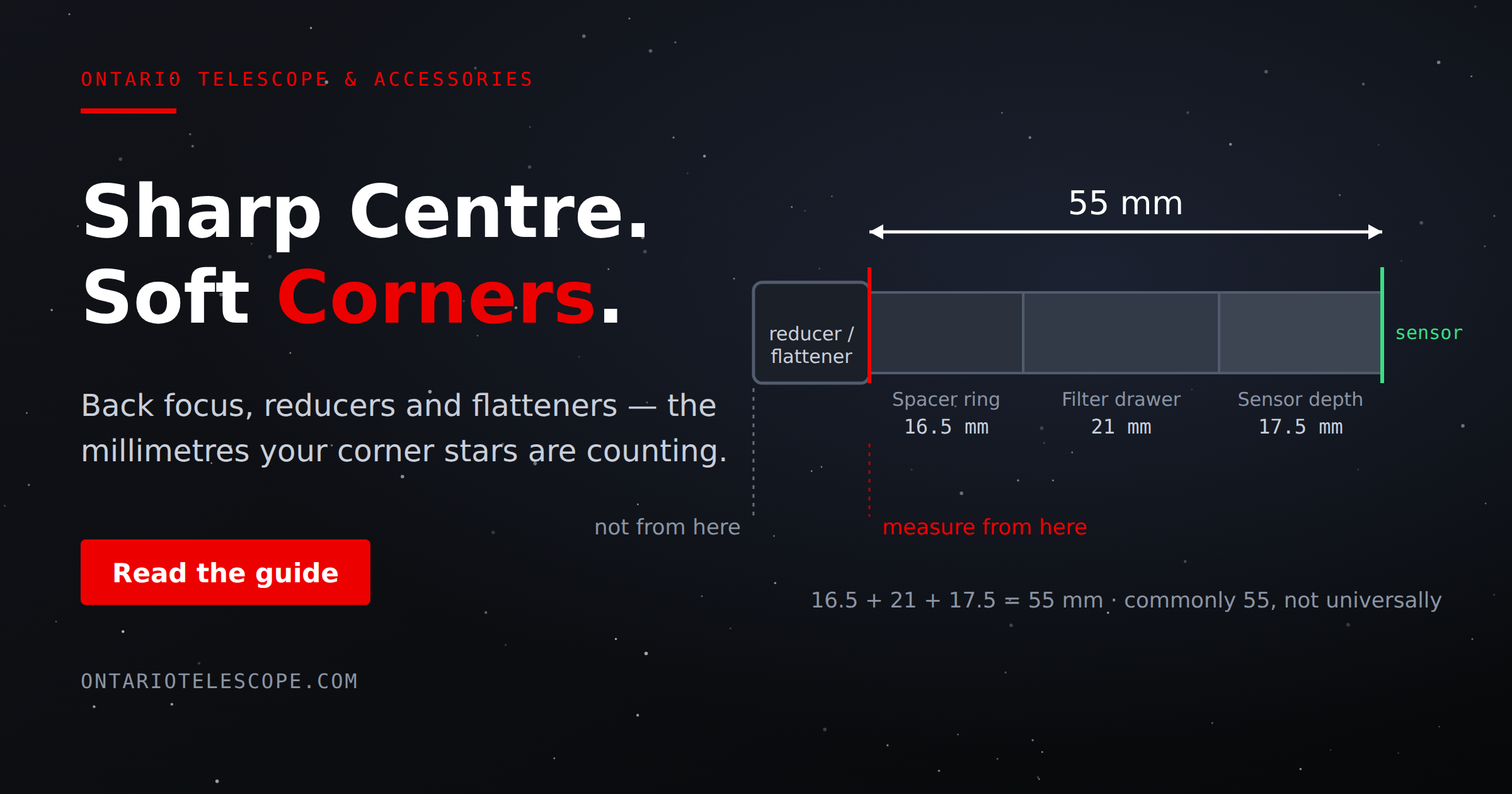
What Is Back Focus in Astrophotography? Telescope Reducers, Flatteners, and Spacing Explained
Read More