


- Description
Product Overview
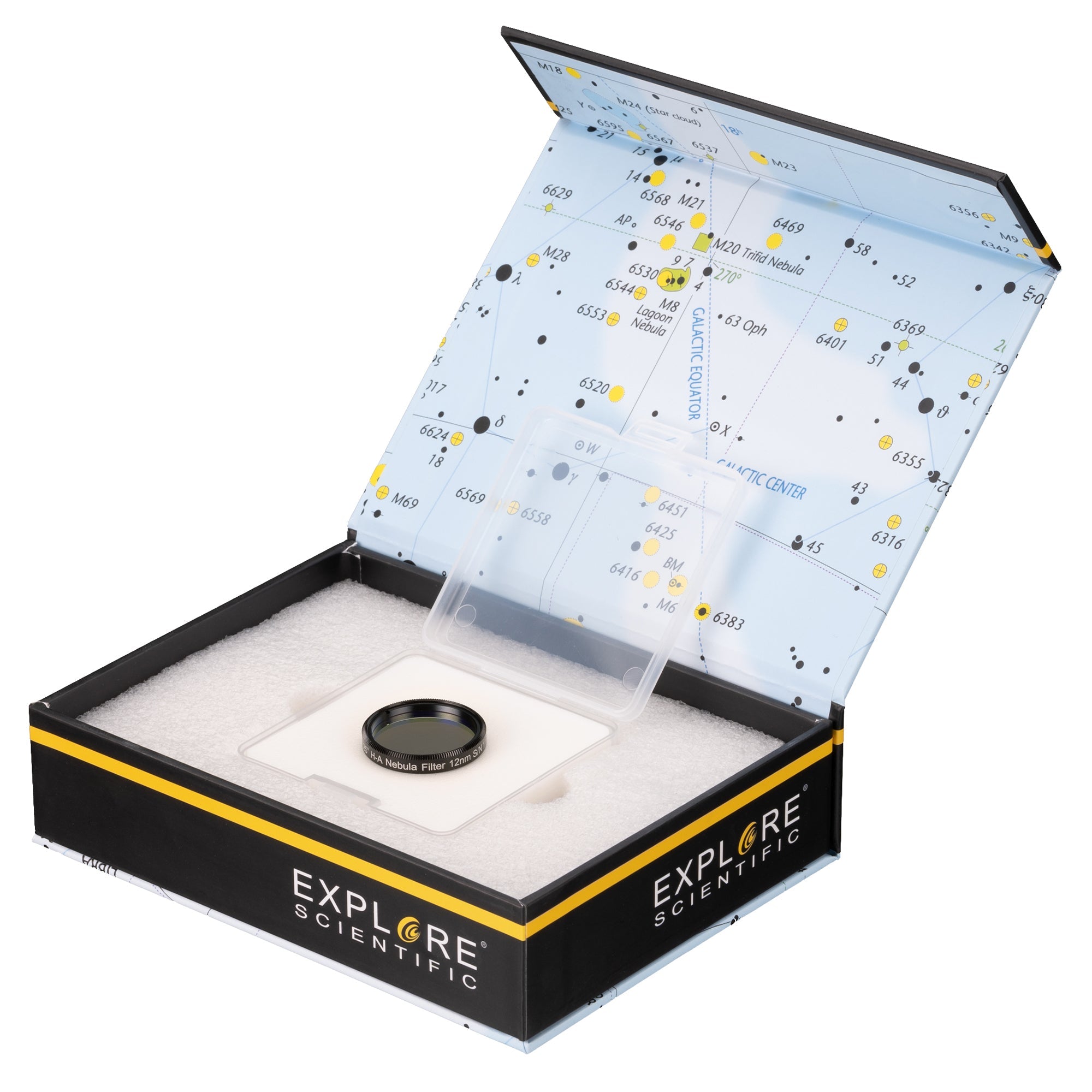
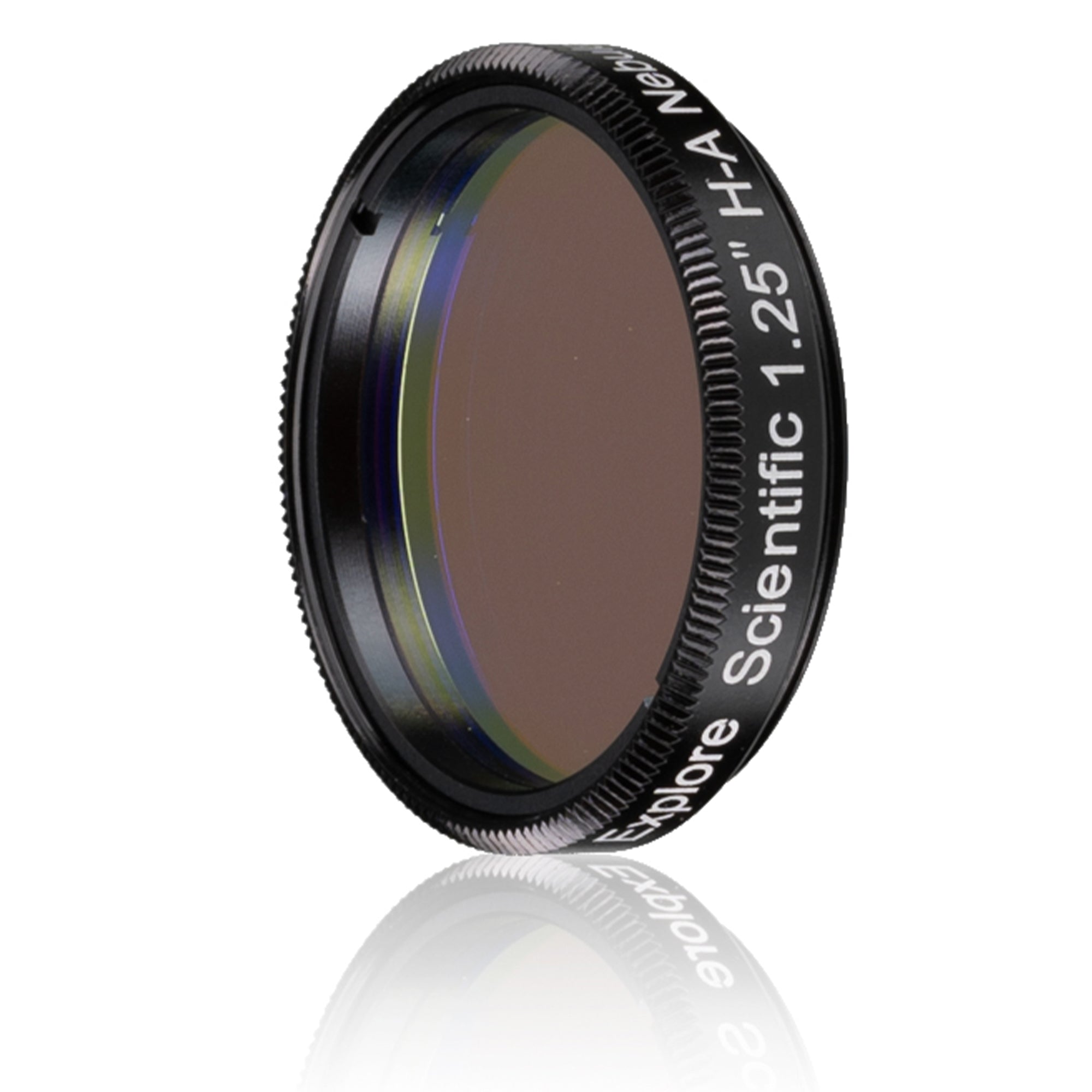
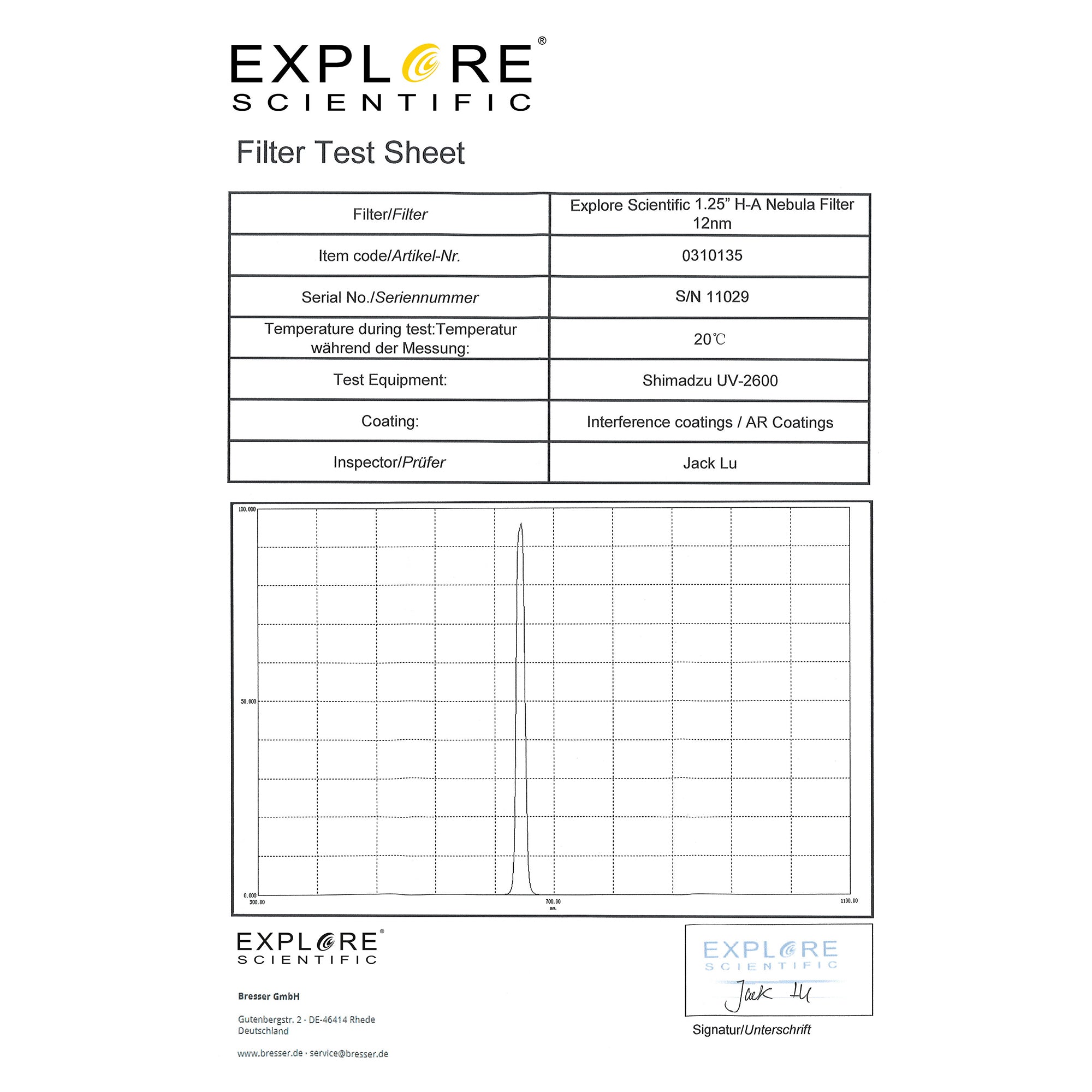
The Explore Scientific 1.25-inch H-Alpha Nebula Filter has a 12 nm passband and is built to pass the hydrogen emission line at 656.3 nm while rejecting everything else. Explore Scientific is direct about the intended use: this is a filter developed for astrophotography, aimed squarely at imagers working near cities, and the company notes it blocks almost all the light from mercury and sodium vapour lamps. It comes mounted in a standard 1.25-inch threaded cell with an individual test report for the filter in the box.
Who It's For
Hydrogen-alpha is the loud one. In an emission nebula it is normally the strongest of the three lines narrowband imagers work with, often by a wide margin, and that single fact changes the whole calculation around bandpass. Because the signal is strong, you do not need to squeeze the window down to get a usable result, and a 12 nm passband gives you something more valuable on modest equipment: tolerance. Tolerance of a fast light cone, where the passband shifts as rays strike the coating off-axis. Tolerance of shorter subframes, because the target is bright enough that you are not waiting forever to climb out of the read noise. Tolerance of nights that are less than ideal, since the streetlight emission that ruins broadband work sits at 589 nm and below, comfortably outside this window.
That makes this the natural first narrowband filter for someone with a 1.25-inch filter wheel and a small monochrome sensor, for an f/4 or f/5 Newtonian where a 3 nm filter would be a poor match, or for anyone who wants a hydrogen luminance layer to blend into an existing colour image. It is also the honest choice if your total time per target is one or two nights rather than one or two months. If you routinely image from a genuinely bright site through a full moon and you already own a slower scope and a patient temperament, the tighter 7 nm hydrogen-alpha filters will pull the background down further; for everyone else, 12 nm is the width that gets a good image out of ordinary conditions.
Key Features & Design
- 12 nm passband on the hydrogen emission line at 656.3 nm, in the red
- Explore Scientific states it blocks almost all light from mercury and sodium vapour street lighting
- Wide enough to stay well behaved in fast light cones around f/4 to f/5
- Standard 1.25-inch threaded cell for nosepieces, eyepiece barrels and 1.25-inch filter wheels
- Individual test report for the specific filter included with the product
- Explore Scientific specifies it for astrophotography rather than visual observing
- Records red emission nebulae to their full extent in photographs where an unfiltered exposure shows mostly skyglow
Filter Design
A narrowband filter is not tinted glass. It is a stack of dielectric layers whose thicknesses are chosen so that light near 656 nm reflects back and forth between them in phase and emerges, while every other wavelength interferes with itself and is turned back. The reason this matters for a 12 nm filter specifically is that the window's width is what buys you angular tolerance. The transmission curve moves toward the blue as the angle of incidence increases, and in a converging beam the edge of your light cone is always arriving at an angle. With 12 nm of width the shift produced by an f/4 or f/5 cone still leaves 656.3 nm sitting near the top of the curve across the whole field, so the centre and the corners of the frame record the same signal. Narrow that window enough and the corners start to see a filter that is no longer tuned to hydrogen, which shows up as an unevenly illuminated frame that no amount of flat-fielding fixes properly.
Recommended Uses
- The hydrogen channel of mapped-colour narrowband imaging on emission nebulae
- Hydrogen-alpha luminance layers blended into broadband colour images
- Imaging emission nebulae and supernova remnants from urban and suburban back gardens
- Continuing to collect useful data through moonlight, when broadband imaging is finished for the night
- Fast Newtonians and small refractors at f/4 to f/6 with monochrome cameras
Compatibility and Accessory Notes
The cell carries the usual 1.25-inch filter thread, so it will thread into a 1.25-inch camera nosepiece, the barrel of a 1.25-inch eyepiece, or a 1.25-inch filter wheel carousel. It is not intended for 2-inch focusers or for wheels built around unmounted 31 mm and 36 mm discs. If your imaging train is tight on backfocus, remember that a mounted filter adds a few millimetres of glass in the optical path and shifts focus slightly rearward, which is worth accounting for when you set your spacing to a field flattener. This is also the filter most people pair first with a matching Explore Scientific O-III and S-II in the same 1.25-inch format when they are building a full narrowband set. Tell us what camera and wheel you are running and our team in Bolton will confirm the fit.
Good to Know Before You Order
Explore Scientific publishes no shipping weight for this item, so we are confirming it on our own scales before the listing goes live. That is why it is currently unpublished. Contact us and we will give you a shipping figure for your address. It is also worth repeating that Explore Scientific specifies this filter for photographic use. Visually, a 12 nm window in the deep red passes far too little light for the dark-adapted eye to do much with, and you should not buy this expecting an eyepiece filter. Explore Scientific does not publish peak transmission, substrate or blocking specifications for the filter, so we do not quote figures we cannot source; the enclosed test report is the measurement that applies to your copy. The scope of delivery is the filter and its report, with no adapters, wheel or camera included.
Frequently Asked Questions
Can I use this with an unmodified DSLR? You can, but the result will disappoint you. The internal cut filter in a stock camera is designed to attenuate exactly the deep red region where hydrogen-alpha sits, so you lose most of the signal before it reaches the sensor. A modified or astronomy-specific camera is the right partner for this filter, and a monochrome camera is better still.
Why start with hydrogen-alpha rather than O-III or S-II? Because it is the strongest line and the most forgiving. You will get a usable image from a single night with H-alpha long before you get one with sulphur, and the technique you learn on this filter transfers directly to the others.
Is 12 nm too wide for a light-polluted sky? Not for hydrogen. The window at 656 nm sits clear of the sodium and mercury emission that dominates urban skyglow, so a 12 nm filter already removes the great majority of what a broadband exposure suffers from. A tighter filter reduces the remaining continuum background further, which matters most under a bright moon.
Will it vignette on my sensor? A mounted 1.25-inch filter usually offers a clear aperture near 27 mm, which is comfortable for Four Thirds and smaller chips. Larger sensors want the 2-inch version of this filter.
Bottom Line
If you are taking your first serious step into narrowband imaging with a 1.25-inch wheel and a small sensor, the 12 nm hydrogen-alpha is the filter that gives you the most result for the least demanded of your equipment. It is forgiving of fast optics, short subframes and imperfect nights in a way the tighter filters are not. Contact us and we will help you slot it into your imaging train.
You may also like
Recently viewed
Recent Blog Posts
View all
Your Guide Graph Is Lying to You
Read More
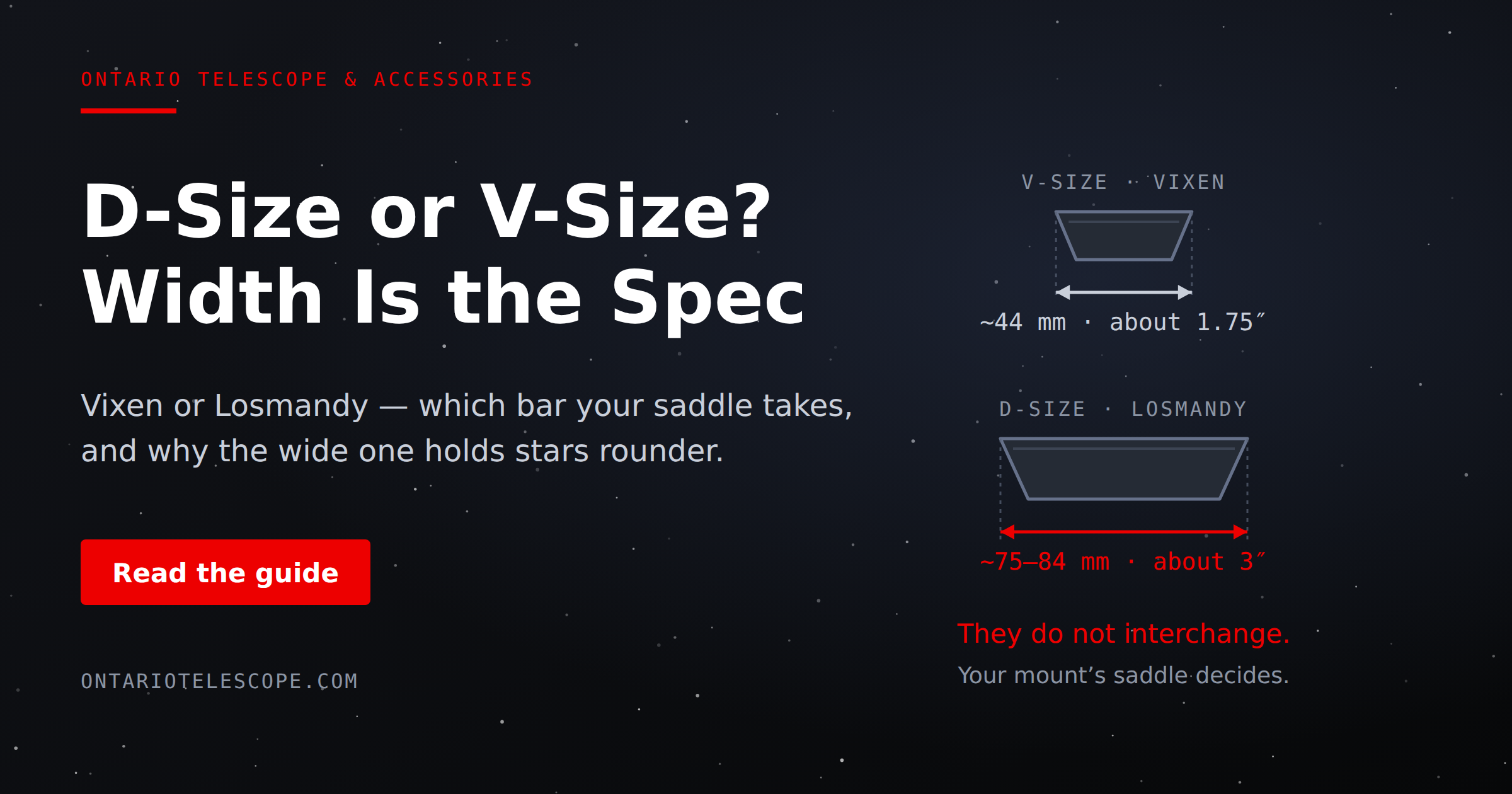
D-Size vs V-Size: A Complete Guide to Telescope Dovetail Systems
Read More
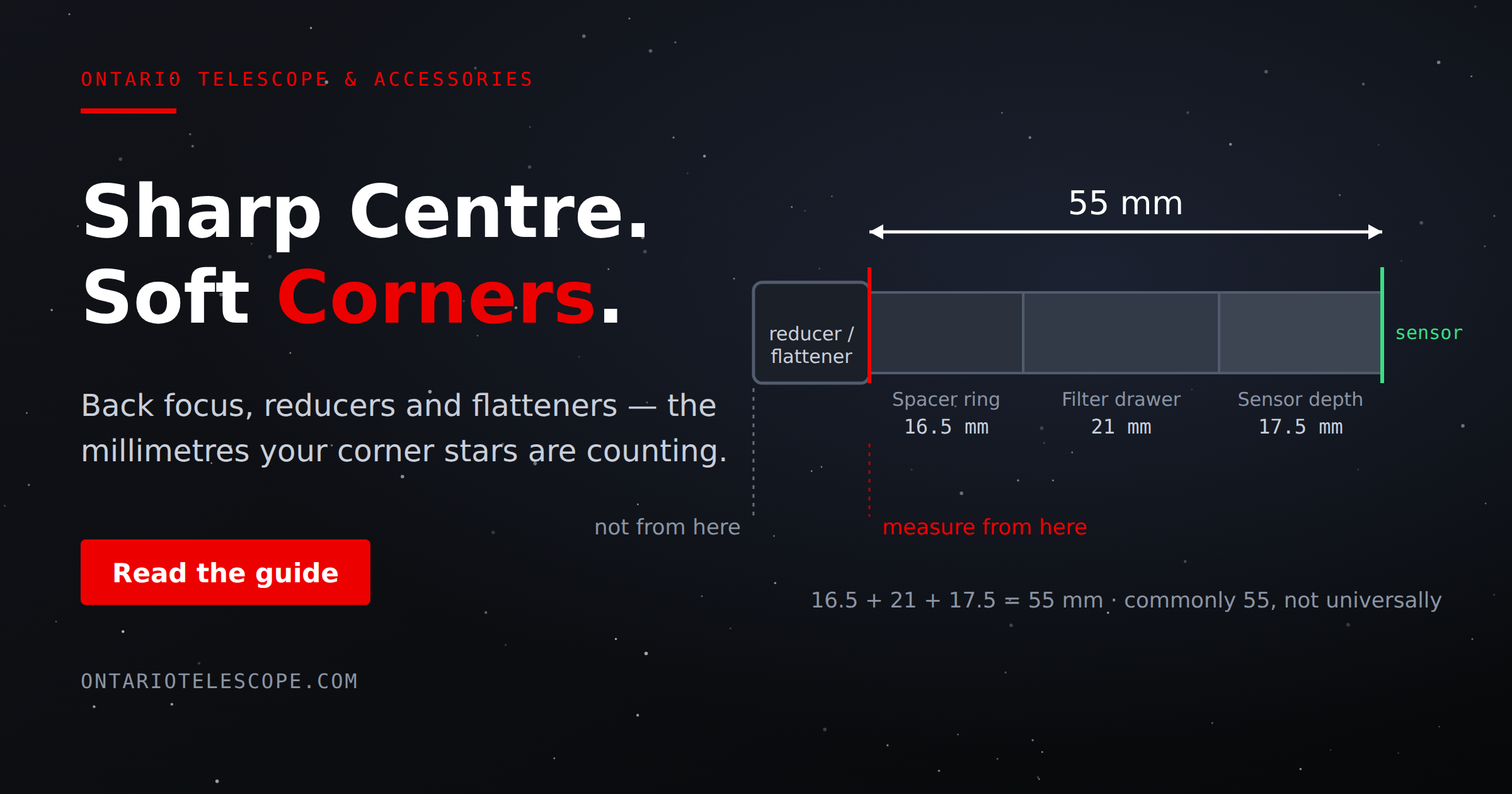
What Is Back Focus in Astrophotography? Telescope Reducers, Flatteners, and Spacing Explained
Read More